In 2016, a group of armed, divinely inspired right-wing protestors led by Ammon Bundy occupied the Malheur National Wildlife Refuge in the high desert of eastern Oregon. Encamped in the shadowlands of the republic, insisting that the Federal government had no right to own public land, the occupiers were seen by a divided country as either dangerous extremists dressed up as cowboys, or as heroes insisting on restoring the rule of the Constitution. From the Occupation's beginnings, to the trials of the occupiers in federal court in downtown Portland and their tumultuous aftermaths, Shadowlands is the resonant, multifaceted story of one of the most dramatic flashpoints in the year that gave us Donald Trump.
Sharing the expansive stage with the occupiers are a host of others-Native American tribal leaders, public-lands ranchers, militia members, environmentalists, federal defense attorneys, and Black Lives Matter activists-each contending in their different ways with the meaning of the American promise of Liberty. Gathering into its vortex the realities of social media technology, history, religion, race, and the environment-this piercing work by Anthony McCann offers us a combination of beautiful writing and high-stakes analysis of our current cultural and political moment. Shadowlands is a clarifying, exhilarating story of a nation facing an uncertain future and a murky past in a time of great collective reckoning.
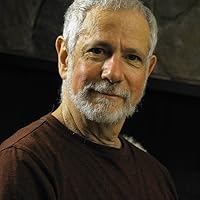
Anthony McCann was born and raised in the Hudson Valley. He is the author of four collections of poetry including Thing Music (Wave Books, 2014). His book Shadowlands: Fear and Freedom at the Oregon Standoff (Bloomsbury, 2019) is a nonfiction prose work investigating the 2016 armed right-wing occupation of the Malheur National Wildlife Refuge. Anthony’s teaching, writing and research interests include 19th, 20th and 21st century North American Poetry; Political Theology; Political Ecology; Native American History; History of the Revolutionary, Constitutional and Reconstruction eras; Ecological History of the American West; Cultural Anthropology; Modern Latin American Poetry; and Anarchist thought and practice as it pertains to art-making, politics and other spheres of human endeavor. He lives in the Mojave Desert.
“This book tells a story about American democracy in the midst of one of its many difficult historical moments. It’s also a book about common Americans, out in the shadowlands of the republic, demanding, in their different ways – some twisted, some inspired – that the Beautiful Democratic Words of their nation come true on their terms. It’s about unpowerful people insisting that they have power, and that the American public square be a true and meaningful ‘boisterous sea of liberty…’ In its pages you will encounter a wide cast of characters: western ranchers, right-wing militia members, armed religious mystics, environmentalists, Native American tribal leaders, defense lawyers, Black Lives Matter protesters, rural political leaders, and others. All these people will be seen contending, in their own ways, with what it means to be American today…” - Anthony McCann, Shadowlands: Fear and Freedom at the Oregon Standoff
The occupation of the headquarters of the Malheur National Wildlife Refuge by an eclectic spectrum of generally right-wing militants feels quintessentially American. It is an occurrence that perfectly embodies the complexities of America’s past, the truly weird and contradictory notions of freedom cherished by its citizens, and the uneasy relationship between a government and its people. Though it lacks any hint of innocence, it nevertheless deserves to be a Rockwell painting on the cover of the Saturday Evening Post.
Anthony McCann’s Shadowlands uses this quirky, tragicomic piece of political activism as the center of an epic exploration of a democracy on the verge of failure.
***
On January 2, 2016, a group of men and women arrived in Harney County, Oregon and proceeded to the Malheur National Wildlife Refuge, which is administered by the United States Fish and Wildlife Service. This group was led by a man named Ammon Bundy, the son of anti-government rancher Cliven Bundy, who had participated in his own standoff with the federal government over nonpayment of cattle grazing fees on federally-owned land.
Ammon’s followers were a loose-knit coalition of militias, sovereign citizens, and extreme libertarians. Their stated purpose was to “unwind” federal land and have it transferred back to the states. They based this principle on a bold misreading of the Constitution’s Enclave Clause, located at Article 1, section 8, clause 17.
Though heavily armed, the occupiers claimed they were peaceful protesters, and livestreamed most of their activities onto the internet. Showing patience that would have been well-served at Waco and Ruby Ridge, federal and state law enforcement decided to mostly wait the squatters out. Indeed, in the early going, people were allowed to come and go at will.
However, on January 26, Ammon and several of his compatriots left the refuge to attend a meeting in an adjacent county. Their caravan was pulled over by agents of the Federal Bureau of Investigation and the Oregon State Police. Ammon surrendered peaceably. One of his confederates – LaVoy Finicum – tried to drive away. He crashed his vehicle and was killed by police, a moment captured on video.
By February 11, the final four holdouts left the wildlife headquarters without violence. There followed a series of federal indictments, which led to a bunch of plea deals, a few convictions after trial, and some surprising nonguilty verdicts.
Were it not for Finicum’s death, this might have been a halfway funny episode of the ongoing theater known as Bizarre America. In McCann’s telling, though, it is a dense web of interlocking strands that holds within its patterns the gravest dangers the nation has faced since the Civil War.
***
The summary above suggests a straightforward, chronological narrative. That is not how McCann approaches this material. I really liked Shadowlands, but it is an acquired taste. McCann is not interested in telling you what happened as an ordered sequence. Instead, he is looking to capture the messiness of the occupation by embracing that messiness as an organizing principle. McCann does not pick a throughline and build around it. Rather, he plunges into things as an observer, and follows around anyone willing to talk with him.
One of the exceptional things about Shadowlands is its willingness to meet people on their own terms. McCann is upfront about his own biases and beliefs, but he does not let them interfere with profiling the characters he meets. He has in-depth discussions with several of Ammon’s cohorts, doing an excellent job of exploring their convictions, and often finding some logic within. McCann also hangs out with the locals of Harney County, including the much put-upon sheriff trying to keep the peace. In addition, time is spent with the Wadatika Paiute tribe who lived on a nearby reservation. Tribal members unsurprisingly had some thoughts on which “people” federal land actually belongs to.
In this wide-ranging investigation, McCann moves back and forth in time. Sometimes he is unpacking the history of the land, including the 1878 Bannock War. On other occasions, he describes some of the vast array of social media that came out of the occupation (for some reason, this book does not have a single picture, despite its thirty dollar cover price, which is incredibly irritating). There are digressions about “constitutional sheriffs” and the Dakota pipeline. Then there are moments when McCann becomes a character in his own work, reflecting on what he saw.
***
Shadowlands is a book of tangents. There is no rigorous method or structure to McCann’s approach. This should not be entirely surprising, because McCann is a poet, not a journalist. To me, Shadowlands often had a mesmeric quality, with beautiful descriptions of the land, sharp insights into its inhabitants, and a dogged belief that there is some important lesson obscured by the confused mosaic being confronted.
In short, this is a work that values the excesses of artistry over the concision of journalism. If you were looking solely for an A-to-Z chronicle of what went down, this will be a resounding disappointment. McCann simply has too many things on his mind.
***
One of the resounding traits of Shadowlands is its empathy for all involved. McCann really takes the time to listen, sometimes to a fault. Yet he critiques Ammon Bundy’s movement in ways that are interesting and relevant today.
Importantly, he avoids dwelling on the obvious double-standard given to Ammon and his mostly-white fellows, who would have been treated as domestic terrorists if they were Muslim or black. In place of this superficial judgment, McCann notes the ignorance of Ammon Bundy regarding globalization. Bundy actually thought that if he was successful, valuable federal land would be given to people like him. That is just not how a world dominated by multinational corporations works. The reality is that if Bundy succeeded, this land would have gone to an entity worth billions of dollars, which would then use it to make the kind of profits you do not get from selling cattle.
The transfer of public goods into private hands – hands which then take those private goods and resell them at absurd profits – is a grand American tradition. In fact, it is happening right now, as pieces of America’s most beloved national parks get sold off to developers.
***
Shadowlands was published back in 2019. This context is important, as McCann is really wrestling with the political turmoil that began in 2016. Somewhat surprisingly, he finds flickers of hope in Bundy’s followers, as many of their beliefs actually overlap with those on the opposite end of the political spectrum. This overlap suggests the possibility of a true people’s movement.
Unfortunately, time has shown that Bundy’s acolytes never acted on principle, because principles are something that remain steady. For these guys, the priorities have drastically changed. Ten years ago, they were extremely worried about an imperial presidency, the overreach of the federal government, and of masked paramilitaries stalking the streets. They do not really seem to care about that now.
As it turns out, it was anger – and not any set of coherent beliefs – that drove them all along. Their lives have not turned out the way they wanted, and so they sought someone to blame. Someone to hate. Back then, they hated the government. Today, that hate has been transferred to other, far less powerful groups. The problem is not in their often justified grievances, but in the ignorant refusal to direct it at the right target: the ludicrously unfair economic system in which they – and all of us – exist.
I was so excited to read this, but, alas, I was disappointed. Good things about Shadowlands: the Bundys’ armed occupation of the Malheur National Wildlife Refuge in Oregon is a fascinating story, and this book effectively captures the complexity of the situation. The author includes a great deal of historical context and some interesting socio-political commentaries (i.e. contrasting Bundy Revolution with the Black Lives Matter movement and Standing Rock). Although the author frequently shares his opinions, both points of view are presented in exhaustive detail… which leads me to my issues. Shadowlands is 400 pages long, but it felt never-ending. This was meandering and redundant AF. Some of the language is beautiful, but more often, it felt superfluous. The last 100 pages in particular bugged the hell out of me. 14 sentences on a long ride in a casino elevator. Saying that a prison facility defies description, but then proceeding to describe it anyway (JUST DESCRIBE IT). In a section about touring the refuge, he writes that he was there a long time because he was writing “too much,” then proceeds to share an example by quoting a long passage about ducks from his notes that day. Ultimately, I wish that the focus had remained on the situation and less on the author’s musings. He entrenched himself so firmly in this story that the book is about him as much as it is about the Bundys. I know this is a common nonfiction device, but it didn’t work for me because I didn’t particularly care about whether he agreed with something, or liked someone, or if a point made sense to him-- and these personal reflections were constant throughout. This book has gotten some great reviews so perhaps I’m an impatient reader. But if this had been tighter and more focused, it would have been much more compelling for me.
I was aghast that the author first mentioned and then ignored the vicious and vile racism his subjects dIsplayed. i.e. 'if you see a Jew, run a sword through him.' This may not be an exact quote, but is an example of the book's structure and impact. These moron's come across as quasi-heros.
Meandering story of the Bundy cases, which amazingly resulted in zero convictions against the clan. A poet’s exploration of a myriad issues- the history, proper use, and future of public lands; a mutant strain of Mormonism where God speaks directly to his chosen ones and guides them on his reading of the US Constitution and the meaning of personal freedom; juror nullification and the randomness of the court system; the continuing injustice to Native. Americans from theft and misuse of their ancient lands; and the history and current peril of ranchers struggling to survive on the most remote and arid reaches of the American West. While there has been a lot written about the social ills of the Rust Belt that contributed to the rise of Trump, far little is known and understood of the anger and discontent of people in the rural West. This book covers that subject well, maybe better than anything yet written. It’s not easy going but strongly recommended for anyone trying to understand the politics and odd theology surrounding the public lands of the West,
To my mind there are three ways of reading. For information, for experience or for both. I read a number of goodreads reviews after finishing this book and found a bunch of people from category one complaining about the wandering nature of the author's writing. To them I say, what did you expect of a poet in his first non poetry work?
I think this book largely falls into the third category. It's loaded with information about the occupation and it's fall out. First hand accounts abound and that "information" grounds the more philosophical aspects of this wonderful book. Without it, the book wouldn't work and without his wanderings the book would have been one dimensional. The two work together to give you not only a picture of what happened but the complexities of being an American in 2016 and the following years. The heaving changes and just slightly out of control feeling that is working its way through the American psyche are all on display, in capable hands.
I will concede the last third of the book felt slightly tacked on. As if the story hadn't fully rounded into the story he wanted it to and so he searched through what remained to find the ending. Some are put off by that searching and some, like myself, feel it made the book that much more tangible and real.
His search for the throughline is precisely what's driving Americans today into violent psycho-spasms. Their overarching ideas are falling at their feet and no one, literally no one, is sure how to put things back together. Watching a gifted writer struggle to find his way to a story he can live with, and I think maybe falling just short, then having to make sense of how that's just reality sometimes mirrors the activity of the first part of the book in fascinating ways if you pay attention.
There is not much in the way of usable information in that last third of the book but there is a lot to feel and experience and though it never really ties up nice and neat I think theres a beauty in that somehow. A beauty in a young, talented, intelligent white man who thinks he can ride in and tell the perfect story, shaping metaphor and placing context around this or that bit of history ultimately running aground and having to sit in the mess with the rest of us.
Will he come to find later that his singular gifts and views will not be enough to reconcile what's happening and it will take the efforts of many to uncover and make sense of this time? I'm optimistic about his writing future and think this is the first step towards something...
I think if you bundled this read with "The Line becomes a River" and followed or started with "Unwinding" by George Packer you'd have for yourself a nice glimpse into the convulsive change going on in the United States right now.
Ideas matter. Ideals matter. Words Matter. They give persistence and shape to a commons of sorts we can all feel safe in together. This is fracturing before our very eyes and Shadowlands is as good of a portrait of that fracturing as any I've read recently.
Ignore the information seekers. Give this book a read.
I loved McCann’s goals for what he wanted to convey. I learned much that is going to stay with me. I wish there was a different ratio of history to personal musing - more history less musing. Otherwise I would give Shadowlands a hearty endorsement.
Anthony McCann set off to Oregon to try and make sense of Ammon Bundy’s armed takeover of the Malheur National Wildlife Refuge. I read Shadowlands with the same goal. I got more than I bargained for.
McCann provides historical context for the occupation, pulling together seemingly disparate threads into a seamless narrative. Mormon theology, libertarianism, interpretations of the Constitution, federal land use, local history, and the strong and morally undeniable Paiute claims to the area share these pages with the author’s accounts of his meetings with some of the Bundyites and his reporting of how events unfolded and the subsequent court trials.
McCann is a poet: Shadowlands is his first prose book. His descriptions of the natural environment and the creatures that inhabit it are often lyrical. Yes, he sometimes wanders away from the main thrust of his story, but I found his writing so captivating that I was happy to accompany him on his detours. His masterful command of language enthralled me.
Shadowlands is a beautifully written meditation on liberty, freedom, and democracy, on the very meaning of America.
This is the Trump era book I've been waiting for. It's the one that looks the crazy in the face and calls it crazy somehow with compassion and a certain almost beauty. McCann is a poet and his writing is beautiful - detailed, but taking moments to step back and sum it all up in a way that few other journalists can. It broke my heart, that this is what we've come to. Such absurdity, such distance from the people right next to us. So much pain and such a desperate need to belong. I think we're all screwed and I can't see the way out, but I was happy to go along with McCann for a little while as I finally stopped trying to see some sense in all this and instead just spent some time with the humans on the other side.
This book feels like it will never end. It’s needlessly verbose. I thought I’d enjoy it since I lived in Oregon during the occupation, but only approximately 40% of the book is about the occupation and 60% about anything that could be considered even tangentially related. Furthermore, it bounces back and forth between philosophical and matter-of-fact story telling.
I do still give it a couple stars because it’s hilarious at points and those moments of levity are always surprising.
Wow, I can’t tell if the writer is trying to tell a story or impress is friends with his self indulgent prose. Once I read the term “providential certitude”, it was time to shut it down.
The story itself could be quite interesting, but the writer spends a paragraph describing what happened, and then two more on some tangent to take you completely off track. Once I realized I could stand the writer, I had no desire to follow him through the rest of the story.
I couldn't finish. I was 100 pages in and it just moves too slow with too many unimportant details. I think it's 450 some pages in all, if the rest of the books reads like the first 100 pages, the author could have told the story with 50% of the word count.
I really this book, but I also understand some of the complainier reviews about it. If you’re looking for a book written from a historical/current events standpoint that provides a linear narrative and facts, this is probably not it. If you’re looking for a lot of information interspersed with startlingly tender and/or startlingly stark descriptive language, here’s your book.
The author is a poet and an academic, and the book reads like a poet and an academic dwelling on the Oregon standoff, what personalities and culture forces contributed to it, what events led to it, what came of it, what it means, and on and on. He indeed recounts what happened, but his scope of “what happened” is pretty expansive.
I followed the Malheur standoff fairly closely, so when I saw a reference to this book in an article about the current Portland protests, I was glad to see that our library has the ebook. The first half of the book is brilliant, the writing beautiful, the myriad threads of thought, and descriptions of landscape, always interesting. That part is a 5-star book. The second half, which concern the trials, is three-star -- reasonably interesting but not compelling. I felt the author was fair to all the people involved, trying to honestly give their viewpoints and philosophies.
The best book I have read about the Bundys and the whole weird right wing militia movement and it’s conspiracy theories. McCann does an outstanding job not only of detailing the takeover of the Malheur wildlife refuge in Oregon but also tribal animosities towards the occupation, the aftermath, Trump’s election in 2016, the problem of private prisons, the solar eclipse of 2017, the reactions of citizens at Harney Lake and weird permutations like the black nationalist group called the Washitaw Nation (p 245), the thinking of the Founding Fathers and more. The message about freedom, liberty, democracy and the role of the Federal government are intriguing and well-explored by McCann. He is a great writer. You can really understand how the Bundys were acquitted of the occupation of Federal property and how government overreach led to several mistrials. We’ll done McCann!
Shadowlands is a sprawling, ruminative, and digressive dissection of the 2016 Malheur refuge occupation. As you’d expect, McCann painstakingly reconstructs all of the events leading up to, during, and following the Bundy occupation, but he also gives disquisitions on so many varied topics, like the, frankly, anti-historical right-wing reverence for the U.S. Constitution, messianism in American politics, Joseph Smith, Manifest Destiny, public land management, the Harney County basin, Oregon’s deeply racist history (“the only state ever to be admitted to the union with a black exclusion clause in its founding charter”), the bewildering abstractions of right-wing militants (what amounts to and exceeds sloganeering), and mass incarceration. Taking the misguided Malheur takeover as its focal point, the book spirals out into a deeply textured, non-linear narrative about, you guessed it, America (not just as place, but as mood, as possibility, as “territory of feeling”). Approaching his various subjects with curiosity and (let it not go unremarked upon!) a deeply poetic sensibility, McCann layers in the many messy contradictions, perspectives, and modes of feeling that comprise our social and political moment.
Fascinating as I found Shadowlands, your enjoyment might be hindered by a whole host of factors: your current tolerance for white leftist hand-wringing, your tolerance for prolix descriptions of landscapes, your tolerance for detailed play-by-play descriptions of the Bundyites’ YouTube videos, and so on. But here I’ll offer a final defense: there’s some great phraseology in this book! If you’re someone who reads with an eye toward freshness of language/expression, you’ll probably enjoy it.
What I loved about this book was that it payed out the myths behind the ‘militia’ Ideology and how absurd their arguments really are. It did it, as strange as it may sound, in a respectful way. It did not disrespect individuals but it did challenge their ideas. You know this is true not just from reading but from the acceptance that the ‘Ammonites’ and their opponents showed the author. I learned a lot!
The author tries to get into the heads of the Malheur occupiers and, in doing so, renders a sympathetic appreciation of them and the western landscape. That isn't to say he approves their actions, just their sincerity. I thought the booked was too long and dragged in the second half.
The title or subtitle should include the words, "Reflections on... ." There is a historical account of the occupation of the Malheur Wildlife Refuge in Oregon, but more than half the book is the author's ruminations on what led up to it and what it might lead to.
In late 2016, a self-appointed group of constitutional protectors moved into the Refuge and refused to leave. Their inspirational leader was Ammon Bundy. In this account, Ammon is a polite, sincere theorist with a televangelist's flair for recruitment. He is also the son of Cliven Bundy. In 2014, the Bundy ranch in Nevada was the scene of an insurrection against the authority of the federal government to control cattle grazing on public land.
Based on his experience in Nevada, Ammon decided to ride to the defense of a couple of Oregon ranchers named Hammond who had started some fires to burn brush. Burning brush is a common thing to do on a western ranch, but you're supposed to do it on your own land, not someone else's. In this case, someone else was the U.S. government. The Hammonds were convicted of arson and sent to jail.
Ammon Bundy's analysis of the situation was a runny omelette of artfully selected constitutional text and self-serving interpretation, with a pinch of Mormon mysticism. He figured out that the Constitution did not allow the federal government to own land, and that the only officials who could unwind hundreds of years of government overreach were county sheriffs. (It's about as loopy as it sounds.) Bundy and his supporters were going to enforce the true meaning of the Constitution by "returning these lands to their original owners." In other words, to white ranchers. (The local Paiute tribe found his definition of "original owners" to be lacking.)
Bundy is a persuasive fellow, and he made this argument compelling to a number of supporters, mostly right-wing and militia types, who came to Burns, Oregon to be part of the revolution. They squatted in the Wildlife Refuge and refused to leave until Constitutional law was restored.
Besides spotty logic, there was a very critical reason why Bundy's idea wasn't very good: It would economically wipe out the small, independent ranchers it was supposed to benefit. Vast tracts of arid, nutrition-poor western rangeland are needed to create a sustainable cattle ranch, far more than any of these small independents could buy. It would take the resources of a large corporation to buy up and hold that much land. Good luck to the small rancher trying to negotiate favorable grazing terms with those guys.
The author talks at length about why Bundy's supporters signed on to this seemingly irrational quest. The Malheur conflict foreshadowed today's ascendance of belief over facts.
When it was over, one occupier, LaVoy Finicum, was shot and killed by a jittery state trooper (unnecessarily, in my opinion). The book convincingly shows how narrowly more bloodshed was averted. The occupiers were men waving AR-15s around and talking about liberty or death. That's intimidating and threatening. Anyone dealing with them better be able to recognize the difference between posturing and intent, because there may not be a second chance to get it right.
The prose is grandiose. The author swings for the fence with every sweeping, multi-syllable sentence. He is clearly hostile to the cause of the occupiers, which casts some doubt on his accounts and conclusions. He details the buffoonery--the guy who paraded around dressed as George Washington; the cowboy who saddled up every day, grabbed a large, American flag, and rode back and forth in front of a mountain backdrop for photo ops--and makes sarcastic use of occupier terminology. But his ideas about how things reached this point and where they might be headed are worth some thought, even if they sometimes inflate into rants or spiral down The Drain of Self-involvement.
It brought much more to the table than I had anticipated, in that I feel like I received numerous and valuable American history lessons alongside thorough explanations of various social, racial, legal issues. I mean, it accomplished its point in an interesting way: that showing that those racist, fanatical creeps who occupied the Malheur Refuge waaaaaay back in 2016 were... well, people. Objectively stupid people, yes. But people whose strange beliefs didn't pop out of nowhere - their sense of reality is framed by a frighteningly weird, narrow-minded, exclusively white-male privileged history. People freaked out because their dinosaur skill sets don't match up with the modern world; lost and often mentally ill people looking for the feeling of belonging and purpose that capitalism doesn't provide. Unfortunately, the same stew that barfed out all the Facebook-fed batshit crazies assaulting the U.S. Capital six years later.
I guess I'm saying that if you're expecting a journalistic, chronological account of the standoff, this is not that book.
This is an account written by a Deep Thinker Thinking Deeply about Everyone and Everything Around Him. Which is fine and I think very valuable; just a slow and sometimes exasperating slog as a reader. For example, I was waiting impatiently to hear about the Burns-Paiute Tribe's perspectives; it came - eventually - but not until you've had to endure pages and pages of teeth-grinding tales that seem to oh-so-faintly praise (?!?) LaVoy Finnicum, one of the most famous narcissist-babyman-fools oblivious to the cultural and environmental damage their unwanted presence caused. Which is to say nothing of the horrible, horribly Bundy family circus. I'll just say that the author did his research and listened to every side; it was actually refreshing that he wasn't nearly as judgemental and mean as I am, but nonetheless sometimes a story should take a page or two, not ten to fifteen. Just like, cut to the point sometimes.
I'm glad I got all the way through without throwing it against a wall; I am filing it away under "Important Books That Help Me Gain Understanding About a Really Unpleasant Subject". And I will now be hiding under my bed to avoid the world. God Bless America lol!
It makes a funny sort of sense that a poet would write the definitive account of the Oregon wildlife refuge standoff led by the Bundy family.
To almost all observers, even those like me who followed it closely, the occupation of the Malheur Wildlife Refuge near Burns, Oregon was pretty stupid and the reasons that motivated it were pretty ridiculous. The particular strain of modern libertarian thinking that is influenced by the "Patriot," "militia," and "sovereign citizen" movements is hard for a casual observer to understand and hard for a close follower to respect. The stereotype of mentally ill, bearded, semi-automatic-toting, livestreamers who are behind on child support and are way too weepy for their tactical gear is often not far from reality. To mock them would be easy.
While Anthony McCann does not agree with the methods or the rhetoric of the Bundys and their circle, and while he reasonable finds humor and disdain where it needs to be found, McCann is uniquely suited to find a way to feel empathy and even points of agreement with the occupiers.
A poetry professor pushed out of LA and into the quietude of the desert, McCann understands the West and its open spaces in a way not dissimilar to the Bundys. He is distrustful of surveillance and bureaucracy and mass media narratives. He is respectful of concepts like freedom and liberty and self-determination. And so, he takes on a poetic journey to try and parse the detestable from the admirable, the noble from the ridiculous in this story. He does not admire Ammon Bundy and LeVoy Finicum, but he dares to explore their story as human beings.
Most will likely find this book a little long (17 hours if you listen to it as I did), but I think that you have to be willing to go on McCann's journey with him as he employs digressions about birds and founding fathers and Indigenous land rights and judicial history to try to find some common ground with the Bundys and their hangers-on. This book is a journey and it is not a straight line.
While many authors write books about subjects they love, McCann writes this book less out of love than curiosity, less out of a deep connection than a gnawing fascination.
"In January 2016, Ammon Bundy stood in front of a crowd of heavily armed American “patriots” in Burns, Oregon and proposed an insurrection. Specifically, Bundy—son of Nevada rancher Cliven, infamous for his 2014 grazing rights standoff with federal authorities—was calling for an occupation of the Malheur National Wildlife Refuge. The story that follows—deftly told by poet-turned-reporter Anthony McCann in Shadowlands: Fear and Freedom at the Oregon Standoff is older even than America itself, equal parts natural history, true crime potboiler, and spiritual reckoning.
With a poet’s eye and a historian’s rigor, McCann gives an engaging account of a century-and-a-half of conflict in a territory that’s seen its fair share, from 19th-century Mormon pioneers clashing over grazing land to the infamous rise and fall of the cult city of Rajneeshpuram in the 1980s. Then, as now, none of the players—save the Northern Paiute, who’ve been on the land for a thousand years—come across all that well. McCann is as thorough as he is thoughtful in giving equal time to all involved, from the bemused (and eventually horrified) locals of Harney County to the environmentalist counter-protesters to the unlikely carpetbagging coalition of libertarians, militiamen, and “citizens of Heaven” who come armed with semi-automatics and pocket Constitutions, brandishing both with abandon.
What sets Shadowlands apart from so much reporting on the far right fringe is the way McCann creates fully rendered, deeply sympathetic portraits of the drama’s main characters, while reserving the right to judge their decisions. In resisting the journalist’s default impulse toward apolitical objectivity, McCann acknowledges the full humanity of his subjects, their dignity and their hopelessness, and, most importantly, their mistakes.
I was really excited about the topic of this book, in the context of others I’ve read recently, but I found it lacking in clear details, and including too much of the author’s wandering mind- personal rhetoric and stretched conclusions. It was hard to follow the facts of the story.
There were some interesting conclusions drawn, after meandering paragraphs, a concise idea would be reiterated-
- The scary implications about suicide’s looming shadow: unemployed or lonely white men with lost identities, drawn to a cause which makes them feel important.
- Their misguided goal to bring back state control, which would be their downfall: local control for cash strapped municipalities would mean selling off, of course to the “big guys” who can afford to own the land. Contributing to the destruction of farm land and the consolidation of our food sources. This implied consequence isn’t really highlighted, and is maybe the most important one!
- The disturbing anti-parallels with the Standing Rock pipeline protests and Black Lives Matter movements- the inconsistent treatment of protesters, but in the co text that that its more complex than injustice?
The author bringing up at the end this High Desert Partnership, working all along- isn’t this what the protesters said they wanted? Why wasn’t this on their radar?
- The realization of what privatization of federal lands would mean when Ammon was thrown in federal prison (private prisons).
A difficult book, not because of the writing, which is very engaging, but because the author insists that we see the occupiers of the Malheur National Wildlife Refuge as actual people. They were misguided, and in many cases possessed by rather bizarre beliefs, but McCann makes us see the frustrations that led them to that place. I came away from it with some whiplash. Ammon Bundy was completely deluded in thinking that they could somehow just give all the federal land back to the "original" (White) owners, and thus solve all the problems of the western ranching community. In fact, the area was a particularly shining example of collaboration among landowners, preservationists, ranchers, and various federal agencies to manage the land effectively and productively while maintaining its natural diversity; Bundy could hardly have chosen worse. Bundy, along with many ranchers in the American west, is the victim, not of a government conspiracy, but of economic forces that just don't care about him and his way of life. Ranchers see their lives changing for the worse and feel powerless, and Bundy and his motley followers thought they had a way to reclaim the power. They were wrong, and they failed, but there's a tragic quality to their story.
McCann paints a detailed picture of the occupation of federal property in Oregon in 2016. He gets to know the occupiers and their motivations. He exposes the many tensions in their views and inherent in our nation and Constitution. The book is by turns hopeless and hopeful. Interestingly, this event happened during the election year and Black Lives Matter protests in Portland, OR where the trial took place. Quite a combination of the many manifestations of America.
The occupiers, perhaps misguided to some, expose some difficult truths about our nation. I found myself shaking my head many times while reading.
McCann uses the occupation as the spine of the book while wrapping many musings about our nation’s history (and many other things as well) around that spine. Sometimes the musings go far afield but, taken together, really enliven the story.
Anyone interested in understanding some of the undercurrents of today’s America ought to read this book.
“No matter how you broke it down, small ranchers depended on public land; without it they’d be finished. It was federal power—for all its flaws—that had helped keep that land available up till now for use by the ranchers whose plight the occupation had made its central cause. The Bundyites, pumped up on the energy of their messianic commune, were advocating for policies that would in all likelihood bring an economic end to the picturesque lives of cowboy freedom they idealized. Along the way, if they were victorious, they’d also deprive themselves and the rest of us of perhaps our single greatest public good. Precious ecosystems and all water all over the American West would be turned into the private wealth of absentee and overseas landlords while the rest of us lost access forever to the meaningful intimations of peace, freedom, and spiritual connection that public land provides to its millions of users.”
Wow. Every American (and anyone wanting to understand American politics in 2025) should be reading this book. The author does a spectacular job of explaining complex interwoven concepts into a seamless narrative that is (yes) about the Bundy family and the Malheur Refuge; but is also so much more than just that story. Almost every chapter I felt the joy of an author articulating something I could feel but could never put into words. This is also a Nevada story, and a Western story and a rural story and we so rarely find people who treat those stories with the serious care they deserve. McCann has a gift; reinforcing to me that we should definitely ask far more poets to write books about current / historical / civic topics. Also as a librarian, its always just a bunch of fun to see some of your favorite people / historians you've worked with thanked in the acknowledgments.
Anthony McCann’s story of the Malheur Wildlife Refuge occupation is ambitious in scope, trying to cover the entire history of the region, the West, the Mormon movement, and more. By being so overly broad, it tends to ramble and go into tangents not directly related to the narrative. This would be pleasant to read, but McCann revisits each of these again and again and again, which makes it feel as though you’re rereading the story over and over agin. That experience is not enjoyable - this was the hardest book I’ve ever tried to finish, and the effort doesn’t weigh the value I feel in what I took away overall.