One of the few positives of 2020 was that I turned to Dame Agatha Christie to keep me from falling into a number of reading slumps. By year’s end I had read an average of one book a month although many of them came in the second half of the year when I had hit the proverbial wall. After going through my reading, I noticed that I still had a number of Poirot cases to left and decided to continue reading about my favorite Belgian detective in chronological order until I got through all of this cases of interest to me. For my first Hercule Poirot mystery of 2021, I went back to near the beginning of his career with Poirot Investigates. A book of short stories, a genre I tend to avoid due to lack of character development, Poirot explains his detecting methods to Captain Hastings. Although there is little plot in any of these stories, I was intrigued to find out Poirot’s methods of using his little grey cells.
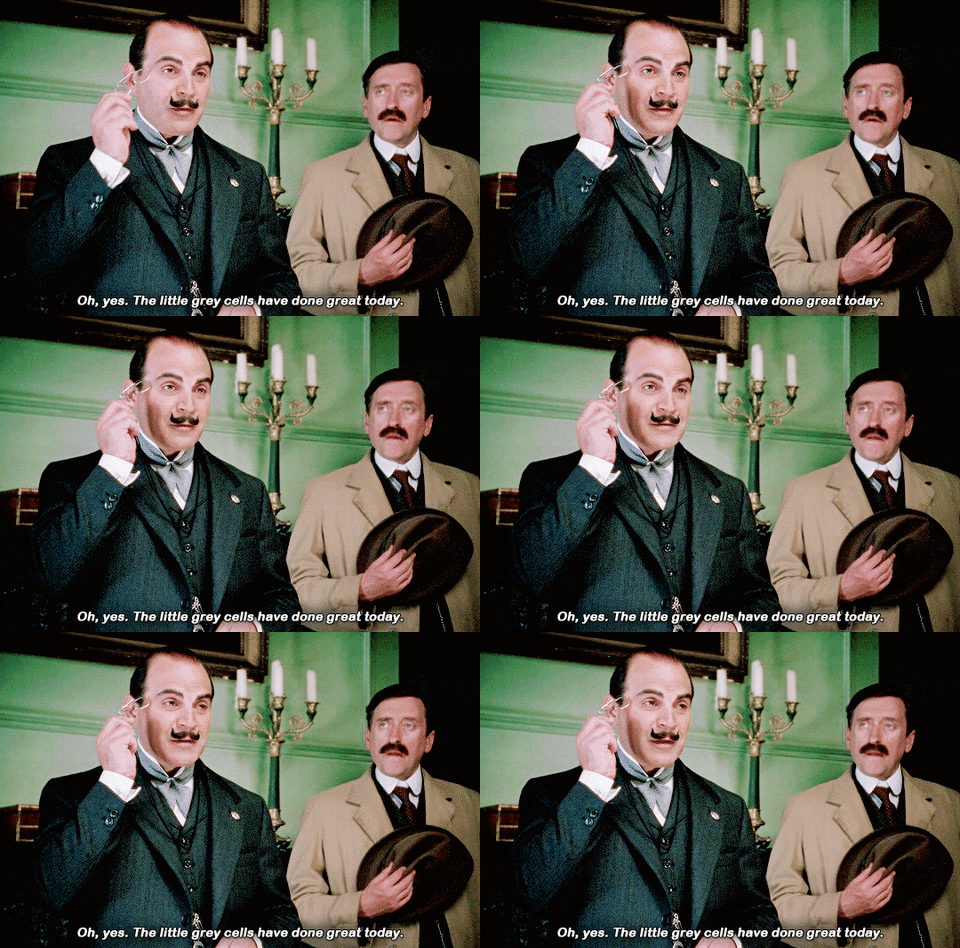
Hercule Poirot is described by Captain Hastings, who narrates here, as a cat with green eyes, ready to pounce when he has his aha moment and deduces whodunit. Early in Poirot’s career it is already apparent that he is steps ahead of the police, or at figures out the one key clue before they do. Since moving from Belgium to London, Poirot has made the acquaintances of Inspector Japp of Scotland Yard, a convenience when he is called to investigate and other principal figures may not know of his identity. Even Japp, in most of these cases, is only around to do Poirot’s investigating after the Belgian figures on the criminal, motive, and possible alibis. With Scotland Yard at his disposal to do background checks, Poirot is able to sit for hours in his suites, his grey cells hard at work, and nearly 100% of the time, he comes up with whodunit correctly before anyone else explores his avenues of deduction.
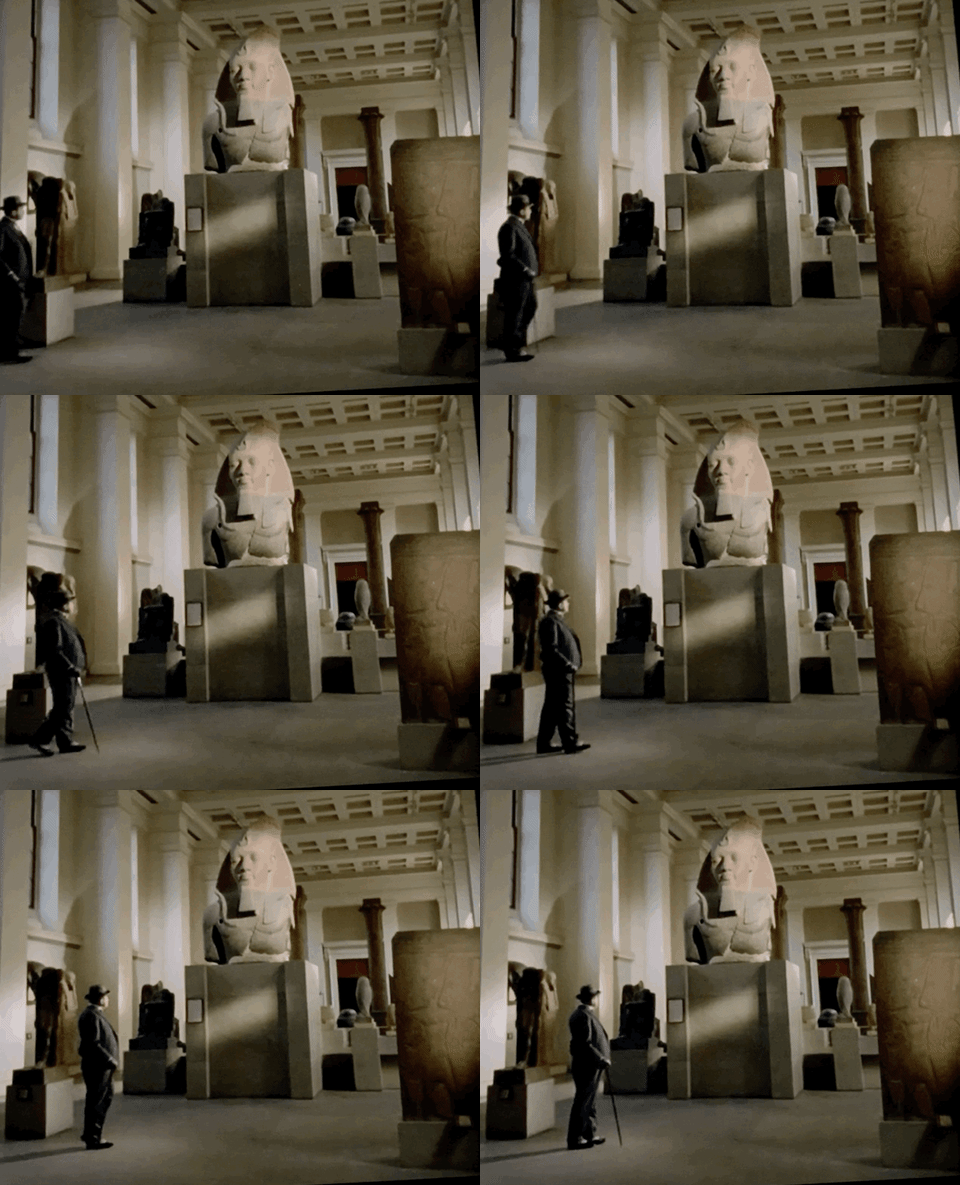
Although fascinated to pick apart Poirot’s detecting methods, I did find many of these cases to be similar. This is only the third of his cases, so Christie perhaps had not fully developed his character yet. There are fourteen cases that feature jewel heists, robberies, missing people, and a few murders. The cases that intrigued me the most were the ones out of the ordinary such as The Kidnapped Prime Minister, where Prime Minister MacAdam is supposed seized by the Germans en route to a key conference in Paris. Poirot is given twenty four hours and a vital fifteen minutes to locate the missing Prime Minister. Of course, he is located but Poirot’s reasoning process is diametrically opposed to anyone else on the case. With espionage involved in this case, at least there was some action involved. Most of the other cases lacked even that. The Adventure of the Egyptian Tomb also provided some time away from London. We find out that Poirot is not a good sea traveler, preferring his feet to be on land. While this case took Poirot and Hastings out of England, it was straight forward once Poirot met all of the principals involved. The location, however, set the stage for some of Christie’s later cases situated in the Middle East, a region of the world that she was fascinated by.
The Jewel Robbery at the Grand Metropolitan shows Poirot’s propensity to live a life of luxury. Hastings knew this and invited Poirot for a weekend by the sea. As with many later cases, it did not matter if Poirot was vacationing, crime just finds him. In this instance, it is a Mrs Opalsen who has a cherished pearl necklace stolen. She notes that if Poirot can’t find her necklace, then no one can. In other cases, women seek out Poirot’s services because he has the reputation of being the best, and these young women realize that his mind is far superior to theirs. The Case of the Missing Will and The Veiled Lady provide such instances, Poirot prevailing in both, with the latter providing a twist at the end. Even in these short stories with little time to develop a plot, Christie has made it a point to omit a key piece of information until the end. Even Hastings is baffled at times, leading Poirot to often state that the Captain rarely uses his grey cells. Hastings, as narrator, does admit to being stumped by Poirot’s methods, often coming to the same conclusions as the polices. Poirot notes on more than one occasion that 99 people out of 100 would come up with the same idea, and that is what makes him, Hercule Poirot, the best detective in the world. In Hastings’ eyes, Poirot might be conceited, but he is indeed the best, and never wrong.
With my first Poirot case of the year under my belt, I am looking forward to the rest of the cases featuring the Belgian sleuth I still have to read. As Christie developed his character over time, she also made it a point to develop the surroundings and principal players in the crime, creating a backdrop for whodunit before Poirot arrives on the scene. Readers knowing key information before Poirot starts his investigation makes it that much trickier for us to figure out whodunit before Poirot; we just think we know, and Poirot reveals a key clue that we never thought of. Perhaps one day I will deduce whodunit before Poirot does. I found it fascinating to read about his investigative methods, even in short story form. Poirot always knows, and here we have an insight as to the why. Until next time, Poirot is there.
🕵️♂️ 4 stars 🧐