

What do you think?

The Penguin Books of Short Stories
The Penguin Book of Japanese Short Stories
A major new anthology of great Japanese short stories introduced by Haruki Murakami.
This fantastically varied and exciting collection celebrates the great Japanese short story collection, from its origins in the nineteenth century to the remarkable practitioners writing today. Curated by Jay Rubin (who has himself freshly translated several of the stories) and introduced by Haruki Murakami this is a book which will be a revelation to many of its readers.
Short story writers already well-known to English-language readers are all included - Tanizaki, Akutagawa, Murakami, Mishima, Kawabata, Yoshimoto - but also many surprising new finds. From Tsushima Yuko's 'Flames' to Sawanishi Yuten's 'Filling Up with Sugar', from Hoshi Shin'ichi's 'Shoulder-Top Secretary' to Yoshimoto Banana's 'Bee Honey', The Penguin Book of Japanese Short Stories is filled with fear, charm, beauty and comedy.
This fantastically varied and exciting collection celebrates the great Japanese short story collection, from its origins in the nineteenth century to the remarkable practitioners writing today. Curated by Jay Rubin (who has himself freshly translated several of the stories) and introduced by Haruki Murakami this is a book which will be a revelation to many of its readers.
Short story writers already well-known to English-language readers are all included - Tanizaki, Akutagawa, Murakami, Mishima, Kawabata, Yoshimoto - but also many surprising new finds. From Tsushima Yuko's 'Flames' to Sawanishi Yuten's 'Filling Up with Sugar', from Hoshi Shin'ichi's 'Shoulder-Top Secretary' to Yoshimoto Banana's 'Bee Honey', The Penguin Book of Japanese Short Stories is filled with fear, charm, beauty and comedy.
518 pages, Paperback
First published September 11, 2018
About the author
Jay Rubin
63 books322 followersJay Rubin is an American academic and translator. He is most notable for being one of the main translators into English of the works of the Japanese novelist Haruki Murakami. He has also written a guide to Japanese, Making Sense of Japanese, and a biographical literary analysis of Murakami.
Ratings & Reviews
Friends & Following
Create a free account to discover what your friends think of this book!
Community Reviews
Displaying 1 - 30 of 379 reviews

September 28, 2018
Since I've read every word Haruki Murakami has published in English I felt obligated to read his introduction once it showed up in the preview on Amazon. People saying "Haruki Murakami is my favorite author" has now become a cliche. But cliches can sometimes be true.
His introduction was nice and long and juicy. My impression of the collection of stories was that they were chosen, as Mr. Rubin explains, for the casual reader. Maybe it's pretentious but I consider myself more than a casual reader of Japanese fiction. I have an entire bookcase devoted to Japanese literature.
I like to imagine what stories I would have picked if I had the opportunity to compile an anthology of this kind.
There are new translations, which are sorely needed in this day and age. Akutagawa's previously untranslated short story "General Kim" was my favorite inclusion. Out of Akutagawa's 300+ works only 77 have thus far been translated into English. Since he's one of my other favorite authors I've actually gone to extremely nerdy lengths to read them all. I wish Rubin would just translate all of Akutagawa already. And maybe Bakin while he's at it.
I am glad that he put a lot of translating into this volume, but why include "Patriotism" and the first chapter of Sanshiro? Not only do they take up valuable space but they are available almost anywhere. I buy anthologies because they contain stories on the brink of obscurity. Where are all the translations of Hiromi Kawakami or Junnosuke Yoshiyuki? I would have liked to see something new from Ryu Murakami, who never gets anthologized but is one of the best Japanese writers of all time.
I gave this book four stars because it was excellent, but it really could've gotten five. The two stories by Haruki are previously available, but luckily we get something new by Banana Yoshimoto and Akutagawa which save this collection, in my opinion, from being a rehashing. It's hard to find Kenji Nakagami and we are treated to a new story by Mieko Kawakami, which was appreciated, so while I would not recommend this for your shelf if you can only have one Japanese literature anthology - it's hard to beat the two volume Columbia anthology - I'd put it in my top 5 Japanese literature anthologies. Yes, I am that much of a geek that I would create a top five.
Though this is a step in the right direction there's about 3000 miles of stepping left to do if we are ever going to get the most out of J. Lit. I keep asking myself, why can't I just read Japanese? Oh yeah, it's insanely difficult. Anyway, check it out if you are a fan.
His introduction was nice and long and juicy. My impression of the collection of stories was that they were chosen, as Mr. Rubin explains, for the casual reader. Maybe it's pretentious but I consider myself more than a casual reader of Japanese fiction. I have an entire bookcase devoted to Japanese literature.
I like to imagine what stories I would have picked if I had the opportunity to compile an anthology of this kind.
There are new translations, which are sorely needed in this day and age. Akutagawa's previously untranslated short story "General Kim" was my favorite inclusion. Out of Akutagawa's 300+ works only 77 have thus far been translated into English. Since he's one of my other favorite authors I've actually gone to extremely nerdy lengths to read them all. I wish Rubin would just translate all of Akutagawa already. And maybe Bakin while he's at it.
I am glad that he put a lot of translating into this volume, but why include "Patriotism" and the first chapter of Sanshiro? Not only do they take up valuable space but they are available almost anywhere. I buy anthologies because they contain stories on the brink of obscurity. Where are all the translations of Hiromi Kawakami or Junnosuke Yoshiyuki? I would have liked to see something new from Ryu Murakami, who never gets anthologized but is one of the best Japanese writers of all time.
I gave this book four stars because it was excellent, but it really could've gotten five. The two stories by Haruki are previously available, but luckily we get something new by Banana Yoshimoto and Akutagawa which save this collection, in my opinion, from being a rehashing. It's hard to find Kenji Nakagami and we are treated to a new story by Mieko Kawakami, which was appreciated, so while I would not recommend this for your shelf if you can only have one Japanese literature anthology - it's hard to beat the two volume Columbia anthology - I'd put it in my top 5 Japanese literature anthologies. Yes, I am that much of a geek that I would create a top five.
Though this is a step in the right direction there's about 3000 miles of stepping left to do if we are ever going to get the most out of J. Lit. I keep asking myself, why can't I just read Japanese? Oh yeah, it's insanely difficult. Anyway, check it out if you are a fan.

December 18, 2018
I spent a while with this collection and I think on the whole it's stronger than the sum of its parts. Apparently my average rating for these 34 stories was 3.35 stars, but it still feels like a 4-star collection to me, because it absolutely got its job done: introducing me to a number of authors whose work I'm interested in exploring further.
Curated by Jay Rubin and introduced by Murakami, this collection is arranged thematically rather than chronologically: there's a section on natural and man-made disasters, a section whose stories are unified by the theme of dread, and a section on the values of Japanese soldiers, among others. Jay Rubin writes in his forward that he wanted this collection to reflect his personal taste rather than serving as a more generic primer to Japanese lit, and for better or worse I think that shows: I didn't understand why every single one of these stories was chosen, but I did feel like I got a clear sense of Rubin as a reader, and why shouldn't an anthology say something about its editor?
There were three main standouts for me:
(1) Dreams of Love, Etc by Kawakami Mieko: A woman is invited into her neighbor's house, and her neighbor confesses that although she loves playing the piano, she's unable to play a certain piece straight through when someone is watching, and she entreats the protagonist to sit with her until she's able to play the piece perfectly. Compelling, sensual, and subtle, but still rewarding.
(2) Hell Screen by Akutagawa Ryunosuke: The talented but contemptible painter Yoshihide is commissioned to create a folding screen that depicts Buddhist hell. As he's unable to paint an image that he hasn't seen firsthand, he inflicts torture on his apprentices. The climax, though it's easy to see it coming from a mile away, still somehow manages to shock, with horrifying imagery that isn't easily forgotten.
(3) Insects by Seirai Yuichi: Set against the backdrop of the bombing of Nagasaki, Insects follows an elderly woman whose lifelong love had died fifteen years ago, after having been married to another woman. Brutal and tender all at once.
There are a handful of other noteworthy stories worth mentioning. The story that opens the collection, Tanizaki Jun'ichiro's The Story of Tomoda and Matsunaga reads like a film noir mystery but ultimately takes a philosophical turn, ruminating on the conflicting values of the East and the West. Factory Town by Betsayaku Minoru is wry and clever and achieves a lot with its brevity. American Hijiki by Nasaka Akiyuki provides a frighteningly honest look at Japanese post-war psychology. And of course, Mishima Yukio's Patriotism and its graphic, visceral depiction of seppuku will probably haunt me to my dying day.
But I have two main criticisms of this collection: one about its composition and one about its selection. While I enjoyed the thematic arrangement, why oh why weren't the stories' publication dates readily accessible?! All the dates were listed somewhere in Murakami's introduction, but it took a lot of flipping back and forth and I would have liked the date listed alongside the title, author, and translator. The second and larger criticism is that only 9 of these 34 stories are by women, so needless to say we can do better than a mere 26%.
Still, I found this to be a really solid introductory collection for anyone looking to expand their horizons and discover some new favorite Japanese writers, some seminal and some more obscure.
Thanks so much to Penguin for the copy provided in exchange for an honest review.
Curated by Jay Rubin and introduced by Murakami, this collection is arranged thematically rather than chronologically: there's a section on natural and man-made disasters, a section whose stories are unified by the theme of dread, and a section on the values of Japanese soldiers, among others. Jay Rubin writes in his forward that he wanted this collection to reflect his personal taste rather than serving as a more generic primer to Japanese lit, and for better or worse I think that shows: I didn't understand why every single one of these stories was chosen, but I did feel like I got a clear sense of Rubin as a reader, and why shouldn't an anthology say something about its editor?
There were three main standouts for me:
(1) Dreams of Love, Etc by Kawakami Mieko: A woman is invited into her neighbor's house, and her neighbor confesses that although she loves playing the piano, she's unable to play a certain piece straight through when someone is watching, and she entreats the protagonist to sit with her until she's able to play the piece perfectly. Compelling, sensual, and subtle, but still rewarding.
(2) Hell Screen by Akutagawa Ryunosuke: The talented but contemptible painter Yoshihide is commissioned to create a folding screen that depicts Buddhist hell. As he's unable to paint an image that he hasn't seen firsthand, he inflicts torture on his apprentices. The climax, though it's easy to see it coming from a mile away, still somehow manages to shock, with horrifying imagery that isn't easily forgotten.
(3) Insects by Seirai Yuichi: Set against the backdrop of the bombing of Nagasaki, Insects follows an elderly woman whose lifelong love had died fifteen years ago, after having been married to another woman. Brutal and tender all at once.
There are a handful of other noteworthy stories worth mentioning. The story that opens the collection, Tanizaki Jun'ichiro's The Story of Tomoda and Matsunaga reads like a film noir mystery but ultimately takes a philosophical turn, ruminating on the conflicting values of the East and the West. Factory Town by Betsayaku Minoru is wry and clever and achieves a lot with its brevity. American Hijiki by Nasaka Akiyuki provides a frighteningly honest look at Japanese post-war psychology. And of course, Mishima Yukio's Patriotism and its graphic, visceral depiction of seppuku will probably haunt me to my dying day.
But I have two main criticisms of this collection: one about its composition and one about its selection. While I enjoyed the thematic arrangement, why oh why weren't the stories' publication dates readily accessible?! All the dates were listed somewhere in Murakami's introduction, but it took a lot of flipping back and forth and I would have liked the date listed alongside the title, author, and translator. The second and larger criticism is that only 9 of these 34 stories are by women, so needless to say we can do better than a mere 26%.
Still, I found this to be a really solid introductory collection for anyone looking to expand their horizons and discover some new favorite Japanese writers, some seminal and some more obscure.
Thanks so much to Penguin for the copy provided in exchange for an honest review.

January 31, 2020
It’s hard to review a book of short stories with 35 of them. And I must say a number of the authors of the short stories are acknowledged by many to be masters of the Japanese short story – the oldest story in the collection dating back to 1898. There were some stories I did not like but “different strokes for different folks.” With that I will say several things:
• For those people who like Haruki Murakami, he wrote the Introduction for this book, and it is a rather lengthy but excellent synopses of the authors and the topics they chose to write on. It is over 22 pages long – so again for Haruki Murakami devotees, one will get an excellent piece of writing by him, as well as within the collection two of his short stories: ‘UFO in Kushiro’ and ‘The 1963/1982 Girl from Ipanema’.
• This is 504 pages of short stories. The curator of this collection does something that I think nicely “collects” the stories…rather than starting from the oldest story and ending at the most recently written, he categorizes the stories into threads or themes, so you can browse and pick and choose as you wish rather than feeling pressured in some way to start from the beginning and work your way to the end. Themes with number of stories within the them in parentheses are: ‘Japan and the West’ (3); ‘Loyal Warriors’ (2); ‘Men and Women’ (6, 5 of which are written by females); ‘Nature and Memory’ (5); 'Modern Life and Other Nonsense’ (5); Dread (3); ‘Disasters, Natural and Man-made’ (10, 1 on the great Kanto earthquake of 1923, 2 of the atomic bombings in World War II, 3 on post-war Japan, 1 on the Kobe earthquake, and 3 on the Tohuko earthquake, Tsunami and nuclear Meltdown).
• I was attracted to this book because I am enamored with Yoko Ogawa’s writings (Revenge; The Memory Police; The Housekeeper and the Professor; The Diving Pool) and I saw that there was a short story by her in this collection not available anywhere else so that informed by decision to purchase this book: The Tale of the House of Physics.
• Banana Yoshimoto (Kitchen) had a short story in the collection that was very nice: ‘Bee Honey.’
• Authors were listed with their last names first as is the custom in Japan.
• One of the stories I liked the most was by an author who rarely wrote short stories…he is known for translating American literature into Japanese for Japanese audiences (some authors: Paul Auster, Steven Millhauser, Stuart Dybeck): his name (last name first) is Shibata Motoyuki and the story was ‘Cambridge Circus.” So so clever!
• The book was edited by Jay Rubin (he has edited several of Marakami’s works) and his rationale for the 37 stories he chose seemed good to me: “One potential drawback to compiling a historical anthology of a nation’s literature is that the editor is likely to feel obligated to include certain works or writers because of their generally recognized ‘importance’ in the developmental scheme of things without regard to his/her own personal response to the work. The reader of this collection can be assured that all the works here have been chosen because the editor has been unable to forget them, in some cases for decades, or has found them forming a knot in the solar plexus or inspiring a laugh or a pang of sorrow each time they have come spontaneously to mind over the years."
If anybody wants a list of all 37 stories and authors let me know. 😊
• For those people who like Haruki Murakami, he wrote the Introduction for this book, and it is a rather lengthy but excellent synopses of the authors and the topics they chose to write on. It is over 22 pages long – so again for Haruki Murakami devotees, one will get an excellent piece of writing by him, as well as within the collection two of his short stories: ‘UFO in Kushiro’ and ‘The 1963/1982 Girl from Ipanema’.
• This is 504 pages of short stories. The curator of this collection does something that I think nicely “collects” the stories…rather than starting from the oldest story and ending at the most recently written, he categorizes the stories into threads or themes, so you can browse and pick and choose as you wish rather than feeling pressured in some way to start from the beginning and work your way to the end. Themes with number of stories within the them in parentheses are: ‘Japan and the West’ (3); ‘Loyal Warriors’ (2); ‘Men and Women’ (6, 5 of which are written by females); ‘Nature and Memory’ (5); 'Modern Life and Other Nonsense’ (5); Dread (3); ‘Disasters, Natural and Man-made’ (10, 1 on the great Kanto earthquake of 1923, 2 of the atomic bombings in World War II, 3 on post-war Japan, 1 on the Kobe earthquake, and 3 on the Tohuko earthquake, Tsunami and nuclear Meltdown).
• I was attracted to this book because I am enamored with Yoko Ogawa’s writings (Revenge; The Memory Police; The Housekeeper and the Professor; The Diving Pool) and I saw that there was a short story by her in this collection not available anywhere else so that informed by decision to purchase this book: The Tale of the House of Physics.
• Banana Yoshimoto (Kitchen) had a short story in the collection that was very nice: ‘Bee Honey.’
• Authors were listed with their last names first as is the custom in Japan.
• One of the stories I liked the most was by an author who rarely wrote short stories…he is known for translating American literature into Japanese for Japanese audiences (some authors: Paul Auster, Steven Millhauser, Stuart Dybeck): his name (last name first) is Shibata Motoyuki and the story was ‘Cambridge Circus.” So so clever!
• The book was edited by Jay Rubin (he has edited several of Marakami’s works) and his rationale for the 37 stories he chose seemed good to me: “One potential drawback to compiling a historical anthology of a nation’s literature is that the editor is likely to feel obligated to include certain works or writers because of their generally recognized ‘importance’ in the developmental scheme of things without regard to his/her own personal response to the work. The reader of this collection can be assured that all the works here have been chosen because the editor has been unable to forget them, in some cases for decades, or has found them forming a knot in the solar plexus or inspiring a laugh or a pang of sorrow each time they have come spontaneously to mind over the years."
If anybody wants a list of all 37 stories and authors let me know. 😊

May 18, 2021
Many thanks to JimZ for putting this collection on my radar: His review is so thorough, there’s not much more I can say, except for relating my own experience.
I read the opening section of Haruki Murakami’s excellent introduction first and then read each paragraph devoted to each writer/story right before I read each corresponding story. There were only a few I’d previously read: “Patriotism,” Yukio Mishima’s graphic story of seppuku, and two short tales by Murakami himself. He didn’t select these stories; in fact he says most of them he hadn't read before. (He had a lot of reading and writing to do!)
Most of the writers were new to me, but I was pleased to read the story by one of my favorites, Yōko Ogawa, as well as the story by Mieko Kawakami, author of Breasts and Eggs, a novel I recently read, which is in a very different style. I believe there’s only one story in the collection that’s taken from a longer work, which seemed kind of like “cheating” to me, but I’m sure Jay Rubin, the editor, had his reasons.
Because I read this book straight through, I'm of course remembering the last stories (several wonderful surrealistic responses to man-made and natural disasters) more than the ones in the beginning. Yuten Sawanishi’s “Filling Up with Sugar”, placed a bit more than halfway through the volume, lingers in my memory as well. Overall, I loved this collection, such a pleasure to find such amazing writers, even when through the necessity of translations.
I read the opening section of Haruki Murakami’s excellent introduction first and then read each paragraph devoted to each writer/story right before I read each corresponding story. There were only a few I’d previously read: “Patriotism,” Yukio Mishima’s graphic story of seppuku, and two short tales by Murakami himself. He didn’t select these stories; in fact he says most of them he hadn't read before. (He had a lot of reading and writing to do!)
Most of the writers were new to me, but I was pleased to read the story by one of my favorites, Yōko Ogawa, as well as the story by Mieko Kawakami, author of Breasts and Eggs, a novel I recently read, which is in a very different style. I believe there’s only one story in the collection that’s taken from a longer work, which seemed kind of like “cheating” to me, but I’m sure Jay Rubin, the editor, had his reasons.
Because I read this book straight through, I'm of course remembering the last stories (several wonderful surrealistic responses to man-made and natural disasters) more than the ones in the beginning. Yuten Sawanishi’s “Filling Up with Sugar”, placed a bit more than halfway through the volume, lingers in my memory as well. Overall, I loved this collection, such a pleasure to find such amazing writers, even when through the necessity of translations.

January 29, 2021
Maybe 4.5. I thoroughly enjoyed this - a really standout, interesting anthology. There were a few stories that didn't quite land for me but the majority were amazing. My favourites were probably 'Peaches', 'The Tale of the House of Physics', 'Unforgettable People' and 'Factory Town'.
July 24, 2020
I think the editor of this anthology and I have quite different taste in short stories. That is why I’ve had a mixed experience reading this book. Many of these stories are more real than life which I do not really appreciate in short fiction. There are two high simply taken from the longer novels. Also I was not convinced by the thematic structure. Around 40% of the whole is appeared to be devoted to disasters. Out of those, the two long ones are more or less straight survivors accounts.
On the positive side, around 6-7 stories did stand out for me. The majority of them were by women. I might expend on this when I have more time.
And I would not advice to read the intro by Murakami until after you finish the book. It is very detailed and might “spoil” some of the stories. But after the main book, it is quite good read. Though of course for Murakami it has to be quite a bit about him.
On the positive side, around 6-7 stories did stand out for me. The majority of them were by women. I might expend on this when I have more time.
And I would not advice to read the intro by Murakami until after you finish the book. It is very detailed and might “spoil” some of the stories. But after the main book, it is quite good read. Though of course for Murakami it has to be quite a bit about him.

April 12, 2019
Introduction, by Murakami Haruki
Editorial Note, by Jay Rubin
Further Reading
Note on Japanese Name Order and Pronunciation
Japan and the West
Tanizaki Jun'ichirō
--The Story of Tomoda and Matsunaga
Nagai Kafū
--Behind the Prison
Natsume Sōseki
--Sanshirō
Loyal Warriors
Mori Ōgai
--The Last Testament of Okitsu Yagoemon
Mishima Yukio
--Patriotism
Men and Women
Tsushima Yūko
--Flames
Kōno Taeko
--In the Box
Nakagami Kenji
--Remaining Flowers
Yoshimoto Banana
--Bee Honey
Ohba Minako
--The Smile of a Mountain Witch
Enchi Fumiko
--A Bond for Two Lifetimes -- Gleanings
Nature and Memory
Abe Akira
--Peaches
Ogawa Yōko
--The Tale of the House of Physics
Kunikida Doppo
--Unforgettable People
Murakami Haruki
--The 1963/1982 Girl from Ipanema
Shibata Motoyuki
--Cambridge Circus
Modern Life and Other Nonsense
Uno Kōji
--Closet LLB
Genji Keita
--Mr English
Betsuyaku Minoru
--Factory Town
Kawakami Mieko
--Dreams of Love, Etc.
Hoshi Shin'ichi
--Shoulder-Top Secretary
Dread
Akutagawa Ryūnosuke
--Hell Screen
Sawanishi Yūten
--Filling Up with Sugar
Uchida Hyakken
--Kudan
Disasters, Natural and Man-Made
The Great Kantō Earthquake, 1923
Akutagawa Ryūnosuke
--The Great Earthquake
--General Kim
The Atomic Bombings, 1945
Ōta Yōko
--Hiroshima, City of Doom
Seirai Yūichi
--Insects
Post-War Japan
Kawabata Yasunari
--The Silver Fifty-Sen Pieces
Nosaka Akiyuki
--American Hijiki
Hoshino Tomoyuki
--Pink
The Kobe Earthquake, 1995
Murakami Haruki
--UFO in Kushiro
The Tōhoku Earthquake, Tsunami and Nuclear Meltdown, 2011
Saeki Kazumi
--Weather-Watching Hill
Matsuda Aoko
--Planting
Satō Yūya
--Same as Always
Notes
Glossary
Acknowledgements
Editorial Note, by Jay Rubin
Further Reading
Note on Japanese Name Order and Pronunciation
Japan and the West
Tanizaki Jun'ichirō
--The Story of Tomoda and Matsunaga
Nagai Kafū
--Behind the Prison
Natsume Sōseki
--Sanshirō
Loyal Warriors
Mori Ōgai
--The Last Testament of Okitsu Yagoemon
Mishima Yukio
--Patriotism
Men and Women
Tsushima Yūko
--Flames
Kōno Taeko
--In the Box
Nakagami Kenji
--Remaining Flowers
Yoshimoto Banana
--Bee Honey
Ohba Minako
--The Smile of a Mountain Witch
Enchi Fumiko
--A Bond for Two Lifetimes -- Gleanings
Nature and Memory
Abe Akira
--Peaches
Ogawa Yōko
--The Tale of the House of Physics
Kunikida Doppo
--Unforgettable People
Murakami Haruki
--The 1963/1982 Girl from Ipanema
Shibata Motoyuki
--Cambridge Circus
Modern Life and Other Nonsense
Uno Kōji
--Closet LLB
Genji Keita
--Mr English
Betsuyaku Minoru
--Factory Town
Kawakami Mieko
--Dreams of Love, Etc.
Hoshi Shin'ichi
--Shoulder-Top Secretary
Dread
Akutagawa Ryūnosuke
--Hell Screen
Sawanishi Yūten
--Filling Up with Sugar
Uchida Hyakken
--Kudan
Disasters, Natural and Man-Made
The Great Kantō Earthquake, 1923
Akutagawa Ryūnosuke
--The Great Earthquake
--General Kim
The Atomic Bombings, 1945
Ōta Yōko
--Hiroshima, City of Doom
Seirai Yūichi
--Insects
Post-War Japan
Kawabata Yasunari
--The Silver Fifty-Sen Pieces
Nosaka Akiyuki
--American Hijiki
Hoshino Tomoyuki
--Pink
The Kobe Earthquake, 1995
Murakami Haruki
--UFO in Kushiro
The Tōhoku Earthquake, Tsunami and Nuclear Meltdown, 2011
Saeki Kazumi
--Weather-Watching Hill
Matsuda Aoko
--Planting
Satō Yūya
--Same as Always
Notes
Glossary
Acknowledgements
February 13, 2019
This is by far one of the most fulfilling and rewarding collection I’ve ever read in my entire life. Introduced by none other than Murakami, edited by Jay Rubin and, more importantly, I am introduced to new Japanese authors, spanning from classics to modern authors that I am not familiar with. What could possibly go wrong with this?
The stories ranged from the 1890s to the present day and grouped together in themes - Japan and The West, Loyal Warriors, Men and Women, Nature and Memory, Modern Life and Othe Nonsense, Dread and Disasters, Natural and Man-Made. The following is the list of my favourite stories in the anthology:
1. The Story of Tomoda and Matsunaga by Jun’ichiro Tanizaki
2. Patriotism by Yukio Mishima
3. Remaining Flowers by Nakagami Kenji
4. Hell Screen by Ryūnosuke Akutagawa
5. Filling Up With Sugar by Yūten Sawanishi
6. Hiroshima, City of Doom by Ōta Yōko.
I also loved that it includes notes on Japanese name order and pronunciation, notes on some unfamiliar terms or incidents that made the whole reading experience even better than it already was. This astounding anthology is very enlightening in a sense, and I’m pretty sure I would revisit this gem in the future. Highly recommended for those who are into Japanese literature!
The stories ranged from the 1890s to the present day and grouped together in themes - Japan and The West, Loyal Warriors, Men and Women, Nature and Memory, Modern Life and Othe Nonsense, Dread and Disasters, Natural and Man-Made. The following is the list of my favourite stories in the anthology:
1. The Story of Tomoda and Matsunaga by Jun’ichiro Tanizaki
2. Patriotism by Yukio Mishima
3. Remaining Flowers by Nakagami Kenji
4. Hell Screen by Ryūnosuke Akutagawa
5. Filling Up With Sugar by Yūten Sawanishi
6. Hiroshima, City of Doom by Ōta Yōko.
I also loved that it includes notes on Japanese name order and pronunciation, notes on some unfamiliar terms or incidents that made the whole reading experience even better than it already was. This astounding anthology is very enlightening in a sense, and I’m pretty sure I would revisit this gem in the future. Highly recommended for those who are into Japanese literature!

April 4, 2023
Ich habe "The Penguin Book of Japanese Short Stories" geschenkt bekommen. Es lag dann allerdings länger auf meinem Stapel. Ich war unsicher, ob ich mit der englischen Übersetzung japanischer Texte zurecht komme. Glücklicherweise habe ich mich jetzt endlich herangetraut. Und siehe da: es hat funktioniert. Ich habe sicherlich nicht jede Nuance mitbekommen, aber im Großen und Ganzen, konnte ich die Geschichten nachvollziehen. Wer also einigermaßen gut mit amerikanischen oder englischen Büchern im Original klarkommt, wird auch die Texte in dieser Anthologie genießen können.
Die vierunddreissig Geschichten in diesem Band geben einen sehr guten Überblick über die neuere japanische Literatur. Die älteste Geschichte ist von 1898, die neueste von 2014. Die Geschichten sind jedoch nicht chronologisch, sondern thematisch geordnet.
Die Abschnitte sind:
-Japan and the West
-Loyal Warriors
-Men and Women
-Nature and Memory
-Modern Life and Others Nonsense
-Dread
-Disasters, Natural and Man-Made
Die Länge der einzelnen Geschichten reicht von fünf Seiten bis zu sechzig Seiten. Einige Texte würde ich eher als Novelle und weniger als Kurzgeschichte bezeichnen, was der Vielfältigkeit der Anthologie aber zuträglich ist. Es sind Texte von mir bekannten Autoren wie Mishima, Yoshimoto oder Murakami, der auch das Vorwort geschrieben hat, und Texte von mir bisher unbekannten Autoren wie Tanizaki oder Nosaka enthalten.
Um zu einer Wertung zu kommen, habe ich jede Geschichte einzeln bewertet, und am Ende den Durchschnitt berechnet. Dabei lande ich bei einem Wert von 3,8. Ich habe entsprechend auf eine Wertung von 4 Sternen aufgerundet.
Die vollständige Liste der Geschichten und der jeweiligen Autoren und meine Einzelwertungen (Namen werden in diesem Buch in der in Japan üblichen Reihenfolge - erst Nachname, dann Vorname - verwendet. Ich verwende diese Form auch in der Liste für die Namen der Autoren):
The Story of Tomoda and Matsunaga von Tanizaki Jun'Ichirō
*****
Behind the Prison von Nagai Kafū
***
Sanshirō von Natsume Sōseki
****
The Last Testament of Okitsu Yagoemon von Mori Ōgai
**
Patriotism von Mishima Yukio
***
Flames von Tsushima Yūko
***
In the Box von Kōno Taeko
***
Remaining Flowers von Nakagami Kenji
**
Bee Honey von Yoshimoto Banana
*****
The Smile of a Mountain Witch von Ohba Minako
***
A Bond for Two Lifetimes - Gleanings von Enchi Fumiko
****
Peaches von Abe Akira
***
The Tale of the House of Physics von Ogawa Yōko
*****
Unforgettable People von Kunikida Doppo
***
The 1963/1982 Girl from Ipanema von Murakami Haruki
****
Cambridge Circus von Shibata Motoyuki
*****
Closet LLB von Uno Kōji
****
Mr English von Genji Keita
****
Factory Town von Betsuyaku Minoru
*****
Dreams of Love, Etc. von Kawakami Mieko
****
Shoulder-Top Secretary von Hoshi Shin'Ichi
****
Hell Screen von Akutagawa Ryūnosuke
***
Filling Up with Sugar von Sawanishi Yūten
****
Kudan von Uchida Hyakken
****
The Great Earthquake and General Kim von Akutagawa Ryūnosuke
**
Hiroshima, City of Doom von Ōta Yōko
****
Insects von Seirai Yūichi
*****
The Silver Fifty-Sen Pieces von Kawabata Yasunari
****
American Hijiki von Nosaka Akiyuki
****
Pink von Hoshino Tomoyuki
****
UFO in Kushiro von Murakami Haruki
*****
Weather-Watching Hill von Saeki Kazumi
****
Planting von Matsuda Aoko
****
Same as Always von Satō Yūya
*****
Die vierunddreissig Geschichten in diesem Band geben einen sehr guten Überblick über die neuere japanische Literatur. Die älteste Geschichte ist von 1898, die neueste von 2014. Die Geschichten sind jedoch nicht chronologisch, sondern thematisch geordnet.
Die Abschnitte sind:
-Japan and the West
-Loyal Warriors
-Men and Women
-Nature and Memory
-Modern Life and Others Nonsense
-Dread
-Disasters, Natural and Man-Made
Die Länge der einzelnen Geschichten reicht von fünf Seiten bis zu sechzig Seiten. Einige Texte würde ich eher als Novelle und weniger als Kurzgeschichte bezeichnen, was der Vielfältigkeit der Anthologie aber zuträglich ist. Es sind Texte von mir bekannten Autoren wie Mishima, Yoshimoto oder Murakami, der auch das Vorwort geschrieben hat, und Texte von mir bisher unbekannten Autoren wie Tanizaki oder Nosaka enthalten.
Um zu einer Wertung zu kommen, habe ich jede Geschichte einzeln bewertet, und am Ende den Durchschnitt berechnet. Dabei lande ich bei einem Wert von 3,8. Ich habe entsprechend auf eine Wertung von 4 Sternen aufgerundet.
Die vollständige Liste der Geschichten und der jeweiligen Autoren und meine Einzelwertungen (Namen werden in diesem Buch in der in Japan üblichen Reihenfolge - erst Nachname, dann Vorname - verwendet. Ich verwende diese Form auch in der Liste für die Namen der Autoren):
The Story of Tomoda and Matsunaga von Tanizaki Jun'Ichirō
*****
Behind the Prison von Nagai Kafū
***
Sanshirō von Natsume Sōseki
****
The Last Testament of Okitsu Yagoemon von Mori Ōgai
**
Patriotism von Mishima Yukio
***
Flames von Tsushima Yūko
***
In the Box von Kōno Taeko
***
Remaining Flowers von Nakagami Kenji
**
Bee Honey von Yoshimoto Banana
*****
The Smile of a Mountain Witch von Ohba Minako
***
A Bond for Two Lifetimes - Gleanings von Enchi Fumiko
****
Peaches von Abe Akira
***
The Tale of the House of Physics von Ogawa Yōko
*****
Unforgettable People von Kunikida Doppo
***
The 1963/1982 Girl from Ipanema von Murakami Haruki
****
Cambridge Circus von Shibata Motoyuki
*****
Closet LLB von Uno Kōji
****
Mr English von Genji Keita
****
Factory Town von Betsuyaku Minoru
*****
Dreams of Love, Etc. von Kawakami Mieko
****
Shoulder-Top Secretary von Hoshi Shin'Ichi
****
Hell Screen von Akutagawa Ryūnosuke
***
Filling Up with Sugar von Sawanishi Yūten
****
Kudan von Uchida Hyakken
****
The Great Earthquake and General Kim von Akutagawa Ryūnosuke
**
Hiroshima, City of Doom von Ōta Yōko
****
Insects von Seirai Yūichi
*****
The Silver Fifty-Sen Pieces von Kawabata Yasunari
****
American Hijiki von Nosaka Akiyuki
****
Pink von Hoshino Tomoyuki
****
UFO in Kushiro von Murakami Haruki
*****
Weather-Watching Hill von Saeki Kazumi
****
Planting von Matsuda Aoko
****
Same as Always von Satō Yūya
*****

April 17, 2023
230417: I have read that short stories are often considered higher art form, better characterisation, better style, high prestige for Japanese authors. this collection certainly renews my appreciation of japan lit. this is the twelfth complete anthology of japanese lit Anthology of Japanese Literature: From the Earliest Era to the Mid-Nineteenth Century, Modern Japanese Stories: An Anthology, Japanese Tales from Times Past: Stories of Fantasy and Folklore from the Konjaku Monogatari Shu, The Shōwa Anthology: Modern Japanese Short Stories, The Oxford Book of Japanese Short Stories, the last of which is probably my favourite. I also have two sff collections The Best Japanese Science Fiction Stories, The Stories of Ibis, and one modernist collection Modanizumu: Modernist Fiction from Japan, 1913–1938... in general, I love j lit, particularly short stories and novellas...
rather than chronologically, this collection is ordered thematically: Japan and the west, loyal warriors, men and women, nature and memory, modern life and other nonsense, dread, disasters, man-made and natural. some authors and works I have read before so read again, Tanizakii, Akutagawa, Kawabata, Mishima, Tsushima, Enchi, Ogawa, Murakami, Mieko, Uchida, there are three on the atom bombing, two on Fukushima tsunami, several which have that j lit surrealism and satire. overall great collection...
rather than chronologically, this collection is ordered thematically: Japan and the west, loyal warriors, men and women, nature and memory, modern life and other nonsense, dread, disasters, man-made and natural. some authors and works I have read before so read again, Tanizakii, Akutagawa, Kawabata, Mishima, Tsushima, Enchi, Ogawa, Murakami, Mieko, Uchida, there are three on the atom bombing, two on Fukushima tsunami, several which have that j lit surrealism and satire. overall great collection...
November 22, 2021
Was enjoying this dip into Japanese story telling, from the late 19C to now-ish, arranged by theme, when the library recalled the book. To be fair I had renewed it once, but expected to keep it another couple of months and wasn't rushing through it. Probably read about half the stories and enjoyed three quarters of those. I'll get it out again and finish it off. Really enjoyable and recommended.

August 27, 2018
This is a collection of both well known to me Japanese authors, as well as those I have not heard of before. I enjoyed this collection, with an introduction by a favorite author, Murakami. As always, I enjoyed some more than others.

May 3, 2020
Most short story collections end up being boring because the editor can't escape the "I will take out the story I really love, because this story must be in, because it is [insert here] more important/historically significant/approved by literally criticism/more popular etc."
Rubin-sensei overcame the need to explain to anyone why he chose these stories by these authors and that is the secret to the collection's freshness and enjoyability.
Because I like them, *shrug*, could be the answer. I get it Rubin, I like a Steinbeck "insignificant" novel more than his "significant" novels and noone can convince me otherwise. So, if someone asked me why is Steinbeck important, I would lead them to The Grapes of Wrath but if they asked why I like Steinbeck, I'd say: The Wayward Bus.
Rather than arranging the stories chronologically, he arranges them thematically, he creates an editing narrative, short story collection editors should keep notes here. I have favorites all over, but the best sections for me were Men and Women and the most heartwretching ones, the ones that gave me nightmares: Disasters, Natural and Man-made.
I also realized that I prefer Japanese women writers more than men, maybe as Murakami mentions in the Introduction (yes the collection has a Murakami Introduction), it is because
Favorite stories:
Yukio Mishima Patriotism
A story of a couple comitting seppuku full of lyrical tension and ...beauty?
Kōno Taeko In the Box
A lesson of making your reader stand on edge in a couple of pages, plot-less, story-less, tension-full. The art of suggestion.
Oba Minako The Smile of a Mountain Witch
Might be my favorite story ever, for obvious subjective reasons, for being able to connect 100%, for feeling it was written just for me, but for objective reasons too, like how creativily it mixes the folk tale standard with contemporary sharp theme and language. I'm going to read this again a couple times. Researching Oba, I found out that she was mainly a poet, a feminist and a social critic. All three qualities manifest in this short story.
Ogawa Yōko The Tale of the House of Physics
Ogawa is always undescribable and uncategorizable, breathing life into the bizarre found in common stuff. I love her.
Akutagawa Ryūnosuke Hell Screen
I'm not surprised that the most prominent Japanese literary award has his name. I need to read his whole corpus. His ability to invoke terrible beauty and intense emotions is unparalleled.
Sawanishi Yūten Filling Up with Sugar
Starts with the phrase "The vagina was the first part of her mother’s body that turned to sugar – probably because it was the one organ for which her mother no longer had any use." and let's all agree , Murakami included, that this is the most captivating and weird first sentence, we've all read in the last few years. Excellent story.
Ōta Yōko Hiroshima, City of Doom
Nightmares
Seirai Yūichi Insects
Nightmares and insects. This is my second favorite story. It starts as an atomic bomb memoir but it untangles a humanity rodeo in many different levels. You think you've read this type of story before but it will keep taking turns that surprise and excite.
Kawabata Yasunari The Silver Fifty-Sen Pieces
How to break a reader's heart in a couple of pages, while achieving literary perfection.
Matsuda Aoko Planting
Allegory done right. A woman "cosplays" and plants. [Enter tsunami]. Ends up planting fear.
Satō Yūya Same as Always
Allegory done right, volume 2. A woman wants to kill her baby, when the Fukushima incident happens, she finds the perfect way to do it...
Immediate reading goals: more Akutagawa Ryūnosuke and Oba Minako.
Rubin-sensei overcame the need to explain to anyone why he chose these stories by these authors and that is the secret to the collection's freshness and enjoyability.
Because I like them, *shrug*, could be the answer. I get it Rubin, I like a Steinbeck "insignificant" novel more than his "significant" novels and noone can convince me otherwise. So, if someone asked me why is Steinbeck important, I would lead them to The Grapes of Wrath but if they asked why I like Steinbeck, I'd say: The Wayward Bus.
Rather than arranging the stories chronologically, he arranges them thematically, he creates an editing narrative, short story collection editors should keep notes here. I have favorites all over, but the best sections for me were Men and Women and the most heartwretching ones, the ones that gave me nightmares: Disasters, Natural and Man-made.
I also realized that I prefer Japanese women writers more than men, maybe as Murakami mentions in the Introduction (yes the collection has a Murakami Introduction), it is because
[] the long history of male-centred society in Japan has produced female writers whose gaze possesses a sharper critical spirit.
Favorite stories:
Yukio Mishima Patriotism
A story of a couple comitting seppuku full of lyrical tension and ...beauty?
Kōno Taeko In the Box
A lesson of making your reader stand on edge in a couple of pages, plot-less, story-less, tension-full. The art of suggestion.
Oba Minako The Smile of a Mountain Witch
Might be my favorite story ever, for obvious subjective reasons, for being able to connect 100%, for feeling it was written just for me, but for objective reasons too, like how creativily it mixes the folk tale standard with contemporary sharp theme and language. I'm going to read this again a couple times. Researching Oba, I found out that she was mainly a poet, a feminist and a social critic. All three qualities manifest in this short story.
Ogawa Yōko The Tale of the House of Physics
Ogawa is always undescribable and uncategorizable, breathing life into the bizarre found in common stuff. I love her.
Akutagawa Ryūnosuke Hell Screen
I'm not surprised that the most prominent Japanese literary award has his name. I need to read his whole corpus. His ability to invoke terrible beauty and intense emotions is unparalleled.
Sawanishi Yūten Filling Up with Sugar
Starts with the phrase "The vagina was the first part of her mother’s body that turned to sugar – probably because it was the one organ for which her mother no longer had any use." and let's all agree , Murakami included, that this is the most captivating and weird first sentence, we've all read in the last few years. Excellent story.
Ōta Yōko Hiroshima, City of Doom
Nightmares
Seirai Yūichi Insects
Nightmares and insects. This is my second favorite story. It starts as an atomic bomb memoir but it untangles a humanity rodeo in many different levels. You think you've read this type of story before but it will keep taking turns that surprise and excite.
Kawabata Yasunari The Silver Fifty-Sen Pieces
How to break a reader's heart in a couple of pages, while achieving literary perfection.
Matsuda Aoko Planting
Allegory done right. A woman "cosplays" and plants. [Enter tsunami]. Ends up planting fear.
Satō Yūya Same as Always
Allegory done right, volume 2. A woman wants to kill her baby, when the Fukushima incident happens, she finds the perfect way to do it...
Immediate reading goals: more Akutagawa Ryūnosuke and Oba Minako.

November 13, 2018
All the classic contradictions - kawaii and banality, sullen obesiance and batshit intensity, mono no aware and sexual frustration.
There are five great stories (“Hell Screen”, 'Sanshirō', “American Hijiki”, “Pink”, “Mr. English”) and 10 or so enjoyable squibs (out of around 40). There aren't many great sentences, but greatness doesn't strictly need em.
Conspicuous by its absence is Shōwa fascism* - there are no positive or negative references, nor (modern German-style) defensive rightful disownment. The war is there, the terrible firestorms, the terrible hunger; but nothing of the cult (a death cult, king cult, Prussia cult, and race cult) that caused them. There is a little bit of Edo totalitarianism (a lord having a maiden burned alive to render a painting of hell more realistic) at least.
That said, one of the great achievements of 'American Hijiki' is to show how resentment and insularity can come from other sources than hibakusha trauma or psychotic Imperial pique.
The allure and/or horror of Western things (booze, books, bodies) features in maybe half of these. It is very common for the stories to end on an inconclusive, ambiguous, middle-distance-staring notes.
I continue to see little in Mishima's lascivious, sadistic honour, though I suppose I should thus admire the portrayal of an alien outlook, which might well have overtaken the liberal-ironic-rationalist one. But Akutagawa does that better. In general I didn't see much correlation between eminence and quality (though this judgment is from behind that thick screen, translation).
Only one piece, 'Same as Always' (about harming your child) stands for Japan's powerful, distinctive kind of horror.
The Hiroshima piece is surprisingly flat, journalistic. I've cried at exhibits about the bombs before, so it ain't me.
I liked Murakami's introduction, where he admits hostility to, and ignorance of, modern Japanese fiction:
though both of his included stories are kind of dull, unaffecting.
---
* In a sense, Imperial Japan was too fascist to be fascist, since "fascism" was a filthy European idea.
---
Ranked:
• “Hell Screen” by Ryūnosuke Akutagawa
• 'Sanshirō' by Natsume Sōseki
• “American Hijiki” by Akiyuki Nosaka
• “Pink” by Tomoyuki Hoshino
• “Mr. English” by Keita Genji
• “In the Box” by Taeko Kōno
• “Remaining Flowers” by Kenji Nakagami
• “Hiyoriyama” by Kazumi Saeki
• “Closet LLB” by Kōji Uno
• “The Story of Tomoda and Matsunaga” by Jun'ichirō Tanizaki
• “Filling Up with Sugar” by Yūten Sawanishi
• “The Silver Fifty-sen Pieces” by Yasunari Kawabata
• “The Tale of the House of Physics” by Yōko Ogawa
• “Hiroshima, City of Doom” by Yōko Ōta
• “Shoulder-Top Secretary” by Shin'ichi Hoshi
• “Cambridge Circus" by Motoyuki Shibata
• “Peaches” by Abe Akira
• “UFO in Kushiro” by Haruki Murakami
Below the cut:
• “Unforgettable People” by Doppo Kunikida
• “The Last Testament of Okitsu Yagoemon” by Ōgai Mori
• “The Great Earthquake” by Ryūnosuke Akutagawa
• “Patriotism” by Yukio Mishima
• “Same as Always” by Yūya Satō
• “Bee Honey” by Banana Yoshimoto
• “Dreams of Love, Etc.” by Mieko Kawakami
• “The Smile of a Mountain Witch” by Minako Ohba
• “A Bond for Two Lifetimes—Gleanings” by Fumiko Enchi
• “Planting” by Aoko Matsuda
• “Flames” by Yūko Tsushima
• “The 1963/1982 Girl from Ipanema” by Haruki Murakami
• “Factory Town” by Minoru Betsuyaku
• “Insects” by Yūichi Seirai
• “Kudan” by Hyakken Uchida
• “Behind the Prison” by Kafū Nagai
There are five great stories (“Hell Screen”, 'Sanshirō', “American Hijiki”, “Pink”, “Mr. English”) and 10 or so enjoyable squibs (out of around 40). There aren't many great sentences, but greatness doesn't strictly need em.
spinning slowly all in unison, and Naomi found herself joining them, looking up into the sky just as she had before, but this time she felt she was falling, and...perhaps... they could go back to before they'd twisted their bodies in wicked prayer and find some other way to free themselves from a world become a living hell, and so she vowed that once they'd wound the world back a full nineteen years, they would take it in their hands again and make it theirs at last; on and on she spun, every revolution a prayer in reverse.
Conspicuous by its absence is Shōwa fascism* - there are no positive or negative references, nor (modern German-style) defensive rightful disownment. The war is there, the terrible firestorms, the terrible hunger; but nothing of the cult (a death cult, king cult, Prussia cult, and race cult) that caused them. There is a little bit of Edo totalitarianism (a lord having a maiden burned alive to render a painting of hell more realistic) at least.
That said, one of the great achievements of 'American Hijiki' is to show how resentment and insularity can come from other sources than hibakusha trauma or psychotic Imperial pique.
no Japanese can understand it, probably, if he's not my age. No Japanese who can have an ordinary conversation with an American, who can go to America and have Americans all around him without going crazy, who can see an American enter his field of vision and feel no need to brace himself, who can speak English without embarrassment, who condemns Americans, who applauds Americans, no Japanese like this can understand... what I have is an incurable disease, the Great American Allergy.
The allure and/or horror of Western things (booze, books, bodies) features in maybe half of these. It is very common for the stories to end on an inconclusive, ambiguous, middle-distance-staring notes.
I continue to see little in Mishima's lascivious, sadistic honour, though I suppose I should thus admire the portrayal of an alien outlook, which might well have overtaken the liberal-ironic-rationalist one. But Akutagawa does that better. In general I didn't see much correlation between eminence and quality (though this judgment is from behind that thick screen, translation).
Only one piece, 'Same as Always' (about harming your child) stands for Japan's powerful, distinctive kind of horror.
The Hiroshima piece is surprisingly flat, journalistic. I've cried at exhibits about the bombs before, so it ain't me.
I liked Murakami's introduction, where he admits hostility to, and ignorance of, modern Japanese fiction:
for a long while I was convinced that, with a few exceptions, early modern and contemporary Japanese literature was simply boring. There were many reasons for this, but foremost among them may be that the novels and stories we were assigned to read in school were pretty bad. My “I-novel allergy” was also quite strong back then (these days, to be sure, it has become less intense), and since you can’t hope either to make your way through or to understand modern Japanese literature if you’re going to avoid its constitutional predisposition to producing “I novels,” I made a conscious effort while young to avoid getting anywhere near Japanese literature.
though both of his included stories are kind of dull, unaffecting.
---
* In a sense, Imperial Japan was too fascist to be fascist, since "fascism" was a filthy European idea.
---
Ranked:
• “Hell Screen” by Ryūnosuke Akutagawa
• 'Sanshirō' by Natsume Sōseki
• “American Hijiki” by Akiyuki Nosaka
• “Pink” by Tomoyuki Hoshino
• “Mr. English” by Keita Genji
• “In the Box” by Taeko Kōno
• “Remaining Flowers” by Kenji Nakagami
• “Hiyoriyama” by Kazumi Saeki
• “Closet LLB” by Kōji Uno
• “The Story of Tomoda and Matsunaga” by Jun'ichirō Tanizaki
• “Filling Up with Sugar” by Yūten Sawanishi
• “The Silver Fifty-sen Pieces” by Yasunari Kawabata
• “The Tale of the House of Physics” by Yōko Ogawa
• “Hiroshima, City of Doom” by Yōko Ōta
• “Shoulder-Top Secretary” by Shin'ichi Hoshi
• “Cambridge Circus" by Motoyuki Shibata
• “Peaches” by Abe Akira
• “UFO in Kushiro” by Haruki Murakami
Below the cut:
• “Unforgettable People” by Doppo Kunikida
• “The Last Testament of Okitsu Yagoemon” by Ōgai Mori
• “The Great Earthquake” by Ryūnosuke Akutagawa
• “Patriotism” by Yukio Mishima
• “Same as Always” by Yūya Satō
• “Bee Honey” by Banana Yoshimoto
• “Dreams of Love, Etc.” by Mieko Kawakami
• “The Smile of a Mountain Witch” by Minako Ohba
• “A Bond for Two Lifetimes—Gleanings” by Fumiko Enchi
• “Planting” by Aoko Matsuda
• “Flames” by Yūko Tsushima
• “The 1963/1982 Girl from Ipanema” by Haruki Murakami
• “Factory Town” by Minoru Betsuyaku
• “Insects” by Yūichi Seirai
• “Kudan” by Hyakken Uchida
• “Behind the Prison” by Kafū Nagai

February 19, 2022
I was planning to review every story individually but after reading more, I decided not to do that. Instead, I'll make a list of my favorites from the collection.
Before that, I need to mention how beautiful that introduction from Murakami was! At this point, I feel like he can just scribble stuff and I'd read it like it's the best thing ever written. How does he do that?
So here is the list of the stories that I loved particularly. The overall collection was really good though, but these stand out to me much more.
• The Story of Tomoda and Matsunaga - Tanizaki Jun'ichirō
• Sanshirō - Natsume Sōseki
• Patriotism - Mishima Yukio
• Bee Honey - Yoshimoto Banana
• The Smile of a Mountain Witch - Ohba Minako
• The Tale of the House of Physics - Ogawa Yōko
• Unforgettable People - Kunikida Doppo
• Factory Town - Betsuyaku Minoru
• Dreams of Love, etc. - Kawakami Mieko
• Hell Screen - Akutagawa Ryūnosuke
• Insects - Seirai Yūichi
• UFO in Kushiro - Murakami Haruki
Before that, I need to mention how beautiful that introduction from Murakami was! At this point, I feel like he can just scribble stuff and I'd read it like it's the best thing ever written. How does he do that?
So here is the list of the stories that I loved particularly. The overall collection was really good though, but these stand out to me much more.
• The Story of Tomoda and Matsunaga - Tanizaki Jun'ichirō
• Sanshirō - Natsume Sōseki
• Patriotism - Mishima Yukio
• Bee Honey - Yoshimoto Banana
• The Smile of a Mountain Witch - Ohba Minako
• The Tale of the House of Physics - Ogawa Yōko
• Unforgettable People - Kunikida Doppo
• Factory Town - Betsuyaku Minoru
• Dreams of Love, etc. - Kawakami Mieko
• Hell Screen - Akutagawa Ryūnosuke
• Insects - Seirai Yūichi
• UFO in Kushiro - Murakami Haruki

March 19, 2019
A mixed bag of stories, I did discover some I loved and enjoyed very much and some others that were a bit odd, or quite odd in the case of one involving sugar.
Overall a nice collection and introduction to many authors I have yet to experience. That said there were a few stories that I had read previously.
A good collection and well worth the £3.50 I paid for it as a pre-order.
Overall a nice collection and introduction to many authors I have yet to experience. That said there were a few stories that I had read previously.
A good collection and well worth the £3.50 I paid for it as a pre-order.

June 6, 2021
I took more than a year to complete this wonderful collection of stories and it was worth the time. Along the way it helped to discover some great writers like Tanizaki and Mishima, and made me read some elegant Japanese books including Some Prefer Nettles, Sanshiro and Memory Police. Overall a year that was well spent..!!!

February 12, 2020
One of the best anthologies I have ever read.
What little I have known of Japanese literature I have liked for a long time, but that was mainly limited to Kawabata and Akutagawa. This anthology has considerably broadened my insight into the diversity and range of the many excellent Japanese writers who have been writing fiction over the past century or so.
Many of the stories in this volume I regard as 'perfect' examples of the form.
I didn't read them in the order they are presented in the book and this was fortunate because the very first story, a novella by Tanizaki Jun'ichiro didn't grab me as much as I'd hoped. I know that Tanizaki is one of the giants of Japanese literature, but although I did enjoy 'The Story of Tomoda and Matsunaga' (which is a peculiar kind of Jekyll and Hyde tale) I also found it overlong and a little wearying. If I had read this story first I might not necessarily have progressed with the rest of the anthology.
I don't intend to rate all the stories individually here, but I will mention only those which I thought were extra special in some way. Those stories were:
Natsume Soseki - 'Sanshiro' (The opening chapter of a novel. It works perfectly well as a story in its own right and has made me want to seek out the books of Soseki, who I know is the most important figure in modern Japanese literary history).
Nakagami Kenji - 'Remaining Flowers' (Very beautiful writing, wistful and poignant and strange).
Ohba Minako - 'The Smile of a Mountain Witch' (wonderful fabular tale with satirical elements).
Enchi Fumiko - 'A Bond for Two Lifetimes - Gleanings' (extraordinary account of how the past can subtly but powerfully invade the present).
Abe Akira - 'Peaches' (brilliant nostalgia tale).
Kunikada Doppo - 'Unforgettable People' (the oldest story in the anthology, dating from 1898, and absolutely the kind of thing I love so much in Japanese literature, with a very subtle twist at the end that is oddly moving).
Murakami Haruki - 'The 1963/1982 Girl from Ipanema' (highly original and very brief tale about passing time).
Shibata Motoyuki - 'Cambridge Circus' (an utterly perfect and unusual ghost story).
Uno Koji - 'Closet LLB' (a wonderful tale of an idler).
Betsuyaku Minoru - 'Factory Town' (the first tale in this anthology I read and it was a lucky choice, because it is a perfect ironic satire on capitalism, a tale structured like an Escher print or like some sort of Mobius strip).
Hoshi Shin'ichi - 'Shoulder-Top Secretary' (hilarious science fiction about robotic parrots).
Akutagawa Ryunosuke - 'Hell Screen' (one of the best darkly weird horror stories ever written).
Uchida Hyakken - 'Kudan' (a nightmarish story that reminded me of Kafka).
Akutagawa Ryunosuke - 'General Kim' (strange, magical and bloody historical tale).
Seirai Yuichi - 'Insects' (very powerful account of the aftermath of the atomic bombing of Nagasaki).
Kawabata Yasunari - 'The Silver Fifty-Sen Pieces' (one of Kawabata's brilliant 'Palm-of-the-Hand Stories').
Nosaka Akiyuki - 'American Hijiki' (devastating tragicomedy about a man who remembers the time of Japan's surrender during the war and how he survived by servicing the occupation forces).
Hoshino Tomoyuki - 'Pink' (an incredible story about time travel. The ending seems at first to be detached from the narrative but then it can be seen as essential, necessary and brilliant, the only perfect ending).
Matsuda Aoko - 'Planting' (disturbing surrealistic story about pure fear).
I have merely highlighted my personal favourites. Many of the stories I haven't mentioned were also very good, but the ones in the list above I regard as better than very good. There were very few stories in this book that I didn't like, only one or two in fact. I am very happy indeed to have had the chance of reading this volume.
What little I have known of Japanese literature I have liked for a long time, but that was mainly limited to Kawabata and Akutagawa. This anthology has considerably broadened my insight into the diversity and range of the many excellent Japanese writers who have been writing fiction over the past century or so.
Many of the stories in this volume I regard as 'perfect' examples of the form.
I didn't read them in the order they are presented in the book and this was fortunate because the very first story, a novella by Tanizaki Jun'ichiro didn't grab me as much as I'd hoped. I know that Tanizaki is one of the giants of Japanese literature, but although I did enjoy 'The Story of Tomoda and Matsunaga' (which is a peculiar kind of Jekyll and Hyde tale) I also found it overlong and a little wearying. If I had read this story first I might not necessarily have progressed with the rest of the anthology.
I don't intend to rate all the stories individually here, but I will mention only those which I thought were extra special in some way. Those stories were:
Natsume Soseki - 'Sanshiro' (The opening chapter of a novel. It works perfectly well as a story in its own right and has made me want to seek out the books of Soseki, who I know is the most important figure in modern Japanese literary history).
Nakagami Kenji - 'Remaining Flowers' (Very beautiful writing, wistful and poignant and strange).
Ohba Minako - 'The Smile of a Mountain Witch' (wonderful fabular tale with satirical elements).
Enchi Fumiko - 'A Bond for Two Lifetimes - Gleanings' (extraordinary account of how the past can subtly but powerfully invade the present).
Abe Akira - 'Peaches' (brilliant nostalgia tale).
Kunikada Doppo - 'Unforgettable People' (the oldest story in the anthology, dating from 1898, and absolutely the kind of thing I love so much in Japanese literature, with a very subtle twist at the end that is oddly moving).
Murakami Haruki - 'The 1963/1982 Girl from Ipanema' (highly original and very brief tale about passing time).
Shibata Motoyuki - 'Cambridge Circus' (an utterly perfect and unusual ghost story).
Uno Koji - 'Closet LLB' (a wonderful tale of an idler).
Betsuyaku Minoru - 'Factory Town' (the first tale in this anthology I read and it was a lucky choice, because it is a perfect ironic satire on capitalism, a tale structured like an Escher print or like some sort of Mobius strip).
Hoshi Shin'ichi - 'Shoulder-Top Secretary' (hilarious science fiction about robotic parrots).
Akutagawa Ryunosuke - 'Hell Screen' (one of the best darkly weird horror stories ever written).
Uchida Hyakken - 'Kudan' (a nightmarish story that reminded me of Kafka).
Akutagawa Ryunosuke - 'General Kim' (strange, magical and bloody historical tale).
Seirai Yuichi - 'Insects' (very powerful account of the aftermath of the atomic bombing of Nagasaki).
Kawabata Yasunari - 'The Silver Fifty-Sen Pieces' (one of Kawabata's brilliant 'Palm-of-the-Hand Stories').
Nosaka Akiyuki - 'American Hijiki' (devastating tragicomedy about a man who remembers the time of Japan's surrender during the war and how he survived by servicing the occupation forces).
Hoshino Tomoyuki - 'Pink' (an incredible story about time travel. The ending seems at first to be detached from the narrative but then it can be seen as essential, necessary and brilliant, the only perfect ending).
Matsuda Aoko - 'Planting' (disturbing surrealistic story about pure fear).
I have merely highlighted my personal favourites. Many of the stories I haven't mentioned were also very good, but the ones in the list above I regard as better than very good. There were very few stories in this book that I didn't like, only one or two in fact. I am very happy indeed to have had the chance of reading this volume.

August 21, 2026
Picked this up because I really enjoyed reading Penguin's collection of fin-de-siècle British short stories earlier this year. After paging through the introduction, however, my expectations are dampened.
The editor (Murakami's translator, Jay Rubin) explains that he gravitated towards stories that exert a personal pull on him, rather than stories or writers particularly well known in Japan. This is all very well, except I know nothing about Jay Rubin, nor his tastes and what they occlude.
The stories are grouped thematically, which is a choice I feel often tends towards repetition. I'd have liked some more elaboration as to how and why these themes were chosen and prioritised; to what extent is (or was) "Loyal Warriors", for example, a dominant theme within Japanese literature, and how has this changed over time? What's more, many of these broad themes – "Japan and the West", the aforementioned "Loyal Warriors", and so on – really only tackle a tiny sliver of the sweeping subjects implied by the chapter titles. Japan and the West deals solely with the aftermath of the Russo-Japanese war and early twentieth-century unease; Loyal Warriors handles ritual suicide only. I think adding a short introductory preface to each theme, as well as dating each story, would have offered the reader a broader frame of reference with which to situate the texts.
I was also disappointed to discover that the bulk of the stories by female writers are, conveniently, lumped all together in a section titled "Men & Women"; more stories by women are indicated in the "Further Reading" footnote, and therefore not included within the anthology. In contrast, I felt that Philip Hensher, the editor of The Golden Age of British Short Stories 1890-1914, made a real effort towards eclectic and diverse representation.
JAPAN AND THE WEST
The Story of Tomoda and Matsunaga by Jun'ichiro Tanizaki (1926) – 5 stars. What a phenomenal opener! It's a classic tale of culture clash, but wound up into a mystery narrative that would appeal to fans of Agatha Christie or Arthur Conan Doyle. Compellingly written; I was hooked throughout.
Behind the Prison by Kafu Nagai (1909)– 2 stars. A young man returns from travels abroad to idle away within his family estate. The house overlooks a prison, which offers him ample time to ruminate on why his restricted life in Japan is also like a prison. Short, and a bit vapid in my opinion.
Sanshiro by Natsume Soseki (1908) – 3 stars. A young student travels to Tokyo for the first time; on the train, he meets a young woman who attempts to bathe with him, and then a man who sharply criticises Japan for lagging behind the west. This is the first chapter of a longer novel, though I think it wraps up pretty well.
LOYAL WARRIORS
The Last Testament of Okitsu Yagoemon by Ogai Mori (1912) – 1 star. A samurai explains why he plans on committing seppuku. Based on a real story, it's a very dry retelling; it read almost like a passage from Thucydides.
Patriotism by Yukio Mishima (1960) – 3 stars. A soldier grooms his young wife to witness his ritual suicide and then, after touching up her makeup, to kill herself in turn. A heavily romanticised story of patriotic thanatophilia, the author himself ended up committing seppuku in service to his ideals. The typical criticism of this one tends to focus largely on the subject matter (I personally found the infantilisation of the wife, Reiko, particularly disturbing), but I actually thought the writing itself was clumsy in its attempts at eroticism. The author lays his fantasies bare with stomach-curdling earnestness; not a pleasant read, but an interesting one.
MEN AND WOMEN
Flames by Yuko Tsushima (1979) – 1 star. I don't know, it's not really this story so much as a creeping unease with this collection's general depiction of women. Almost every story so far has depicted women in a sexual context, even just casually. It makes me really question both the editor's taste and his recognition (or lack thereof) of complex female personhood. Or maybe this is symptomatic of Japanese literature in general, and I'm being unfair on poor Jay Rubin. (But if that's the case, for goodness sake, discuss it in the introduction.) Anyway, in this one, a depressed mother on the brink of divorce lets her long-since-weaned child play with her nipples. Then she has a sex dream. The end.
In The Box by Taeko Kono (1964) – 2 stars. This felt slightly pointless. Unfinished, maybe. Like the set up to a joke without a punchline. A woman ends up stuck in the lift with another woman she's previously slighted. Just as something interesting might happen, the story's over.
Remaining Flowers by Kenji Nakagami (1988) – 3 stars. Had to think about this one a bit, and actually it's grown on me. Heavy on the symbolism, and I'm not sure I've understood it 100%.
Bee Honey by Banana Yoshimoto (2000) – 1 star. This is a short, autobiographical (I think?) story, in which the author uses the turbulent backdrop of post-junta Argentina to find peace in her own feeling of untethering. I quite like her prose, but the lack of plot, character, wider meaning etc. really bored me. This marks my second underwhelming experience with this author.
The Smile of a Mountain Witch by Minako Ohba (1976) – 3 stars. This is a feminist short story, and I liked it all the more given the quite chauvinistic undertones of this anthology so far. Recounted as a sort of modern day fairytale, it trembles its way to its rather Dickensian conclusion.
A Bond for Two Lifetimes – Gleanings by Fumiko Enchi (1957) – 2 stars. Jesus, this book feels almost like an anti-Japan psy-op. Is it really this bleak? I'm so creeped out. In this story, a woman reflects fondly on the times she was sexually harassed by an ageing professor, looking on the experience with new eyes now that the professor is close to death and impotent. The power dynamic has been renegotiated; her clemency and detachment are luxuries afforded to her by her youth, and the physical dominance that comes with it. Once again, sex is the hot topic here: Enchi suggests that all men, even old men or holy men, are secretly at the whim of their basest and most animal desires. Women, too, though they lead diminished lives at the hands of men. The story culminates with the protagonist having sex in the bushes with a stranger, who she imagines might be either her dead husband or the old professor. Overall, I thought this story's writing was some of the best in the collection, but I've been enjoying so few of these that there's hardly a high bar.
NATURE AND MEMORY
Peaches by Akira Abe (1972) – 2 stars. "Ahh, brilliant," I thought to myself. "This story is about a boy's memory of his mother, so there's no way it's going to be as horny as all the others... Oh." Jay Rubin, you insatiable dog. It's almost an interesting little piece though, tightly focused on the nature of false memory and subjective truth. Unfortunately, I feel the execution was somewhat belaboured, dragging the already-slow pace into snail territory. I also didn't like the ending, which stacks benign false memories on top of benign false memories to suggest something benignly impossible. It's not as profound as it thinks it is.
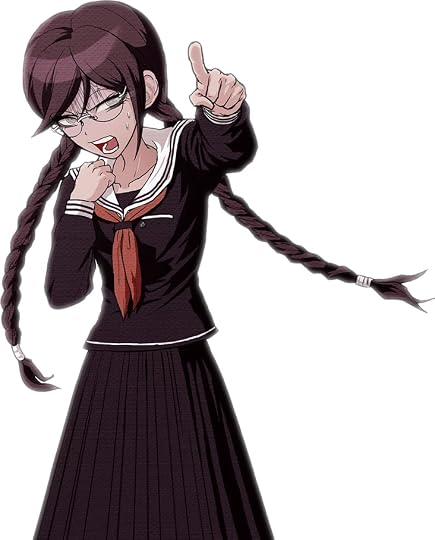
The Tale of the House of Physics by Yoko Ogawa (2011) – 2 stars. I've wanted to read this author for some time now, but I didn't love this. It's the story of a strange, reclusive woman who squats in an abandoned governmental building; she was too flat a character for me to find her sympathetic. Her description reminded me of Touka from the Danganronpa franchise.
Unforgettable People by Doppo Kunikida (1898) – 1.5 star. A writer stays up all night and recounts brief, romanticised vignettes of people he's encountered only fleetingly. All the people he talks about are working people – labourers, innkeepers, itinerant musicians – and the writer sees himself reflected back in all of them, struck with deep sympathy at their shared humanity. I thought the effect of all this was somewhat disingenuous: the working people are viewed through an aesthetic, sanitised lens, with emotions and meaning imposed upon them by their privileged observer. Talking to these people, trying to get to know them and to understand the truth of their circumstances, is naturally a step too far.
The 1963/1982 Girl from Ipanema by Haruki Murakami (1982) – 2 stars. I'm not much of a Murakami fan, though I remember really enjoying Hardboiled Wonderland and the End of the World. Nonetheless, I quite liked the writing in this one – certain turns of phrase felt very fresh, especially within the wider context of this collection. But I thought the objectively slight contents were puffed out by a silly self-importance.
Cambridge Circus by Motoyuki Shibata (2010) – 1.5 stars. Again, too self-congratulatory in tone for my taste. The author is thrilled with how brilliantly his life has turned out, and sometimes likes to imagine how badly things might have gone if he'd led his life differently.
MODERN LIFE AND OTHER NONSENSE
Closet LLB by Koji Uno (1918) – 3.5 stars. I liked this. I see elements of my own disposition in the main character's gloomy and self-absorbed bitterness. Naturally, this was pretty arresting to read and immediately plunged me into a bit of a funk, but then again, I love a bit of self-awareness.
Mr English by Keita Genji (1951) – 4 stars. A light story about a Scroogeish older man with his heart in the right place. Think A Man Called Ove, but Ove is a salaryman on a temporary contract. The gentle tone felt discordant against the wider collection so far.
Factory Town by Minoru Betsuyaku (1973) – 5 stars. Really enjoyed this! A fable about technological progress with a timeless moral: salesmen will create problems to sell you the solution.
Dreams of Love, Etc. by Mieko Kawakami (2011) – 5 stars. The thrill of assuming a false identity, of entertaining the fantasy of being somebody else, of feeling compelled towards humdrum, harmless, but nonetheless illicit acts, of life going on afterwards as aimlessly as before... The housewife's feelings of uselessness are captured in quite a dry, "well, that's life" prose that simultaneously succeeds in conveying such a profound sensitivity. I wasn't that into Breasts and Eggs, but I adored this, enough that I want to give Kawakami's other fiction a second chance.
Shoulder-Top Secretary by Shin'ichi Hoshi (1961) – 3.5 stars. It's a short piece, with an intriguing central conceit: in the future, humans outsource communication to AI birds that sit on their shoulder and translate their mumbled, grumbled speech into polite, jargonistic nonsense. Certainly ahead of its time, but aside from the idea there's very little else to it.
DREAD
Hell Screen by Ryunosuke Akutagawa (1918) – 4 stars. Brilliantly eerie, this went on long enough to really hit its stride. It centres on a classic "evil, but loves his daughter" character that reminded me of Der Sandmann (or more prosaically, Marvel's Thanos).
Filling Up with Sugar by Yuten Sawanishi (2014) – 4.5 stars. A creative exploration of coping with a loved one's terminal illness; if the author wasn't writing from personal experience I'd be very surprised (and impressed). I thought the author was very imaginative in co-opting real fears, behaviours, and coping mechanisms into his surrealist world.
Kudan by Hyakken Uchida (1922) – 2 stars. A man is reborn as a monstrous man-cow, and expected to deliver a momentous prophecy to his former loved ones. Maybe I just didn't get it – I know literally nothing about Japanese yokai – but this didn't really do anything for me.
DISASTERS, NATURAL AND MAN-MADE
The Great Earthquake by Ryunosuke Akutagawa (1927) This is a single paragraph about the deadly aftermath of the Great Earthquake in 1923. It's really a snippet, not a short story, and why it's included in this collection is a mystery.
General Kim by Ryunosuke Akutagawa (1924) – 1.5 stars. 0.5 of an extra star for its admission that history is adapted by the people telling it. Otherwise, I found this dry. I think it really relies on knowing the Japanese version of the story being told. This is a summary of the Korean way of telling it, intended to entice Japanese listeners to waggle their fingers in the air and shout, "But that's not how it happened!"
Hiroshima, City of Doom by Yoko Ota (1948) – 5 stars. If you've curious about Hiroshima and the immediate impact of the atomic bomb, read this. I've mostly disliked the mass of autobiographic "I-novel" stories that have found their way into this collection, but this is a shocking and fascinating piece of popular history, very well told and well translated too.
Insects by Yuichi Seirai (2006) – 5 stars. A fantastic character study, incredibly well done. I thought it worked wonderfully as a diptych with the preceding work by Yoko Ota. It focuses on an old woman jealously basking in her one-time indiscretion with a married man. In her youth, she was physically maimed by the atomic bomb, and she's also heavily religious (she's a member of Japan's secret Christian sect, which I briefly studied at uni, ohoho). An all-time great, I reckon.
The Silver Fifty-Sen Pieces by Yasunari Kawabata (1946) – 3.5 stars. A story in 3 parts, focused on fire-bombing during WW2. I found the first two parts very compelling, a study of the main character's tight-pursed tendencies, but thought the ending (the fire-bombing) rushed too quickly to its finish line.
American Hijiki by Akiyuki Nosaka (1967) – 5 stars. Another absolutely incredible piece. It's about Japanese hypocrisy and feelings of inferiority in the post-war period. Alongside Insects, this is my biggest recommendation from the collection.
Pink by Tomoyuki Hoshino (2014) – 3.5 stars. Quite eerie, sickening, really visceral in its description in a way that brought the spiralling body horror of Junji Ito's Uzumaki to mind, maybe also Charles Burns' Black Hole.
UFO in Kushiro by Haruki Murakami (2001) – 4.5 stars Awesome – though, typical of Murakami, there are many loose ends left open; he's very good at creating a mysterious atmosphere, but I always get the impression that he never has a clue how to wrap things up.
Weather-Watching Hill by Kazumi Saeki (2012) – 1.5 stars. Not a fan at all; another "I-novel" focused on the author's real experience of the 2011 earthquake + tsunami + Fukushima disaster. Skim read it to the end.
Planting by Aoko Matsuda (2012) – 2 stars. There's certainly something of interest here, but it in no way interested me.
Same as Always by Yuya Sato (2012) – 4 stars. A somewhat dark, despairing ending to the collection: just my thing! A mother tries to murder her newborn by feeding it contaminated vegetables in the wake of the Fukushima disaster. It's a desperate, probably futile attempt, an you get the sense that it won't work out, anyway. Her husband and mother-in-law soon evacuate mother and baby to the countryside.
---
Overall, were I to judge this collection on the combined merit of its stories alone, this would be a definite 3 stars – but I thought the curation, particularly the decision to organise the work in flimsy (often one-note) themes, was abnormally poorly done. I also disliked that many of these stories were autobiographical accounts from rather unpleasant people. I'm assuming that this style of work is popular in Japan (and not just popular with Jay Rubin), but did it really have to take up so much of the total anthology?
The editor (Murakami's translator, Jay Rubin) explains that he gravitated towards stories that exert a personal pull on him, rather than stories or writers particularly well known in Japan. This is all very well, except I know nothing about Jay Rubin, nor his tastes and what they occlude.
The stories are grouped thematically, which is a choice I feel often tends towards repetition. I'd have liked some more elaboration as to how and why these themes were chosen and prioritised; to what extent is (or was) "Loyal Warriors", for example, a dominant theme within Japanese literature, and how has this changed over time? What's more, many of these broad themes – "Japan and the West", the aforementioned "Loyal Warriors", and so on – really only tackle a tiny sliver of the sweeping subjects implied by the chapter titles. Japan and the West deals solely with the aftermath of the Russo-Japanese war and early twentieth-century unease; Loyal Warriors handles ritual suicide only. I think adding a short introductory preface to each theme, as well as dating each story, would have offered the reader a broader frame of reference with which to situate the texts.
I was also disappointed to discover that the bulk of the stories by female writers are, conveniently, lumped all together in a section titled "Men & Women"; more stories by women are indicated in the "Further Reading" footnote, and therefore not included within the anthology. In contrast, I felt that Philip Hensher, the editor of The Golden Age of British Short Stories 1890-1914, made a real effort towards eclectic and diverse representation.
JAPAN AND THE WEST
The Story of Tomoda and Matsunaga by Jun'ichiro Tanizaki (1926) – 5 stars. What a phenomenal opener! It's a classic tale of culture clash, but wound up into a mystery narrative that would appeal to fans of Agatha Christie or Arthur Conan Doyle. Compellingly written; I was hooked throughout.
Behind the Prison by Kafu Nagai (1909)– 2 stars. A young man returns from travels abroad to idle away within his family estate. The house overlooks a prison, which offers him ample time to ruminate on why his restricted life in Japan is also like a prison. Short, and a bit vapid in my opinion.
Sanshiro by Natsume Soseki (1908) – 3 stars. A young student travels to Tokyo for the first time; on the train, he meets a young woman who attempts to bathe with him, and then a man who sharply criticises Japan for lagging behind the west. This is the first chapter of a longer novel, though I think it wraps up pretty well.
LOYAL WARRIORS
The Last Testament of Okitsu Yagoemon by Ogai Mori (1912) – 1 star. A samurai explains why he plans on committing seppuku. Based on a real story, it's a very dry retelling; it read almost like a passage from Thucydides.
Patriotism by Yukio Mishima (1960) – 3 stars. A soldier grooms his young wife to witness his ritual suicide and then, after touching up her makeup, to kill herself in turn. A heavily romanticised story of patriotic thanatophilia, the author himself ended up committing seppuku in service to his ideals. The typical criticism of this one tends to focus largely on the subject matter (I personally found the infantilisation of the wife, Reiko, particularly disturbing), but I actually thought the writing itself was clumsy in its attempts at eroticism. The author lays his fantasies bare with stomach-curdling earnestness; not a pleasant read, but an interesting one.
MEN AND WOMEN
Flames by Yuko Tsushima (1979) – 1 star. I don't know, it's not really this story so much as a creeping unease with this collection's general depiction of women. Almost every story so far has depicted women in a sexual context, even just casually. It makes me really question both the editor's taste and his recognition (or lack thereof) of complex female personhood. Or maybe this is symptomatic of Japanese literature in general, and I'm being unfair on poor Jay Rubin. (But if that's the case, for goodness sake, discuss it in the introduction.) Anyway, in this one, a depressed mother on the brink of divorce lets her long-since-weaned child play with her nipples. Then she has a sex dream. The end.
In The Box by Taeko Kono (1964) – 2 stars. This felt slightly pointless. Unfinished, maybe. Like the set up to a joke without a punchline. A woman ends up stuck in the lift with another woman she's previously slighted. Just as something interesting might happen, the story's over.
Remaining Flowers by Kenji Nakagami (1988) – 3 stars. Had to think about this one a bit, and actually it's grown on me. Heavy on the symbolism, and I'm not sure I've understood it 100%.
Bee Honey by Banana Yoshimoto (2000) – 1 star. This is a short, autobiographical (I think?) story, in which the author uses the turbulent backdrop of post-junta Argentina to find peace in her own feeling of untethering. I quite like her prose, but the lack of plot, character, wider meaning etc. really bored me. This marks my second underwhelming experience with this author.
The Smile of a Mountain Witch by Minako Ohba (1976) – 3 stars. This is a feminist short story, and I liked it all the more given the quite chauvinistic undertones of this anthology so far. Recounted as a sort of modern day fairytale, it trembles its way to its rather Dickensian conclusion.
A Bond for Two Lifetimes – Gleanings by Fumiko Enchi (1957) – 2 stars. Jesus, this book feels almost like an anti-Japan psy-op. Is it really this bleak? I'm so creeped out. In this story, a woman reflects fondly on the times she was sexually harassed by an ageing professor, looking on the experience with new eyes now that the professor is close to death and impotent. The power dynamic has been renegotiated; her clemency and detachment are luxuries afforded to her by her youth, and the physical dominance that comes with it. Once again, sex is the hot topic here: Enchi suggests that all men, even old men or holy men, are secretly at the whim of their basest and most animal desires. Women, too, though they lead diminished lives at the hands of men. The story culminates with the protagonist having sex in the bushes with a stranger, who she imagines might be either her dead husband or the old professor. Overall, I thought this story's writing was some of the best in the collection, but I've been enjoying so few of these that there's hardly a high bar.
NATURE AND MEMORY
Peaches by Akira Abe (1972) – 2 stars. "Ahh, brilliant," I thought to myself. "This story is about a boy's memory of his mother, so there's no way it's going to be as horny as all the others... Oh." Jay Rubin, you insatiable dog. It's almost an interesting little piece though, tightly focused on the nature of false memory and subjective truth. Unfortunately, I feel the execution was somewhat belaboured, dragging the already-slow pace into snail territory. I also didn't like the ending, which stacks benign false memories on top of benign false memories to suggest something benignly impossible. It's not as profound as it thinks it is.
The Tale of the House of Physics by Yoko Ogawa (2011) – 2 stars. I've wanted to read this author for some time now, but I didn't love this. It's the story of a strange, reclusive woman who squats in an abandoned governmental building; she was too flat a character for me to find her sympathetic. Her description reminded me of Touka from the Danganronpa franchise.
Unforgettable People by Doppo Kunikida (1898) – 1.5 star. A writer stays up all night and recounts brief, romanticised vignettes of people he's encountered only fleetingly. All the people he talks about are working people – labourers, innkeepers, itinerant musicians – and the writer sees himself reflected back in all of them, struck with deep sympathy at their shared humanity. I thought the effect of all this was somewhat disingenuous: the working people are viewed through an aesthetic, sanitised lens, with emotions and meaning imposed upon them by their privileged observer. Talking to these people, trying to get to know them and to understand the truth of their circumstances, is naturally a step too far.
The 1963/1982 Girl from Ipanema by Haruki Murakami (1982) – 2 stars. I'm not much of a Murakami fan, though I remember really enjoying Hardboiled Wonderland and the End of the World. Nonetheless, I quite liked the writing in this one – certain turns of phrase felt very fresh, especially within the wider context of this collection. But I thought the objectively slight contents were puffed out by a silly self-importance.
Cambridge Circus by Motoyuki Shibata (2010) – 1.5 stars. Again, too self-congratulatory in tone for my taste. The author is thrilled with how brilliantly his life has turned out, and sometimes likes to imagine how badly things might have gone if he'd led his life differently.
MODERN LIFE AND OTHER NONSENSE
Closet LLB by Koji Uno (1918) – 3.5 stars. I liked this. I see elements of my own disposition in the main character's gloomy and self-absorbed bitterness. Naturally, this was pretty arresting to read and immediately plunged me into a bit of a funk, but then again, I love a bit of self-awareness.
Mr English by Keita Genji (1951) – 4 stars. A light story about a Scroogeish older man with his heart in the right place. Think A Man Called Ove, but Ove is a salaryman on a temporary contract. The gentle tone felt discordant against the wider collection so far.
Factory Town by Minoru Betsuyaku (1973) – 5 stars. Really enjoyed this! A fable about technological progress with a timeless moral: salesmen will create problems to sell you the solution.
Dreams of Love, Etc. by Mieko Kawakami (2011) – 5 stars. The thrill of assuming a false identity, of entertaining the fantasy of being somebody else, of feeling compelled towards humdrum, harmless, but nonetheless illicit acts, of life going on afterwards as aimlessly as before... The housewife's feelings of uselessness are captured in quite a dry, "well, that's life" prose that simultaneously succeeds in conveying such a profound sensitivity. I wasn't that into Breasts and Eggs, but I adored this, enough that I want to give Kawakami's other fiction a second chance.
Shoulder-Top Secretary by Shin'ichi Hoshi (1961) – 3.5 stars. It's a short piece, with an intriguing central conceit: in the future, humans outsource communication to AI birds that sit on their shoulder and translate their mumbled, grumbled speech into polite, jargonistic nonsense. Certainly ahead of its time, but aside from the idea there's very little else to it.
DREAD
Hell Screen by Ryunosuke Akutagawa (1918) – 4 stars. Brilliantly eerie, this went on long enough to really hit its stride. It centres on a classic "evil, but loves his daughter" character that reminded me of Der Sandmann (or more prosaically, Marvel's Thanos).
Filling Up with Sugar by Yuten Sawanishi (2014) – 4.5 stars. A creative exploration of coping with a loved one's terminal illness; if the author wasn't writing from personal experience I'd be very surprised (and impressed). I thought the author was very imaginative in co-opting real fears, behaviours, and coping mechanisms into his surrealist world.
Kudan by Hyakken Uchida (1922) – 2 stars. A man is reborn as a monstrous man-cow, and expected to deliver a momentous prophecy to his former loved ones. Maybe I just didn't get it – I know literally nothing about Japanese yokai – but this didn't really do anything for me.
DISASTERS, NATURAL AND MAN-MADE
The Great Earthquake by Ryunosuke Akutagawa (1927) This is a single paragraph about the deadly aftermath of the Great Earthquake in 1923. It's really a snippet, not a short story, and why it's included in this collection is a mystery.
General Kim by Ryunosuke Akutagawa (1924) – 1.5 stars. 0.5 of an extra star for its admission that history is adapted by the people telling it. Otherwise, I found this dry. I think it really relies on knowing the Japanese version of the story being told. This is a summary of the Korean way of telling it, intended to entice Japanese listeners to waggle their fingers in the air and shout, "But that's not how it happened!"
Hiroshima, City of Doom by Yoko Ota (1948) – 5 stars. If you've curious about Hiroshima and the immediate impact of the atomic bomb, read this. I've mostly disliked the mass of autobiographic "I-novel" stories that have found their way into this collection, but this is a shocking and fascinating piece of popular history, very well told and well translated too.
Insects by Yuichi Seirai (2006) – 5 stars. A fantastic character study, incredibly well done. I thought it worked wonderfully as a diptych with the preceding work by Yoko Ota. It focuses on an old woman jealously basking in her one-time indiscretion with a married man. In her youth, she was physically maimed by the atomic bomb, and she's also heavily religious (she's a member of Japan's secret Christian sect, which I briefly studied at uni, ohoho). An all-time great, I reckon.
The Silver Fifty-Sen Pieces by Yasunari Kawabata (1946) – 3.5 stars. A story in 3 parts, focused on fire-bombing during WW2. I found the first two parts very compelling, a study of the main character's tight-pursed tendencies, but thought the ending (the fire-bombing) rushed too quickly to its finish line.
American Hijiki by Akiyuki Nosaka (1967) – 5 stars. Another absolutely incredible piece. It's about Japanese hypocrisy and feelings of inferiority in the post-war period. Alongside Insects, this is my biggest recommendation from the collection.
Pink by Tomoyuki Hoshino (2014) – 3.5 stars. Quite eerie, sickening, really visceral in its description in a way that brought the spiralling body horror of Junji Ito's Uzumaki to mind, maybe also Charles Burns' Black Hole.
UFO in Kushiro by Haruki Murakami (2001) – 4.5 stars Awesome – though, typical of Murakami, there are many loose ends left open; he's very good at creating a mysterious atmosphere, but I always get the impression that he never has a clue how to wrap things up.
Weather-Watching Hill by Kazumi Saeki (2012) – 1.5 stars. Not a fan at all; another "I-novel" focused on the author's real experience of the 2011 earthquake + tsunami + Fukushima disaster. Skim read it to the end.
Planting by Aoko Matsuda (2012) – 2 stars. There's certainly something of interest here, but it in no way interested me.
Same as Always by Yuya Sato (2012) – 4 stars. A somewhat dark, despairing ending to the collection: just my thing! A mother tries to murder her newborn by feeding it contaminated vegetables in the wake of the Fukushima disaster. It's a desperate, probably futile attempt, an you get the sense that it won't work out, anyway. Her husband and mother-in-law soon evacuate mother and baby to the countryside.
---
Overall, were I to judge this collection on the combined merit of its stories alone, this would be a definite 3 stars – but I thought the curation, particularly the decision to organise the work in flimsy (often one-note) themes, was abnormally poorly done. I also disliked that many of these stories were autobiographical accounts from rather unpleasant people. I'm assuming that this style of work is popular in Japan (and not just popular with Jay Rubin), but did it really have to take up so much of the total anthology?

January 13, 2021
I felt so excited reading this book. Whether or not I loved the story at hand, it is such a privilege to get to bask in the perspectives and imaginations of over a century’s worth of writers from the other side of the world…all in one handy, translated anthology. Much of this collection deals with tragic events and/or their repercussions, which sometimes made for exhausting reading set against the hellscape of 2020. But this focus also delivered my favorite story: Yūichi Seirai’s “Insects,” pub. 2005. The foundation for “Insects” seems to be the foundationlessness of life for many people following the U.S.’ atomic bombing of Nagasaki in 1945. I don’t think I’ve ever before enjoyed being hit over the head with a metaphor… but in this case, I was surprised to find that Seirai’s use of insects on just about each of the 30-ish pages was incredibly effective and beautiful. This story looks at the PTSD, rage and bitterness, loss of faith and desperate clinging to faith, that followed the bombing. But like most great stories, it also digs into fascinating bits of human nature that can be found anywhere.

Read
August 8, 2020I will not rate this collection because it would be unfair to some and overly generous to other featured stories. I wish they had put a year of publishing with the story titles as I believe they have to be viewed within that contex too.
Some works are true classics but for some I really wonder how representative they are. Also, I really do not understand why they chose to include two stories by H. Murakami (who, incidentally, worked on preparing the collection).
Some works are true classics but for some I really wonder how representative they are. Also, I really do not understand why they chose to include two stories by H. Murakami (who, incidentally, worked on preparing the collection).

Read
January 20, 2021A great introduction to Japanese literature. I am eager to read more!
My two favourite stories were 'The Story of Tomoda and Matsunaga' by Tanizaki Jun'ichirō and 'Hell Screen' by Akutagawa Ryūnosuke - both were creepy, even nightmarish, but perversely succulent and fascinating. I highly recommend
My two favourite stories were 'The Story of Tomoda and Matsunaga' by Tanizaki Jun'ichirō and 'Hell Screen' by Akutagawa Ryūnosuke - both were creepy, even nightmarish, but perversely succulent and fascinating. I highly recommend

November 14, 2021
"أخترت هذه القصص لأنها وبالرغم من مرور عقود على قراءتي لها لازالت بقاياها و شظاياها-عالقةً في ثناياي-تُكون عُقدًا من الحنين التي تارةً ما تكون مؤلمة وأحيانًا مضحكة أو غامضة."
•جاي روبن-٩٠ عامًا- مُعد الكتاب وأستاذ الأدب الأمريكي في هارفارد سابقًا.
بعد انتهائي من قراءة كافة روايات هاروكي موراكامي المترجمة، ازدادت رغبتي بالغوص داخل أعماق الأدب الياباني، الأدب الذي مازالنا نجهل عنه الكثير لأسباب عديدة منها حاجز اللغة وقلة الاعمال المترجمة بالانجليزية والعربية، فما هو متوفر لنا باللغتين يُعد نقطة من محيط شاسع وحتى تلك النقطة ستجد معظمها محصور في عمالقة كهاروكي موراكامي وناتسومي سوسيكي ويوكيو ميشيما.
هذا الكتاب أعده أفضل مدخل لكل مبتدىء مثلي لأنه يحتوي على عينات كثيرة تُمكن القارىء من الخروج بتصور وفكرة معينة عن أسلوب كتابة رواد الأدب الياباني المعاصر وطريقتهم السردية والنثرية كما أنها تحتوي على أعمال لكُتاب لم تصلنا أعمالهم من قبل أبدًا.
35 قصة قصيرة مختلفة موزعة على 500 صفحة مأخوذة من الأدب الياباني المعاصر (أواخر القرن التاسع عشر وحتى يومنا هذا) قام بتنقيحها واختيارها الأستاذ الكبير جاي روبن وكتب مقدمتها هاروكي موراكامي.
القصص ترتكز على سبعة محاور رئيسية هذه المحاور كانت: علاقة اليابان بالغرب، الساموراي، الطبيعة والذاكرة، الرجال والنساء، الحياة المعاصرة وتوابعها، البؤس، وأخيرًا كوارث اليابان الطبيعية والبشرية (كانتو 1923-هيروشيما45-كوبي95-توهوكو2011)
بدأت الكتاب وهدفي منه العثور على كاتب يستطيع أن يبعث فيني نفس الشعور الذي أجده بين أحرف وكتابات هاروكي وأنتهيت منه وأنا أملك قائمة بعشر كُتاب أثارت أحرفهم إهتمامي لذلك أستطيع القول أن الكتاب أدى مهمته بنجاح. سأبدأ مستقبلًا بقراءة ما هو متوفر ومترجم لهم والباقي سأعود له عند ما أتقن اليابانية يومًا ما.
•جاي روبن-٩٠ عامًا- مُعد الكتاب وأستاذ الأدب الأمريكي في هارفارد سابقًا.
بعد انتهائي من قراءة كافة روايات هاروكي موراكامي المترجمة، ازدادت رغبتي بالغوص داخل أعماق الأدب الياباني، الأدب الذي مازالنا نجهل عنه الكثير لأسباب عديدة منها حاجز اللغة وقلة الاعمال المترجمة بالانجليزية والعربية، فما هو متوفر لنا باللغتين يُعد نقطة من محيط شاسع وحتى تلك النقطة ستجد معظمها محصور في عمالقة كهاروكي موراكامي وناتسومي سوسيكي ويوكيو ميشيما.
هذا الكتاب أعده أفضل مدخل لكل مبتدىء مثلي لأنه يحتوي على عينات كثيرة تُمكن القارىء من الخروج بتصور وفكرة معينة عن أسلوب كتابة رواد الأدب الياباني المعاصر وطريقتهم السردية والنثرية كما أنها تحتوي على أعمال لكُتاب لم تصلنا أعمالهم من قبل أبدًا.
35 قصة قصيرة مختلفة موزعة على 500 صفحة مأخوذة من الأدب الياباني المعاصر (أواخر القرن التاسع عشر وحتى يومنا هذا) قام بتنقيحها واختيارها الأستاذ الكبير جاي روبن وكتب مقدمتها هاروكي موراكامي.
القصص ترتكز على سبعة محاور رئيسية هذه المحاور كانت: علاقة اليابان بالغرب، الساموراي، الطبيعة والذاكرة، الرجال والنساء، الحياة المعاصرة وتوابعها، البؤس، وأخيرًا كوارث اليابان الطبيعية والبشرية (كانتو 1923-هيروشيما45-كوبي95-توهوكو2011)
بدأت الكتاب وهدفي منه العثور على كاتب يستطيع أن يبعث فيني نفس الشعور الذي أجده بين أحرف وكتابات هاروكي وأنتهيت منه وأنا أملك قائمة بعشر كُتاب أثارت أحرفهم إهتمامي لذلك أستطيع القول أن الكتاب أدى مهمته بنجاح. سأبدأ مستقبلًا بقراءة ما هو متوفر ومترجم لهم والباقي سأعود له عند ما أتقن اليابانية يومًا ما.

July 9, 2022
Wonderful and varied collection of well written short stories.
Surprisingly I’d say it’s a 70:30 split (good v bad -or not so good) as well -so that’s a bonus !
4 stars
Surprisingly I’d say it’s a 70:30 split (good v bad -or not so good) as well -so that’s a bonus !
4 stars

October 4, 2026
I took a long time with this one, but I really enjoyed it. The whole collection of disasters, natural and man-made, is a huge standout. My favourites are:
1. Hiroshima, city of doom
2. American hijiki
3. Insects
4. Dreams of love, etc.
1. Hiroshima, city of doom
2. American hijiki
3. Insects
4. Dreams of love, etc.

November 21, 2024
The best collection of short stories ive ever read.

April 14, 2019
This book contains 35 short stories by many of the most prominent Japanese writers (at least among authors whose works are translated into English,) including: Jun’ichiro Tanizaki, Natsume Soseki, Yukio Mishima, Banana Yoshimoto, Yoko Ogawa, Akutagawa Ryunosuke, and Haruki Murakami (who contributes the book’s Introduction as well as two stories.)
The stories are arranged into seven sections that are apropos for modern Japanese literature: “Japan and the West” (3 stories,) “Loyal Warriors” (2 stories,) “Men and Women” (6 stories,) “Nature and Memory” (5 stories), “Modern Life and Other Nonsense” (5 stories,) “Dread” (3 stories,) and “Disasters, Natural and Man-made” (11 stories.) This organization scheme, which might seem random applied to most literature, offers some insight into the Japanese mind and experience.
“Japan and the West” reflects a Japan in the vanguard among non-Western nations entering into developed nation status. For a time, Japan sat in the unique situation of being the only rich nation that wasn’t majority Caucasian, and the uneasy balancing act that many Japanese felt is reflected in these three stories. “Loyal Warriors” reflects the long shadow of the feudal samurai era, and – in particular – the custom of ritual suicide. It’s true that “Men and Women” has a certain universality to it, though the individual stories speak to the Japanese experience and history. The section entitled “Nature and Memory” is really more about the latter than the former, and the stories all reflect a concern about remembering, forgetting, and the imperfection of memory. “Modern Life and Other Nonsense” explores the modern corporate existence. “Dread” are the horror stories, a genre that has a lengthy history in Japan. “Disasters, Natural and Man-Made” reflects Japan’s experience with many devastating earthquakes and two atomic bombs.
In the interest of brevity, I’ll not describe or comment upon all the stories. Instead, I’ll pick out a few that I found particularly moving. This doesn’t mean that there aren’t many gems among the others. But my intention is merely to give the reader a taste of what is in this volume.
- “The Story of Tomode and Matsunaga” by Tanizaki Jun’ichiro: A writer receives a letter from a woman whose husband has a history of pulling extended disappearing acts. She asks for the writer’s help because she believes he may know her husband. The writer makes a connection to an acquaintance he has frequently socialized with in bars. The writer notices the man’s appearance in town seems to line up with the dates the woman gave for her husband’s disappearances. It might seem like a mystery solved, but the two men look nothing alike.
- “Patriotism” by Yukio Mishima: A junior military officer comes home and tells his wife that he has been put in the untenable position of having to arrest his comrades. Deciding that there is no honorable path, he decides to commit seppuku (ritual suicide,) and – given societal norms – this means his wife, too, will be expected to end her own life.
- “Smile of the Mountain Witch” by Ohba Minako: A mythical mountain witch is transposed into a modern urban setting.
- “Peaches” by Abe Akira: A man revisits a memory from his youth involving his mother and a cart of peaches, realizing that events couldn’t have happened as he remembers, he reconstructs events as he re-imagines his story.
- “Mr. English” by Keita Genji: We meet an office worker who seems like a bit of a jerk, but as we get to know his story, he is humanized.
- “Hell Screen” by Akutagawa Ryunosuke: A prima donna artist painting a hellish artwork for his Lord insists that he must have seen scenes to accurately depict them, and thus he is drawn into the hellishness of his work.
- “Filling Up with Sugar” by Suwanishi Yuten: A woman’s mother has a rare and incurable disease in which the body slowly turns into sugar.
- “Hiroshima, City of Doom” by Ota Yoko: As the title suggests, this is a story of the devastation of Hiroshima by atomic bomb at the end of the Second World War.
- “Weather-Watching Hill” Saeki Kazumi: This description of the 2011 earthquake and tsunami reads a bit like a journalistic account.
- “Same as Always” by Sato Yuya: This is a chilling tale of a mother who uses the release of radiation as a result of the Fukushima Dai-Ichi nuclear plant melt-down as a pretext for murdering her baby in a way that won’t look like murder. It’s so wrong in so many ways, but extremely evocative.
I enjoyed this collection immensely. The stories are great, and I would highly recommend it for readers of short fiction – particularly if one enjoys the cultural insight that comes from reading translated literature.
The stories are arranged into seven sections that are apropos for modern Japanese literature: “Japan and the West” (3 stories,) “Loyal Warriors” (2 stories,) “Men and Women” (6 stories,) “Nature and Memory” (5 stories), “Modern Life and Other Nonsense” (5 stories,) “Dread” (3 stories,) and “Disasters, Natural and Man-made” (11 stories.) This organization scheme, which might seem random applied to most literature, offers some insight into the Japanese mind and experience.
“Japan and the West” reflects a Japan in the vanguard among non-Western nations entering into developed nation status. For a time, Japan sat in the unique situation of being the only rich nation that wasn’t majority Caucasian, and the uneasy balancing act that many Japanese felt is reflected in these three stories. “Loyal Warriors” reflects the long shadow of the feudal samurai era, and – in particular – the custom of ritual suicide. It’s true that “Men and Women” has a certain universality to it, though the individual stories speak to the Japanese experience and history. The section entitled “Nature and Memory” is really more about the latter than the former, and the stories all reflect a concern about remembering, forgetting, and the imperfection of memory. “Modern Life and Other Nonsense” explores the modern corporate existence. “Dread” are the horror stories, a genre that has a lengthy history in Japan. “Disasters, Natural and Man-Made” reflects Japan’s experience with many devastating earthquakes and two atomic bombs.
In the interest of brevity, I’ll not describe or comment upon all the stories. Instead, I’ll pick out a few that I found particularly moving. This doesn’t mean that there aren’t many gems among the others. But my intention is merely to give the reader a taste of what is in this volume.
- “The Story of Tomode and Matsunaga” by Tanizaki Jun’ichiro: A writer receives a letter from a woman whose husband has a history of pulling extended disappearing acts. She asks for the writer’s help because she believes he may know her husband. The writer makes a connection to an acquaintance he has frequently socialized with in bars. The writer notices the man’s appearance in town seems to line up with the dates the woman gave for her husband’s disappearances. It might seem like a mystery solved, but the two men look nothing alike.
- “Patriotism” by Yukio Mishima: A junior military officer comes home and tells his wife that he has been put in the untenable position of having to arrest his comrades. Deciding that there is no honorable path, he decides to commit seppuku (ritual suicide,) and – given societal norms – this means his wife, too, will be expected to end her own life.
- “Smile of the Mountain Witch” by Ohba Minako: A mythical mountain witch is transposed into a modern urban setting.
- “Peaches” by Abe Akira: A man revisits a memory from his youth involving his mother and a cart of peaches, realizing that events couldn’t have happened as he remembers, he reconstructs events as he re-imagines his story.
- “Mr. English” by Keita Genji: We meet an office worker who seems like a bit of a jerk, but as we get to know his story, he is humanized.
- “Hell Screen” by Akutagawa Ryunosuke: A prima donna artist painting a hellish artwork for his Lord insists that he must have seen scenes to accurately depict them, and thus he is drawn into the hellishness of his work.
- “Filling Up with Sugar” by Suwanishi Yuten: A woman’s mother has a rare and incurable disease in which the body slowly turns into sugar.
- “Hiroshima, City of Doom” by Ota Yoko: As the title suggests, this is a story of the devastation of Hiroshima by atomic bomb at the end of the Second World War.
- “Weather-Watching Hill” Saeki Kazumi: This description of the 2011 earthquake and tsunami reads a bit like a journalistic account.
- “Same as Always” by Sato Yuya: This is a chilling tale of a mother who uses the release of radiation as a result of the Fukushima Dai-Ichi nuclear plant melt-down as a pretext for murdering her baby in a way that won’t look like murder. It’s so wrong in so many ways, but extremely evocative.
I enjoyed this collection immensely. The stories are great, and I would highly recommend it for readers of short fiction – particularly if one enjoys the cultural insight that comes from reading translated literature.

Read
February 15, 2019It's a perfect way to start your adventure with Japanese literature. I really enjoyed it, though it is absolutely impossible to rate this book. Every short story has its own rating and this anthology wasn't created in order to become the best among its category. It is supposed to introduce you to many different authors. Great read.
Tanizaki Jun'ichiro - The Story of Tomoda and Matsunaga 4/5
-a really clever idea of showing how Japanese people were (and often still are) torn between their love&hate for the West and their own culture in comparison.
Nagai Kafu - Behind the prison 1/5
-God, I hated this one. A lazy, always complaining rich boy describes to you how he cannot do anything with his life.
Natsume Soseki - Sanshiro 3,5/5
Mori Ogai - The Last Testament of Okitsu Yagoemon -/5 (unsure)
Mishima Yukio - Patriotism -/5 (again unsure, both of these stories deal with the delicate topic of suicide)
-I found it difficult to enjoy these stories since the main theme was very unsettling for me.
Tsushima Yuko - Flames 2,5/5
Kono Taeko - In the Box 3,5/5
-"Bizzare" was created to describe the idea behind this one.
Nakagami Kenji - Remaining Flowers 1/5
Yoshimoto Banana - Bee Honey 4/5
Ohba Minako - The Smile of a Mountain Witch 4/5
Enchi Fumiko - A Bond for two lifetimes 4,5/5
Abe Akira - Peaches 3/5
Ogawa Yoko - The Tale of the House of Physics 4,5/5
-Somehow it really stayed with me.
Kunikida Doppo - Unforgettable People 2,5/5
Murakami Haruki - The 1963/1982 Girl from Ipanema 3,5/5
Shibata Moriyuki - Cambridge Circus 1/5
Uno Koji - Closet LLB 2/5
Genji Keita - Mr English 3/5
Betsuyaku Minoru - Factory Town 4/5
-Reminded me a lot of Hoshi Shin'ichi. Wonderful.
Kawakami Mieko - Dreams of Love, etc. 3/5
Hoshi Shin'ichi - Shoulder-Top Secretary 5/5!
-I will definitely read more of his work in the future. I love how he uses science fiction to comment on Japanese society.
Akutagawa Ryunosuke - Hell Screen 4/5
-Atmospheric, engaging - I could have expected that from a legendary author.
Sawanishi Yuten - Filling up with sugar 5/5!
-The best short story of this entire anthology. From the very first line I was captured and couldn't look away. Crossing my fingers for this author to be translated into English soon. Highly reccommend!!!
Uchida Hyakken - Kudan 3,5/5
Akutagawa Ryunosuke - General Kim 3/5
Oka Yoko - Hiroshima, City of Doom 4/5
Seirai Yuichi - Insects 4,5/5
Kawabata Yasunari - The fifty sen pieces 3,5/5
Nosaka Ariyuki - American Hijiki 4/5
Hoshino Tomoyuki - Pink -/5 (I have literally no recollection of this story)
Murakami Haruki - UFO in Kushiro 2/5
Saeki Kazumi - Weather-Watching Hill -/5 (again, no memory)
Matsuda Aoko - Planting 2/5
Sato Yuya - Same as Always 4,5/5
-Chilling tale of a housewife trying to kill her baby. At the same time - much more.
Tanizaki Jun'ichiro - The Story of Tomoda and Matsunaga 4/5
-a really clever idea of showing how Japanese people were (and often still are) torn between their love&hate for the West and their own culture in comparison.
Nagai Kafu - Behind the prison 1/5
-God, I hated this one. A lazy, always complaining rich boy describes to you how he cannot do anything with his life.
Natsume Soseki - Sanshiro 3,5/5
Mori Ogai - The Last Testament of Okitsu Yagoemon -/5 (unsure)
Mishima Yukio - Patriotism -/5 (again unsure, both of these stories deal with the delicate topic of suicide)
-I found it difficult to enjoy these stories since the main theme was very unsettling for me.
Tsushima Yuko - Flames 2,5/5
Kono Taeko - In the Box 3,5/5
-"Bizzare" was created to describe the idea behind this one.
Nakagami Kenji - Remaining Flowers 1/5
Yoshimoto Banana - Bee Honey 4/5
Ohba Minako - The Smile of a Mountain Witch 4/5
Enchi Fumiko - A Bond for two lifetimes 4,5/5
Abe Akira - Peaches 3/5
Ogawa Yoko - The Tale of the House of Physics 4,5/5
-Somehow it really stayed with me.
Kunikida Doppo - Unforgettable People 2,5/5
Murakami Haruki - The 1963/1982 Girl from Ipanema 3,5/5
Shibata Moriyuki - Cambridge Circus 1/5
Uno Koji - Closet LLB 2/5
Genji Keita - Mr English 3/5
Betsuyaku Minoru - Factory Town 4/5
-Reminded me a lot of Hoshi Shin'ichi. Wonderful.
Kawakami Mieko - Dreams of Love, etc. 3/5
Hoshi Shin'ichi - Shoulder-Top Secretary 5/5!
-I will definitely read more of his work in the future. I love how he uses science fiction to comment on Japanese society.
Akutagawa Ryunosuke - Hell Screen 4/5
-Atmospheric, engaging - I could have expected that from a legendary author.
Sawanishi Yuten - Filling up with sugar 5/5!
-The best short story of this entire anthology. From the very first line I was captured and couldn't look away. Crossing my fingers for this author to be translated into English soon. Highly reccommend!!!
Uchida Hyakken - Kudan 3,5/5
Akutagawa Ryunosuke - General Kim 3/5
Oka Yoko - Hiroshima, City of Doom 4/5
Seirai Yuichi - Insects 4,5/5
Kawabata Yasunari - The fifty sen pieces 3,5/5
Nosaka Ariyuki - American Hijiki 4/5
Hoshino Tomoyuki - Pink -/5 (I have literally no recollection of this story)
Murakami Haruki - UFO in Kushiro 2/5
Saeki Kazumi - Weather-Watching Hill -/5 (again, no memory)
Matsuda Aoko - Planting 2/5
Sato Yuya - Same as Always 4,5/5
-Chilling tale of a housewife trying to kill her baby. At the same time - much more.
March 13, 2023
I could not decide which Japanese book to read next so I picked this one up to discover other Japanese authors, traditional and contemporary. The eye candy cover also got me.
This English-translated collection is categorized according to various themes: Japan & the West, Loyal Warriors, Men and Women, Nature and Memory, Modern Life and Other Nonsense, Dread.
I felt like most pieces here end loose or commonplace, plain like a lazy afternoon rather than closing the storyline with a definite or affecting thought. It's as if this is an intrinsic characteristic of Japanese literature, but I'm merely giving an opinion.
The few ones that caught my interest and had me looking up the authors were Akutagawa Ryunosuke for his eventful and eccentric piece Hell Screen which is also found in Rashomon and 17 Other Stories and Ogawa Yōko's storytelling in The Tale of the House of Physics.
Meanwhile, the theme that had me feeling was the final section under Disasters, Natural and Man-made, particularly the story depicting the nuclear bombing in Ota Yōko's Hiroshima, City of Doom ironically describing the terror this way,
This English-translated collection is categorized according to various themes: Japan & the West, Loyal Warriors, Men and Women, Nature and Memory, Modern Life and Other Nonsense, Dread.
I felt like most pieces here end loose or commonplace, plain like a lazy afternoon rather than closing the storyline with a definite or affecting thought. It's as if this is an intrinsic characteristic of Japanese literature, but I'm merely giving an opinion.
The few ones that caught my interest and had me looking up the authors were Akutagawa Ryunosuke for his eventful and eccentric piece Hell Screen which is also found in Rashomon and 17 Other Stories and Ogawa Yōko's storytelling in The Tale of the House of Physics.
Meanwhile, the theme that had me feeling was the final section under Disasters, Natural and Man-made, particularly the story depicting the nuclear bombing in Ota Yōko's Hiroshima, City of Doom ironically describing the terror this way,
"an eerie blue flash came from the sky"
"I felt neither pain nor fear but only a strange, almost light-headed sort of calm. The bright early morning sunlight had been replaced by a gloom like that of a rainy-season evening." [emphasis mine]
"A hush had fallen over everything. (The newspaper later said there was an 'instant pandemonium', but that was the writer's preconceived notion. In fact, an eerie stillness descended as if people, trees and plants had all died at once." [emphasis mine]
"All their faces had been hideously transformed [...] many of them now with severe burns. At first we didn't realize that their injuries were burns. There were no fires, so where and how could they have been burnt so badly? Strange, grotesque, they were more pathetic than frightening. They had all been burnt in the same way [...] Ash-coloured skin hung from their flesh, peeling off in strips like the skins of roast potatoes."
July 19, 2019
*Score: 9/10*
Pros:
- A gold mine and treasure trove of new Japanese Authors to discover
- Serves as a great introduction to Japanese Literature, while also being a great pick for someone more well versed into Japanese Literature
- Even with few week stories, the ones that are great tend to dominate with higher page count, making the book greater than the sum of its parts
- Unique breakup of the book, as stories are put into different sections by theme (i.e. Nature, Modern Life, Disasters, etc...)
- Very helpful notes and brief summary by Murakami to each story to give more context
- Consistently accessible writing even with various authors and translators being involved
- Offers multi generational overview of Japanese Authors, combining classic with modern in good balance
Cons:
- Few stories definitely lack the punch to make them as memorable as many of the other stories
- Would have been nice to put the year in which each story was written on with the title as opposed to on the notes section
- The Section relating to "Disasters" theme, while has some of my favorites, is a bit too long, taking away some space from equally strong themes that have notabley less representation
- Story #3, Sanshiro by Natsume soseki is out of place, as its only a "Chapter 1" from one of his novels, and not really a short story.
Overall: The amount of new authors and books that are in my list after this book is a clear indication of its power, especially since I know about Japanese Literature quiet a bit. Out of 34 stories, at least 10 are brilliant, with many other good to great ones, making this a really quality focused collection. This book easily joins my all time favorites list, and also one of the "go to" first recommendations I would give to someone new to Japanese Literature (assuming they don't mind the short story format).
Pros:
- A gold mine and treasure trove of new Japanese Authors to discover
- Serves as a great introduction to Japanese Literature, while also being a great pick for someone more well versed into Japanese Literature
- Even with few week stories, the ones that are great tend to dominate with higher page count, making the book greater than the sum of its parts
- Unique breakup of the book, as stories are put into different sections by theme (i.e. Nature, Modern Life, Disasters, etc...)
- Very helpful notes and brief summary by Murakami to each story to give more context
- Consistently accessible writing even with various authors and translators being involved
- Offers multi generational overview of Japanese Authors, combining classic with modern in good balance
Cons:
- Few stories definitely lack the punch to make them as memorable as many of the other stories
- Would have been nice to put the year in which each story was written on with the title as opposed to on the notes section
- The Section relating to "Disasters" theme, while has some of my favorites, is a bit too long, taking away some space from equally strong themes that have notabley less representation
- Story #3, Sanshiro by Natsume soseki is out of place, as its only a "Chapter 1" from one of his novels, and not really a short story.
Overall: The amount of new authors and books that are in my list after this book is a clear indication of its power, especially since I know about Japanese Literature quiet a bit. Out of 34 stories, at least 10 are brilliant, with many other good to great ones, making this a really quality focused collection. This book easily joins my all time favorites list, and also one of the "go to" first recommendations I would give to someone new to Japanese Literature (assuming they don't mind the short story format).
Displaying 1 - 30 of 379 reviews