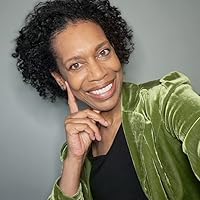
From her childhood in Chattanooga to her Harlem debut; from touring the Jim Crow South to showcasing in Shanghai and London, Valaida lived large, blazing a trail with energy and style. Based on the story of Valaida Snow, one of jazz’s first female trumpeters, this is an enthralling, seductive, deeply imagined novel. Candace Allen received her BA from Harvard before attending New York University’s School of Film and Television. A former Hollywood screenwriter and assistant director, she was the first African-American woman to become a member of the Director’s Guild of America.
Candace Allen is an American novelist, political activist, cultural critic and screenwriter, who is based in London. She was the first African-American woman to be a member of the Directors Guild of America. In the 1970s, she moved to Los Angeles, where for twenty years she worked as an assistant director on feature and television films, and later as a screenwriter. She was a founder of Reel Black Women, a professional organization for African-American women in film. Through the organization "Americans Abroad for Obama" Allen was an active campaigner for the election of Barack Obama in 2008, and subsequently became a frequent commentator on US culture, race and politics on radio and television. She writes regularly for The Guardian of London and other newspapers. She is the niece of actress and drama coach Billie Allen, and the former wife of British conductor Sir Simon Rattle.
This gorgeous novel is a fictionalization of the life of Valaida Snow, a jazz musician and entertainer in the first half of the 20th century. In addition to singing and dancing, she was also successful as a trumpet player in an era when brass instruments were considered either inappropriate for women to play or impossible for them to play well. She was enormously talented and was very successful during the 1920s and 30s, but then became addicted to opiates and had some traumatic experiences in Europe during WWII. She never really recovered from the latter, and although she resumed career after the war, Valaida was unable to fully rebuild her career before her death in 1956. Allen's rendering of Valaida and her life is really wonderful. The book is written in third person, but is very much from Snow's perspective so that it ends up being just this side of first-person narration. This really works - Valaida gives the reader a wonderfully vivid sense of Snow - I could hear her voice and just about smell her perfume as I was reading. The highs and lows of her life are depicted with complete clarity and compassion, too. I felt like I truly knew Valaida. Allen also evokes the era amazingly well. The world of African-American musicians and entertainers in the early 20th century is brought to life with equal attention to its darker and lighter sides, its grit and its glamour. As a result, I was entirely involved with the story from beginning to end.
Hmm, really torn about this one. I started off really enjoying it but once I'd gotten over half way I became bored because I thought the author repeated herself rather. I couldn't always get to grips with her use of tenses and I felt her voice changed so significantly towards the end, it seemed as though she came back to writing the last few chapters after too long a pause. BUT having said that, this book is different in style than many I have read and some readers might find that refreshing. The subject matter, the coming of age of a female trumpeter growing up in the 1930s is really quite interesting. The author used a real life person to create a fictional character from. Good idea. Though for me, I wish the book was half the length.
This book is an interesting biography of Valaida Snow, a jazz singer, dancer, and trumpet player. The book begins in the present (1956) at a benefit concert in which she is performing; it then alternates with chapters telling the past story of Valaida's career. She spent significant time abroad in Europe, China and Southeast Asia - very impressive for a black woman in that time period. The book also includes much information about her personal life, which had its ups and downs. She did not record a lot and so is not as well known as some of her peers. This book is recommended particularly for those with an interest in jazz.
I found the book in a great bookshop in Prague when on holiday. Being a cornet player myself I was curious: I had never heard of Valaida Snow, so I started reading with great interest.
Aside from reading about a really vivacious woman with a hell of a determination to make it on the trumpet, I learned a lot about the lives of black people in the US: I now understand better the background to the current race problems in the US and I am grateful for learning these things, having grown up in the Netherlands in a moderate society.
The writing style was difficult for me being non native English and having to read in a sort of southern 'slang' and that sometimes caused a distance to the story I preferred not to have, but I absolutely loved reading about Valaida Snow and wish I could have heard her playing her trumpet!