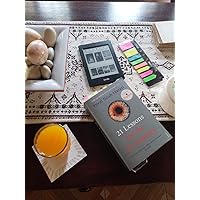
Inside the science behind why we do the things we know aren't good for us.
The Science of Sin brings together the latest findings from neuroscience research to shed light on the universally fascinating subject of temptation--where it comes from, how to resist it and why we all succumb from time to time. With chapters inspired by the seven deadly sins, neurobiologist Jack Lewis illuminates the neural battles between temptation and restraint that take place within our brains, suggesting strategies to help us better manage our most troublesome impulses with the explicit goal of improving our health, our happiness and our productivity.
Anyone who has ever wondered why they never seem to be able to stick to their diet, who marvels at how little work some of their colleagues get away with doing, who despairs at the anti-social behavior of their teenagers, who can't understand how cheaters can juggle extra-marital affairs, who struggles to resist the lure of the comfy sofa and the giant bag of chips, or who makes themselves thoroughly bitter by endlessly comparing themselves to others--this book is for you.
The Science of Sin surprised me. I expected a largely analytic framework of religious constructs but what it delivered was an engaging, extensive and impactful study of human behavior from historical perspective to modern times. The foci of the book are Christianity’s Seven Deadly Sins and contributing factors, such as the normalization of narcissism due to parenting styles, the brain’s feedback system and social media echo chambers to name but a few. I especially enjoyed the discussions of brain function in each chapter, tying together the philosophical, social and neurobiological aspects of human behavior. The author breaks down the subject of the seven sins into a series of intellectual and conversational topics that build on each other in a concise and educational manner. The book peeked my interest immediately and held it to the very last page. I would recommend this book to all those interested in human behavior and those curious about why they do what they do.
This book took me into a journey through seven main sins. In each sin, the author explains it in details starting with its origin, why we do it and how to control it. Since the author is a neuroscientist, he flooded the book with many clinical studies in relation. He explained both the psychological and physiology root causes of each of the seven sins in focus. The book is very good to read and I recommend it for those interesting in psychological literatures.
What a fun book. Finished The Science of Sin: why we do things we know we shouldn’t by Jack Lewis. A very fun book on what are the seven deadly sins, how they manifest in us today, and why they’re still so prevalent.
My Opinion: A very well written book that was deeply entertaining to read. Yes, some points can get annoying, and some data is just a tad outdated or not wholly researched, such as a claim that there’s no happiness in money, whilst in another segment we’re reminded to not take the running water for granted: sure, paid bills shouldn’t be taken for granted either, in my humble opinion. But, overall, the book is a very nice piece of food for thought: how certain feelings affect us, and how we can combat those feelings. A little offering of self-awareness, I guess.
Great read. Discusses each of the seven deadly sins in turn. Interesting social commentary. I should have skim read the science of the brain stuff a bit quicker. Which may put some readers off. Thought the provocative stance on God was unnecessary - although may it helped with the marketing, controversy is one way to sell right? But again, this is likely to put some readers off, which is a shame. Although he is anti-god, he is pro-religion. Overall would highly recommend and it was a worthwhile read.
I really wanted to love this book from the moment I picked it up, hoping to gain insight from a perspective different from my own. Unfortunately, I ended up disliking it. The author's tone comes across as condescending, presenting expert opinions on psychological matters, only to later admit having no real expertise in psychology. He is heavily biased toward one viewpoint, ignoring the fact that other perspectives can be equally valid. This attitude extends even to psychological topics where he’s clearly mistaken. Why offer a so-called expert opinion in such a dismissive tone on something you don't fully understand?
A very interesting and humane book looking at the origins and effects of the destructive behaviours classically known as 'sins' - sloth, pride, greed, envy, etc. Some of my 'take aways' are:
Much classical wisdom about 'sins' to be avoided, is fully justified in that giving in to short-term impulses to commit those sins, leads to longer term harm both for the individual and for society. And conversely, the opposite behaviours - generosity, humility, etc. - lead to individual and societal benefits.
The author is a neurobiologist. Mostly it is a fairly easy read with examples and observations, but as the title suggests that it will, it includes scientific explanations and brain science. I found myself tending to skim the neuroscience bits and take them on trust in order to keep reading at the same pace (slothfulness on my part perhaps!). A reader with a stronger biology background or more patience might benefit more. It made me wonder about my own writing and the effect on the reader of the inclusion of maths and graphs in an otherwise reasonably straightforward account of economics.
At the conclusion of the book, the author says "When people do things that they know they shouldn't, it is usually caused by emotional suffering." Coincidentally I've been listening to this year's BBC Reith lectures by forensic psychologist Dr Gwen Adshead "Five things I've learned from working with violent perpetrators" and there is some very clear overlap. Essentially, it seems that if people are socialised (part of a trusting community) and lead reasonably happy meaningful lives, they are far less likely to be violent or to commit any of the other sins. (If anyone wants to hear them, the BBC lectures are recorded and available online).
One other conclusion of the book is that while many of us may no longer be able to believe in a god, it would be a pity to lose all that religions have to offer in terms of community, emotional support, ritual, guidance, etc. I have also often wondered the same, and whether the United Nations should more actively promote values (such as those in the UDHR) and community activity around them.
Wow, yet another book by a neuroscientist who spends most of the text preaching to the reader about correct social behavior Instead of explaining the Science of Sin. Why do all neurologist believe they know the basis of human behavior and how to correct all aberrations of said behaviors? Not only don't they know root cause for anyone's behavior but their solutions are mostly panacea. This author for example urges not to give into the food industry which has lured us to overeat But does urge us to get Botox treatments so our permanent smile prevents us from even thinking angry! OMG, there are far too many things in this book and with this author arguments, which I would gleefully argue with! But my sloth prevents me from reaching no further than this review... IMO the author hasn't properly connected misbehavior with neurological science in any depth! The author also spends far to much time justify the concepts for how each "sin" is bad... not for the individual but for the society or the population we may leave behind. And lastly, if there's a physiological reason for all misbehavior we'd collectively label "sin" wouldn't that mean, it Wasn't sin, that it was illness! There's so many things we'd expect this author to mention that were Skipped... mostly because the author has to sell books therefore has to have a prominent social conscience therefore all the preaching (incorrectly) about individual exhausting the resources of those we'll leave behind... He even disses an After Live... We should just "Care" about the hardship of those that follow us... as if those who departed Earth before us Or the .1% who seek to control us (and not die) care about our hardship. Seriously, this author needs some better reasoning! IMO.
I just completed reading this book. The book addresses the seven sins. The author talked about each of the seven sins in a chapter on its own where he explained the background and the correlation of these sins into the human brain. The author, being a Neuroscientist, explained which area of the brain is activated when one of the sins is committed. The author at the end explains that religion has made it possible to help those committing these sins to be out of them. The author also suggests that social media and the advances internet had made it easy for these sins to be committed. The author also hoped that new technologies can provide better tools to deal with these sins. For me to remember the seven sins I came up with a seven letter word that has the first letter from each name of the sins. The word is EGGLPSW. You will notice that there are 2 similar letters and 5 different letters. Coincidently, I came up with a 7 letter word in Arabic (جحكفششغ) that has the first letter of each of these sins’ names in Arabic. The coincident is the Arabic word also had 2 similar letters and 6 different letters. Interesting!!. I am not sure if this book was translated to Arabic and if it wasn’t, I believe it should be. It is a good book to read and I enjoyed reading it.
Todos os dias enfrentamos uma batalha para nos mantermos afastados das tentações que nos rodeiam. Sabemos que não devemos ceder. Mas porque é tão difícil resistir e fazer o que está certo? Porque é tão difícil manter a dieta, ficarmos contentes pelo sucesso dos outros ou evitar a traição? A Ciência do Pecado apresenta as últimas descobertas da investigação neurocientífica sobre a batalha entre o que sabemos que devemos fazer e o que fazemos efetivamente. Inspirando-se nos sete pecados mortais, o neurobiólogo Jack Lewis apresenta-nos o fascinante tema da tentação: como surge, como lhe resistir e porque todos sucumbimos de tempos a tempos. E porque os nossos impulsos são, muitas vezes, demasiado fortes para resistir, o autor apresenta estratégias que nos ajudam a geri-los da melhor forma para atingirmos um objetivo muito concreto - dizer não à tentação e melhorar a nossa vida e a nossa saúde. [Resumo da responsabilidade do Plano Nacional de Leitura 2027]
ISBN: 978-989-8892-30-0
ASSUNTOS: Tentação; Neuropsicologia
CDU: 612.8
Livro recomendado PNL2027 - 2020 1.º Sem. - Ciências e Tecnologias - dos 15-18 anos - maiores 18 anos - Fluente
A little esoteric, but not awfully so. I've always wondered about those seven deadly sins and how much they really mattered in real life. Lewis makes good cases for why each of the sevens should be observed. Resisting temptation can help you live healthier, I suppose. Gluttony isn't exactly good for one's health, I don't think. Then again, I can't imagine worse case scenario for it either. Sin isn't really a concept I was brought up with though! Things are just as they are and humans, humans. Still it's always interesting to explore other peoples thought on the subject and gain a new perspective. It's an interesting read for anyone wanting to learn more about how our brains work and maybe gain some insight into how to fight harder to resist temptation. Be prepared for quite a bit of neurological speak about the brain (I didn't understand a lot of that myself, but no matter, book is still readable.). I received a Kindle ARC from Netgalley in exchange for a fair review.
I loved the book and realized that in my case I do not abuse all of the seven sins, since I use them in moderation. In my opinion this is the message the author tries to convey. We can have all these sins without falling into excess, because what is too much makes us antisocial, and in our actual society people who are somehow different are immediately set aside. It is written in a colloquial way which allows to enjoy each page without feeling drawn to the extremes of science and religion. The author is able to make a perfect combination of both.
Really good, looking at the seven sins from a few different perspectives - the historical, the religious and the neuroscientific. Why is a sin considered as such. What provokes us to keep on doing bad things to ourselves or others? Can we control the urge or is the urge controlling us? Where is the line of "right" or "wrong"? These any many other big questions are tackled in the book. I enjoyed reading it a lot and I'm recommending to friends. It's not a super easy read however, as the author refers to some theory- you have to be open to understand a bit of neuroscience.
The author covers the various sins mentioned in the movie Seven - Greed, Lust, Sloth, etc.
It was an interesting read on the science behind the behaviour by people who committed the sins. The author goes into what happens in the brain that causes one to be a sinner.
It wasn't easy to follow along, at parts where he wrote of how we might overcome the temptations with various suggestions from science to technology at the end.
While I didn't get to the why, the author helped present the science behind our sinful behaviour.
Overall an interesting approach to the science of sin.
A layman albeit neuroscientist view of what St Gregory pains as the seven deadly sins. Pride, Glutonny, Wrath, Envy.... See i forget the rest. Damn the 7 things we struggle to hold in our heads. Very likely a pet project not meant to stir any new grounds on how we assess social situations, personal gains and pains. Still, an easy, tactical read for those who believe that we all hold upper middle class incomes and the only vices perpetuating is the result of hubris and overwrought worth.
I'm not sure how this book was such a bad fit for me , but it was. I expected to be fascinated. Neuroscience and temptation and human decision-making are subjects I find fascinating, but somehow this one just felt flat, dry, and long-winded in a way that just did not resonate with me.
This book nicely summarizes the research behind each sin in layman's terms- for the most part. The consequences of the sins were interesting, but I found some of the rare and extreme examples (pedophilia and murder) were discussed at too much length.
This book is interesting but since I knew some psychological/neurological facts, I learned only some. But it's a fun book if you wanna know more about those bad things people do or have but with neurological explanations.
It sits right with my interests, since I am fascinated with religion as a topic and keen on disasembling it with sciece tools. There is also a good portion of new knowledge and curiosities here, my favourite being: paracetamol helps with social pain. I am on my way to the pharmacy! ;)
Only need to go a few pages in to see that Jack Lewis has no regard for the consideration of historical evidence, while also projecting his own biases and purporting his claims as a held general consensus.
Great book sharing interesting findings on why humans behave the way we do. Kept it simple yet informative. Breaks down the science and data in an easily digestible narrative, and didn’t feel text-heavy. Enjoyed this read!
A great read focusing on the brain structures that influence behaviours. A good way to add to your overall knowledge on behaviours and their origins. Maybe a slow start but picks up very quickly.
I really enjoyed Lewis's look at the science behind our Sins. He does a fantastic job breaking down each of the seven sins and looking at the neuroscience behind our behaviors. Highly recommend.
A love-hate relationship with this one. One moment, I like the insights the next. I want to throw away my Kindle. The author has a rigid mind. His tone sounds like a learned uncle who, despite being smart, has no clue of everything in life but thinks he does. The biggest highlight is the question on hobbies towards the end of the book. I need Lewis to really define and lay out what qualifies as a hobby. Based on his description, where does that leave activities like reading? I can go on and on about situations. The author was simply biased. Also, is winding down after a long day with a tv series now bad? Is resting sloth? Lewis tried so hard to show the voce side of every deadly sin, but for some, it was far cry. Pride and confidence are two distinct things, so it is sloth and resting. I love provocative nonfiction, and this did not let me down in that department. I settled for 3 stars because of the scientific terms, I’m green in neurology, and this made my head spin. Also, I found so much injustice for psychological progress in human beings. Definitely felt like a hardware guy trying to give a few points on software
Interessant om te lezen hoe de christelijke zeven zonden zich nu in de maatschappij uiten. Toch wel net iets te pyschologisch/neurobiologisch naar mijn smaak.
Why is this so lowly rated. As the title suggests, the book goes through all the sins and explains all there is to know from a science standpoint. Of course the lust was the best part, but all of them were interesting enough to enjoy the audiobook. It is not life changing by any means but entertaining enough, and good enough to shine above the mediocre. What I learned is that there is a certain level of overlap across the sins. And that I don't necessary consider all of them a sin, or a bad thing, or the examples provided. Even if I don't agree with everything, it was interesting!