This collection of seven connected stories set in the Ozarks explores the relationships between people and place and the changing culture of rural America where now, with a growing crime culture, characters are forced to reevaluate their sense of right and wrong.
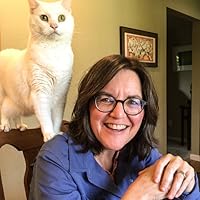
Angela Mitchell's stories have been published in Colorado Review, New South, Carve Magazine, storySouth, and other journals. Her story, "Animal Lovers," was awarded the Nelligan Prize from Colorado Review and given special mention in The Pushcart Prize XXXV (2011). An eighth generation native of southern Missouri, she now lives in St. Lous with her husband and sons. UNNATURAL HABITATS & OTHER STORIES (October 2018, WTAW Press) is her first book.
Angela Mitchell writes about the grit of modern-day life in the country - Arkansas and Southern Missouri, mostly - about people who make the wrong decisions, about the meanness that lurks out there in the tall grass, like a bobcat or a snake waiting to make its move. We find though, that those wild creatures have a more predictable code of ethics than the characters portrayed here ever could.
There’s a sense of empathy that underpins the stories, a feeling of the writer’s understanding. Mitchell sees these characters - not a saint among them - with impartiality and grace. One character says, “It’s like every move I made was the wrong one. But is it wrong if you can’t seem to avoid it?” Mitchell doesn’t shy from demonstrating the consequences of bad choices, but she shows the real struggles that lie at the heart of those choices too. These are deeply broken characters, explored with a true and steady hand.
Let’s talk entertainment. Mitchell has a talent for voice, each character rightfully taking hold of their own place in the world. The stories are veined with an uncertainty that keeps the pages turning, and the twists, though sometimes shocking, seem strangely inevitable in retrospect. The writing itself is beautiful, nature keenly observed - “a sea of grasshoppers rising and dividing” as one character makes his way through a field - and sentences, from cadence to content, are carefully constructed and honed.
This is a collection worth your time. And you might want to carve out a little chunk of it because you’re really not going to want to put the book down.
This collection of linked stories was a true pleasure to read. Mitchell peels back the layers of human facade to reveal bare-bones humanity. She exposes the blatant desires, wants, and needs of her characters without bothering to justify their actions or dress up their baseness. What we have here is a real, honest telling of the inner life of people: every day people just trying to survive. Mitchell does not spare her readers detail for the sake of comfort, and if we are uncomfortable, maybe it's because she touches so closely to our own veiled thoughts: our most secret longings, the things we won't admit to others.
Of all the stories my favorite is "Deeds" but don't go skipping around in this collection. It's meant to be read from start to finish. There's a order to things and you must sample the buffet as it comes to you. The hardest hitting and most genuine line I found sums up the collection: "Sometimes if you don't provoke it, meaness will leave you alone" (pg 134). But of course Mitchell, in capturing the totality of human spirit, just can't help but have her characters provoke that meaness. It is beautiful; it is brutal; it is life.
In the vein of Daniel Woodrell’s Winter’s Bone, Bobbie Ann Mason’s Shiloh, and recent television series such as Justified or Ozark, Mitchell’s Unnatural Habitats tells stories set in the Midwest and upper South based in the dark realism of desperate people, but ordinary people, trying to survive in contemporary America.
From the frustrated wife of a failing farmer, who seeks solace on her lunch hours in the arms of a car salesman and financial freedom in ill-advised get-rich-quick schemes, to the struggles of aging parents dealing with the second marriage of the long-lived family patriarch and the possible loss of the family farm, Mitchell’s characters represent a fascinating cross-section of small-town and rural America. Her perspectives are as varied as the difficult situations facing her characters, and Mitchell thereby illuminates the struggles and quiet victories inherent in the lives of people often forgotten by mainstream literary America.
I devoured this book in a single afternoon. The stories each work brilliantly on their own, but together they really build a world—not just because characters resurface from story to story, and not just because they're all in the same geographic area, but also because each story builds this similar kind of wild tension that thematically makes everything of-a-piece. Mitchell really has a gift for writing characters, and I think that's because she's really in tune with even the most subterranean levels of what motivates people; there's never a moment where a character does something (even when it seems bonkers and/or makes you want to choke the life out of them) that doesn't feel earned or somehow inevitable, even as it surprises you.
Literary and genuinely suspenseful. It’s rare for me to find a short story collection that has me binging stories, like I was for this, in order to see what happens next to the characters (and that bobcat).
There is a scene in Unnatural Habitats & Other Stories where a bobcat lounges on a bed between a man and a woman. It’s the couple’s first night together. The man loves animals and keeps them in his house, including birds and snakes, but the bobcat is special. Soon, awkwardness enters the scene, the moment the woman wakes up after her nap and feels the bobcat’s belly moving up and down beside her, instead of her date. She has awakened the bobcat now, looking at her like an unwanted third-party on the man’s bed, a rival. The woman feels strange about the situation, a strangeness intensified by the remoteness of the place she’s in: “She was somewhere she’d never been before, miles, probably, from the nearest highway, deep in the Arkansas woods.”
Most of Angela Mitchell’s characters in this debut collection are caught in that predicament. There are more than moments of strangeness and indecision. There are chasms of alienation. At times they feel like the black and white photographs of Matthew Genitempo in Jasper, a book that was reviewed in The New Yorker. His photographs capture the Ozarks with stunning melancholy and solitude, a desolate state of exile, detached from a universe driven to wire everyone into new levels of interconnectedness. While Genitempo’s project breathes images of clutter, dilapidation, and folks who appear to shun the concept of proper hygiene, the Ozarks of Mitchell refuse to romanticize poverty, and set her stories in the imagination of self-determination driven by ambition, struggling to ride the train of upward mobility. It’s a world bristling with schemers who walk the existential line between pride, self-preservation, and the specter of criminal behavior.
Consider the nameless female narrator in “Not From Here,” whose father is plagued with unstable employment, and a girlfriend who “comes and goes as she wants.” This could be a story of a girl whose future is highly dependent on government social services. She envies the life of Annette Clark, a schoolmate who resides in a big house. She longs for Annette’s white cat, velvet couch, and other fancy things. Mitchell tells the story so well that we forget the extent on which pedophilia drives the plot. The adult, female narrator in “This Trailer is Free” doesn’t feel any moral compunction after robbing a bank. Her childhood is a result of bad decisions that hampered her father’s employment prospects. On the other hand, keeping her head straight in high school lands her a decent job after graduation, before signing up for the Army. Then, her love for a man, while in the military, planted the seed for future, failed relationships.
In the end though, Mitchell’s women never alienate their conscience. They have no one to blame for their misfortunes but themselves. But can we say the same with Mitchell’s men? Mitchell puts their testosterone levels on overdrive, especially in two stories that appear to be chapters of a novel-in-progress: “Retreat” and “Unnatural Habitats.” Here, the men in question are Gary and Layton. Layton manages an insurance business called Insure-U, and Gary works for him as an insurance adjuster. But technically, Layton’s father holds the title of the business, since he bought it for his son’s future, “hopeful it would provide the structure his wayward son needed.” Sadly though, Insure-U is only a cover for another business with bigger turnovers: drugs. One day, Layton waits for a customer in a parking lot, when three men with baseball bats drag him out of his car. Now, why would Layton think Gary is behind the attack? I invite you to find out.
Stop binge-watching Ozark on Netflix, for a while. I know you’re entranced by Laura Linney’s irreproachable but chilling character on that show. However, you’ll be glad you took a detour into the Ozarks of Angela Mitchell, where the pages might feel like a bobcat’s fur now and then. And avoid tapping the aquarium housed in the woods of Arkansas, because something lethal fizzles the air when you irritate the snakes.
Reviewed by Michael C. Baradi, Librarian, West Valley Area
My book club unanimously agreed that we didn’t like most of the characters in these stories, but part of that is because we know them so well—here in Arkansas, where a good portion of the stories are set. And there is no doubt that Mitchell knows them, too. She especially seemed to have a firm grasp of how to write along the thin line between the fragile vulnerabilities of a young Southern girl and the unyielding, yet sometimes misguided power of the Southern woman. Short stories aren’t my preferred genre, but these were all linked well enough to keep me from feeling lost. I look forward to seeing what Mitchell can do at a novel’s length.
These linked stories create one compelling narrative that is not so much about the people in them as it is about the place that created these people and the circumstances in their lives. The characters are rarely (if at all) likable. But the collection didn't seem to need likable characters. Each story unwinds itself to a surprising end, and finding the connections between each story offers up a certain satisfaction.
This collection was exceptional. I'm a big fan of writers like Daniel Woodrell, David Joy, Bonnie Jo Campbell, Dorthy Allison, and Wiley Cash. Mitchell is absolutely this level of high caliber writer. The stories are loosely linked, so certain characters make appearances in several stories, and some stories are told from another point of view or from a slightly different time in the story, but overall they all weave together to make something so surprising and interesting.
The images throughout work so well to bring these stories alive. The animals, the landscape, the very real and vivid depictions of ordinary, yet often awful people. I couldn't put this book down. It is no surprise that Mitchell is a native of the Ozarks, as she captures the landscape in a way that makes the setting feel like an additional character.
I also really love her style of writing - it is at the same time efficient, yet so vivid and rich. I can't wait to read whatever she writes next - as I'm sure this will only be the beginning after such a strong debut.
This woman can really write. Funny, sad, subtle, blunt, powerful -- she does all that. In a series of linked stories, Mitchell puts us inside Arkansas minds. Her dialects and rhythms, their varied points of view, offer unique reading pleasures.
This was a random pickup looking for a small collection to read, unfortunately I only read the first 2 blurbs that talked about the writing and not the final one that talks about the characters. The characters are intentionally just utter trainwrecks as people, which is something loads of readers do enjoy, but it's a massive turn off for me personally. The first story for instance follows a woman going through divorce, who had adopted dogs she didn't want in order to avoid honest conversation with her husband about what she wanted in the relationship early on, neglects/mistreats the dogs, then demands them in the divorce while of course not wanting them at all, then wants to get rid of them. Pretty across the board the protagonists couldn't make a right choice to save their lives, and having been primed by the first story I was having anxiety every time any animal came up in the subsequent stories (which they did), though there wasn't any further abuse in the ones I read.
However, the actual writing was incredibly compelling. I would definitely read something else by the author, to the point that I went to look if they had anything else out and found out they are actually local to me, I'll definitely be following for new releases.
This collection of linked short stories reminded me of Elizabeth Strout's Olive Kitteridge. The characters are gritty and there is a satisfying balance of interior rumination and exterior action. While the title and the unsettling cover photo refer to a real incident in a couple of the stories, they also function as a metaphor for how we shape and contort our lives and environments to survive.
WOW. These bites of darkness were unexpected. I had to get the book because Angela Mitchell is one helluva good reader. She brought her work to life in less than ten minutes. Also, she left me needing to know what the hell was causing the itching.
I won't ruin it for you, but her stories scratched the itch–and I finally found out what caused it.
A bunch of dangerous Ozark ne'er-do-wells. Terrific cover. "Not From Here" and "Pyramid Schemes" didn't seem as strong to me. "Deeds" was my favorite in character development, story, and double-entendre title. Mitchell showed how well she understands her characters in the title story, even Bobbie. I particularly liked learning about Layton and Jody from other characters' perspectives.
All of Angela’s stories hooked me immediately. Her writing is easy to follow yet graceful and her characters are very well developed, most of them are outcasts constantly watching their back from something. Her stories take place in the Ozarks and setting is essential to the stories she tells. Every ending will leave you wanting to stay and savor it a bit longer before turning the page.
This is a wonderful collection of linked stories. Beautiful prose, engaging themes, and interesting and well developed characters. Mitchell does an amazing job with changing points of view to help us see how these characters know, love, and hurt one another. I enjoyed every moment of this book.
Another local author, this time a friend of a good friend. Good stories with southern Missouri/northern Arkansas flavor and the requisite colorful characters and presence of meth manufacturing. She reminds me a bit of Daniel Woodrell, who does Ozark Noir like no other.
You know there are normal, likable people living in the Ozarks, but there sure is a rich vein to be mined demonstrating otherwise, and this linked short story collection is another strong demonstration of that fact. The best stories here involve drugs, beatings, and a bobcat; the bobcat steals the show, I had to read ahead just to make sure she makes it through ok.
The characters in these stories are well written and brought to life. They seem real. They are often to some degree involved in or at least flirting with illegality. While the title of the collection might suggest something unnatural about their activities or environment, it all strikes me as perfectly believable human nature, in all its dumbness and meanness. Yet there's more to them than those aspects of themselves that just leave you shaking your head, which is a sign of characterization done well.