In Decolonial Daughter: Letters from a Black Woman to her European Son, Trinidadian-American writer & activist Lesley-Ann Brown explores, through the lens of motherhood, issues such as migration, identity, nationhood and how it relates to land, forced migrations, imprisonment and genocide for Black and Indigenous people.
Having moved to Copenhagen, Denmark from Brooklyn over 18 years ago, Brown attempts to contextualise her and her son's existence in a post-colonial and supposedly post-racial world in where the very machine of so-called progress has been premised upon the demise of her lineage. Through these letters, Brown writes the past into the present --from the country that has been declared "The Happiest Place in the World"-- creating a vision that is a necessary alternative to the dystopian one currently being bought and sold.
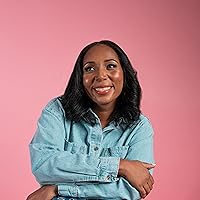
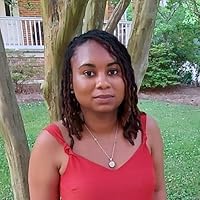
Lesley-Ann Brown is a Caribbean-American writer born in Brooklyn with roots in Trinidad and Tobago.
She studied Writing and Literature at Eugene Lang College at the New School in New York City. During the 90s, she worked in NYC publishing and freelanced for various publications such as the Source and Vibe magazines.
In 1999 she moved to Copenhagen, Denmark, to become a mother. She began organizing poetry events and freelanced for NBCBLK.
blackgirlonmars, her blog that chronicled her life in Denmark, was a pioneer in the blogosphere. She is the founder of Bandit Queen Press (how to make books in your kitchen), where she conducts writing workshops around. She has undertaken Bandit Queen Press workshops at the Royal Danish Art Academy, as well as in Finland and the US. Brown is also a TEDx speaker.
Her work has been published in the US, Europe, and Latin America. She is the author of Decolonial Daughter: Letters from a Black Woman to her European Son, her debut.
Lesley-Ann Brown is interested in how modernity has ruptured familial memories and bonds. She is interested in the land and the stories that it holds. In her upcoming publication, “Blackgirl on Mars,” she examines the current global mental health crisis and how it relates to “civilization,”; the project of modernity and healing, among other issues.
Whether we talk about Trinidad, Denmark, the United States- there is a constant unwillingness to examine history and to truly understand how we ended up here and how we could create a different path forward.
Lesley-Ann Brown writes that unlearning is a tenet of decoloniality which is why she wrote this book for her biracial son so that he can have the knowledge of who came before him and a narrative he can use to navigate his life.
Lesley-Ann Brown was born in Brooklyn, spent some of her formative years in Trinidad and Tobago and is currently living in Denmark. She is well traveled, a poet, activist, writer and also worked in publishing, Decolonial Daughter, Letters from a Black Woman to Her European Son is her debut non-fiction book. In this book she sets out to show how colonialism impacted her history, heritage, the world and how we are all still reeling from the effects.
This book is well written, well researched and deeply moving in certain areas when Brown talks about her childhood trauma, growing up with an abusive father, being sent to Trinidad for an incident she should have been protected from and the nuanced look into her prison visit to her brother. There are certain parts in this book that will leave you feeling heavy and like you cannot breathe because of a lot what Brown experiences I am sure will resonate with you.
A lot is covered in this book from Colonialism, Racism, Colourism, Classism, Religion, Abuse, Immigration, Microaggression, Depression, Mental Health, Motherhood, Systematic Racism, Generational Wealth, Policing of Women’s Bodies Privilege and Whiteness. Yes- I know, that is a mouth full but Brown was able to address these issued in a very nuanced and current way. She gives us information to help us learn more about our shared history, for us to better understand why we are still in 2020 having to “fight” racism.
Science says we carry within us the experience of fourteen generation so you can image why writing a book like this to her son will help in the unlearning process. I loved how Brown walked us through her family history, how she was met with opposition or silence when she asked about the past. I think a lot of people feel shame or some are not sure of their heritage but seeing someone go through and dig into her family’s history really empowered me to do the same. I could go on and on about this book but I know this was a deeply personal read for me and I implore you to give this a read and experience it for yourself.
I recommend this for anyone with children, or anyone looking to learn more about colonialism and it’s impact on the world today.
This is a collection of letters from the author, a woman who was born in American and is of Trinidadian descent, to her son, who was born in Denmark and is half Danish. Through these letters the author explores the history of Trinidad and Tobago, the Caribbean and Europe's colonial history.
Because this exploration is through the personal history of herself, her son and her family, I found it to be a little light touch, so struggled to relate to it, and it felt quite meandering in places.
There was a lot of interesting content about colonialism, and I could easily have taken 'Denmark' out and replaced it with 'UK' in the way she describes the colour blindness and the total unwillingness to see how the current anti-immigration rhetoric is a direct product of our colonial past and deeply embedded institutional racism. It was also interesting to read about the experience of being a parent of a biracial child, for example when her son could speak Danish better than her, or the way she is trying to pass on her Trinidadian heritage to her son who was born in the country that has as much to answer for in terms of colonialism and anti-immigration as many of its neighbours.
It is relatively short, so this is perfect for anyone wanting to start exploring colonialism but who is put off by heavy or jargon-filled books, though it wasn't one I was particularly drawn in by.
The author writes a series of letters to her 18 year old son to help him (and the book's readers) to understand her life and the world we find ourselves in. These letters have an originality and vitality, at times meandering off on a tangent before getting back to the story she was telling. The author is a Black woman born in Brooklyn, she spent her teenage years in Trinidad and Tobago and now 18 years living in Denmark. Her letters are at times very personnel and cover the modern world sins - racism, sexism, US international interference, US democracy gone wrong, the impact of colonisation on the colonised, the forgotten histories of slavery and imperialism, US imprisonment rates of Blacks and the poor, refuges, climate change and capitalism. As the author has the advantage of living in three different countries her thoughts are worldly, compassionate and based on both practical experience and various studies, papers, books, music and folk tales. She has given her son and all readers much to reflect on.
First, the writing was simply beautiful. The honesty, authenticity of the author's experience, how she told her story without whitewashing, sanitizing, or devaluing herself was stunning.
Second, as a daughter of the Jamaican diaspora, I seek out and specifically read and support writers from the Caribbean and African countries and diaspora. This book was 100% relatable on so many levels, it was like sitting in conversation with my best friend who is Guyanese and having a conversation about our lives and we met at 12 and are now in our 30s.
Third, I would love to meet this author, post COVID or even on a Zoom reading, and I have come to loathe Zoom. Maybe a WhatsApp group instead.
Either way, all women of the our respective Diasporas should read this book. It is full of life, history and also references to other authors I need to read and artists I need to look up.
Thank you Lesley-Ann Brown for a wonderful, insightful and historically accurate book. 👏🏾👏🏾👏🏾🖤💚💛🔥🔥🔥
A really insightful collection of thoughts and reflections, a lot of which really resonated with me, and a lot more that encouraged me to think and to learn. That's exactly what I was looking for!
It's written in a fairly casual, meandering style, but that's precisely what the author tells us it will be like in the opening pages, and it is afterall a series of letters to her son, so I don't see this as a negative or unexpected aspect to the book.
"In an attempt to do what those before could not do for me, I hope that by piecing our lineage back together again, through fact and conjecture, I can better equip you for life. I grew up with the knowledge that I shared the same birthday as my maternal great-grandmother, something that I was made to feel was of some import. Perhaps this explains why all my life, I have been obsessed with trying to decipher the whispers of the women in my family, with trying to salvage a story that would explain where I came from and how, perhaps, I could move forward."
I bought Lesley-Ann Brown's book "Decolonial Daughter. Letters from a Black Woman to Her European Son" on a whim in Copenhagen - and I am very glad I did so! In these letters, Brown, who was born in Brooklyn descending from Trinidad and Tobago and who had moved to Denmark roughly two decades ago, weaves together stories about her family's history and experiences she has made with wider societal analysis. She writes about colonialism, incarceration, James Baldwin, European Immigration policies, nature, motherhood and more. Some of the letters are more straightforward, others a bit meandering but always quite rewarding.
I will always be grateful to have met Lesley-Ann and have had her as a teacher! This book is so wonderfully written in Lesley's beautiful prose and it made me consider things in a different manner than I had ever done before. I practically ate this book up in the time I had at night or on the bus; making me stay up too late or almost miss my stop because I couldn't put the book down and go away from Lesley-Ann's writing.
Love you, Lesley-Ann! I am so excited for your next book and to see you again soon! <3 (Hopefully, this mess of a review makes any sense or does any justice to how much I loved this book).
This is a series of letters from a woman born in the US to her half white, half black son. She explores themes such as colonialism, US history, the history of Trinidad and Tobago, her own story, etc. She does this to help him, herself and the reader understand their places in the world.
Eh. Books written as letters are always a tough read for me and this was no different. I can't say this book really held my attention: sometimes the author goes on a lot of tangents. I suppose that makes sense for a letter to someone close to you and would understand but it was just pretty distracting.
Like others I appreciated her thoughts on history, colonialism, sexism, racism, US history, etc. That she has lived in many places also brings a perspective that's different from what I've read. But overall it did not really capture me, although I wouldn't rule out it resonating deeply for someone else.
I really didn't care for it and would recommend it as a library borrow.
I think this is extremely important book for everyone who thinks that there’s no racism in Europe. Or, and I will further elaborate, that you yourself aren’t racist.
Brown has managed to capture through her own experience, life in Denmark. It’s often a side that most people have no awareness unless you were born in multicultural country and mixed nationalities wasn’t something out of ordinary.
I’m so grateful to have found this informative and also highly sensitive read. Author’s view isn’t coming from a place of anger but more through hope that there is a moment in the future where every one of us can feel safe, get same rights, healthcare and salary terms, as well as just EXIST.
Lesley-Ann Brown shares life experiences through letters that she has written to her European, biracial son. Brown is Brooklyn-born, Caribbean raised and currently living in Denmark. Her letters are filled with lessons in history and geography, and very thought-provoking. Brown emphasizes communal responsibility, the importance of family and that of knowing one’s history (especially the matriline). I love how this book challenged me to think about the past, about what the future could be and about the part that I play in the world at present.
This book started out slow to me. It wasn't what I expected. However, because of my love of history, it resonated with me. Being from Trinidad and Tobago, it was quite familiar in her references. Halfway through, my interest was peaked as she was going through her family background. Linking her background to history and showing how it shaped or moulded her was seen throughout the letters.
Very beautifully written and extremely thought provoking while diving into deep heavy topics. By breaking up the message into letters, this allowed the delivery to be a bit less intense. But as food for thought... maybe these tough topics need to be uncomfortable in order to create change
This was a really great book, it opened my eyes to all of the sly racism in the world that so many black people have had to endure over the years and how it just increasingly gets worse as time goes on. Really upsetting but definitely eye opening being a white woman reading this
“Why do most believe that Western civilisation is Europe, when Europe isn’t even a united cultural force as such, but an amalgamation of conquered people, whose histories have been vitally erased and mythologised to the point where these very people accept uncritically this narrative.”
A powerful book. A book you should read as a Dane, as an European, as a human who wants to do better than our ancestors who robbed so many people of their future, their freedom, their lives.
"A wise person once said that the primary endeavor of education is to instill in our children a sense of dignity and pride in who they are. From this premise, new worlds can certainly be created, rather than the reproduction of out-of-date knowledge systems and rote learning" - Author.
The above lines summarizes nicely what Brown seeks to do with this book she wrote to enlighten her son about his heritage and the world in which he lives. She took the opportunity to pen it while she's alive and kicking so that their story is currently told and not thwarted when told by someone else.
In writing this book, Brown did some great research to place the reader, more so her son, in a better understanding from whence they came. Her story spans, New York to Trinidad to Hawaii to Denmark. I admire too how she broke the narrative of single parenting by the respect she showed for her son's father. Besides imparting knowledge of their family tree, she also sees to enlighten him on key topics like colonization, race, capitalism, politics
Lines that stayed with me:
1. "...the oil Brough money for the rich, and the steel barrels were used to create culture by the poor." 2. All of we is one - a famous Trini saying. 3. "You will find that the best way to learn about someone's character is through the work they do and not only how they treat you but mot importantly how they treat those perceived to be the weakest." Things I learnt:
1. Àse (Yoruba) - and so it will be 2. Vikings - fierce sea warriors 3. Singh comes from the Sanskrit word for "lion" and was originally adopted by certain warrior castes in India 3. Balbir means "strong" 4. okra - the same as the word for "soul" for the Akan people of West Africa. The plant made its way out of Africa when an enslaved woman hid the seeds in her hair. 5. jordmor (Denmark) - is a midwife that translates to Earth Mother 6. 2017 was the hundredth anniversary of when Denmark "sold" what are now called the US Virgin Islands - the islands of St. Cvroix, St. John and St. Thomas. - to the US which interestingly enough, never did endow its inhabitants the right to vote in the US. An entire population with very little electoral power 7. Drumming was banned in 1884 by the British Bec the feared that the salves were sending each other coded messages. 8. vuggestuen (Danish) - daycare 9. Denmark has the world's 4th largest personal debt, although ranking only 6th in terms of world salaries. 10. root trauma - deals with the loss that many feel when the home of their childhood is no longer there. 11. Haiti, now known for its poverty and natural disasters was the 1st free Black republic in the so called New World