Jump to ratings and reviews
Rate this book

Das weinfarbene Meer

Rate this book
Così Sciascia volle presentare questo bellissimo libro di racconti, scritti fra il 1959 e il 1972: «... mi pare di aver messo assieme una specie di sommario della mia attività fino ad ora – e da cui vien fuori (e non posso nascondere che ne sono in un certo modo soddisfatto, dentro la mia più generale e continua insoddisfazione) che in questi anni ho continuato per la mia strada, senza guardare né a destra né a sinistra (e cioè guardando a destra e a sinistra), senza incertezze, senza dubbi, senza crisi (e cioè con molte incertezze, con molti dubbi, con profonde crisi); e che tra il primo e l'ultimo di questi racconti si stabilisce come una circolarità: una circolarità che non è quella del cane che si morde la coda». Resta da dire che il tempo trascorso non ha per nulla intaccato, e anzi esalta, la felicità e l'efficacia delle storie qui riunite come in un breve compendio delle molte voci narrative di Sciascia: scoprirle (o riscoprirle) oggi significa anche lasciarsi sorprendere dalla loro sconcertante, amara lucidità. Il mare colore del vino apparve per la prima volta nel 1973.

Paperback

First published April 21, 1973

71 people are currently reading
2502 people want to read

About the author

Leonardo Sciascia

220 books490 followers


Ratings & Reviews

What do you think?
Rate this book

Friends & Following

Create a free account to discover what your friends think of this book!

Community Reviews

5 stars
322 (23%)
4 stars
635 (45%)
3 stars
367 (26%)
2 stars
59 (4%)
1 star
7 (<1%)
Displaying 1 - 30 of 138 reviews
Profile Image for Ted.
515 reviews737 followers
October 28, 2017
Giufa has been living in Sicily since Arabian times. In the script of that period his name appeared as a small, crested bird, its tail stuck straight up in the air and a grape in its beak. A thousand years later, Giufa still shambles along the roads, ageless like all simpletons and up to all kinds of mischief.


4 1/2 rounded up because of my typical disinterest in short stories. I found these easy and pleasurable to get through.


the author

Leonardo Sciascia (1921-1989) was a writer of novels, essays, short stories and plays. Several Italian films have been based on his fiction, including Il giorno della civetta (1968; The Day of the Owl), Cadaveri Eccellenti (1976; Illustrious Corpses), and Porte Aperte (1990; Open Doors).


Starting in his mid-50s, for about a decade Sciascia also held various elected offices in Palermo, the Italian Chamber of Deputies, and the European Parliament, as a member of the Communist Party and later the Radical party.


the NYRB edition

has an Introduction by Albert Mobilio, and a brief afterward by the author, in which he explains how the collection came to be published in 1973. The stories are presented in the order in which they were written, in the period 1959-1972. Three in particular were, by that time, hard to find – these being “A Matter of Conscience”, recently made into a film, and two stories which had been adapted for television, “End Game” and “The Long Crossing”. Sciascia notes that the collection seems to form, “collectively, a kind of summary of my work up to now”.

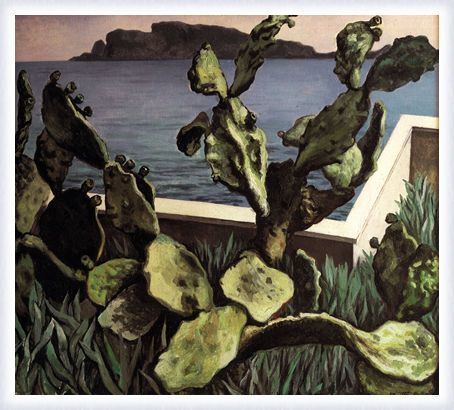
The cover design of this edition is based on a painting by a noted Italian painter, Renato Gutusso, also born in Sicily, who in fact shared many social and political views with the author. I particularly like it because it reminds me of flora I saw on a walk along the ocean cliffs between three cities of the Cinque Terra in 2007.


Cactus sul golfo di Palermo, Renato Gutusso, 1978


the Sicilian connection

Sciascia was a Sicilian first and Italian second, from what I have gathered. The stories in this collection are all set primarily in Sicily - perhaps one or two do not have any particular setting that I was able to recognize. I’m certain that a reader who knows more about Sicily than I do would see many connections to Sicilian land and culture that I never caught.

A couple stories started with a long, arduous journey from Rome to Sicily. It was nearly 24 hours, a long train ride, ferrying of the train cars over the Strait of Messina, then resumption of the train ride to whatever final destination on the island. This seems likely to have been a journey that the author took many times, though certainly air connections have existed for decades.

The Mafia are mentioned in several stories, which indicates not only the prominent role that organization has played in Sicily, but also that the violence and corruption connected to them and their internecine warfare was one of the author’s greatest political concerns.

As for the land of Sicily itself, the seas surrounding it, and the prominent beauty of these natural gifts, Sciascia is relatively non-committal. With the partial exception of the title story, he is much more concerned with people, and with the social environment resulting from human interactions.

the stories

Most of the thirteen stories in the collection employ a third person narrator. A couple exceptions use all dialogue, or quotations from letters. Some are small mysteries, which have the unusual feel that the narrator too is keen to see the outcome, even as the story is being related.

A word I thought of more than once was “curious”. There’s something different about Sciascia’s stories, hard to put into words – and even if I tried, they would be words dissimilar to another reader’s words, even as that other reader admitted this curious feel to the stories.

The title story, at about forty pages much the longest, tells of an engineer taking that previously mentioned long train ride from Rome into Sicily, sharing a compartment with three adults, two of whom are the parents of two young boys. The third adult, “attached to the others by ties of family, friendship or casual acquaintance, was a girl of about twenty-three, rather colorless at first sight and clad in a severely simple dress of black edged with white. The children never left her alone…” The engineer, a good-natured man in his late thirties, finds himself, somewhat against his wishes, drawn into conversation with the parents, the girl (whom he slowly becomes oddly attracted to once he observes her talking and interacting with the children), and even the young boys themselves, who are not very well behaved. The strange arc of the quickly progressing interrelations between the engineer and the others forms the story, a story which appears headed to an improbable conclusion, which turns into one most probable after all, as the travelers reach their destination.

This sort of ending-with-a -thud, a reassertion of reality onto the back end of a story which seemed almost a fairly-tale (or a folk tale), appears frequently in the collection. But these stories are each concluded in a different manner, so this reader at any rate, always one to give himself up to an author’s easy manipulation, was (at worst) at least somewhat surprised at the particular twist that Sciascia applied.

One of the TV adaptations mentioned above, “End Game”, is another story in which the reader shares one of the main character’s confusion over what is happening. This is so finely wrought that I find it impossible to even describe the story in a simple manner than would not ruin it for a reader. I found sudden thoughts of Jorge Borges sneaking into my consciousness.

These thoughts had already occurred when I read an earlier story, “Giufa”. The quote at the top of the review its first two sentences. It’s a tale is about the time that Giufa killed a cardinal “and got away with it either by sheer cunning or sheer stupidity: for the two are closely allied, and Giufa, stupid as he was, could also be extremely cunning.” The cardinal in question was one of the church-prelate species, also referred to in the story as “His Eminence”.

Other stories include “Philology”, a very curious (that word again!) story about the etymology of the word mafia, a dialogue between a lawyer coaching his client for an upcoming testimony; and “Apocryphal Correspondence re Crowley”, letters passing between a Chief of Police and His Excellency Benito Mussolini, and reports submitted by the Commissariat of Public Security at Cefalu. We thus read Sciascia's fictive and amusing telling of the 1923 expulsion from Sicily of the English occultist, ceremonial magician, iconic outside-the-box moralist and cult leader Aleister Crowley.

Then there’s “A Matter of Conscience” (that film mentioned above) in which a lawyer, on his way home from Rome to Madda (see train ride above) reads in a woman’s magazine (don’t ask) a letter written by an unnamed woman to an advice-giving priest, about an infidelity she committed many years prior, with a relative “who had been a frequent guest at our house”. Tormented by guilt, she wants to know if she should confess to her husband, whom she loves dearly. And the woman is identified as being from Madda!
The jubilation that surged within the lawyer’s breast was so intense that it bordered on ecstasy. This letter would provide a topic of conversation for at least a month at the club, among colleagues at the courthouse and within domestic circles. Theories by the hundred would be formulated, numberless private lives – of wives, husbands, wives’ relatives – would be put under the microscope and examined with the keenest curiosity; in some cases, like his own, this curiosity would be detached, almost academic; in others it would be malicious, dedicated to the winkling out of every shred of scandal.
And so it transpires. Suspicions build, each new idea or piece of previously confidential information engenders a host of new ideas and suspicions amongst ever shifting collections of the town’s males, together with profound interest, amusement, or dread among these leaders and followers of society. (Hm. Just now I’m reminded of The Scandals of Clochemerle.) This was no doubt made into a pretty amusing movie.


judgement

Stories by a keen writer, expressing irony, satire, and a wry sense of humor about the human condition. Recommended to lovers of short fiction.


. . . . . . . . . . . . . . . . . . . .
Previous review: Organic Marxism public service
Random review: Buddenbrooks: Family Life as the Mirror of Social Change a book about the novel
Next review: Ready Player One preview

Previous library review: The Periodic Table
Next library review: La Bodega the Fruit of the Vine
Profile Image for  amapola.
282 reviews32 followers
March 22, 2019
“E allora ha ragione il Traina: ti credi un grande uomo solo perché sei una grande bestia... Ma io me ne fotto”

13 racconti, alcuni brevissimi, che ci confermano quanto Sciascia sappia essere essenziale; gli bastano pochi tratti per raccontare una storia o una manciata di dettagli per pennellare un personaggio (magari anche solo accennato, ma di cui è messo in luce tutto quello che ci serve sapere). Mai retorico, mai banale, sempre lucido, sottilmente ironico, ricco di pietas, venato di malinconia; il tutto con la consueta prosa asciutta, elegante, raffinata.
Un vero maestro.

– Ma è un uomo che si è fatto da sé, almeno così mi ha detto, così dicono tutti: e si è fatto molto ricco, potente...
– Lei ha un'idea da romanzo rosa, da manuale americano del successo, sugli uomini che si fanno da sé. (...) Posso assicurarle che sono stati fatti, tutti, dagli altri; i quali, a loro volta, sono stati fatti da circostanze, combinazioni e intrallazzi che, anche se arrivano all'altezza della storia, restano fortuiti e miserabili.

Profile Image for Amaranta.
588 reviews261 followers
December 29, 2019
Era da tanto che non leggevo Sciascia. E adesso ricordo perché. L’autore mi rimanda una Sicilia che pur essendo mia, vera, mi turba, mi lascia insoddisfatta. Non per le parole che usa, per le immagini che fa rivivere, perfette nella loro veridicità, ma per quel suo essere ruvido in cui poco mi ritrovo.
E’ vero, la Sicilia è una terra difficile, dura da raccontare e forse è questo il modo giusto per farlo, ma io la vedo madre, accogliente e buona.
I racconti, nonostante le mie impressioni sono scritti magistralmente e meritano. Il mare colore del vino, scivola sulle nostre coste, le accarezza e le bacia.
Profile Image for William2.
859 reviews4,043 followers
July 21, 2017
The first half of this book of stories I found flat and not up to Sciascia's usual rich level of storytelling. But then halfway through, starting with the tale "Demotion," I felt the stories begin to deepen. By the time I got to "End Game," p. 121, I was without question back in the master's hands. This seems to me an anomaly in Sciascia's otherwise unusually consistent oeuvre. I'd like to know if the translation is at fault. I don't have a word of Italian, but a couple examples of English phrasing I found laughably bad. I would ask that any GR reader who has Italian to render a verdict on this translation. I'd really like to know what you think. So this is an uneven collection, for whatever the reason, recommended with reservations. However, I do not hesitate to recommend Sciascia's other collections in English. There are two that are fabulous. They are Open Doors and Three Novellas, available in US as a Vintage print-on-demand book, and Sicilian Uncles, on Granta Books and not currently in print. Of the novels, my two favorites are To Each His Own and Equal Danger. Please see my reviews.
Profile Image for Sandra.
963 reviews333 followers
March 6, 2013
Il mare colore del vino” è lo splendido mare della Sicilia, che al tramonto si tinge di colori dorati grazie ai raggi del sole che vi si riflettono: è un mare che “non ubriaca: si impadronisce dei pensieri, suscita antica saggezza”, quella saggezza che la terra di Sicilia sembra aver assorbito dai tanti popoli che l’hanno calpestata e ne hanno solcato i mari, e che si trasmette quasi passasse nel DNA dei suoi abitanti, come il piccolo e sveglio Nenè del racconto che dà il titolo al libro. Alcuni racconti sono rievocazioni di vicende del passato, in cui la donna svolge un ruolo di silenziosa pedina nelle manovre familiari gestite esclusivamente dagli uomini, come accade in Reversibilità e nell’ultimo racconto, Eufrosina, che in un disegno circolare, richiama la tematica iniziale, definita da Sciascia “la straziante religione della famiglia”. I miei racconti preferiti sono Gioco di società, che potrebbe benissimo essere uno di quei brevi episodi della serie Alfred Hitchcock presenta, che vedevo in tv da bambina, e Il lungo viaggio, tragicomico racconto di emigrazione che mi ha ricordato invece qualche film di Alberto Sordi. Sono racconti che offrono uno spaccato della realtà siciliana di ieri e di sempre, come Western di cose nostre che descrive le sanguinarie faide di mafia, ma contemporaneamente parlano di aspetti che riguardano l’umanità, descrivendo personaggi quali Giufà, un personaggio da favola, uno stolto astuto che riesce a fregare, grazie alla sua stoltaggine, le guardie, la giustizia e anche la Chiesa. Una lettura molto piacevole, che offre diversi spunti di riflessione.
Profile Image for Steven Godin.
2,782 reviews3,373 followers
March 7, 2019
Better well known in his native Sicily than overseas, Leonardo Sciascia is finally now reaching a broader audience with his short stories on Sicilian life. For the outsider, or anyone who has zero knowledge of his work it's almost like entering a hidden world in the way he opens up on his homeland, and whilst for the most part he deals with real life situations which at times do become quite dark, there is something of a mythical folk-tale feeling to some of his other stories included, which number thirteen in total. I found that they ranged from good to the very good. The pick of the bunch for me were - 'The Long Crossing' 'The Wine Dark Sea' 'End-Game' A Matter of Conscience' and Mafia Western'. This is a great introduction to Sciascia, and I can definitely see myself reading more of his work.
Profile Image for Roberto.
627 reviews1 follower
August 23, 2017

Benvenuti al sud

A volte si viaggia per tutto il mondo cercando di capire le culture dei popoli più remoti e si trascura invece di cercare di comprendere quella dei luoghi più vicini a noi.

E' quello che succede al protagonista di questo breve racconto di Sciascia (parte di una raccolta di tredici racconti), che costretto a convivere con una famigliola di siciliani durante un lungo viaggio da Roma ad Agrigento, impara improvvisamente qualcosa di più sui siciliani e sulla sicilianità. Un incontro che dura relativamente poco ma che rimarrà a lungo nella memoria, nostra e del protagonista.

Scrive bene Sciascia. Conciso, mai una parola di troppo, preciso. Ma qui anche particolarmente efficace, perché a momenti di riflessione alterna dialoghi esilaranti, specie con i due terribili bambini Lulù e Nenè che ne combinano di tutti i colori.

Ho ascoltato il libro durante un viaggio letto da Enrico Lo Verso, che è molto bravo a interpretare i dialoghi con la giusta cadenza siciliana; consigliatissimo, un'oretta di divertimento assicurato!
Profile Image for notgettingenough .
1,081 reviews1,364 followers
September 1, 2019
Oh, I could easily give this five stars. I'd say it's the most readily accessible of his books that I've read thus far. Short stories, no real room to get Off Topic, these are tight and 'enjoyable', a word that doesn't seem suitable for his books in general.

If you are thinking of trying this celebrated Italian author, this really does make sense as the way to start. Dip your toes....into the water of The Wine-Dark Sea.
Profile Image for LW.
357 reviews93 followers
August 14, 2020
Così, in una nota , Leonardo Sciascia parla del libro Il mare colore del vino
Questi racconti sono stati scritti -con altri,pochi, che non mi è parso valesse la pena di raccogliere e riproporre- tra il 1959 e il 1972.[..]
Ma se il lettore non se lo chiede e non me lo chiede, io me lo chiedo: perché raccolgo e pubblico questi racconti? Ecco :perché mi pare di aver messo assieme una specie di sommario della mia attività fino ad ora -e da cui vien fuori (e non posso nascondere che ne sono in un certo modo soddisfatto, dentro la mia più generale e continua insoddisfazione) che in questi anni ho continuato per la mia strada, senza guardare né a destra né a sinistra (e cioè guardando a destra e a sinistra), senza incertezze, senza dubbi, senza crisi (e cioè con molte incertezze, con molti dubbi, con profonde crisi)


Una scrittura precisa, raffinata, arguta, venata di amara lucidità ma anche di sottile ironia - mi piace come sa ricreare atmosfere e personaggi in pochissimi tratti
Da Reversibilità
Maestà- disse il ministro Santangelo battendo dolcemente un dito sulla spalla di Ferdinando- siamo alle Grotte.
Il re si svegliò con un singulto,in faccia al ministro aprì gli occhi acquosi di sonno e smarriti(..)
-E che mi svegliate a fare?(..)
Il labbro ,che pareva un rognone di vaccina, gli tremava dalla collera.

Da Il lungo viaggio bellissimo l'incipit:
Era una notte che pareva fatta apposta,un'oscurità cagliata che a muoversi quasi se ne sentiva il peso.
E faceva spavento, respiro di quella belva che era il mondo, il suono del mare:un respiro che veniva a spegnersi ai loro piedi.


In alcuni passaggi la scrittura si fa più intima ,delicata, anche malinconica; in certi racconti il tono è molto divertente, come nella storia di Giufà e del cardinale , e diventa beffardo in Filologia, dove c'è una disquisizione sull'etimologia della parola mafia
mohafat, che vuol dire difendere; hofuat, la miglior parte di una cosa; mohafi, amico, amico riconoscente

Una raccolta molto varia , davvero di piacevolissima lettura .
4 stelle piene!
Profile Image for Argos.
1,259 reviews489 followers
September 22, 2022
İtalyan yazar Sciascia gününün Sicilya'sını 1959-1972 tarihleri arasında yazdığı 13 öykü ile anlatıyor. Öyküler tabii ki, mafya, feodalite, cehalet ve fakirlik üzerine kurulu. Sol dünya görüşüne sahip yazar fırsat buldukça faşizme ve Mussolini’ye dokunduruyor. Lampedusa’nın müthiş eseri “Leopar”dan sonra okuduğum Sicilya üzerine yazılmış en iyi edebi metinler. Basit yazılımı, kolay okunumu ile ağır okuma ğstüne iyi gider.
Profile Image for Andrea.
179 reviews64 followers
September 27, 2025
"E credono, i siciliani, che non ci sia problema nella vita che l'affetto non possa risolvere. Risolvono così anche la morte"
March 13, 2021
Viaggio in Sicilia con qualche escursione nel continente"

Continuo a chiedermi come faccia a godersi a pieno Leonardo Sciascia chi è "continentale" (con continentale dalle nostre parti si denomina chi abbia i natali al di là del Regno delle due Sicilie).
Certo può godersi quelle poche parole che sembrano ricalcare gli stereotipi della figura del siculo ma di cosa ci sta sotto, la montagna di stratificazioni della sicula cognizione, può averne vera contezza?
Certo ogni produzione autoriale ha un sottotesto che nemmeno l'autore conosce e che viene lasciato alla libera interpretazione del lettore che a volte confonde la libertà con il libertinaggio interpretativo, rivendicandolo con forza.
Ciò non toglie che raccomando fortemente la lettura di questi racconti anche ai continentali.
Io ho preferito "Un caso di coscienza": Pirandello non è stato capace di raggiungere tali vette, preso com'era a innalzare il particolare ( lo sguardo siculo sulla vita) al generale sguardo dell'umanità tutta, condannandosi alla banale generalizzazione detto annacquamento.
Sciascia no.
Profile Image for Pilar.
177 reviews101 followers
December 15, 2023
Esta colección de cuentos de los años sesenta es pura "sicilinitud", vocablo inventado que significa insularidad, soledad y un cierto apego a las raíces de las gentes sicilianas. El relato del título a la recopilación, "El mar color de vino", cuenta los distintos avatares de una ruidosa familia siciliana y un ingeniero vicentino que discurren en el mismo compartimento de un tren Roma - Agrigento. Se dan la mano norte y sur, modernidad y tradición, cierto misterio de lo extranjero en tierras de campesinos, al igual que en "El largo viaje", en el que se rompe la ilusión de la emigración de unos ignorantes aldeanos, o "La prueba", en el que un empleador busca mujeres sicilianas para trabajo doméstico en Suiza. Tiene cuentos en los que se habla de lo habitualmente que no se habla, como de la manipulación femenina en "Juego de sociedad" o de la infidelidad en el entorno católico en "Un caso de conciencia", y cuentos en los que indaga en los elementos intrínsecos una sociedad lugareña que se asocian a la religión, a la corrupción, a la "cosa nostra" pero siempre vistos desde los valores del Iluminismo francés, de la razón que le gana a la superstición. Para muestra el mejor, "Filología", cuento antológico en el que dos mafiosos discuten sobre la etimología de la palabra "mafia". 
Profile Image for Noelle.
39 reviews6 followers
November 20, 2011
The Wine Dark Sea is a collection of Leonardo Sciasia’s best short stories. Sciasia, a Sicilian author who lived from 1921 to 1989, has a writing style that is much more accessible than that of many of his contemporaries such as Umberto Eco or Dino Buzzati. The bulk of these stories were written in the 1960s, and each eloquently speaks to an aspect of the Sicilian way of life and history, such as distrust for outsiders, the Mafia culture, Catholicism, Communism, and the desperation of poverty. Some read as ye olde folk tales, others as cutting political commentary. In “Demotion,” a Communist leader gets a back a little of his own after berating his wife for clinging to a decanonized saint. “Guifa” tells the tale of a village idiot who outsmarts a military captain in a rustic way that puts the reader in mind of Rudyard Kipling’s Just So Stories or a fable by Aesop. The greed and treachery involved in the depressing tale “The Long Crossing” leaves the reader feeling as betrayed as the victims in the story; it illustrates the desperation the people must have felt and the risks they took to reach a better place with better opportunities. “Mafia Western” is about a blood feud between two Families taking such a death toll that an outsider’s influence on the body count goes unnoticed until after a truce is negotiated. This man’s vendetta struck fear in the hearts of the fearless Mafiosi, a tale that many Sicilians would likely appreciate. Sciascia’s collection is riveting and enlightening, a perfect introduction to his other works such as The Day of the Owl.
Profile Image for heidola.
213 reviews10 followers
August 25, 2020
Racconti siciliani di cronaca, mafia, tradizioni e magia, che vanno giù come un buon vino.
Profile Image for Stephen Durrant.
674 reviews168 followers
October 21, 2014
Reading the late Sicilian writer Antonio Sciascia while traveling in Sicily recently was a good decision. So much that he writes about seems to have real currency, at least to this fairly superficial traveler with far too little Italian. The striking landscape (and wine-dark sea, at least as seen from Taormina) has not changed, nor has the corrupting power of the mafia, which just extracts and doesn't develop, or the almost imploring look of residents there who want to know if you are impressed with their homeland, a place where there is so much to like . . . and so much to dislike as well. Several of Sciasia's stories will long stay with this reader. "The Long Crossing," about Sicilians who believe they are traveling by ship to America, is devastating, especially when read against the backdrop of what now goes on almost daily in Lampedusa. And the delightful "Giufa," which is really just an extended joke, says much about gullible Catholicism and a "stupid Moslem," who is really not so stupid at all!
Profile Image for Procyon Lotor.
650 reviews111 followers
January 27, 2014
Mediamente buoni, qualcuno da fuoriscala. Solita classe, molto scialo: oggi con idee ben inferiori tirerebbero fuori da ognuna un romanzo, lui ne fa raccontini acuminati o balsamici. 1) Reversibilit�. 2) Il lungo viaggio. 3) Il mare colore del vino. 4) L'esame. 5) Giuf�. 6) La rimozione. 7) Filologia. 8) Gioco di societ�. 9) Un caso di coscienza. 10) Apocrifi sul caso Crowley. 11) Western di cose nostre. 12) Processo per violenza. 13) Eufrosina. Colonna sonora: vari rumori aeronautici.
Profile Image for Ann.
45 reviews9 followers
January 12, 2009
The Sicilian language has no future tense. Nostalgia for La Cosa Nostra is not strictly an American phenomenon. Aleister Crowley lived in Sicily for a while before WWII, and Mussolini had him deported. Or that one Sciascia might have just made up. There was one story in there that reminded me a lot of Lucio Fulci's "Don't Torture a Duckling."

Profile Image for Pamela.
1,673 reviews
November 30, 2022
Intriguing set of short stories, mainly set in Sciascia’s native Sicily, and written in the realist tradition with subtle revelations of the human (and Sicilian) psyche from the actions of his characters. I really liked the understated style of the writing which dealt with comedy and tragedy alike, allowing the reader to respond according to their own reactions.

My favourite story was A Matter of Conscience in which a letter written to the problem page of a woman’s magazine causes drama among the inhabitants of a small town, but the collection also contains an excellent noir crime situation, a short piece of historical fiction, and some comic gems - all well worth reading.
Profile Image for Elia Mantovani.
210 reviews5 followers
February 18, 2021
Sciascia come sempre infallibile. Una raccolta di 13 racconti pregni di sicilianità, intesa, come sempre nelle parole dello scrittore di Racalmuto, come metafora d'Italia e del mondo intero. A dir poco meraviglioso, uno stile intrigante perché sempre sfidante: leggere un racconto è quasi come provare a risolvere un puzzle, un indovinello del quale è sempre impossibile prevedere come se ne uscirà. Probabilmente è il titolo che regalerò i prossimi quattro o cinque compleanni di amici 🤣.
Profile Image for Naim.
113 reviews23 followers
March 16, 2021
"God Almighty! D'you think I'm an educated man or something? The nearest I ever got to university was looking after sheep!"
Profile Image for GONZA.
7,427 reviews124 followers
June 23, 2021
Una storia breve e intensa, bellissima, che sembra quasi di esserci in quello scompartimento, tra fragole e mortadella, sguardi obliqui e promesse di un futuro da dividere assieme.
Profile Image for Francisca.
562 reviews152 followers
January 28, 2025
Querido Leonardo,

es la primera vez que te leo y he de decirte que me has encantado. Que me gusta cómo entrelazas la vida con el deseo, la belleza con la vulgaridad, el saber estar con la elegancia de quien asume la desnudez como algo que nos es propio. Estos cuentos tuyos, escogidos, desde 1959 a 1972 son tremendamente puros y dignos de admiración. Menos uno, Juicio por violación, que no he podido leer porque me ha hecho sentirme muy mal (acabo de comer, entiéndeme que no me apetezca leer algo que retuerce la moral y la desgarra). Me gusta cómo usas la tradición de tu país para hacernos ver un mundo propio y absolutamente lírico. Hallo mucha poesía en ellos, sobre todo en ese El mar color de vino, ay, ¡cuánto me he podido reír! Nené es todo lo que una quiere encontrar en un libro, aunque a ratos quisquilloso, me ha hecho emocionarme y sentirme llena de amor hacia la vida.

Me gusta leer tus cuentos sin ser yo mucho de cuentos. Es curioso. Son como pequeñas gemas que una va encontrando a cada paso que da. Me hallo aquí feliz leyéndote, susurrándote para mis adentros, enfocando mi vocecita hacia mi alma. Este diálogo que hago contigo profundiza en el deseo de ser humano, de querer ser humano y no otra cosa, cosa rara en mí. Es decir, aquí en estos cuentos he saboreado el último soplo de vida que nos hace vulnerables y sensibles, que nos hace proclives a pensar y pensar, y sobre todo, a sentir con gran desmesura que la vida está no sólo para vivirla, sino también para contarla. Contar la vida es vivirla dos veces y creo que eso tú lo sabes muy bien. Me gusta tenerte cerca estos días, se comportan tus libros como un amigo fiel y confidente a esa rabia que puedo tener contenida pero que leyéndote saco al emocionarme, al encontrar un poco de catarsis, de sentimiento expandido.

Te leo y me encuentro. Tus cuentos me parecen tan poderosamente humanos y humanizadores, se nota que tenías mucha pasión por Italia, tu país, pues nos muestras la tradición como nadie. Es relevante cómo tus personajes luchan y no se dan por vencidos, pero a la vez se resignan hacia la vida, hacia una vida que se interconecta con la nuestra cuando la pensamos. La vida y la literatura no están separadas, al contrario. Tu literatura es pura vida, pura filosofía y filología. En estos cuentos hallo todo un sinfín de emociones compartidas, que no sé si has sacado de tu vida, pero que encuentro muy acordes a tu persona. Ya no puedo leer estos cuentos en otro lugar sin recordarte a ti, tu estilo está puramente vocalizado y definido. Encontraste tu voz y yo lo celebro, y estoy segura que cualquiera que te lea también lo celebrará. Todo aquí es puro canto, puro gozo, pura alegría por percibir y sentir. Percibo cosas y fuerzas muy contrarias sin embargo en tus cuentos, pero eso los hace mucho más humanos si cabe.

Ah, querido, voy a seguir leyéndote porque quiero saber más, conocerte mejor, saber más de tu imaginación tan pura como la de un niño. Quiero creer que no terminaste de crecer, que en esos cuentos realizaste toda una labor e imaginería de la vida. Porque ya te lo he dicho, vida y literatura aquí son lo mismo y el materialismo con el que muestras la poesía no es sólo un hecho cotidiano, va más allá de toda logia y toda filo. Las palabras mutan a sentimientos y nosotros no somos más que sus contenedores, esperando transmutarlos, esperando expulsarlos. Te leo para escribir después, como hacemos cuando el vuelo de un pájaro nos atraviesa la mirada. Te seguiré buscando, intentando encontrarte por ahí, por esos terrenos de habilidad inmensa hacia la palabra escrita.

Un saludo muy afectuoso de tu nueva lectora,

Francisca
Profile Image for Aaron Maes.
53 reviews12 followers
April 22, 2023
Dit is een schitterende bundel met dertien kortverhalen van de Siciliaanse schrijver Leonardo Sciascia die volgens zij die het kunnen weten ondergewaardeerd is buiten het Italiaanse taalgebied en al zeker buiten Europa. Zijn droge detectives 'Dag van de Uil' en 'Een Duidelijke Zaak' lazen vlot, maar lieten maar een beperkte indruk na, al zijn het beide huzarenstukjes die de maffia als thema hebben zonder het vermoeden van georganiseerde misdaad te benoemen.

Dat bewijst op zich al voldoende dat Sciascia een grote meester is die de aard van zijn volk op papier weet te vangen en dat doen de verhalen uit 'De Wijnrode Zee' evenzeer. Traditionalisme, patriarchale structuren, vreemdelingenvrees en algehele achterdocht zijn vaak de motor van de plot. Zijn oprakelen en integreren van oude volksverhalen en legendes doet me denken aan Ismail Kadare. Het titelverhaal, dat een pak langer is dan de rest, lees ik zeker gauw opnieuw. Een pak melancholischer van aard volgt het de bespiegelingen van een Italiaanse ingenieur tijdens een treinreis van Rome naar Agrigento. Onmogelijk om er niet Sciascia in te zien die als buitenstaander zijn mede-eilandbewoners liefdevol observeert.

5*
Profile Image for Cristina.
180 reviews8 followers
March 20, 2021
Bello! Non conoscevo questo scrittore. Ho iniziato per caso con il racconto che dà il nome alla raccolta e poi ho letto tutti gli altri.
Quanta cultura, quanti rimandi a storia e letteratura senza essere pesante.
Profile Image for Giancarlo Corsetti.
Author 3 books3 followers
October 14, 2023
Bel libro di racconti. Ho apprezzato più di tutti "Un caso di coscienza", da cui poi ho scoperto che è stato ricavato un film del 1970 con Lando Buzzanca. Consiglio.
Displaying 1 - 30 of 138 reviews

Can't find what you're looking for?

Get help and learn more about the design.