

What do you think?

Clover [クローバー] #4
Clover, Vol. 4
If you find a four-leaf clover,
It will bring happiness;
But
don't tell Anyone
Where its white flower
blooms
Or how many leaflets from its stem extend.
The four-leaved clover.
I only want your happiness, knowing
I can never be yours to share it.
It will bring happiness;
But
don't tell Anyone
Where its white flower
blooms
Or how many leaflets from its stem extend.
The four-leaved clover.
I only want your happiness, knowing
I can never be yours to share it.
128 pages, Paperback
First published August 9, 1999
About the author
Clamp
779 books3,187 followersŌkawa Nanase 大川七瀬
[born: 2 May 1967; Ōsaka, bloodtype: A]
Mokona Apapa もこなあぱぱ
[born: 16 Jun 1968, Kyōto; bloodtype: A]
Nekoi Mick 猫井みっく
[born: 21 Jan 1969, Kyōto; bloodtype: O]
Igarashi Satsuki 五十嵐さつき
[born: 8 Feb 1969, Kyōto; bloodtype: A]
CLAMP originally began in 1989 as a twelve-member dōjinshi circle, but by 1990, the circle had diminished from twelve to seven. Of the remaining seven, Tamayo Akiyama, Sei Nanao, and Leeza Sei left the group during the production of the RG Veda manga. Other former members of CLAMP also included Soushi Hishika, O-Kyon, Kazue Nakamori, Yuzuru Inoue and Shinya Ōmi. Currently, there are four members in the group.
In 2004, CLAMP's 15th anniversary as a mangaka group, the members changed their names from Nanase Ohkawa, Mokona Apapa, Mick Nekoi, and Satsuki Igarashi to Ageha Ohkawa, Mokona, Tsubaki Nekoi and Satsuki Igarashi (her name is pronounced the same, but written with different characters) respectively. The August 2004 issue of Newtype USA, a magazine specializing in events of the anime and manga subcultures, reported that the members of CLAMP simply wanted to try out new names. In a later interview with Ohkawa, it was revealed that initially Mokona wanted to drop her surname because it sounded too immature for her liking, while Nekoi disliked people commenting that her name was the same as Mick Jagger's. Ohkawa and Igarashi, wanting to go with the flow of Nekoi's and Mokona's name changes, changed their names as well.
In 2006, they made their first USA public debut at Anime Expo in Anaheim, California. They were well received at the convention, with 6,000 fans in attendance at their panel.
[born: 2 May 1967; Ōsaka, bloodtype: A]
Mokona Apapa もこなあぱぱ
[born: 16 Jun 1968, Kyōto; bloodtype: A]
Nekoi Mick 猫井みっく
[born: 21 Jan 1969, Kyōto; bloodtype: O]
Igarashi Satsuki 五十嵐さつき
[born: 8 Feb 1969, Kyōto; bloodtype: A]
CLAMP originally began in 1989 as a twelve-member dōjinshi circle, but by 1990, the circle had diminished from twelve to seven. Of the remaining seven, Tamayo Akiyama, Sei Nanao, and Leeza Sei left the group during the production of the RG Veda manga. Other former members of CLAMP also included Soushi Hishika, O-Kyon, Kazue Nakamori, Yuzuru Inoue and Shinya Ōmi. Currently, there are four members in the group.
In 2004, CLAMP's 15th anniversary as a mangaka group, the members changed their names from Nanase Ohkawa, Mokona Apapa, Mick Nekoi, and Satsuki Igarashi to Ageha Ohkawa, Mokona, Tsubaki Nekoi and Satsuki Igarashi (her name is pronounced the same, but written with different characters) respectively. The August 2004 issue of Newtype USA, a magazine specializing in events of the anime and manga subcultures, reported that the members of CLAMP simply wanted to try out new names. In a later interview with Ohkawa, it was revealed that initially Mokona wanted to drop her surname because it sounded too immature for her liking, while Nekoi disliked people commenting that her name was the same as Mick Jagger's. Ohkawa and Igarashi, wanting to go with the flow of Nekoi's and Mokona's name changes, changed their names as well.
In 2006, they made their first USA public debut at Anime Expo in Anaheim, California. They were well received at the convention, with 6,000 fans in attendance at their panel.
Ratings & Reviews
Friends & Following
Create a free account to discover what your friends think of this book!
Community Reviews
Displaying 1 - 30 of 47 reviews

August 29, 2023
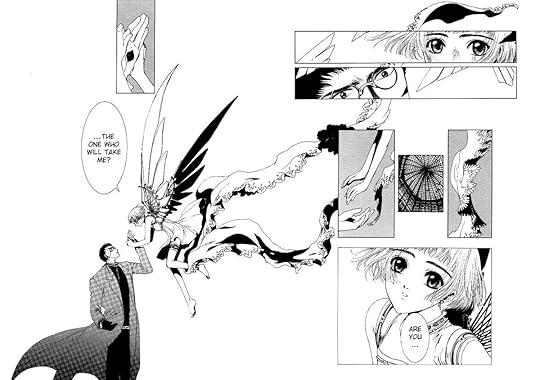
This manga is 50% song lyrics and 50% white background lol
I decided for this rating:
Art: ⭐️ ⭐️ ⭐️ ⭐️
Plot: ⭐️ ⭐️ ⭐️
The white backgrounds typical in CLAMP's mangas are a bit too much in this one, but I still love their art style. As for the plot, since this is an experimental anime I don't think the artists prioritised it, but it was still okay. I kinda wish this was completed but at the same time I don't know if I would be interested enough to go on reading for, let's say, 20 volumes. I get why I was so obsessed with this as a teenager though. If you read a lot of manga, this definitely looks and feels very different and... edgy I guess? So yeah, it definitely stands out.

April 30, 2017
This volume takes us back even further in time, to when Gingetsu met Lan.
It's a cute, if cliché story of the hunter sort of falling for his prey and a creepy co-dependant twin brother threatening to murder everyone his other half loves.
If I don't think about it too hard, I think I can actually live with this being the last volume of the story. It doesn't "end" on a cliffhanger or the world in danger, which makes it automatically 100% less frustrating than X-1999 or Drug & Drop, so there is no giant "AND WHAT NOW???" in your brain after you finished it.
Of course, if I do think about it more closely, I still have lots of questions about the Clover Project itself, the world this story takes place in as a whole and especially about the characters and what will happen to them in the future.
Is Sue really dead? How much time does Lan have left? Does he already love Gingetsu more than What's up with the "I'm-treasuring-your-arm"-dude? How is Kazuhiko doing? What the heck is up with the magicians? Did they have Oruha killed, because she meant something to Sue? How powerful was Sue really (compared to Lan, she seemed rather useless)?
There are more questions of course. In the end, this is simply a very visually stunning work that will more than likely remain unfinished forever, but also one, I won't lose any sleep over.
It's a cute, if cliché story of the hunter sort of falling for his prey and a creepy co-dependant twin brother threatening to murder everyone his other half loves.
If I don't think about it too hard, I think I can actually live with this being the last volume of the story. It doesn't "end" on a cliffhanger or the world in danger, which makes it automatically 100% less frustrating than X-1999 or Drug & Drop, so there is no giant "AND WHAT NOW???" in your brain after you finished it.
Of course, if I do think about it more closely, I still have lots of questions about the Clover Project itself, the world this story takes place in as a whole and especially about the characters and what will happen to them in the future.
Is Sue really dead? How much time does Lan have left? Does he already love Gingetsu more than What's up with the "I'm-treasuring-your-arm"-dude? How is Kazuhiko doing? What the heck is up with the magicians? Did they have Oruha killed, because she meant something to Sue? How powerful was Sue really (compared to Lan, she seemed rather useless)?
There are more questions of course. In the end, this is simply a very visually stunning work that will more than likely remain unfinished forever, but also one, I won't lose any sleep over.

November 18, 2021
Nel corso dei 4 volumetti le clamp sono riuscite a delineare questo universo in maniera molto chiara, e di questo sono felice, pensavo che non ci avrei capito niente, onest. C’è del potenziale, ma secondo me non è abbastanza forte da rimanere impresso a lungo. Mi pare si punti molto di più sulle atmosfere, sulla poeticità e sul senso di malinconia e reclusione che vivono i personaggi che contrasta (in maniera però positiva secondo me) con questa ariosità nelle tavole (i disegni sono come al solito il punto forte). In definitiva bello, non eccezionale, ma le clamp hanno fatto di peggio quindi mi accontento

July 12, 2019
No esperaba menos para el final. La idea de dividir a las personas según la cantidad de hojas que tiene el trébol y como un trébol de cuatro hojas nace único y trae suerte me pareció increíble.
A pesar de que el amor está presente no forma parte de lo que trata de mostrar en toda la historia. Por eso creo que en las escenas finales la separación de los protagonistas no duele tanto.
Como siempre los gráficos excepcionales acompañando a la trama que a pesar de ser corta no fue necesario nada más.
A pesar de que el amor está presente no forma parte de lo que trata de mostrar en toda la historia. Por eso creo que en las escenas finales la separación de los protagonistas no duele tanto.
Como siempre los gráficos excepcionales acompañando a la trama que a pesar de ser corta no fue necesario nada más.
This entire review has been hidden because of spoilers.

July 31, 2018
Still liking these side stories more than the main one! Ran is kind of a blank slate, personality-wise, but he's still leagues better off than Sue.
One of the minor problems I had with this series was actually addressed in this volume. The wizards are always talking about how the Clovers will beat them if they're not careful, but all the Clovers we've met have been pretty chill? Sue didn't even care about being locked up her entire life, Ora was making a career as a singer, and Ran just kind of sat around Gingetsu's house and helped out every once in a while. But now we've seen one pretty powerful Clover in Ran's twin, A, who just loves killing. Finally, some justification for keeping these little kids in cages (besides the weird aging thing that's not explained until the very end)! It's not a good explanation, but it's there.
Again, giving characters screen time and personalities to bounce off of really gets an audience to care for them, shocker of shockers! The only problem is that Gingetsu and Ran don't show their emotions very often, which does not really make for endearing characters. I do like the father-son relationship that develops between them, though.
The only reason this volume doesn't get the same three-star treatment as its counterpart is because of A. His uncomfortable obsession with his twin brother Ran is super weird to read about, even if I know it's to make him a villain with motivation. The second he started trying to drink Ran's blood I wholly understood why this kid would want to leave the only family he's ever known: that family's psychotic. Even if A does make a good adversary, his fixation on his brother and how quickly his plot wraps up makes it seem like a wasted effort.
So that was Clover! The series is all over the place, pretends to be deep when it isn't, has pretty boring characters, and doesn't expand upon its universe when it definitely should have! If this had been given a longer run, I think a lot of its problems could have been solved, but even then that's a huge maybe. I'd say if you're dead-set on reading these books, go through volumes three and four first and see how you feel. Other than that, skip it.
One of the minor problems I had with this series was actually addressed in this volume. The wizards are always talking about how the Clovers will beat them if they're not careful, but all the Clovers we've met have been pretty chill? Sue didn't even care about being locked up her entire life, Ora was making a career as a singer, and Ran just kind of sat around Gingetsu's house and helped out every once in a while. But now we've seen one pretty powerful Clover in Ran's twin, A, who just loves killing. Finally, some justification for keeping these little kids in cages (besides the weird aging thing that's not explained until the very end)! It's not a good explanation, but it's there.
Again, giving characters screen time and personalities to bounce off of really gets an audience to care for them, shocker of shockers! The only problem is that Gingetsu and Ran don't show their emotions very often, which does not really make for endearing characters. I do like the father-son relationship that develops between them, though.
The only reason this volume doesn't get the same three-star treatment as its counterpart is because of A. His uncomfortable obsession with his twin brother Ran is super weird to read about, even if I know it's to make him a villain with motivation. The second he started trying to drink Ran's blood I wholly understood why this kid would want to leave the only family he's ever known: that family's psychotic. Even if A does make a good adversary, his fixation on his brother and how quickly his plot wraps up makes it seem like a wasted effort.
So that was Clover! The series is all over the place, pretends to be deep when it isn't, has pretty boring characters, and doesn't expand upon its universe when it definitely should have! If this had been given a longer run, I think a lot of its problems could have been solved, but even then that's a huge maybe. I'd say if you're dead-set on reading these books, go through volumes three and four first and see how you feel. Other than that, skip it.

April 11, 2018
Éste es otro flashback que retrocede aún más que el tomo anterior, y cuenta la historia de Ran, que también tuvo una mínima relación con Suu y Oruha. Es dulce a su modo, y por supuesto triste.
Ojalá la historia se hubiera extendido un poco más para ver más en profundidad todo este mundo, realmente es muy interesante.
Ojalá la historia se hubiera extendido un poco más para ver más en profundidad todo este mundo, realmente es muy interesante.

November 9, 2025

Review for volumes 1-4

In what is known as the Clover Project, the government is rounding up children that appear to have magical powers. Whether they are a one, two or three-leaved clover depends on their magical potential - but it's four-leaved clovers they are truly worried about. Sū is the only known four-leaved clover and has been locked away from the rest of the world, never to meet anyone. Finally, her wish is granted when former military agent Kazuhiko is assigned to escort her to the place she believes will bring her happiness.
The biggest issue with Clover is that it is incomplete. Although it seems widely believed that it is complete in four volumes, it was planned to have a total of six of which the final two would wrap up the story. So, as an incomplete work, it sadly leaves the reader with more questions than answers. As it currently stands, it's only real appeal is the artwork.
I really enjoyed Sū as a character - she has a beautiful design and I generally like the way she was drawn. She definitely has that naiveté about her that I would expect from someone who grew up without contact with other people. It's nice to see how she is exploring herself as a person and developing a sense for the emotions inside her. Kazuhiko, I'm afraid, was a pretty boring character to me - I cared a lot more about some of the supporting characters such as the three-leaved clover Ran.
In terms of narration, this is definitely a more unique manga. It uses interesting panel layouts, often leaving large blank spaces. There are a couple of songs that are relevant to the story of which the lyrics are constantly repeated on the pages. On one hand, it gave this series a poetical and melancholic tone - on the other hand, it became very repetitive and I found myself skimming the lyrics.
As far as the story goes, this could have either been magnificent or your average snore-fest - for that to be determined, one would really need to know the ending. Many things were left vague and there is no conclusion to any aspect of the story. The little that is known is that it is set in some kind of dystopian world and the magic the clover children posses is in direct relation to electronic devices - it struck me more like psychic powers than actual magic.
Where was this story headed? Would there have been a happy ending? What was the government's goal? What exactly are these clover children? There's a near-infinite list of questions, and I'm sorry to say that we are likely to never find an answer as I don't see CLAMP returning to complete this work. That being said, if they were to return to unfinished works, there are other works I would prefer them to complete first.

November 1, 2022
Zum Inhalt:
Der Junge mit dem Namen C ist ein »dreiblättriges Kleeblatt«. »Dreiblättrige Kleeblätter« haben besondere Kräfte und Kenntnis von allen »ein«- und »zweiblättrigen Kleeblättern«, jedoch nicht von den »vierblättrigen«. C und sein Zwillingsbruder A sind die letzten »dreiblättrigen« auf der Welt. Als C sich entschließt, aus der Abgeschiedenheit ihrer Welt zu fliehen, kann sein Bruder den Verlust nicht ertragen und macht sich auf die Suche nach ihm - mit schwerwiegenden Folgen...
Einst waren sie zu Dritt. Die "dreiblättrigen Kleeblätter". Kinder mit besonderen Gaben. Doch in der Abgeschiedenheit eines Labors, in dem sie leben, ist eines der Kleeblätter gestorben. Nun sind nur noch A und C am Leben. Zwillinge. Sie können nicht miteinander, aber sie können auch nicht ohneeinander. Als sich C dazu entschließt aus dem Labor zu verschwinden, damit A leben kann, beginnt eine waghalsige Flucht und eine Verfolgung die es in sich hat. Denn die Hexenmeister der Regierung schicken Gingetsu, ein zweiblättriges Kleeblatt, um C zu fangen. Doch C wehrt sich und schließlich schafft es C Gingetsu auf seine Seite zu bringen. Für C oder Lan, wie der kleine Junge später heißen soll, gibt Gingetsu viel auf...
Als Bonusstory kommt die Geschichte rund um den Jungen Lan daher, der dem vierblättrigen Kleeblatt Sue und Kazuhiko bei der Flucht und der Reise in den Märchenpark hilft. Endlich erfährt der Leser wie Lan zu Gingetsu kam und was es mit den zweiblättrigen und dreiblättrigen Kleeblättern auf sich hat. Die Geschichte ist traurig und tragisch und doch wunderschön gestaltet. Auch trifft man hier auf Charaktere aus den anderen drei Bänden. So taucht Sue in ihrem selbst auferlegten Exil auf und auch Oruha, das einblättrige Kleeblatt, und ihr Freund Kazuhiko kommen in diesem Teil vor. Die Geschichte von Lan hat mir am besten gefallen, denn durch die Vorgeschichten kann man nun den ganzen Zusammenhang erfassen und bekommt endlich ein komplettes Ganzes. Das regt natürlich zu weiteren Gedankenspielen an und gefällt mir daher sehr gut.
In diesem Manga wird wieder gezielt auf Hintergrunddetails verzichtet, dafür aber an den Figuren und ihren Gesichtern sowie Outfits nicht gespart - ich bin noch immer ein absoluter Fan von Oruha und war wirklich froh, dass sie noch einmal auftauchen durfte. Durch sparsam eingesetzte Dialoge erfährt der Leser nur das Nötigste, kommt aber trotzdem sehr gut mit der Geschichte hinterher. Es bleiben keine Fragen offen.
Die Zeichnungen und die Welt, die CLAMP hier geschaffen hat ist durch Technik geprägt. Es mutet ein bisschen nach Steampunk an, ist aber sehr futuristisch gehalten. Maschinen und Menschen leben sehr nach beieinander.
Empfehlen möchte ich die Reihe allen Fans des Autorenquartett CLAMP. Wer andere Reihen mochte, der wird auch diese Reihe lieben. Bis jetzt gibt es vier Bände, wobei die Hauptstory ab dem zweiten Band bereits endet.
Von mir gibt es jedenfalls 5 von 5 Sternen, weil ich ein absoluter Fan der Reihe bin.
Taschenbuch: 128 Seiten
Verlag: Carlsen; Auflage: 1., Auflage (15. Februar 2001)
Sprache: Deutsch
ISBN-10: 3551756546
ISBN-13: 978-3551756541
Größe und/oder Gewicht: 14,7 x 1,2 x 21,2 cm
November 1, 2022
Zum Inhalt:
Der Junge mit dem Namen C ist ein »dreiblättriges Kleeblatt«. »Dreiblättrige Kleeblätter« haben besondere Kräfte und Kenntnis von allen »ein«- und »zweiblättrigen Kleeblättern«, jedoch nicht von den »vierblättrigen«. C und sein Zwillingsbruder A sind die letzten »dreiblättrigen« auf der Welt. Als C sich entschließt, aus der Abgeschiedenheit ihrer Welt zu fliehen, kann sein Bruder den Verlust nicht ertragen und macht sich auf die Suche nach ihm - mit schwerwiegenden Folgen...
Einst waren sie zu Dritt. Die "dreiblättrigen Kleeblätter". Kinder mit besonderen Gaben. Doch in der Abgeschiedenheit eines Labors, in dem sie leben, ist eines der Kleeblätter gestorben. Nun sind nur noch A und C am Leben. Zwillinge. Sie können nicht miteinander, aber sie können auch nicht ohneeinander. Als sich C dazu entschließt aus dem Labor zu verschwinden, damit A leben kann, beginnt eine waghalsige Flucht und eine Verfolgung die es in sich hat. Denn die Hexenmeister der Regierung schicken Gingetsu, ein zweiblättriges Kleeblatt, um C zu fangen. Doch C wehrt sich und schließlich schafft es C Gingetsu auf seine Seite zu bringen. Für C oder Lan, wie der kleine Junge später heißen soll, gibt Gingetsu viel auf...
Als Bonusstory kommt die Geschichte rund um den Jungen Lan daher, der dem vierblättrigen Kleeblatt Sue und Kazuhiko bei der Flucht und der Reise in den Märchenpark hilft. Endlich erfährt der Leser wie Lan zu Gingetsu kam und was es mit den zweiblättrigen und dreiblättrigen Kleeblättern auf sich hat. Die Geschichte ist traurig und tragisch und doch wunderschön gestaltet. Auch trifft man hier auf Charaktere aus den anderen drei Bänden. So taucht Sue in ihrem selbst auferlegten Exil auf und auch Oruha, das einblättrige Kleeblatt, und ihr Freund Kazuhiko kommen in diesem Teil vor. Die Geschichte von Lan hat mir am besten gefallen, denn durch die Vorgeschichten kann man nun den ganzen Zusammenhang erfassen und bekommt endlich ein komplettes Ganzes. Das regt natürlich zu weiteren Gedankenspielen an und gefällt mir daher sehr gut.
In diesem Manga wird wieder gezielt auf Hintergrunddetails verzichtet, dafür aber an den Figuren und ihren Gesichtern sowie Outfits nicht gespart - ich bin noch immer ein absoluter Fan von Oruha und war wirklich froh, dass sie noch einmal auftauchen durfte. Durch sparsam eingesetzte Dialoge erfährt der Leser nur das Nötigste, kommt aber trotzdem sehr gut mit der Geschichte hinterher. Es bleiben keine Fragen offen.
Die Zeichnungen und die Welt, die CLAMP hier geschaffen hat ist durch Technik geprägt. Es mutet ein bisschen nach Steampunk an, ist aber sehr futuristisch gehalten. Maschinen und Menschen leben sehr nach beieinander.
Empfehlen möchte ich die Reihe allen Fans des Autorenquartett CLAMP. Wer andere Reihen mochte, der wird auch diese Reihe lieben. Bis jetzt gibt es vier Bände, wobei die Hauptstory ab dem zweiten Band bereits endet.
Von mir gibt es jedenfalls 5 von 5 Sternen, weil ich ein absoluter Fan der Reihe bin.
Taschenbuch: 128 Seiten
Verlag: Carlsen; Auflage: 1., Auflage (15. Februar 2001)
Sprache: Deutsch
ISBN-10: 3551756546
ISBN-13: 978-3551756541
Größe und/oder Gewicht: 14,7 x 1,2 x 21,2 cm

December 15, 2018
The fourth and last piece of the tale of the Clovers is put into place in this volume, only it takes place before any of the other books. Once again, the story weaves in and out of a song which Ora is alive to sing, already Kazuhiko’s lover. Once again Sue sings along with her, only she has yet to reach out to Ora. The two of them are background characters, providing the poem and commentary on the life of C, the boy who will become Ran, the main character of this story, who discovers a life for himself outside the cage as one of Three Leaf Clover triplets, and the psychotic possessiveness of his brother, A. Readers see how Gingetsu starts out hunting C, only to become an oasis for the unhappy boy. Once more Kazuhiko is a background character, but a fairly active one, still in the military, offering a closeness and intimacy to Gingetsu even as he continues his affair with Ora and Gingetsu froms a bond with C. There’s even a suggestion that Gingetsu would never go to the lengths he does for C if not for his relationship with Kazuhiko, offered by General Shuu. Once more the Generals manipulate things from the background, fearful and jealous of their power, of the Clovers, although Ko and Shuu start to show remorse over this. It’s interesting how the Clovers could overthrow them if they wished, but they chose not to. Each Clover is more interested in their own happiness and the happiness of others than in power, including A. Once more, the story proceeds in an exquisitely artistic format, letting the song take us to each point. I do feel the lack of B’s tale and A’s jealousy within this, even though that would be a grim one to relate. In spite of the gaps, this book is as beautiful, compelling as any of the others, drawing me into the dreamlike, mournful existence of the characters, punctuated by smiles. For all of these qualities, I give this five stars.

August 14, 2020
Si encuentras un trébol de cuatro hojas,
te traerá felicidad,
pero, nunca
podrá ser encontrado.
La felicidad yace
en una caja secreta.
Nadie puede poseer
un trébol de cuatro hojas
pero entonces ¿que hay
de un trébol de tres Hojas?
Así empieza este 4to tomo y el ultimo hasta el momento, en este nos cuenta la historia de el trébol de tres hojas, que son tres gemelos que uno de ellos muere y o que pasa con los otros dos. Todo esto pasa mientras las otras historias se entrelazan. Cronológicamente pasaría primero los acontecimientos de este 4to tomo, luego 3ro tomo y por ultimo el 2do y 1er. Lo ultimo que pasa es lo que leemos con Suu y Kazuhiko.
La verdad es que la historia es hermosa y super trágica de estos pequeños niños. Y que amar, ser Libre, ser feliz es un lujo que ellos no poseen o que les fue robado.
En este tomo hay una nueva canción que se nota es para el protagonista de esta historia que es Ran uno de los trébol de tres hojas.
Me gusto el final.... contarles es spoiler así que mejor léanlo por que es hermoso.
WEN
te traerá felicidad,
pero, nunca
podrá ser encontrado.
La felicidad yace
en una caja secreta.
Nadie puede poseer
un trébol de cuatro hojas
pero entonces ¿que hay
de un trébol de tres Hojas?
Así empieza este 4to tomo y el ultimo hasta el momento, en este nos cuenta la historia de el trébol de tres hojas, que son tres gemelos que uno de ellos muere y o que pasa con los otros dos. Todo esto pasa mientras las otras historias se entrelazan. Cronológicamente pasaría primero los acontecimientos de este 4to tomo, luego 3ro tomo y por ultimo el 2do y 1er. Lo ultimo que pasa es lo que leemos con Suu y Kazuhiko.
La verdad es que la historia es hermosa y super trágica de estos pequeños niños. Y que amar, ser Libre, ser feliz es un lujo que ellos no poseen o que les fue robado.
En este tomo hay una nueva canción que se nota es para el protagonista de esta historia que es Ran uno de los trébol de tres hojas.
Me gusto el final.... contarles es spoiler así que mejor léanlo por que es hermoso.
WEN

March 13, 2020
¡Yay! El gran final. Sinceramente esperaba un poco más.
Terminamos de conocer a todas las personas que fueron parte del "Clover leaf project" y parte de ello me sorprendió. Los nuevos personajes no me terminaron de cerrar pero me gustó conocer el pasado de los secundarios y ver el trasfondo que se dio por sentado en los primeros tomos.
Me despido de esta historia con un buen sabor de boca. No sé por qué estuvieron tanto tiempo en mi biblioteca sin ser leídos pero definitivamente me arrepiento de ello.
En conclusión, Clamp nos presenta una historia en un mundo distópico que se rige por sus propias reglas e incluso innova con un lenguaje particular. El sistema de avances tecnológicos se me hizo un poco confuso al principio pero terminó siendo un poco más claro hacía el final. Además, los gráficos acompañan de forma excelente a la trama, siempre con el estilo tan característico de estás mangakas.
Terminamos de conocer a todas las personas que fueron parte del "Clover leaf project" y parte de ello me sorprendió. Los nuevos personajes no me terminaron de cerrar pero me gustó conocer el pasado de los secundarios y ver el trasfondo que se dio por sentado en los primeros tomos.
Me despido de esta historia con un buen sabor de boca. No sé por qué estuvieron tanto tiempo en mi biblioteca sin ser leídos pero definitivamente me arrepiento de ello.
En conclusión, Clamp nos presenta una historia en un mundo distópico que se rige por sus propias reglas e incluso innova con un lenguaje particular. El sistema de avances tecnológicos se me hizo un poco confuso al principio pero terminó siendo un poco más claro hacía el final. Además, los gráficos acompañan de forma excelente a la trama, siempre con el estilo tan característico de estás mangakas.

April 7, 2020
The darkest of the four, in my opinion, this volume goes back in time to when Ran first entered the picture and surprise surprise . We learn about the three three-leafs we heard about back in the first volume and why Ran and Gingetsu are so close~ Also that, like Ora, Another tragic but beautiful volume and I could only wish that they had continued the series after this... but I guess it is just another on the shelves of the unfinished and never-to-be-finished manga...

April 14, 2023
2.5
This volume introduces some new characters, both of which are Clovers. You only learn the tiniest bit about them, but it's honestly not that compelling. Small spoiler for Clover and Drug & Drop! This probably has the worst plot cohesion of all of the volumes. I understand what's going on, but again, it's so floaty it becomes nonsensical.
This volume introduces some new characters, both of which are Clovers. You only learn the tiniest bit about them, but it's honestly not that compelling. Small spoiler for Clover and Drug & Drop! This probably has the worst plot cohesion of all of the volumes. I understand what's going on, but again, it's so floaty it becomes nonsensical.

January 21, 2022
Bref, « Trèfle » nous propose un monde futuriste alléchant et des personnages au passé mouvementé et au futur incertain. J’ai aimé tout ce qui a été proposé, les pays, les armes, les moyens de transport, de communication, la place de la magie, etc., j’aurais simplement préféré que le ratio flashback/présent ne soit pas de 50/50 et qu’il y ait plus de tomes pour pouvoir développer tout cet univers. J’ai l’impression qu’on m’a ouvert la porte d’un lieu fascinant pour me la claquer au nez juste avant que j’y rentre. Je suis un peu frustrée par cet aperçu.

May 11, 2022
Che dire... il più poetico ed enigmatico manga delle sensei.
I primi due volumi parlano della storia in se per se, e io aggiungerei che non ha un finale non senso (come dicono in molti),anzi. Più definitivo forse non esiste. Nei volumi successivi hanno approfondito delle storie passate riguardanti i personaggi citati e descritti nei primi due.
I primi due volumi parlano della storia in se per se, e io aggiungerei che non ha un finale non senso (come dicono in molti),anzi. Più definitivo forse non esiste. Nei volumi successivi hanno approfondito delle storie passate riguardanti i personaggi citati e descritti nei primi due.

November 28, 2025
If not for the art, this is an unnecessary sidequest. Yes it gives a brief for the events of the first two volumes, specifically for the relationship between the two big bads but this volume could've been used to delve into the world more.
The core story is weak and repetitive of the first volume but the art yet again adds a lot of depth.
The core story is weak and repetitive of the first volume but the art yet again adds a lot of depth.
May 3, 2026
This volume works well as a flashback and connects back to earlier events, giving more context to the characters and their relationships.
It’s interesting that Sue’s storyline doesn’t fully resolve, which is frustrating but also makes the story feel more realistic and different from typical endings.
It’s interesting that Sue’s storyline doesn’t fully resolve, which is frustrating but also makes the story feel more realistic and different from typical endings.

June 3, 2019
La existencia de los trébol al fin ha sido explicada; tanto que explica la relación en la que cada uno se relaciona; sin embargo, es una lastima que las autoras no hayan seguido con la historia. De todos modos, queda el final del principio.


June 18, 2017
Stupendo! Una delle opere migliori delle CLAMP, a mio avviso.
Un vero peccato che non sia stata ristampata.
Un vero peccato che non sia stata ristampata.

June 4, 2018
This volume is an explanation of Ran and what happened with him.

August 27, 2020
Strange place to this series. Not enough questions answered.

April 16, 2023
En este tomo nos cuentan acerca de los tréboles...

June 5, 2024
Amo le Clamp e ogni cosa che fanno. L'unica cosa terribile è che la storia non finisce!

September 10, 2024
3.5
El arte de los paneles es alucinante, la maestría para sacarle todo el jugo posible al formato comic/manga es impresionante. Precioso.
El arte de los paneles es alucinante, la maestría para sacarle todo el jugo posible al formato comic/manga es impresionante. Precioso.
January 23, 2026
I wish CLAMP finished more of their works 😭 I love what they do but it's hard to enjoy it when most of them are left incomplete. : /


July 28, 2018
This is easily my favorite of the four stories of Clover- I don't know if it's that I've gotten used to the pacing (which is still structured like someone translating a music video into pure text, with the spacing and repetitions of lyrics doing a lot of the emotional heavy lifting; plus the quick cuts to striking images). It's very atmospheric, and it feels like it finally balances out in this final volume. Maybe the song having more than like 10 lines helps.
It is an interesting little story about freedom and affection for someone you are thrown together with.
It is an interesting little story about freedom and affection for someone you are thrown together with.
Displaying 1 - 30 of 47 reviews