Stranded on the distant planet Tschai, young Adam Reith is the sole survivor of a space mission who discovers the world is inhabited--not only by warring alien cultures, but human slaves as well, taken early in Earth's history. Reith must find a way off planet to warn the Earth of Tschai's deadly existence.
Against a backdrop of baroque cities and haunted wastelands, sumptuous palaces and riotous inns, Reith will encounter deadly wastrels and murderous aliens, dastardly villains and conniving scoundrels.
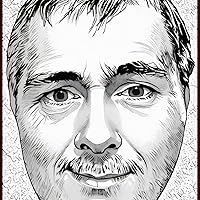
John Holbrook Vance was an American writer widely celebrated for his imaginative contributions to science fiction, fantasy, and mystery literature. Over a career that spanned more than six decades, he became known for richly detailed worlds, inventive language, and stories that combined adventure with sharp social observation. His work influenced generations of speculative fiction writers and helped expand the literary possibilities of the genre. Vance wrote more than sixty books and numerous short stories, many first appearing in science fiction magazines before later being expanded into novels and collections. His fiction was widely translated and developed an international readership. Vance grew up in California and spent part of his youth on a ranch near the Sacramento River delta, where he developed a love of the outdoors and an appetite for reading. The family experienced financial hardship during the Great Depression, prompting him to take a variety of jobs before completing his studies at the University of California, Berkeley. During these years he worked in several trades and cultivated interests in music, travel, and sailing, experiences that later informed many of the settings and themes in his fiction. Before becoming a full-time writer he held numerous occupations, including shipyard worker, merchant seaman, carpenter, and surveyor. His earliest published story appeared in the mid 1940s in a science fiction magazine, marking the beginning of a long writing career. Throughout the following decades he produced stories across multiple genres, though he became best known for science fiction and fantasy cycles that combined imaginative settings with elaborate cultures and social systems. Among his most famous works are The Dragon Masters and The Last Castle, both of which received Hugo Awards. The Last Castle also earned the Nebula Award, confirming Vance's reputation as one of the most distinctive voices in speculative fiction. His fantasy trilogy Lyonesse later received the World Fantasy Award, while his memoir This Is Me, Jack Vance! earned another Hugo decades later. In addition to speculative fiction, Vance wrote several mystery novels, some under pseudonyms including Ellery Queen. These works often blended crime elements with psychological or social themes and sometimes anticipated ideas that later appeared in his science fiction. His storytelling frequently emphasized cultural conflict, moral ambiguity, and intricate social customs rather than large-scale warfare, setting him apart from many contemporaries in the genre. Vance maintained close friendships with other science fiction writers and participated in literary communities that shaped postwar American speculative fiction. He traveled widely with his family and spent extended periods abroad, experiences that influenced the exotic settings and cosmopolitan tone found in many of his books. Music also played a role in his life and writing, reflecting his long-standing enthusiasm for traditional jazz. Despite gradually losing his eyesight later in life, Vance continued writing with the aid of specialized software and completed both fiction and autobiography in his later years. Over time his reputation grew steadily, and he received numerous honors, including the World Fantasy Award for Life Achievement and recognition as a Grand Master by the Science Fiction and Fantasy Writers of America. Critics and fellow writers often praised his distinctive style, wit, and imagination, and his stories remain widely read within the science fiction and fantasy community.
hello again Mr. Amazing! it's been a while since I've been in your company. I think not since way back in the summer of '89 when I was house-sitting for a friend's parents. parents who shouldn't have left a 19-year-old alone with so much booze and two highly-prized frozen pheasants hidden deep within the garage freezer's depths. that's when our love affair began. as soon as I cracked open your pages, I was mesmerized. at least two, three, probably more days went by as I began an obsessive quest to read, read, read you all up, then flip to the beginning and start all over again. both booze and frozen pheasant went unmolested, at least until my passion was satiated. and now that I've been seeing you again, I'm delighted to say that the magic is still there! I'm forever yours, Planet of Adventure.
this is a collection of four short novels. all very much connected and all very much a part of one long narrative. and yet all delightful in their own specific sort of way.
City of the Chasch details the arrival of one Adam Reith to the ancient world of Tschai. this is a world where men live in the shadow of four alien races who have long since made it clear that the human kind is the loser kind. Adam at first just wants to go home, but his burning anger at the injustice of it all means that he finds himself empowering his fellow humans into throwing off their shackles and fighting back for once in their loser lives. summary: Revolution against the Alien Overlords!
Servants of the Wankh finds Adam exploring more of this world as he attempts to carry out a rather eye-rolling plan to gain a starship and flee back to Earth. he takes in many sights along the way via various water vehicles, and falls afoul of two cultures: the insanely stylized Yao and the sinister Wankhmen, who may have a very different relationship to their alien masters than outsiders realize. are these Wankhmen actually topping from the bottom? summary: A travelogue featuring haunting journeys along haunting waterways as various communities are noted and often avoided. this is my favorite of the four, and not just because it was hilarious saying "Wankh" and "Wankhmen" and "Servants of the Wankh" out loud. I think that Vance is at his best when he describes relaxed water journeys full of contemplation on the topics of the strangeness of life and the fascinating oddness and diversity of human cultures.
The Dirdir has Adam entering two very different hunting grounds at the mercy of one very aggressive alien race. it is full of Adam turning the tables on the bizarrely aggressive Dirdir and various unpleasant human assholes, often using amusingly outside-of-the-box tactics. this novel also has Adam crying with relief after he finds a lost friend, which I thought was just the cutest thing. summary: Hunting grounds built to hunt most humans don't take into consideration that Adam Reith is not most humans.
The Pnume features an eerie journey underground and an increasingly amusing journey above ground as Adam finally meets the right girl while desperately racing back to the starship that has at long last been built and is ready for that much-delayed journey to Earth. summary: Creepy creatures dwell below; sunlit love throbs above.
these books are wonderful! they have everything I love about Jack Vance:
- smooth, elegant prose full of perfectly constructed sentences with not a word out of place. exciting adventures with a cunning, playful, sometimes dark sense of humor. ambiguity and lots of it. an occasional sense of melancholy. a relaxed, even meandering narrative that is still briskly paced. the pricking of egos, the sailing of boats, the coolly composed women and the transparently avaricious men, and other Vancean hallmarks. the restraint.
an eye for just the right detail. an ear for sharply ironic dialogue. an appetite for unusual foods. a nose for how exactly a place will smell. a soft but confident touch.
- an always witty focus on expenses and bargaining and how to get dat cash. it never ceases to surprise me how disarmingly entertaining he can be when writing on the minutia of exchanging money for goods or services.
- a sardonic hero who knows how to get himself out of a jam. Adam Reith is often dryly amused at the behavior of the people around him, just as Vance was himself clearly amused while writing this (and I while reading it). he's masterful but he also makes plenty of mistakes. he's a tolerant and very loyal friend, a gentleman with the ladies, and of course loathes injustice. he's the best.
- truly alien aliens. reptilian Chasch that come in three iterations: savage Red Chasch, haughty Blue Chasch, and the possibly senile but still ominous Old Chasch, all prone to ostentatiously byzantine decor and craftsmanship. the lumbering and aloof Wankh, resembling giant upright beetles and hiding their cities behind giant black walls. the fearsome and ritual-obsessed Dirdir, resembling upright cheetahs and making their basic predator nature a key part of their rituals. the sepulchral Pnume and their insane or at least highly eccentric cousins the Phung, in their wide-brimmed hats and long overcoats, living in their tunnels or hiding in shadowy caves and crevices, full of unknowable motivations and inexplicable goals. my favorite moments of these aliens, in scenes full of weird charm and creepy menace: wizened Old Chasch beckoning at travelers to stray from their designated safe area to do who knows what; two scenes of the silent Phung, bizarrely miming attitudes of surprise and consternation before slaughtering everyone around them in a whirling, prancing dance.
- interesting human cultures. there are probably dozens described, but key are the races groomed and transformed by aliens: the dowdy and unimaginative Chaschmen, the sinister and secretive Wankhmen, the pretentious and supercilious Dirdirmen, and the robotic, uncanny Pnumekin. I was particularly amused by the various scenes of Pnumekin walking into a room and "conversing" with each other by talking at the air and at walls, never at each other, never making any physical or eye contact, and giving responses as if they were musing to themselves aloud. ha! a whole race of asocial weirdos. I totally get those Pnumekin.
- two droll companions. the first a grim and suspicious youth, once the leader of a band of murder-happy nomads. the second a Dirdirman, full of affectation and cynical commentary and sarcastic dismissals. I loved the way these two nonchalantly displayed their loyalty to our hero and, even more, their own growing affection for each other. Adam Reith knows how to bring people together!
- two intriguing romantic interests. the first a melancholy and impassive member of Yao royalty, full of mixed emotions and an eventually overriding compulsion to commit bloody mayhem on all those who've wounded her pride. the second a naive resident of the Pnume's underground world, suddenly bereft of her placating drug regimen and finding herself changing from asexual bore to a woman with needs of her own.
- one completely fascinating spy who moves from opaque counselor to devious judas to uncertain ally to drug-addled victim to outright villain. one of the most compelling characters that Vance has ever created.
- despite the spare quality of the writing, Vance remains a strikingly visual writer. you can see his images perfectly. his descriptions of the dusky-golden light transforming Tschai into a sort of hazy dream-world were an ongoing delight. much like the series itself!
Science Fiction and Fantasy Grandmaster is an impressive title, but just not comprehensive enough.
Jack Vance was the Grand Poobah of Speculative Fiction Cool.
He was the High Galactic Overlord of SF Writing.
Jack Vance was the Tom Bombadil Dean of Fantasy Writing, the most powerful man on the planet but too hip to let it go to his head.
He was all that and a bag of chips.
In the late 60s, a cool period by most standards, Vance added his unique footprint on the SF/F writing landscape. In the time of Heinlein and Asimov, Vance laid down a simmering riff of Stratocaster JIVE with his Tschai books, collected later as The Planet of Adventure.
Campy theme park titles aside, The Planet of Adventure books established Vance’s ability to pay tribute to pulp fiction heroes like Edgar Rice Burroughs while transforming the plot heavy, traveling adventurer protagonist tales into something new. Adam Reith, Vance’s hero, is edgier and a touch darker than either John Carter or Tarzan. America was bogged down in civil unrest and an unpopular, misunderstood distant foreign war. Vance revisited and recast the fantasy hero mold into something new, something relevant for his time.
Vance’s writing is witty, well developed and fun. Beneath the surface, though, is a demonstrable observant eye towards human nature and cultural tribulations. Science fiction is best when it is allegory and Vance was too good a writer to beat his readers over the head. His were not the strident messages, but the sidelong glances and the subtle, dry witticism that cast a read-between-the-lines spotlight on shadows.
If you have never read Jack Vance, I have some good news for you. There is much to look forward to. You can start right here. The Planet of Adventure / Tschai series is perhaps not quite as edgy as Tales of the Dying Earth: The Dying Earth/The Eyes of the Overworld/Cugel's Saga/Rhialto the Marvellous, but that only makes it a bit more accessible. Vance was really, really good at this sort of thing. It’s pulp fiction, but not quite. For one thing, it is written in a style that is very much Vance’s own. That’s to say: bloody brilliant!
One of the author’s strengths on display here is the creation of a truly unique and interesting setting. The world itself is a very tangible presence in the story and drives the narrative. The mystery of Tschai lies at the very heart of these books. The characters, of course, are nothing short of delightful, even if most of them are either caricatures or just plain malicious. To be honest, there isn’t a whole lot of character 'development', but it somehow doesn’t feel like a shortcoming. It’s all about presentation, and Vance was a true master.
There are some dark things hidden beneath the pulpy veneer of this story. Yet, at the same time, there is a generous helping of dry wit and truly delightful dialogue. It’s a psychedelic roller coaster ride through a fascinating world, populated by all kinds of fascinating critters. Really – what’s not to like?
The most literate, witty, sophisticated, inventive space opera ever written. Jack Vance, a master in creating believable worlds and societies, excelled himself in this book, comprised of four connected short novels (I regard them all as one long novel, not a series). He tosses off entire elaborate cultures with unmatched ease, and his commentary is as ironic as it is profound.
Entertaining, exhilarating, suspenseful, funny, and occasionally horrifying, with a very slashy subtext (Adam/Traz), this book is one of his very best. Classic and classy.
At diferent times I liked reading diferent sort of books. In the childhood I read adventures (Jules Verne). As young adult I liked historical novel (Dumas' Musketeers).It was a period there I read all science fiction stories I could find. Then I enjoyed high-fantasy. Now I prefer urban fantasy. And at all this times, at all ages since 1993 I liked to read this book. Because of Tschai and because of Reith.
"Suppose I return to Earth, what then? Can I adjust to an existence so placid and staid? Or all my life will I long for the steppes and seas of Tschai?"
That is a quote from this book and I know how Reith is feeling if he is back to Earth. Like me. He can't forget. He is longing for the steppes and seas of Tschai. Like me... I am going there again and again.
The deeper I got into this series, the more I loved it. Amazing world building and depictions of beautiful and bizarre alien landscapes. Plus nonstop action and adventure to boot. This is a pulp series, no doubt, but a classic.
Since this is a four part omnibus edition I am going to take a break after each part, breaking down my review accordingly.
"City of the Chasch" - An enjoyable read...this feels like Vance doing his version of Edgar Rice Burroughs' A Princess of Mars. Reith is the equivalent of John Carter, unwillingly stranded on an alien planet and gets inexorably swept up in the local troubles as his sense of justice leads him to intervene time and again to right the wrongs he sees about him. That said, Vance has certainly put his own stamp on it stylistically and that dry wit of his comes through in the dialogue.
"Servants of the Wankh" - Our hero continues in his quest to find a way of getting home which takes him across continents and oceans and embroils him in intrigue and adventure. The humans on this world seem as Machiavellian and self-serving as they are in ours and Reith constantly has to use his shrewd wit to avoid being ripped off (or worse). This book, more than the last, reminded me of Cugel's Saga in some ways (although the protagonists couldn't be more different). I continue to enjoy this series immensely.
"The Dirdir" - Reith is starting to make a name for himself and finds that he is wanted by the Dirdir. In his quest to find a space ship he goes to desperate lengths for money which only makes matters worse. As usual he is forced to deal with unsavoury and corrupt characters. He is usually shrewed enough to avoid being swindled although perhaps this time he has met his match. I'm still loving the story but I am beginning to wonder whether our hero will ever find his way back to earth...maybe by the end he will no longer want to?
"The Pnume" - Reith gets to know another indigenous race of Tschai a little better than he really wanted to but makes a new friend in the process so it isn't all bad. But can he escape the clutches of the Phume and find his way back to his friends and spaceship that was so near completion?
Conclusion - All in all a great series of stories that I think needed to be read pretty close together as they don't stand alone, they are more like four chapters to one story. Well worth reading for any Vance fans. While there are similarities with Edgar Rice Burroughs' "Barsoom" series, these stories are less superficial and Vance makes it very much his own.
I read this book for the first time in English when I was 15 years old (which was not easy since I'm Dutch) and I just keep re-reading it round every 5 years or so. And every time I finish it, I wonder why it's still not made in to a movie. I think it's brilliant.
I've been holding off on writing my Jack Vance reviews for a while because I loved The Dying Earth stories so much that I'm still struggling with how to write the perfect review to make everyone run out and buy a copy. Since then, however, I've been slowly assimilating many of his other works so I suppose I'll start on a low ebb and review Planet of Adventure.
The plot is non-existent, but this is never a problem with this author. Like a lot of his books, it is basically an excuse for a series of travelogues and characters outwitting dangerous situations that they find themselves in. Two Earthmen crash on an unknown planet, only one, Adam Reith, survives the ensuing encounter with their reception party, and a struggle begins to locate a replacement ship and return to Earth.
I picked up these books after reading about the breakneck pace, the social commentary and alien anthropology, and vivid setting. All of these things are singularly Vancian, but I have to admit that this felt a bit like he was writing on auto-pilot. I hate to say it, but I began to notice a few JV cliches here, in fact. After a while it became a bit of a game I was playing with myself to see how many times the characters "threw their hands in the air" in exasperation, or pronounced the syllable "Bah!".
Another thing which was sorely missing was the humour. In the Cugel stories I was constantly laughing out loud at the archly silly dialogues, the punishing put downs and mean, stingy, backstabbing nature of the characters. In Planet of Adventure the main characters seem like ciphers-yes, Traz is uncivilised and spurns the unneccessary trappings of culture, and yes Anacho is a foppish twit. Now what? They are thrown together to make an odd couple and then almost forgotten about. As for Adam Reith, he is so bland as to basically not even be there. This maybe down a deliberate use of the "Tintin" principle, where the main character just acts as a vessel for the reader to experience another world through, but I'm not so sure. The unscrupulous, conniving and bloated Woudiver is about as close to interesting as they get here, and you won't experience him until halfway through.
Now, the good aspects of the books! As always, Jack Vance effortlessly constructs his settings, cultures and customs, even down to the meticulous details of the meals his characters eat (for some reason I can never get enough of this...) This series is no exception, especially in the last two books. Reith's infiltration of the underground tunnels of the Pnume were particularly great. Marketplaces, docks, deserts, hunting grounds, stadia, cities-it's all convincingly rendered in brightly coloured Vance-o-vision.
The way that an Earthman systematically disrupts ancient alien systems of government or slavery in each book is also very well done, and the authors knowledge of anthropology comes to the fore here. Systems of exploitation from both sides are overthrown, untruths are exposed and so on. Each alien race in the books "breeds" mankind for it's own uses, and they way they have been conditioned is probably the most interesting part of the books. It could be argued that it's a bit morally dubious, as Adam Reith basically contemptuously murders and denounces various ancient races for the way they live their lives-it's all a bit Robinson Crusoe shooting the "cannibals"-but to do so is probably to overlook the fact that these are adventure stories. Knowing how deeply Vance explores ideas of social custom in his other books, it's probably a deliberate exploration of these themes.
Sadly though, I finished all four thinking the books never got started. It's absolutely worth a read, and not a difficult one at all but I just wish the characters were a bit more solid and things became a little more developed.
Many others seem to rank this as top of their Vance reading lists, so I'm not sure what I'm missing. I read all of the volumes separately, so perhaps that's the problem, but I'd definitely say that there are much better places to start with this marvellous, overlooked author.
L’avventurosa storia di Adam Reith, terrestre che naufraga su un pianeta (Tschai, per l’appunto) e cerca di trovare un’astronave per tornare sulla Terra. Trama esile, ma la grandezza di Vance sta nella sua capacità di plasmare un mondo dalle mille culture, lingue, usanze, razze; un mondo variopinto, le cui forme si rivelano però oppressive e irrazionali agli occhi dello straniero che deve attraversarlo e a ogni passo si scontra con tradizioni millenarie che nel migliore dei casi gli sono d’intralcio, nel peggiore minacciano di stritolarlo. Ma la caparbietà di Adam Reith è infinita e avrà effetti che andranno ben al di là del suo progetto di fuga.
Ahhh, Jack Vance's world(s) ... I've been away too long. This one is a bit more of the fantasy realm than my previous read, "The Demon Princes," but is also a collection of several short novels in a series. In this case it's four novels, while "The Demon Princes" is five(I think). Here the setting a planet with multiple alien races and a confusing history - I'm sure Mr. V. will get to that at some point. The origin stories the locals give out when asked are amusingly nutty(unscientific to say the least). So far I'd say that this more resembles Philip Jose Farmer's "World of Tiers " series than it does "The Demon Princes." It's closer to fantasy than sci-fi but very much straddles whatever boundary lies between the genres.
- Macroscope - isn't that a Piers Anthony thing? Or is it vice versa?
- A beginning resembling "Planet of the Apes"
- Who used the term "berserker" first. JV or Fred W. Saberhagen?
- The title planet is an appropriately impressive and crazy place. Jack V. could not make it otherwise of course.
Part one is done. The similarities here with "The Demon Princes" are quite evident, particularly in the character of Reith, a cool, calm and collected badass in the mold of Kirth Gersen from Demon Princes. Or, perhaps it ought to be the other way around as this book came first. The imagination and verbal skills of the author are consistently in evidence. It's a page-turner, and not necessarily for any suspense, but for the great writing.
- there's a "mad king" mentioned here, as in the "Hyperion" books.
- The Blue Chasch = the N.Koreans ...
- is the descriptive phrase "half as long as a football field" a bit out-dated for it's use so far into the future???? Maybe ...
Interesting - according to the bio at the end of the book JV was born in 1920, but according to Wiki and G'reads he was born in 1916???????? A mystery ...
I'm now well into book #2 and liking it even better than book #1. JV is really letting his creative chops rip as we visit the wacky city of Settra, where it's not considered good form to impede a paid assassin in the execution of his contract. Deep doo-doo will await you! The first book focused on action: battles both small and large. This book is more ... pensive(?) as the author lays out the various mysteries, beauties and amazements of Tschai. Plus, it's pretty funny, which is par for the course with Mr. Vance. Not really a lot of sci-fi here but the "realistic fantasy" descriptions and plot twists are an ongoing treat. This stuff is like word-crack, it crowds out all my other reading!
- Some here have mentioned that this would make a great(if very expensive) movie. I agree!
- Scorps! Think Arthur C. Clarke ...
- Vance makes nice fun of religious dogmatism.
- This book came from the Augusta, Me library, where it was checked out 14 times in 1994.
Finished now with #2, "Servant of the Wankh," as Adam Reith displays his kinship with "The Demon Princes" Kirth Gerson by being very resourceful and lucky. Unlike the loner Gerson, however, he has an ever enlarging entourage to assist him in his schemes to get back to Earth. Mr. Vance's storytelling remains unsurpassed. The scene of Reith's trial before the "board" of Wankh bigwigs and triumph over the machinations of the duplicitous Wankhmen is awesome and inventive. Back to it with #3(The Dirdir) tonight.
(Almost)nothing but Vance last night and I wonder if I'm getting a bit of fantasy overload. Still ... one MUST see it to the end and probably with all due haste as the pages turn. I wish I could read faster but ... I hope we get inside that Dirdir glass building. Something tells me that we will.
- The Dirdir hunting thing reminds me of "The Naked Prey"(a movie).
- JV tries to clear up something I've been wondering about; the fact that all the humans on Tschai speak the same lingo. Convenient for him(and Reith). Definitely NOT the case on what we presume to be the human home planet - Earth.
- Aila Woudiver = Jabba the Hut
Now finished with this intense and excellent saga with the finish of Book 4(The Pnume). Some reviewers her have noted that the whole things seems to kind of peter out at the end, or, to put it differently, end rather abruptly. Certainly there's more story to be had if Mr. Vance had desired to write it: a return to Earth and adventures there, followed by a return to Tschai and on and on ... The author chose to move on(I think - I'm not aware of any more stories in the series). I still say that "The Demon Princes" is/was better. Personal opinion ...
- This book has another moment like THX 1138.
- How does Reith "pull the rope down" when he gets down into the Pnume-world?
- Reith assumes the role of Jesus before Pilate. The heretic outlander with the good/bad news - unwelcome. Also, he is a bit of a superman, isn't he?
- Why wasn't Reith's ship shot down as it departed as his first ship was shot down as it arrived? And ... I'm not sure it was ever revealed who had blown up his original mother ship.
- This book includes LOTS of sailing, as does Ursula K. LeGuin's "Earthsea" series.
- Wiki points out a factual inconsistency about the Pnume between book Two and Book Four. Can they or can't they swim?????
In the classic pulp plot, stranded man becomes hero, leads fight against increasing dangerous enemy alien races, and gets the girl. Gabble-gook is light, mostly comprehensible, confusing with so many races. Humor cranks the rating higher. The outlook is original Star Trek - we enforce peace on the universe.
With opposite new friends, taciturn dark stocky Traz and garrulous pale tall Anacho, Reith breaks each alien race apart from their associated imitative "men", and overcomes more villainous allies. Females are helpless pretty mysteries. I prefer unexpected females in Alastor http://www.goodreads.com/review/show/.... Reith just wants to go home.
1 City of the Chasch
An Earth spaceship, responding to a call received 200 light-years before, is destroyed by beams from Tschai. Only scout Adam Reith survives - tall, lean, and dark-haired. Captured by Emblem nomads who worship pink moon Az and blue moon Baz, he escapes with their former boy chieftain straightforward Traz.
After befriending pretentiously-mannered Didirman Anacho, Reith takes the impoverished city of Pera from villainous Naga Goho and his thugs. He provokes the ruling Blue Chasch of Dadiche who hold his "boat" and attack in force. Reith prefers surprise offense to defense.
A common mythology, that imitative "sub-men" corpses produce imp babies, keeps them subservient to aliens. Reith tries to convince men they can be civilized. He continually rescues beautiful Derl, Princess of Cath, from harm; she gives him her "last name", that only her husband may hear.
2 Servants of the Wankh
Hoping Derl's father will gratefully help Reith return to Earth, the trio set sail for Cath. But their "erotic accomodation has long since run its course" p165. Reith must be both diplomatic and devious to avoid clothing and travel expenses incurred by her and fellow noble Dordolio, until, according to Yao custom, shame leads to suicide.
Lord Cizante regrets rash promises for his lost daughter, and Cath lacks the technology for a spaceship. To steal from a Wankh yard, Rieth enlists a dubious ally. Zorfa is a Lokhar man, hair bleached white, skin dyed black - opposite of females.
.
3 The Dirdir
Scariest yet, Dirdir hunt and eat humans, sanctioned in Carabas wild lands where prospectors dig for sequins. The trio fight for the fortune needed to build a spaceship. Their Sivishe yard go-between for materials, elephantine Aila Woudiver, skims, swindles, then betrays one to the Glass Box, an enclosed arena for Hunts. Kindly old craftsman Deine Zarre and his two innocent orphaned charges are breaths of niceness.
4 The Pnume
Evil Woudiver drugs and sells Reith to the underground Pnumekin, human servants to the Pnume. To escape, Reith enlists a girl to read a top secret book of maps, and nicknames her Zap 210 after her group area designation. Withdrawn from addictive hormone suppressants, she grows womanly and enjoys "boisterous behavior".
The way back to Sivishe seems much longer than the way in. Zap has no other future than with Reith. Less haggling and fighting this time. Running, swimming, pretending to board a ferry, and cleverness get him away from pursuers. Thankfully Woudiver gets punished justly.
Typo: p 355 "street passes closes to that broken building" is "close"
Definitions: p 19 pangolin = scaly long-tailed and snouted mammal 22 withe = rope of twisted twigs/stems 23 swale = hollow 24 habiliments = clothes 43 fetor = stink 347 effulgence = radiance 418 caternary = curve of chain hanging from two level points 432 adit = horizontal underground tunnel 475 sweeps = oars
If it were possible to eat a mile long hot fudge sundae and not get sick, Vance's Planet of Adventure would be the readerly equivalent. For me, at least.
Adam Reith is a most splendid hero who accumulates a marvelous set of sidekicks to accomplish marvelous deeds in all manner of settings and situations on the planet Tchai.
I dig this out and reread it every few years for a time of totally satisfying, zero-calorie action adventure. For we Vance-lovers (a select breed, to be sure) part of the treat in reading his works is the erudite dialog. Reminds me of a conversation I read about, wherein several acclaimed science fiction writers of decades past were discussing Vance's unique and stylized mode of dialog. Two had decided it was "wooden." Keith Laumer (bless his soul), had a different perspective: "carved," he said.
Probably time to pull my yellowed paperback out and read it yet again before the pages crackle and crumble.
The Planet of Adventure is an omnibus of four Jack Vance science fiction novels. These four novels constitute The Planet of Adventure series. Each of the four novels in the Planet of Adventure series involve the story of Adam Reith who is marooned on the planet Tschai where four major, intelligent civilizations exist, each ruled by a different species and an enemy of the others. They are the Chasch, the Wankh, the Dirdir and the Pnume. Each of these considers itself superior to others and has humans as servants. The humans try to resemble their masters through the use of costumes, headgear, props, surgery and perhaps genetic manipulation. These human underlings are called the Chaschmen, Wankhmen, Dirdirmen and Pnumekins. Each group considers itself to be the only real humans. There are also various enclaves of free humans who are not servants, but they are referred to as sub-men and are considered inferior to all others.
In all four novels he has been assisted by two newly met friends, Traz Onmale (an Emblem Man) and Ankhe at afram Anacho (a Dirdirman). Reith's main goal (besides surviving) is to steal or build an airship to escape Tschai and return to Earth. He wants to alert humans on Earth to the presence of the four advanced civilizations on Tschai and inform them that humans, originally from Earth, are being kept as servants and slaves. He is also concerned about the safety of humans back on Earth because both the Dirdir and now the Chasch have spaceships and know about Earth and the humans who reside there. Below are brief reviews of each of the novel in this series. I have more detailed reviews under each novel's title.
City of the Chasch City of the Chasch, also known as The Chasch, was first published as a paperback novel in 1968. It is the first of four novels in the Planet of Adventure series about the planet Tschai
A Earth starship far from home receives an unusual signal from a planet that is 212 light years from Earth. It indicates that intelligent beings might inhabit a previously unknown world. When the ship arrives at the planet Tschai the crew decides to send down two of their scouts in a 30 foot scout-boat resembling a miniature spaceship. A few moments after they depart, however, a missile strikes the main ship, totally destroying it and damaging the scout-boat. The two scouts are able to repair the damages enough to crash-land on Tschai. Reith survives but is stuck up in a tree, and the other scout lives only long enough to be beheaded by a primitive looking man with a sword and a strange silver emblem on his hat. (Reith later learns that these are called Emblem Men.) The man is harshly reprimanded by a person who appears to be the leader, but their interaction is suddenly interrupted by the sound of a sky raft above.
The group of men with emblems on their hats (Emblem Men) depart and hide when a sky raft approaches. It turns out to be a group of massive creatures and what appear to be their human servants. Reith later learns that these are the Blue Chasch and their Chaschmen. The Blue Chasch are non-human, intelligent creatures. The humans with them wear headpieces and costumes to make them look somewhat like the Blue Chasch, but they are humans and they clearly do the bidding of the Blue Chasch.
Soon another space ship approaches so the Blue Chasch and their Chaschmen hide themselves and their sky-raft. This ship belongs to the tall, thin, technologically sophisticated Dirdirs and they are accompanied by Dirdirmen who are humans who are modified with dress wear and by possibly genetic engineering to look somewhat like their Dirdir leaders. As soon as they land the Blue Chasch ambush them and chase them away after killing some. They then take Reith's scout-boat and depart. When the Emblem Men return, Reith calls out to them because he is still hanging way up in a tree and has no means of getting down. Fortunately he has better luck than the other scout and they help him down from the tree and adopt him as a servant.
Reith learns the language of the Emblem Men and by challenging them to hand to hand combat he is able to rise in status. The Emblem Men and their lifestyle are fascinatingly described with their worship of the two moons, religious beliefs, customs and taboos. Reith also learns about the Chasch, Wankh, Dirdir, Pnume and other intelligent beings who inhabit the planet. The Pnume are the original inhabitants. The others arrived by spaceship from other planets. Each group of beings have humans as servants who are adapted by costumes and headgear to look somewhat like their masters. Each group of humans thinks they are the only true humans and that they will eventually be like their masters. The Chasch go so far as to cut open a dead Chaschman or Chashwoman and insert a Chasch imp into the dead body. They then bring it out for display to other Chaschman and tell them that that they are currently Chasch larvae and that when they die they will become real Chasch and rule other Chaschman. It is all a ploy to give humans a sense of hope while keeping them enslaved. Humans who are not modified and used as servants but live on their own, such as the Emblem Men, are considered human mutants and are called sub-men. Sub-men are all looked down upon by everyone else.
City of Chasch involves Reith's visit to a main Chasch city to attempt to retrieve his scout-boat. Reith is joined by the youthful former leader of the Emblem Men, named Traz Onmale, and a Dirdirman whose life he saves, named Ankhe at afram Anacho. A minor romance even develops between Keith and Ylin-Ylan, the Flower of Cath, whom he rescues and then protects. She is one of Vance's physically attractive but poorly developed female characters.
Of the four novels that comprise Planet of Adventure, the City of the Chasch is the least interesting, but it is still well worth reading. I recommend starting with the first book and reading all four.
Servants of the Wankh Servants of the Wankh was first published as a paperback novel in 1969. It has also been called Planet of Adventure #2, The Wannek and Tschai. In the Vance Integral Edition the name Wankh was changed to Wannek because of the meaning of the British slang words wank or wanker. It is well worth reading.
In the previous novel Reith had rescued, and was accompanied by, a Yao woman named Ylin-Ylan who had been kidnapped by a religious cult. Reith was informed by Ylin-Ylan that her father was very wealthy Yao who lived in Cath and would reward Reith for rescuing her. Reith wants the money to try to obtain or build a spaceship to return to Earth. So he makes plans to take Ylin-Ylan back to Cath. There is an adventurous and tragic journey by sea followed by encounters with the Yao and their intricate and rigid customs.
Reith thinks that to present himself to Ylin-Ylan's father and obtain his thanks and a reward, all he has to do is explain how he rescued his daughter after she had been abducted. But he finds out that the type of clothes he wears when he meets the father and what his social status is considered to be in Yao culture is far more important than the act of saving a daughter's life. It is a satirical critique of a society that is reminiscent of some cultures that have existed here on Earth. What Reith considers rational and normal is frequently dismissed because of the laws and social rules that vary widely from one culture to another. It is very unpredictable. How easy it is to offend others, to get into trouble or to be ridiculed when you don't know the expectations and social ground rules of an unfamiliar culture.
The second part of the novel involves Reith's interaction with the Wankh culture and his attempt to steal a space ship. Reith hires a Lokhar named Zarfo who is to assist him with the stealing of a Wankh space ship. Other Lokhars work as technicians at the space yards at Ao Hidis where the Wankh keep and maintain their space ship fleet. Zarfo acts as an intermediary with other Lokhars to try to recruit them to work with Reith to steal and operate a space ship. No space ship has ever been stolen so the yards are only lightly guarded.
The Wankh are amphibious, plump reptilian like creatures who are at war with the Dirdirs and Dirdirmen. They are a very intelligent, mysterious alien creature who use chime like sounds to communicate. The only other beings on the planet who can understand Wankh communication are their underlings, the Wankhmen. The Wankhmen are humans who with costumes, props, surgery and possible genetic manipulation look somewhat similar to the Wankh. The Wankhmen represent the Wankh at diplomatic functions and are intermediaries in all communication between the Wankh and others. They have a life that is much easier and more rewarding than the humans who serve the Dirdirs, Chasch and Pnume. They also have much more power because they serve as the sole translators for the Wankh. The Wankhmen oppose all changes because they want to maintain everything the way it is. The Wankh culture and interactions between the Wankh and Wankhmen is fascinating, and Reith's encounters with them become an intriguing adventure.
As often the case, Vance not only builds detailed, amazing worlds and cultures with fascinating alien creatures, but he uses the settings for humor and satire. Here we have a dazzling display of social anthropological insights punctuated with satire and ironic humor. Vance takes all of this to even greater heights in The Dirdir and The Pnume.
The previous novel City of the Chasch is simpler, lighter, and easier to read with less of the elaborate, intricate, world building that we find in Servants of the Wankh. Both are highly entertaining books that I did not want to put down.
The Dirdir The Dirdir was first published as a paperback novel in 1969. It has also been called Planet of Adventure #3 and Tschai. The Dirdir is the third of four novels in the Planet of Adventure series involving the planet Tschai. It is a haunting novel, beautifully written by a master writer and is rich in symbolism, world building and social satire.
In The Dirdir we have almost constant suspenseful action as the Dirdirs hear about Reith and decide that they want to track him down, interrogate him and then kill him. Reith is in a human Lokhar village but flees. But Reith, as usual, meets danger head on by confronting it. Not only does he decide to try to outwit and defeat the Dirdirs who are pursuing him, but he makes plans to build a space ship by purchasing parts from the Dirdirs to assemble one. Unfortunately this will be very expensive, and he has no funds so must come up with a plan for finding money or sequins.
The currency on the Tschai planet consists of different colored sequins. Each color is worth a specific amount. These sequins actually grow as crystal like nodes from the chrysospine plant in a large uranium enriched valley called the Carabas or the Black Zone. Humans, human hybrids and others travel to the Carabas to try to gain wealth by locating sequins. Unfortunately about a third who visit there are killed and eaten by Dirdirs because Carabas is the Dirdir Hunting Preserve and is used as a sports hunting grounds by the Dirdirs. Although they are a highly intelligent, technologically advanced species, the Dirdirs are also fierce predators who love to hunt for sport and have a special fondness for human flesh. Anybody who is able to get in and out of Carabas with sequins may keep them but very few become rich this way. Reith carefully calculates the chances and decides that he has to develop some sort of innovative plan to turn the odds to his advantage.
After being both hunted and a hunter in suspenseful engagements in the Dirdir hunting grounds, Reith has to deal with a scoundrel of an innkeeper who tries to steal from him and who betrays even his own neighbors. Then he elects to hire Aila Woudiver, a want to be Dirdirman, who is deceitful, cruel and unethical but seems to be the only one able to coordinate the assembling of a spaceship. We also encounter the Glass Box hunting complex in the Dirdir city where Reith's friend, Anacho, after being captured, is to be hunted in a public sporting event. Reith plans to enter the complex and to help his friend escape while armed with a power gun, explosives and a rope.
Dirdirs think that any living creature that is not a Dirdir is not worth consideration. They feel that they are superior to all other intelligent species and they view humans as vermin. The other dominate species on Tschai feel the same way about themselves. Their human servants are treated as inferiors and these servants in turn think that free humans are subhuman and not real human beings. There are times in our own history when one group of people considered another group to be inferior or of lesser value and all societies seem to have criteria for social status and prestige. And humans obviously treat other species differently than their own.
What would happen if we encountered nonhuman alien beings? We might respect them and treat them as equals, but they could be thought of as subhumans or nonhuman animals. I imagine their level of intelligence would be a major consideration, but religious beliefs, military strength, wealth or other variables could be deciding factors. These aliens might be far more intelligent and advanced than us and consider us as inferiors or even as pets or slaves. We clearly make distinctions between humans and other animals and between animals such as dogs and others such as insects. Among persons, groups and societies there are often attitudes and judgments about prestige, status and social worth.
Vance creates unfamiliar worlds where there are many unclear social, cultural and other boundaries among and between species. Many different, often unfamiliar, values and other considerations are used in these worlds to make judgments and determinations. Vance does not offer us solutions, but he does prompt us to look at ourselves and our religions, laws, customs, ethics, values, cultural biases, belief systems and social structures.
But even if anthropological, and psychological issues are of no interest to a reader, even if a reader wants pure entertainment and nothing to think about, Vance still creates fascinating, imaginative, engaging worlds with almost non stop action, much suspense, amazing dialog, ironic humor, dazzling linguistic flourishes and more substance in just over a hundred pages than many other writers provide in many hundreds of pages with less humor and imagination.
The Pnume The Pnume was first published as a paperback novel in 1970. It has also been called Planet of Adventure #4 and Tschai. This is the final of four novels in the Planet of Adventure series involving the planet Tschai. It is a fascinating novel, beautifully written and rich in symbolism, world building and social satire.
In this novel Reith is involved mostly with The Pnume and the Pnumekins. Unlike the other intelligent species on the planet, the Pnume did not come to Tschai from another planet but are indigenous. They are a mysterious and secretive creature, with seven million years of history who now live in vast networks of underground tunnels. The Pnume have Pnumekins as servants. These are humans who live in the tunnels with the Pnume and are educated and controlled by them. They were originally kidnapped from Earth tens of thousands of years ago by the Dirdirs.
Reith continues to be assisted by two recent friends, Traz Onmale and Ankhe at afram Anacho. Reith's main goal is to steal or build an airship to escape Tschai and return to Earth. He wants to alert humans on Earth to the presence of the four advanced civilizations on Tschai and inform them that humans, originally from Earth, are being kept as servants and slaves.
The Pnume is much different from the action packed novel The Dirdir. It still has adventure and drama but it is slower paced, less violent and more mysterious with beautifully detailed world building. In addition to having close interaction with the Pnumes and Pnumekins, Reith encounters Gzhindras who are Pnumekins who have been expelled from their underground tunnels, usually for "boisterous behavior." These gaunt figures who wear black cloaks and wide-brimmed hats wander on the surface as agents for the Pnume who never come out of their tunnels and avoid open air and sunlight. To trade with the Pnume, other species must deal with Gzhindras. The Gzhindras also do the bidding of the Pnumes and accept commissions to kidnap, steal and perform other tasks for those who live on the surface.
Reith continues building an airship with purchased Dirdir parts. One night while asleep he is drugged or gassed, placed in a large bag and kidnapped by Gzhindras. He regains consciousness while being carried and then feels himself being lowered into a deep hole. Reith is able to free himself using his belt buckle to dig a tear in the bag, but is unable to remove the heavy lid from the tall chimney like hole he is in. Eventually some Pnumekins arrive from an adjoining chamber and he hides but is able to overhear their conversation which is in the universal Tschai language. They were expecting him to be in the bag, are perplexed that he is not there and leave after discussing the situation. Soon some Pnume arrive and Reith sees one of these strange beings. "A black hat shaded its eye-sockets; its visage, the cast and color of a horse's skull, was expressionless: under the lower edge of a complicated set of rasping and chewing parts surrounded a near-invisible mouth."
Reith begins his long journey through the labyrinth of caves and rivers in the underground world of the Pnumes. While there he meets a Pnumekin woman who only name is Zith, of Athan Area, in the Pagaz Zone, of rank 210. Reith decides to call her Zap 210. Reith eventually learns about some of the mysteries of the Pnume and their Museums of Foreverness and how they have recorded a history for much of their seven million years on the planet Tschai. The Pnume "regarded the surface of Tschai as a vast theater, on which wonderful millennium-long dramas were played out." Reith later meets other strange groups such as the Khors whose holy grounds are used for night time dancing and mating and who have lethal darts they use to try to kill anybody who trespasses. And there is a remarkable story about Reith's encounter with the Thangs in their trade city Urmank where outsiders provide a livelihood for them through the Khor's stealing and trickery. Here Reith finds a carnival like booth that has colored coded eels that race and where bets are placed against the house. Reith tries to figure out how the game is rigged so he can bet on winning eels to gain badly needed sequins to continue his trip over water by ship.
I found the resolution and ending of the novel to be very satisfying although I would have preferred it to be somewhat longer and more detailed. But that is a minor reservation, and the novel is highly recommended as is the entire series.
In the Planet of Adventure series Vance creates some strange and interesting cultures on the planet Tschai. Many different, often intriguing, social values, customs, attitudes and behaviors are depicted within the various social groups and between different cultures and species. Vance encourages us to look at ourselves and our own religions, laws, customs, ethics, values, cultural biases, belief systems and social structures. He does this in a well crafted, witty, entertaining and exciting way that I find totally engaging.
Tout d'abord, j'aimerais dire qu'ils ont très bien fait de mettre ce cycle sous forme d'intégrale, et que je conseille vivement de la lire d'une traite (les 4 tomes à la suite, quoi) car chaque tome commence quasiment au moment où le précédent s'est arrêté. Donc si vous attendez trop longtemps entre deux tomes, vous perdrez le côté immersif de l'histoire, et peut-être le fil de l'intrigue. Surtout qu'il y a une progression, dans les tomes.
Le titre de chacun d'eux est en fait le nom d'une des quatre principales races non-humaines qui vivent sur la planète Tschaï, et on se rend compte au fil des tomes que l'on va de la race la moins intéressante à la plus intéressante, la plus mystérieuse, aussi, car celle qui est la moins connue des autres. Et je pense que l'on se rend mieux compte de cette évolution si on lit les quatre tomes à la chaîne.
D'ailleurs, l'intérêt que l'on trouve à la lecture de cette tétralogie suit également cette évolution. Au début, je me suis demandée dans quoi je m'étais embarquée.
Je me souviens que je m'ennuyais un peu et que je ne trouvais pas du tout l'histoire et les événements crédibles. Et puis petit à petit, je me suis habituée au style de l'auteur, je me suis attachée aux personnages principaux, et je me suis surprise à avoir envie de savoir ce qui allait leur arriver. Et au final, j'ai pris beaucoup de plaisir à cette lecture, même si ce cycle n'est pas exempt de défauts, selon moi.
Pour commencer, j'ai trouvé que, malgré ses 862 pages, ce récit survolait trop de choses sans les approfondir. L'univers de cette saga est tellement riche qu'il y aurait eu de quoi faire beaucoup plus de tomes que les quatre existants ! Car la planète Tschaï n'est pas habitée seulement par les quatre races non-humaines qui s'en disputent la domination.
Il y a également une multitude de peuples apparentés aux humains (de plus ou moins loin), tous plus étranges et différents les uns que les autres, et dont on n'apprend que peu de choses.
Et même les quatre races non-humaines sur lesquelles le récit se penche d'avantage (dont trois viennent d'autres planètes et une qui est sur Tschaï depuis toujours), on en sait finalement assez peu.
Mais tout cela, en fait, est dû à un facteur unique, à mon avis : c'est que tout le récit n'est raconté que du point de vue du héros, Adam Reith, et que lui, il n'a qu'une seule idée en tête, reconstruire un astronef pour repartir sur Terre. Donc toutes ses actions ne sont motivées que par cela. Il n'est pas là pour faire du tourisme ou de l'anthropologie.
Après, bien sûr, pour pouvoir survivre et évoluer dans ce monde, il est obligé de se mettre au courant des mœurs et des particularités des peuples ou races qu'il rencontre, et grâce à ses deux fidèles compagnons (qu'il a rencontré après son arrivée sur la planète), on apprend pas mal de choses. Mais il y a énormément d'informations qui sont laissées de côté alors que j'aurais aimé en savoir d'avantage.
Ceci dit, il se passe toujours quelque chose, il y a du danger, du suspense, beaucoup d'action et de rebondissements, on voyage sans arrêt et on n'a pas le temps de s'ennuyer (à part tout au début, comme je l'ai dit, mais finalement ça ne dure pas longtemps).
Quant à Adam Reith, même s'il ne pense qu'à partir de cette planète, il ne se montre pas indifférent à ce qu'il s'y passe et il prend souvent la défense de ses habitants, quand une situation lui paraît trop injuste ou quand il se prend d'affection pour quelqu'un.
De même, l'amitié est une notion très importante pour lui et il s'attache énormément à ses deux compagnons, allant même jusqu'à risquer sa vie pour sauver la leur, à plusieurs reprises.
Il n'est pas insensible non plus au charme des femmes, mais ce n'est pas pour autant un "tombeur" effréné, et surtout, il ne prend pas les femmes pour de simples objets sexuels ou de ravissantes potiches, comme cela arrive trop souvent dans les romans de SF (et d'autres genres aussi, d'ailleurs).
Quand il s'attache à une femme, il fait attention à elle, à son bien-être, et se pose beaucoup de questions, quand elle a un comportement ou des réactions qu'il ne comprend pas (il ne faut pas oublier que ce sont des femmes appartenant à des peuples très différents, et surtout, d'une planète qui n'est pas la sienne).
A l'arrivée, c'est un homme d'action sympathique et attachant, intelligent, intrépide, courageux et généreux, mais qui peut se révéler violent et intraitable avec ses adversaires. Un vrai héros, quoi...
Au niveau des points négatifs, je rajouterais que j'ai trouvé que la fin était beaucoup trop rapide et qu'il nous manquait des réponses (surtout une, en fait, qui n'est pas primordiale, mais importante quand même, à mon avis). Mais cela n'a pas non plus gâché mon plaisir.
Une bonne saga, donc, que je conseillerai à tous les amateurs de SF, malgré ses défauts.
These did not age well. In some ways, the writing is very good - Vance is excellent at description, particularly of locations, and his aliens do seem alien, but in other ways, it's a mess. While the female characters get (somewhat) better over the course of the books, I was left with a definite impression that Vance was unaware that women are people. When the best it gets is a character who basically fits the Born Sexy Yesterday trope, you've got problems. (And a lot of characters people point to for that trope are still less...whatever the heck was going on here.)
The main character is less a person than a collection of whatever attributes is needed for a given scene, and there's a weird sort of exaggerated tension/stakes thing that keeps happening around him. "Oh, no, things look bleak, the [whichever alien race] are so much more powerful than our hero and his friends, whatever will they do!?" *five minutes later* "Oh, never mind, he just beat them in single combat (or whatever)." It's like the enemies all suffered from last minute power decay, which leaves one with the fridge logic of why Reith and co couldn't deal with them the way the eventually did sooner. (Particularly in the third book.)
Honestly, I'm mostly just disappointed there, because the character had potential - or at least certain versions of him did. But it was like... imagine playing a game of D&D, but every hour, your character's stats were randomly reassigned. Reith was kind of like that. For this scene, his highest score is in wisdom and he can accurately predict the psychology of an alien race. For this scene, his lowest score is in wisdom and he can't even understand a human from a culture not that different from ones found on Earth. (Also, he kept waffling between being utterly stoic and kind of refreshingly emotional.)
And, while I realize this is kind of inherent in the genre, since this is basically a more scifinal planetary romance, but there was something really uncomfortable both in nearly every society (human or alien) on Tschai being deeply terrible and in Reith proving, again and again, superior to everyone around him. I mean, I should be thoroughly rooting for him to win, since nearly everyone is made of awful, but there was some background assumption or...something...that made it all feel wrong. I have no idea whether I would have agreed with Vance on anything or not, but it felt kind of like finding oneself agreeing with that awful relative who has completely different political/social points of view. You find yourself asking what you're missing that this is happening.
Or maybe this is all a case of me taking the not-serious thing too seriously. I do that. Often. ¯\_(ツ)_/¯
Of everything in my fiction library, this is the only book I reread every 7 years or so. It never gets old, nor do I ever feel the need to skim or skip ahead.
The plot is as straightforward as anything you will ever read. Not too many plot twists or surprises that can't be seen chapters ahead. So what makes it worth my while - and why is it one of the few books I recommend to everyone without hesitation?
It's all about the journey.
Imagine seeing a mile-long mural of the most fantastic alien scenery you can possibly imagine. Then, instead of seeing it all from a distance and then getting close enough to pick out the gist of the story or recognize elements here and there so that when you finally get to the beginning you can walk the mile with a fairly good idea of what it's all about, you start at the beginning... with an opaque curtain preceding you as you walk along it - taking in all the sights, sounds, textures and wonders revealed as you stride.
You only get to start once. The wonder of everything you've experienced will make you come back for more. You will see details and layers and lines and emotions you never noticed as you hurried to get to the end.
After the first time, subsequent readings will only enhance the pleasures of the first. This book has taught me why art exhibits exist, and why there are benches in front of some paintings that need to be revisited until [if, indeed, ever] they can be fully appreciated.
I had always wondered about that. Reading and rereading this book [the tetralogy, more precisely] has had a similar effect on me.
I have tons of other titles I have no hesitation in recommending as 'must reads' depending on whether you enjoy sci-fi or fantasy. But this is the ONLY book I recommend with an eye towards rereading.
An Earthman (Adam Reith) is marooned on a planet dominated by four alien races. To his astonishment he discovers humans also inhabit this planet as one of the alien races took their ancestors from Earth in the distant past. Each alien race has cultivated a sub-race of humans to serve them.
This book is actual four novels that detail Adam Reith's adventures as he tries to escape back to Earth. In each novel Reith learns a little more about the cruel planet and confronts one of the four alien races.
Adam Reith is a fairly likable fellow if not very multidimensional. He's the kind of guy you'd like be. Clever enough to think his way out of most situations and tough enough to fight his way out of the rest. Despite his numerous setbacks he never gives up.
This is the second Vance book I've read. He is an imaginative author that likes his characters to be clever and speak to each other with flowery dialogue. He is often cited as a influence on Gene Wolfe and I can see why. Vance is much more accessible than Wolfe, however.
This is classic science fiction, written by a master. The story is a series of four action/science fiction stories centered around scout Adam Reith, the only surviving member of a spaceship that has journeyed to the distant planet of Tschai to investigate a distress signal. The spaceship is destroyed and his scout ship is shot down and his partner slaughtered by the one of the five races on the planet. Adam uses his sensibility and cunning to help men oppressed by the one race and one race oppressed by men. He befriends the leader of the nomads and a human running from prosecution, and the three travel the planet together trying to help Adam get back to earth.
1991, Omnibus Edition, Tom Doherty Associates City of the Chasch 3 ⭐ P.12-13: "The scouts aboard the Explorator IV were Adam Reith and Paul Waunder. Both were men of resource and stamina; each was Master of many skills; there the resemblance ended. Reith was an inch or two over average height, dark-haired, with a broad forehead, prominent cheekbones, rather gaunt cheeks where showed an occasional twitch of muscle... ...Waunder was older by a year or two; Reith however, held senior rank, and was in nominal command of the scout boat: a miniature spaceship 30 ft long, carried in a clamp under the Explorator stern. In something over 2 minutes they were aboard the scout boat. Waunder went to the controls; Reith sealed the hatch, pushed the detach-button. The scout-boat Eased away from the great black hull. Reith took his seat, and as he did so a flicker of movement registered at the corner of his vision. He glimpsed a gray projectile darting up from the direction of the planet, then his eyes were battered by a tremendous purple white dazzle. There was rending and wrenching, violent acceleration as Waunder clutched convulsively upon the throttle, and the scout-book went careening down toward the planet." P.74-5: "Anacho [a Dirdirman] spoke on, describing his difficulties, but Reith's attention wandered. it was clear, to Reith at least, how men had come to Tschai. The Dirdir had known space-travel for more than 70,000 years. During this time they evidently had visited earth, twice at the very least. On the first occasion they had captured a tribe of photo - mongoloids; on the 2nd occasion -- 20,000 years ago, according to Anacho -- they had collected a cargo of proto - Caucasoids. These two groups, under special conditions of Tschai, had mutated, specialized, remutated, re-specialized to produce the bewildering diversity of human types to be found on the planet."
Animal cruelty on Tschai: P.100: "at a Corral to the rear of the inn Reith and the Dirdirman hired leap-horses of a tall rubber-legged breed strange to Reith. The ostler threw on the saddles, shoved guide-bars through holes in the creatures' brains, at which they screamed and whipped the air with their palps. The reins were attached, Reith and Anacho vaulted up into the saddles; the beasts made angry sidling leaps, then sprang off down the road."
Servants of the Wankh 4 ⭐ The strange Phung: P.161: "it was over 8 ft in height, in its soft black hat and black cloak, like a giant grasshopper in magisterial vestments. Reith studied the face, watching the slow working of chitinous plates around the lower section of the face. It watched the Green Chasch with brooding detachment, though they crouched over their pots not 10 yards away. 'a mad thing,' whispered Traz, his eyes glittering. 'Look, now it plays tricks!' the Phung reached down its long thin arms, raised a small Boulder which it heaved high into the air. The Rock dropped among the Chasch, falling squarely upon a hulking back. the Green Chasch sprang up, to glare toward the top of the butte. The Phung stood quietly, lost among the shadows. The Chasch which had been struck lay flat on its face, making convulsive swimming motions with arms and legs. The Phung craftily lifted another great Rock, once more heaved it high, but this time the chasch saw the movement. venting squeals of fury they seized their swords and flung themselves forward. The Phung took a stately step aside, then leaping in a great flutter of cloak snatched a sword, which it wielded as if it were a toothpick, hacking, dancing, whirling, cutting wildly, apparently without Aim or direction. The Chasch scattered; some lay on the ground, and the Phung jumped here and there, slashing and slicing, without discrimination, the Green Chasch, the fire, the air, like a mechanical toy running out of control. crouching and shifting, the Green Chasch hulked forward. They chopped, cut; the Phung threw away the sword as if it were hot, and was hacked into pieces. The head spun off the torso, landed on the ground 10 feet from one of the fires, with the soft black hat still in place. Reith watched it through the scanscope. The head seemed conscious, untroubled. The eyes watched the fire; the mouth parts worked slowly. 'it will live for days, until it dries out,' said traz huskily. 'gradually it will go stiff.' "
Blue Jade Flower, a young woman kidnapped by witches to serve as a sacrifice in their man-hating festival, had promised Reith that her father, the Blue Jade Lord of The Blue Jade Palace, would reward Reith for saving her, giving him whatever he asked. Thus, Reith planned to ask him for money to build his spaceship to return to earth. But the Blue Jade Lord wasn't so happy when Reith told him that Blue Jade Flower had killed herself, on the journey to Cath. P.207: " '...I helped her escape from the Priestesses of the Female Mystery; thereafter she was secure and under my protection. She was anxious to return to Cath and urged me to accompany her, assuring me of your friendship and gratitude. but as soon as we started Eastward she became gloomy, and, as I say, halfway across the Draschade she threw herself overboard.' While Reith spoke Cizante's face had shifted through phases and degrees of various emotions. 'so now,' He said in a clipped voice, 'with my daughter dead, after circumstances I do not care to imagine, you come hurrying here to claim the boon.' Reuth said coldly, 'I knew then and know nothing now of this "boon". I came to Cath for several reasons, the least important of which was to make myself known to you. I find you indisposed to what I consider civilized standards of courtesy and I will now leave.' Reith Gave a curt nod and started for the door. He turned back. 'if you wish to learn further details regarding your daughter, consult Dordolio, whom we found stranded at Coad.' Reith left the room. The Lord's sibilant murmur reached his ears: 'you are an uncouth fellow.' In the hall waited the majordomo, who greeted Reith with the faintest of smiles. he indicated a rather dim passageway painted red and blue. 'This way, sir.' Reith Paid him no heed. Crossing into the grand foyer, he left the way he had come."
Lord Cizante's aide, Helsse, offers to advise Reithth in the best way to approach The Blue Jade Lord. They go out to a nightclub together, where Reith observes some strange musical performers. P.214-5: "The orchestra had dispersed. to the platform came a somewhat obese man in a long maroon robe. Behind him sat a woman with long black hair plucking a lute. the man produced an ululating wail: half-words which Reith was unable to comprehend. 'another traditional Melody?' he inquired. Helsse shrugged. 'A special mode of singing. It is not all together without value. If everyone belabored themselves thusly, there would be far less aWaile [a word meaning the dark side of a being].' Reith listened. 'Judge me harshly, all,' Moaned the singer. 'I have performed a terrible crime; it is because of my despair.' "
The Dirdir 4 ⭐ On their journeying in the sky-car they captured, the three stay at different inns. One of them is riddled with the Planet Tschai's equivalent of cockroaches. The owners of the inn, instead of fighting them, make use of them. P.312-3: "Anacho turned the sky-car somewhat to the north and landed at a dingy village on the Sandy North cape. the three spent the night at the Glass Blowers Inn, a structure contrived of bottles and jugs discarded by the shops at the sand-Pits behind the town. The inn was dank and permeated with a peculiar acrid odor; the evening meal of soup, served in heavy Green Glass turreens, evinced something of the same flavor. Reith remarked on the similarity to Anacho, who summoned the Gray servant and put a haughty question. The servant indicated a large black insect darting across the floor. 'the skarats do indeed be pungent creatures, and exhale a chife. Bevol made a plague on us, until we put them to use and found them nutritious. Now we hardly capture enough.' Reith long had been careful never to make inquiry regarding food set before him, but now he looked askance into the tureen. 'You mean... The soup?' 'indeed,' declared the servant. 'The soup, the bread, the pickles: I'll be skarat - flavored, and if we did not use them of purpose, they'd infest us to the same effect, so we make a virtue of convenience, and think to enjoy the taste.' Reith Drew back from the soup. Traz ate stolidly. Anacho gave a petulant sniff and also ate. It occurred to Reith that never on Tschai had he noticed squeamishness. He heaved a deep sigh, and since no other food was forthcoming, swallowed the rancid soup."
The Pnume 4 ⭐ Reith is at last constructing his spaceship. However, the man he is forced to use as a go-between to hire the technicians that work on it, is a crook. While Reith is sleeping, he drugs him and the Pnume capture him, taking him to their underground city. Reith Escapes, but is forced to kidnap a young female to help him find his way out. P.450-1: "She spoke softly: 'why do you look at me like that?' 'I was thinking,' he said, 'that, considering the circumstances, you appear remarkably unconcerned.' She made no immediate reply. There was a heavy silence in the dim passage. then she said, 'I float upon the current of life; how should I question where it carries me? It would be impudent to think of preferences; existence, after all, is a privilege given a very few.' Reith Leaned back against the wall. 'A very few? How so?' the girl became uneasy; her white fingers twisted. 'how it goes on the GHAUN I don't know; perhaps you do things differently. in the Shelters the mother-women spawn 12 times and no more than half -- sometimes less -- survive... ' She continued in a voice of didactic reflection: 'I have heard that all the women of the GHAUN are mother-women. Is this true? I can't believe it. If each spawned 12 times, and even if six went to the Pit, the GHAUN would boil with living flesh. It seems unreasonable.' she added, as a possibly disconnected afterthought, 'I am glad that I will never be a mother-woman.' again Reith was puzzled. 'How can you be sure? You're young yet.' the girls face twitched with what might have been embarrassment. 'Can't you see? Do I look to be a mother-woman?' 'I don't know what your mother-women look like.' 'they bulge at the chest and hips. Aren't GHIAN mothers the same? some say the Pnume decide who will be mother-women and take them to the crêche. There they lie in the dark and spawn.' " 🤣
Reith and Zap 210 (for that is her name) hire a ship to take them to the city where Reith left his spaceship being worked on. Here comes the ubiquitous misogyny of science fiction: P.516: "She had climbed the companionway to the quarterdeck, where she stood leaning on the taffrail, looking back the way they had come. reith seated himself on a bench nearby and pretended to bask in the wan brown sunlight while he puzzled over her behavior. She was female and inherently irrational -- but her conduct seemed to exceed this elemental fact...."
This bit of misogyny aside, I immensely enjoyed this omnibus. I looked on Goodreads' biography of Jack Vance, and found that he is aka Ellery Queen. I never knew that. What a vast amount of writing this author did. And he is one of my favorites.
Pulp sci-fi written in the 1960s; four books in one audiobook package. I got about two-thirds of the way and just wasn't interested anymore. I didn't like the narration by Elijah Alexander, but it wasn't horrible.
Tschai is a marvelous planet. It has two moons and a motley collection of alien species and sub-species. It is around 200 light years away from Earth. But fascinatingly enough, it has humans which have been living on it for tens of thousands of years along with these other aliens. But surprisingly, even though humans on Earth have learnt to travel at light speed, their distant cousins on Tschai are living either a primitive or a submissive life.
Adam Reith is a human from Earth and he has just crash-landed on Tschai. Now his only goal is to go back to his home. In the beginning, it reminded me of Shōgun. A man enters a world that he desperately wants to escape. Over the course of the four book, he makes friends, he saves damsels, he topples governments and learns well hidden secrets.
The four books portray the four enemies that he faces. But they were so much more too. City of the Chasch: We are shown Adam's sense of righteousness from the start. He saves people because that is the right thing to do. We see how brave he is and how he is willing to jump into danger without hesitation. Servants of the Wankh: To be honest, I didn't expect the ending even though there were clear signs of it all along. But the thing that I took away from this book is the bartering and bargaining skills that Adam possess. I've never been so jealous of a fictional character before. The Dirdir: The desperate measures a man takes when backed into a corner. Also, the dangers in this world is not only manipulative aliens but also manipulative humans. Never underestimate humans. The Pnume: In the first three books, it has been established that Tschai is not a safe place and everywhere you go, you'll be in danger. But in this good, there is more sense of adventure than sense of danger. There are actually people who help without asking. There are actually places where bargaining is not needed. There are actually people on Tschai who are opposite of manipulative, who are pure and innocent. There is this underlying feeling in this book, it won't be that bad if Adam just stay in this world, will it?
And this is precisely why we are left with an empty feeling when the book ends. We are craving for more from a series which we know have so much unexplored. The last book shows us a glimpse into the possibilities that the planet hold. But we know that it being the last book, there's not going to be more. But I think that this world will stay with me, in my thoughts.
What an fantastic read, just changed my perception regarding Jack Vance for sure, because previously I had tried reading his Lyonesse trilogy, and had given up on the book after few pages in. I actually found this book from tor.com, where they had listed this as an classic sci-fi, but it's so much relevant even in today's times.
This book is actually a combo of four books 1.City of the Chasch 2.Servants of the Wankh 3.The Dirdir 4.The Pnume
Each book linearly follows the plot line of the previous books, and as I read the books one after the another, I just did not miss a step, the pieces fell perfectly in place.
The story is simple enough where have an spaceman from earth namely Adam Reith who gets stranded on the planet of Tschai due to unusual circumstances, and to his relief he finds human beings on the planet. But here actually comes the turning point of the story, we have four alien races on the planet of Tschai, and they have basically used human beings as there slaves for hundreds of years.
Human being is like a plastic - Jack Vance(Planet of Adventure)
I love this quote, and this exactly what has happened to humans on this planet, they have lost their own identity and have started distinguishing each other based on the master they are serving or not.
Now our protagonist has to migrate through such sub-culture where he finds one peculiar human being after another at each and every turn in the book, and coming with him on the ride are two fellows from the planet who have their own inhibitions.
What makes this book fantastic is Vance is just a master in creating hundreds of different flavors of human beings on this planet, and what adds more spice to this mixture are the alien races which also in some case are not indigenous to this planet.
The book has such rich culture on this planet, that I simply loved reading about it, and the information does not come to us in form of info dumps, but it is intricately weaved in the story, that you just can't notice it, and this where I think Vance masters over in the book.
I loved this book, and did not want this adventure to end, I just breezed through these four books in a matter of month.
I specially want to mention Elijah Alexander who has read this book on Audible, and he does an fantastic job regarding different voices in the book.
You just can't miss this adventure. Very very highly recommended.
Jack Vance is not pulp fiction. I won't believe it. He's just cursed with the 60s & 70s phenomenon, like Philip K. Dick, of terrible book titles.
Planet of Adventure is a tightly connected series of four novellas, similar to "Tales of Dying Earth" (which may be the best pure fantasy adventure books ever). We follow Adam Reith on a mission across a foreign planet as he tries to get back home to Earth. His quest is to not save anything or anyone, but to build a spaceship.
From the beginning of the book, there's a philosophical bent that beckons readers to pause and think about mortality and meaning. Then, things get crazy. We're treated to impossibly imaginative cultures and civilizations. Lands that are alive with creatures you've never seen. Traditions and beliefs that are immersive and, often times, challenge philosophical notions of identity. As Reith discovers more about the planet, he becomes a catalyst that disrupts everything around him.
And Vance is always so damn funny. He's a singular writer, offering a plain, epic style of narrative that is unique and sometimes even off-putting compared to fantasy books today. The characters might lie or tell a joke or have a relationship... you'll never know, because Vance doesn't harp on it. Reith and his crew are already onto the next challenge.
This can be a weakness in the books, if you are attracted to character-driven novels. When it comes to character development or inner dynamics, there are none. But reading a Jack Vance book is to go on an adventure and I suppose that's why this collection was named the insanely straightforward "Planet of Adventure" in the first place. Reading this is to dive deep into a sci fi world with no familiar elements.
For me, Vance novels are always a balm of individuality in a fantasy / sci fi market itchy with Super Villains Hellbent on WholeSale Destruction and Domination. Adventure books with such well-imagined worlds are hard to find, which, perhaps, is why the title wasn't taken already. So ignore the title and embrace the planet of adventure. You won't be disappointed.
Planet of Adventure is a set of four short novels by Jack Vance: City of the Chasch (1968), Servants of the Wankh (1969), The Dirdir (1969), and The Pnume (1970). They depict the adventures of a resourceful earthman, Adam Reith, as he attempts to buy, steal, or make a spaceship in which to return to Earth from the planet Tschai, where he has been stranded (212 light years away). His goal is difficult because "On Tschai both virtue and vice were exaggerated." Its denizens lack chivalry and decency as they pursue personal advantage and are prey to volcanic joys and rages that make the people of earth seem sedate. "Evil?" A character asks Reith at one point. "On Tchai the word has no meaning. Events exist--or they do not exist." His goal is also difficult because the locals treat his supposed earthly origin as dangerous heresy. (Hence he becomes evasive: "I have learned that candor creates problems.")
Tschai is populated by four sentient alien species, the Chasch, Wankh, Dirdir, and Pnume, by their modified human servants (Chaschmen, Wankhmen, Dirdirmen, and Pnumekin), and by a "bewildering diversity of human types," ranging from pirates, cannibals, and marsh-folk, to nomadic mechanics, ultra-civilized Asiatics, and gray mongrels. As a local tells Reith, "men are as plastic as wax." Being a vivid world (possessed of pink and blue moons), Tschai also hosts all manner of exotic and often dangerous flora and fauna.
What in the first book is heading for a John Carter pastiche (with Adam Reith bringing independence to subjugated people and starting a romance with a Dejah Thoris type) morphs into something else by the second. Although the backbone of the novels is basically what Reith says more than once, "We are men," and in his peregrinations he tries to instill in the people of Tschai a little human get go and pride, far from seeking to liberate and unite all cultures on Tschai and settle there, he wants to return to earth, primarily to warn humanity there of the threat posed by the Dirdir (who millennia ago visited earth to get human slave stock to use on Tschai).
Planet of Adventure is full of Vance's ironic understatement ("The inhabitants are far from cordial"), dry humor ("A person who calls facts absurdities will often be surprised"), roguish conmen (everyone is out for the main chance), strategic manipulation of contractual language (when bargaining for the return of a friend be sure to stipulate that the person be returned alive), episodic plotting ("Events sometimes display a vitality of their own"), and vivid descriptions of exotic scenes ("For a long period the sea rose and fell in fretful recollection, but dawn found the Charnel Teeth standing like archaic monuments on a sea of brown glass"), cities ("plazas and piazzas of wind scoured concrete"), creatures ("It was over eight feet in height, in its soft black hat and black cloak, like a giant grasshopper in magisterial vestments"), and couture ("They wore long-billed black caps crowned by jawless human skulls, and the plume of hair rose jauntily just behind the skull").
It also features neat Vanceian philosophy:
"It occurs to me that the man in his religion are one and the same thing. The unknown exists. Each man projects on the blankness the shape of his own particular world-view. He endows his creation with his personal volitions and attitudes. The religious man stating his case is in essence explaining himself. When a fanatic is contradicted he feels a threat to his own existence; he reacts violently."
It is also full of cool Vanceian concepts, among them the sentient Emblems that shape the behavior of the steppe nomads who wear them; the cult who correctly believes that humanity derived from another world but who irrationally tries to contact the planet via telepathy; and "the multiple sexuality" of the Dirdir, whose males each have one of twelve varieties of sexual organs and whose females each have one of fourteen, most of which are incompatible with each other.
Although Vance imagines myriad exotic cultures with outre systems of fashion, alimentation, reproduction, recreation, religion, punishment, and music, he conveniently arranges things so that everyone speaks essentially the same language, glibly explaining the phenomenon as deriving from the intensely heterogeneous nature of the inhabitants of Tschai. (That said, he does interestingly play with language by giving English words outlandish spins, as with "boisterous" for the Pnumekin; giving different cultures different non-English words and translating them into English, as with the Yao word "awaile"; and creating an exotic and subtle, chime-based writing system for the Wankh.)
Vance is no feminist here. In the first book appear grotesque man-hating Priestesses of the Female Mystery, in the second book something shocking happens to the Dejah Thoris figure, in the third and fourth books Reith and Vance have completely erased her from their memories, in the fourth book Reith muses about a new companion, "She was female and inherently irrational, but her conduct seemed to exceed that elemental fact," and the main players in all four books are male.
Elijah Alexander reads the audiboook perfectly, with clear pronunciation, effective pacing and emphasis, and just enough emotion and amusement for Vance's dry irony. He does a solid Reith (earnest and gruff) and is great with Reith's mismatched complementary friends, Anacho the renegade Dirdirman (condescending and drawling) and Traz the renegade nomad (youthful and terse).
Although Reith can sure kill and is not above stealing at a pinch, he is the moral compass of the novel, acting in good faith, sticking by his friends, and avoiding needless killing in cold blood. His superiority to the venal and treacherous people he meets is one reason I find Planet of Adventure less impressive than Vance's Lyonesse Trilogy and Dying Earth books, populated as they are by anti-heroes. It's also less consistently and convincingly realized. So I recommend those other works before Planet of Adventure.
“I regret becoming a thief,” said Reith, “but my need is far greater than yours.”
Edgar Rice Burroughs and Keith Laumer pulp vibes, distilled into four grand and thrilling adventures that are rather more than the sum of their (slim) parts. The first volume of the series was, to tell the truth, a slight disappointment: it felt somewhat shallow, even if the text was served with Vance’s inimitable grace, style, and verve, and even if the world—together with its alien and human inhabitants—was as prodigiously imaginative as one expects from him. From the second volume onward, however, depth appears. And it does so unmistakably. To wit:
Anacho, still smarting from Reith’s comparisons, looked across the deck. “Well then, what of Adam Reith, the erudite ethnologist? What theosophical insights can he contribute?” “None,” said Reith. “Very few, at any rate. It occurs to me that the man and his religion are one and the same thing. The unknown exists. Each man projects on the blankness the shape of his own particular world-view. He endows his creation with his personal volitions and attitudes. The religious man stating his case is in essence explaining himself. When a fanatic is contradicted he feels a threat to his own existence; he reacts violently.” “Interesting!” declared the fat merchant. “And the atheist?” “He projects no image upon the blank whatever. The cosmic mysteries he accepts as things in themselves; he feels no need to hang a more or less human mask upon them. Otherwise, the correlation between a man and the shape into which he molds the unknown for greater ease of manipulation is exact.”
“In only one phase of existence,” said Cauch, “can the Thang be trusted: their cuisine, to which they are loyal. The reason for this particularity escapes me.” “It goes to demonstrate,” said Reith, “that you can’t judge a man by the table he sets.” Cauch asked shrewdly, “How then can a man judge his fellows? For example, what is the basis of your calculation?” “Only one thing I know for certain,” said Reith. “First thoughts are always wrong.”
One by one, on noiseless feet, they filed into the exercise room. Once more Reith looked forth and once more retreated as now the five older girls issued from the refectory. They were alike as mannequins from the factory: slender and straight, with skins as pale and thin as paper, arched coal-black eyebrows, and regular, if somewhat peaked, features. They wore the usual black cloaks and black hats, which accentuated the quaint and eerie non-earthliness of the earthly bodies. They might have been five versions of the same person, although Reith, even as the idea crossed his mind, knew that each made sure distinctions, too subtle for his knowing, between herself and the others; each felt her personal existence to be the central movement of the cosmos.
The girl made one of her small apathetic gestures: no, it meant nothing; she cared little one way or the other. Reith had a sudden insight into the processes of her psyche. Life for Zap 210 was a somewhat insipid experience to be tolerated. Fear was reserved for the unfamiliar; joy was beyond conjecture. He saw his own personality as it must appear to her: abrupt, brutal, crafty, harsh and unpredictable, in whom the worst excesses of boisterous conduct must always be feared ... A sad creature, thought Reith, inoffensive and colorless. Still, remembering the feel of her clinging to his neck, he wondered. Still waters ran deep.
These books were published between 1966 and 1970, more than half a century ago, and yet they have not aged. I’ve been pondering this small miracle, and I think it works like this: Reith’s ship is destroyed in the opening pages, and he is abruptly thrust into a strange world, dense with wonders and perils, which he must negotiate using nothing but his wits, determination, and courage if he is to survive—and eventually prosper. Whatever technology exists does so entirely in service of the plot, and thus never dates. As for the human condition, the protagonist is a heterosexual male (probably white); there are no women in his intimate circle of companions, and he rescues ladies in distress. This may strike some readers as dated. It does not trouble me—certainly not by my own standards.
Vance’s prose is, as always, luminous, gracious, and quietly magical, and his imagination feels like an outright gift from Heaven. Let's get this settled:
“I don’t know quite what I’d ask him,” said Reith. “Well then, all things considered...” The two strolled forward and climbed the carved steps to the forepeak, and stood looking south across the sea. Az hung low in the west laying a line of amethyst prisms along the water. An orange haired girl, a purple moon, a fairytale cog on a remote ocean: would he trade it all to be back on Earth? The answer had to be yes. And yet, why deny the attractions of the moment? Reith kissed the girl somewhat more fervently than before and now from the shadow of the anchor windlass, a person hitherto invisible jumped erect and departed in desperate haste.
Heizari brought Reith a goblet of wine. “I have a wonderful idea.” “Which is?” “You must leave the ship at Wyness, come to Orchard Hill and assist my father’s fencing academy. An easy life, without worries or fear.” “The prospect is pleasant,” said Reith. “I wish I could ... but I have other responsibilities.” “Put them aside! Are responsibilities so important when one has a single life to live? But don’t answer.” She put her hand on Reith’s mouth. “I know what you will say. You are a strange man, Adam Reith, so grim and so easy all at once.” “I don’t seem strange to myself. Tschai is strange; I’m quite ordinary.”
Traz and Anacho went outside to sit in the wan afternoon sunlight, and Reith presently joined them. With images of Earth in his mind, the landscape became suddenly strange, as if he were viewing it for the first time. The crumbling gray city Sivishe, the spires of Hei, the Glass Box reflecting a dark bronze shine from Carina 4269, the loom of the palisades through the murk: this was Tschai. He looked at Traz and Anacho: these were men of Tschai.
Again Woudiver seemed on the verge of swinging his great arm. But he said, “You misuse language. I did not ‘betray’: I exposed a criminal to his just deserts. What loyalty do I owe you or yours? You have given none to me, and would do worse if opportunity offered. Bear in mind, Adam Reith, that friendship must work in two directions. Do not expect what you are unwilling to give. If you find my attributes distasteful, remember that I feel the same about yours. Which of us is correct? By the standards of this time and this place, it is certainly I. You are the interloper; your protests are ludicrous and unrealistic. You blame me for inordinacy. Do not forget, Adam Reith, that you chose me as a man who would perform illegal acts for pay. This is your expectation of me; you care nothing for my security or prospects. You came here to exploit me, to urge me to dangerous acts for trifling sums; you must not complain if my conduct seems merely a mirror of your own.” Reith could find no answer.
The sun settled upon the horizon; the wind, as on the previous evening, lessened. Sunset brought a dead calm with the boats rolling helplessly on the waves. Reith shipped the sweeps. As twilight settled over the ocean he pulled away from the becalmed pirate ship toward shore. He rowed on through the night. The pink moon rose and then the blue moon, to project tremulous trails across the water.
The men regarded him with impersonal curiosity. “What do you do here, along this coast?” “We are travelers, from the south of Kislovan, now returning home.” “You have traveled a remarkable distance in so small a craft,” remarked one of the men in a mildly skeptical voice. “One which strongly resembles the craft of the Khors,” noted another. “For a fact,” Reith agreed, “it does look like a Khor boat. But all this aside, what of lodging?” “Anything is available to folk with sequins.” “We can pay reasonable charges.” The oldest of the men on the bank rose to his feet. “If nothing else,” he stated, “we are reasonable people.” He signaled Reith to approach. As the boat nosed into the reeds he jumped aboard. “So, then: you claim to be Khors?” “Quite the reverse. We claim not to be Khors.” “What of the boat, then?” Reith made an ambiguous gesture. “It is not as good as some, but better than others; it has brought us this far.” A wintry grin crossed the man’s face. “Proceed through the channel yonder. Bear to the right.”
“Everything at Zsafathra is a bargain,” said Reith. “Before we leave we might owe more sequins than we carry. In this case, what would be your attitude?” “Sorrowful resignation, nothing more. We know ourselves for a destiny-blasted race, doomed to a succession of disappointments. But I trust this is not to be the case?”
As they bargained they consumed quantities of the pepper tea, a mild intoxicant. Reith’s mood became loose and easy. The present seemed none too bad. The future? It would be met on its own terms. At the moment the failing afternoon light seeped through the enormous ouinga trees, pervading the air with dusty violet, and the pond mirrored the sky.
Ratings: City of the Chasch: 2.75 Servants of the Wankh: 2.8 The Dirdir: 3.0 The Pnume: 3.5
Overall: 3.0
Earth receives radio transmissions from a star 212 light-years away that abruptly cut off. They send a ship to investigate – the Explorator IV – which discovers the planet Tschai. A mysterious torpedo destroys the ship, stranding Adam Reith, who had just left the ship on a shuttle, on the planet. What follows in the four related novels is Reith’s adventures as he tries to acquire the means to return home. Tschai is an ancient world inhabited by the four titular races as well as humans whose ancestors were kidnapped from Earth several thousand years ago (maybe by the Dirdir). The humans are divided into Vance’s usual idiosyncratic cultures as well as subspecies who cater specifically to the aliens – Dirdirmen, Pnumekin, etc.
City of the Chasch is the weakest of the four books. It’s still Vance so it’s still well written and fun but it’s not him at his best. The Chasch aren’t one of Vance’s more memorable aliens and the most interesting character is the Flower of Cath. Reith does, however, acquire the two companions who will accompany him to the end – Traz, a human nomad, and Anacho, a renegade Dirdirman, both of whom think him mad for believing he’s from another planet.
Servants of the Wankh introduce the titular aliens, who are potentially an interesting species but don’t really figure much in the story (despite the title). The story here mainly serves to get Reith into a position where he acquires the means to build a spaceship.
In The Dirdir, the stakes start to get serious as Reith must overcome both human duplicity and the vengeance of the Dirdir to achieve his goal. Anyone familiar with Wayne Barlowe’s Guide to Extraterrestrials will recognize the race. They’re one of two (the other being the Pnume) he chose to include in that volume.
The Pnume is the best of the tetralogy. The Pnume are one of the more developed and sinister of Vance’s creations and we’re introduced to Reith’s final companion – Zap 210, a Pnumekin whom circumstance places in his company, where she gradually emerges as a unique human being (the Pnumekin essentially being indistinguishable drones who have been genetically and chemically manipulated). I’m not going to argue that Zap is a very strong character, but Vance does spend some time developing her as a person, even if it is the usual “girl falls for hero” way.
I would definitely recommend this series to the Vance fan, and to SF readers in general. Though I wouldn’t recommend this as your introduction to the author. For that, I’d recommend his Lyonesse, Demon Princes or the iconic Dying Earth series. Or – my personal favorite among Vance’s many novels – The Galactic Effectuator – a standalone, quasi-noir set in the Gaean Reach universe of the Demon Princes.
These books were written in the late 60s, and in many aspects they have held up quite well. I read this for the first time in my late 10s (over 30 years ago) and when I came across the audiobook version it seemed like something to listen to as despite reading it that long ago it has always been one of the books that make it on my favorite space opera list, so I was wondering how it has held up.
And as said it generally it has held up well. Jack Vance's wild imagination and exquisite world building is on broad display and yes, there is some distinct lack of detail on the intricacies of space travel and some of the technology is definitely a little dated, but the focus here is on the experiences and interactions with the different 'native' peoples that Adam Reith has on the planet Tschai, while trying to find a means to return to Earth after he got stranded when one of the major different races/factions on the planet destroy the main spacecraft he arrived on. And Jack Vance spins a wonderful story while at the same time efficiently world building without overloading you with too much information so as to distract from what is going on.
The one thing that has not held up well which is something I would not have been as aware of when I was in my teens and which stops me from giving it 5 stars now is the attitudes towards/about women that Adam Reith expresses. Things like freeing the great diversity of human tribes, groups, and clans from subservience to and the oppression (as Adam Reith see it) by the alien races, are front and center, expressing how men are equal if not better than the alien races, it does this all from a very male centric point of view. While this may be somewhat understandable given when these books were originally written, it is something that you cannot help but remark upon and I certainly got somewhat irritated by it as it is one area where Vance's imagination and world building excellence essentially fails and fails rather badly.
It does not make this a bad story, I still enjoyed it, but I had to consciously decide to ignore the instances where this attitude towards women popped up. These are still books that are really worthwhile to read as the are a prime example of Jack Vance's talent, wild imagination, and great writing and world building, which makes so many of his other stories and books so great.
raccolta dell'intero ciclo concepito da jack vance, "tschai" narra delle avventure di un esploratore spaziale che si ritrova intrappolato nell'omonimo pianeta: scopo delle sue avventure è sopravvivere alle tante insidie del luogo in cui si trova e nel frattempo trovare un modo per fuggire e ritornare sulla terra. non vi aspettate riflessioni sociali o psicologiche, anticipazioni sociali o intuizioni su tecnologie a venire: questo è una pura e semplice avventura galattica senza fronzoli, che punta a tenere il lettore sulla pagina e a divertirlo con colpi di scena e azione continua, come un blockbuster hollywoodiano. vance poi vi aggiunge una capacità incredibile nel creare da zero un mondo alieno complesso, ricco di ambienti e abitanti, in cui il lettore può perdersi con la fantasia: davvero, tante nuove leve della fantascienza e del fantasy dovrebbero studiarsi queste pagine per capirne i meccanismi. tutto bene? no: è un romanzo figlio del suo tempo, quindi con un protagonista fin troppo sicuro di sé, sempre vincente sia intellettualmente che fisicamente (sconfigge pure un lottatore fino ad allora imbattuto!), sempre capace di suscitare simpatia nelle persone a lui utili (a partire dai due compagni d'avventura che lo accompagnano sin dai primi capitoli del primo romanzo, utilissimi a vance per gli spiegoni su usi e costumi del pianeta) e rispetto e/o timore negli avversari, e ovviamente capace di far innamorare tutte le donne che incontra (che peraltro sono le UNICHE figure femminili del romanzo che non siano semplicemente di sfondo: a vance le donne interessano solo se utili a rimarcare quanto il suo eroe sia figo, per il resto non esistono...e l'ultima ad apparire, zap 210, ha anche sfumature inquietanti), e tutto questo nella più totale assenza di umorismo e simili. insomma, non cercate nel libro qualcosa di più del più puro e semplice intrattenimento senza grandi riflessioni: in quel caso sarete sicuramente soddisfatti.