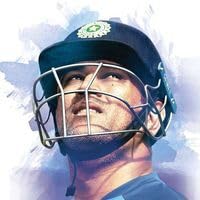
For over a decade, Mahendra Singh Dhoni has captivated the world of cricket and over a billion Indians with his incredible ingenuity as captain, wicketkeeper and batsman. Bharat Sundaresan tracks down the cricketer's closest friends in Ranchi and artfully presents the different shades of Dhoni-the Ranchi boy, the fauji , the diplomat, Chennai's beloved Thala , the wicketkeeping Pythagoras-and lays bare the man underneath. He discovers a certain je ne sais quoi about the man who has a magical ability to transform and elevate everything which comes into his orbit-the Dhoni Touch. Funny, candid, and peppered with delicious anecdotes, The Dhoni Touch reveals an ordinary man living an extraordinary life. 'Dhoni is adored, respected, loved wildly, and yet, remains mysterious. Don't we want to know more? I do. And this book by Bharat, a fine journalist, helps' HARSHA BHOGLE 'One of India's most stylish and inquisitive cricket writers unleashes an array of helicopter shots to produce the definitive origin story of a player and captain who changed the sport in his country' ALI MARTIN, GUARDIAN
Book review: “The Dhoni Touch: Unravelling the Enigma That Is Mahendra Singh Dhoni” by Bharat Sundaresan
A well-written and unique insight into the enigma of MS Dhoni.
I have been wary of books on Indian cricketers of late as most have disappointed me. I was extremely skeptical of ‘The Dhoni Touch’, especially. After all, he is one of the most well-known sports celebrities of this decade. He's even had a movie made on him and so much has already been discussed about the life and times of MS Dhoni in the media space ever since he became a sensation all those years back when he bludgeoned Pakistan into submission with his strong arms, long hair and rustic charm.
Fortunately, this book this isn’t a biography and was a refreshing look at unraveling the different shades of Dhoni’s little-known personality. Written by noted cricket writer, Bharat Sundaresan, the book is short, well-written and very different. It is mostly told through fascinating accounts of people who have the pleasure of being close to Dhoni through his life. Here are some highlights from the book for me.
* The first couple of chapters are mostly focused on Dhoni’s childhood friends, Chittu and Chhotu. While Chittu gives us an endearing account of Dhoni from his boyhood days and his time in the MECON Colony, Chhotu, the owner of the sports goods store named Prime Sports and the one who ensured the first ever sponsorship for Dhoni, provides some lovely anecdotes of an adolescent Dhoni who was way mature for his age.
* Then there is the chapter on Banerjee Sir, Dhoni’s coach from school who actually discovered his talent. Here we get to know some more tales of Dhoni’s raw and brute talent as a young cricketer, his ability to remain grounded despite adulation coming his way and how confident he would be about balancing his academics and cricket.
* The best chapter is the one about Dhoni’s love, admiration and relation with the Indian Army. As many would know already, The Indian Territorial Army conferred the honorary rank of Lieutenant Colonel to Dhoni on November 2011. Through the words of Col. Shankar Vembu, a close aide of Dhoni, we get to know Dhoni’s enduring love affair with the military.
This is the longest chapter in the book and easily the most interesting as we get some hitherto unknown facets of Dhoni’s personality. I wouldn’t like to reveal much and spoil it for anyone. But I really enjoyed getting to know that Dhoni goes out of his way to bond with the jawans of the Indian Army regularly and even wishes them personally on some achievements, has an outstanding knowledge about the weapons they use, and can shoot the bulls-eye perfectly from most weapons. The book is worth reading for this chapter alone. My respect for Dhoni grew manifold after reading this.
* The chapter on Dhoni’s relationship with the media is also very interesting. Through various anecdotes, we get to learn why Dhoni doesn’t trust the Indian media and chooses to guard himself well against them while being relaxed in front of the western press. In fact, when he was captain, it is learnt, Dhoni got the Indian media to approach the team much differently than they were used to. Dhoni believed that whatever happened inside the dressing room should stay there and he would be particularly severe on any cricketer who would leak any information about the team whatsoever to the media.
* The author doesn’t shy away from criticizing Dhoni at some places: From his adamant nature, his habit of backing a player despite failures and just to prove a point to the selectors and almost mocking the media before the 2013 Champions Trophy press conference and refusing to answer pertinent questions related to the spot-fixing scandal.
* There’s a riveting chapter on Dhoni, the wicket-keeper. The author decodes his unique wicket-keeping style and explains in great detail how he has added new trends to wicket-keeping over the years despite being so unconventional behind the stumps. He also insists that Dhoni’s wicket-keeping style is unique and shouldn’t be emulated by youngsters.
* While Dhoni's traits as a captain has been much discussed over the years, here we do get some glimpses of his unique style of leadership as well. For instance, when India was on the verge of beating Australia in Australia in a league game of the 2008 CB series, Dhoni asked his teammates to not go overboard and behave normally, just to show the Aussies that this was not a 'special' victory for them and was just another game.
* The last two chapters are dedicated to brand Dhoni – how he stormed the ad world with his rustic Indianness and went on to create his own unique image that connected to the average Indian – and of his incredible relationship with Chennai (where his reverence is almost next to only superstar Rajnikanth now) after becoming the captain of the Chennai Super Kings. Both the points are well elaborated and give a good peek at different facets of his personality.
* Throughout the book, it is stated on many occasions that Dhoni never lets go of those who helped him when he was an unknown commodity – from his friends and his coach to even the local ground and their staff near his old home. He goes out of his way to help them when in need and make their life a little easier through simple yet touching gestures that you will know of in the book. Also, despite appearing aloof and indifferent at times, Dhoni is supposedly very mischievous. He also believes in taking everyone along in his life’s journey and is a very secure person who doesn't bother at all about what the world think of him.
* Sharing an anecdote from the book that I think gives a good understanding of Dhoni's persona: "I’ve heard Dhoni himself talk about his pet peeve—people peering into their phones when they’re being spoken to or when they’re amidst a group of people. It apparently annoys him far more than most other modern-day distractions. This exemplifies his friends’ belief that despite being a gadget freak, he ensures he never becomes a slave to them."
* Col Shankar reasons in the book that Dhoni is able to be the same because of his two staunch principles in life—‘control the controllables’ and that ‘no man can have everything in life, there’s always that one thing you will never be able to have’.
* The best line from the book for me is this one, quoted by a close friend of Dhoni’s: “‘He’s able to savour every moment and relish it more than others, whether it is good or bad, because woh saas leta rehta hai (he keeps breathing). You notice him, he’ll always take deep breaths despite being the fittest cricketer in the country as if he wants to make the most of everything, rather than rushing through life like most of us do.”
At just 203 pages, ‘The Dhoni Touch’ is a short and engaging read. Like I mentioned earlier, it gives some great and hitherto unknown insights into the enigma of MS Dhoni. The language is lucid and flows freely. I would recommend 'The Dhoni Touch' to anyone wanting a little peek into some different shades of Dhoni and to those who are looking for a refreshing book on a captivating sports personality
I have always been a fan of Dhoni since Worldcup and no wonder CSK is always supported by Non-Madrasians especially for M.S.Dhoni. As I have already watched the movie Of MS Dhoni, I felt I'd be finding the same content but not until I have seen the publishing year of the book.
Kudos to the author who has unraveled the enigma of Dhoni very well. This book deals more with his childhood, his character, his loved ones, and his love for the Indian Army more than his involvement in cricket(which every Indian cricket fan is aware of). This is the main reason why I liked this book more than I have expected it to be. There is a lot one can learn from a person like him: 1: how pure he is and never forgets the ones who have always been there with him in the initial years of his career. He makes sure nobody is left behind. 2: his respect for the Indian Army. 3: His leadership skills 4: his philanthropy 5: the way he behaves when he losses or gets he gets criticized. The reason why is called Mr.Captain Cool.
I'd recommend this book to every cricket fan out there.
Also, can't wait to read more books on cricket especially the one about Rahul Dravid.
When I read a review of this book in The Hindu, I was eager to get my hands on it. Finally, I bought it on my way back to the US from India and started to read immediately. Like everyone else that follows cricket, Bharat Sundaresan seems to have been affected by Dhoni spell and I thought this book is him trying to understand Dhoni's enigma. He tries doing that by cobbling together set of interviews from people who had interactions with Dhoni. While it gives you some perspective but it is too shallow to make anything out it. First, the shallowness comes from opinions of few people that interacted with him that think Dhoni of only positive light. Almost like God. Such reverence does not get you the complete picture. Second, the supposition of Dhoni's prowess comes from few anecdotal matches and situations within them. This is very one-sided and does not give us a glimpse into Dhoni's decision making. In short, this book does not provide much more than what one could get by watching the movie on Dhoni and also watching his games. That said, there are some interesting tidbits.
The author himself is so enamored by Dhoni that the first chapter was all about comparing his long mane and Dhoni's during the beginning of his career. It got tiring after a while and I was glad that chapter ended albeit lot longer than it should have been.
In this book, the author talks about getting encouragement from a friend who tells him to write this book as it is akin to writing about fifteen 3000 words article that he is used to writing. I think this book has not more than 2 such articles worth but the author managed to expand it.
Because I like Dhoni a lot, I managed to finish this book. If there is someone that want to get a balanced perspective would not have been able to finish it.
While many of the stories and incidents can be found in Dhoni's biopic. The book delves into some finer aspects in areas of Dhoni's relationship with Ranchi, Army and to some extent, CSK/Chennai. There are no spicy questions answered, like the ones on spot fixing or conflict of interests. It is a straightforward biography touching on some small aspects of Dhoni's persona. The book can be avoided if you are interested in grey areas of MSD's life and finding answers to some uncomfortable questions as it doesn't delve in those.
The book is about No.7 jersey, one of the Indian cricket stars, an incredible cricket captain, wicketkeeper & batsman who is also a poster boy of world T20 cricket, the M. S. Dhoni. This book is not an actual biography but just some stories and anecdotes here & there to peer in to his life, as author meets up with Dhoni's close friends, chittu from his hometown in MECON colony, Ranchi, his school coach & fauji friends like colonel. Now, I am not very much a die hard fan of the cricket but I could very well fathom, if the book is good or bad, being a voracious reader. This book unfortunately, doesn't do much justice for M.S. Dhoni -an enigma or paradox in cricket world. The initial 1st chapter in the book is entirely wasted on 'Baal' or 'hair raising tale where author keep stretching about his long hair Vs Dhoni's long hair and his various remarks about it whenever they met. The author could meet Dhoni and his close friends personally to chit chat about the cricketer for writing this book, but he didn't seemed to have utilized this good chance to weave a good story around him, I feel; the book turns out rather flat in narrative rather than turning out to be interesting like 'Mahi' himself as presented on TV or movie. Plus, I kept thinking more about young late Sushant Singh Rajput who played Dhoni on big screen, rather than the one who this book was supposed to be on while reading. I think, that's a book's failure too, somehow. 2 stars.
Delightful read ! If you are a cricket-podcast fan, surely you might have noticed that zillions of chats/interviews were done in the post-Corona period when players and commentators had time on hand. Or think of all the "Breakfast with Champions" and co. you have read/watched/listened to before. One name will be missing - Mahendra Singh Dhoni. Firstly, while Bharat Sundaresan has not been able to interview him either, he got those close to Dhoni to open up - with the consent of MSD himself. And the book turned out to be a delightful read with chapters devoted to conversations with MSD's near-and-dear ones and revealing different aspects of his personality and anecdotes. I liked listening to Bharat Sundaresan on podcasts after India's recent test series in Australia (2020-21) and so decided to pickup "Believe" written with and for Suresh Raina. "Believe" was an ordinary read but thankfully I decided to give him another shot. Easily one of the best biographies of Indian cricketers. Only wish it (and Dhoni) had gone on forever...
Ain't any better time to finish it in style? The legend retired on 1929 hours of 15-08-2020 i.e. 73rd Independence day of the country. As Suresh Raina's interpretation goes, 1929 is the exact time when India lost to NZ in the CWC 2019 Semifinal. Moreover, 7 & 3 are the jersey numbers for Dhoni & Raina.
Coming to the book, it is well written, articulate and feels fresh despite having witnessed MSD's career and then the biopic very closely. It narrates the journey of a small town guy who wasn't destined to be a legend but he became one. The book feel like a hyperbole on MS as it brings various perspectives from his best friends, coaches, army colonels, selectors and confidantes to MS Dhoni.
It was both an emotional and heart warming read personally as an ardent cricket fan, an admirer of MSD leadership style and his ever inspiring journey. Bharat Sundaresan's witty parallels, sporting analogies and razor sharp observations from school level to international matches are a treat to witness. Pick this up for an inspiring ride filled with awe inspiring revelations and some nostalgia filled chapters.
This book is fascinating because it is not just a biography in the truest sense. It does not give a historical account of Dhoni's journey. Rather through stories and anecdotes shared by people close to MSD personally and professionally this book gives an insight into the mind of MSD and making of him as a cricketer and a human being, his decision making and calmness in several situations and his steadfast, caring yet practical approach towards relationships. A must read for anyone interested to get a deeper understanding of what goes in the ultra-sharp brain and the courageous heart of Dhoni!
At first I want to thank all of you who are reading my review.Its my first book review and pls show Ur Love and supports towards me. MS Dhoni, this name does not need any introduction. The man who bearing all the pressures and expectations of about 130 billions of Indians more than one decade deserves a salute from all of us. "WHAT LIES BEHIND MAHENDRA SINGH DHONI'S CALM AND UNFLAPPABLE FACADE"
MY REVIEW:-this book completely based on the past and present situation of MSD'S life.this book written after Consulting all his childhood friends,teachers and those who supports him each and every moment of his life to become a cricketer and a successful human being.How a boy from Ranchi started playing cricket from his school ground to become so successful to play all over the world in all the cricket pitches with full of confidence and so much passionate, aggressive, attractive manner. He never forget those persons who are always with him and support him in his highs and lows. He is a man of inspiration. Starting a journey from some comments १.वह देखो धोनी कुछ क्रिकेट में ध्यान नहीं है शिव स्टाइल बाजी करता है और गाड़ी गाड़ी करता है २. अरे, यह लड़की जैसा दिखने वाला ढाबे में खाने वाला क्रिकेट क्या खेलेगा?? to climbing the podium and receiving all three ICC tournament trophies is called success. This this book explains the MECON boy'slife,The Portrait of a young cricketer the Fauji captain and the unorthodox style of captaincy which is called the Mahi Way in a beautiful mesmerizing and heart touching Manner.it is impossible to write a book about Dhoni without explaining his relationship with the peoples of Chennai. Dhoni is like God for the people of Chennai. he is the most lovable person Thala has also a very soft corner for them in his heart. ABOUT THE AUTHOR:-BHARAT SUNDARESAN, the author a journalist by profession who admired and following MS Dhoni from the beginning. his love towards him is so unconditional that he started keeping long hairs like him to show his support towards him and how much he inspired him in his life. My Ratings:-🌟🌟🌟🌟
I am a big Dhoni fan, reason being to pick this book.
However this book doesn't deals with depth of how Dhoni thinks but it explores the hype around Dhoni and elaborates on what people around Dhoni think of Dhoni.
Writer is clearly smitten by the Dhoni and comapares himself with Dhoni in the first chapter, which is a pain to finish and move on, if Bharat sir is reading this "please remove the first chapter if the next edition is published".
Now for good points , there are definitely some good stories that I didn't knew before, which hooked me and got to know a little more about Dhoni and how he deals with people around him.
This books tries really well to unravel Dhoni’s enigma and gives a very good glimpse of how he is different than any other cricketer to have played for India. His mindset and his mannerisms are crucial in his success as a cricketer and most importantly as a captain.
Bharat Sundaresan is a fine cricket writer known especially for his efforts in tracking down Patrick Patterson, the West Indian quick who had disappeared from the public eye for years. However, this book flatters to deceive. It almost reads like an official biography vetted by the enigmatic Dhoni himself. The book steers clear of controversial but important episodes like spot-fixing, conflict of interest etc and focuses instead on childhood nostalgia. Bharat has the potential of pulling off a Helicopter shot but ends up playing safe.
Few love him, a few call him nothing but a selfish batsman. However one facet of his where most people agree would be this unknown.. there is a kind of mystery, some sort of enigma, a part of him that always remains in the oblique background and that too in the time unforgiving, relentless, omnipresent social media.
If not above, how you even try to explain that a guy with no powerful backing early in the career, suddenly entrusted with the captaincy of the T20Is where he wins you nothing short of a WC. The big hotshots in the team listen to this man of few words. Coming from a part of the world non existent in the cricket map, gets admired, adored and loved to the bits in the land where the people cut down even close friends who do not speak their language.
I picked this book with an idea to get to the bottom of such credentials of the man. I love the author's writing style. I have been reading his cricket articles for past 6-7 years and i am quite positive about his way of reading complex cricketing situations and writing that in a placid yet intriguing manner. To gauge into Dhoni's personality and its evolution, the author has gone to his childhood friends in Ranchi, his very close army man Col Shankar, the man who gave him a chance in the national squad - Kiran More, his early CSK team men V B Chandrashekhar, Prahlad Kakkar and Chocka. The anecdotal references from each of these sources are fascinating. Yet somewhere they fail to add anything new that most readers already knew.
Yes, he is a man of few words, he likes to have a free hand while running a team, he treats success and failures as nothing but two sides of the coin and remains nonchalant in either situation. But any Indian cricket fan would know this. While there is no denying that with multiple perspectives, one gets a better view of it, but at the end the reader is left wanting for more.
My 26th, 27th and 28th read of this year is dedicated to the unconventional leader and my favourite - Mahendra Singh Dhoni . On 7th of July we celebrated the 42nd birthday of MSD . Being and ardent fan , I decided to do some research on MSD by going through some of the work by Indian novelist portraying him. While the book “ Think and Win like Dhoni “ by Sfurti Sahare subtly unveil what is it like to live inside Dhoni’s mind and witness how his brain beautifully works even under the most pressurized of situations. The other two which I read “ Dhoni Touch “ by cricket journalist Bharat Sundaresan and “ Captain Cool “ by Gulu Ezekiel is more about MSD cricket stats than anything else . I personally feels that none of them has done justice to this living legend. I would say that he is the only playing cricketer in the world who has transformed so many youngsters and rekindled the talent of cricketer like Ajinkya through simple pep talks and giving freedom to play . I strongly believe that Management Gurus should carry some deep diving to uncover the jadu of this leader who gets maximum out of all his team members.
I had always watched MS Dhoni as Captain. That man impressed me so much that I couldn’t imagine how the Indian team would perform without him.
His simplicity always stood out, the smiling face in crunch situations, the calm batsman during last overs. That soothing line, “Abhi Dhoni hai crease pe, tension mat le kar lega”, became legendary. Even after losing 7 wickets, we’d say, “Abhi Dhoni hai”. Even when the required run rate was three times the usual, the thought remained the same: “Abhi hai Dhoni.”
Beneath this calmness, there was a village-level simplicity in him. He’s exactly the kind of person any man would dream to be.
I’ve learnt several lessons from his life: 1. Control the controllable – Focus on what you can manage and never worry about what you can’t. 2. Live in the present – Don’t get lost in past mistakes or future anxieties. 3. Observe silently – Watch, understand, and learn without always speaking. 4. Do your work yourself – Take responsibility instead of relying on others. 5. Be punctual – Respect time in all aspects of life. 6. Lead by example – You don’t have to shout you’re a leader; your actions speak louder.
The main thing I liked about this book is the fact that it was focused on people/things/organizations Dhoni has impacted over just being a story about his career. It talks everything from his childhood friends,Ranchi, bikes, CSK, wicketkeeping and his captaincy. It was an enjoyable read for sure although there were a few things I wished could've been altered. There was a lot of parts where thr author Bharat has kept the content in hindi as spoken by the person and then translated to English as well just making the book longer cause this happens a looot. I understand it's for authenticity and feel but somehow felt like it made the book longer than needed. Another thing is how this has been polished to talk about some parts of Dhoni's attitude. Even if he doesn't participate in meetings or consider other people's opinions, it is written as a good thing or it's his enigma don't have to spin everything in a positive sense. Of course, nothing too much about the controversial topics of CSK and monkey-gate scandal etc... Still a good light read for sure though.
The book gives us deeper insights of the person rather than the cricketer. The book is written in a very funny way so that the reader may enjoy it thorough If you are a dhoni fan , this book you just can not miss. If you are not a Dhoni fan , read it and become one , because that's how the person is depicted in this book. Sometimes he is critcised too. The book starts with the long hair tales of MS and ends with all the narratives of CSK , WT20 , WC11 and Dhoni's connections with Army. The author has talked with many close aides like Chittu( the famous person from the movie) Dhoni's bestfriend , Lt. Colonel Santosh Babu , Dhoni's only coach Banerjee Sir , VB Chandrashekhar and many more personalities. You must try this book if you wanna read about Dhoni and his stories which aren't shown in the movie.
When you meet Tendulkar you know he is a private person but also hit by his unbelievable humility. A man more private than him was Dravid, polished and who built a career around phenomenal temperament. Ganguly's grey cells were always working, not in a scheming way, but you knew he was thinking. Laxman stood for simplicity while Sehwag defined an uncluttered mind. You could categorize all of them. But how do you put Dhoni in any one column? An enigma is someone whom you cannot understand or comprehend or categorize.
But Dhoni's biggest strength has been that despite being a paradox to the rest of the world, he's always known exactly who he is. Perhaps that's why he's never cared much about what the world has to say about him. And he doesn't need to knock on your door in the middle of the night to tell you that. For, he is Dhoni.
A simple laid back writing which covers a few unknown facets of the Legend. Except for the first chapter I really enjoyed exploring Dhoni's various roles as The Ranchi guy, the lieutenant Colonel at Indian Army and the 'Thala'.
However, I was expecting more about his cricket decisions and anecdotes which I didn't find many. Also his personal life was not covered even for a page. But I guess that's because it is already covered much in the movie and MSD being a private person he doesn't disclose much.
Reading this book was my way of giving a tribute to the legend on his birthday tomorrow and overall I am NOT DISAPPOINTED.
My rating might be biased as reading this book was a fanboy journey for me. Its a must read book for all the Dhoni fans as it is full of quirky anecdotes from Dhoni's personal and professional life.
Unlike the movie, it does not have any romantic and emotional episodes, it is a verbatim first person account from people very close to him and thus It helps you know the man at a much deeper level.
Recommended if you would like to rub some dhoni dust to become a better leader, manager or an overall human to imbibe some qualities or just have a light read on some interesting facets of Indian cricket.
What a delightful book. It does unravel the enigma around the legend that Dhoni is. If you are looking for the cricketing exploits of Dhoni then this is not the book for you. This book looks at the softer aspects of what makes Dhoni?
The author has the backing of Dhoni to write this book and hence is allowed just a small peek into the largely private world of this man. Pretty similar to what we saw in the movie but a little more in-depth as the author is also a well known sports journalist and hence usually has a better perspective.
This is a complete Dhoni book, It's a solid 3.5 but i can't give anything less than 4 stars because Bharath Sunderesan has done a tremendous job of following, the most successful captain in the history of the Indian cricket for months to prepare himself to write this.
Although the writer could decode some of the tricks used by Dhoni in the past(out of which most are already public and discussed) the Enigma of the player remains intact unlike the title claims.
If you're a fan it's the best gift you can get yourself.
Awesome book, but it just feels like it's another journal on the legendary cricket icon, Honorary Lieutenant Colonel Mahendra Singh Dhoni. The mainly talks about the various life phases of Dhoni and how he reacted to people around him, behaved, lead life, surpassed obstacles which came in his way to become one of the leading cricketer of the world. Author should do some homework on how to keep the reader connected, rest everything is fine with the book. One more important thing that it's not another motivational book on the captain cool.
For people curious to know what MS is like as a person, this account is gold. It is honest and presents a very transparent view of Dhoni. Author quotes some interesting conversations with people close to MS that give very very sharp insights on how he lives his life.
He truly is an enigma but this books gives at least some glimpse into his mind.
As Harsha Bhogle once said, though Sachin & Virat achieved greatness and created a world for themselves, they will always be jealous of Dhoni because he was just himself.
Book was a good insight into Dhoni. Although I felt like the words “for the record” and “by the way” were used way too often, it felt very matter of fact-y. The author is eager to share all the information he’s got about a very reserved personality, Dhoni, and it reflects several times where the author brings up a point but then says that he’ll tell us about it later. I’m not actually sure if we actually got to the later part in the end for several of the times that it was said they’ll come back to it.
Not that Dhoni can be unraveled in a book, this book doesn't try to unravel him most of the times.
At least 60 to 70 percent of the book is the author conversing with people for whom Dhoni is a demigod. Yes, you would get anecdotes and the genuine admiration they have for him, but a book has to serve beyond that.
This was a good read but more of Dhoni's on-field geniuses and his tactical mind could have been discussed here, considering Bharat is a good writer from what articles I have read of his.
The book reads like a caricature. It just hypes and hypes Dhoni. It offers no insights into the man Dhoni was, the way he thought, or anything to that effect. It goes on and on like a masala film, to the point that it becomes unintentionally funny.
The chapters cut unexpectedly across the timeline with no real effect, and the first chapter comparing their hair is so childish that I wanted to stop reading the book right then. In hindsight, that would actually have been a good decision.
The entire book reads like a Dhoni stan's Reddit post, where the hero (Dhoni) can do no wrong.