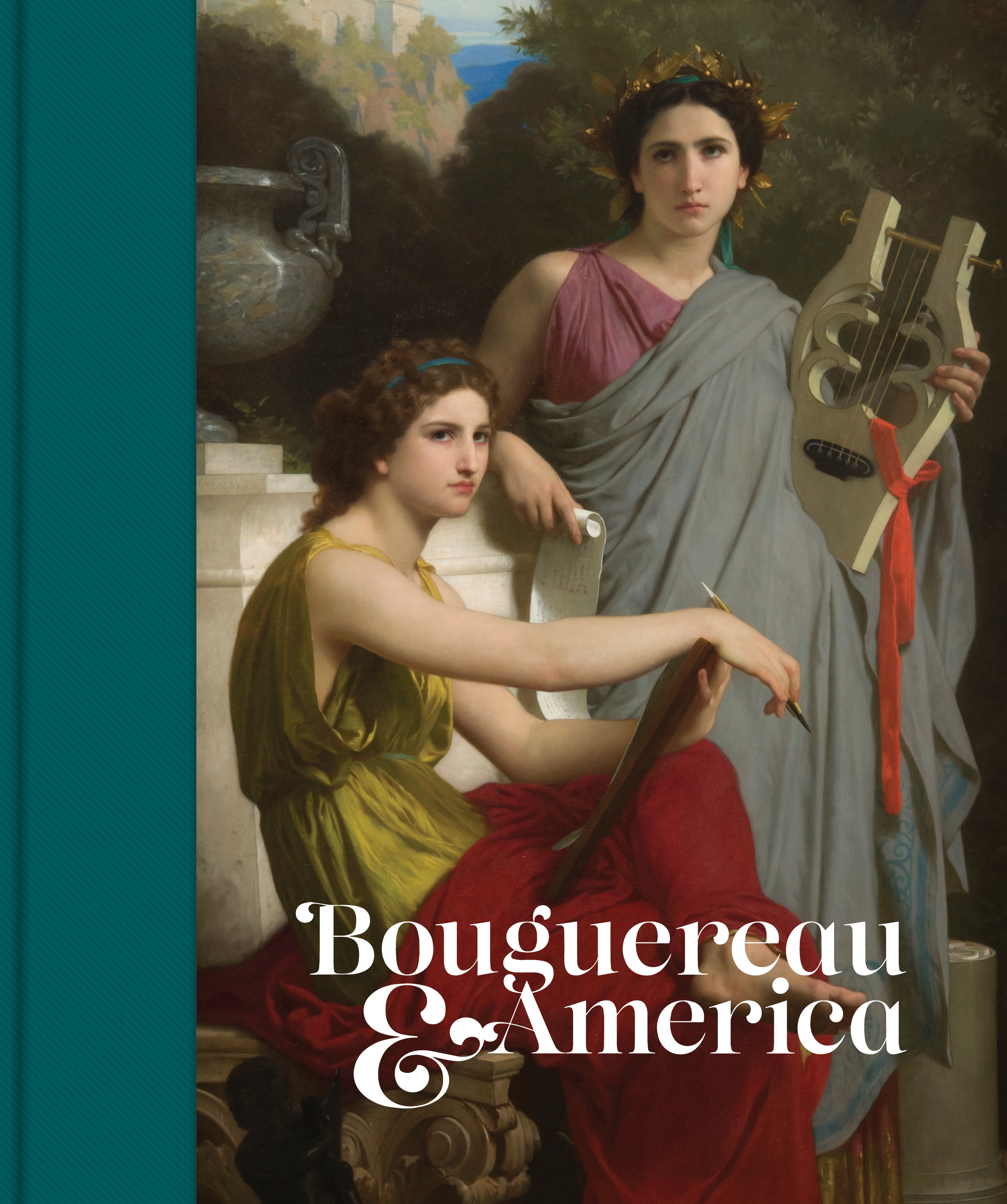
An in-depth exploration into the immense popularity of William-Adolphe Bouguereau’s work in America throughout the late 19th and early 20th centuries
Seeking to bring Gallic sophistication and worldly elegance into their galleries and drawing rooms, wealthy Americans of the late 19th and early 20th centuries collected the work of William-Adolphe Bouguereau (1825–1905) in record numbers. This fascinating volume offers an in-depth exploration of Bouguereau’s overwhelming popularity in turn-of-the-century America and the ways that his work—widely known from reviews, exhibitions, and inexpensive reproductions—resonated with the American public. While also lauded by the French artistic establishment and a dominant presence at the Parisian Salons, Bouguereau achieved his greatest success selling his idealized and polished paintings to a voracious American market. In this book, the authors discuss how the artist’s sensual classical maidens, Raphaelesque Madonnas, and pristine peasant children embodied the tastes of American Gilded Age patrons, and how Bouguereau’s canvases persuasively functioned as freshly painted Old Masters for collectors flush with new money.
Published in association with the Milwaukee Art Museum and the Memphis Brooks Museum of Art
Exhibition
Milwaukee Art Museum (02/15/19–05/12/19)Memphis Brooks Museum of Art (06/22/19–09/22/19)San Diego Museum of Art (11/09/19–03/15/20)
What I liked about this book is looking at the photo reproductions of the Bouguereau paintings that were owned at some point or right away by the American collectors. Each plate has a short history of the work, also good to know. It was also interesting to learn about the collectors themselves, however limited this information was. What I didn’t like, and was actually flabbergasted by it, is the introductory essays, varying from mildly passive aggressive negative to openly hateful (and so unjust!) towards the artist and his works. That just didn’t make any sense to me, why here, in the book dedicated to an artist? Bouguereau is not going anywhere, and very deservingly has become a part of the art history. Maybe people with different artistic tastes should be expressing their opinions elsewhere.
I love the artwork of William Adolphe Bouguereau. I am grateful that the book has so many large prints of his work. I am also grateful for the list of all the paintings in museums and galleries in the United States. However I was disappointed that many of the essays had a note of snark in them. The people who bought these paintings in the late 19th and early 20th century were also buying Monets and Renoirs as well. Can we say that when a specific buyer bought a Bouguereau this reflected his bourgeois and therefore crass sensibilities but when they bought a Monet or a Renoir that same person was enlightened? That seems to me to be a ridiculous position to take. And if we are criticizing the commercial aspirations of the painters I seem to remember reading somewhere that Bouguereau only painted 800 or so works while Monet painted in excess of 3000. I suspect that Monet’s lifetime earnings were much greater than Bouguereau’s. This book would be so much better if more of the contributers actually liked Bouguereau’s work.
A catalog of the most recent exhibition of Bouguereau in the US, which started in Milwaukee and Memphis in early-mid 2019 and moved to San Diego in late 2019-early 2020 right before COVID. The exhibition focused on the connection of Bouguereau with American collectors and included 44 paintings. These paintings are a centerpiece of the catalog, each presented in a large scale and with excellent quality on a separate page, with the opposite page presenting associated information. The catalog also includes five essays, which offer further examples of Bouguereau’s paintings, some full-page, but most in smaller size. Among the essays, the most useful is the essay by Eric Zafran reviewing how various paintings of Bouguereau found their way to the American museums. This essay includes an extensive list of Bouguereau’s paintings in the American museums, which is very useful for planning museum visits. While a useful book to start on Bouguereau, the number of plates in the book is rather small. if you really appreciate this remarkable artist, opt for a definitive book "William Bouguereau: His Life and Works" by Bartoli and Ross, which has much more data and many more color plates.