Em Daisy Town, René Goscinny, demonstrando mais uma vez o seu inigualável sentido de humor, narra o nascimento, esplendor e extinção de uma nova cidade do oeste americano. Lucky Luke é chamado a esta nova cidade para a livrar dos bandidos que a querem dominar. Mas quando tudo parecia controlado, o nosso herói vê-se confrontado primeiro com os temíveis irmãos Dalton e, depois, com os não menos temíveis índios. Felizmente, se algumas tradições mudam, outras continuam a ser o que eram, e nesta divertida história, o nosso cavaleiro solitário acabará por vencer todos os perigos. Lucky Luke - Daisy Town de René Goscinny , Morris
The Belgian author Morris (full name Maurice de Bevere) is best known for his humorous cowboy character, Lucky Luke. Morris started his career in 1945 in Le Moustique, creating various covers and illustrations. By the end of the 1940s, Morris met his colleagues Jijé, Franquin and Will. These four artists would be called "The Gang of 4", because they all worked in Jijé's studio at that time. The first episode of Lucky Luke, 'Arizona 1880', was published in L'Almanach Spirou 1947, and was later continued in Spirou. In his early 'Lucky Luke' comics, Morris was greatly inspired by animated cartoons à la Disney. In 1949, Jijé took Morris and Franquin to the US, where Morris met Jack Davis and Harvey Kurtzman, whom he helped with their plans for Mad Magazine. He also met René Goscinny in the US. In 1955, Morris returned to Europe and collaborated with René Goscinny on 'Lucky Luke'. Goscinny wrote the scenarios of over 35 stories, which led to the great success of the series. 'Lucky Luke' is one of the best-sellers i
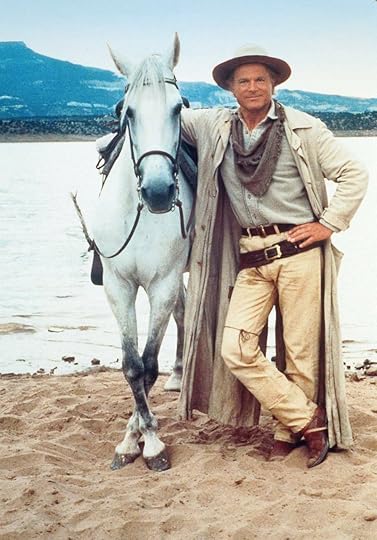
A short while ago I was watching a western movie with my friend, called My Name Is Nobody, starring Terence Hill. It was pretty good - not great, but good - but then when he put up a long coat for the climactic showdown, it began to nag me: he looked so familiar, I was sure I'd seen it somewhere before.
Then it hit me... that's Lucky Luke!
I used to watch the TV show when I was a kid, and then as a grown-up I got to check out some more works starring Hill (mostly prompted by this friend of mine, who is a fan), and I never drew the connection until now. It was a small shock.
The reason I bring all this up is that the show took place in Daisy Town, which this album also concerns. I think I even recognized a few of the familiar faces. But it was a rather loose adaptation, so I don't believe I'd like it quite as much if I were to see it again in the present day.
Maybe it would have been even more relevant to say that this comic is also an adaptation, from a 1971 animated movie of the same name - which I've also seen, and which I greatly enjoy even now. As is usually the case with adaptations, I tend to like the original the best. There's this sort of an alternate-universe feel going on - mostly with the Daltons, who have been outlaws all their lives in this scenario, and did not seem know Lucky Luke at all - which would have worked in the cartoon but not so well in the comics where I keep remembering about how stuff actually went.
Qui n'a jamais lu cette BD culte ou au pire regarder le dessin animé...! C'est d'après moi la Référence de la série... Et un coup de chapeau particulier à la couverture qui nous laisse entrevoir un Lucky Luke plus sombre que jamais !
"Great Chief, listen to me! The new town threatens the life of your people! The Palefaces' civilization is bad for Indian brothers! Soon the railroad will drive the buffalo away from the land... Across the vast, wild prairie, your hunting grounds will be overrun... By roads filled with spending carts driven by bloodthirsty Palefaces... That'll ruin the landscape! And once the white man has poisoned the prairie... What will the Red Man's place be? Tiny! Piddling!"
Ziemlich schwach, man merkt deutlich, dass hier ein Filmdrehbuch auf Comic zurechtgestutzt wurde, und einige Gags (ein Indianer benutzt für seinen Speer einen riesigen Bleistiftanspitzer; Ausflug ins 20. Jahrhundert als Verdeutlichung des ansteigenden Verkehrsvolumens) passen irgendwie gar nicht. Hier und da wurde auch schludrig gezeichnet, ich glaube, man *impliziert* hier auch nur, dass das Werk von Morris sei und irgendein preiswerter Kopist war am Werk.
Το συγκεκριμένο κόμικ είναι βασισμένο στην ομότιτλη ταινία κινουμένων σχεδίων και αυτός είναι ο λόγος που είναι αρκετά πιο κινηματογραφικό από άλλα Λούκυ Λουκ κόμικς. Είναι κάτι παραπάνω από εμφανές αυτό στον τρόπο που τα panels δίνουν το ρυθμό. Για τον ίδιο λόγο, όμως, έχει και κάποια παράδοξα με βασικότερο όλων το ότι φαίνεται πως οι Ντάλτον δε γνωρίζονται με τον Λούκυ, αλλά και ότι ο δεύτερος έχει σχεδόν μηδέν ατάκες (όλο η ιστορία είναι σχετικά «λιγομίλητη» βέβαια).
Daisy Town je adaptace stejnomenného filmu z roku 1971 a ačkoli jsou jednotlivé panely opět krásně nakreslené, občas tu něco chybí, čehož jsem si, jako znalec filmu, dost často všimnul. Některé scénky tak podle mě nemají takový úder nebo pointu a občas nemusí být ani 100% jasné, co se stalo. Některé části jsou tak spíš překreslením částí filmu než vyloženě samostatnou adaptací, což je škoda.
This Lucky Luke comic is quite different, because it's an adaptation of the animated film "Daisy Town" and that is obvious throughout the story. So, it may have the feel of a film but at the same time it is a bit strange.
Oh cool now I see the charm of Lucky Luke. This is the fourth lucky Luke volume I read and by far the best. Had great wit, some commentary, absurd moments, and a good story.
I still can't fathom why I got hooked to the Lucky Luke series in the first place and why I keep buying them every time I get my hands on a Goscinny-Morris creation. Guess, it's all because of the name, Goscinny. It is difficult not to give in to the temptation when one of Asterix's creator is involved.
It's also precisely because of this reason that the series is such a let down, is such a disappointment. Perhaps my zero familiarity with life & times in the wild American west (compared to that in historical Europe) is a contributing factor. But I find most of the books in this series (barring a rare few) not worthy of the Goscinny name (even when he is definitely the writer) - the story-lines are weak, puns forced and most characters are very 'cardboard cut-out'-ish.
Still, for my fourth grader daughter, I'd buy a Lucky Luke book any day rather than some of the contemporary thingys going by the name of graphic novels.
Sebuah kota baru terbentuk. Bermula dari para pendatang berbondong-bondong mencari tempat tinggal baru. Salah satu anggota rombongan tertarik pada keindahan bunga dan lingkungan sekitar hingga memutuskan untuk mendirikan kota di sana, Daisy Town.
Daerah yang semula gersang berubah menjadi sebuah kota kecil yang penuh dengan keceriaan penduduknya. Seiring dengan berkembangnya kota, para pejabat juga mulai berdatangan dan menimbulkan kekacauan. Kota membutuhkan seorang penegak hukum, sherif.
Namanya juga kisah, Lucky Luke terpilih karena berada di saat yang tepat. Ia dengan mudahnya mengalahkan bandit-bandit yang mengacau kota. Sebagai hukuman mereka mendapat ter dan bulu bebek.