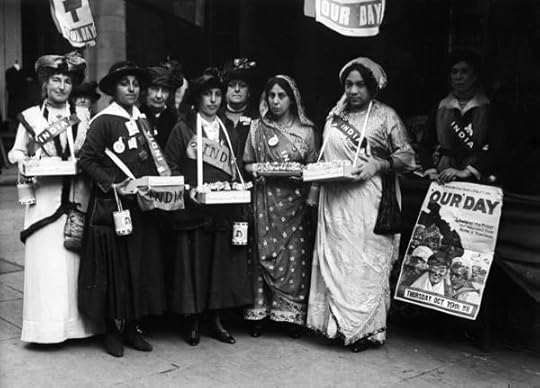
First published in 1978, and winning the Martin Luther King Memorial Prize for that year, Finding a Voice established a new discourse on South Asian women's lives and struggles in Britain. Through discussions, interviews and intimate one-to-one conversations with South Asian women, in Urdu, Hindi, Bengali and English, it explored family relationships, the violence of immigration policies, deeply colonial mental health services, militancy at work and also friendship and love. The seventies was a time of some iconic anti-racist and working-class struggles. They are presented here from the point of view of the women who participated in and led them. This new edition includes a preface by Meena Kandasamy, some historic photographs, and a remarkable new chapter titled 'In conversation with Finding a Voice: 40 years on' in which younger South Asian women write about their own lives and struggles weaving them around those portrayed in the book.
I first bought this book as a university student in 1981 and I was amazed to read its contents. It opened my eyes to a new world which had been completely dark to me. As an Asian Pakistani growing up in Britain, I had discussed these types of stories with friends and family but to be honest, they were just stories. There were very few reference points to which I could relate some of the experiences set out within these pages.
I was very proud of myself, for a well-purchased book, and possibly one of the first books of its kind that I had bought. Some years later I lost this paperback and completely forgot about it. Surprisingly I found it a few weeks ago and thought why not read this book after 40 years of human history and see if I still feel the same.
The Anglo-Asian
Whilst reading this book to be honest, I recall almost every sentiment this book offered. This time round I wasn’t so easily impressed by the writer Amrit Wilson who I would probably describe as the modern-day Anglo-Indian whose world view is shaped not by her own experiences or those of other Indian women she spoke to but more by her personal desire to be a woman of superior intellect, behaving much like an adopted pseudo white woman who would probably enjoy riding her rented horse than riding her man. An Anglo-Indian is probably the worst kind of Indian you can adopt into your circle of friends or family.
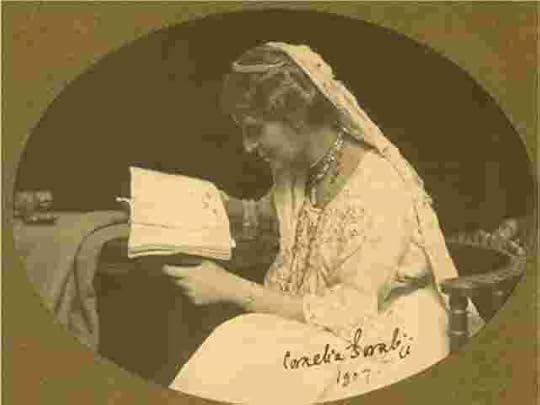
Forty years ago, this book for an impressionable young man was a ‘wow factor’ but today, I see it as nothing more than playing to the sentimentalities of the liberal elite, more suitably known as ‘white do-gooders’. Although the stories are true and no one is doubting that such experiences did and continue to exist, but there are also some really great stories where women had progressed into great role models for the generations that followed them. For example: Cornelia Sorabji in 1902 was the first women to graduate in Law at Oxford University and to practice law in Britain.
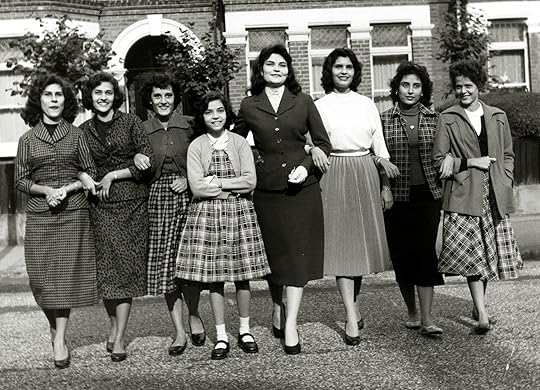
Fifty years ago, three young women got off a plane that had flown from India and landed at Heathrow. They wore their best outfits: hand-embroidered silk saris, Bollywood-style beehives, bright pink lipstick – looking like minor film stars. They were, after all, travelling to England, a place of dreams, a mythical country of prestige and opportunity.
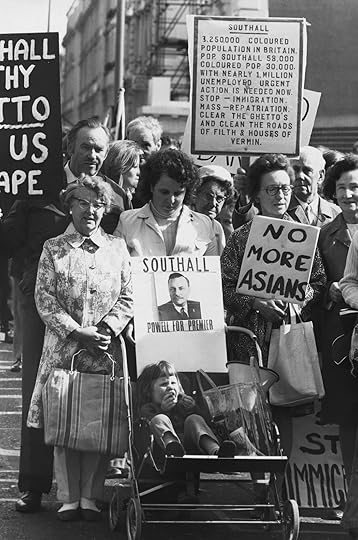
But what greeted them was not evil, sexist and misogynist husbands as portrayed in this book but rather these women landed in the heart of Enoch Powell’s Rivers of Blood speech; they saw white people complaining about the influx of Asian and black immigrants. In Southall, Indian children were bussed out of the area to different schools, after protests by local white parents. One of the women remembers going out in her sari and being stared at, with white men sometimes barging into her. “I felt afraid whenever I saw young white men, in large boots, with their heads shaved,” she says. A Bengali friend was dragged from a car and punched; others were routinely threatened with violence. Bhaiti recalls being spat at by white men from a passing bus (The Guardian 29/12/2018). This was the lived experiences of families settling in Britain. This type of ‘slap-around’ seemed perfectly acceptable to Amrit Wilson, while she focussed on the economically demanding relationship at home within the Bengali families.
Sensationalising Human Indignity
Amrit Wilson went about sensationalising family lives, some of which were very difficult to listen to. These stories may have stopped you momentarily from scooping up your chicken Rogan Josh or the stories may serve as a great red wine and after dinner conversations. It would have definably got you to pour out your concealed prejudices in the guise of hating Asian men as evil, sexist and misogynists with a sense of sardonic flavouring thrown in for good measure.
The book excludes considerable context and backstories and picks out alarming and on occasion damaging story lines, some of which are wholly inaccurate and misleading. Had this book been depicted a fictional account of Asian women’s experiences during their early years in Britain, it would have probably been a great book to read, but it wasn’t portrayed as such.
Its Your Fault
The book focused almost comprehensively on the faults within the Asian communities, the lack of education, the long working hours, the factory horrors and the restaurant trappings. It missed the policy failures that created horrific experiences of street violence, community isolation, mental health fatigue, political appeasements for the aggressors, racist police officers and a breakdown in complete family relations. These were not created by hard working men and women and their children. The sense of isolation and desperation by women and many men were fashioned from a deliberate withdrawal of safe guarding policies to help and assist such communities to settle into their new home.
A Slaveowner
It didn’t matter if you were a victim of female virginity tests by white male immigration officials, or lowly paid factor workers who were routinely abused and sexually molested or that you had several children and no family support system in place by the authorities. You were never going to come out of these conditions unscathed. But, according to Amrit Wilson, this was all the fault of their uneducated hard-working husbands.
The book depicts young Asian wives as badly treated by their husbands in the most abhorrent way and where husbands act like slaveholders who were determined to hold on to their human chattel, she further, adds by describing Bengali men as being like a Banana tree, half human in appearance.
Although an interesting book to read, somewhat dated for my taste, after all it was written in 1979 when it was completely acceptable to liken blacks, Asians and the Irish to dogs. What is not acceptable is to create stories much like a tabloid newspaper with stories often overly distorted and exaggerated. Such stories are frequently linked to racism, hate and scandals with a lot of what is widely considered as ‘Yellow journalism’, a type of reporting that consists of fictional news rather than factual.
Written in 1970s Britain, this book is a necessary catalogue of the Asian Woman experience in Britain and I would argue also the Asian Woman diaspora experience in Western colonial settler states. I found the way in which this book captured the anecdotal stories of these women to be similar to the theoretical foundational work "Talkin up to the White Woman" has done for the body of Critical Feminist Indigenous scholarship led by Professor Aileen Moreton Robinson. People tend to dismiss anecdotal storytelling, but it is needed as the first plank on which to draw patterns and allow for a deeper analysis of the conditions that face marginalised women who have to navigate and survive multiple oppressions. There was a good intersectional awareness throughout of class, caste, religion, nationality, race, sex and gender. It was good to see Asian masculinities also being discussed in this book.
This book is amazing. It's not about the need for deep 'academic' analysis. The appetite for this is ceded to a vivid description of people's reality. Must read for any race history courses. The necessary black feminist subjective (from the books review within it) is eye opening.