Jump to ratings and reviews
Rate this book

So Much Longing in So Little Space: The Art of Edvard Munch

Rate this book
Literary giant Karl Ove Knausgaard offers a brilliant and personal assessment of the famous expressionist painter, his Norwegian compatriot, Edvard Munch

Karl Ove Knausgaard's renowned sui generis autobiographical works, both the My Struggle and Four Seasons series, have been celebrated for their passionate and original engagement with art and their insightful critical excursions. But never before in English has Knausgaard published a true work of nonfiction. With this daring sweeping study, in characteristic style, Knausgaard combines piercing artistic insight with freewheeling historical, biographical, and autobiographical digressions, bringing to life Munch's emotionally and psychologically intense work with extraordinary and fitting feeling and urgency. Munch has long been most famous for his iconic work The Scream, but a series of important and comprehensive exhibitions with major galleries in both London and New York have promoted a recent surge of interest.

A singular and exceptionally stylish work of art criticism, and a perfect match of subject and author, So Much Longing in So Little Space, which will include reproductions of a number of Munch's most significant paintings, will be an essential and fascinating volume for both Knausgaard's legion of loyal readers and devotees of the visual arts alike.

256 pages, Paperback

First published May 2, 2017

187 people are currently reading
2670 people want to read

About the author

Karl Ove Knausgård

76 books7,365 followers
Nominated to the 2004 Nordic Council’s Literature Prize & awarded the 2004 Norwegian Critics’ Prize.

Karl Ove Knausgård (b. 1968) made his literary debut in 1998 with the widely acclaimed novel Out of the World, which was a great critical and commercial success and won him, as the first debut novel ever, The Norwegian Critics' Prize. He then went on to write six autobiographical novels, titled My Struggle (Min Kamp), which have become a publication phenomenon in his native Norway as well as the world over.

Ratings & Reviews

What do you think?
Rate this book

Friends & Following

Create a free account to discover what your friends think of this book!

Community Reviews

5 stars
352 (25%)
4 stars
650 (47%)
3 stars
310 (22%)
2 stars
49 (3%)
1 star
5 (<1%)
Displaying 1 - 30 of 167 reviews
Profile Image for Michael Finocchiaro.
Author 3 books6,257 followers
November 20, 2019
As a personal prereq for making the trip to Düsseldorf to see the upcoming exposition on Munch (http://www.kunstsammlung.de/edvard-mu...), I wanted to read Knausgaard's book about Munch published earlier this year as he is the co-curator of the show. The first exposition was in 2017 in Olso about which he writes in this book.

Besides being a short biographical sketch of Edvard Munch's life, it is also an inquiry into the meaning of his art and an attempt to de-Munchify the art that is less emblematic of his career since The Scream has become so synonymous with Munch that it distorts the real view of who he was. I enjoyed how KOK gives us his thoughts and then goes out to interview other contemporary artists and filmmakers to get their views and compare and contrast them. It gives a certain livelihood to the book and avoids an iconoclast reading of Munch's value as an artist.

I have visited the Munch Museum in Oslo as well as the National Museum of Norway and seen many of the Munch paintings in other collections. I am, of course, like everyone else drawn to the period of the 1890s (Vampire, Melancholy, etc), but this book does a great job talking about the art leading up to this symbolic/expressionist breakthrough as well as the fact that it was an impasse and he still had 50 more years of painting after this period.

Definitely an interesting book about Munch. I'll let you know how the expo stacks up!
The exposition in Düsseldorf is astounding: 139 works in 4 rooms. I spent over three hours on two separate visits. Truly insightful and mind-blowing. This book did a great job of preparing me for that experience.

Fino's KOK Reviews:
Book 1
Book 2
Book 3
Book 4
Book 5
Book 6
A Time For Everything
So Much Longing in So Little Space: The Art of Edvard Munch
Profile Image for Lori.
386 reviews545 followers
July 13, 2021
My Struggle with Karl Ove Knausgard

I did not read this for Munch; I was in it for Karl Ove Knausgard. I wanted to experience him because he's respected and admired worldwide by intelligent, deep readers and is the favorite writer of one of my favorite writers --but not by committing to the first book of either of his long, very long, works, considered masterpieces. I sensed from samples, interviews and reviews that he and I might not be a great match. And we weren't. Yet I'd read it again in a heartbeat, have re-read highlights, watched a documentary and interviews. This book has been a sort of earworm for me: a bookworm.

The concept excited me because I knew quite a bit about Edvard Munch, have seen versions of most of his masterpiece paintings collectively called The Frieze of Life and some of his other work. I was fortunate to be taken to a significant exhibition at Harvard's Fogg Museum, which has a collection substantial enough that they were able to mount one which included important loans, before The Scream became a meme, a mask which the killer wore in a series of horror movies made in America. (Later in this review I will mention a different series of horror movies, for other reasons.) I'd never seen the painting. I went back several times, purchased the superb catalog and a few high-quality prints, none of which I have anymore. I wish the desk at which I'm writing faced the version of Madonna which I long ago gave away, I wish I still had the catalog, which someone borrowed and never returned. So much longing, so many comma splices.

Munch's paintings are the most significant to come from a Norwegian, Karl Ove is Norway's most beloved writer so it was a great honor, a fitting one, when he was invited to curate an exhibition at The Munch Museum. From that came this book, also a documentary and more. In some ways there's significant symmetry between both artists, in others not, and what I found most interesting often lay in the contrast between shy, private, troubled Munch, who let his work speak for itself, and naked-to-the-world, troubled Karl Ove, who reflects constantly on himself, on his choices for the exhibition, on art, on things outside the scope of the book but no, nothing is outside of the scope of the book, it's his book, it seems he's always writing about himself. That contrast, as articulated by him and expressed with a thousand comma splices, fascinated and confounded me.

He was given unprecedented access to the entire collection and the freedom to select from among all the paintings and arrange how they would be shown.

Its storage space must be the Munch Museum’s inner sanctum, that is where the main body of the collection is found, more than a thousand paintings that were in Munch’s possession when he died and which he willed to the Municipality of Oslo, in other words those paintings he didn’t sell and the versions of well-known paintings which he painted again in order to have after he had sold the originals. Time-wise they span the decades from the 1870s to the 1940s. The selection of paintings in this large collection was in a sense dictated by the art market, since the pictures which museums and art dealers in Munch’s time were interested in and acquired are not part of it. The most significant Munch collection in the world belongs to the Norwegian National Museum, it comprises almost exclusively pictures now considered masterpieces, bought at the beginning of the twentieth century by its then director Jens Thiis. The Munch Museum’s collection is vastly larger and much more interesting, since it covers every epoch, track and sidetrack in his artistic career, but it is also much more difficult to evaluate in terms of quality, since such a large part of it consists of uncanonical works, and it contains pictures that have never been shown, including sloppy or trifling works, complete failures, first attempts and experiments.

Before and after the exhibition he speaks with the head of the museum, with art scholars, and after with Anselm Kiefer, Stephen Gill, Vanessa Baird, other artists and, mostly, himself.

So was I trying to ‘save’ him from himself? Was I creating an image of him which didn’t actually fit him, but rather me – and if so, with what right? Could I place myself ‘above’ Munch and direct his pictures into something which didn’t really accord with his view of reality?

I noticed that Grøgaard called many of the pictures in the Munch Museum’s collection ‘basement drudges’, and I was seized by a bottomless anxiety: had I selected all the poor paintings by Munch based on an underlying notion that they were good because Munch had painted them?

He's a seeker, Karl Ove, and that's beautiful but reading him I wanted him to settle down somewhat, not wrestle with every single thought of his and the others', let some go. It sometimes made for tedious reading which was punctuated by hypnotic insights, truths and observations, sentences I'd reread in awe followed by pages of his self-doubt, arguing, contradictions.

Since Grøgaard was a professor of art theory and an expert on Munch, I wanted to show him that I too knew a thing or two about Munch, that I saw straight through convention to what was really good. But Grøgaard disagreed, so I was left looking doubly stupid, as I gazed at the portraits...
That one is rather less successful. Oh no! This was one of the few pictures from that period which I had selected for the exhibition. And now he thought it unsuccessful?


He wrestles with everything, everyone. It's admirable but can be tiresome. A meal with Vanessa Baird illustrates this. He so admires her work he asked her to illustrate Autumn, her work is on the original back cover. He's asked her to lunch to talk about the exhibit and it stops shy of an argument as he is not taking in what she's saying, tuning her out, and she increasingly denigrates Munch as if to punish Karl Ove for putting her through this uncomfortable conversation. Later:

Vanessa Baird had been so critical of so many of the pictures I had selected for the exhibition. That she had used words like bad, feeble, shameful, embarrassing about them, and often laughed too, in a way I felt to be contemptuous. Next morning I was so full of shame and anxiety about the pictures that I could hardly get out of bed. As a writer, in the actual moment of writing, an absolutely necessary precondition is to be able to disregard what other people might think...

This man is truly full of shame and anxiety. I wanted to put the book down, I wanted to hug him, I was embarrassed for him, simultaneously this openness, and annoyed by his not letting go of a thing, being haunted by so many thoughts at once, by his self-image. It was strangely engaging. I will not do it for his other work but something about it, something about him, his talent? naked soul? the rawness?, the comma splices? something captured me, at times captivated me.

And at times I wanted to strangle him, or he strangled me, as when he sees a painting in the studio of photographer Stephen Gill by Canadian painter Peter Doig, with whom Karl Ove is familiar. But he isn't familiar with Doig's greatest influence as told to him by Gill, a group of Canadian painters known as the Group of Seven. Gill explains it was they who were influenced by Munch, Doig influenced by them. Karl Ove goes home and looks through Doig's work:

But if one looks at Munch’s and Doig’s paintings side by side, the differences are often greater than the similarities. Isn’t the connection merely that both painted figuratively, people and landscapes, and that the commonalities between them belong to figurative painting itself, in the most general sense? That’s what I thought until I saw Doig’s painting Echo Lake from 1999. It is so like Munch’s painting Ashes from 1895 that it can’t be a coincidence, Doig’s must be a direct reference to Munch’s picture.

It doesn't end there, he won't let it go even after Doig said he was not influenced by Ashes in making Echo Lake. I wanted to know what was going on here since Karl Ove seems an intimidating figure to some, who bend to his strong personality, and not to others, who bristle at it, get impatient with his obsessing. I wanted this matter settled and found a moderated interview on YouTube between the two of them in which Karl Ove nags Doig to admit Munch's influence on him.

And then, in a moment that I love but can't quite explain why, Doig asserts himself. Echo Lake was inspired by this -- and he whips out an enlargement of a screenshot from a film. His sister and her friends were watching it and he was passing through the room when the picture on the screen lodged in his mind. Of course! One can see it clearly in that photo. Maybe the trees were somewhat Munch-like but a hundred painters, and the Group of Seven, painted trees like that. No, Doig asserts, holding the photo aloft while Karl Ove looks on in disbelief and disappointment, a bit of horror: Echo Lake really was inspired by this shot I saw from the film Friday the 13th.

Not only doesn't this fit Karl Ove's thesis it disturbs him, he's visibly upset, but, but -- not Munch!, merely an American horror film. I'm embarrassed at how much pleasure I took from that moment, the reveal, how Karl Ove tried to not let it happen. And once Doig is freed from the shackles of KOK KarlOvesplaining his own work to him, Doig relaxes and the interview continues as if that See? Believe me now? moment had never happened, and their conversation is engaging.

There were parts I loved, including his excitement when he's with the Trier Brothers, who are filming him at Munch's farmhouse and he's adoring every bit of being there, standing on the spot inside where Munch set Self Portrait Between Clock and Bed, combing the grounds for relics, looking for the rocks Munch painted in Melancholy, thinking he's got them but no, not those, then finding them, these are the rocks!, the very same! Here I found him charming, his delight infectious.

And his childlike enthusiasm when he describes bidding on a Munch that is affordable, which he acquires, that was enjoyable to read. Then it turns annoying again as he regrets it, spends the next few days and paragraphs ruminating about the things he could have done with the money, bought things for the children, gone places with them, and instead now he's just got this small, minor painting. He probably still ruminates about it.

But there is beautiful writing, keen insights, pearls of phrase, pearls of wisdom, they kept me going, wanting more. His response to agreeing to curate the exhibition:

It was a clear case of hubris, for my only qualification was that I liked looking at paintings and often browsed through art books. The hubris was of course connected with my lack of knowledge, it is always easy to say yes to something one doesn’t understand the scope of. Stupidity can also be liberating.

I do want more. Now I know why many so love Karl Ove Knausgard, and why I can't read his trilogies, brilliant though they may be.

In themselves pictures are beyond words, beyond concepts, beyond thought, they invoke the presence of the world on the world’s terms, which also means that everything that has been thought and written in this book stops being valid the moment your gaze meets the canvas.
Profile Image for Adam Dalva.
Author 8 books2,155 followers
August 11, 2021
Very good (and I loved the movie that is a companion piece), but I found myself wishing for a little less transcript and a little more analysis
Profile Image for Abubakar Mehdi.
159 reviews243 followers
August 11, 2019
Funnily enough, I first learned about Munch when I was standing in front of his famous painting Madonna in The National Museum, Oslo. It was there that I learned some isolated and perplexing facts about Edvard Munch, one of the most accomplished and famous artists of the twentieth century. I learned, for instance, that he was a loner. That his mother died when he was a child and thence he suffered tragic loss of his siblings and his father over the coming decades. I learned that he once shot himself in the hand, travelled widely and never married or had children. It all sounded terribly sad. In the sullen cold and quiet of a January Oslo, I walked out of the Museum concluding Munch as a stereotypical artist; a loner, a tortured youth and a genius ahead of his time. As is mostly the case, my clever lawyer’s reasoning was both right and wrong.

It wasn’t until mid-June this year that I learned that Karl Ove Knausgård wrote a book on Munch. It was titled “So Much Longing in So Little Space: The Art of Edvard Munch”. I felt like I had to read it. A few days later, I found a post on British Museum’s Facebook page advertising an exhibition called ‘Edvard Munch: Love and angst’. It was as if the universe was trying to coax me to finally satisfy the perplexity that first blossomed in my mind on that cold evening in Oslo. Who was Munch? Why is he important?

But first I had to ask myself why Munch, or any artist, was important? In a world where art exhibitions have very much been an indulgence for the eccentric upper-class, is it really worth it for someone growing up in a small town in Pakistan, who never learned anything about painterly art or ever interacted with it to undertake this curious expedition?

‘So Much Longing in So Little Space: The Art of Edvard Munch’ by Knausgård answered all of these questions. In exchange of my patience and perseverance, Knausgård like a sagacious guide introduced me to the world of art criticism. It wasn’t a biographical account of Munch and his art but rather a critical study of art, Edvard Munch as an artist and his influence on other artists. Knausgård speaks as an artist, a writer, rather than a critic when discussing art.

Artists are fascinating people. They use a medium to say something that can’t be said in any other medium and do so in a way that it touches and affects any sensitive person who comes across it. Munch’s art fascinates us, not for its evocative representation of sickness, loneliness, suffering and angst, but for its masterful manipulation of the medium. As an artist and painter Munch was a master innovator. His woodcut and lithograph prints are a marvellous example of Munch’s industriousness and his vivacity.

This is an excellent treatise on art and the creative process that transforms a chaos of ideas in the mind of the artist to a painterly expression. I would highly recommend this book to anyone who is interested in art and can spare a few evenings to spend in the company of a master craftsman like Knausgård.
Profile Image for Matt.
752 reviews625 followers
December 11, 2019
I came for Knaus­gård and stayed for Munch. A great in­tro­duc­tion to Nor­we­gian’s most fa­mous painter by to­day’s most suc­cess­ful Nor­we­gian writer (es­pe­cially for an art newb like my­self).

More if/when I have vis­ited the Ed­vard Munch ex­hi­bi­tion in Düs­sel­dorf (sans Scream) which was cu­rated by Karl Ove...


Creative Commons License
This work is licensed under a Creative Commons Attribution-NonCommercial-ShareAlike 3.0 Unported License.
Profile Image for Lee Klein .
911 reviews1,054 followers
November 13, 2019
Started this during the summer but put it down thanks to zoning out whenever KOK described paintings. Just could not engage or care. Returned to it recently, zoned out again at the same passages 15-20 pages into it, but this time googled the paintings that weren't reproduced in glossy color in the book, which helped, and made it through to personal talk about artistic creation and Hamsun and Deleuze, a visit with Anselm Kiefer, and later an interview and some scenes with the director of Oslo August 31, which I saw a few years ago on Netflix, knowing nothing about it, and loved and think about often (a puff of smoke from a fire extinguisher shot from a receding moped at early summer dawn after a wild night). Worth it for the intermittent emergence of the first-person roving textual experience we know and love -- and for how what he writes about Munch applies to his own writing. But the sections about Munch and his paintings I found myself skimming, particularly the descriptions, which I always zoned out on. Also felt like it was out of sequence, or that it could have been more engaging if the parts at the end were upfront, starting with outbidding someone online for the Munch piece, about Hamsun and Munch first as people and then as Norway's Greatest Artists, about the persistence of twenty-year-old Knausgaard's fantasy of the artist, free to travel, write, debauch, and drink, drink, drink, followed by curating the Munch show, the visit to Munch's house, and then ending with visits/interviews with the artists, with the biographics and painting descriptions integrated throughout. I guess it's an attempt at iconoclasm, an exploded biography, like one of those Emmanuel Carrère books (like Limonov), but in the end I found a third to a half of it not engaging, other than a few pages of primo exposition about art (~pgs 87-90, eg) that seemed worth the sticker price alone. Glad I spent a few days with it but would recommend "for completists only." On my Knausgaard hierarchical reading experience continuum, all our base belongs to this (that is, this is probably in my estimation his "worst book" -- better than most of what's out there but I'd rank it below even his Brazil/soccer correspondence, which I comparatively loved).
Profile Image for Hendrik.
440 reviews111 followers
March 11, 2020
Karl Ove Knausgård schreibt über seinen Landsmann, den Maler Edvard Munch. Das Buch ist im Zuge einer Kollaboration mit dem Munch Museum Oslo entstanden. Der Schriftsteller durfte, frei nach seinen eigenen Vorstellungen, eine Ausstellung mit Bildern aus dem riesigen Depot des Museums kuratieren. "Edvard Munch gesehen von Karl Ove Knausgård" war im Jahr 2017 zuerst in Oslo zu sehen und gastierte kürzlich im K20 in Düsseldorf. Munchs immenser Bekanntheitsgrad gründet sich vor allem auf einige wenige Bilder. Fast jedem fällt wohl bei seinem Namen als Erstes "Der Schrei" ein. Ein ikonographisches Bild, dessen Strahlkraft den Rest von Munchs Werk in den Schatten stellt. Dabei steht dieses Bild lediglich für eine kurze Phase innerhalb einer langen künstlerischen Laufbahn. Knausgård konzentriert sich mit seiner Bildauswahl hauptsächlich auf die weniger bekannten Werke. Einerseits aus Notwendigkeit, da die bekannteren Bilder nicht zum Besitz des Museums gehören, andererseits um einen frischen, unverstellten Blick auf Munch zu ermöglichen. In seinem Buch beschreibt er seine Herangehensweise an die Aufgabe, verschweigt dabei auch nicht seine eigene Unsicherheit im Bezug auf die Bewertung der Qualität von Munchs Arbeiten und widmet sich der Frage nach der Bedeutung von Kunst im Allgemeinen. Gleichzeitig ist das Buch auch Biographie im engeren Sinne. Als interessierter Laie finde ich das insgesamt ganz gut gemacht. Allerdings blieben mir einige von Knausgårds Gesprächspartnern mit ihren Äußerungen zum Wesenskern von Edvard Munchs Kunst zu sehr im Ungefähren. Man könnte meinen, der bekannte Spruch: "Writing about music is like dancing about architecture.", gelte in abgewandelter Form ebenso im Kunstbereich. Die Bilder anzusehen bleibt eben immer noch die Hauptsache. Buch + Ausstellung = 5*
Die Kunst zu malen, besteht darin zu sehen und dann den Abstand zwischen dem Gesehenen und dem Gemalten möglichst klein zu machen. Munchs große Begabung bestand in seiner Fähigkeit, nicht nur zu malen, was der Blick sah, sondern auch das, was in ihm lag.
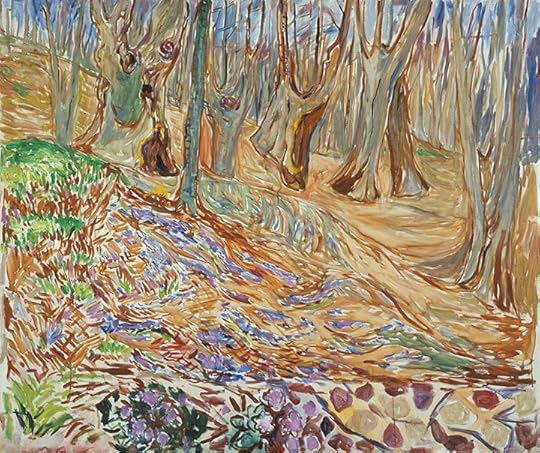
Edvard Munch – Ulmenwald im Frühling
Profile Image for Carla.
285 reviews85 followers
April 1, 2019
Visão pessoal e despretensiosa da arte de Edvard Munch. Gostei muito.
Profile Image for Darwin8u.
1,833 reviews9,037 followers
February 22, 2024
Gathering my thoughts first. Giving them time to fade. I’ll soon write a review of Knausgaard’s take on Munch based on my memory of my thought and the emotions they evoked. That seems an appropriate approach.
Profile Image for M. Sarki.
Author 20 books237 followers
January 15, 2019
https://rogueliterarysociety.com/f/so...

...all artists are iconoclasts…But that is not what art is! You have to shove meaning into it and turn it into a possible place...I know that what I’m making will also exist outside myself. That it takes time…

To read Knausgård as art critic or curator is to enter an unknown territory quite unfamiliar and in some ways much too foreign to be fully realized. But by the end of the book Knausgård achieves the unexpected. Though lacking in personal anecdotal material there was abundant biographical information provided about his subject Edvard Munch. Karl Ove is generally so personal and confessional that at times I found it difficult to remain engaged properly with his academic text. Even a bit bored at times. But I suffered through and was rewarded in the end.

...Doubt and shame are social mechanisms, they come into play when a boundary has been transgressed, when something is done or said that shouldn’t have been. Art lives by transgressing boundaries, by going beyond what has been collectively decided, beyond what everyone has agreed to see and think…Many of Munch’s paintings from the 1890’s are about being shut out, or about shutting the world out...It is almost as if he developed a symbolism of gestures of exclusion, with all the bowed heads and averted faces…

It is understandable why Knausgård is attracted to the art of Edvard Munch. As accessible as Knausgård is in a symposium setting, interview, or even his creative nonfiction, the opposite is true of his private life. He is a homebody, content to spend time with his kids, his two gardens, and sitting down to business in his writing shed. Munch, as well, lived in a small and simple house, in an out-of-the-way little town, and made thousands of drawings and paintings of unspectacular people and his surroundings. Though famous for his remarkable masterpieces, Munch also produced an amazing number of works seemingly for no good reason.

…Memories are identity, they are what we think of ourselves…but the fluid zone between the world in itself and our image of it is what painting explores, that is its core activity...
Profile Image for Lauren .
1,833 reviews2,548 followers
Read
June 22, 2021
"No one does cabbages like [Munch] does..."

From SO MUCH LONGING IN SO LITTLE SPACE: The Art of Edvard Munch by Karl Ove Knausgaard, translated from the Norwegian by Ingvild Burkey, 2017/ 2019

#ReadtheWorld21 📍 Norway

My 2nd entry for the Karl Ove's Oeuvre readalong is this lovely work of biography, art and literay criticism, as well as personal memoir.

Using the life and works of Edvard Munch, Norway's foremost 20th-century visual artist as a launchpad, the narrative winds through a prolific art career of over 1700 oil paintings and numerous other sketches.

This book is a result of Knausgaard's research for his own curation a Munch exhibit, including site visits to Munch's home and items in historical vaults and archives that have never been displayed.

So much more than the art, there are some fascinating literary references here too, with many nods to Russian and French lit, as well as Scandinavian writers that I wasn't as familiar with sent me to research.

"Knausgaardian" - just as people describe writing and stories as "Proustian" or "Kafkaesque" - if you have read his work, you know what to expect here, but this time with a central focus on Munch.

One I plan to return to... A larger art history project is forming in my mind and this would be a great one to revisit in that context.
Profile Image for Sarah ~.
1,054 reviews1,036 followers
September 12, 2024
So Much Longing in So Little Space: The Art of Edvard Munch - Karl Ove Knausgård

يكتب كناوسغارد عن إدفارد مونش الفنان النرويجي الشهير وصاحب لوحة الصرخة-أشهر أعماله، يكتب عن طفولته ونشأته ويستحضر مشاهد معينة من حياته وعلاقتها بلوحاته الأشهر مثل حقل الملفوف والطفل المريض...إلخ، ويغلف كل هذا بتعليقات ومواقف حياتية ويومية كثيرة كعادته.


وإن كنتم من محبي كناوسغارد-مثلي، ستحظون بفرصة القراءة له وهو يتحدث بلا نهاية عن أي شيء وكل شيء، عن الفن والرسم والتصوير والسينما والتاريخ والفلسفة والعلاقات الانسانية، عن غرباء وأصدقاء وعن مدن وكتب وتجارب .. وكل هذا بإسهاب لا يُملٌّ منه ...
Profile Image for Niklas Laninge.
Author 8 books78 followers
October 9, 2021
Förvisso den första konstnärsbiografi jag läst men detta är nog det bästa jag läst i år.

Finns ett svagt parti i del 3 när KO hänger med någon filmare men annars brilliant rakt igenom.
Profile Image for Preston.
6 reviews1 follower
December 26, 2018
The first time I've read Knausgaard in sustained essay mode. Here he channels his already ekphrasic writing style toward paintings, and the fit is predictably snug.

On offer are analyses of KOK's own artistic development in addition to Munch's. Of particular note are ideas excerpted from Deleuze's book on Francis Bacon, which exerted a profound influence on KOK after he came across it in his late 20's. Deleuze held that "it is a mistake to think that the painter works on a white surface." Rather, the painter works in the thrall of an ideal painting he must discover by way of the real painting, which he enters into "precisely because he knows what he wants to do but not how to do it, and the only path to that certainty leads through the painting and out of it."

KOK relates.

"When I read Deleuze's short essay for the first time in 1995, I didn't know how to write ... one image to suggest this way of writing might be a laboratory in which the objects being studied are kept in a glass case, within which they are manipulated by scientists by means of a pair of fixed gloves, the only physical connection between them and the object of their work."

This experience is probably familiar to anyone who has made sustained attempts at writing. It’s not easy getting into the flow state: it requires seceding from a default state of abstracted inertia, wherein the writer hovers above what (s)he has written without ever inhabiting it.

"Then, one year later, something happened. I changed my language, from a radical form of bokmâl (one of the two officials forms of written Norweigian) to a more conservative form, so that what I wrote felt slightly foreign ... it didn't express me or my world, it expressed the text, what had happened there at that particular moment. That moment could not be reconstructed, it belonged solely to the situation in which it had emerged. The art of writing was to find another such moment, and then another and another again."

So writing draws nearer as it grows more foreign. A conundrum, but an approachable one. Probably part of it is that we are less viciously exacting in our standards of sentences not our own; less anal-retentive about handling artifacts that aren’t freighted with our own fragilities or identities.

Another part of it might be that reading is much easier than writing, and writing much easier when it feels like reading, when the sentences seem to come on their own volition. KOK is a devotee of this unmastered, self-volitional writing style, which is naked but not hysterically so. Naked like a buddha, assured in its nakedness.

Or as KOK says of Munch: “This is at once a strength and a weakness of his pictures, they are not sophisticated but so open towards the world that it seems to reveal itself defenselessly, as if it is the world that is unguarded, not the artist."
Profile Image for Philippe.
748 reviews722 followers
December 15, 2019
My very first Knausgaard and certainly an incentive to read more. But it’s rather the tone of voice than the insights about Munch that resonated with me. Knausgaard seems to say an awful lot of sensible and sensitive things about his countryman, but at the end there was nothing that really stuck. Maybe my reading was too fragmented or I was distracted. But then there is something in the book that doesn’t make me pay more attention. Definitely annoying that the colour plates in the book do not match the paintings discussed. I’ll rate the book with 3 stars. Upon rereading this may go up to 4 or down to 2.
Profile Image for Adira.
54 reviews34 followers
August 1, 2024
I love Knausgaard’s ability to turn anything into an unapologetic kind of autobiography. There is plenty of analysis but it’s deeply emotional and there is no part left untouched by the authors opinion and experiences. I found this to be very engaging because if I wanted to read a detailed art history book I would, but chose this one mainly because of the author and it did not disappoint.
Profile Image for Michael Bohli.
1,107 reviews53 followers
September 26, 2019
Karl Ove Knausgård schreibt einen Essay-Band über den norwegischen Maler Edvard Munch - und in mir frohlockt es. "So viel Sehnsucht auf so kleiner Fläche" ist ein Buch mit extrem spezifischen Thema, doch glücklicherweise geschrieben von einem der besten, zeitgenössischen Autoren. Ursprünglich zur von Knausgård kuratierten Munch-Ausstellung verfasst, ist das Buch eine persönliche Begegnung mit den Gemälden, ein weltoffener und philosophischer Spaziergang durch die Kunst im allgemeinen und natürlich auch ab und zu ein Fenster in die Welt und den Alltag des Autors.

Theorien und Fragen zur Malerei, zur Veränderung der Kunst in der Gesellschaft und dem Wunsch nach Vermächtnis - "So viel Sehnsucht auf so kleiner Fläche" ist ein hoch interessantes Buch, das nicht nur Liebhabern von Munch gefallen wird, sondern sogar dessen Kritikern. Es übersteigt aber schnell seine eigentlichen Inhaltsgrenzen und offenbart viele, anregende Gedanken zum Kunstschaffen per se und wirkt immer wieder inspirierend.
Profile Image for Marie  Lund Alveberg.
92 reviews36 followers
July 11, 2017
"Og det er det alt sammen handler om, er det ikke? Nærvær? Nærvær til et menneske, nærvær til et landskap, nærvær til et rom, nærvær til et eple - og nærværet til maleriet eller tegningen som løfter mennesket, landskapet, rommet, eplet fram."

Enkelte tunge passasjer til tross - Knausgårds unike tolkning av Munch er et must for alle tilhengere. Knausgårds blikk på Edvard Munch som kunstner og som menneske fanger og fortryller. Boken veksler mellom rent kunsttekniske analyser av Munchs malerier, til passasjer med essayistisk stil, ofte koblet til livet Munch levde, men også til livet Knausgård lever i dag. Jeg likte særlig bokens del tre, og Knausgårds samtale med Joachim Trier. Triers måte å sammenlikne utenforskapet Munch må ha følt, med hovedkarakteren i spillefilmen "Oslo, 31. august" fascinerte meg dypt. Så også hans innsiktsfulle refleksjoner rundt forgjengelighet. Både i egen kunst og i Munchs malerier. Anbefales varmt!
Profile Image for Karenina (Nina Ruthström).
1,779 reviews807 followers
October 1, 2022
Som människa var han tydligen känslostyrd, nervös och självupptagen. Som en annan då antar jag. När han dog (1944) donerade han alla sina sjuttonhundranånting målningar till Oslo kommun. Karl Ove Knausgård fick frågan (2017) om att curera en utställning vilket ledde fram till den här boken.

Skriets pappa målade stora känslor med existentiell bas. Som författaren försöker skriva snabbare än tanken försökte Edvard Munch möjligen måla för att komma undan ”målningen före målningen” det vill säga de mentala bilder han hade i huvudet innan han börjar måla. Kanske förklarar detta hans yviga penseldrag. Målet skulle enligt Knausgård vara att måla exempelvis trädet som det upplevs i nuet och inte hur det ser ut i minnet präglat av tidigare erfarenheter/ förutfattade meningar. Knausgård skriver åter om att skapande – både skrivande och målande – handlar om förmågan att se på vanliga vardagliga saker med en ny blick.

”Skriet ser ut som något från en helt annan värld. Men det enda som har hänt är det som hände i Svält, perspektivet har flyttat in i en människa och det är platsen som världens ses från som det gäller, det är denna ensamma människas verklighet som är världen.”

Munchs verk visar betraktaren vad Munch såg och kände då när han skapade verket. Det är inifrånperspektivet som gör hans konst intressant, menar Knausgård.

”All kunskap vi har om världen är som en gard, något vi håller upp mot den för att inte övermannas av nya intryck.”

Skriet är ett nu i ett slutet rum som inte går att värja sig mot. Hans personliga trauma blir mitt personliga trauma.

”Grundläggande för allt skapande är att det inte handlar om överföring av något som man äger och vill uttrycka, utan om att det uttryckta ska uppstå som något i sig självt.”

De vågade penseldragen kan också förklaras av klasstillhörigheten. Munch vågade satsa och ta ut svängarna i sitt måleri, kanske för att han hade borgerlig bakgrund. Andra målare från lägre klass hade troligen mindre anspråk och satsade på att måla inom paradigmet.

Det här är nog en drömbok för den konstintresserade. Jag är väl måttligt intresserad, vad det verkar. Men det handlar inte bara om Munch. Knausgård skriver också om konstnärerna vars bilder pryder hans årstidsböcker och mot slutet handlar det till min stora glädje om film och filmkritik. Men jag blir lite trött på tonläget och den pretentiösa ansatsen även om det tack och lov finns motkrafter. Konstnären Vanessa Baird bereds plats precis när jag känner att fotfästet gått förlorat.

”Jag hänger väldigt lite med konstnärer, sa Vanessa. Jag tycker att saker hakar upp sig, de blir så viktiga, alltihop blir så viktigt. Det är så väldigt intressant, säger de. Det är så intressant, alltihop. Då tänker jag, far åt helvete, det är det ju inte alls!”
Profile Image for Tülay .
233 reviews13 followers
Read
May 30, 2025
Ama insan sadece dışarıdan bakıldığında insan değildir, yalnızca başkalarıyla karşılaşmalarının toplamı da değildir, insan her şeyden önce kendisi için insandır ve işte oradan yazar, oradan resim yapar.
Hayattaki dönüm noktaları bizi dönüştüren şeylerdir. Bir ölüm, bir hastalık, bir travma. Özellikle bu durumlar yaratım sürecine dayalı sanat ve edebiyat gibi faaliyetleri oldukça etkiler. Sanatçının yaşadığı duyguların izini biz eserlerinde görmeye başlarız. Sanat travmayı, acıları bir baş yapıta dönüştüren yegane şeydir. Terapi yöntemi degil, kendine özgü bir alan açmanın ifade biçimidir sanat. Hayatı yakınların ölümüyle sarsılmış, kendi içine dönmüş Edvard Munch'un sanatını Kavgam serisiyle tanıdığımız Karl Ove Knausgaard'ın gözünden okuyoruz. Knausgaard bize Munch'un sanatını anlatmıyor aslında. Munch'un sanatında yer alan melankoli, hüzün, varoluşsal sancılar ve kıskançlık gibi duyguların insan hayatında olan yerini sorgulatıyor. Bunu ilk once kendi kişisel tarihinden aktarıp, sonra okuyucuya sunuyor. Zaman zaman şiirsel bir anlatımı var metnin. Munch'un yaşadığı acılar, bu acıların sanatına yansıması, resim sanatında zamanla değişen üslubu, diğer sanatçılarla olan ilişkisi, edebiyat dünyası özellikle Knut Hamsun ile olan ilişkisi metinde yer alan konular. Sinemadaki yalnızlık ve içe dönüş temasının resim sanatındaki karşılığını arayan Knausgaard, Munch tablolarının sinematografik yapısına da değinmiş. Munch günümüzde hala bir ikon. Özellikle Çığlık tablosuyla. Benim de en sevdiğim ressamlardan biri. Kırmızıyı, yeşili ve sarıyı hüzünlü bir şekilde resme yansıtmasını çok seviyorum. Resimleri hüzünlü olduğu kadar, aynı zamanda tedirgin edici bir özelliğe sahip. Bu yüzden de gerçekçi duyguların yansıması. Sanatseverlerin seveceğini düşünüyorum. Okuyun tavsiye ederim. Cok sevdim. Sanatla kalın.
Profile Image for Campbell.
597 reviews
April 15, 2019
This one didn't do for me, much to my disappointment. Perhaps it was just my natural aversion to at criticism, but I just didn't find it interesting, despite the occasional flash of beautiful prose.
Profile Image for Derek.
1,843 reviews140 followers
November 28, 2023
I love Knausgaard’s unique brand of art history and criticism. Knausgaard leverages his own background as an art student and his ability to yoke biographical details (both those drawn from his own life as a writer and those drawn from the life of Munch) to criticism, philosophy, and art theory. And how wonderful to see one of Norway’s greatest authors celebrate one of its greatest artists?
Profile Image for J Earl.
2,334 reviews111 followers
May 6, 2019
So Much Longing in So Little Space by Karl Ove Knausgard is part art criticism, part simply art appreciation, part biography, and part memoir. I wasn't sure how I would feel about this book when I started but I was quickly caught up in every distinct aspect of the work.

Knausgard, by his own admission not an art critic or historian, takes an approach to Munch's entire artistic output that makes more sense than it might initially seem. Because he is simply interested in Munch and not in promoting a particular school of thought, he looks at the things that many people who enjoy art might also think about. Of course he looks at Munch's life and circumstances and how these play into his art. But he looks also at where and how art is viewed and produced. He does this by looking, such as is possible, at where Munch worked but also by interviewing contemporary artists about their work and work environments.

As a guest curator for a Munch exhibit, he has the opportunity to arrange a selection of paintings along thematic strands that he sees running through the works. Would someone "trained" in art history or an experienced curator made the same decisions? Likely not. We walk with him through the process of pondering the works, thinking about similarities and differences, and about how best to display the works to bring these things to the fore.

If you're looking strictly for either a biography of Munch or a critique of Munch heavily steeped in art theory, you may well be disappointed. But I think even if you're disappointed on those points you'll still find a lot to appreciate about Knausgard's unusual approach to art appreciation as it applies to Munch. And I think his perceptive comments about the arc of Munch's life give the already known facts of his life a new perspective and meaning. Plus there are some wonderful prints of Munch's work.

Reviewed from a copy made available by the publisher via Edelweiss.
Profile Image for Elie Ra.
4 reviews
September 28, 2023
Tant de désir pour si peu d’espace
اسم فرانسه کتابی که کنوسگارد در باره مونک نوشته و چه اسم قشنگیه.
نمیدونم در مورد کتابی که یکی در مورد یکی دیگه نوشته، میشه چطوری نوشت.
به شیوه شلخته‌ای کتاب رو خوندم. کتاب رو چند ماهه دستم گرفتم ‌و هر بار با فاصله زیاد، چند صفحه می‌خوندم. چطور چیزی میشه در مورد یه کتابی گفت که اینطور بریده بریده خونده شده؟ حتما اینجا هم قراره چیز شلخته‌ای که در هماهنگی با سبک خوندن این کتاب بوده بنویسم.
کتاب رو از کتابفروشی موزه اورسی گرفتم. بعد از دیدن نمایشگاه مونک، اونقدر متاثر شده بودم که در همون روز ۲ بار نمایشگاهش رو از اول تا آخر دیدم و کتاب رو هم که گرفتم، همونجا توی موزه شروع کردم به خوندنش. خیلی سریع هم پیش می‌رفتم. ولی یه هویی ول کردم و گذاشتم یه وقت دیگه بخونم و یه وقت دیگه همین چند روز گذشته بود.
کنوسگارد یه سال تمام روی تابلوهای مونک کار کرده و سفری می‌کنه به جهان مونک. خواننده هم شروع ‌به کشف مونک از دید نویسنده کتاب می‌کند و همینطور آشنا شدن با خود کنوسگارد. این اولین کتابیه که از این نویسنده می‌خونم.
نویسنده مشهور نروژی در مورد هنرمند مشهور نروژی حرف میزنه و رابطه‌ش رو به عنوان یه ادم آماتور در زمینه هنر با مونک تعریف می‌کنه. خودش هم میگه که تخصصی در این مورد نداره و هر وقت با هنرمندانی که شناخت زیادی از مونک دارند صحبت می‌کنه، این اضطراب را داره که نکنه سوالات نحیف و احمقانه‌ای بپرسه و یا تابلوهایی در نظرش شاهکار بودند که از طرف یه متخصص آثار مونک به عنوان یه چیز سطح پایین نگاه شود. ولی خاصیت مونک اینه که هر کسی و حتی من هم، می‌تونه باهاش ارتباط بگیره و درباره‌ش حرف بزنه. پس حتما کنوسگارد میتونه چیزای جالب‌تری در موردش بگه. تابلو‌های مونک انگار جایی از وجودت رو لمس می‌کنن که اصلا لازم نیست خیلی ادم حرفه‌ای باشی تا بتونی مونک رو بفهمی. میشه با هر سطحی یه فهمی از مونک داشت. چون همه ما مریضی، جدایی، غم، حسادت، رنج، اضطراب، از دست دادن، نرسیدن… رو تجربه می‌کنیم.
شاید کسی نتونه در مورد از دست دادن حرف بزنه، اما اونو میفهمه. ما همیشه نمی‌تونیم در مورد چیزی که حس می‌کنیم یا میفهمیم، حرف بزنیم و برای بیانش از کلمات استفاده کنیم.
من خیلی سر از نقاشی در نمیارم. نمیدونم چطور یه اثری خوب میشه و یه اثری نه. در ابتدای کتاب هم از این صحبت میشه که چی باعث میشه یه اثری به چشم بیاد و یه اثر دیگه نه. یا تفاوت نظر یه آدم معمولی با یه هنرمند در چیه. ولی در وضعی نمایشگاه مونک رو دیدم که انگار یه کسی رو پیدا کردم که یه قرن پیش درگیر همین چیزایی بوده که من امروز در سال ۲۰۲۳ هستم.

کنوسگارد در این کتاب با ادمهای متفاوتی دیدار می‌کنه. حتی تعریف هم می‌کنه که چه چیزی باعث شده که بره به ملاقات این آدم‌ها که همگی هم هنرمند هستند، البته نه الزاما نقاش. هر بار در مورد سوژه‌هایی بحث می‌کنند که منم درگیرشونم ‌ و به ویژه در همین زمان. مثلا همین معنای زندگی و دادن معنی به کارهایی که انجام میدیم و نداشتن درگیری‌های متافیزیکی که انگار داشتنشون ارزشمنده و اگه نداری، یعنی آدم بیخودی هستی، پس جدی گرفته نمیشی و نادیده گرفته میشی.

چیزی که در هنر مونک هست، نشان دادن همین احساساتیه که فارغ از زمان و مکان، تونسته انسان را در این جهان درگیر خودش کنه. یکی از تم‌های اصلی در آثار مونک همین زندانی بودن انسان در خودشه، هر کسی در دنیای خودش، و تنها با خودش.
صحبت از ادمهایی‌ست که قادر به رابطه با دیگری نیستند و البته این حق رو دارند که در ارتباط با بقیه باشند، اما نمی‌توانند ‌ و در عین حال در این اجتماع زندگی می‌کنند.

در کتاب پریودهای مختلف زندگی مونک و دوره‌های کاریش و تحولاتش در طول زمان هم بررسی میشه و همینطور بررسی تعدادی از تابلوهاش.

از بعضی تابلوهایی صحبت میشه که نه در نمایشگاه بود و نه قبلا دیده بودم. آثار مونک یه چیزی حدود ۱۷۰۰ اثره و میشه نمایشگاههای زیادی برگزار کرد و هر بار میشه تصور کرد با هنرمند جدیدی روبرو شدی.

درخت
مونک در تمام دورهای کاریش بارها درخت کشیده و درخت چیزیه که من هم در عکاسی و هم در نقاشی برام جالب بوده و دوست داشتم. مثلا عکس‌هایی که انتوان داگاتا از درخت گرفته واقعا خوبند.
اینجا دوست دارم در مورد تابلو printemps dans la forêt d’ormesهم چیزی بنویسم. البته که خود نویسنده در مورد این سری از تابلوها حرف میزنه. تابلوهایی که در اواسط ۱۹۲۰ کشیده شده. تابلوهای این مجموعه خالی از هر پرسوناژیست و همینطور هیچ چیزی که به انسان ربط داشته باشد در آن نیست.
هیچ وضعیت انسانی، خاطرات, رومنس،
سائق جنسی ، اضطراب و … درش نیست. انگار به دنبال انتقال هیچ معنی در این تابلوها نیست. فقط فرم درختان است و روشنایی بهار، رنگ‌ها و چیزهای اینطوری.
وقت خوندن این قسمت به این فکر کردم که آیا امکان داره که اینطور کاری را هم در ادبیات انجام داد. این امکان هست که داستانی نوشت خالی از هر گونه عناصر انسانی. چیزی به ذهنم در این مورد نمی‌رسه.

در مورد علاقه‌ش به تابلوی Inger en noir et violet صحبت می‌کند. تابلویی که من در نمایشگاه دیدم، اما فکر نمی‌کردم نویسنده تا این اندازه از دیدنش تحت تاثیر قرار گرفته باشه. شاید در اون زمان تابلوی حسادت یا کودک بیمار برای من بیشتر جالب بود. از اینکه من به اندازه نویسند از دیدن تابلو اینگر متاثر نشدم و
از اینکه تونسته این همه با دقت تابلو رو ببینه و من ندیدم خجالت کشیدم. این تابلو اثر مهمی از مونک است چون کار مونک به عنوان نقاش با همین تابلو شروع می‌شود.
تابلو را تحلیل می‌کند اما میگه خودم هم دقیقا نمیدونم چرا این تابلو یکی از تابلوهاییه که تا دیدمش اونو دوست داشتم و ادامه میده که این تابلو در سکوت با تو ارتباط برقرار می‌کند و این فهمش از نوعیه که در سکوت بهش رسیده و نمی‌دونه آیا «فهمیدن» کلمه مناسبیه برای بیان این حالت یا نه. چون یه شناخت شهودیه و یه خرد ارام و بی‌صداییه. و این نوعی از بینش و بصیرته که قابل فورموله شدن نیست و نمی‌تونیم اونو در قالب زبان ببریم. البته من نمی‌دونم این چیزایی که به فارسی دارم می‌گم همون معنی رو میده که به فرانسه داره یا نه. چون برای خودم هم استفاده از این کلمات به فارسی راحت نیست. اما متن کتاب واقعا زیباست.

کس که درباره مونک کتاب می‌نویسد، حتما در مورد تابلوی جیغ هم صحبت می‌کند. تابلوی جیغ آنقدر معروف است که من کنجکاوی نسبت به آن نداشتم. مثل اینکه باید حتما این تابلو رو تحسین کرد و اگر نکنی نمی‌شود و همین مانع کشف اثر می‌شود. مثل تابلو ژکوند که وقتی تابلو رو از فاصله نزدیک دیدم، به نظرم معمولی بود و بیشتر شیوه نمایش دادن تابلو و جمعیتی که به زور میخواد بهش نزدیک بشه جالب بود.
کنوسگارد در جاهایی از کتاب درباره رمان گرسنه می‌نویسد و همینطور زمانی که به تابلوی جیغ می‌رسد. ابتدا از گرسنه شروع می‌کند. همه چیز روی یک نفر متمرکز شده و همه چیز از زاویه دید اون دیده می‌شه و ما آن چیزی رو میبینم که او میبینه.
و بسیار تاثیر گذاره و در حال حاضر هم تاثیر زیادی داره. انگار همه چیز با وجود آمدن این پرسوناژ به وجود آمده . همه چیز در همین لحظه می‌گذرد و هر چیزی ممکن است اتفاق بیفتد. همانطور که در زندگی ما هر روز ممکن است چیزی پیش بیاید. رمان گرسنه نه طرحی دارد و نه پرسوناژی ساخته شده . در این رمان جهان متعلق به این شخص گرسنه است و وقتی که میمیره، این دنیا نیز با اون از بین می‌رود. فرم جدیدی از ادبیات که در آن گذشته و اینده غایب است.
نویسنده تابلو جیغ و رمان گرسنه را در یک دسته می‌گذاره. مونک همان کاری را در کشیدن جیغ انجام می‌ده که هامسون در نوشتن رمان گرسنه.
در تابلوی جیغ، تمام فضا به صورت و وضعیت فکری روانی که در ظاهر آدمی که کنار پل ایستاده تعلق داره. کنوسگارد میگه جیغ کاملا برای جهان متفاوتی است. همان چیزی رو تولید می‌کند که رمان گرسنه. پرسپکتیو جایش عوض شده و تنها به طرف یک نفره و دنیا دقیقا از همینجایی که این آدم در تابلو است دیده می‌شه. جهان همان چیزی‌ست که توسط همین فرد ایزو��ه در تابلو یا رمان گرسنه زندگی شده است.
تابلو جیغ تاثیر گذاری شدید و شوکه کننده‌ای داره چون تماشاگر را بی دفاع می‌گذاره و مستقیم میاد میخوره بهت و شوکه میشی. مخاطب بدون هیچ دفاعی در برابر آن قرار می‌گیره. همه چیز در نهایت شدته و هر چیزی که در تابلوه، در خدمت نشون دادن اینه.

خیلی دارم به سمت نوشتن جزییات کتاب می‌روم و این در حالیست که بخش‌هایی از کتاب رو که چند ماه پیش خوندم، خیلی یادم نیست.
ولی یادم بود که کتاب با صحبت کردن در مورد تابلویی شروع شد که تابلو مورد علاقه کنوسگارده و این تابلو در نمایشگاه نبود. تابلو champ de choux. نمی‌دونم اگه این تابلو هم در نمایشگاه بود، باز برای من مثل تابلو Inger بود یا نه. فکر می‌کنم احتمالا به همون اندازه‌ای به تابلو Inger توجه کردم به این هم توجه می‌کردم. هم تابلو Inger و هم champ de choux با خوندن درموردشون در این کتاب برام قشنگ شدن. حسادت کردم که من نمی‌تونم یه تابلو رو اینطور ببینم. درکم از هنر یه چیز گل درشته. به سراغ چیزهایی میرم که یه جوری در ارتباط با خاطره‌ای یا چیزی از گذشته من باشه. فکر می‌کنم برای اکثر آدم‌ها همین باشه. قسمتی رو متوجه میشویم که ارتباطی با چیزی در ذهن ما داشته باشه و کلا در این زمینه سوادی ندارم.

در جایی از کتاب کنوسگارد با همکاری یه کارگردان نروژی شروع به ساخت فیلمی در مورد مونک می‌کنند. به دیدار محل زندگی مونک می‌روند. در آنجا معلوم می‌شود که مونک همیشه در حال کشیدن همون سوژه‌های در دسترسش بوده، چیزهایی که در خانه‌ و کوچه‌ای که زندگی می‌کرده و همان قسمتی از دریا که در نزدیکیش بوده، نویسنده می‌گه مونک قصدش نشون دادن این بوده که انسانی در این جهان بودن، در همه جا یه جوره و اگه قراره دنبال معنایی بگردیم، باید در درون خودمان به دنبالش باشیم.
با دیدن خانه مونک، کنوسگارد باور نمی‌کند که همه چیز در جای به این کوچکی رخ داده باشد. پلاژی که تابلو ملانکولی رو کشیده پیدا می‌کنن و در نزدیکی خونه‌ست. یه پلاژ معمولی که می‌تونه هر جایی پیدا بشه. یه چیزی که جالب بود در این قسمت این بود که اول رسیدن به یه پلاژی که اونم کنار خونه‌مونک بود و اطمینان نداشتن که این دقیقا همون جاییه که ملانکولی کشیده شده یا نه و کنوسگارد میره میشینه روی سنگ و سعی می‌کنه فیگور مردی که در تابلو است رو بگیره و خنده‌ش میگیره و به این نتیجه میرسن که نه این پلاژ همون پلاژ نیست. کمی که راه رفتند، تونستند ساحل مورد نظر رو پیدا کنند.

در کتاب خوندم که یه ورژن رنگی تابلو جیغ سال ۲۰۱۲ به قیمت ۱۲۰میلیون دلار فروش رفته و من در موزه از کنار تابلوی جیغ خیلی راحت گذشتم و اونقدر که تابلوهای دیگه منو به خودش مشغول کرد، خیلی وقت برای نگاه کردن به این تابلوی میلیون دلاری نگذاشتم و البته جمعیت بیشتری هم در حال نگاه کردن به این تابلو بودند.
در مورد تابلویی از مونک حرف زد که من نتونستم توی گوگل هم پیداش کنم. احتمالا خوب نگشتم. الان همه چیز در دسترسه، لااقل در عکس. ولی بین سری عکسی بود که کنوسگارد برای کتاب انتخاب کرده بود و در آخر کتاب بود.
تابلوییه که مردی روی پله ایستاده و در حال رنگ کردن دیوار یه خونه‌ست. مونک این تابلو رو ۲ سال قبل از مرگش کشیده. یه تابلویی که هیچ ارتباطی با دیگر آثار مشهورش نداره و تنها یه لحظه معمولی نادیده در زندگی روزمره رو کشیده و کنوسگارد میگه که مونک می‌تونست اون رو به هر شیوه‌ای بکشه و چرا خواسته اینطوری بکشه؟ به دنبال چی بوده؟
توضیحاتی هم در جواب سوالی که مطرح می‌کنه میده. اما در اخر چیز جالبی می‌گه، مونک در ۷۸ سالگی بزرگ‌ترین هنرمند مملکت خودش بود و در این تابلو انگار یه جور به سخره گرفتن خودش در برابر حرفه‌شه. مردی که روی نردبان ایستاده، در حال رنگ کردن دیوار خانه‌ایست و مونک هم در حال نقاشی کردن این مرد و این تصویر ، آیا واقعا از اساس تفاوتی بین این دو هست؟
کتاب در اینجا تموم نمیشه، اما من تا همینجا می‌نویسم. فکر کنم بازم برگردم و قسمتهایی که چند ماه قبل خوندم رو دوباره بخونم.
11 reviews8 followers
December 15, 2025
Un de mes écrivains préférés qui écrit sur un de mes peintres préférés et boum, un de mes réalisateurs préférés surgit de nulle part. J'aime bien.
Profile Image for Paul H..
868 reviews457 followers
August 25, 2019
I dunno, Karl Ove. Everything since Min Kamp has been kind of a mess; some of the work is pretty good (e.g., this book!), while the 'seasons' books and the epistolary-soccer-dialogue book, etc., are just an embarrassment. So Much Longing is basically a B-minus version of the belles lettres art commentary sections of Min Kamp; pretty good, but, yeah.

Honestly I was mainly happy to see Stephen Gill show up halfway through, he is absolutely one of the best British photographers working at the moment, hopefully Karl Ove has managed to raise Gill's profile somewhat (check out his work, especially Coexistence and Best Before End: https://www.stephengill.co.uk/portfol...). I don't buy photobooks very often, given how ferociously expensive they are, but I do own a couple of Gill's . . .


Profile Image for Richard Cho.
307 reviews11 followers
March 7, 2024
Notes:

- No art is free of morals, for the simple reason that all art entails a set of assessments of reality, and they are always social in nature, since no such thing as non-social art has ever existed, but - and this is important - art is moral first and foremost through form, since it is form which establishes a relation between the viewer and the viewed.

- This is really about truth, which I believe to be both unchanging and at the core of all art. I think the essential thing about truth is that it must be experienced, and in order for it to be experienced, I think it has to appear nakedly, not woven into inherited notions.

- van Gogh's sunflowers and Monet's water-lily ponds, Picasso's Guernica and Matisse's dancing women, Munch's The Scream.

- ... the problems he set out to resolve as he faced a blank canvas.

- I think this is why so many artists and writers talk about truth, say that they want to express what is true. In this conception truth is seen as lying behind something else, there is always a veil of notions that must be pulled aside in order for us to see the truth, to see the world as it really is. And to do that one must possess a language other than the language of one's time, since the language of the age is one of the things that conceal or overshadow. This is why originality is among the most highly valued qualities in the world of art. Originality is the idiosyncratic, the particular, it is the new. Whereas the true is always the same.

- What it is possible to say in a given epoch, and how it can be said, defines more than anything the different expressions of art, and this of course applies to Munch too.

- 'the painting before painting'

- ... the painter enters into the painting precisely because he knows what he wants to do but not how to do it, and the only path to that certainty leads through the painting and out of it.

- This ability, to both step aside for the motif, make room for it, see it and sense it, which demands a great openness to the world, and at the same time be able to bring out one's own vision in a painting, is perhaps the decisive quality for every artist.

- Yes, for intuitive knowledge exists, silent wisdom exists, instinctive insight exits, and I believe this unarticulated understanding of the world comprises a much larger part of our self than we usually imagine.

- Art is of course itself a part of the world, like everything we make, but art distinguishes itself from objects by always being more than them, in that besides being an object in reality, it also creates a reality of its own, next to or beyond the one we usually see and inhabit.

- What these texts did, I think, was to find words for something I didn't know that I knew.

- So what does one do when the determining form makes it impossible to say what one wants to say, show what one wants to show? Then the form has to be broken down, has to be destroyed.

- Writing cannot merely reconstruct a moment, it must itself be a moment, only then is it in touch with the world, not as depiction but as action. ... Fundamental to all creation is that it is not about transferring something one possesses and wishes to express, but about what is expressed emerging as something in itself.

- ... and at once I knew that this was writing. I looked at it, it didn't express me or my world, it expressed the text, what had happened there at that particular moment. That moment could not be reconstructed, it belonged solely to the situation in which it had emerged. The art of writing was to find another such moment, and then another and another again.

- But these are arguments. And you can't argue against feelings.

- This was the opposite of integrity, the opposite of an act of art, for an act of art is precisely seeking something that can't be said or done in any other way, and which disregards the thoughts and opinions of others, is in fact entirely independent of them.

- Doubt and shame are social mechanisms, they come into play when a boundary has been transgressed, when something is done or said that shouldn't have been. Art lives by transgressing boundaries, by going beyond what has been collectively decided, beyond what everyone has agreed to see and think. ... That the reactions to Munch's pictures were so strong initially, when a common reaction at the exhibition of The Sick Child was that people stood there laughing at it, was precisely because it had been painted shamelessly, with no thought of how it would be judged, entirely on its own terms.

- There was a fire in him, and a will to sincerity and self-searching which one simply couldn't respond to with any kind of formality.

- Heidegger's The Origin of the World of Art; Deleuze's Literature & Life.
Profile Image for Audrey Kalman.
106 reviews4 followers
Read
April 14, 2025
some quite good writing about 20th century painting, analyzing visual art, Norway, museum collections, etc

“A work of art is like a point in a system of three coordinates: the particular place, the particular time, the particular person. The more time has passed since the creation of a work, the more apparent it becomes that individuality, the particular person's experiences and psychology, plays less of a role than the culture in which it found expression. I am sure that a well-informed and competent reader in the Middle Ages would have been able to distinguish between different book illustrators of that time, and that the differences between illustrators were perhaps even considered essential, while for us, at least for me, the style expresses one thing and one thing only: the medieval.” (13)

“To write about a painting deepens the same problem. A painting addresses itself directly to the emotions, and when the emotions are explained and words assigned to what is wordless, it becomes something else.” (43)

“He was born on this day, I thought. In this light and in this silence. Much had changed during the I50 years that had passed since then, but not” (122)

“When I looked at the famous pictures, I saw 'Munch', when I looked at the unknown works, I saw paintings.” (130)

“style is a way of controlling information.” (145)

“It is difficult to imagine that a break as radical as that which took place in the 188os and gos will ever happen again - but then it was impossible for those living in the 185os to predict that the old art paradigm was about to collapse.” (178)

“Hegel talks about the universally specific. That you hit upon something so specific to you that it actually transcends you and reaches outwards. That's what I feel Munch does. The loneliness, the inability to get close to others, watching the others dance, standing in the forest and peering out at them on a summer night.” (203)

“A black car came driving down the pedestrian street an. pulled up on the pavement. It was Emil and Joachim. I climbed in, into the warm, faintly humming interior, and we drove out of Oslo, along roads and past buildings I wouldn't have noticed fifteen years earlier but which I now saw and thought of as being Norwegian.” (215)

“But what was he after? It can't have been much. It wasn't to create great art, it wasn't to paint a masterpiece, it was simply to capture the essence of this little scene.” (229)
Displaying 1 - 30 of 167 reviews

Can't find what you're looking for?

Get help and learn more about the design.