Jump to ratings and reviews
Rate this book

Gaean Reach

Night Lamp

Rate this book
Found as a child with no memory of his past, adopted by a scholarly couple who raised him as their own, Jaro never quite fit into the rigidly defined Society of Thanet.

When his foster parents are killed in a mysterious bombing, Jaro Fath sets out to discover the truth of his origins--a quest that will take him across light-years and into the depths of the past.

380 pages, Paperback

First published January 1, 1996

29 people are currently reading
814 people want to read

About the author

Jack Vance

776 books1,582 followers
Aka John Holbrook Vance, Peter Held, John Holbrook, Ellery Queen, John van See, Alan Wade.

The author was born in 1916 and educated at the University of California, first as a mining engineer, then majoring in physics and finally in journalism. During the 1940s and 1950s, he contributed widely to science fiction and fantasy magazines. His first novel, The Dying Earth , was published in 1950 to great acclaim. He won both of science fiction's most coveted trophies, the Hugo and Nebula awards. He also won an Edgar Award for his mystery novel The Man in the Cage . He lived in Oakland, California in a house he designed.

Ratings & Reviews

What do you think?
Rate this book

Friends & Following

Create a free account to discover what your friends think of this book!

Community Reviews

5 stars
219 (25%)
4 stars
332 (38%)
3 stars
232 (27%)
2 stars
54 (6%)
1 star
21 (2%)
Displaying 1 - 30 of 81 reviews
Profile Image for mark monday.
1,874 reviews6,305 followers
January 15, 2016
it can be all about the journey, right? it can be about the things along the way, how a place works or how a people think, it can be about taking in the details and experiencing them slowly, at leisure. it doesn't have to be a whirlwind amazing race around the world, stops checked off of a list while on the way to figuring out the next puzzle, it doesn't have to be all about solving the mystery and reaching the final destination to collect whatever prize or face whatever doom is waiting there.

Jaro Fath has some mysteries to solve about the start of his life and the absence of those memories, about who he is and where he came from. the mysteries will be solved eventually. but his life isn't all about that mystery - despite that being foremost in his mind. his life is also about living in his caring new parents' household while trying to be his own person; it is about his ambitions to be a spaceman and his deepening attraction to an intriguing girl and his navigation through a society obsessed with private clubs and other hierarchies. it is about how to deal with some threatening bullies and how to avoid being taken advantage of by a beautiful woman with a plan. it's all about his actual life and the world he lives in and the worlds he visits - it's not just about getting it all over with so that there is some sort of satisfying conclusion. all the stops and idles along the way to that conclusion are just as important.

Jack Vance makes it easy to enjoy the journey. I loved every page of this splendid novel. the cunning wit and the sardonic characterization, the various vibrantly hued cultures on display, the sublime descriptive passages, the absorbing tales and side-trips recounted that are only tangentially connected to the main narrative, the hero and the girl and all of the supporting characters, the way the end sets the stage for new adventures. the way the ending made me want to flip back to the beginning and start the whole experience all over again!

Books I Wanted to Re-Read As Soon As I Turned the Last Page:


I love the paperback cover of this book:

 photo 3422205_zpsdgt8jblq.jpg

I love Vance's fascination with ego- and status-obsessed individuals and cultures, the closed circles they create that are compelling to study as an observer but that are frustrating and even toxic to experience firsthand. each society depicted in this book - and they are all depicted brilliantly - is entirely different from the other yet most share that same basic trait of having a tunnel-visioned obsession with class and with honor.

I love Vance's sense of humor, often quite sneaky and even base, but always sparkling and witty. a sample:


most of all, I love Vance's prose. he's my personal idol as far as his writing style goes. I've learned from him and I've stolen from him; he is my number one influence in how I write many of my reviews and how I've written stories and even in how I personally (and sometimes professionally) communicate to people in emails and the like. his novel The Languages of Pao takes the position that language and the way we express ourselves is intimately linked to how we view ourselves and the world around us. if that is the case, then Vance has not only influenced the way I communicate, he has influenced the way I conceive myself to be as an individual and he's impacted how I look at my own world and the people in it. thank you, Jack Vance. I honestly don't think I would be the same sort of person I am today if I never picked up one of your books. rest in peace!

Profile Image for Dan.
3,205 reviews10.8k followers
July 16, 2013
A six-year boy is found nearly beaten to death and, in order to save his life, a portion of his memory is erased. He recovers and is adopted and becomes Jaro Fath, an outcast youth on the socially stratified planet Thanet. As Jaro gets older, his desire to find out about his past intensifies until he can resist the call of space no longer! Will he be able to unlock the mysteries of his past?

First off, I have to say I've discovered an advantage of reading using a digital book rather than an analogue one: no back cover flap to blow half the plot twists. Yeah, the flap revealed things that happened 60% of the way through the book. Bastards.

Night Lamp is a likeable read but it's not up to the standards of the Dying Earth books. While Vance creates some interesting cultures and creatures in the Gaean reach in this volume and the standard Vance formal dialogue is there, the sense of wonder is diluted with a sense of tedium. While Jaro is curious about his past, he only leaves Thanet 75% of the way through the novel. The first 75% is Jaro going to school and dealing with all the cliques while trying to become a spacemen despite what the Faths want. 75%. And when he finally figures out who was behind the death of his mother, there's a showdown, only it's in a courtroom. It reminded me of that Simpsons episode where Bart and Lisa watched a parody of the Phantom Menace that was all in the senate halls on Coruscant. The bit with Jaro's dead twin brother was fairly predictable. In fiction, how often does one twin actually die and not come back later in some capacity?

Night Lamp isn't a bad read, it just isn't up to the standard set by his earlier books.
Profile Image for Algernon.
1,839 reviews1,163 followers
December 20, 2020

When the sun has set, go outside, look into the sky. To one side is the bright galaxy; to the other is the black void, where one star hangs alone. That star is Night Lamp, with its planet Fader.

Some people hear the call of the wild places more loudly than others. They are attracted by the mystery of the unknown places, those blank spaces left unexplored on the maps. Once the home planet has been thoroughly inspected from the top of the Himalayas to the bottom of the Marianna trench, these dreamers turns their imagination towards the stars, forever rejecting the safety of the nest for the thrill of the hunt.

Spacemen were customarily recruited from the ne’er-do-wells and vagabonds at the fringes of society.

Jaro Fath is discovered on a distant planet by a couple of musical researchers, a small boy beaten to a pulp by local bullies. In order to save his life, the emergency doctors have to delete the synapses in his brain responsible for memories of the horrible events that left Faro an orphan. Years later, despite being lovingly steered towards an academic career by his foster parents, Jaro Fath is still haunted by his missing childhood memories and all he dreams about is becoming a spaceman, like the one time visitor to their household, a certain Tawn Maihac.

My disposition has always been restless and skeptical.

Like many other heroes in the Jack Vance universe, Jaro Fath has the vagabond soul, the restlessness and the rebellious nature of the born adventurer. Naturally then, he becomes an outcast on his adopted planet, a queer place ruled by rigid social norms, where everybody strives to join a fashionable club or an exclusive fraternity. The caste system of the Hindus is child’s play compared with the vain struggles of his compatriots on Thanet, and Faro will soon be struggling with bullying and with peer pressure for his refusal to become a conformist.

“The Black Angels of Penitence once more do their duty! Let schmeltzers beware, now and forever!”

The novel has a slowish start, dealing mostly with Faro’s school days and with the curious habits of his Thanet neighbours. A hopeless infatuation with the smart socialite princess Skirlet Hutsenreiter adds to his growing up pains. Faro, who knows that a spaceman must be both resourceful and self-reliant, soon learns martial arts, spaceship mechanics and stoic endurance, as he pursues both his dreams of space exploration and the secret history of his birth with relentless determination. Dealing with the local bullies from the Black Angels Klan is a satisfying bonus.

Society without ritual is like music played on a single string with one finger.

Night Lamp , as one of the last published big novels from Jack Vance, is a sort of recapitulation of the major themes embraced in a long and spectacular career in speculative fiction. Echoes of the “Dying Earth” series are present both in the type of people one meets along the journey, in the melancholic, elegiac tone that describes decadent societies and in the exuberant diversity of landscapes, fauna and social customs one comes across the pages. Each of these societies is governed by rituals, tabus, conventions that may look absurd to the outside visitor, yet rule the lives of the insider group with an iron fist.

The conscious mind puts the question; yaha searches among the options and indicates a ‘yes’ or a ‘no’. To the left lies the energetic, restless, daring principle; it also signifies ‘negative’. To the right is ‘affirmative’, and also serene and restful. Imagine a circle. Outside is the ‘left’; inside is the ‘right’.

It’s easy to extrapolate from here to liberal and conservative political principles, but the author seems little inclined to score points about real world events. For Vance, a society that turns its eyes inward instead of looking for distant planets at the edge of known space is doomed for failure. It may fail in a spectacular, artistic fashion, but it’s fate is sealed the moment progress is defined as subversive and blind submission is seen as a virtue.

... submission was the optimum response, in that it put an end to struggle. Submission offered surcrease from agonies of hope and love and wonder.

Young Skirlet, once the arrogant queen of her upper class exclusive circle, will soon be forced to join the ranks of the outcasts when her father gambles away all their fortune. The suicide of one of her close friends in a private school for the jet set, a girl who submitted to brainwashing from a couple of religious nutjobs, will drive Skirl on a parallel path to Faro, towards self-reliance and adventure. Hopefully, as both young starlings are finally able to leave their Thanet nest, some romantic options will become available as they steer their newly purchased yacht Pharsang towards the distant Night Lamp.

I’ll try to give you a glimpse, at least, of Romarth, perhaps the most beautiful city ever built by the Gaean race. When I first saw it, many of its great houses had been abandoned and its wonderful gardens left to decay. Decadence hung in the air like the odor of rotten fruit. Nevertheless, the Roum persisted in their reveries and played out their intricate ceremonies. Several times a day they changed their costumes, according to their roles of the hour.

Despite the slower start and the early focus on social interactions on the conservative planet Thanet, there never was a dull moment for me during the journey. The black humour, the elegant phrasing, the oddball customs and the vibrant life that characterizes so many other settings from Jack Vance kept me awake long into the night, usually with a delighted smile on my face.

“Ah, my poor throat – dry as rusk! Woman, have we no tipsic to drink? Is not life to be lived, with tipsic to be shared among friends? Or must we whimper and tiptoe around all the good things, proud only of our frugal austerity? We cannot drink tipsic once we are dead! Bring out the bottle, woman! Pour with a loose wrist and an eager hand! This is a great day!”

The pleasure of the journey is enhanced by the philosophical debates the travelers are engaged in during their quest to discover Jaro’s past secrets. Somehow, wherever their spaceship lands, Jaro and Skirlet and their companions must evaluate their future options in view of the local social customs. Coming back to my earlier quote about society needing rituals in order to survive, this epic is nowhere near a one string melody, but a polyphonic concerto for humanity, in all its diversity and glory [something that must include a song like The Bad Ladies of Antarbus played on the froghorn by Tawn Maihac]

Five hundred xenologists came under his purview: every sort of philosopher, explorer, biologist, anthropologist, historian, cultural psychologist, linguist, analytical aesthetician, philologer, dendrologist, lexicographer, cartologist, and a dozen other more recondite professions. Some were scheduled speakers; others would listen and engage in the important work of intellectual cross-fertilization.

The author refers to his approach as the field of ‘cultural anthropology’ , or the study of man through the lens of his social structures. Such a thesis becomes a useful tool in a better appreciation and interpretation of many of Jack Vance’s earlier works and explains the repetitive nature of some of his characters and situations. The dynamic between outside/adventure and inside/stagnation is the other key to unlocking the mysteries of his imaginary worlds.

If the cosmos thinks to play this tragic joke upon me, the cosmos shall suffer more than I, since I go out in a suffusion of beauty! This smoke I breathe, it is like incense; I am intoxicated with the beauty of my going! Let the cosmos beware! The future is blank, but I shall glory in my sunset colors of death! I will be famed for my great tamsour!

Beauty and decadence should suffice to fill in the blanks left over from the philosophical and moral debates. More often than not, life is a tragic joke filled with pain and loss, but the journey itself is a land of marvels and still the best game in town by a long parsec.

At every port we found new colors, strange smells, new combinations of sounds, surprising flora and fauna as well as human folk with unfamiliar habits. We learned the techniques of dealing with merchants who knew tricks so ingenious that it was a pleasure to be cheated. We heard dialects so broad that we could barely understand them. Vigilance was always a good idea, for the sake of both profit and survival.

The plot may be twisted, absurd, meandering and often pointless but I find myself in agreement with the author in thinking that we need more in life than mere sustenance and shelter. We need laughter, we need surprises, we need to act crazy at least once before settling down. Better yet, why settle down when there are so many more sights to be seen, people to meet, music to be sung and books to be read.

“The scene is not without charm, but your mental processes are untidy. Surely you will notice that the scene lacks conceptual integrity. It is chaos; it is abstraction; it is nothing!”
“Still, it evokes a mood. Isn’t this the function of beauty?”


In another place, as one scientist complains that the modern world provides too much raw data for the researcher to make sense of it at a global (or galaxy) level:

After all, where is the harm in superabundance? If you are invited to a banquet, you denounce not too much fine food, but its absence. Let us continue to celebrate the delectable crime of gluttony, with no thought for the hollow-eyed vegetarian who glares at us so enviously.

In conclusion, I will pick up a book by Jack Vance any day of the year, despite their impossible landscapes, twirly magic spells or amoral heroes, over any serious writer who bemoans the intellectual alienation of the modern man. Imagination is a precious plant that needs quality watering.

The Swamps along the fringes of the desert and beside the rivers seethed with life. Balls of tangled white worms, prancing web-footed andromorphs with green gills and eyes at the end of long jointed arms, starfish-like pentapods tiptoeing on limbs twenty feet long; creatures all maw and tail; wallowing hulks of cartilage with pink ribbed undersides.

... and I will be proud to call myself a ‘fringer’ or a ‘dreamer’ as I head towards the Night Lamp in the company of Jaro and Skirlet for one final adventure.

I was a spaceman, and hence a vagabond.

>>><<<>>><<<

“Fringer” : a human sub-class impossible to define exactly. “Misanthropic vagabonds” has been proposed as an acceptable approximation.

>>><<<>>><<<

“They don’t make men like Wilbur Wailey nowadays!” And for a time the group is quiet, while everyone think his or her own thoughts, and wonders how it goes now on far Safronilla.
Profile Image for TJ.
277 reviews9 followers
December 28, 2024
Night Lamp is a 371 page novel by Jack Vance that was published in 1996 when he was almost 80 years old. I think Night Lamp will probably appeal more to Vance devotees or those who have read many of his science fiction and fantasy novels. It is also a book that blossoms upon further readings, once the story is familiar and one can appreciate the wry humor, witty dialog, odd characters and social satire. It is a stand alone novel, is not part of a series and is longer than most Vance novels.

The plot is not especially original and the storyline rambles somewhat but this is still a colorful novel with some interesting world building. It begins with the childless married couple Hilyer and Althea Fath who are Associate Professors at Thanet Institute on the world of Gallingale. Hillyer's specialty is the “Theory of Concurrent Symbols” while Althea is a musicologist who studies the music of barbaric or semi-barbaric peoples. Some of this music is strange and complex and is incomprehensible to human ears. They are both associated with the College of Aesthetic Philosophy and frequently travel to other planets on academic expeditions. One such trip takes them to the planet of Camberwell where they rescue a six year old emaciated boy from a nearly fatal beating by a group of peasant boys who tell the Faths that it is "sensible to exterminate such vermin."

The child was called "Jaro" by the other children, but they know nothing more about him. Jaro was beaten so severely that he nearly died and survived only after extensive medical treatment. While being treated medically Jaro had terrifying and violent visions and nightmares that jeopardized his medical treatment so the doctors used advance procedures to blot out his memory of the first six years of his life. While he retained a few fleeting images and memory flashes, the memory and traumas of his previous life were almost completely erased. Jaro does recall having a mother and thinks she might have been killed. He also feels a strange need to uncover the mysteries of his past and what happened to his mother. The Faths decide to adopt Jaro and return with him to their home planet of Gallingale. They refuse to tell Jaro where he came from despite Jaro's repeated requests.

Much of the first half of the novel describes Jaro's upbringing in the culture of Gallingale where a person's social worth is determined by his or her "comporture" which is gained through social striving and moving up through social clubs. The most prestigious social club is called the Clam Muffins, but there are many others including the Bubblebosters, Zonkers, Sick Chickens, etc., each with a different level of social status. When candidates apply to a higher level club they are often rejected unless they can add prestige to the club. The Fath's, although respected somewhat as professors, are very low in the social order because they are not members of any club and therefore are considered to be "nimps." Jaro decides to remain a nimp himself and wants to become a spaceman who can travel to find out about his origins and early life and piece together the few memories he has of his mother.

Jaro eventually meets a fascinating spaceman Tawn Maihac who helps him to obtain a job at the space terminal machine shop where Jaro becomes a mechanic apprentice. Maihac leaves for a few years but returns and Jaro is startled to learn where Maihac has been and who he really is. The second half of the story is devoted to Jaro leaving Gallingale to find out the mysteries of his early life and what happened to his mother. This includes a visit to Fador the planet where the Faths found him and where a different set of criteria determine a person's social rank and where a slave race is bred and used so that those in control do not have to engage in any unwanted labor. Vance develops the world of Fador in even more detail than he did Gallingale and the satire and his social insights are utterly fascinating. Throughout the novel is a growing love story between Jaro and the brilliant Clam Muffin member named Skirlet Hutsenreiter.

In addition to world building and social satire Night Lamp has much humor, intrigue and witty dialog. Being familiar with Vance's other novels and his style of writing greatly increased the pleasure of reading this novel, and it seems to take several readings to fully appreciate the creativity and complexity of this work. I’ve read Night Lamp three times so far and rate it a 5.

For the most recent review and other Vance reviews please see Vancelot: Jack Vance in Review
https://vancealotjackvanceinreview.bl...
Profile Image for Derek.
1,382 reviews8 followers
June 10, 2013
At least in immediate plot, this breaks absolutely no new ground for Vance: an intense young man operating within an ornate and slightly ridiculous social structure, in pursuit of something unusual, who must discover his competences and have an off-kilter romance with an equally quirky young lady. See also, the Cadwal Chronicles, various Alastor Cluster stories, and so forth.

Even if it is a rehash of ideas, his language and constructions and characters always make it work and always make the reading a giggly joy.

His sociology is always fun, and here he plays with a series of closed, baroque societies with ever-elaborate rituals, each with a concept of personal aura or strength: "comporture" on Gallingale, "tamsour" on Ushant, "rashudo" in Romarth, and the "surround" in the degenerate society-of-one that is Garlet. They are all framed differently, but all tie back into the status level in that society. And they are all equally silly to an outside viewer.

The city of Romarth had striking Dying Earth flavor notes that were delicious to read through and which cried out for deeper development after Vance delivered tantalizing hints about its history.
Profile Image for Bokeshi.
42 reviews60 followers
May 4, 2017
Vance, old chap, you've done it again.

Jack Vance was 80 and blind when he wrote this book, but it just might be one of his very best. While I was reading it, I tried to imagine how would I feel about it had I not read Vance before. I'm sure I would enjoy the rich imagination, the exotic locales, the strange cultures and their bizarre customs, but overall, I might have found it odd; the erratic structure, the meandering plot, the aloof characters, the formal dialogue, the magniloquent vocabulary. Perhaps I would not "get" it, caught up in the conventional narrative expectations to fully appreciate its quirkiness, its jazzy digressiveness. Perhaps.

But Vance fans will get it. And they'll love it.
Profile Image for Chris Gager.
2,062 reviews88 followers
August 17, 2024
Got lucky and found this at the transfer station the other day. Time for some more Jack Vance!

Moving on into the story, which is resembling the plot of "The Demon Princes" according to the blurbs on the back of the book. One not-happened-yet event is spoiled back there. I WISH publisher's wouldn't DO that. Baron Bodissey turns up here as well as in "The Demon Princes" too. As ever, much of the enjoyment of reading Jack Vance comes from his seemingly effortless skills as a word-meister.

Not a lot going on in the story so far as Jaro grows up. At all times he is a most appealing character. The books shows it's Y/A roots in sometimes over-simple prose and plotting and a certain degree of repetitiveness. On the other hand, Vance's take on the flirting young folk of Gallingale and of the wacky social structure there are always entertaining. Plus, old age must take a toll on all of us, even Jack Vance. That said, I assume his underlying motive here is to entertain himself and, by extension, his lucky readers. Meanwhile, it's still heaps of fun to read all the wacky Vance-names of people, places and things. I especially like that Skirlet Hutsenreiter! I hope she comes back into the story. Vance heroines have a tendency to disappear w/o a trace at times.

Approaching the home stretch and still not a lot going on. We're into some back-story-telling right now so we'll know what's at stake when Jaro(and I suspect a few others) will be heading out into space to right some wrongs.

- "macroscope" gets mentioned again - title of a novel by Piers Anthony

- JV uses the word "symbologist" - that's what that DaVinci Code guy was supposed to be - right?

- My speculation about how a spaceship would be acquired was correct. Kind of obvious to the observant.

I thought I'd finish this last night, but didn't quite make it. As I've noted before this reads at times like a condensed, or simpler re-working of "The Demon Princes,"(with a bit of "Planet of Adventure" tossed in on the side) that is to say, a REALLY weird and bad villain gets his comeuppance. Asrubal is nasty for sure. Not as uber-powerful nasty as a Demon Prince, but the reader wants him to go down hard. Hasn't happened yet, but it will. JV uses the latter part of the book do do some fun world-building. In fact, that seems to be the primary purpose for the existence of the book. Like Nabokov, the ultimate reason for JV to write/create was because he loved doing it.

Finished last night with this good-but-not-great Jack Vance. As a few reviews have noted, the whole thing kind of peters out at the end. There is also a bit of a surprise at the end as "things" sort of spiral out of control and then seem to settle down. Too bad for Garlet, I suppose.

- Jaro...??? A name/character from another Vance tale - rings a bell.

- 3.5*(my lowest Vance-rating yet?) rounds down to 3*.
6 reviews18 followers
February 22, 2012
Night Lamp is a gem. It's another late Vance SF novel, written next after he'd finished the Cadwal trilogy, and it shares that work's close plotting. He indulges in a couple of his favorite formulae – one's first romantic interest coming to a bad end, and social class struggles being rigidly formalized and overt – but this sort of thing is expected. It wouldn't be Vance without it.


This is a delightful read. It would also make a good introduction to Vance: it's accessibly short compared to his other top-rank works.
Profile Image for Bex.
313 reviews42 followers
January 3, 2021
Probably the quirkiest, dorkiest and easily visualized sci-fi/fantasy novel I've ever read!!
Profile Image for Edward Davies.
Author 3 books34 followers
July 20, 2016
Vance takes what could have been a simple story of revenge and twists it into a satirical look at how society compartmentalises people into strict groups that they can never escape from. The characterisation of Jaro is fun, and the supporting characters expertly assist him through his journey to discover what happened to his family and, indeed, who they were. Filled with witty rejoinders and sideways looks at the world, this is an entertaining and multi-layered read.
Profile Image for Stuart Rimmer.
35 reviews3 followers
August 27, 2011
I love Jack Vance, the language he uses, the worlds and characters he creates, and tales he weaves. This book doesn't disappoint. I can appreciate not everyone will take to Vance, but those who do will like this book very much.
Profile Image for Seth Kenlon.
Author 10 books11 followers
May 1, 2017
This is one of my absolute favourite books. When I had a copy of it, I would read it through, and when I reached the end, I'd open it back to the beginning, and re-read it. Vance creates such a vivid world, and such great characters, that the fairly standard plot becomes a secondary concern. It's a very enjoyable and very unique read.
Profile Image for Antonio Fanelli.
1,030 reviews204 followers
December 17, 2014
Stupendo.
Una narrazione dettagliata appassionante inventiva di mondi e personaggi geniale :)
Personaggi drammatici e credibili fino all'ultimo.
Un po' affrettato il finale, ma sta bene così: sarebbe risultato troppo pesante forse.
Profile Image for Ben.
48 reviews3 followers
July 23, 2008
Jack Vance's style of writing is my favorite in this genre. Night Lamp is just one excellent example of his mastery over prose.
Profile Image for David McGrogan.
Author 9 books37 followers
September 11, 2022
4 1/2 stars. Vance's books often veil very bleak and dark themes beneath beautiful language, arch humour and inventive worldbuilding, and this is almost the supreme example. Although it all ends happily enough, the book presents a very harsh appraisal of human morality and social affairs. The more I read of Vance the more this undercurrent fascinates me; here it is more of an overcurrent, if such a word exists. I was also struck by the parallels between the unfortunate Garlet and Robin Rampold from "The Star King" - two interesting psychological explorations of the nature of long-term captivity bookending Vance's long career, which no other writer could pull off with such terse efficiency.
Profile Image for Noémie J. Crowley.
692 reviews130 followers
February 6, 2021
2,5/5

Un SF Masterworks que je n’apprécie pas ? 
Comme quoi, tout arrive dans la vie.
Pourtant, le livre contient des points sympas: il décrit une humanité divisée, séparée sur plusieurs planètes, sans réel gouvernement central ni culture commune, ce qui, en soi, est assez rare en SF. Mais l’histoire se traine complètement, la plupart des personnages ne sont pas sympathiques et ne donnent pas envie de les suivre, et encore une fois, il y a pour moi un vrai problème de sexisme. Je n’ai tout simplement pas réussi à m’investir dans l’histoire, et j’avais juste envie de passer à autre chose. Dommage, parce qu’il me donnait vraiment envie, et la couverture est sublime … Tant pis, au suivant !


A SF Masterworks that I do not like ?
Well, everything happens in life.
Yet, the book has very cool points: it describes a humanity scattered on many planets, divided, without real main government or common culture, which is, in itself, quite rare in SF. But the story is drags around so much, most characters are not likeable and I just don’t want to read about them, and, again, there is a real problem with sexism. I just could not invest myself into the story, I just wanted to go and do something else. Too bad, I really wanted to like it, and the cover is beautiful … Well, next !
Profile Image for Hunnapuh Xbal.
Author 4 books33 followers
February 12, 2018
“Lámpara de Noche”, es la historia de Jaro Fath un joven huérfano, rescatado de una paliza mortal en un misterioso mundo por un par de ancianos investigadores de una universidad, que lo acogen, cuidan y educan en una sociedad de castas, en la que lo más importante es ascender socialmente perteneciendo a clubes o sociedades exclusivas que se van volviendo más y más selectivas con sus miembros.

Esta novela me mantuvo atrapado, por la calidad de narración, realmente no tiene muchas aventuras sino narraciones de cómo va transcurriendo la vida de Jaro en el colegio donde estudia y las intrigas que se ciernen a su alrededor mientras él alimenta su deseo de saber quien es y de donde viene, bajo la amorosa pero firme negativa de sus padres adoptivos.

Me llama la atención que buscando en un sitio de reseñas sobre esta novela, me encontré con muchos comentarios como estos:

Miguelkian (de cyberdark.net) el 24-04-2002 a las 08:49
Uno de los libros mas flojos de Vance. Muy pintoresco e imaginativo en la recreacion del mundo y los alienigenas pero con una trama que hace agua por muchos lados ademas de ser muy insulsa. Ademas, el malo maloso no convence, no tiene no aguanta ni media ostia.

darkdeclan (de cyberdark.net) el 05-06-2003 a las 05:09
Realmente un Vance en un nivel muy discreto, que por ratos me recuerda al último Heinlein (:shock:!) la trama es muy líneal y poco convincente, aunque Vance se las ingenia para mantener su descripción de escenarios y caracteres tan brillante como siempre, solo su inventiva salva a este libro de ser un descalabro pleno. No muy recomendable.

Moonwish (de cyberdark.net) el 17-07-2003 a las 22:10
Es una novela muy corta apenas doscientas páginas creo que tenía, con lo cual se lee muy rápido.
Carece totalmente de amoción y de aventuras, aunque tengo que decir que la trama está bien urdida, se trata de una obra costumbrista sobre la sociedad americana. En conclusión, resulta entretenida aunque me decepcioné mucho al conocer un dato importante sobre el protagonista, no lo digo por no chafarle el final a nadie 😉

Señor de la luz (de cyberdark.net) el 07-03-2004 a las 09:50
Si se lee como una novela de aventuras decepciona, por que no consigue mantener el interés en muchas de sus partes, excepto cuando Tawn Maihac cuenta sus aventuras en Fader. Si se lee como una novela de humor, ya que tiene detalles que pretenden ser graciosos tampoco consigue hacerte reir. No está mal para pasar un rato, si aguantas la soporífera primera parte. A destacar la minihistoria de Wilbur Wailey, menos de una página que es lo mejor del libro.

Gusgsm (de cyberdark.net) el 10-03-2004 a las 15:56
Vale, Jack Vance está mayor; agotado incluso. Tiene que ganarse el pan y se le nota bastante. Pero quien tuvo, retuvo… y es que en algunos aunque sólo les quede oficio, con ese oficio te hacen un libro o una docena.
Ahí va otro “Vance”: Aventuras, machotes que lo pueden todo, mundos exóticos y diálogos curiosos, muy curiosos. No es de lo mejor pero tampoco de lo peor.
Me gusto más que la saga de los Asutra, por ejemplo.

Sandy (de cyberdark.net) el 29-04-2004 a las 17:54
Como es habitual en la obra de Vance la descripción de las sociedades, sus usos y costumbres resulta tan fascinante como el propio argumento de la novela.

Bigtwin (de cyberdark.net) el 17-05-2004 a las 19:28
Flojito, flojito, flojito….
Ya se que los “vancianos” de la peich, que sois muchos, me vais a cricificar, pero me ha parecido una soberana pérdida de tiempo leer este libro.
Las descripciones de los mundos y los seres de otros planetas y todo eso, muy bien, un diez, pero la trama y los personajes, deplorables.
Si esta misma acción transcurriese, por ejemplo en la actualidad, ni siquiera se hubiese publicado.
Es mi opinión.
Sin odio.

Entiendo la mayor parte de críticas que le hacen al libro, pues el Vance que todos sus seguidores conocemos es un narrador de épicas epopeyas, aventuras sin fin, personajes y sociedades indescriptibles, esta novela aunque mantiene todas las características “Vancianas”, no tiene ese hilo argumental de una poderosa y épica aventura, llena de largos y fascinantes recorridos, cruentas batallas, suspenso, intrigas y mundos en colisión, me recuerda más a la otra saga que estuve leyendo hace poco de Patrick Rothfuss, es decir la aun no terminada, por su autor, Saga del Asesino de Reyes que transcurre sin mayores aventuras pero con una gran calidad narrativa, desde su primera novela “El Nombre del Viento” pasando por “El temor de un Hombre Sabio” y la tercera que aún no se ha publicado.

En fin “Lampara de noche” es una verdadera joyita literaria, de un escritor más que maduro, creo que fue publicada en 1996, es decir cuando ya tenía ochenta años, para entonces Vance creo que escribía por pura diversión y “Lampara de Noche” fue un ejercicio de narrativa e imaginación, personalmente me ha gustado mucho la novela, he disfrutado del arte de narrar en su mejor expresión y espero que a quienes se animen a leerla les guste también.
Profile Image for Xabi1990.
2,126 reviews1,386 followers
March 8, 2019
Leído en 2003.
8/10. Media de los 30 libros leídos del autor : 7/10.

Si leéis por la red os pondrán a esta novela prácticamente a bajar de un burro: malos personajes, mala historia, un Vance envejecido que escribe solo para hacer caja … pues bien, pues vale, pero por la nota que le puse en el 2003 parece ser que a mí me gustó bastante.
La construcción del mundo alienígena y la sociedad que se inventa Vance son, una vez más, treméndamente imaginativa.

Como "doctores tiene la iglesia" no os voy a recomendar que lo leáis sí o sí, pero no reniego de la buena impresión que me causó.
Profile Image for Billy Cryer.
13 reviews2 followers
July 3, 2021
This book, written in the twilight of Vance’s prodigious career, effervesces like the pink tonic “Fairy Dew” and entrances the senses like the Toe-Clencher Number Two. Proceed into yet another lushly-realized tale by the incomparable Jack Vance.
Profile Image for Srfletcher.
149 reviews6 followers
May 14, 2015
Shit, this took some warming up. The huge majority of the plot is in the final 30% of the book, so prepare yourself for some heavy world building. This was my first jack Vance, and apparently he's a master so I decided to try it, and I did end up liking it, but not for the first 60% of the book. Characters are all shockingly formal in elocution (apparently a style thing) and it took some brain bending to get into it. I liked the world building- clearly creative although I personally found it unrefined in most cases. I always enjoy footnotes, so that was a thing. More classic sci-fi than I usually tread and I'm not sorry but honestly I felt like the majority of that book could have been cut out and would have liked the interesting bits expanded upon. Overall- ended up liking it but hard to get through the majority of meh. Will try an Fantasy Jack Vance once I get my energy back up.
92 reviews1 follower
June 8, 2015
Here you find a biographical tale, from youth to adulthood, full of some extraordinarily entertaining, while strange, peoples and situations. Vance oscillates between a kind of tense low-stakes space opera and farcical situations. If the main character hadn't become an action hero (boo!) I would have liked this book much more. Also, the culmination tapered off a bit too slowly for my tastes. What is most remarkable about this story is its similarities with Jack Vance's Emphyrio - a much better crafted novel in my opnion - reviewed separately.
Profile Image for Dittar.
24 reviews1 follower
January 5, 2020
This is an odd book. Nothing much happens until halfway through. Most of the narrative is spent world-building but sadly it is not a very interesting world. When something pertinent to the plot actually happens it is mostly brushed over in a few seconds. Character's motivations are so changeable as to be unfathomable. The entire novel seems to be just an exercise in whatever crossed the author's mind. "Emphyrio" by thr same author was enjoyable enough although nothing special. I think I've read enough Vance now not to bother with any more of his output.
Profile Image for Rumfuddle.
445 reviews
June 22, 2021
This is Vance at his purest, he isn't for everyone and if you like your stories to get to the point or in fact even to have a point and not just meander to a conclusion then he probably is not for you.

Profile Image for Andrew.
86 reviews
November 29, 2010
An excellent book, well written with a great story that unfolds in directions that you just can't possibly imagine.
Profile Image for Brendan .
780 reviews37 followers
April 18, 2012
Vancian weirdness at it's finest ~
Profile Image for Rob.
143 reviews1 follower
October 6, 2017
When you read Jack Vance, you expect Jack Vance - and boy do I love Jack Vance! A bit slower paced than most of his novels, but I love his detail for new worlds and cultures.
Profile Image for Kerry.
145 reviews1 follower
August 29, 2025
Night Lamp, published in 1996, was one of Jack Vance’s last books, written when he was 80. I read the SF Masterworks edition from 2015 with cover art by Dominic Harman.

Night Lamp is a stand-alone novel in the Gaean Reach super-series. Vance writes, "The star Yellow Rose, along with [its planet] Nilo-May, wandered across an empty gulf near the edge of the galaxy, in a region almost forgotten by the rest of the Reach" (p. 215). Then, from Nilo-May, even further beyond the Gaean Reach, "'When the sun has set, go outside, look into the sky. To one side is the bright galaxy; to the other is the black void, where one star hangs alone. That star is Night Lamp, with its planet Fader'"(p. 220).

Night Lamp, then, is completely isolated, and it gives Vance a good opportunity to display his skill with far-out speculative anthropology. A native of Fader explains,

We go back about five thousand years. The first settlers included a group of idealistic biologists, who tried to create strains of specialized workers. Their best success was the Seishanee. Their most awful failure turned out to be the Loklor.... In short, the Loklor are not so much a human variation as a human deviation. They approximate humanity much as a nightmare approximates a birthday party. (p. 229)


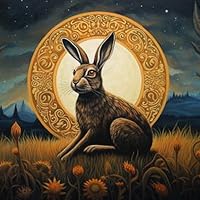
The white house-ghouls are another failure, perhaps worse even than the Loklor. They take over abandoned houses—actually all palaces on decadent Fader—and terrorize the regular folk. In any case, the Seishanee do all the work, leaving the descendants of the biologists from thousands of years ago to follow lives of leisure amid their intricate social codes.

The other main planet in the book, also with a weird and decadent society, is Gallingale. The book's hero, Jaro Fath, was brought up on Gallingale. The citizens of Gallingale try to achieve "comporture" through membership in increasingly exclusive clubs.

The book is long, and while the story is quite complex, it probably doesn't need so many pages. Perhaps some of the multiple side-plots could be shortened or even eliminated, while maintaining the focus on Jaro himself and the bizarre cultures on Fader and Gallingale.

Jaro, effectively, has lost the memories from his early years, and his goal is twofold: rediscovering his early history, while flouting expectations of Gallingale society to become a spaceman. Vance's take on the profession of spaceman is funny and original. The spacemen are the vagabonds of Gaean society, perhaps like footloose merchant sailors of Victorian times rather than the typical romantic heroes of science fiction.

Interestingly, Vance several times mentions the term "macroscope," which I had only heard of previously in terms of a book of the same name by Piers Anthony. In Night Lamp it appears to be a kind of telescope, to view details far off. Wikipedia, on the other hand, describes it as "a method, technique or system appropriate to the study of very large objects or very complex processes." Scientific understandings of "macroscope" are quite sophisticated, and perhaps there is room for Vance's use of the term.

I somewhat preferred two older Vance Gaean Reach books that I read previously, The Gray Prince and Maske Thaery, because they are more concentrated and less rambling. Nevertheless, I love Vance’s approach to what might be called a science fiction of anthropology. Night Lamp is brilliant and great fun, despite some flaws in its construction.
Profile Image for Lianne Pheno.
1,217 reviews77 followers
November 30, 2016
Chronique tirée de mon blog :

Voila une lecture de science fiction à l'ancienne, c'est à dire qu'il n'est pas facile de rentrer dedans, mais une fois lancé on est totalement récompensé !
Je ne pourrais faire meilleur résumé que celui de l'éditeur, nous suivons donc Jaro depuis sa toute jeune enfance dans sa quête pour savoir qui il est et d’où il vient.

Comme je le disais le seul problème de ce livre c'est que le chemin est long avant qu'il arrive vraiment à s'identifier ou s’intéresser à Jaro. Il faut bien passer les 350 pages avant que Jaro n'arrive à un age ou il puisse vraiment agir. Et j'ai trouvé ces pages très longues. En fait je pense qu'une partie de la difficulté du début du livre vient de la façon qu'a l'auteur de nous donner les informations d'un coup au lieu de nous expliquer les choses petit à petit. Résultat j'avoue qu'a certains moments j'étais un peu perdue sous la masse de données et je me sentais étrangère au système présenté, ne le trouvant ni intéressant ni même crédible (surtout vu les nom donnés certaines fois, j'avais l'impression que l'auteur parlait plus de confréries étudiantes que de groupes sociaux sérieux).
Surtout que le ton est lointain, on croirait entendre une tierce personne nous raconter l’histoire après coup, on est pas dans les personnages, comme si il y avait un écran entre nous et le récit. Sans parler des dialogues qui semblent un peu trop formels pour être réalistes.
C'est pour ça que j'avoue avoir ramé un peu dans ma lecture sur la très grosse premières moitié.

Puis petit à petit l’intérêt arrive avec les interrogations de Jaro, on commence nous aussi à nous poser des question, sur ce qu'il vit, si il s'agit de voix qu'il entend ou de souvenirs ... et bien sur de l’événement qui le pousse à vraiment se lancer dans sa quête. Je ne peux évidemment pas vous en dire plus sans vous spoiler l’intérêt du livre. J'ai trouvé un peu dommage que la vrai action n'arrive que sur les dernier tiers du livre par contre.

Les personnages eux semble à premier abord un peu bizarre, excentriques presque. En fait on a l'impression qu'il s'agit des deux seules personnes normales dans tout leur entourage, tellement la culture de la planète ou ils vivent est différente de ce qu'on peut avoir l'habitude. Rigide voila le mot pour la définir. Et ces deux enfants sont perdus dedans, ne rentrant pas dans les canons de ce qui est "normal" pour le reste de la population.
Il s'agit bien entendu la d'une critique de l'esprit de "mouton" des humains qui sont capable d’obéir à n'importe quelle règle absurde ou idiote si ça leur permet d'être à la mode et comme les autres surtout si les règles en questions sont complexes et mystérieuses.
Pendant tout le début du livre j'étais un peu bouche bée devant ce qui se passait, totalement en décalage.

En gros je dirais que malgré le bon style et l’intérêt des personnages et de l'histoire, on aurait de nos jours largement coupé une bonne partie de ce livre. Et allégé d'au moins 1/4 en moins il aurait vraiment fait un livre sensationnel. C'est dommage parce que la quête de jaro mérite et que je me doute que beaucoup de monde abandonnera le livre avant d'arriver à la meilleur partie !

16/20
Profile Image for Leif.
1,950 reviews103 followers
December 31, 2022
Here's the short version: an unjustly under-read novel and perhaps one of Vance's finest stand-alone science fiction novels.

Jack Vance was a writer without equal on his chosen territory. Take one measure of visionary science fiction, another measure of sheer ethnographic delight, and a third measure liberally drawn from the genres of detective fiction, mid-century thrillers, and competence tales, and you have Vance's typical novel. In his best works, Vance takes these ingredients and spits out tales of adventure and insight.

Sometimes, as in the Dying Earth books, Vance's characters learn little. Instead, they challenge and suffer the fate of their worlds, and they provide a vision of worlds thrilling and despairing. The pleasure isn't in an organic development of character and ambition so much as in the spread of various delights and the array of thrilling escapades, while the reader is free to judge, gasp, and sneer at the characters' various choices both good and not good.

Other times - and Night Lamp is one of those times - his characters develop and grow in somewhat organic fashion as Vance reaches toward the more thoughtful character study. This is fitting for his last novel, as it revels in the exploration of tightly limited times and places. In these novels, Vance's ethnographic interests lend strength to his character study as his worlds become thick with meaning. Add the classic elements of bildungsroman and mystery, as in Night Lamp, and you have less of the typical Vancean smash-and-grab and more of a concentrated vision of people as they (maybe and perhaps) could really be in the garishly coloured and sometimes brutal societies and planets that Vance imagines.

All of which is to say that, in a way that many of Vance's more thrilling and competence-driven stories shy away from, Night Lamp replaces the joy of vicarious exploration with something quieter and softer, though maybe more severe: the study of character development. And I am here for it! I wish that Vance had written many more books like this, and in many respects, while Vance's older science fiction can feel dated or slight, Night Lamp feels modern and substantial. It is a real classic of the genre.

This isn't to say that there are not challenges, especially now decades after composition. Vance's highly gendered vision can be unforgivingly misogynistic and baldly judgemental, and he can be shockingly cavalier about sexual violence when viewed through the false remove of supposedly objective ethnographic distance. These elements of Vance's imagination should not be minimized, but I feel that his strenghts as a writer should be recognized despite them. As I say, in his way he was without equal and science fiction is better and more diverse given his works. Here's to Night Lamp: may it shine for many years to come!
Author 59 books100 followers
February 15, 2020
Tuhle knížku napsal Jack Vance už v osmdesáti letech. Patří k jeho posledním knihám a nutno říct, že už je trochu pomalejší a děj je tu vysloveně náznakový. Ale jinak je to klasický Vance. Psaný archaickým stylem, s nenápadným suchým humorem a s fascinací rituály. Skoro v každé jeho knize hrdinové prochází podivnými světy, kde žijí společnosti postavené na bizarních pravidlech a zvláštních společenských zvyklostech. Sám Vance někde tvrdí, že společnost bez rituálů je jako hudba hraná jedním prstem na jedné struně. Proto ani ty nejpodivnější etnika neodsuzuje, hrdinové skoro nikdy nebojují proti systému. Buď se do něj snaží zapadnout, nebo ho prostě ignorují a dělají si, co je zajímá.
Ale fakt tady příběh hraje druhé a notně nakřáplé housle. Víc než polovinu z téměř čtyř set stránek sledujeme dospívání hrdiny na planetě až sektářsky rozdělené do různých skupin... a teprve pak se od ní odpíchneme a vyrazíme na cestu za pomstou, která je ovšem celkem rychle odbytá, aby se pak objevily problémy úplně odjinud. Asi z toho, co jsem od Vance četl, mě tohle bavilo nejméně, ale pořád jsou tam věci, které mě zaujaly. A rozhodně mám respekt k autorovi, který se rozhodl psát sci-fi archaicky, s odstupem od postav a téměř nulovými emocemi (většina jeho postav nahrazuje rituály osobnost), asi tak, jak by vypadaly sci-fi, kdyby je psali ti, co dávali dohromady příběhy rytířů od kulatého stolu.
Displaying 1 - 30 of 81 reviews

Can't find what you're looking for?

Get help and learn more about the design.