Jump to ratings and reviews
Rate this book

Tłumacz z Darfuru

Rate this book
Wspomnienia opowiedziane Dennisowi Michaelowi Burke'owi i Megan M. McKenna

Daoud Hari pochodzi z okolic Darfuru, należy do plemienia Zaghawa. Przez lata pracował jako tłumacz oraz przewodnik dla wielu fundacji pozarządowych oraz dziennikarzy podróżujących do objętego wojną Sudanu. W 2006 roku razem z nagrodzonym Pulitzerem dziennikarzem Paulem Salopkiem oraz ich kanadyjskim kierowcą został porwany i skazany przez sudański sąd za szpiegostwo. Ich uwolnienia domagały się m.in. znane osoby publiczne, przedstawiciele amerykańskiej dyplomacji i wojska oraz Watykan. Po wielomiesięcznym uwięzieniu i torturach zostali zwolnieni z obawy przed międzynarodowym skandalem. Po odzyskaniu wolności Hari przeniósł się do USA, gdzie rozpoczął pracę nad spisywaniem swoich wspomnień, aby przybliżyć światu losy jego kraju. W ten sposób powstała książka Tłumacz z Darfuru.

184 pages, Paperback

First published January 1, 2008

90 people are currently reading
7382 people want to read

About the author

Daoud Hari

4 books10 followers

Ratings & Reviews

What do you think?
Rate this book

Friends & Following

Create a free account to discover what your friends think of this book!

Community Reviews

5 stars
1,741 (33%)
4 stars
1,882 (35%)
3 stars
1,235 (23%)
2 stars
275 (5%)
1 star
107 (2%)
Displaying 1 - 30 of 510 reviews
Profile Image for Orsodimondo.
2,457 reviews2,428 followers
December 4, 2024
ONORE AL TITOLO

description

Come parlare male di un libro così che ti porta dentro un dramma umano atroce, così poco conosciuto, se pur nominato tanto, ti prende per mano, ti spiega, ti svela segreti, testimonia?!
Eppure, a me, questo libro non convince in pieno.
Mi piace molto il titolo e mi interessa molto l'argomento: e dopo averlo finito, bene o male ho l'impressione di saperne un poco di più, di aver chiarito qualche idea.

description

Difficile aspettarsi che un libro di testimonianze possa avere una bella scrittura, a meno che a raccogliere le testimonianze sia qualcuno abituato a maneggiare la bella scrittura. E, non è questo il caso.
C'è enfasi e retorica, anche se Hari cerca di restare su un tono costante di apparente scanzonatura.

description

C'è qualche dubbio che sia tutto vero.
Sembra esserci qualche esagerazione: per esempio, è possibile che sia costretto a tacere i nomi di persone e posti della sua terra per salvare loro la vita?! Come se Bashir e i suoi accoliti passino il tempo ad analizzare e spulciare il suo libro.

description
Profile Image for Angie.
249 reviews45 followers
January 22, 2010
Let's get the controversial stuff out of the way first, shall we?

I feel that this book panders to soft-hearted Americans. There are numerous times Hari mentions how "good" the American people are. It is not that we aren't or that we are, or that Hari shouldn't be grateful (for, after all, Americans played a large part in saving his life and he now lives here), but this book as a whole doesn't read so much as a "memoir" as a causal glance backward, a highlight of a horrific scene here, a laugh there. He states, at one point, "The good America was in the room" and I did a massive eye-roll. What was genuine sentiment at the presence of American military officers and the hope that they brought with them was ruined by the exalted praise given to the country as a whole.

After reading this, I don't feel satisfied. I felt Hari was very censored when he wrote this, both owing to the fact that he (presumably) wrote most of the book in his non-native English and the fact that he must suffer some symptoms of PTSD from the terrible things he's witnessed. It's not that I want him to suffer while writing a book, but I feel like the purpose of this book was just to pacify some big heads who want to sit back and pat themselves on the back for doing something for the people of Darfur. They want to be able to know something about the situation, they want to seem educated, and to support the people, but they want to remain distant, to feel self-satisfied at the end of it.

This was, perhaps, a good primer on the Darfur issue and certainly, numerous reviews have complimented the appendix on Darfur as being one of the best around, but anyone who reads this book and is able to sit it down and feel "satisfied" should really poke their heads out of their shells a little more.

Perhaps I'm jaded because this is not the story of an ordinary "tribesman" in Darfur: Hari is an intelligent and motivated man who was often in the wrong place, at the wrong time, but with the right people and the right frame of mind. His character comes off as friendly and charming in the book, as he tells his captors at one point that he refuses to talk unless they give him a cigarette.

There are passages in the book that are absolutely heart-wrenching:

"It is interesting to me that people bother to shout at you, or even to hurt you, when they are planning to kill you. What lesson will that teach you if you are going to be dead? It always seemed like a waste of energy. If you are going to kill someone, why not let him go with as much peace as you can manage to give him? I have never understood this, unless it speaks to the mental illness or at least the crazy sadness of these men. So kill us, yes, please do. But don't hurt our ears with your screaming or show us pictures on your cell phones. Just do what you have to do and leave us or our bodies in peace." - pg 153
Profile Image for Taylor.
65 reviews21 followers
March 19, 2020
This was really, really good. It's Daoud Hari's story of his experience in Darfur, at the time of the War in Darfur. The depth of what this man went through is beyond any imagination. It's truly exceptional.

Written as a reader's introduction to the war, I appreciate how it was written so as to accommodate the ignorant "hawalya" like myself. For one to begin to be educated on the tragedies that were and remain of the genocide, it was laid out very straight forward, organized and in an easily readable way. For those who wish to have more context of Sudan's 20th century history leading up to the genocide, more information is at the back of the book.

What an honour it would be to meet Daoud. An easy 5 stars.
Profile Image for Jeanette.
41 reviews1 follower
June 25, 2008
In late August, 2006, the National Geographic submitted this press release to news organizations: Paul Salopek, who was traveling in Africa to report on the culture and history of the Sahel [a semi-arid region between the Sahara Desert to the north and tropical forests to the south:] for National Geographic magazine, was detained by Sudanese authorities and on Aug. 26 charged with espionage in a North Darfur court in El Fashir, Sudan. National Geographic magazine vigorously protests this accusation and appeals to Sudan for his immediate release and the release of two Chadians assisting him. [return:][return:]The Translator is the memoir of Daoud Hari, one of the two Chadians assisting Salopek. Salopek knew Hari at that time by the Arabic name Suleyman Abakar Moussa. Hari is, in fact, a non-Arabic African from the Darfur region of Sudan where the Arabic Sudanese government is systematically killing off non-Arab Africans to take over their more fertile land as northern Sudan turns more and more to desert. Hari, who knows three languages -- Zaghawa, the language of his people, Arabic, and English -- risked his life working as a translator for English-language news organizations because he knew he had to do what he could to spread the word to the outside world about the genocide going on in his homeland. [return:][return:]Hari wants to show that he and others from Darfur are not very different from those reading his book. Yes, he had looked forward to his first camel rather than to his first car, and his childhood games had to be played at night because of the desert heat in the day, but he uses cell phones and some of his favorite books are Jane Eyre, Treasure Island and Animal Farm. He loves his family as we love our families. [return:][return:]Because I am ignorant of African history, geography and politics, I was uncertain as to why this genocide was taking place, why Hari feared for his freedom in Chad if he were exposed as Sudanese, why he was imprisoned in Egypt, and why he so feared for his life when he would cross the border between Chad and into Sudan. In his narrative, Hari explains briefly what the problems are, but the politics are so foreign to me as an American that I wasn t able to grasp it all on first reading. The history and politics of the genocide in Sudan are more clearly described in an Appendix in this advance reader s edition. Readers would benefit to have the history and politics woven more intricately into the narrative, and it would be helpful if the published edition includes a map or two of the region. [return:][return:]It is disheartening to know that sixty years after the ratification of the United Nations Universal Declaration of Human Rights a copy of which is included in the back of Hari s book -- the systematic stripping of these basic human rights by governments throughout the world continues.[return:]I hope Random House will make a big production of the release of Hari Daoud s memoir. Americans declare Never again! when we talk about the genocide of the Jews and others in Europe last century, but we are virtually ignorant of contemporary genocides. While some people are aware that something unpleasant is going on in Darfur, others are entirely ignorant. [return:][return:]Hari s memoir has the potential to become a best-seller, if well marketed. Then, perhaps, more people will see the humanity that Hari brings to the African faces we see in newscasts, and will become sensitive enough to the ongoing genocide that we pressure leaders to help our fellow humans.
Profile Image for Mike.
32 reviews5 followers
January 19, 2009
This book is heartbreaking. It's hard to imagine anyone having to endure this kind of suffering. But, of course, that's why this book was written. Daoud Hari wants to help us understand.

I complain when I have a bad day, when I have to wait 6 minutes for the Metro instead of 2, or when a book I want from the library is checked out. But, c'mon, I don't have really bad days. After reading his book you'll see that you probably don't really have bad days either.
Profile Image for Kamila Kunda.
430 reviews356 followers
April 14, 2019
“The Translator: A Tribesman’s Memoir of Darfur”, which I chose to read in Polish purely because the cover was so much prettier than of all English editions, proved again that Polish translations from English so often suck. The language, though proper, sounds artificial and it impacted my reading experience (a note to myself: always choose the English version if that’s the original one).

The book is a slim memoir of selected events in the life of the author, Daoud Hari, the Sudanese translator and guide who accompanied many mostly British and American journalists to villages and refugee camps in Sudan and Chad for their assignments. He risked his own and their lives and eventually got captured by Sudanese pro-government military forces together with Paul Salopek, American journalist then on assignment from National Geographic, and Ali, their driver from Chad. They spent many weeks in captivity, being moved from place to place, not knowing whether they would survive the next day. Afterwards, Hari moved to the US, where he lives now.

He describes grim reality of Darfur, emphasising nevertheless that his childhood was very happy and that people in Sudan, just like in every part of the world, lead lives full of simple joys, disappointments, worries and happiness. My problem with the book is that Hari is not a good writer. His story is worth telling and I do not belittle his experiences, his knowledge and his mission of telling people about the atrocities committed in Sudan. However, his writing did not move me, the style was at the level of a high school student doing a creative writing course, and Hari’s simplistic views and generalisations (e.g. how good Americans are and how much they care about people in Darfur) made me feel a bit uncomfortable. I understand that he feels he needs to express gratitude to those who helped rescue him and welcomed him in the US, but I am concerned that an American reader may have a false impression that his country is once again ‘a saviour’ of poor Africans from yet another war-torn country.

Overall, the story that deserves to be read but maybe should be limited to a long article written with the help of an experienced journalist.
Profile Image for Shannon .
1,219 reviews2,580 followers
March 5, 2013
Daoud Hari is a Zaghawa tribesman from the region known as Darfur in west Sudan. In 2003 his peaceful village life is shattered when government helicopters arrive, gunning down the villagers where they stand, followed by government-backed Arab militia on horses who murder, rape and burn their homes. The desired effect is achieved: the tribespeople are driven from their lands. Some make the long trek into neighbouring Chad, also Darfur territory, while others relocate, becoming "internally displaced people". Daoud finds himself working as a translator for foreign journalists, helping them get into Darfur and document these destroyed village, the murdered tribespeople.

His story is a harrowing, violent and increasingly dangerous one. Even before the Muslim government of Sudan, led by Ahmad al-Bashir, decided to actively remove the settled Africans from the land, Daoud's life had been adventurous and more than a bit scary. He had moved to a large town to continue his education, then decided he wanted to see the world rather than go home and submit to an arranged marriage. He traveled through Chad to Libya to work, then went to Egypt for more work. When he heard of high-paying menial jobs in Israel, he tried to enter the country illegally but was arrested as soon as he got through the fence, and was extradited back to Egypt where he spent a long time in an over-crowded prison that would make our jails look like holiday resorts. With help, he was finally released into Chad - if he had been sent back to Sudan, the government would have executed him immediately (mostly for embarrassing them).

With fake Chad identification papers and a new name - Suleyman - Daoud used his linguistic skills and his many contacts with the various rebel groups in the region to ferry journalists safely through Darfur. Only "safety" is an illusion and there's no protection for anyone, and he very nearly loses his life many times.

Having already read a few books about South Sudan and the civil war, it was good to read a book about Darfur alongside them - interesting to see what they have in common, and how they differ. I came to these books knowing very little about Sudan, and having read four in a month, feel I've learnt a great deal. Like the south of Sudan, Darfur is a large territory (the size of France) inhabited by many different tribes:

Dar means land. The Fur are tribespeople farther south who are mostly farmers. One of the Fur leaders was king of the whole region in the 1500s. The region took its name from that time. [p.x]


Daoud's story is told like an oral story, but arranged non-chronologically to create a more interesting narrative flow. We gradually get the pieces we need to flesh out a nightmarish vision, told in Daoud's almost laconic voice, with a tone that displays unflagging optimism and humour while at the same time a sad acceptance. Life in Darfur - in all of Sudan, and Africa - is so vastly different from the western world. It would be easy to think that they hold life to be cheap, and certainly some of them do. I cannot even begin to put myself in their shoes to empathise with that kind of attitude - it's wholly alien and I don't understand enough. But reading Daoud's account, it's clear that they don't hold life to be cheap. It's just that there's nothing you can do, no laws or army to protect you. The African tribespeople of Sudan have only themselves and their long centuries of culture which has changed very little.

And the west has so very little real sympathy for people like this. I see it in how our own governments treat the Aborigines, for instance: we have a kind of disguised disdain for these people and their culture. We don't understand it and we don't value it, collectively and individually. We wish they'd just "get with the program" and join our consumeristic, salaried, car-driving, suit-wearing, depressed society. We look down on them because they're practically prehistoric, especially these African tribes. We can't see value or worth in them, only the resources they're sitting on, squandering. It's fucking tragic is what it is. As if we had the answers. Deep down, many people in the west have a secret voice that just wishes people like the Aborigines and Africans would just give up on their traditional way of life and assimilate. I don't just suspect this, I've heard it from those who actually say it.

This is a highly readable book and Daoud's voice leads us through the minefields with our hearts in our mouths. There's one particular story, not one that he witnessed but one that the father, almost mad with shock and grief, relates to him that had me sobbing. The story seems extreme at times, like it can't possibly be real, these things couldn't possibly have happened to him, it's way too over-the-top. But once you enter the world of Sudan, it all becomes possible, and probable. I had no trouble believing in his story.

Daoud is clearly a thoughtful, reflective and highly intelligent man, who touches on the political issues in succinct, hard-hitting lines, as well as other themes like what it means to be a man, and the shares the traditional way of life. Not all of it is perfect, he isn't deluded, but he recognises that all this trouble - like with the south of Sudan - arose partly out of colonialism and the mistakes of the British etc. They are also suffering from extreme Islamic fundamentalism, through Bashir, the dictator of Sudan, who invited Bin Laden to stay (Bin Laden's first bombings were within Africa, which I hadn't even heard about - no surprise there).

The story carries a wealth of hope along with insight, and the appendices at the back are useful too in understanding more of the issues in Sudan. He also includes the Universal Declaration of Human Rights, which is telling. I'll end with a number of quotes that really struck me.

As for the future, the only way that the world can say no to genocide is to make sure that the people of Darfur are returned to their homes and given protection. If the world allows the people of Darfur to be removed forever from their land and their way of life, then genocide will happen elsewhere because it will be seen as something that works. It must not be allowed to work. The people of Darfur need to go home now. [p.x]


You have to be stronger than your fears if you want to get anything done in this life. [p.11]


"Shooting people doesn't make you a man, Daoud," [Ahmed] said. "Doing the right thing for who you are makes you a man." [p.17]


It says everything about this land to know that even the mountains are not to be trusted, and that the crunching sound under your camel's hooves is usually human bones hidden and revealed as the wind pleases. [p.20]


In Africa, our families are everything. We do all we can to help them, without question. [p.23]


Many men were joining resistance groups; you would see very young teenage boys jumping into the backs of trucks with a family weapon and that was it for them. No one in the boys' families would try to stop them. It was as if everybody had accepted that we were all going to die, and it was for each to decide how they wanted to go. It was like that. The end of the world was upon us. [p.46]


We came upon a lone tree not far from the Chad border where a woman and two of her three children were dead. The third child died in our arms. The skin of these little children was like delicate brown paper, so wrinkled. You have see pictures of children who are dying of hunger and thirst, their little bones showing and their heads so big against their withered bodies. You will think this takes a long time to happen to a child, but it takes only a few days. It breaks your heart to see, just as it breaks a mother's heart to see. This woman hanged herself from her shawl, tied in the tree. We gently took her down and buried her beside her children. This moment stays with me every day. [p.65]


...the world's charity seemed almost invisible here [at the refugee camp]. Perhaps the wealthy nations had finally blown themselves away and were no longer available to send their usual token remedies for the problems that their thirst for resources has always brought to such people as these. [pp.73-4]


At the edge of one village, in a thickly forested place, the village defenders had made their last stand by wedging themselves high in the trees with their rifles. They were all shot and killed. It had been three days or more since the men in the trees had died, and on this steamy spring afternoon, their bodies were coming to earth. We walked through a strange world of occasionally falling human limbs and heads. a leg fell near me. A head thumped to the ground farther away. Horrible smells filled the grove like poision gas that even hurts the eyes. And yet this was but the welcome to what we would eventually see: eighty-one men and boys fallen across one another, hacked and stabbed to death in that same attack.

Reporters are so very human, wonderfully so, and they weep sometimes as they walk through hard areas. There is no hiding their crying after a time. They sometimes kneel and put their heads in their hands near the ground. They pray aloud and will often find A handful of soil to lay on the body of a child, or they may find some cloth to cover the dead faces of a young family - faces frozen in terror with their eyes and mouths still open too wide. They will help bury bodies; we buried many on the British TV journey. But these eighty-one boys and men were too much for everyone. [p.112]


Ali speaking to the Zaghawa boy soldiers in the rebel-army-turned-government-force:

"Did you know that Darfur was a great country long ago, so great that it was both in Sudan and also in Chad? Did you know that the French, who later controlled Chad, and the British, who later controlled Sudan, drew a line, putting half of Darfur in each new nation? Did you know that? What do you care about this line if you are Darfur men? What business is it of yours if the British and the French draw lines on maps? What does it have to do with the fact that we are brothers?" [p.138]


With the mandate of the United Nations, the African Union troops were in Darfur - some barely a mile away - to monitor the peace agreement between the Sudan government and one of the rebel groups. If the government and this rebel group want to attack villages together, or the government and the Janjaweed want to attack a village, or just the Janjaweed or just the government, then that is not the A.U.'s business, though they might make a report about it. They have not been given the resources to do much more than give President Bashir the ability to say that peacekeeping troops are already in Darfur, so other nations can please stay away. Also, African troops have seen so much blood and so many killed that their sense of outrage has perhaps been damaged for this kind of situation. U.N. troops from safer parts of the world, where people still feel outrage, might be better. [pp.146-7]


The genocide in Darfur began in 2003. It is now been going on for 10 years, and still the world refuses to get involved. It is true what they say: we learned nothing from Rwanda. This is an important book and it is the saddest truth imaginable that it is still timely and relevant. For more information, start with the United Human Rights Council website and go from there.
Profile Image for William.
414 reviews220 followers
August 21, 2008
Daoud Hari has written a painful, unglossed but also celebratory novel of the Darfur region of Western Sudan, and with his understated approach, genuine character, and very unexpected humor, reminds us that Darfur was a place well before it was a tragedy.

This approach allows Hari to engage his readers on a personal level: he asks them to consider their response to losing their cities and their children; he reminds them of the simple connecting power of cellular telephones, and the vital necessity of friendship. Few individuals presented in Hari’s narrative escape as caricatures of evil. Instead, their histories are contemplated, their motivations explored, and the Sudanese government’s pitting tribe against tribe is revealed as a manipulative orchestration that will make a man a soldier one week and an enemy the next.

But what makes The Translator most remarkable is that its author exists. Hari does not take credit for much, but his grace, his honesty, and his willingness to learn the individual stories in the murderous epidemic that dominates his land, demonstrates him to be of a completely singular character and a person whose love and friendship will, for some, hold back a end that we might wrongly feel to be inescapable and, for Sudan, inevitable.

Profile Image for Pedro.
825 reviews331 followers
February 20, 2018
A principios del siglo XXI el gobierno de Sudán, en el nordeste de África, organizó una matanza sistemática sobre la población negra de la región de Darfur, para ser una nación árabe pura.
Daoud Hari actuó como traductor de funcionarios de la ONU y de los medios de prensa para que el mundo conociera el genocidio.
En El traductor narra sus experiencias, con un tono amable, apto para no ahuyentar lectores.
Esta amabilidad de Hari, nos lleva por los primeros relatos por el medio del horror como en un sueño, mientras se escucha "What a wonderful world". Pero más allá de sus esfuerzos, llega un momento en que no hay manera de esconder la crueldad, la violencia y el dolor. Y aunque no es un escritor profesional, parece haber descubierto que para ello los protagonistas deben pasar de ser testigos a ser víctimas.
Un muy buen testimonio, que me ha hecho volver a pensar en lo poco que sé de lo que pasa en el mundo.
PD: Aclaro que pese a lo que aparece (seguramente un error involuntario) leí el libro sólo una vez.
Profile Image for Marianna the Booklover.
219 reviews101 followers
May 10, 2021
Bardzo trudno jest oceniać czyjeś wspomnienia, zwłaszcza wojenne. Myślę, że to ważna książka, bo mówi o konflikcie, który w mediach się przewijał, ale jednak gdzieś daleko i nie wydaje mi się, że należycie się o nim pamięta. Jednak sposób, w jaki Hari opowiada o swoich doświadczeniach nie do końca do mnie trafił. Nie umiem jednak dobrze wyjaśnić, co mi zgrzytało. Po prostu nie czułam się aż tak emocjonalnie zaangażowana w tę historię, jak się spodziewałam, a zwykle przeżywam bardzo takie ludzkie dramaty. Choć opisy brutalności wobec kobiet i dziewcząt rzeczywiście mnie bardzo poruszyły, w dużej mierze dlatego, że zostały napisane językiem prostym, bez patosu. Takie bezpośrednie komunikaty zwykle robią na mnie dużo większe wrażenie, niż nadmierne opisy czy epatowanie okrucieństwem. Poza tym jednak pozostałam niejako obok historii samego Hariego.

No i jedno zdanie sprawiło, że musiałam je przeczytać kilka razy, bo myślałam, że źle czytam: "Ludzie są przeważnie wysocy, tak jak ja, a mam ponad metr osiemdziesiąt, i chudzi, bo dużo chodzą, ciężko pracują i mało jedzą. To jedna z wielu korzyści, jakie przynosi ubóstwo." Nie, nadal nie rozumiem, co autor miał na myśli.
122 reviews20 followers
September 22, 2017
This book gave a rare glimpse of the Darfur genocide from the inside, as recounted by a man who grew up in the region and led Western journalists in to cover the violence. It was a very difficult and powerful read, as would be expected, and was also beautifully written with many gems about life in Sudan (for example, many details surrounding the author’s love of camels and the realities of trekking through the desert). It reminded me of The Return: Fathers, Sons, and the Land in Between, which is now one of my favorite books, and I think admirers of that book would also appreciate this one.

Hari tells us the story of his life, starting with his childhood in a village in Sudan, his education in Khartoum, his attempt to illegally immigrate Israel, his time in prison in Egypt, his return to his family during the conflict, and finally his work as a translator and guide for journalists. It is really *his* story, even though Western news articles at the time focused on the journalists he guides while leaving his name as a footnote. I appreciated the chance to read the story from his point of view. I did wish the title had been stronger to further emphasize the fact that Hari was really the brains of the whole operation, not just a translator brought in on the side.

The tone is very removed and optimistic, which I found striking. There was no mention of symptoms of PTSD in either Hari or others, so it made me wonder if some aspects of the experience had been left out or softened (although of course I am by no means an expert on what to expect).

I disagree with some previous comments that suggest the book is too sympathetic to Americans. Hari is not shy about sharing his critiques, such as the impracticalities of UN refugee camps and the way the United States contributed through its greed over oil. His book was also a great way to glean some information about the political backdrop, such as the Janjaweed militias that were baited into conflict by the government (despite a former understanding of peace between the Arabs and native Sudanese), attacks on the people directly by the government, and the rebels who were persuaded by the government to switch sides.
Profile Image for Koren .
1,170 reviews40 followers
June 22, 2018
The story takes place in Darfur in Sudan during a time of war. The author got lucky in that he was able to hook up with a journalist as a translator. Aside from that the book is mostly about man's inhumanity to man. It was interesting to read about what his childhood was like before the war and what the country was like. The book was published in 2008 so I did a search to find out what has been going on in the country since then and it sounds like progress has been made but there still is some strife still going on.
Profile Image for LindaJ^.
2,517 reviews6 followers
July 9, 2016
This is a difficult book to rate. While the structure is less than perfect, the story is powerful. The author talks about the internal war in Sudan where the Arab government has been killing the non-Arab citizens. The conflict was determined to be genocide and the President of Sudan indicted by the ICC. Hari tells about the war through his own personal experience, first as a young man returning home after years of working in other surrounding countries and then as an interpreter for reporters (NYTimes, BBC, National Geographic, etc) and others. On his last trip as an interpreter/guide for a reporter from National Geographic, Hari, the reporter, and the driver are captured, tortured, turned over to the civilian authorities and tried before, through the help of various Americans (including Gov. Bill Richardson) eventually being released.

How someone survives such experiences as Hari describes is hard to imagine and it is doubtful that anyone does without some type of mental, if not physical, scarring. Hari wants people to know what is happening in hopes that pressure can be brought to change the situation. Unfortunately, since he wrote the book in 2009, little had changed. South Sudan is now (as of 2011) an independent nation from Sudan, but it is currently involved with its own civil war among tribal factions. But things aren't any better in Sudan, where the same President that was indicted by the ICC continues to rule. And the ICC has stopped its work on the Darfur genocide because of lack of assistance from the UN.

We hear little about this conflict but millions of people have lost their homes and live in refugee camps, while the killing and raping continue.
Profile Image for Chrissie.
2,811 reviews1,421 followers
November 4, 2008
I just finished this book. All that I can think is - how can we human beings be so terrible?! And yet there are some, a few, that show we needn't continue behaving so badly. Some humans are capable of great courage, bravery and compassion. This book shows both sides. How can the trend be turned so that despicable behavior is no longer so easily accepted? Is it through education? Or is compassion genetically imprinted in just some of us? I have no answers. Genocide has occured and is continuing to occur. Look what is happening in the Congo in today's news, even though so much has been written about the Rwandan genocide in 1994. It is happening all over again. WHY can't this be stopped.
Profile Image for Shawnee.
26 reviews8 followers
February 11, 2008
Daoud Hari is from Darfur and as war came to his village his family encouraged him to fight not with a gun but with his education. With his ability to translate, Daoud worked to help as many journalist and government officials as possible tell the story of what was happening to his people and his country despite the very real threat to his own life. Yet I doubt that any reporter could tell the world the heartbreaking truth of the genocide that has and is occurring in Darfur as eloquently as Daoud Hari does himself in this book.
Profile Image for Karen.
357 reviews25 followers
September 5, 2008
One of the most moving books I've read in awhile. The Translator is a first-person account of genocide in Darfur. The author witnessed the slaughter of his village and his neighbors and risked his life to serve as a translator for foreign journalists. He was imprisoned and tortured. And yet he still believes in the inherent goodness of people and their desire to help. This book is a direct plea to help the victims of genocide in Darfur.
Profile Image for Brett C.
947 reviews233 followers
July 21, 2025
This was a memoir of the violent conflict in Darfur. It read quickly and gave a glimpse into the atrocities committed over there that we never heard about on the news here.
4 reviews
May 5, 2025
I found this book very shocking. I hadn’t expected how graphic it was going to be in the descriptions of the atrocities, and I was surprised by how much it affected me. I think Daoud is an incredible man, particularly for his bravery and compassion. This book has made me want to learn more about the situation in Sudan, although I am aware that it has changed in the past 20 years. I am glad I read this book and would recommend it to others but with a warning of its graphic nature
Profile Image for Sweetdhee.
514 reviews115 followers
September 1, 2010
I've borrowed this book from my office's library.

Although its fun games during the launch, i've sceptically thought that this library will only loaded by some work field reports and thesis from the interns whom have their studies here. Then a few months ago, Perang Eropa III by P.K. Ojong was laying on the desk of someone which then said it was one of the library collection.

Darn!! I straight out went upstairs, to the library and facinated by the lines of fine books in its shelfs. Not just books in Indonesian, but also novels and literature in English and French!!!

God, The Most Gracious.. Thank You.. I'm gratefull to find such a fortune to be able to read these books. Great job, Bu Junni!!

Ok, back to the book.

I've been dragged to this book by just reading the title. And after fully reading it, well it might be not precisely right to call Daoud Hari as a tribesman despite that he is a Zaghawa. Daoud had spend his youth and finished his study in El Fasher. Though he was born and grew up among his tribe, he adore books as Jane Eyre, Treasure Island, Cry, the Beloved Country and Oliver Twist.

He become obsessed to see things in the world that larger than life in Darfur. He had working in Libya and trying to have jobs in Israel due to the high wage rumors. But in his way to Israel, he got stuck in Egypt and decided to go back to his home Village.

But it is not a beautiful homecoming. He sees conflicts. And after found so many killings and attacks among the villages which leads his family become IDPs (Internally Displaced Persons), he learn that he could do something to help his people. And by someway, he found himself taking guidance for reporters, NGOs, and others to understand what is really happens in Darfur. With the language skills (Hari also speaks Arabian), he's trying to show the world and naively hopes that it'll help to stop the war.

[image error]


To found a mother hung herself under a three with her three dead children laying on the ground. To know such a man loosing his mind after watching his four year old daughter blood pouring down from her body while a man dancing and swing her around with his bayonet. To take the BBC's crew in to a medical clinic for three days to recover from the sight of eighty one boys and men fallen across one and another, hacked and stabbed to death in one attack.

After one trip to another, Hari just can not get why people can be easily fight each other just because some prejudices poured by disgraceful persons whom like to take advantage of the war. This happens among the tribes there, there are Janjaweed, Massalait, Fur, and Tine.

And somehow i agree with him. The wars in around the world leaded by few people who like to take over all and sneakily manipulate some groups and boom!! Murders are everywhere.

Main story in the book is when he tried to get to Darfur in its peak time of conflict with Paul Salopek of New Mexico and a Chad man named Ali. Being imprisoned for more than one month, tortured, being accused as a spy, beaten to hunger, Daoud and the two fellows almost lost their hope to live.

Read the book to know how can he survives it and make it to finally able to tell stories to Megan and Dennis who help him write this. May we can see how we actually able to stop a conflict, starts from the small one in our daily life. Amen

Only there are things that makes me gave only three stars. But i guess it was just from my point of view ^_^
Profile Image for toolie.
161 reviews17 followers
April 27, 2021
Nie ujmując dramatyczności wydarzeń i nieszczęść ludzkich!! -> Sama forma niestety nie do końca mnie przekonała. Całość mogłaby zostać skrócona w formie artykułu (choć przy tej tematyce brzmi to na pewno dość płytko). Ale właśnie w tym tkwi problem - język książki nie oddaje dramatu wojny, nie pozwala wczuć się w opisywane sytuacje.
242 reviews6 followers
December 23, 2014
Finding accurate descriptors to relate this snapshot of a place and time as foreign to my experience as imaginable is a challenge. Heart-rending – there are moments detailed in this account of the war(s) in Sudan that left me feeling as if the oxygen had been sucked out of the room. Humorous – Mr. Hari’s gentle, welcoming spirit, tongue-in-cheek wit and “Gift of Gab” shine through on nearly every page. Frightening – to witness the rapid destruction of an ancient culture, even from the remoteness of reading it in a book, and realize how vulnerable even the most established society actually is cause for one’s anxiety to rise. Joyous – overhearing Mr. Hari’s family as they welcome each other amid the terror that surrounds them is to hear the voices of ones who: know what is valuable, practice the heritage of their ancestors with humility and invites all to celebrate their familial connections. Those four words are a poor start to relating the marvel of this book.
Daoud Hari grew up in the close-knit, much extended Zaghawa tribe of Eastern Africa. This group has existed long before the concept of land “belonging” to people and the need for boundaries to define “countries” existed. His parents recognized his high intelligence and provided formal education to further develop his talents. This education combined with his ability to speak (at least) three languages fluently and his already large capacity to make friends made him highly sought as a translator after the various rebel groups (according to the author, these groups are actually supported by the government in a systematic effort at genocide) began a civil war and foreign journalists began arriving to cover the “action.”
In the course of Sudan’s “Season of War,” Mr. Hari’s family, as have most of the population of that area, has suffered the loss of many of its members. Entire villages have been attacked, its inhabitants slaughtered or forced from their lands, becoming refugees in the neighboring country of Chad. Mr. Hari’s position as translator made him a witness to many of the atrocities of this conflict, highly valued as a guide and deeply suspected by his government of being a spy. He speaks openly of the fear that was ever-present in his work, but he functioned from the perspective of “you have to be stronger than your fears if you want to get anything done in this life.” (p.11). His commitment to helping the journalists, who were reporting the carnage to the rest of the world, is rooted in his tribal heritage and the values taught him by his elders lead him to live the reality that “(you) must of course help everyone you can” (p.63).
During his last job as guide and translator, he was arrested by one of the “rebel groups” and turned over to the government. His time as a prisoner was filled torture, interrogations, starvation, sleep deprivation and a heightened awareness that his Government cared more for power than it cared for justice or caring for its people. “The proof of a democracy is surely whether or not a government represents the hearts of its people” (p.86). The book is written to further educate the world about what is happening in Sudan, as the rulers of that country will not cease the genocide unless they are forced to do so by the outside world.
Through all of the loss, torture, harassment and becoming a refugee himself, Mr. Hari remains hopeful – that the Zaghawa will return to the land without borders, that justice will prevail and that he may return home to his family. May this wish become a reality.
Profile Image for Jimmy.
Author 6 books280 followers
June 26, 2011
The horrors of Darfur. Why do such things happen? And they have continued to happen throughout my life. The world just can't seem to prevent them.

The scene that was hard to shake out of my mind was when the author and a group of BBC reporters come upon a massacre of over 80 men and boys. They were hacked to death by machetes, so body part are everywhere. The reporters break down and cry. Some have to leave and seek professional help to deal with what they have just found.

European colonialist countries would create areas by saying, "I own from this mountain over to this mountain, and you own from that mountain over to that mountain." No consideration was given to the people who lived there. Kingdoms and tribes were broken up. Revolution would follow independence.

Darfur was once a powerful kingdom. Part of it was placed in Sudan, and part of it was placed in Chad.

When the British left Sudan in 1956, they placed a small Arab minority government to rule over an African majority. The revolt had started even before independence. This lack of foresight created the problem.

In 1983 Gaafar Nimieri started Sharia law. He imposed stronger federal law that tried to control the largely independently governed south Sudan. Thieves had their hands cut off; I'd have no hands now if I lived under Sharia law. Women were stoned. The moderate Sadiq al-Mahdi suspended Sharia law in 1985. Some local Arabs still enforced it. Then General Omar Hassan Ahmad al-Bashir took over. He expanded Sharia law and ended dissent. Women could not leave the country without written permission of father or husband. Men and women were separated. The army purged unbelievers. Courts and attorneys were controlled by religious zealots.

China got involved for the oil. They are willing to look the other way.

Climate change affects the rainfall. Drought is increasing.

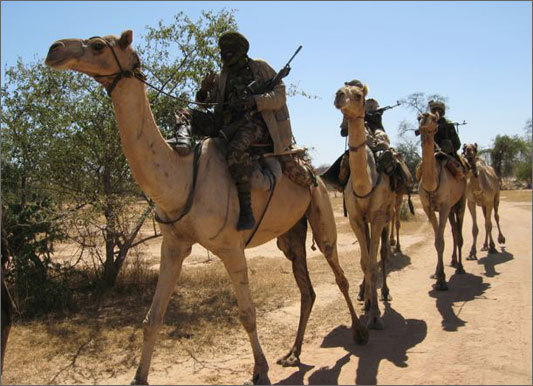
The Arab government promoted the spread of Arabs throughout the country. They invited Arabs from elsewhere to move out the native Africans. The Arab Janjaweed militia riding on camels wiped out entire villages, killing hundreds of thousands of Africans. They literally killed and tortured everyone. Women were raped. Children were tossed alive into fires.

The book covers up until 2008. Where are the Arab and Muslim voices of protest? I must be deaf because I can't hear them.


Profile Image for Fariha Hossain.
10 reviews11 followers
July 19, 2025
Reading The Translator was like holding a mirror to the stories I hear every day in the Rohingya refugee camps. Though the book is set in Darfur and I work in Cox’s Bazar, the pain, the loss, the resilience it’s all the same. Different names, different landscapes, but the same human suffering.

Daoud Hari’s memoir is not just a story of survival it’s a story of dignity. He writes about a land where even the mountains betray you, where the ground crunches with the bones of the forgotten. That line stopped me cold. I’ve heard similar stories from Rohingya elders of fleeing burning homes, of children lost in the chaos, of entire villages erased. Hari’s words gave voice to the pain I see in the eyes of the people I serve in the Rohingya refuge camp.

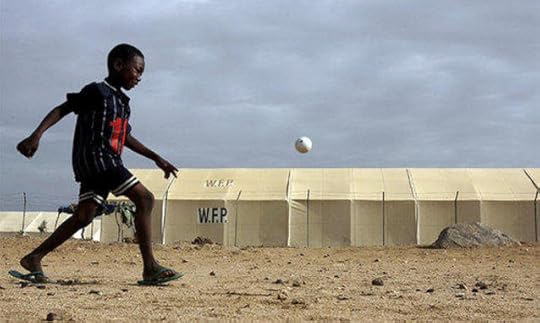
What moved me most was Hari’s spirit. Despite being captured by rebels, despite the constant threat of death, he never loses his humor or his hope. When he writes, “To not get killed is a very good thing. It makes you smile again and again, foolishly, helplessly, for several hours,” I thought of the boys here who kick a ball made of plastic bags and laugh like the world hasn’t broken around them. That kind of joy- fragile, defiant is sacred.

Hari’s role as a translator is deeply personal to me. He used his knowledge of Arabic, English, and Zaghawa to help others tell their stories. In that, I saw a reflection of all aid workers- listening, witnessing, and carrying these stories with care. Hari reminds us that language can be a lifeline, a bridge, and even a quiet form of resistance;

“You have to find a way to laugh a little bit each day despite everything, or your heart will simply run out of the joy that makes it go.”

Some of the most powerful and memorable lines are;

“The best way to bury your pain is to help others, and to lose yourself in that.”

“You have to find a way to laugh a little bit each day despite everything, or your heart will simply run out of the joy that makes it go.”

“Because of my schooling, my fate would always be a little different from my friends.”

The Translator is a book I will carry with me, not just in memory, but in the way I listen, the way I serve, and the way I hold space for the stories that are still unfolding around me.
5 reviews
October 31, 2016
The Translator

The Translator by Daoud Hari is an autobiography story set in Darfur, a region of Sudan. It is an emotional book that tells the story of Daoud Hari. The story is told by first person narrator and it’s about the war in Darfur how people struggled and Daoud became translator.

Rebel groups were trying to move all non Arabic people from Sudan. They damaged all of their villages, many people were killed in front of their families. When the villages were burned by rebels villagers had nowhere to go. Many of their animals were killed too, so they didn’t have that much food, many people died because of hunger. They raped their women and girls. Also took young boys paid them, and used them to fight against their villagers. Boys were agreeing to do that because their families needed money.

Daoud learned English and Arabic in Egypt by reading books. When he came back to his village reporters came to there to write stories of villagers. So Daoud translated for them then it became his job. He was traveling to many villages so rebels thought he was a spy between Darfur and Chad. A friend of Daoud helped him to go to New York it was dangerous for him to stay there because before he crossed the border from Egypt to Israel.

The translator in the book is the symbol courage and helpfulness. Daoud was very helpful and hardworking. Reporters were so brave, no matter how dangerous the places are they would go and listen to stories and try to help them. This story is really interesting, it will make readers want to know what is going to happen next, especially when the main character was traveling to other places.

I love this book and I learned many things. like I was thinking that education is not really important, it's all about money. but after I read this book I learned that by education we can do many things that would protect people. So I recommend teens read this book because it's interesting and they will learn from it. Teens who like to know about what happens in the world will love this story.


Profile Image for Doug.
46 reviews2 followers
December 12, 2009
I listened to the audio book, which is brilliantly read by Mirron Willis. The book conveys in the rawest terms the violence and human tragedy of Darfur. Hari helps us understand the ways of life in Darfur, both before the genocide, when he lived a traditional tribal life with his family, and after, when government troops and their allies lawlessly spread death and destruction and created refugees, living in squalid camps in Chad, of the survivors. This story also demonstrates how difficult it is to effect change in a far-off totalitarian part of the world, where threats of sanctions or UN censure carry little weight.

Hari, while remaining humble, demonstrates his amazing courage and, perhaps even more remarkable, his ability to avoid falling into despair. It is clear he would like to see a vigorous humanitarian relief effort but I also believe he also understands that humanitarian relief alone is ultimately not sufficient to return the surviving people of Darfur to their homes and villages and lifestyles. Sadly, these people are regarded as insignificant in the global game of politics, which is why the stronger actions which are required to remove the Bashir regime are not likely to occur any time soon. Perhaps if enough people read this book, and other works describing the realities of Darfur, more pressure will be brought to bear on the leaders of the free world to take real action to help the people of Darfur.
913 reviews5 followers
September 6, 2017
This is up with The Return in my list of favorites from my Around the World in 80 Books book club here on Goodreads. I found this such a good read; it was conversational, engaging, and extremely informative about the history of and life in Sudan. There was so much I didn't know about Sudanese history that directly impacts the ongoing genocide in Darfur, and seeing this history through Daoud's eyes really gives the Western reader an access that is totally lacking from press coverage of the crisis. This book also does an excellent job of explaining the problems with modern foreign aid and the many ways that white and Western privilege affects citizens of the so-called Third World. The insistent demands of Western journalists (which are ultimately responsible for Daoud's imprisonment), the invasive questions and expectations, and power of their individual voices among international courts are extremely striking in contrast to the helpless plight of most of Darfur's citizens. It certainly gives the reader a lot of food for thought regarding future aid and assistance.

I highly recommend this book to anyone looking for an overview of the Darfur conflict or just for some insight into life in Sudan. You won't be able to put this one down; make sure if you read it that you read all the appendices as well as they are extremely helpful in providing context for the rest of the book.
Profile Image for Stefanie.
43 reviews
February 24, 2013
This is an intriguing book - simple prose that belies the horror of what's described, namely the many acts that add up to genocide. Hari manages to retain love, compassion and integrity despite the devastating consequences of civil conflict, the complete loss of humanity and the collapse of moral reason and action. Hari has experienced much, and survived, and through his commitment of bearing witness relentlessly works to ensure the world knows the truth of Darfur. All this for the simple hope that others will come and create the conditions for peace. Having witnessed the effects of genocide, rape and war in Bosnia myself, the accounts are remarkably gentle - some would say sanitised. Yet, Hari's decision to feature only certain moments of utter horror means that the reader is drawn into the human dimension, the challenges of bearing witness and living with that impact. I'm in two minds about whether this is contrived or genuine in places, but I prefer to err on the side of genuine because no account of Darfur, loss of family and friends should be judged from the comfort of one's armchair. Hari has seen much and still wishes others to understand and help change the situation - such hope after so much suffering deserves applause.
Profile Image for Louise.
1,845 reviews384 followers
May 9, 2013
How does anyone survive? Nothing is hospitable neither the inhumane climate nor the "human" society.

Daoud had a short adult life before this war. He got an education and saw some of the world through restaurant work. He spent some time in the prison systems which was merely prologue for what was to come.

Most teenage males are recruited by one army or another, and they join for a meal. For those with skills like driving, mechanics or languages, choices are more complex. They can join an army, a government, an aid organization or the press... but the end result is most likely the same.

When you think of the combination of skill, luck and outside intervention that resulted in Daoud's survival, you have to mourn for all the others. What is the best probable future for the 14 year old soldiers he encounters or the 2+ million people in the refugee camps? What changes and what resources are needed to give this large a population a shot at a decent life?

This book is a fast read, but before you start, its best to read the synopsis of this war at the end of the book. It's only a sketch, but a starting point to understand the no-win situation the people of this region are in.
Profile Image for Rebecca.
146 reviews5 followers
May 25, 2009
A short, simply written and compelling book. Something hard to rate but good for everyone to read. Here is an excerpt:

"It is interesting how many ways there are for people to be hurt and killed, and for villages to be terrorized and burned, and for children to die in deserts, and for young mothers to suffer. I would say that these ways to die and suffer are unspeakable, and yet they were spoken: we interviewed 1,134 human beings over the next weeks; their stories swirled through my near-sleepless nights. I found that if I made little drawings of the scenes described to me, it would sometimes get the stories out of my head long enough for me to get some sleep. I would wake and make these drawings, and then I could sleep a little. These stories from the camps, mixed with things I had seen with my own eyes, such as the young mother hanging in a tree and her children with skin like brown paper and mothers carrying their dead babies and not letting them go....I was thankful that I could not draw them very well--stick figures, really. Even so, it helped." (pp 84-85)
Displaying 1 - 30 of 510 reviews

Join the discussion

Can't find what you're looking for?

Get help and learn more about the design.