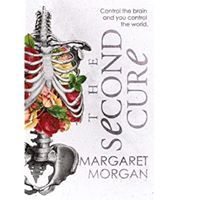
Dark, thrilling and compulsively readable, The Second Cure is a provocative debut novel about control, courage and belief.
A pandemic is racing through our world, changing people subtly but irrevocably. The first sign for some is losing their faith. For others it comes as violent outpourings of creativity, reckless driving and seeing visions.
Scientist Charlotte Zinn is close to a cure when her partner becomes infected. Overnight her understanding of the disease is turned upside down. Should she change the path of evolution?
As Australia is torn apart, reporter Brigid Bayliss is determined to uncover the dark truth behind the religious response to the outbreak.
Brigid and Charlotte find themselves on the frontline of a world splintering into far left and far right, with unexpected power to change the course of history. But at what cost?
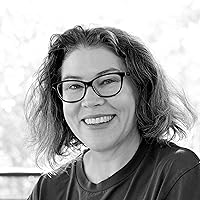
After practising in criminal law, Margaret Morgan became a professional writer, screenwriter and script editor in television for many well-regarded Australian drama series (including Water Rats, A Country Practice and GP). Margaret’s short fiction has been published in Meanjin and Going Down Swinging, and her works for stage (librettos for music theatre) have been performed at major Australian arts festivals.
Margaret recently completed a bachelor’s degree in Advanced Science in Biology at Macquarie University, where she focused on plant science, genetics and parasitology. She lives in Sydney with her family.
A pandemic is racing through our world and it is changing people. Some lose their religion. Others have outpourings of creativity, reckless behaviour and seeing visions. Scientist Charlotte is close to a cure when her partner becomes infected and her understanding of the disease is turned upside down. Reporter Brigid is determined to uncover the truth behind the religious response to the outbreak. Australia, and worldwide, is torn apart politically into far left and far right with unexpected power to change the course of history.
Science and religion are not my strong subjects but this book was actually pretty interesting. Some (or a lot haha) of the science stuff went over my head but I found it to be a fascinating concept; some of science definitions etc were explained but I felt it could have done with a bit more dumbing down for those of us that need it, although I do think I got the basic gist of it. I found the second part more enjoyable than the first, I think because the second was not as science heavy and was more about the consequences on society from the events in the first part of the book. The storyline was entertaining and quite plausible in my opinion. Religious readers may find the conclusions drawn by the scientists to be offensive to themselves and their faith. I don't think this is a book I'd forget about in a hurry, was definitely food for thought and one I'd recommend for those looking for something different to read. I'd also be keen to see a film version of this book!
As soon as I read the synopsis for The Second Cure I was instantly interested! Whilst it’s unlike anything else that I’ve read before I absolutely adored this book, the characters especially were so likeable and I quickly became invested in what was going to happen to them. It’s one of those books that makes you stop and think because even though it’s essentially fiction you can’t help but wonder what yourself as a reader would do if you were faced with similar situations or environments. I loved the scientific/biology aspect of the story (science nerd here) and appreciated that it was all explained in a way that would be easy for anyone to understand. I can’t wait to see what’s to come in the future for Margaret Morgan as her debut novel has simply blown me away!
I have just finished reading this book. It is terrific. Margaret Morgan manipulates complex ideas with startling ease while driving her narrative along at a cracking pace. At once disturbing, humorous and highly intelligent, "The Second Cure" is compellingly believable and utterly contemporary. Do yourself a favour and dive into it.
There is so much plot packed into this novel! It's ambitious, clever, stunning in breadth and imaginative power. The writing is at once authoratitively scientific, and compellingly plot-driven. More of my thoughts are below (but they're a little disjointed).
Charlie is a scientist, concerned with finding a cure for a new plague affecting the world's cats. Bridgid is a reporter, watching her world change and trying to keep the truth in sight. These two remarkable women are embroiled in huge, world-shaking events and forced to make decisions that will impact generations to come.
The science in The Second Cure feels plausible, the political extremism even more so. And my word, did the pace ramp up in the latter half of the story! I thought this would be a tale about a point in time, but instead is covered decades of change. A really unique, fascinating book.
‘The cure, she called it, did you know that? Not the cure to stop the plague. This was the second cure she said.’
The Second Cure hit me like a bolt of lightning. I went into this novel with a fair amount of trepidation; science fiction is not really ‘my thing’. Or so I tell myself. But this year alone, I’ve read more science fiction than ever before and each of these novels has been brilliant. I’ve loved them. And so it is with The Second Cure, a genre blend of science fiction with dystopian themes written in a literary style. Utterly captivating, horrifyingly realistic and ultimately uplifting. I honestly can’t recommend this novel high enough.
Margaret Morgan writes with exception. She presents a type of science that is not very basic in a very accessible manner, which was really lucky for me because my brain tends to become overwhelmed very quickly once anything becomes scientific. But I really knew what was going on all the way through this novel. Too bad Margaret wasn’t my science teacher back in school. For anyone who has been contemplating reading The Second Cure but has held off because of a fear of the science themes, you can shelve those concerns. As well as writing with accessibility, Margaret has a way with words in general that seem to have them blending into the most beautifully atmospheric prose. I was gripped with a certain sense of place while reading The Second Cure. It’s a very immersive novel.
‘As her eyes adjusted to the darkness, the bush remained invisible, no cloud present to bounce back the light of the city. On moonlit nights she could see down to Bujwa Bay, a tucked-away pocket of the river that ran into the vast Hawkesbury and out into the Pacific Ocean. But tonight there was no moon, and the stars were sharp against the night, the Milky Way looking like the smear of cream its name suggested. From the pond below she could hear the knock-on-wood call of a striped marsh frog and from across the valley was the two-toned hoot of a solitary boobook. Crickets and the metallic ting of microbats. There was no breeze.’
The Second Cure has several narrators but the main two are scientist Charlie (Charlotte) and journalist Brigid. These two women are almost sisters-in-law. Charlie lives with, and is the partner of, Brigid’s brother Richard. Another character by the name of Winnie also has an impactful presence in the first part of the novel. She is Richard’s and Brigid’s mother. So you can see that this story revolves to a certain extent around a family. I really liked both Charlie and Brigid. Very different from each other, but both equally as passionate about their cause. For Brigid, her cause is the truth. She’s in it for the long haul and she’s determined to unmask a proselytising politician who is rising rapidly by capitalising on fear within society – I know, they all do that! But this guy…well, you really just need to read it. As a Queenslander (the setting of the more extreme parts of the novel), my face was doing a good impression of that little shocked face emoji while my stomach was churning over the extreme right wing politics. It’s fiction though…right? Charlie, after years of research, is working on a vaccine as well as a cure for the cat plague that has the world within its grip. Why does it matter if cats are dying? Well, it matters a lot, because everything is connected. If cats don’t exist, the population of rats boom, as one example. But it’s not just domestic cats dying, it’s big cats too, the lions and cheetahs and every type of cat all around the world. It’s wrecking havoc on the ecosystem. Furthermore, even though it’s a cat plague, it’s infecting humans, because they have become the host. The virus manifests itself in different ways, depending on the individual, something Margaret skilfully demonstrates by way of contrasting the experiences of her characters. When Richard becomes infected, his symptoms force Charlie to regard the progression of the disease in a new light. The need for a cure, and a vaccine, becomes all the more focused.
As a side note, on the topic of Charlie and Richard, I absolutely love the way Margaret sums up their relationship in this moment of introspection by Charlie:
‘At its worst, she worried that their relationship was little more than an exchange of facts and orgasms. He told her things about music and art. She told him things about science. They had good sex. Of course there were other exchanges, too. He provided the accommodation (free of mortgage or rent); she earned most of their money. She paid for the food; he bought it and cooked it. Just another symbiosis, like fungi and algae in lichen. But she loved him, and she knew he loved her. That added a buffer against imbalances, perhaps. Or maybe it magnified them. Was it true that in every relationship one person loved the other more?’
This novel spans a long timeline, more than fifteen years, but it’s split into two parts and jumps ahead in the second part, so it’s still very fast moving. It really is a novel for our times. It generated such a sense of unease within me, how familiar some of the themes seem when considered within the context of today’s society. I did not see the end result coming. I honestly had no idea what was going to happen with Charlie and Brigid. Were they going to pull off what they had each set out to do? And what is the second cure? How does it differ to the first cure and what is its purpose? It all ends in a way that is both devastating and uplifting at the same time. I was shocked and elated in equal measure. This novel is nothing short of brilliant. And the cover is absolutely gorgeous.
‘Charlie couldn’t endure listening. This was her work they were exploiting. Her work had built Capricornia. Without her cure, Effenberg would not have been able to build his regime and equally vile dictatorships across the world couldn’t have found their power. She’d been trying to stop extinctions, to do good science, and she had indeed succeeded, but the price…the price made her want to vomit.’
Thanks is extended to Penguin Random House Australia for providing me with a copy of The Second Cure for review.
Gripping. The science is fascinating and I cared a lot about the characters - biologist Charlie Zinn, her artist/composer partner Richard, their lovely dog Goblin, Richard's gentle mother Winnie, and his acerbic sister Brigid.
Biology - specifically parasitology and epigenetics - mixed with religion, politics, and the arts, makes for fascinating near-future world-building.
Very accomplished writing, particularly for a debut novel. The style, plotting, and characterisation are all great. I was occasionally confused about the timeline in the first part of the book, but other than that, everything worked smoothly.
Margaret Morgan's debut novel, The Second Cure, is published by Penguin. I went to the launch put on by Newtown bookshop, Better Read than Dead, at Leadbelly Bar in Newtown. The launch speech was given by Kerryn Goldsworthy, who said she had read the book twice and could read it twice again. I know what she meant, as I came to write this review; for it is such a complex plot that I did not feel I could do it justice on one read alone, and after skimming through it for the second time, I still don't. I am not a lover of plot-driven novels, or novels structured by an idea or a thesis. On the other hand, I don't want to slot this novel into a box of 'political thriller' or 'dystopian fiction' for it is both and more than that.
I would not normally choose to read a novel of this kind. But I did enjoy it; it kept me turning the pages, and I have great respect and admiration for the complex structure and the convincing unravelling of a scientific quest for a cure for a pandemic of toxoplasmosis, which has mutated from the strain that is hosted by cats to one of plague proportions, hosted by humans. The virus is spreading through the world, and its effects are both devastating and in some ways, liberating. Charlie Zinn, a biologist, and her colleague, Juliette, have isolated the genome and are close to finding a cure.
Meantime, the world's domestic, wild and feral feline population is disappearing. The emphasis of the novel is on the human, not the animal; not on the loss of an entire biological population, but on the divisions in Australia between the general population, the far left, and the far right; the latter are represented by Song of Light New Apostolic Church. In Queensland, where church and state are not separate, their Pastor and leader, one Jack Effenburg, effects a leadership spill and becomes premier, then leads a secession from the Australian Republic to set up the independent nation, Capricornia. Jack and his wife Marion profess to be on the side of the light, and convince the population of this, but are in fact from the dark side.
The key characters in this tale are two scientists, Charlie, and her former partner in love and science, Shadrack; Brigid, a fearless investigative reporter and sister of Charlie's present partner (when the story opens) Richard, who is a musician and a painter. There is a love triangle at the centre of the plot, between Charlie, Richard and Shadrack.
The plot is so complex I won't attempt a summary. There are riots, there is torture, there is cruelty, blood is shed. There is an underground movement against the cruel, secretive, hypocritical, repressive rule of Capricornia. Charlie, with Shadrack's support, develops a second cure for the mutated virus, which offers release from the toxic effects and the prospect of a shift from capitalism to a more humane, caring and concerned society. Empathy and connectedness versus power, cruelty and corruption.
I think this book will do very well. When I visited Better Read than Dead bookshop in Newtown, they were featuring it as their no. 1 bestseller, even before it was launched. The author has woven together strands of science, speculative fiction, romance, political thriller, and more, to create a convincing, disturbing and entertaining vision of how our society might develop when humans exploit biological mutations for power, and thinkers, scientists and artists refuse control and seek ways of living in a more connected, empathic world.
A dystopia (sort of) with an eye to todays latest scientific discoveries that questions the notion of rational self interest and reason as the only influence on individuals and society.
In the last 10 years there has been a steady build up of ideas about biological processes affecting more than just our bodies but what we like to think of as our minds, which in the Western tradition, we hold to be ethreal and some how purer than our bag of meat bodies. For instance the influence of our gut bacteria on our behaviour and then there is the curious parasitic disease Toxoplasma gondii.
These ideas mixed with the pessimistic research which suggests that conservative and progressive brains are wired up diffferently and we have the basis of this book. What would happen if there was a species jump of a disease and what would happen if that disease changed our perceptions of the world in a dramatic and unexpected way? It has happened before with the Black Plague which profoundly changed the medieval world. Worl War One, while not a plague in the normal sense of the word, so changed the mass of individuals perception of the world that it altered the whole consciousness of the world.
What a cornucopia of diversity and variety I found in The Second Cure! The book's artful blending of genuine and speculative (but convincing) science, religious and political isolationism, gender politics, sexuality, intriguing characters and cats had me hooked. An Australian setting too — huzzah! It's also one of the few fiction books I've read that include characters with synaesthesia, a fascinating neurological trait that causes a merging of the senses e.g. hearing colour or seeing sound. Highly recommended, The Second Cure is a 5* star novel, thought-provoking, thrilling, informative and a joy to read.
If you like your science fiction extra sciency, contemporary and pandemic-infused, featuring a cast of engaging characters including all-too-plausible politico-religious whackjobs then this one is for you. Reminds me a little bit of Max Barry’s fabulous thriller Lexicon, albeit with different subject matter. I’m tipping this novel for an Aurealis Award.
Another good one. Look what happens when I actually choose books instead of just reading whatever I can find!
This is a speculative/dystopian book that in some ways is uncomfortably plausible. A conservative "Christian" government backed by a pentecostal church. A pandemic. Media disinformation used to roll back citizen's rights. The two heroines are likeably flawed, their relationships develop slowly holding together a plot that could have got too big to handle.
I didn't feel it was a perfect book, environmental issues are understated and kind of gaslit with minimal treatment (possibly that's a question of scope). Bridget's insta-love is a bit too good to be true (but necessary representation as well). But it had some types of nuance. A strong critique of fundy Christianities managed without polarising against all religions. A slightly fetishistic view of science (goes with the genre I suppose) but with ethical dilemmas. Most of all I loved the way it more than passed the Bechdel test. Charlotte is heterosexual but forms strong bonds with her mother-in-law and sister-in-law as well as fellow scientist Juliette. Tricia is Winnie's best frienemy and that relationship colours the book almost as deeply as a romance. The complexity and ambivalence of female relationships is very much foregrounded. Sex is just a thing (though certainly not absent in the book). When there is an overdone romance it is a lesbian one. The author seems to have made a defiant and deliberate choice to write gynocentrically and I am 100% here for it cheering because it balances so much else that is out there!
Credit where credit is due, at times I found this uncomfortable and too close to reality (politically) to read but this was such a relevant and ultimately hopeful book. I will add it to the little free library in the Greens office as I feel a few others need the almost plausible positivity. Also the anti-capitalist moment in the book (avoiding a marxist oversimplification) was pure beauty.
The more I think about this book the more I see it as courageous but also necessary.
Lots to love about this book, set in Australia, a science fiction book of our times. Great characters, compelling and believable story, thought-provoking science and politics. All packaged in an immensely enjoyable read.
I wanted to like it. Sciency and GLBTIQ female protagonists, unrepentantly Aussie is location and lingo, and utlises some real life scaries, religious fundamentalism and toxoplasmosis, for its monsters. However the action did not start until over the half way mark, the prose was neither impressive nor wildly engaging and the charactersnever quite felt like people I cared about. I finished it but was happy to get to the end.
Did not finish - got 1/3 into it and just bored me to tears. The writing was quite clinical and lacked nuance, one dimensional characters who I couldn't engage with. After reading a few other reviews and comments about plot flaws, unbelievable scenarios and a weak ending I decided not to finish. Maybe I should have persisted but life's too short and I'm moving on to something better.
I read The Second Cure when it first came out, and am reading it again. Ms. Morgan's background in biology and understanding of the political times in which we live makes this not just a great read, but an essential one.
The Second Cure is one book that you will read in 2018 and it will blow you away. As soon as I read the synopsis for this book I couldn’t say no to a review copy. Let’s just say this book is fantastic and I am shocked that I am not seeing it on everyone’s book cases, their Instagram feeds and posting reviews on Goodreads. This book ladies and gentlemen was utterly fantastic. Not only is the Second Cure unlike any book I have ever read, Morgan’s writing style was captivating, the characters were compelling and delightful. With a mix of science (don’t worry it’s easy to understand), fiction and a thriller with a spin of politics involved. Amazing! I couldn’t fault this book if you paid me to. The Second Cure is based around two main characters Charlie and Brigid. Charlie is a scientist who is focused on finding a cure for a new plague that is targeting the world’s cats and I loved her sympathetic and energetic nature. Brigid is a report who seeks the truth and these two woman were unstoppable as they took heed of world changing events and deciding fate that would affect generations to come. I even found myself questioning if I would have taken the same path as them? Another aspect of the book I actually enjoyed was the science, mostly because I could actually understand what was going on. For someone that drew skulls and love hearts all over her science book in high school and actually didn’t absorb any of the teachers would I found it easy enough to follow what the characters were talking about without scratching my head. Pretty much in my uneducated science background, the testing that was carried out seemed plausible and your heart raced as they tried to find a cure. Have I also mentioned that I am a bit of a dark nut and this book completely satisfied my dark soul? If not, go back and start the paragraph again. There are scenes of torture, cruelty, and unground movement and riots. Need I say more? Have I convinced you to buy it yet? Is it in your cart? No? Well, it should be. Like I said earlier, I couldn’t fault the book. The characters were compelling, the writing was smooth and comforting (would even hold your hand through the torture) and overall it was just a masterpiece.
The Second Cure is one book that you will read in 2018 and it will blow you away. As soon as I read the synopsis for this book I couldn’t say no to a review copy. Let’s just say this book is fantastic and I am shocked that I am not seeing it on everyone’s book cases, their Instagram feeds and posting reviews on Goodreads. This book ladies and gentlemen was utterly fantastic. Not only is the Second Cure unlike any book I have ever read, Morgan’s writing style was captivating, the characters were compelling and delightful. With a mix of science (don’t worry it’s easy to understand), fiction and a thriller with a spin of politics involved. Amazing! I couldn’t fault this book if you paid me to. The Second Cure is based around two main characters Charlie and Brigid. Charlie is a scientist who is focused on finding a cure for a new plague that is targeting the world’s cats and I loved her sympathetic and energetic nature. Brigid is a report who seeks the truth and these two woman were unstoppable as they took heed of world changing events and deciding fate that would affect generations to come. I even found myself questioning if I would have taken the same path as them? Another aspect of the book I actually enjoyed was the science, mostly because I could actually understand what was going on. For someone that drew skulls and love hearts all over her science book in high school and actually didn’t absorb any of the teachers would I found it easy enough to follow what the characters were talking about without scratching my head. Pretty much in my uneducated science background, the testing that was carried out seemed plausible and your heart raced as they tried to find a cure. Have I also mentioned that I am a bit of a dark nut and this book completely satisfied my dark soul? If not, go back and start the paragraph again. There are scenes of torture, cruelty, and unground movement and riots. Need I say more? Have I convinced you to buy it yet? Is it in your cart? No? Well, it should be. Like I said earlier, I couldn’t fault the book. The characters were compelling, the writing was smooth and comforting (would even hold your hand through the torture) and overall it was just a masterpiece.
Unputdownable! Margaret Morgan's vision of Australia in the grip of a pandemic is too close for comfort. As I read of religious zealots taking over Queensland, outlawing gay marriage, abortion, and just about every advance made in the last 100 years, I kept thinking - oh yeah - this could sooo easily happen. JFK nailed it: "The only thing necessary for the triumph of evil is for good men to do nothing." But the characters in Morgan's novel do do something - and you just want to cheer! This novel won on all fronts for me: it's plot is original, not just another grim unrealistic dystopian book; the characters have real depth and although flawed, you can't help but empathise with them all (well not quite all of them!). The science (and be warned, there is quite a bit of it) is well explained without sounding like Biology 101 and I think I understood most of it, which is quite an accomplishment! This is Margaret Morgan's first novel and it's a cracker! Highly recommended.
Brilliant. The Second Cure was brilliant. It was very thought provoking. What a combination of topics. Politics and plague. A thriller, but not in the usual way. What do you do when the victims of a plague don't want to be cured? A plague with positive effects. Not all effects are positive, though. This plague effects people on so many levels. Not the least of those being political and religious beliefs. The result, disastrous. Margaret Morgan's characters are very believable. Jack Effenberg puts me in mind of several RWNJs. Everyone from the red headed Oxley Moron to the mad hatter from FNQ himself. Her main protagonists Charlie and Brigid, a scientist and a news reporter, team up to bring down a regime. A regime, that is every RWNJ's and religious fanatics' wet dream. All I can say is wow. What a read.
A novel about the rapid spread of an infectious disease with a number of side effects, including synaesthesia, loss of religious faith, etc, and its societal effects. We follow Charlotte, a researcher into the disease, and Brigid, a political journalist, as Australia, and their own families, change around them. A really fascinating novel, and a great debut by Morgan - although
3,5 stars It was 4 star read for me until the last third of a book. I liked it much more when it was a slow biological thriller. The second section of a book, set in the nearest future, is a weakest one - too much plot, not enough consistency, a messy ending. Still it was a page turner, a decent try to say something new in a dystopian genre.
I really wanted to rate this 3 3/4 ... so close to 4 stars but not quite there ... The story was great and it was kinda nice having a story set around where I live ... however the scientific elements of the book were really dry and found that I "sped-read" over those sections (if there's such a word) to get the gist but certainly didn't have the patience to read every word. The book was a really nice change from my usual crime genre and despite the dryness of the science - I really did enjoy reading it.
What’s not to love about The Second Cure. Margaret’s use of rich language and science makes this a book that hasn’t been written for readers on an elementary reading level. The characters are interesting, and the plot is tight-no plot holes. It has action, love, suspense, drama, tragedy, comedy, and lots of accurate science that this science geek loves. This book brings together science and social commentary that is currently happening right now across the globe and puts it together in a way that makes you think. It shows how fear is leveraged to gain control of people. Margaret Morgan doesn’t let you get away with thinking I have this figured out-she has added twists. What can I say-it is a magnificent book. I want to read more books by Margaret Morgan. This is a sit down and read it all the way through, I can’t put it down book!!! 5 Stars *****
I highly recommend this, it is a fantastic debut! Urban-scifi is how I would described it. Or a contemporary-scifi. Just something different with religious/political aspects.
A plague is killing all the cats on Earth. When it adapts and infects humans it is no longer lethal, but it does result in some interesting side effects. Those infected develop synaesthesia. The effect this has on them depends on the type they get. For Queensland’s hard right, it doesn’t matter. They are the unclean. So disgusting that North Queensland cedes Australia to become its own state Capricornia and throws the infected out.
The book was interesting and to some degree unique. The science is complex but it is dumbed down sufficiently that a layperson can understand it and still follow the plot. What I particularly liked about this book was that it took on two themes, politics and religion, that are traditionally no-go topics. The characters are interesting and refreshingly, the book isn’t character driven. Unfortunately, the plot is a little lackluster and this is where the book is let down.
In the first part, Zinn is trying to find a cure and is seeking adequate funding, which is of course tangled in politics, not to mention a complex relationship at home. I was enthralled in this but in the space of a chapter all of this suddenly comes to an end and part one is over. It jarred significantly and worst of all the stories pace and tension had ended so that it was like starting a new book. The second part was not as interesting. There was still plenty going on, especially in Capricornia which had become a fascist police state. However, the author did not build enough tension around this and scenes were resolved too quickly. Especially the great escape across the border into Queensland.
The ending was disappointing. Firstly, so controversial that I was reminded why I don’t trust scientist and why they need massive oversight. Secondly, because we do not get to see what the effect of their actions was. The book again stops abruptly and I am left feeling cheated. There are hints of what happened in the epilogue, but this just doesn’t cut it. In hindsight, I think rather than having two parts in one novel, the story should have been told across two books. There was plenty of material to do this and this would have mitigated the jarring and disappointments.
Having said this, the book is still a good read and I will certainly be reading more from this author in the future. I will also be watching the film, currently in the pipes, should it eventuate.