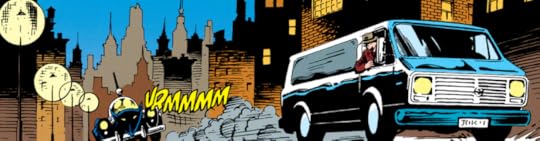
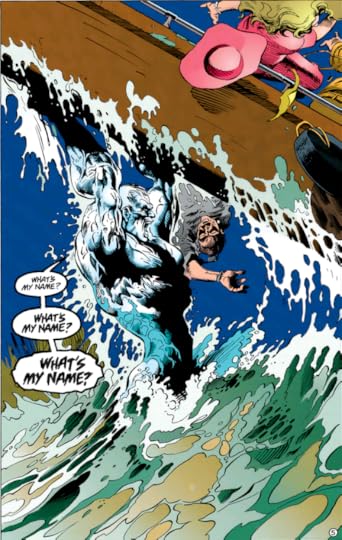
The opening chapters suffer a little from the same problem as previous volumes, containing only a quarter of a crossover which ran across all the Bat-books - but Prodigal (Dick Grayson's pre-Morrison stint in the cowl) is a simpler story than Knightfall. Also a less silly one, and in many ways painfully relevant right now, what with its paralysed court system, overstuffed prisons, and spectre of international, unabashed Russian gangsterism. Even once Bruce is back, partial subplots intrude - when did Alfred quit? Why is Bullock in hospital? Gordon's been replaced by his estranged wife? And so on. But never to the extent that the issues become incomprehensible, and more than anything it works as a reminder that this sort of soap opera stuff works far better with a strong supporting cast than with Batman himself or an ever-expanding roster of costumed sidekicks. And in general the collection reminded me of how much fun Batman comics could be when he'd been retooled by Miller and Burton, but not yet ossified into whatever the fuck he is these days. Gotham, as rendered by artists including John Paul Leon, Barry Kitson and Kev Walker, towers impossibly; in this Piranesi nightmare of a city, little wonder if monsters breed in the shadows. The villains range from Grant's own creations like the Tally Man and Ventriloquist, through KGBeast and Solomon Grundy, to the Clown Prince of Crime himself, the fundamental problem of his very seldom being funny turned from bug into feature by presenting him as precisely that, a failed comedian desperate to prove his critics wrong. Or if not wrong, then at least dead. The standout story, though, must be the return of Anarky, often considered the Batman antagonist whose writer thought he was right. Alas, with hindsight his certainty that the information society would spell an end to fascism, deceit and the lies of powerful men looks as detached from reality as anything King Tut or the Joker ever came up with.