

What do you think?
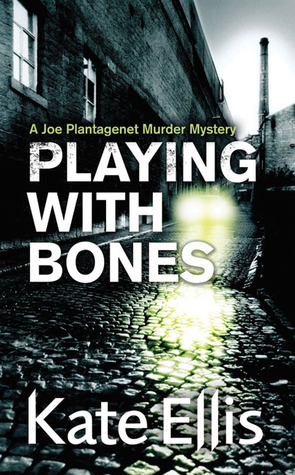
Joe Plantagenet #2
Playing With Bones
Singmass Close has a sinister past. Reputedly haunted by the ghosts of children, in the 1950s it was the hunting ground of the Doll Strangler, a ruthless killer who was never brought to justice. Now DI Joe Plantagenet wonders whether a copycat killer is at work when the strangled body of teenager Natalie Parkes is found with a mutilated doll lying by her side. With the recent disappearance of a young female model and an escaped convict at large, this new, horrific murder stretches Joe’s team to their limit. But as the bodies start mounting up and Joe’s questioning brings him closer to the real strangler, he comes to suspect a shocking connection between all three cases.
320 pages, Hardcover
First published January 6, 2011
About the author
Kate Ellis
123 books635 followersKate Ellis was born and brought up in Liverpool and she studied drama in Manchester. She worked in teaching, marketing and accountancy before first enjoying writing success as a winner of the North West Playwrights competition. Crime and mystery stories have always fascinated her, as have medieval history and archaeology which she likes to incorporate in her books. She is married with two grown up sons and she lives in North Cheshire, England, with her husband. Kate was awarded the CWA DAGGER IN THE LIBRARY award in 2019
Ratings & Reviews
Friends & Following
Create a free account to discover what your friends think of this book!
Community Reviews
Displaying 1 - 30 of 72 reviews

November 2, 2021
Just before he reached the cathedral square, he came across the tall medieval building which housed Eborby Old Books. As he stepped inside the dimly lit shop with its uneven floors and mysterious crooked staircases leading upwards to more delights, he felt a thrill of anticipation – the thrill of the hunt.
In the second of the DI Joe Plantagenet murder mysteries, set in “Eborby” (Eboracum being the Saxon name for the settlement that became York), Joe and DCI Emily Thwaite and their team investigate the murders of two young women found strangled, the big toe amputated and a vintage doll left at the scene, closely resembling the unsolved Doll Strangler murders in the 1950’s, at Singmass Close, the former site of a Ragged School and old doll hospital. The original killer had taken four victims and suddenly stopped, the details never fully released to the public. So how had the copycat killer known? To find out, Joe must comb through the case files of the original unsolved crimes, to see what was missed.
The name of the recent victim, teenager Karen Strange, is found with her bag, but in the first twist in this serpentine story Karen is alive and well, the dead girl identified as her friend, Natalie Parkes, both attending the same private school, identical handbags somehow switched. Joe is sent a book on the original Doll Strangler case and tries to find the author. From there it gets murkier, further complicated by the disappearance of Michele Cardin, catching a train to London, only belatedly reported missing by her businesswoman mother.
It’s a hallmark of Kate Ellis’ writing that the identity of the copycat killer is not revealed until the very end (I never guessed it), the detectives running in ever-decreasing circles, along with a supernatural element in keeping with one of the most haunted cities in Europe. The personal lives of Joe - (who trained for the priesthood) and Emily (struggling to balance work/family pressures, but with an understanding husband) - are there, but not allowed to undermine the investigation, the local accents thick but not impenetrable. Overall, a fine read, and I will search out more of her work.
In the second of the DI Joe Plantagenet murder mysteries, set in “Eborby” (Eboracum being the Saxon name for the settlement that became York), Joe and DCI Emily Thwaite and their team investigate the murders of two young women found strangled, the big toe amputated and a vintage doll left at the scene, closely resembling the unsolved Doll Strangler murders in the 1950’s, at Singmass Close, the former site of a Ragged School and old doll hospital. The original killer had taken four victims and suddenly stopped, the details never fully released to the public. So how had the copycat killer known? To find out, Joe must comb through the case files of the original unsolved crimes, to see what was missed.
The name of the recent victim, teenager Karen Strange, is found with her bag, but in the first twist in this serpentine story Karen is alive and well, the dead girl identified as her friend, Natalie Parkes, both attending the same private school, identical handbags somehow switched. Joe is sent a book on the original Doll Strangler case and tries to find the author. From there it gets murkier, further complicated by the disappearance of Michele Cardin, catching a train to London, only belatedly reported missing by her businesswoman mother.
It’s a hallmark of Kate Ellis’ writing that the identity of the copycat killer is not revealed until the very end (I never guessed it), the detectives running in ever-decreasing circles, along with a supernatural element in keeping with one of the most haunted cities in Europe. The personal lives of Joe - (who trained for the priesthood) and Emily (struggling to balance work/family pressures, but with an understanding husband) - are there, but not allowed to undermine the investigation, the local accents thick but not impenetrable. Overall, a fine read, and I will search out more of her work.

September 9, 2018
Back in the 1950s there was a serial murder that the press called The Doll Strangler. He was never caught.
Now, 50 years later, he is back. It has to be him as things not released to the press are happening. But could a man that old really be killing again? Or is it someone else? Meanwhile, two teenage girls have gone missing and a convicted child killer escaped from jail. DI Joe Plantagenet and his team are on the case.
A great book well plotted and well written with some lovely little odd quirks that raise it above more pedestrian crime novels.
Highly recommended.
Now, 50 years later, he is back. It has to be him as things not released to the press are happening. But could a man that old really be killing again? Or is it someone else? Meanwhile, two teenage girls have gone missing and a convicted child killer escaped from jail. DI Joe Plantagenet and his team are on the case.
A great book well plotted and well written with some lovely little odd quirks that raise it above more pedestrian crime novels.
Highly recommended.

March 19, 2017
Playing With Bones by Kate Ellis
Joe Plantagenet series Book #2
4 stars
From The Book:
Is the Doll Strangler back or is a copycat on the loose?
Singmass Close has a sinister past. Reputedly haunted by the ghosts of children, in the 50s it was the hunting ground of the Doll Strangler, a ruthless killer who was never brought to justice. Now DI Joe Plantagenet wonders whether a copycat killer is at work when the strangled body of teenager Natalie Parkes is found in the same close, a mutilated doll lying by her side.
With the recent disappearance of a young female model and an escaped convict at large, this new, horrific murder stretches Joe's team to their limit. But as the bodies start mounting up and Joe's questioning brings him closer to the real strangler, he comes to suspect a shockingly creepy connection between all three cases.
My Thoughts:
I like this series for the very reason that several reviewers did not like it... the supernatural element that seems to be a regular theme in all the installments of this series that is absent in Ellis's Wesley Peterson series. These ghostly wisps tantalizingly float just out of sight in the margins of the story.
Some of the characters were a tad unbelievable in their level stupidly...but it didn't interfere with the enjoyment of the story. The ending was unexpected but entirely plausible. Looking forward to the next in the series.
Joe Plantagenet series Book #2
4 stars
From The Book:
Is the Doll Strangler back or is a copycat on the loose?
Singmass Close has a sinister past. Reputedly haunted by the ghosts of children, in the 50s it was the hunting ground of the Doll Strangler, a ruthless killer who was never brought to justice. Now DI Joe Plantagenet wonders whether a copycat killer is at work when the strangled body of teenager Natalie Parkes is found in the same close, a mutilated doll lying by her side.
With the recent disappearance of a young female model and an escaped convict at large, this new, horrific murder stretches Joe's team to their limit. But as the bodies start mounting up and Joe's questioning brings him closer to the real strangler, he comes to suspect a shockingly creepy connection between all three cases.
My Thoughts:
I like this series for the very reason that several reviewers did not like it... the supernatural element that seems to be a regular theme in all the installments of this series that is absent in Ellis's Wesley Peterson series. These ghostly wisps tantalizingly float just out of sight in the margins of the story.
Some of the characters were a tad unbelievable in their level stupidly...but it didn't interfere with the enjoyment of the story. The ending was unexpected but entirely plausible. Looking forward to the next in the series.

March 21, 2017
Fifty years ago in Singmass Close, four young women were killed, their feet mutilated and an antique doll left by the body. No one was every captured and the murders eventually stopped. Now they've started again. In book 2 of the Detective Inspector Joe Plantagenet series, he and his boss, DCI Emily Thwaite, are assigned to investigate a new murder, eerily similar to the ones fifty years ago. In a separate storyline, there's a search underway for Gordon Pledge, a child killer who recently escaped during a van transport.
Joe Plantagenet is a multi-faceted character who's a bit different from the usual police detective. He originally studied for the priesthood, then left it to marry a woman who died shortly after their marriage. The story has a hint of supernatural about it but not so much that it takes over the suspense aspect. There were a few too many coincidences for my liking but the range of suspects was quite large and I never knew who it was until the author played out the entire story. I'm looking forward to the next book in this series, Kissing the Demons.
Joe Plantagenet is a multi-faceted character who's a bit different from the usual police detective. He originally studied for the priesthood, then left it to marry a woman who died shortly after their marriage. The story has a hint of supernatural about it but not so much that it takes over the suspense aspect. There were a few too many coincidences for my liking but the range of suspects was quite large and I never knew who it was until the author played out the entire story. I'm looking forward to the next book in this series, Kissing the Demons.
February 24, 2011
I was telling a friend recently that at some point fictional serial killers and their antics get a bit silly. (I was thinking at the time of an American author whose serial killer kidnapped strippers and made them-- under threat of death-- pole dance until exhaustion then killed them anyway.) However, that was pretty much my feeling about The Doll Strangler who left mutilated Victorian doll beside his dead mutilated victims.
There was some potential in the supernatural in this book-- the Ragged School and the idea of the pathetic ghosts of starved Victorian children buried in and around the building, disturbed by renovation is quite creepy. But Ellis' Diocesan Expert on Creepy Things would be eaten for lunch by Phil Rickman's Merrily Watkins. In fact, I'm not sure why he even appeared because no one wanted his help.
Joe Plantagenet is remarkably bland despite having an appropriately angsty background-- dead wife, dead former partner. His boss, DCI Emily Thwaite, gets the role of the detective who can't get home to see her family that Wesley Peterson carries in Ellis' other series as well as DI Gerry Heffernan's weight problem. That just leaves Plantagenet with commitment issues.
I was also not impressed with the resolution-- there is a high degree of coincidence involved and a shocking degree of lock picking by the police. While I know that English law does not accept the Fruit of the Poisonous Tree doctrine, the amount of breaking the close by the police to move the plot along was pretty unbelievable.
I went to some trouble to get the audio version read by Gordon Griffin. I was not impressed. Mr. Griffin's range seemed limited and for some reason he frequently used a stage whisper that I personally found irritating. He did not mispronounce words though and his pacing was good. It's just that I missed the distinct accents that some top of the line readers bring to their audio book work.
It will likely be a while before I pick up another Joe Plantagenet crime novel, audio or otherwise.
There was some potential in the supernatural in this book-- the Ragged School and the idea of the pathetic ghosts of starved Victorian children buried in and around the building, disturbed by renovation is quite creepy. But Ellis' Diocesan Expert on Creepy Things would be eaten for lunch by Phil Rickman's Merrily Watkins. In fact, I'm not sure why he even appeared because no one wanted his help.
Joe Plantagenet is remarkably bland despite having an appropriately angsty background-- dead wife, dead former partner. His boss, DCI Emily Thwaite, gets the role of the detective who can't get home to see her family that Wesley Peterson carries in Ellis' other series as well as DI Gerry Heffernan's weight problem. That just leaves Plantagenet with commitment issues.
I was also not impressed with the resolution-- there is a high degree of coincidence involved and a shocking degree of lock picking by the police. While I know that English law does not accept the Fruit of the Poisonous Tree doctrine, the amount of breaking the close by the police to move the plot along was pretty unbelievable.
I went to some trouble to get the audio version read by Gordon Griffin. I was not impressed. Mr. Griffin's range seemed limited and for some reason he frequently used a stage whisper that I personally found irritating. He did not mispronounce words though and his pacing was good. It's just that I missed the distinct accents that some top of the line readers bring to their audio book work.
It will likely be a while before I pick up another Joe Plantagenet crime novel, audio or otherwise.

October 3, 2016
i finally started reading for pleasure again.
by which i mean, not the odyssey. or jane eyre. although i do enjoy those books.
i also decided i was going to write a review, which is something i haven't properly done in ages.
because, dear goodreads, you're my book-y diary and i missed you.
when i first started this series (i think i read book #5 first...), i definitely didn't notice some of the writer's quirks.
BUT I DO NOW!
first, could we, maybe (MAYBE), stop pointing out emily thwaite's weight? i've started calling her "weighty thwaite-y" in my mind (because in my mindspeak, the name rhymes with her one personality quirk).
EVERY book we get to hear how she's put on a few pounds, or joined a gym she has no intention of ever visiting. we also get her struggle to be a high-power mom with a job. I GET IT. the struggle, she's real. but cut the woman some slack and let her just enjoy her food without feeling compelled to point out that the pants are tight.
IN. EVERY. BOOK.
it reminds me a little of the babysitter club books that used to start off with the litany of character traits pertaining to the main characters. these 10 pages or so were almost always identical in content and structure and i used to just skip over that chapter to get to whatever problem maryann was having with logan this week.
DID YOU KNOW CLAUDIA REALLY LIKES ART???
this rant extends also to: sunny's name not matching his personality, jamilla being short, pretty, and no-nonsense, joe's aching shoulder and his crushing grief over kaitlin and his old partner, and all his hang-ups regarding his last name.
the mysteries are also a wee bit formulaic - when everyone else can be eliminated, only characters we met briefly at the beginning seem particularly relevant by the end. there's always a hint of a ghost story lurking but everything is neatly tied up with the catching of an all-too-human killer.
but still...better than grading essays.
three stars - a creepy diversion for a sunday afternoon
by which i mean, not the odyssey. or jane eyre. although i do enjoy those books.
i also decided i was going to write a review, which is something i haven't properly done in ages.
because, dear goodreads, you're my book-y diary and i missed you.
when i first started this series (i think i read book #5 first...), i definitely didn't notice some of the writer's quirks.
BUT I DO NOW!
first, could we, maybe (MAYBE), stop pointing out emily thwaite's weight? i've started calling her "weighty thwaite-y" in my mind (because in my mindspeak, the name rhymes with her one personality quirk).
EVERY book we get to hear how she's put on a few pounds, or joined a gym she has no intention of ever visiting. we also get her struggle to be a high-power mom with a job. I GET IT. the struggle, she's real. but cut the woman some slack and let her just enjoy her food without feeling compelled to point out that the pants are tight.
IN. EVERY. BOOK.
it reminds me a little of the babysitter club books that used to start off with the litany of character traits pertaining to the main characters. these 10 pages or so were almost always identical in content and structure and i used to just skip over that chapter to get to whatever problem maryann was having with logan this week.
DID YOU KNOW CLAUDIA REALLY LIKES ART???
this rant extends also to: sunny's name not matching his personality, jamilla being short, pretty, and no-nonsense, joe's aching shoulder and his crushing grief over kaitlin and his old partner, and all his hang-ups regarding his last name.
the mysteries are also a wee bit formulaic - when everyone else can be eliminated, only characters we met briefly at the beginning seem particularly relevant by the end. there's always a hint of a ghost story lurking but everything is neatly tied up with the catching of an all-too-human killer.
but still...better than grading essays.
three stars - a creepy diversion for a sunday afternoon

August 3, 2017
got interested in this series thanks to some people on my Facebook Mystery page that I started with a friend. I generally don't do paranormal. I stay away from the Zombie/Werewolf genre in mysteries. I really prefer a good solid police procedural. This is an interesting series that centers around Joe Plantagenet, a DI in the fictional city of Eborby which is really York. I recognized it immediately. The author prefers to keep it fictional so that she doesn't have to be absolutely true to the area, but she does a good job. I fell in love with York when we visited there many years ago. Joe is a transplant who was wounded and lost a partner so he decided to make a fresh start. His surname is interesting as well if you know English monarchs.
The books feature a current crime(s) plus an allusion to a historical case. Interestingly enough she also has a series that she has been writing longer whose protagonist, Wesley Peterson, is a DI with a degree in archaeology. So those books always feature a current crime plus some archaeology that becomes a part of the crime.
In this book Joe and the team are investigating a series of murders that mimic murders that happened in the 1950's. The murders take place in Singmass Close, a British term for a dead end street. It is, according to the Oxford Dictionary, "a residential street without through access." This particular close has a sinister past as a result of the previous murders plus it is reputedly haunted by the ghosts of abused children.
There were so many red herrings and twists and turns. I confess to being surprised at "whodunit." I won't tell you though. That would spoil the fun!
The books feature a current crime(s) plus an allusion to a historical case. Interestingly enough she also has a series that she has been writing longer whose protagonist, Wesley Peterson, is a DI with a degree in archaeology. So those books always feature a current crime plus some archaeology that becomes a part of the crime.
In this book Joe and the team are investigating a series of murders that mimic murders that happened in the 1950's. The murders take place in Singmass Close, a British term for a dead end street. It is, according to the Oxford Dictionary, "a residential street without through access." This particular close has a sinister past as a result of the previous murders plus it is reputedly haunted by the ghosts of abused children.
There were so many red herrings and twists and turns. I confess to being surprised at "whodunit." I won't tell you though. That would spoil the fun!

April 9, 2025
So many twist and turns
Love Kate Ellie's books. Great set of main characters and a creepy strange case. Love how she uses a past and present crime intertwining . I found the plot intricate ,and it moved around quite a bit, that I was intrigued but often had to pay close attention to follow it. I am looking forward to the next case with Joe and emily.
Love Kate Ellie's books. Great set of main characters and a creepy strange case. Love how she uses a past and present crime intertwining . I found the plot intricate ,and it moved around quite a bit, that I was intrigued but often had to pay close attention to follow it. I am looking forward to the next case with Joe and emily.

March 22, 2017
Kate Ellis certainly delivered on this one! I found the characters to be unique and interesting and the plot well-paced. The book is very well written with great twists and a surprise ending. There is a paranormal element to the series but it is very slight and not overpowering. All in all, a very entertaining read and very worthwhile and I look forward to the other books in the series. I would highly recommend this book to those who love their mysteries with a touch of supernatural.

March 18, 2017
Fifty years ago, there were four young women killed in the Singmass Close neighborhood. Brutally murdered, mutilated and a porcelain doll left next to the body. The killer was never caught. Now, a new murder has happened that is eerily similar to those initial murders. Is this the work of a copycat or has the original killer somehow returned to kill again?
This is the 2nd book in the Detective Inspector Joe Plantagenet series by Karen Ellis. We pick up the series several months after the end of the 1st book as Joe and his boss, DCI Emily Thwaite, work to stop this killer. In addition to this potential serial killer, the department is on the lookout for escaped murderer Gordon Pledge who was last seen in the area.
Joe Plantagenet is a complex character. Joe originally studied for the priesthood but left seminary to marry a woman, who was killed shortly after the marriage. Following the death of his partner in the Liverpool police department, he transferred to the smaller Eborby station and is trying to start over.
The story itself was well-written and a good read. There were a few too many coincidences for my liking as well as a couple of Too Stupid to Live moments, but overall the mystery was interesting and it kept you guessing ‘til the end. I will definitely continue with the series
Rating: 4.25
This is the 2nd book in the Detective Inspector Joe Plantagenet series by Karen Ellis. We pick up the series several months after the end of the 1st book as Joe and his boss, DCI Emily Thwaite, work to stop this killer. In addition to this potential serial killer, the department is on the lookout for escaped murderer Gordon Pledge who was last seen in the area.
Joe Plantagenet is a complex character. Joe originally studied for the priesthood but left seminary to marry a woman, who was killed shortly after the marriage. Following the death of his partner in the Liverpool police department, he transferred to the smaller Eborby station and is trying to start over.
The story itself was well-written and a good read. There were a few too many coincidences for my liking as well as a couple of Too Stupid to Live moments, but overall the mystery was interesting and it kept you guessing ‘til the end. I will definitely continue with the series
Rating: 4.25
June 16, 2024
I thought this book had good potential, and it's a shame as I liked some bits and pieces of it, but in general I didn't like the author's voice and it began to get tedious. Some of the characters were under-developed and at times it also felt like a man had written it due to the way women's bodies were described - cannot give more than two stars I'm afraid.

July 6, 2025
an easy read. again I like the mixture of history in with crime. bit predictable in parts but I enjoy them and will read more.

May 5, 2020
Second in the series and I enjoyed it as much as the first. Certainly a lot more pace than the author's Wesley Peterson series.

May 3, 2014
2nd in series set in York (Eborby - love the pseudonym!) On the whole so far I prefer her other series, which has more archaeology/history and less of a supernatural element, but this is quite enjoyable, if creepy. I didn't guess who the modern murderer was, but I probably should have as she has used the same idea before in one of the Wesley Peterson novels (I think). I liked the historical parts and the fact that the past murders were recent enough for some of the people involved still to be around, but long enough ago for that not to be obvious at first. I also like that sense of how areas change with modern development but that there is something left of the past (which is sometimes less attractive than one might expect). I rather wished the 1950s murderer had been unmasked just a bit sooner- he has got away with it, really, even though the mystery is solved after his death.
April 26, 2010
There were four murders in Singmass Close fifty years ago. And now they've started again. Police, including detective Joe Plantagenet, can't believe that the same man is behind them both, but the killer seems to know all the details of the crime that were never released to the public. At the same time, two little girls become obsessed with imaginary playmates. Of course, people in this northern English town have long believed that the Close is haunted...The always reliable Ellis again weaves the present and the future together into a tight, involving mystery. (If you haven't read her Wesley Peterson series, you should!)

April 25, 2010
Thoroughly enjoyed this second outing for DI Joe Plantagenet in the city of Ebory (fictionalised York). Not just a straight forward police procedural, but has a hint of the supernatural about it. I hope she writes more in this series, as I enjoy them better than the Wes Petersen series.
September 1, 2026
⭐⭐⭐⭐
Playing with Bones by Kate Ellis
Another thoroughly enjoyable read from Kate Ellis, and the second book in the Joe Plantagenet series.
This one had a particularly creepy premise: a teenage girl is found strangled in a location where a series of similar murders took place back in the 1950s, with a mutilated doll left beside her. Suddenly, the possibility that the infamous “Doll Strangler” has returned—or that someone is copying his crimes—comes to the forefront.
I really enjoyed the way Kate Ellis weaves the past and present together. There are plenty of suspects, red herrings and seemingly unrelated storylines, and just when I thought I had worked out where things were heading, another twist sent me in a different direction. The atmosphere is one of the book's biggest strengths too. There’s a slightly supernatural, unsettling quality running through the story without it ever completely taking over the crime investigation.
Joe Plantagenet is also developing into a likeable and interesting protagonist, and I’m enjoying getting to know him and the rest of the team as the series progresses.
A couple of elements felt a little too convenient or far-fetched for me, but they didn't detract too much from what was otherwise a well-plotted and genuinely intriguing mystery.
Creepy, atmospheric and full of enough twists to keep me guessing until the end. I’ll definitely be continuing with the Joe Plantagenet series.
4 ⭐️
Playing with Bones by Kate Ellis
Another thoroughly enjoyable read from Kate Ellis, and the second book in the Joe Plantagenet series.
This one had a particularly creepy premise: a teenage girl is found strangled in a location where a series of similar murders took place back in the 1950s, with a mutilated doll left beside her. Suddenly, the possibility that the infamous “Doll Strangler” has returned—or that someone is copying his crimes—comes to the forefront.
I really enjoyed the way Kate Ellis weaves the past and present together. There are plenty of suspects, red herrings and seemingly unrelated storylines, and just when I thought I had worked out where things were heading, another twist sent me in a different direction. The atmosphere is one of the book's biggest strengths too. There’s a slightly supernatural, unsettling quality running through the story without it ever completely taking over the crime investigation.
Joe Plantagenet is also developing into a likeable and interesting protagonist, and I’m enjoying getting to know him and the rest of the team as the series progresses.
A couple of elements felt a little too convenient or far-fetched for me, but they didn't detract too much from what was otherwise a well-plotted and genuinely intriguing mystery.
Creepy, atmospheric and full of enough twists to keep me guessing until the end. I’ll definitely be continuing with the Joe Plantagenet series.
4 ⭐️

May 23, 2021
The plotting of this mystery was excellent, and I especially appreciated the twist .
I did enjoy this book, and I will be picking up another in the series soon, but a few things nag at me.
First, the supernatural elements that may or may not be coincidence: they're not essential to the plot at all. Second, the underdeveloped personality of our hero with the royal name has become even more nondescript, compared to his boss, and she is mainly a set of tics rather than a full-round character. Finally, the motive in this book seemed implausible.
I did enjoy this book, and I will be picking up another in the series soon, but a few things nag at me.
First, the supernatural elements that may or may not be coincidence: they're not essential to the plot at all. Second, the underdeveloped personality of our hero with the royal name has become even more nondescript, compared to his boss, and she is mainly a set of tics rather than a full-round character. Finally, the motive in this book seemed implausible.

October 20, 2023
It took me a little to get in to the style of the Joe Plantagenet series when I'm used to the wording and the world of Kate Ellis' other series, but I ended up getting in to it and enjoying it greatly. The thrill of new murders happening around them after such a long time, of the unknown of what could be in the shadows surrounding you at all times.
It's the battle of wits and patience when it comes to the new murders, sending Joe and his colleagues at the station in to a race against time to try and find the killer before any more victims end up being killed and left in Singmass Close with a doll beside them.
It is the same killer who killed back in the 1050's or is it a copy cat killer who had known the first one?
It's the battle of wits and patience when it comes to the new murders, sending Joe and his colleagues at the station in to a race against time to try and find the killer before any more victims end up being killed and left in Singmass Close with a doll beside them.
It is the same killer who killed back in the 1050's or is it a copy cat killer who had known the first one?

November 19, 2018
This came in as a hold at the library and I can't remember why I requested it. I kept it until it was overdue to finish it, and I have some regrets. The writing style feels very un-modern to me - information dumps about characters, very little subtlety. The superior female policewoman "smiles shyly" at her subordinate male officer a little too often. Numerous mention is made of suspects who "seem to be telling the truth" or "are clearly lying", as if it's always that clear cut. An effort is made to outline the officers' lives outside of the case, but it's perfunctory and issues are too easily resolved. Nothing here worked really well for me.

February 14, 2026
This second series by Ellis is similar in style to her excellent Wesley Peterson archaeology mysteries, the sympathetic Detective Inspector Plantagenet here being a young former seminarian still grieving his late wife, and the setting being the fictional city of Eborby, based on York. Rather than becoming entangled with an ancient dig, this particular series is marked by some mild supernatural elements to the murders being investigated. Not sure how much this adds to the suspense for readers, but it doesn't detract from the carefully constructed murder mystery with lots of red herrings. The resolution in this story was a bit far-fetched, but I enjoyed it nonetheless.

January 11, 2024
Second book I’ve read by Kate Ellis and glad that it followed on the characters from the first one I read. These books were a pleasant find as I was going away and walked into The Works shop thinking I need something to read.
The storylines are well thought out, with clues to connect but also the red herrings to catch you off guard followed by a twist and surprise ending. I’m hoping she writes more books with Joe Plantagenet in the future.
It has also made me want to look at her other books as I do like her narrative in story telling.
The storylines are well thought out, with clues to connect but also the red herrings to catch you off guard followed by a twist and surprise ending. I’m hoping she writes more books with Joe Plantagenet in the future.
It has also made me want to look at her other books as I do like her narrative in story telling.
January 13, 2024
A great read with a mix of history, police procedural, atmospheric presence and great characters. This book is the second in the Joe Plantagenet series. The city of Eborby is part of the plot with its history both ancient and more recently in the 1950's.
The discovery of a victim in similar circumstances to those victims of a previous serial killer in the 1950's who was never convicted is one of the investigations that his team is working on. 2 missing girls and an escaped convict who's conviction for a young girl's murder just before the latest murder also happened add to the workload.
The discovery of a victim in similar circumstances to those victims of a previous serial killer in the 1950's who was never convicted is one of the investigations that his team is working on. 2 missing girls and an escaped convict who's conviction for a young girl's murder just before the latest murder also happened add to the workload.

August 2, 2019
Workmanlike thriller from Kate Ellis about a serial killer stalking a particular residential area of the city. There's a link to historical murders from the 1950s, but I didn't really find the culprit's motivations remotely convincing. There's a sub-plot involving a kidnapped school girl forced into modern-day slavery, but this seemed just as daft! Not one of her best and a fairly weak plot.
© Koplowitz 2019
© Koplowitz 2019
September 1, 2025
Enjoyable and easy to read. A teenager is found strangled in Singmass Close, Eborby, North Yorkshire. Her big toe had been removed, and there was a doll left beside her, which had also been mutilated. Singmass Close had a sinister past. It was the site of previous killings by the Doll Strangler, and it was said to be haunted by the ghosts of children. We follow DI Joe Plantagenet and his team, who investigate. The plot leads us to learn about the lives of the main characters.

November 5, 2018
This is the second time of reading this book. Not only is it my favourite Kate Ellis book I think it is my favourite crime novel (not counting Agatha Christie) It is so well written that when I was looking for a self catering holiday let in York and realised that the flat was near where parts of this book were set, I was too scared to stay there.

December 8, 2019
I really enjoy this author, her books are excellent. This murder mystery thriller kept me guessing throughout. With twists in the plot, it reads at a good pace. It kept me interested. The only reason I gave 4 stars instead of 5, is that with so many different characters, I got confused with who had done what at the end....but it didn’t spoil my read

May 8, 2023
it started really slow and it was kind of boring but after like halfway through I could not put it down. And the ending was pretty good I enjoyed who ended up being guilty and how everything came together. I thought the statement before X was taken away and arrested was kind of cheesy but the statement/confession at the end was awesome and it really fit the character of the person.

May 27, 2023
A second novel in the series, and another very hard to fault satisfying read. It kept me guessing to the very end, and had a number of twists that really threw me off the scent of who was the killer. No spoilers. If you want a slightly spooky and well-rounded story, this is for all police procedural drama fans. I highly recommend this novel.

July 2, 2024
When a murdered young lady’s body shows up in the same place where four murders occurred at the beginning of the 1950s, DI Joe Plantagenet and his new DCI think that this has to be a copycat murder or the original perpetrator is still agile enough to be an involved septuagenarian.
Enough twists and turns to keep the reader guessing, and a subplot into Joe’s personal life.
Enough twists and turns to keep the reader guessing, and a subplot into Joe’s personal life.
Displaying 1 - 30 of 72 reviews