What do you think?
Rate this book


L'évidence n'est pas toujours la vérité.
Manfred Baumann est un solitaire. Timide, inadapté, secret, il passe ses soirées à boire seul, en observant Adèle Bedeau, la jolie serveuse du bar de cette petite ville alsacienne très ordinaire.
Georges Gorski est un policier qui se confond avec la grisaille de la ville. S'il a eu de l'ambition, celle-ci s'est envolée il y a bien longtemps. Peut-être le jour où il a échoué à résoudre une de ses toutes premières enquêtes criminelles, qui depuis ne cesse de l'obséder.
Lorsque Adèle disparaît, Baumann devient le principal suspect de Gorski. Un étrange jeu se met alors en place entre les deux hommes.
Une affaire en apparence banale, des vies, une ville, qui le sont tout autant... Graeme Macrae Burnet nous démontre ici avec une incroyable virtuosité que la banalité n'existe pas : elle est la couverture de l'inattendu. À la façon des grands maîtres du noir, de Simenon à Chabrol, il transfigure avec un incroyable talent l'histoire de ses deux héros, paralysés par un passé mystérieux, dont la délivrance réserve bien des surprises.
288 pages, Paperback
First published July 1, 2014


 I was delighted when a goodreads friend recommended this novel to me as a book really worth reading.
It was an evening like any other at the Restaurant de la Cloche. Behind the counter, the proprietor, Pasteur, had poured himself a pastis, an indication that no more meals would be served and that any further service would be provided by his wife, Marie, and the waitress Adèle. It was nine o'clock.This is the opening of Graeme Macrae Burnet's 2013 debut novel. Skip the title page and start right in with the passage above. Sound familiar? Provincial French bar, the regulars at their respective tables, the taciturn proprietor, evening passing into night. The noir atmosphere could be the start of a Georges Simenon novel, whether a mystery featuring Inspector Maigret, or one of his gritty psychological novels, the so-called romans durs. In fact, it is a mixture of both. Not only does Macrae Burnet clearly intend an hommage to the French writer, but his two principal characters, the bank manager Manfred Baumann and Detective Inspector Georges Gorski, both have Simenon soundtracks running through their heads.
Manfred Baumann was at his usual place by the bar. Lemerre, Petit and Cloutier sat around the table by the door, the day's newspapers folded in a pile between them. On their table was a carafe of red wine, three tumblers, two packets of cigarettes, an ashtray and Lemerre's reading glasses. They would share three carafes before the night is out.
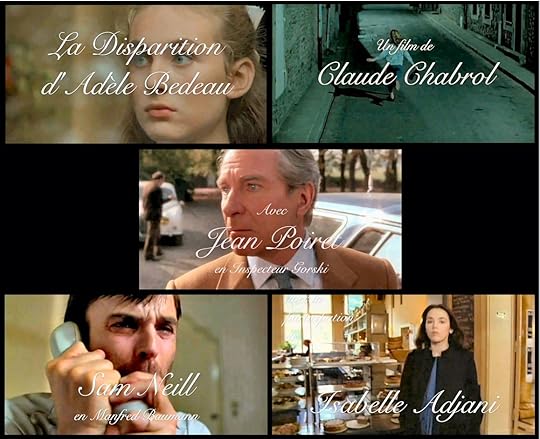
The DisappearanceWhat? And more particularly, Why? If you think about it, Raymond Brunet is a pretty obvious pseudonym for Macrae Burnet. But he goes much further. His "Translator's Afterword" is a four-page biography of the supposed author, whose life has much in common with that of Manfred Baumann in the novel. He is supposed to have lived in the town where the novel is set, Saint-Louis, a real community on the Rhine, facing the border with Germany and Switzerland on the opposite bank, and depicted in absolute detail in the novel; you can even follow the characters' movements with a street plan. But there is even more. Macrae Burnet says that "Brunet's" book, after its inauspicious French publication in 1982, achieved the status of a cult classic with the success of the screen version by Claude Chabrol in 1989. And, if you look online, you can even find a 90-second trailer for this movie, starring Isabel Adjani and Sam Neill. It is totally convincing, but neither Chabrol's filmography nor those of any of the actors supposedly involved list it. The film simply does not exist!
of Adèle Bedeau
by
Raymond Brunet
Translated and with an afterword
by Graeme Macrae Burnet