

What do you think?

The Names of Things
Susan Brind Morrow takes readers from her magical and sometimes troubled childhood in New York State, to the austere splendors of the Egyptian desert. Written with a keen understanding of language, Brind Morrow traces the routes of ideas and images through word origins and time, bringing forth an inner life of words.
230 pages, Paperback
First published January 1, 1997
Ratings & Reviews
Friends & Following
Create a free account to discover what your friends think of this book!
Community Reviews
Displaying 1 - 30 of 38 reviews
December 22, 2007
An interesting read that weaves the study of language, egypt and hieroglyphics with personal narrative. I found it to be OK ... for me, the highlight is on pages 5 & 6:
"The flamingo is the hieroglyph for red. All red things: anger, blood, the desert are spelled with the flamingo. The Red Sea Hills are mostly red. The red rock is vibrant in the changing light.
Near here are lavender mountains with cranberry cliffs. Silver and blue and green wadis wind around them. But the true red of the Eastern Desert, the red of Wadi Baramia, of Nugrus, is an intense color, harboring little plant life except the sweet-smelling selim that grows straight up in branches from the ground making the best walking sticks. It is a painful color, harsh to the eyes.
Flamingo, flaming. In Greek its name is phoenicopteros, phoenix, with feathers of fire. The riddle extends: the delicate, breakable flamingos breed on ash cones in the evaporate bed of Lake Natron in Central Africa. The new birds arise from the ashes. Fee waqt el mattar, in the time of rain, they arrive in the thousands. Last February there were twenty thousand flamingos on Lake Bardawil in North Sinai.
Red and green define the environmental extremes of Egypt. The desert is red. The sea is the great green. The sweet sea, the Nile, was once clotted with papyrus, thriving, gigantic, mobile, filled with animal and bird life, as it is today only in the Sudd, the great marsh in South Sudan. In Egypt the plant no longer exists. It survives only in the hieroglyph for green."
###
I just think that's a brilliant piece of writing.
"The flamingo is the hieroglyph for red. All red things: anger, blood, the desert are spelled with the flamingo. The Red Sea Hills are mostly red. The red rock is vibrant in the changing light.
Near here are lavender mountains with cranberry cliffs. Silver and blue and green wadis wind around them. But the true red of the Eastern Desert, the red of Wadi Baramia, of Nugrus, is an intense color, harboring little plant life except the sweet-smelling selim that grows straight up in branches from the ground making the best walking sticks. It is a painful color, harsh to the eyes.
Flamingo, flaming. In Greek its name is phoenicopteros, phoenix, with feathers of fire. The riddle extends: the delicate, breakable flamingos breed on ash cones in the evaporate bed of Lake Natron in Central Africa. The new birds arise from the ashes. Fee waqt el mattar, in the time of rain, they arrive in the thousands. Last February there were twenty thousand flamingos on Lake Bardawil in North Sinai.
Red and green define the environmental extremes of Egypt. The desert is red. The sea is the great green. The sweet sea, the Nile, was once clotted with papyrus, thriving, gigantic, mobile, filled with animal and bird life, as it is today only in the Sudd, the great marsh in South Sudan. In Egypt the plant no longer exists. It survives only in the hieroglyph for green."
###
I just think that's a brilliant piece of writing.
March 7, 2008
This is one of my favorite books. I've often turned to Morrow's rich, lyrical language for solace or inspiration. This book is deeply spiritual, while also grounded fully in the landscapes Morrow loves: the Finger Lakes and Egypt. The book is also about language, and Morrow explores the natural history of words deep in Egypt's deserts. One reviewer criticized the book because, "Her prose is so lyrical that the book is more like reading poetry than anything else." To me, that's a plus, not a minus. Quote: "a name is a mirror to catch the soul of a thing, and a pun is the corner of its garment."

August 5, 2012

The strapline: A Passage in the Egyptian Desert.
Dedication: For Lanny
Four Sections:
Dead Lanuguage - You could begin with the crab that scratches in the sand. The name of the animal is the action or sound it makes, or its color.
page 21: Bale de bale kerulos eien
os t'epi kumatos anthos am' alkuoessi potetai
nedeed etor exon, aliporphuros iaros ornis
Would oh would I were a kingfisher that flies with the halcyons along the breaking waves, with a fearless heart, that holy bird, the deep blue of the sea.
From the papyrus which was discovered in 1855 at Saqqara by the French Egyptologist, Mariette, and is now in the Louvre.
Cairo 1989 - Cairo is UM A DUNYA, Mother of the World. Coming into the city, I am appalled at how chaotic it is.
Where the Cranes Landed - In Ramses Station the air is dense with noise, voices, movement, the heavy undercurrent throb of the engines of standing trains.
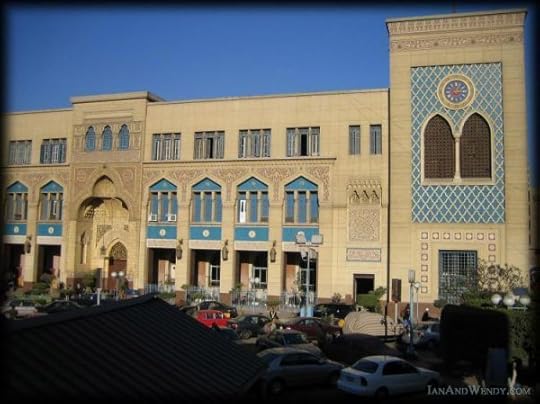
page 141: Southern Egypt is heavily Christian. The Copts fled to the south under Roman persecution and were isolated here, living in temples and desert caves. The language, the link to Ancient Egyptian with Greek influence, is still spoken in places, and Saidi, which the peasants speak, is full of Coptic words, fragments of the earliest language, often simply double sounds.
Gifts from the Sea - They have skin like Beni Adam but it is green, and they breathe like Beni Adam. Their eyes are gold. They fingers and hands. They live in sweet water. They come out after rain and they sing all night long.
June 8, 2011
This is one of those miraculous books that you scavange from the basement of the Uptown Booksmart. I'd never heard of Susan Brind Morrow before I found her book in the Egypt section, but now I think it's amazing that she doesn't have her own wikipedia page.
Not only is her memoir beautifully and lyrically written, full of vivid imagery, but Morrow is about the coolest damn person I can think of. Maybe even cooler than Kathy Acker. Linguist, Archeologist, Egyptologist, Translator, Writer - Morrow used all of these scholarly pursuits to finance her wanderings through Egypt, Sudan, and the African Red Sea coast.
Being that this is a memoir, I feel a little guilty that I was disappointed by the ending (where she leaves Egypt behind to settle in NY state with her husband). Presumably she is happy with her decision. But I'd like to think of her still out there, climbing the sand dunes, tracing the origins of some Arabic folk story, or hopping on the back of a ferry going south in pursuit of adventure.
Not only is her memoir beautifully and lyrically written, full of vivid imagery, but Morrow is about the coolest damn person I can think of. Maybe even cooler than Kathy Acker. Linguist, Archeologist, Egyptologist, Translator, Writer - Morrow used all of these scholarly pursuits to finance her wanderings through Egypt, Sudan, and the African Red Sea coast.
Being that this is a memoir, I feel a little guilty that I was disappointed by the ending (where she leaves Egypt behind to settle in NY state with her husband). Presumably she is happy with her decision. But I'd like to think of her still out there, climbing the sand dunes, tracing the origins of some Arabic folk story, or hopping on the back of a ferry going south in pursuit of adventure.

November 17, 2018
For an author writing about words, I thought I would like the style more. I just couldn’t get into it. It was hard to relate to as it was mostly personal tidbits from New York to vague observations of Egypt, written in a non-linear thought process.

July 25, 2011
I thoroughly enjoyed this book. Mrs. Brind Morrow took me on a beautiful journey I won't soon forget and inspired me to listen more closely to the land and the people next time I go a-traveling.

May 21, 2012
The quartz-flecked blue marble of the vine-crowned Coptic columns absorbed into the qiblah has been eaten by the air into waves.
Paint a thousand words. Scarlet birds. Sparkling sands. Rivers of green. Gold etched in bookbinding. Orange-bellied fish. Lemon-green dawn. Yellow jacinth, the six fabric of heaven.
Susan Brind Morrow takes her North American upbringing, including the loss of a close relative, and attaches herself to Egypt via her love of language. Whether it's Arabic, Latin, Greek, or western verse, her love of words comes through in every page, colouring a world that would be threatening to others. Crowded, stinking, polluted Cairo is the Eye of the Sun. The desert sleeps under peach cirrus clouds. The Milky Way is the Margar el Kabsh, 'the path of the sheep'.
Put me beneath the chariot of the too near sun in a land denied even of houses.
I am now learning Arabic.
Book Season = Summer (deny the desert)
Paint a thousand words. Scarlet birds. Sparkling sands. Rivers of green. Gold etched in bookbinding. Orange-bellied fish. Lemon-green dawn. Yellow jacinth, the six fabric of heaven.
Susan Brind Morrow takes her North American upbringing, including the loss of a close relative, and attaches herself to Egypt via her love of language. Whether it's Arabic, Latin, Greek, or western verse, her love of words comes through in every page, colouring a world that would be threatening to others. Crowded, stinking, polluted Cairo is the Eye of the Sun. The desert sleeps under peach cirrus clouds. The Milky Way is the Margar el Kabsh, 'the path of the sheep'.
Put me beneath the chariot of the too near sun in a land denied even of houses.
I am now learning Arabic.
Book Season = Summer (deny the desert)
January 8, 2024
The Names of Things has three qualities: wonderful prose, rich philosophy, and an entirely character-driven story (naturally). As a memoir, this book has the strength of showing us the fabric of the writer's deepest contemplations, while sometimes getting the stakes lost in the weave.
I have come to admire Susan Brind Morrow and her courage in her exploration of Egypt as well as its languages and animals. However, I feel this book would have been stronger (and perhaps more compelling for me) if it were simply a book of poetry.
I also found a few issues in the last third of the book: repeated adjectives, unclear sentences, and disjointed clauses, which indicates that perhaps the editor(s) allowed a few too many indulgences.
I have come to admire Susan Brind Morrow and her courage in her exploration of Egypt as well as its languages and animals. However, I feel this book would have been stronger (and perhaps more compelling for me) if it were simply a book of poetry.
I also found a few issues in the last third of the book: repeated adjectives, unclear sentences, and disjointed clauses, which indicates that perhaps the editor(s) allowed a few too many indulgences.

October 2, 2010
It's been awhile since I've read this but after reading it the first time I have gone back and reread sections. I agree with Brian's review that the section on pages five and six on "red" is great writing. It's a book that is often on my night stand because it's a book that after you've read it once you can pick up and open to just about any page and enjoy the writing. Ms. Morrow, you must write more.
I've also read "Wolves and Honey" but had to get it from the library. I always check the shelves of used bookstores for Wolves and Honey when I in them. I want to own it for the same reason I keep The Names of Things on the night stand.
I've also read "Wolves and Honey" but had to get it from the library. I always check the shelves of used bookstores for Wolves and Honey when I in them. I want to own it for the same reason I keep The Names of Things on the night stand.

October 21, 2020
Written about the author's life and the beginning of her career, Susan Brind Morrow's first book follows a path through time and across geographies. The book is tied together with the threads of her scholarship and curiosity - she conveys the sense that she is trekking across deserts, tracking down Egyptian words, inhospitable tribes or mystical cities mentioned in their poetry.
Along the way, are lessons sprinkled in about hieroglyphics, their history and structure. Also, much about the history of the area, its people and geographies. It's easy to keep reading, even as it sometimes jumps about in time, place and subject matter, because the language is picturesque and poetic.
In all of the travels described, Morrow was accompanied by men. She recounts a story where she is mocked by the matriarch of the family she's staying with, who dresses as a man, talks in a deep voice and uncharacteristically joins the circle of men where Morrow is sitting, in "men's clothes," smoking and enjoying the ritual of coffee making.
She mentions early on that she is never invited into the circle of women. It wasn't until the Epilogue that the author explained one of her reasons for writing the book was to demonstrate that women were safe traveling in the Middle East alone. It seems odd that she would strike a blow for women's independence and autonomy in pursuing scholarship on the one hand, and remain completely indifferent to the women of the tribes she was seeking out to learn from. Definitely a fascinating woman who went on to great achievements in her field. I already have begun another book of hers, The Dawning Moon of the Mind.
Along the way, are lessons sprinkled in about hieroglyphics, their history and structure. Also, much about the history of the area, its people and geographies. It's easy to keep reading, even as it sometimes jumps about in time, place and subject matter, because the language is picturesque and poetic.
In all of the travels described, Morrow was accompanied by men. She recounts a story where she is mocked by the matriarch of the family she's staying with, who dresses as a man, talks in a deep voice and uncharacteristically joins the circle of men where Morrow is sitting, in "men's clothes," smoking and enjoying the ritual of coffee making.
She mentions early on that she is never invited into the circle of women. It wasn't until the Epilogue that the author explained one of her reasons for writing the book was to demonstrate that women were safe traveling in the Middle East alone. It seems odd that she would strike a blow for women's independence and autonomy in pursuing scholarship on the one hand, and remain completely indifferent to the women of the tribes she was seeking out to learn from. Definitely a fascinating woman who went on to great achievements in her field. I already have begun another book of hers, The Dawning Moon of the Mind.

April 24, 2008
I'm not quite done with this, but I'm going to review it anyway. It's a fascinating book by a writer who really knows words from all sides. Brind Morrow weaves together her memoir, her experiences travelling in Egypt, and etymologies of words in Arabic, ancient Greek, and other Mediterranean/Middle Eastern languages, ancient and modern. The book doesn't quite have enough forward momentum to make you pick it up again once you set it down - at least if you have a busy life like I do - and it really isn't appropriate for the subway as the words on the page deserve your full immersion (though I solved this problem by putting Cuban piano music, no lyrics, on my iPod). Nevertheless, when you're immersed in it, it's a miraculous book... it brings alive places, people, and the natural world in Egypt, makes you want to travel there and, really, everywhere, and inspired me, once again, to marvel at how languages are linked, and through them, ideas, events, history. I can't think of a better advertisement for learning hieroglyphs, Greek, Arabic, Latin... perhaps Turkish and Farsi, too... and a half-dozen tribal languages.

April 6, 2008
This is an unusual read. Morrow is a linguist with an interest in the nature-based origin of ancient Egyptian words and hieroglyphs. She loves Egypt and its people, no matter their poverty and superstition. This narrative mixes her life, family memories, and observations of beauty with her travels and studies. The result is quite interesting. Oddly enough for someone interested in words, I found her sentence construction awkward and often difficult to follow; I guess its the poetry coming out.

August 23, 2017
This is a strange and wonderful book with very little discernible structure; I resisted the looseness of it for awhile but then came to love Morrow's mind and felt like I was sitting with her in her tent as the sand blew in and as she was letting go of any permanence in her understanding of refuge. I love most her evocation of the Egyptian desert and those who live there; she writes through a lens of love.
I love many sentence structures, like a note-taking structure on 87:
“The ritual of arriving in Egypt: excavating a space in the decay of an old magnificent thing.”
And these etymological passages:
34: “And there was the joy in discovering word cores, the threads that run throughout language, as in mut, both mother and death, and dwa, dawn.
Dwa is a picture of a star, a burst of light. Beside it in one common configuration is a human figure with hands raised in prayer. This was often translated into English as ‘Thank God.’ But it could not really be translated, I thought. It was too simple. The picture of a star, signifying this same word, was stamped all over temple and tomb ceilings as though it were a mantra.”
4: “Words begin as description. They are prismatic, vehicles of hidden, deeper shades of thought. You can hold them up at different angles until the light bursts through in an unexpected color. The word carries the living thing concealed across millennia.”
For those who teach, pp199-200 details the making of coffee in the desert (beginning with picking the beans)– great example of slowing down a task.
I love many sentence structures, like a note-taking structure on 87:
“The ritual of arriving in Egypt: excavating a space in the decay of an old magnificent thing.”
And these etymological passages:
34: “And there was the joy in discovering word cores, the threads that run throughout language, as in mut, both mother and death, and dwa, dawn.
Dwa is a picture of a star, a burst of light. Beside it in one common configuration is a human figure with hands raised in prayer. This was often translated into English as ‘Thank God.’ But it could not really be translated, I thought. It was too simple. The picture of a star, signifying this same word, was stamped all over temple and tomb ceilings as though it were a mantra.”
4: “Words begin as description. They are prismatic, vehicles of hidden, deeper shades of thought. You can hold them up at different angles until the light bursts through in an unexpected color. The word carries the living thing concealed across millennia.”
For those who teach, pp199-200 details the making of coffee in the desert (beginning with picking the beans)– great example of slowing down a task.

August 14, 2017
This book is a marvel. It is simultaneously a travelogue, a woman's memoir, an exploration of language, and more. The author is intensely visual in her descriptions of the creatures and nature in her surroundings as she explores the reaches and peoples and culture of Egypt. One gets a sense of an extraordinary generosity of spirit in the people she interacts with in her journey through a very exotic land.
There is an intensity in this book which is hard to get a handle on. I could only read this in fairly short stretches - there was a strangeness, as well as a 'freshness', to the descriptions she provides of her experiences. After reading for a short while, it often felt necessary to me to step back to absorb some of what I had read.
There is an intensity in this book which is hard to get a handle on. I could only read this in fairly short stretches - there was a strangeness, as well as a 'freshness', to the descriptions she provides of her experiences. After reading for a short while, it often felt necessary to me to step back to absorb some of what I had read.
February 7, 2019
The Names of Things: A passage in the Egyption Desert *** Susan Brind Morrow is a poet, linguist, and Egyptophile. She decodes hieroglyphics. Visual, peaceful, intellectually stimulating, informative. Fun to follow her journey.

March 22, 2018
Beautifully descriptive.

November 29, 2021
A beautifully written book about a place I've experienced or read very little about. Really makes me want to experience the chaos of Cairo and the beauty of the desert.

February 19, 2022
One of the most exceptional reads ever.

October 14, 2022
A beautiful, compelling, read set in beautiful, compelling places. Hardship runs like a vein throughout this marbled landscape. I'm grateful to have stumbled across this book!
April 28, 2026
Beautiful writing, in the way no-one writes now. There's nothing about the origins of words, or nearly nothing. This is travel writing but of the highest order and the focus is on the desert.
July 10, 2008
A small and absorbing meditatively paced memoir of one woman’s travel adventures from New York City to the deserts of Egypt and Sudan in search of “the birth of language”. Living with nomads, navigating the harsh terrain and many obstacles, what emerges, more than travel writing, is the experience of the world through the eyes of a linguist and naturalist. A contemporary mid-eastern Walden. Anyone who loves language will be drawn in by Morrow’s spare poetic style and observations rooted in a background as a classicist and translator of Arabic poetry and Egyptian folktales. Recommended for a unique perspective of the middle east, for the curious and for reflection.
August 31, 2007
This woman, Susan Brind Morrow. Wow, she is amazing. This book is amazing. I don't know who recommended this book, Mary Matto? Ana? It's beautifully written and can reach you on many levels. For me, I am most enjoying reading about this woman's connection to people she meets in Egypt, Sudan through the many many times she has lived there and also through her own healing process. It makes me ache. She's also a super smarty pants. William Safire gave this book a 'an etymological wonderment' which is wow-ee for words in smart guy language. Can't beat that.

May 17, 2007
Brind Morrow will tell you what a word is worth. She knows, because she's a world-class etymologist and a person deeply enough in love with life to attempt to wrestle it down and stuff it into the pages of a memoir about journalism, relationships, and the natural world of Cairo. The less said about this book, the better, because her language feels older and deeper than the ocean, and as hard to contain.

December 30, 2016
Fascinating; lyrical and unpredictable account of the author's travels in Egypt, mostly in deserts. Unclassifiable. Erudite, thoughtful, evocative, sensitive, and amusing, all at the same time, somehow. Ruminations and reflections on her life, past and present, almost make this a memoir more than a travelogue. It made me remember my visits in Egypt and Sudan, especially the gentle warmth of the people, once they trust you, and the lilt of Arabic.
September 19, 2012
I absolutely loved this book. Although I've never been to Egypt, Susan Brind Morrow made me feel as though I was there with her. Her words paint pictures of what life was like in Egypt in the 1980's. Her descriptions of the landscape and people are beautfilly written. A fascinating insight into another culure.

October 25, 2007
Gorgeous memoir about etymology and the desert peoples of Egypt and Sudan. One of my absolute favorite books.

March 14, 2008
I enjoyed this book immensely. A wonderful gift from a friend just before a family trip to Egypt and some journies across the deserts described here.
February 3, 2009
A charming and inventive book, part travelogue, part etymology, exploring the northeastern parts of Africa—Egypt, Somalia, etc.
July 6, 2012
Kept trying but just couldn't get seem to through this book. Finally gave up. Guess the writing style just wasn't my cup of tea.

February 1, 2013
A little book that is much bigger than you expect it to be: rich with respect for language, sensual pleasure taking in beauty of the natural world, savory of the kindness of north Africans.
Displaying 1 - 30 of 38 reviews