

What do you think?

Gandhi #2
Gandhi: The Years That Changed the World
Gandhi lived one of the great 20th-century lives. He inspired and enraged, challenged and delighted many million men and women around the world. He lived almost entirely in the shadow of the British Raj, which for much of his life seemed a permanent fact, but which he did more than anyone else to destroy, using revolutionary and inspirational tactics. In a world defined by violence on a scale never imagined before and by ferocious Fascist and Communist dictatorship, he was armed with nothing more than his arguments and example.
This magnificent book tells the story of Gandhi's life, from his departure from South Africa to his assassination in 1948. It is a book with a Tolstoyan sweep, both allowing us to see Gandhi as he was understood by his contemporaries and the vast, unbelievably varied Indian societies and landscapes which he travelled through and changed beyond measure. Drawing on many new sources and animated by its author's wonderful sense of drama and politics, the publication of Gandhi is a major event.
This magnificent book tells the story of Gandhi's life, from his departure from South Africa to his assassination in 1948. It is a book with a Tolstoyan sweep, both allowing us to see Gandhi as he was understood by his contemporaries and the vast, unbelievably varied Indian societies and landscapes which he travelled through and changed beyond measure. Drawing on many new sources and animated by its author's wonderful sense of drama and politics, the publication of Gandhi is a major event.
1152 pages, Hardcover
First published October 2, 2018
About the author
Ramachandra Guha
115 books1,650 followersRamachandra Guha was born in Dehradun in 1958, and educated in Delhi and Calcutta. He has taught at the University of Oslo, Stanford, and Yale, and at the Indian Institute of Science. He has been a Fellow of the Wissenschaftskolleg zu Berlin, and also served as the Indo-American Community Chair Visiting Professor at the University of California at Berkeley.
After a peripatetic academic career, with five jobs in ten years on three continents, Guha settled down to become a full-time writer based in Bangalore. His books cover a wide range of themes, including a global history of environmentalism, a biography of an anthropologist-activist, a social history of Indian cricket, and a social history of Himalayan peasants.
Guha’s books and essays have been translated into more than twenty languages. The prizes they have won include the U.K. Cricket Society’s Literary Award and the Leopold-Hidy Prize of the American Society of Environmental History.
After a peripatetic academic career, with five jobs in ten years on three continents, Guha settled down to become a full-time writer based in Bangalore. His books cover a wide range of themes, including a global history of environmentalism, a biography of an anthropologist-activist, a social history of Indian cricket, and a social history of Himalayan peasants.
Guha’s books and essays have been translated into more than twenty languages. The prizes they have won include the U.K. Cricket Society’s Literary Award and the Leopold-Hidy Prize of the American Society of Environmental History.
Ratings & Reviews
Friends & Following
Create a free account to discover what your friends think of this book!
Community Reviews
Displaying 1 - 30 of 140 reviews

February 18, 2019
I can't compare this book to the multitude of other biographies written on Gandhi as it is my first. At almost 900 pages of text and over 200 pages of ancillary material it stands as a monument for the ages. Ramachandra Guha is arguably one of the more important Indian historians of his generation in the estimation of many. Guha has combed through the massive volumes of Gandhi's writings, endless archives and newly available papers. His aim was no less than to document all of Gandhi's life from his return to India in 1914 to his death in 1948.
Gandhi's four objectives were to gain Indian independence, promote Hindu-Muslim unity, end untouchability, and achieve economic self reliance. To reach these goals Gandhi staged highly effective forms of political protest such as his march to the sea (in defiance of the British salt tax) and famed fasts (to stop interfaith violence). In the end foreign rule was overcome but he was unable to prevent the mass killings and partition of the subcontinent. His assassination by Hindu nationalist Nathuram Godse would foretell of future troubles.
Guha is an unabashed admirer of Gandhi if not entirely uncritical of all he did. He sees Gandhi as the foremost figure in modern Indian history and a highly influential figure across the world stage. This is not a difficult argument to make and Guha does it with great conviction. The writing is fluid and unhindered by an overly academic style. The most obvious critique of his analysis is the representation of Gandhi as a liberal or even a radical. Gandhi was a reformer in many areas but he was often guided by his conservative values and religious beliefs.
Gandhi's rejection of western industrialism and embrace of agrarian decentralization now seem quaint and rooted in the 19th century. He was greatly influenced by Tolstoy's faith-based pacifism, anti-colonialism and opposition to private land ownership. Homespun cloth and village councils were a challenge to British economic and political repression but it would not be the way of the future. In the debate with B. R. Ambedkar over the untouchables Guha makes a different case than Arundhati Roy, who sees Gandhi as a reactionary on caste issues.
Guha covers Gandhi's private life also, although somewhat superficially. In terms of an interesting psychological subject Gandhi ranks near the top. Oddly he appears to be only two dimensional and conventional in this portrait. Guha doesn't shy away from the controversial aspects of Gandhi's celibacy experiments such as sleeping naked with teenage relatives to test his purity. With a purported extramarital dalliance with feminist Saraladevi Chaudhurani Guha concludes nothing untoward occurred. Gandhi, both man and milieu, seem distant and difficult to fathom.
Ultimately this book could have benefited from a shorter format and a more incisive look at Gandhi the politician. Guha proposes Gandhi as an antidote to the fundamentalism and intolerance that has challenged India since the birth of the republic. In doing so he sacrifices a level of insight into the traditionalist worldview Gandhi used to mobilize the rural masses. Although Guha notes the urban and middle class makeup of other nationalist and revolutionary groups he doesn't see this as a significant lens to examine the social context of Gandhi's movement.
Gandhi's four objectives were to gain Indian independence, promote Hindu-Muslim unity, end untouchability, and achieve economic self reliance. To reach these goals Gandhi staged highly effective forms of political protest such as his march to the sea (in defiance of the British salt tax) and famed fasts (to stop interfaith violence). In the end foreign rule was overcome but he was unable to prevent the mass killings and partition of the subcontinent. His assassination by Hindu nationalist Nathuram Godse would foretell of future troubles.
Guha is an unabashed admirer of Gandhi if not entirely uncritical of all he did. He sees Gandhi as the foremost figure in modern Indian history and a highly influential figure across the world stage. This is not a difficult argument to make and Guha does it with great conviction. The writing is fluid and unhindered by an overly academic style. The most obvious critique of his analysis is the representation of Gandhi as a liberal or even a radical. Gandhi was a reformer in many areas but he was often guided by his conservative values and religious beliefs.
Gandhi's rejection of western industrialism and embrace of agrarian decentralization now seem quaint and rooted in the 19th century. He was greatly influenced by Tolstoy's faith-based pacifism, anti-colonialism and opposition to private land ownership. Homespun cloth and village councils were a challenge to British economic and political repression but it would not be the way of the future. In the debate with B. R. Ambedkar over the untouchables Guha makes a different case than Arundhati Roy, who sees Gandhi as a reactionary on caste issues.
Guha covers Gandhi's private life also, although somewhat superficially. In terms of an interesting psychological subject Gandhi ranks near the top. Oddly he appears to be only two dimensional and conventional in this portrait. Guha doesn't shy away from the controversial aspects of Gandhi's celibacy experiments such as sleeping naked with teenage relatives to test his purity. With a purported extramarital dalliance with feminist Saraladevi Chaudhurani Guha concludes nothing untoward occurred. Gandhi, both man and milieu, seem distant and difficult to fathom.
Ultimately this book could have benefited from a shorter format and a more incisive look at Gandhi the politician. Guha proposes Gandhi as an antidote to the fundamentalism and intolerance that has challenged India since the birth of the republic. In doing so he sacrifices a level of insight into the traditionalist worldview Gandhi used to mobilize the rural masses. Although Guha notes the urban and middle class makeup of other nationalist and revolutionary groups he doesn't see this as a significant lens to examine the social context of Gandhi's movement.

December 5, 2019
George Orwell said that saints should always be judged guilty until proven innocent. There have been any number of people and agencies which have readily judged Mahatma Gandhi guilty based on what they chose to focus on in his vivid life. His patriarchal nature, coercion through fasts, and deep involvement in politics are used to denounce him as just another 'crafty, controlling old man.' I belong to the other side, which chooses to view him as a 'saint.' I am amazed by his undying adherence to pacifism, his love for the environment through simplicity in his approach to life, monumental efforts towards Hindu-Muslim amity in India, and tireless pursuit of the eradication of untouchability in Hindu society. His application of the method of Satyagraha as a tool of civil disobedience showed the world how to confront an enemy without hurting him or arousing hatred.
In this second and final volume of his 'magnum opus' on Gandhi, Dr. Guha traces the last thirty-three years of Gandhi's life. He writes as a historian and without judgment. It covers Gandhi's controversial actions on the Khilafat movement, his elevation of the struggle against untouchability above that of the independence struggle, leading the Congress party to a stunning victory in all the Muslim-dominated provinces in the 1936 elections, his dramatic fast to end Hindu-Muslim violence in 1947 in Calcutta and many others. Gandhi's personal life was also very public, as he made no distinction between the two. Dr. Guha does not paper over Gandhi's hitherto-little-known 'spiritual love affair' with Sarladevi or his well-known experiments in celibacy or his obstructive interference in his son Manilal's desire to marry the woman he loved. It draws on a vast amount of archives, sources, letters to and from Gandhi, and his essays. It is a voluminous book of nearly a thousand pages, and I found the narrative gripping, detailed, evocative, and touching. The Gandhi that emerges is one who was kind, compassionate, stubborn, democratic, revolutionary, saintly, reformist, restless, visionary, narcissistic, patriarchal, inconsistent, and much more. This review would be too long if one touches on all these aspects. Hence, I shall focus on a few issues of interest.
Gandhi was passionate about India becoming independent. But two other questions were equally important to him, if not more. One was Hindu-Muslim unity, and the other was the riddance of untouchability from the hearts and minds of Hindus. Dr.Guha gives a fascinating account of how both these missions evolved and unraveled during the freedom struggle. As I neared the end of the book, I felt that, in spite of his Herculean efforts, as India approached independence in 1947, the vast majority of Muslims in India had turned away from him. The Muslim League leadership was positively hostile to him. It was evident in 1946 when Muslims in southern and western India voted the Muslim League to a big win in the reserved constituencies, even though they had little chance of being part of a new Muslim homeland carved out of India. The violent religious riots between Muslims and Hindus/Sikhs in 1947 pointed to Gandhi's message of love not making many inroads into the hearts and minds of Hindus and Muslims.
Similarly, the leadership of the Depressed Classes had turned decidedly anti-Gandhi even as early as the 1930s. They suspected Gandhi to be devious and supportive of upper-caste dominance in a free India. However, Dr. Guha's chronicle points clearly to evidence that the masses of the untouchables viewed Gandhi as their leader. They voted the Congress party to a massive victory in 1946 in the reserved constituencies for the Untouchables. Dr.Ambedkar's Scheduled Caste Forum barely won a couple of seats in the polls.
Reflecting on these two monumental missions, I felt that both these tasks are impossible to make significant inroads in a single lifetime for anyone. Gandhi stubbornly believed that he could accomplish both endeavors by appealing to the innate goodness in human beings. As a Hindu himself, he appealed to fellow-Hindus to show magnanimity towards Muslims. Gandhi wanted Hindus to reach out to Muslims even when they were victims of religious riots. He called for both communities to focus on their syncretic culture rather than the differences. But the ground reality on Hindu-Muslim relations was far from responding to such a liberal approach. Dr. Guha's description shows that the situation in the 1920s was sickeningly similar to what it is today in 2019. There were the same kind of militant Swamis and truculent Maulvis as we encounter today. Hindus objected to cow-slaughter and beef-eating, suspected evil designs in Muslim men marrying Hindu women and converting them to Islam. Arya Samaj leaders busied themselves in trying to bring 'converted Hindus' back into the Hindu fold. The Muslims matched them in sectarianism. For their part, Muslims complained about playing music or performing ceremonial rituals near the mosques. They got enraged over abusive pamphlets on the polygamous tendencies of the Prophet. Some objected to Gandhi quoting the Koran in his prayer meetings. The statues of Gandhi in their neighborhood also became unacceptable because it smacked of idol worship.
Gandhi, however, was too strong-willed and stubborn to be dissuaded in his approach. He refused to accept the fall-out from an India which has been living for millenniums in societies that segregated people by caste, religion, and class. A syncretic culture had indeed developed over centuries between Hindus and Muslims. But it failed to forge a deep understanding of each other's culture or religion in the minds of the masses of either community. Besides, the Muslim elite had felt since the 19th century that the Muslims were a 'separate nation.' They even believed that they were the legitimate heirs of India since the British won India from Muslim rulers. So, the Mahatma was up against formidable odds in his goals of Hindu-Muslim amity.
On Untouchability, Gandhi tried a similar approach by appealing to upper-caste Hindus to look deep into themselves and atone for what they have been doing to the Untouchables for millenniums. He fought for the entry of the depressed classes into temples and their rightful access to public spaces. However, Dr. Ambedkar, the leader of the Depressed Classes, fundamentally differed from Gandhi in his approach.
Both wanted the emancipation of the Depressed Classes. Ambedkar placed more faith in constitutional processes, in changes in the law while Gandhi saw more hope in social change, in the self-directed renewal of individuals and communities. Ambedkar emphasized the creation of more jobs for the untouchables. Gandhi wanted spiritual equality between Hindus of all castes. As one belonging to the upper castes, Gandhi felt a sense of guilt and a desire to make reparations. Ambedkar, belonging to the Depressed Classes himself, was animated by the drive to achieve a position of social equality and human dignity for his fellow members. More importantly, he wanted their struggle to be led by one from the Depressed Classes and not by an upper-caste individual like Gandhi.
Nevertheless, Ambedkar was far less graceful than Gandhi in their interactions. While Gandhi was always civil and understanding towards Dr.Ambedkar, the reverse wasn't the case. Dr. Ambedkar called Gandhi a man without vision, one without knowledge and judgment, and one who was a failure all his life. When Gandhi was assassinated, Ambedkar did not send any condolence message. A bit later, he wrote to a friend that some good will come out of the death of Gandhi and that it will release people from bondage to superman, make them think for themselves and compel them to stand on their own merits. Dr. Guha says that towards the end of his life, Gandhi was more willing to acknowledge the material roots of discrimination. Ambedkar, in turn, was beginning to appreciate that moral transformation might be as significant as legal reform.
Dr.Guha writes at length on Gandhi's evolution on the question of the emancipation of Indian women and his vision of a free India where the village would be the driving force. On the latter, he failed to convince his fellow Congressmen. Nehru was determined to shape India into an industrial state, based on science and technology. On Gandhi and the emancipation of women, the author makes some original observations. Gandhi's most significant relationship with a woman was that of his wife, Kasturba. He saw her initially as an object of lust and later demanded that she follow him blindly in his activist and personal choices. Finally, he came to mature accommodation where they respected and loved one another. However, there was no denying that her life was dictated by his.
Over his thirty-three years in India, Dr.Guha says that Gandhi did a great deal to undermine gender hierarchies. He attacked the pernicious purdah system, which was practiced in both Hindu and Muslim households, particularly in northern India. He energetically promoted the education of girls in his ashram school and 'national' colleges. There was no gender division of labor in his ashrams. Men cooked and cleaned while women taught and spun the yarn. He actively worked to get Mrs. Sarojini Naidu elected as the president of the Congress in 1925, at a time when it was hard to see a woman heading the British Labor Party or the US Democrats. Women activists participated in large numbers in the Quit India, in Satyagrahas, other Congress movements, and Salt marches. Dr.Guha says that Gandhi would be considered conservative in modern days but says that he was progressive for his times. In comparison, Jinnah's Muslim League, Dr. Ambedkar's Scheduled Caste Federation, and Sastri's Indian Liberal Party had few active women. To take the analogy further, the author says that many more women joined the freedom struggle led by Gandhi than the movements led by Lenin, Mao, Ho Chi Minh, or Fidel Castro.
Gandhi's vision of a future India rested on the pillars of Hindu-Muslim amity, the abolition of untouchability, and a nation built on village-level self-sufficiency. Looking at the reasonably successful Reservation (affirmative action) programs for the Depressed Classes in independent India, we can say that Gandhi's fight for social justice in Hindu society has been partially successful. Hindu-Muslim tensions have largely remained even though southern Indian Muslims have prospered much better than their compatriots elsewhere in India. As for a village-centric Indian developmental model, one has to admit that it has been a non-starter.
Many would say that today's India is a far cry from what the Mahatma envisaged and that his dreams are in tatters. They are perhaps right.
But, as far as I am concerned, Gandhi's 'kingdom' may be in shambles, but he is still King!
In this second and final volume of his 'magnum opus' on Gandhi, Dr. Guha traces the last thirty-three years of Gandhi's life. He writes as a historian and without judgment. It covers Gandhi's controversial actions on the Khilafat movement, his elevation of the struggle against untouchability above that of the independence struggle, leading the Congress party to a stunning victory in all the Muslim-dominated provinces in the 1936 elections, his dramatic fast to end Hindu-Muslim violence in 1947 in Calcutta and many others. Gandhi's personal life was also very public, as he made no distinction between the two. Dr. Guha does not paper over Gandhi's hitherto-little-known 'spiritual love affair' with Sarladevi or his well-known experiments in celibacy or his obstructive interference in his son Manilal's desire to marry the woman he loved. It draws on a vast amount of archives, sources, letters to and from Gandhi, and his essays. It is a voluminous book of nearly a thousand pages, and I found the narrative gripping, detailed, evocative, and touching. The Gandhi that emerges is one who was kind, compassionate, stubborn, democratic, revolutionary, saintly, reformist, restless, visionary, narcissistic, patriarchal, inconsistent, and much more. This review would be too long if one touches on all these aspects. Hence, I shall focus on a few issues of interest.
Gandhi was passionate about India becoming independent. But two other questions were equally important to him, if not more. One was Hindu-Muslim unity, and the other was the riddance of untouchability from the hearts and minds of Hindus. Dr.Guha gives a fascinating account of how both these missions evolved and unraveled during the freedom struggle. As I neared the end of the book, I felt that, in spite of his Herculean efforts, as India approached independence in 1947, the vast majority of Muslims in India had turned away from him. The Muslim League leadership was positively hostile to him. It was evident in 1946 when Muslims in southern and western India voted the Muslim League to a big win in the reserved constituencies, even though they had little chance of being part of a new Muslim homeland carved out of India. The violent religious riots between Muslims and Hindus/Sikhs in 1947 pointed to Gandhi's message of love not making many inroads into the hearts and minds of Hindus and Muslims.
Similarly, the leadership of the Depressed Classes had turned decidedly anti-Gandhi even as early as the 1930s. They suspected Gandhi to be devious and supportive of upper-caste dominance in a free India. However, Dr. Guha's chronicle points clearly to evidence that the masses of the untouchables viewed Gandhi as their leader. They voted the Congress party to a massive victory in 1946 in the reserved constituencies for the Untouchables. Dr.Ambedkar's Scheduled Caste Forum barely won a couple of seats in the polls.
Reflecting on these two monumental missions, I felt that both these tasks are impossible to make significant inroads in a single lifetime for anyone. Gandhi stubbornly believed that he could accomplish both endeavors by appealing to the innate goodness in human beings. As a Hindu himself, he appealed to fellow-Hindus to show magnanimity towards Muslims. Gandhi wanted Hindus to reach out to Muslims even when they were victims of religious riots. He called for both communities to focus on their syncretic culture rather than the differences. But the ground reality on Hindu-Muslim relations was far from responding to such a liberal approach. Dr. Guha's description shows that the situation in the 1920s was sickeningly similar to what it is today in 2019. There were the same kind of militant Swamis and truculent Maulvis as we encounter today. Hindus objected to cow-slaughter and beef-eating, suspected evil designs in Muslim men marrying Hindu women and converting them to Islam. Arya Samaj leaders busied themselves in trying to bring 'converted Hindus' back into the Hindu fold. The Muslims matched them in sectarianism. For their part, Muslims complained about playing music or performing ceremonial rituals near the mosques. They got enraged over abusive pamphlets on the polygamous tendencies of the Prophet. Some objected to Gandhi quoting the Koran in his prayer meetings. The statues of Gandhi in their neighborhood also became unacceptable because it smacked of idol worship.
Gandhi, however, was too strong-willed and stubborn to be dissuaded in his approach. He refused to accept the fall-out from an India which has been living for millenniums in societies that segregated people by caste, religion, and class. A syncretic culture had indeed developed over centuries between Hindus and Muslims. But it failed to forge a deep understanding of each other's culture or religion in the minds of the masses of either community. Besides, the Muslim elite had felt since the 19th century that the Muslims were a 'separate nation.' They even believed that they were the legitimate heirs of India since the British won India from Muslim rulers. So, the Mahatma was up against formidable odds in his goals of Hindu-Muslim amity.
On Untouchability, Gandhi tried a similar approach by appealing to upper-caste Hindus to look deep into themselves and atone for what they have been doing to the Untouchables for millenniums. He fought for the entry of the depressed classes into temples and their rightful access to public spaces. However, Dr. Ambedkar, the leader of the Depressed Classes, fundamentally differed from Gandhi in his approach.
Both wanted the emancipation of the Depressed Classes. Ambedkar placed more faith in constitutional processes, in changes in the law while Gandhi saw more hope in social change, in the self-directed renewal of individuals and communities. Ambedkar emphasized the creation of more jobs for the untouchables. Gandhi wanted spiritual equality between Hindus of all castes. As one belonging to the upper castes, Gandhi felt a sense of guilt and a desire to make reparations. Ambedkar, belonging to the Depressed Classes himself, was animated by the drive to achieve a position of social equality and human dignity for his fellow members. More importantly, he wanted their struggle to be led by one from the Depressed Classes and not by an upper-caste individual like Gandhi.
Nevertheless, Ambedkar was far less graceful than Gandhi in their interactions. While Gandhi was always civil and understanding towards Dr.Ambedkar, the reverse wasn't the case. Dr. Ambedkar called Gandhi a man without vision, one without knowledge and judgment, and one who was a failure all his life. When Gandhi was assassinated, Ambedkar did not send any condolence message. A bit later, he wrote to a friend that some good will come out of the death of Gandhi and that it will release people from bondage to superman, make them think for themselves and compel them to stand on their own merits. Dr. Guha says that towards the end of his life, Gandhi was more willing to acknowledge the material roots of discrimination. Ambedkar, in turn, was beginning to appreciate that moral transformation might be as significant as legal reform.
Dr.Guha writes at length on Gandhi's evolution on the question of the emancipation of Indian women and his vision of a free India where the village would be the driving force. On the latter, he failed to convince his fellow Congressmen. Nehru was determined to shape India into an industrial state, based on science and technology. On Gandhi and the emancipation of women, the author makes some original observations. Gandhi's most significant relationship with a woman was that of his wife, Kasturba. He saw her initially as an object of lust and later demanded that she follow him blindly in his activist and personal choices. Finally, he came to mature accommodation where they respected and loved one another. However, there was no denying that her life was dictated by his.
Over his thirty-three years in India, Dr.Guha says that Gandhi did a great deal to undermine gender hierarchies. He attacked the pernicious purdah system, which was practiced in both Hindu and Muslim households, particularly in northern India. He energetically promoted the education of girls in his ashram school and 'national' colleges. There was no gender division of labor in his ashrams. Men cooked and cleaned while women taught and spun the yarn. He actively worked to get Mrs. Sarojini Naidu elected as the president of the Congress in 1925, at a time when it was hard to see a woman heading the British Labor Party or the US Democrats. Women activists participated in large numbers in the Quit India, in Satyagrahas, other Congress movements, and Salt marches. Dr.Guha says that Gandhi would be considered conservative in modern days but says that he was progressive for his times. In comparison, Jinnah's Muslim League, Dr. Ambedkar's Scheduled Caste Federation, and Sastri's Indian Liberal Party had few active women. To take the analogy further, the author says that many more women joined the freedom struggle led by Gandhi than the movements led by Lenin, Mao, Ho Chi Minh, or Fidel Castro.
Gandhi's vision of a future India rested on the pillars of Hindu-Muslim amity, the abolition of untouchability, and a nation built on village-level self-sufficiency. Looking at the reasonably successful Reservation (affirmative action) programs for the Depressed Classes in independent India, we can say that Gandhi's fight for social justice in Hindu society has been partially successful. Hindu-Muslim tensions have largely remained even though southern Indian Muslims have prospered much better than their compatriots elsewhere in India. As for a village-centric Indian developmental model, one has to admit that it has been a non-starter.
Many would say that today's India is a far cry from what the Mahatma envisaged and that his dreams are in tatters. They are perhaps right.
But, as far as I am concerned, Gandhi's 'kingdom' may be in shambles, but he is still King!

September 4, 2018
“On Gandhi: Don’t ever forget, that we were not lead by a saint with his head in clouds, but by a master tactician with his feet on the ground."― Shashi Tharoor
"I and others may be revolutionaries but we are disciples of Mahatma Gandhi, directly or indirectly, nothing more nothing less." Ho Chi Minh
“Gandhi was inevitable. If humanity is to progress, Gandhi is inescapable. He lived, thought and acted, inspired by the vision of humanity evolving toward a world of peace and harmony. We may ignore Gandhi at our own risk.” — Martin Luther King Jr.
How can people with such different personalities and moral views all praise Gandhi? How can Ho Chi Minh murderer of nearly 3 million people and MLK Jr. who believed in peaceful protest both honor and respect Gandhi?
Ramachandra Guha is a serious Gandhi biographer. He has split the biography into 2 parts and either can be read independently as Gandhi basically led two lives, one in South African and one on his return to India. Gandhi 1914-1948: The Years That Changed the World, deals with his life after returning to India.
In the West we were told that Gandhi was a great man, who did great things, and it was all done with peaceful protest. That is such a simplistic and naive view. Gandhi 1914-1948: The Years That Changed the World goes in depth to who Gandhi was, what he believed, why he believed it, and his reactions to the world around him. He wasn't loved and idolized by everyone, including his own children. He was idealistic, and sometimes quite hard core in his moral ethos. Did the ends justify the means? India is struggling today with that question. Delve into this book and decide for yourself as you learn who Gandhi truly was.
"I and others may be revolutionaries but we are disciples of Mahatma Gandhi, directly or indirectly, nothing more nothing less." Ho Chi Minh
“Gandhi was inevitable. If humanity is to progress, Gandhi is inescapable. He lived, thought and acted, inspired by the vision of humanity evolving toward a world of peace and harmony. We may ignore Gandhi at our own risk.” — Martin Luther King Jr.
How can people with such different personalities and moral views all praise Gandhi? How can Ho Chi Minh murderer of nearly 3 million people and MLK Jr. who believed in peaceful protest both honor and respect Gandhi?
Ramachandra Guha is a serious Gandhi biographer. He has split the biography into 2 parts and either can be read independently as Gandhi basically led two lives, one in South African and one on his return to India. Gandhi 1914-1948: The Years That Changed the World, deals with his life after returning to India.
In the West we were told that Gandhi was a great man, who did great things, and it was all done with peaceful protest. That is such a simplistic and naive view. Gandhi 1914-1948: The Years That Changed the World goes in depth to who Gandhi was, what he believed, why he believed it, and his reactions to the world around him. He wasn't loved and idolized by everyone, including his own children. He was idealistic, and sometimes quite hard core in his moral ethos. Did the ends justify the means? India is struggling today with that question. Delve into this book and decide for yourself as you learn who Gandhi truly was.

October 2, 2018
In the long first half of the 20th Century, when mainstream political practice in the West lagged far behind their own enlightened thought and imperial ambitions still reigned, it is not surprising - in hindsight - that the great powers of the time hadn’t realized the harm they could inflict on one another thanks to newly available technological means. It took two World Wars and their associated damage to move past naked imperialism into a new regime. Whenever one reads accounts of that era, those of us who’ve only seen more peaceful, democratic times may find it hard to comprehend what leaders of the time were thinking when they embarked on some their more foolish ventures.
Being a colony of England, India wasn’t immune to these global currents and had to negotiate them while it was simultaneously trying to imbibe the best of these Western ideas into its lived experience. Therefore it’s not entirely inappropriate that such a bewildering age threw up an equally bewildering - but great - man like Gandhi. Albert Einstein’s famous tribute to him - that generations to come will scarce believe that such as a man as this walked upon the earth - shall remain true because Gandhi had dedicated himself entirely to resolving the great contradictions of his time, in the process devising extremely unorthodox approaches that miraculously seemed apt and had their desired effect. A true sui generis.
Thus, a first step to appreciating Gandhi is to engage with his life and ideas in their full diversity and not try to box him into categories of the 21st Century like politician, academic, activist, spiritual guru and so on. I am happy to report that Guha’s new book, “Gandhi - the years that changed the world” succeeds in helping the reader do that. As Gandhi himself writes somewhere, he wants his life to be viewed as an indivisible whole, and the various problems he applied himself to sprang from his lifelong quest for truth. Gandhi was no static ideologue either, and his positions on issues changed during his long life of political and social activism. Even though the changes were incremental, over fifty-odd years they add up to a dramatic degree. At the same time, Guha is a sensitive historian. So you get to see Gandhi’s warts, missteps and mistakes in sufficient detail too.
Which were the problems that animated Gandhi? India’s political independence being the most well known, the others were: Hindu-Muslim harmony, the abolition of untouchability, and economic self-reliance (especially at the village level). Gandhi claimed that he wouldn’t prize any of these over the other, and thus in this biography you see that he works on all of them throughout his lifetime, often concurrently.
His efforts in the freedom struggle start alongside the First World War, when he joins the Muslims of India in trying to keep the Ottoman Empire intact. By the time the Second World War kicks off thirty years later, Gandhi has become the preeminent leader in this struggle and has launched many political movements in the interim. This part of the book describes well known events like the Jallianwala Bagh massacre, the non-cooperation movement, the Dandi march, the Round Table conference(s) in London, the Quit India movement, his repeated imprisonments and so on. His non-violent approach enables great masses of people across the country to participate. Guha adds sufficient context to these events and intersperses them with the other problems Gandhi is working on, so you find a new appreciation for his abilities. But don’t mistake this for a record of the overall freedom movement itself, as that’d need to cover far more than just what Gandhi was doing.
What is striking about his political life is how Gandhi keeps his personal relationships with British officials separate from his political differences with them. Another aspect is that he’d always give them sufficient notice of any agitation he planned to undertake. He’d build up anticipation among his supporters and gradually escalate the intensity of his actions until the opponent is forced to react. The Dandi March is a perfect example of this - and of his political acumen in general. Guha’s account of how this march came to be is one of the highlights of the book. Where Gandhi damages his relationship with the British irretrievably is, perhaps, the Quit India movement that came at a time when Britain was fighting for its own survival during the Second World War. A contradiction of British ideal and practice that was far too pertinent for Gandhi and other Indian leaders to ignore, but their objections were going to lead to unavoidable tragedy a few years later.
The distressing, tragic event that slowly unfolds is of course, the partition of India along religious lines. One follows this thread with a sense of dread, knowing full well that all of Gandhi’s efforts are going to be in vain. How Jinnah managed to muster so much popular support in a relatively brief period is not something Guha explores in depth and would make for fascinating reading. But by the end of the Second World War, it is his party (the Muslim League) which has won most of the seats reserved for Muslims in elections conducted by the British (for the quasi-democratic set up they have created in India). The Congress valiantly claims to represent all Indians, but is rebuffed by both Jinnah and the British - who are probably still smarting from the Quit India movement. Gandhi’s desperate pleas to prevent Partition, his long series of one-on-one talks with Jinnah, and then his fasts to bring back communal harmony after rampant violence in Calcutta, Bihar, Punjab and even Delhi make for poignant reading. There are some references to the RSS and Hindu Mahasabha here. They mirrored - and probably exceeded - Jinnah in conceiving India to be for Hindus alone - an idea so repulsive and outlandishly impractical that it shouldn’t have survived a minute of rational discussion. A moral exists here for us today: to not take social harmony for granted in a country where religious passions run high and rifts take decades to heal. It took someone with Gandhi’s moral authority having to nearly starve himself to death before people came to their senses in the aftermath of Partition.
The one area where I learnt much was Gandhi’s efforts to abolish untouchability. I was not aware that he spent years dedicated exclusively to this task, and travelled around the country giving speeches and raising money for the cause. Again, it’s incomprehensible to us today that people of many castes were not even allowed in many prominent Hindu temples (like the one in Madurai or Guruvayur), not allowed to use the same wells and so on. This is also where Gandhi was clearly the reactionary for a better part of his life, the tone always being set by the precocious Ambedkar. The younger leader - and erudite scholar - had experienced first hand the atrocities of being an untouchable and was in a tearing hurry to rid India of it, and was not averse to throwing out Hinduism altogether if it came in the way of his mission. The lifelong battle of political wills between Gandhi and Ambedkar is quite famous (and historically significant), and receives ample treatment in the book. You see Gandhi move from being a defender of the caste system to becoming a paternalistic advocate of change, to finally accepting that there is no reason for Indians to not marry each other citing caste (and religion) as barrier. Whether the primacy he affords to this problem was deserved is something one doesn’t know, if one were to view his entire life as a preamble to the 15th of August, 1947 as many of us are wont to do. But for someone in his position - who of course had no idea when the British would actually vacate India - this glaring blot in India’s society was not something he could ignore, and there is something so organic and appealing about his approach to the world. While no civilized society should tolerate even a single instance of such a practice, I’d have liked the historian in Guha to provide more data. How widespread was the problem? How many people were classified as untouchables? This would inform the reader about the scale of the problem Gandhi and other social reformers of the time were dealing with. What we do learn is that while Ambedkar was a genuine radical, Gandhi was progressive compared to the bulk of the Hindu establishment, which had no interest in removing this barbaric practice.
Of course, the place where his immersive, organic approach to problem solving found the fullest expression was in the various communes - or “Ashrams” - he created. Having already practiced such communal living in South Africa where he could practice the change that he wanted to preach, he kept pushing his experiments in India further. In these ashrams there was no discrimination on caste, religion or gender. Responsibilities were shared equally. Here Gandhi was always engaged in that other - quaint? - quest, namely village self-reliance. People who lived in the Ashram were required to wear khadi and spin yarn. Gandhi’s idea of self sufficient villages that work on the back of cottage industries never made sense to me, and it is a mystery to me why he wasn’t disabused of this notion by his numerous friends. Nehru, with his fixation on large scale industry and progress based on science and technology, argued with Gandhi on this, but apparently not enough to talk him out of it I guess. Another intriguing question is how Gandhi managed to maintain the friendship and patronage of big industrialists like G D Birla and Jamnalal Bajaj while being engaged in these experiments. What did they have to say about all this?
It is also in these ashrams that Gandhi keeps trying his dietary experiments, his experiments in alternative medicines etc. Apart from publishing on political and social topics in his long running journals, Gandhi also corresponds with people across the world on all kinds of topics, often giving them advice on specific aspects of their personal lives. Guha takes occasional breaks from larger themes to talk about these, so that we see how unusual this makes him compared to any other political leader of his time.
There are also the bizarre experiments regarding celibacy which would have ended the public life of greater men in today’s era (or maybe not?). Guha doesn’t shy away from discussing these, but places them in their proper context and significance in the larger scheme of how Gandhi goes about his life. There is a credible account of the one romantic entanglement he got into that nearly threatened his marriage. The woman involved was called Sarala Devi Chaudhurani. She was a well educated relative of Tagore and was married to a journalist in Punjab.
Though the book doesn’t make a big deal of it, you can’t help notice that Gandhi surrounded himself with people of intellect and industry. Apart from prominent political leaders like Nehru, Rajaji and Patel, in his ashram he had people like C F Andrews, Mahadev Desai, Sarojini Naidu, Kamaladevi Chattopadhyay - each of whom probably ranked as a thinker and reformer in their own right. Intellectually he enjoyed engaging with Tagore, and Ambedkar of course forced him to re-examine and change his beliefs. He continued to correspond with the British and European friends he had picked up during his satyagraha-s in South Africa. (Noticeably he did not have any actual African friends, which shows that he was still a racist back then, a fact that doesn’t escape him in later life). While you can accuse the political leaders of clinging to him due to his ability to appeal to the masses, these other educated folks had no such agenda and should have altogether made for a lively bunch in spite of all the hardships they had to endure.
With all this going on, something has to give. And invariably that turns out to be Gandhi’s personal life. His relationship with Kasturba is shown to be very patriarchal for a good part of their lives, one of his four sons has a falling out with the father and they remain estranged ever after. Even his extremely humble, self-effacing secretary Mahadev Desai is driven to exasperation after an argument and writes, “To be with a saint in heaven is bliss and glory, but to be with a saint on earth is a different story”.
This latest book from Guha is a great - and timely - opportunity for all of us to engage with such a “saint”. Considering the sheer breadth of his life, it is no surprise that the book runs to over 900 pages. And you will be yearning to follow up on some of its threads after you’re done with it. I’ve often wondered why this long, fascinating period in Indian history hasn’t lent itself to a high quality adaptation on screen. The sheer number and variety of characters, the complexity of the intrigue, the scale of challenges and what’s at stake at the end of it all would make it a game of thrones like no other we’ve seen so far. But for now, books like this will have to suffice. To Guha’s credit - much like how Gandhi relentlessly refined his techniques over time - his prose has been refined over decades of writing and you will find yourself deep into the book before you realize it. So I highly recommend giving this one a try.
Being a colony of England, India wasn’t immune to these global currents and had to negotiate them while it was simultaneously trying to imbibe the best of these Western ideas into its lived experience. Therefore it’s not entirely inappropriate that such a bewildering age threw up an equally bewildering - but great - man like Gandhi. Albert Einstein’s famous tribute to him - that generations to come will scarce believe that such as a man as this walked upon the earth - shall remain true because Gandhi had dedicated himself entirely to resolving the great contradictions of his time, in the process devising extremely unorthodox approaches that miraculously seemed apt and had their desired effect. A true sui generis.
Thus, a first step to appreciating Gandhi is to engage with his life and ideas in their full diversity and not try to box him into categories of the 21st Century like politician, academic, activist, spiritual guru and so on. I am happy to report that Guha’s new book, “Gandhi - the years that changed the world” succeeds in helping the reader do that. As Gandhi himself writes somewhere, he wants his life to be viewed as an indivisible whole, and the various problems he applied himself to sprang from his lifelong quest for truth. Gandhi was no static ideologue either, and his positions on issues changed during his long life of political and social activism. Even though the changes were incremental, over fifty-odd years they add up to a dramatic degree. At the same time, Guha is a sensitive historian. So you get to see Gandhi’s warts, missteps and mistakes in sufficient detail too.
Which were the problems that animated Gandhi? India’s political independence being the most well known, the others were: Hindu-Muslim harmony, the abolition of untouchability, and economic self-reliance (especially at the village level). Gandhi claimed that he wouldn’t prize any of these over the other, and thus in this biography you see that he works on all of them throughout his lifetime, often concurrently.
His efforts in the freedom struggle start alongside the First World War, when he joins the Muslims of India in trying to keep the Ottoman Empire intact. By the time the Second World War kicks off thirty years later, Gandhi has become the preeminent leader in this struggle and has launched many political movements in the interim. This part of the book describes well known events like the Jallianwala Bagh massacre, the non-cooperation movement, the Dandi march, the Round Table conference(s) in London, the Quit India movement, his repeated imprisonments and so on. His non-violent approach enables great masses of people across the country to participate. Guha adds sufficient context to these events and intersperses them with the other problems Gandhi is working on, so you find a new appreciation for his abilities. But don’t mistake this for a record of the overall freedom movement itself, as that’d need to cover far more than just what Gandhi was doing.
What is striking about his political life is how Gandhi keeps his personal relationships with British officials separate from his political differences with them. Another aspect is that he’d always give them sufficient notice of any agitation he planned to undertake. He’d build up anticipation among his supporters and gradually escalate the intensity of his actions until the opponent is forced to react. The Dandi March is a perfect example of this - and of his political acumen in general. Guha’s account of how this march came to be is one of the highlights of the book. Where Gandhi damages his relationship with the British irretrievably is, perhaps, the Quit India movement that came at a time when Britain was fighting for its own survival during the Second World War. A contradiction of British ideal and practice that was far too pertinent for Gandhi and other Indian leaders to ignore, but their objections were going to lead to unavoidable tragedy a few years later.
The distressing, tragic event that slowly unfolds is of course, the partition of India along religious lines. One follows this thread with a sense of dread, knowing full well that all of Gandhi’s efforts are going to be in vain. How Jinnah managed to muster so much popular support in a relatively brief period is not something Guha explores in depth and would make for fascinating reading. But by the end of the Second World War, it is his party (the Muslim League) which has won most of the seats reserved for Muslims in elections conducted by the British (for the quasi-democratic set up they have created in India). The Congress valiantly claims to represent all Indians, but is rebuffed by both Jinnah and the British - who are probably still smarting from the Quit India movement. Gandhi’s desperate pleas to prevent Partition, his long series of one-on-one talks with Jinnah, and then his fasts to bring back communal harmony after rampant violence in Calcutta, Bihar, Punjab and even Delhi make for poignant reading. There are some references to the RSS and Hindu Mahasabha here. They mirrored - and probably exceeded - Jinnah in conceiving India to be for Hindus alone - an idea so repulsive and outlandishly impractical that it shouldn’t have survived a minute of rational discussion. A moral exists here for us today: to not take social harmony for granted in a country where religious passions run high and rifts take decades to heal. It took someone with Gandhi’s moral authority having to nearly starve himself to death before people came to their senses in the aftermath of Partition.
The one area where I learnt much was Gandhi’s efforts to abolish untouchability. I was not aware that he spent years dedicated exclusively to this task, and travelled around the country giving speeches and raising money for the cause. Again, it’s incomprehensible to us today that people of many castes were not even allowed in many prominent Hindu temples (like the one in Madurai or Guruvayur), not allowed to use the same wells and so on. This is also where Gandhi was clearly the reactionary for a better part of his life, the tone always being set by the precocious Ambedkar. The younger leader - and erudite scholar - had experienced first hand the atrocities of being an untouchable and was in a tearing hurry to rid India of it, and was not averse to throwing out Hinduism altogether if it came in the way of his mission. The lifelong battle of political wills between Gandhi and Ambedkar is quite famous (and historically significant), and receives ample treatment in the book. You see Gandhi move from being a defender of the caste system to becoming a paternalistic advocate of change, to finally accepting that there is no reason for Indians to not marry each other citing caste (and religion) as barrier. Whether the primacy he affords to this problem was deserved is something one doesn’t know, if one were to view his entire life as a preamble to the 15th of August, 1947 as many of us are wont to do. But for someone in his position - who of course had no idea when the British would actually vacate India - this glaring blot in India’s society was not something he could ignore, and there is something so organic and appealing about his approach to the world. While no civilized society should tolerate even a single instance of such a practice, I’d have liked the historian in Guha to provide more data. How widespread was the problem? How many people were classified as untouchables? This would inform the reader about the scale of the problem Gandhi and other social reformers of the time were dealing with. What we do learn is that while Ambedkar was a genuine radical, Gandhi was progressive compared to the bulk of the Hindu establishment, which had no interest in removing this barbaric practice.
Of course, the place where his immersive, organic approach to problem solving found the fullest expression was in the various communes - or “Ashrams” - he created. Having already practiced such communal living in South Africa where he could practice the change that he wanted to preach, he kept pushing his experiments in India further. In these ashrams there was no discrimination on caste, religion or gender. Responsibilities were shared equally. Here Gandhi was always engaged in that other - quaint? - quest, namely village self-reliance. People who lived in the Ashram were required to wear khadi and spin yarn. Gandhi’s idea of self sufficient villages that work on the back of cottage industries never made sense to me, and it is a mystery to me why he wasn’t disabused of this notion by his numerous friends. Nehru, with his fixation on large scale industry and progress based on science and technology, argued with Gandhi on this, but apparently not enough to talk him out of it I guess. Another intriguing question is how Gandhi managed to maintain the friendship and patronage of big industrialists like G D Birla and Jamnalal Bajaj while being engaged in these experiments. What did they have to say about all this?
It is also in these ashrams that Gandhi keeps trying his dietary experiments, his experiments in alternative medicines etc. Apart from publishing on political and social topics in his long running journals, Gandhi also corresponds with people across the world on all kinds of topics, often giving them advice on specific aspects of their personal lives. Guha takes occasional breaks from larger themes to talk about these, so that we see how unusual this makes him compared to any other political leader of his time.
There are also the bizarre experiments regarding celibacy which would have ended the public life of greater men in today’s era (or maybe not?). Guha doesn’t shy away from discussing these, but places them in their proper context and significance in the larger scheme of how Gandhi goes about his life. There is a credible account of the one romantic entanglement he got into that nearly threatened his marriage. The woman involved was called Sarala Devi Chaudhurani. She was a well educated relative of Tagore and was married to a journalist in Punjab.
Though the book doesn’t make a big deal of it, you can’t help notice that Gandhi surrounded himself with people of intellect and industry. Apart from prominent political leaders like Nehru, Rajaji and Patel, in his ashram he had people like C F Andrews, Mahadev Desai, Sarojini Naidu, Kamaladevi Chattopadhyay - each of whom probably ranked as a thinker and reformer in their own right. Intellectually he enjoyed engaging with Tagore, and Ambedkar of course forced him to re-examine and change his beliefs. He continued to correspond with the British and European friends he had picked up during his satyagraha-s in South Africa. (Noticeably he did not have any actual African friends, which shows that he was still a racist back then, a fact that doesn’t escape him in later life). While you can accuse the political leaders of clinging to him due to his ability to appeal to the masses, these other educated folks had no such agenda and should have altogether made for a lively bunch in spite of all the hardships they had to endure.
With all this going on, something has to give. And invariably that turns out to be Gandhi’s personal life. His relationship with Kasturba is shown to be very patriarchal for a good part of their lives, one of his four sons has a falling out with the father and they remain estranged ever after. Even his extremely humble, self-effacing secretary Mahadev Desai is driven to exasperation after an argument and writes, “To be with a saint in heaven is bliss and glory, but to be with a saint on earth is a different story”.
This latest book from Guha is a great - and timely - opportunity for all of us to engage with such a “saint”. Considering the sheer breadth of his life, it is no surprise that the book runs to over 900 pages. And you will be yearning to follow up on some of its threads after you’re done with it. I’ve often wondered why this long, fascinating period in Indian history hasn’t lent itself to a high quality adaptation on screen. The sheer number and variety of characters, the complexity of the intrigue, the scale of challenges and what’s at stake at the end of it all would make it a game of thrones like no other we’ve seen so far. But for now, books like this will have to suffice. To Guha’s credit - much like how Gandhi relentlessly refined his techniques over time - his prose has been refined over decades of writing and you will find yourself deep into the book before you realize it. So I highly recommend giving this one a try.

October 10, 2023
"What an enigma this man is" - so much so that when the G-20 summit happened last month in India, all the top global leaders paid homage to this man.

Ironically, the summit was hosted by the current regime which probably undermines Gandhi and his values to the most. There are voices inside the regime that valourizes the assassin instead.
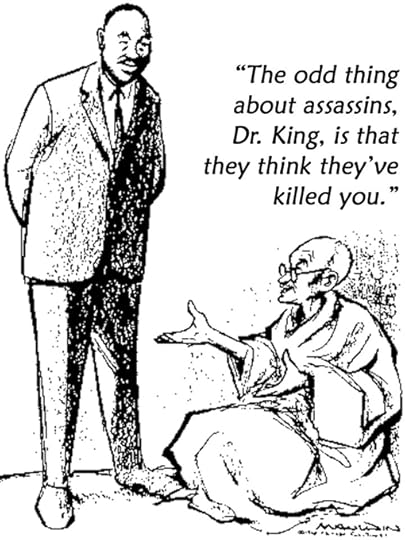
Anyway, my personal perception of Gandhi has never been linear. More I know about him, more confused I am.
Genius or superstitious? Visionary or Luddite? Politician or Saint? Liberal or Orthodox?
My "How could he!"s have oscillated between extreme positives and extreme negatives.
There are so many myths around his legend, that reading multiple accounts of this enigma is warranted.
Here, I presumed I would be reading a fan-boy's account of arguably the greatest man India produced in the last century, but surprisingly I found the book to be balanced, not shying away from covering the darkest of shortcomings, along with the god-like virtues.
Ironically, the summit was hosted by the current regime which probably undermines Gandhi and his values to the most. There are voices inside the regime that valourizes the assassin instead.
Anyway, my personal perception of Gandhi has never been linear. More I know about him, more confused I am.
Genius or superstitious? Visionary or Luddite? Politician or Saint? Liberal or Orthodox?
My "How could he!"s have oscillated between extreme positives and extreme negatives.
There are so many myths around his legend, that reading multiple accounts of this enigma is warranted.
Here, I presumed I would be reading a fan-boy's account of arguably the greatest man India produced in the last century, but surprisingly I found the book to be balanced, not shying away from covering the darkest of shortcomings, along with the god-like virtues.
March 12, 2019
I remember that after I read "India after Gandhi" by Ramachandra Guha, I hoped that some day he would choose to write a history of India's freedom movement too. To an extent, this was the book I was waiting for. And he really made me wait for the Kindle edition's release in India !
This book is the second part of Mahatma Gandhi's biography by Guha. The first part "Gandhi Before India" which focused on Gandhi's life upto 1914 was around 600 pages and together the Gandhi biography is a challenging 1700 pages for the reader. In this review I will avoid summarising the book or commenting on Gandhi himself.
Both the books are written in a little more detail than required. I have read many of Guha's books on history and cricket and he is elegant without being a show-off. However in both parts of the biography, he has sometimes bored with trivial details and extensively included Gandhi's correspondence. But, largely the book is very readable.
The research is stupendous, the commentary is largely unbiased and it was almost at the very end that I realised this was also intended for an international audience. Thankfully, unlike his hero Nehru's tedious Discovery of India, this book was not trying to prove Gandhi's greatness to the world.
Finally, readable if you are a history buff or a Gandhi fan. Also, do take a look at Rajmohan Gandhi's biography of the Mahatma who was also his grandfather. That book was also a delight to read at half the length.
This book is the second part of Mahatma Gandhi's biography by Guha. The first part "Gandhi Before India" which focused on Gandhi's life upto 1914 was around 600 pages and together the Gandhi biography is a challenging 1700 pages for the reader. In this review I will avoid summarising the book or commenting on Gandhi himself.
Both the books are written in a little more detail than required. I have read many of Guha's books on history and cricket and he is elegant without being a show-off. However in both parts of the biography, he has sometimes bored with trivial details and extensively included Gandhi's correspondence. But, largely the book is very readable.
The research is stupendous, the commentary is largely unbiased and it was almost at the very end that I realised this was also intended for an international audience. Thankfully, unlike his hero Nehru's tedious Discovery of India, this book was not trying to prove Gandhi's greatness to the world.
Finally, readable if you are a history buff or a Gandhi fan. Also, do take a look at Rajmohan Gandhi's biography of the Mahatma who was also his grandfather. That book was also a delight to read at half the length.

August 10, 2020
1000 pages book… That’s a lot to read about one man- was my immediate thought. Since I hadn’t read Ram Guha earlier- I thought of giving it a try. By the time I had reached page 50 – I was engrossed. Brilliantly written – a very easy to read book.
The book makes you understand Gandhi, his ideologies and principles. A simple patriotic man-who wanted freedom from British rule keeping religious harmony amongst Hindus and Muslims and fought for it till the end. After landing in India in 1914- Gandhi brought the masses in various Provinces of India together to fight for India’s freedom. Freedom struggle till then was fought in bits and pieces by Congress class leaders. The book also throws light on relations between Gandhi and Ambedkar as well as Gandhi and Jinnah.
Very commonly we hear the phrase these days that Gandhi was responsible for partition of India. Was he really? History is Opaque as Nassim Taleb puts it. History seems clearer and more organized in history books than in empirical reality. We actually see what comes out; not the script that produces events – the generator of history. The book takes you through the situations that are facing Gandhi when he takes the decisions that he does.
Could we have avoided Partition? - the author does bring that question towards the end and you tend to agree with him that the seed of partition was sown by Britishers in 1909 itself which was watered by Jinnah.
One must read the book to understand Gandhi and why he was called Mahatma and the legacies he left behind.
The book makes you understand Gandhi, his ideologies and principles. A simple patriotic man-who wanted freedom from British rule keeping religious harmony amongst Hindus and Muslims and fought for it till the end. After landing in India in 1914- Gandhi brought the masses in various Provinces of India together to fight for India’s freedom. Freedom struggle till then was fought in bits and pieces by Congress class leaders. The book also throws light on relations between Gandhi and Ambedkar as well as Gandhi and Jinnah.
Very commonly we hear the phrase these days that Gandhi was responsible for partition of India. Was he really? History is Opaque as Nassim Taleb puts it. History seems clearer and more organized in history books than in empirical reality. We actually see what comes out; not the script that produces events – the generator of history. The book takes you through the situations that are facing Gandhi when he takes the decisions that he does.
Could we have avoided Partition? - the author does bring that question towards the end and you tend to agree with him that the seed of partition was sown by Britishers in 1909 itself which was watered by Jinnah.
One must read the book to understand Gandhi and why he was called Mahatma and the legacies he left behind.

March 27, 2026
― “The image of an elderly, emaciated man walking with a staff on a hot and dusty road, day after day, in a single (and singular) challenge to the greatest empire on earth, captivated the national and global imagination.’”
― Ramachandra Guha, Gandhi: The Years that Changed the World, 1914-1948
Mohandas K. Gandhi, more commonly known by the honorific Mahatma (meaning great-souled), is most famous for his philosophy of non-violent civil disobedience that inspired civil rights leaders around the world, particularly in the United States during the Civil Rights Movement of the 1960s. Gandhi’s approach directly influenced Dr. Martin Luther King, Jr.
Gandhi: The Years that Changed the World, 1914-1948 is the second of two biographies of Gandhi by Ramachandra Guha. The first, Gandhi Before India (a book I read in 2022), covers his activism as an Indian immigrant in South Africa in the early 1900s, in the years following World War I. After earning his law degree in London, Gandhi spent 21 years in South Africa protesting against racism and developing his political and ethical views. He returned to India in 1915.
While the British government controlled much of India until the mid-19th century, it directly ruled India from 1858 onwards. Known as the British Raj, it had a significant impact on the Indian people, with many Indians suffering from extreme poverty and famines during British rule. At the same time, the British government and British individuals gained a lot of wealth from trade with India by exporting vast quantities of goods such as tea and pepper.
― “Ironically, while he disliked modern civilization, Gandhi sought to introduce two modern, Western ideas into India—those of liberty and equality. Yet these modern ideas required modern institutions to make them a reality. For, ‘you cannot fight an institution with an idea, however great and sublime it may be.’”
― Ramachandra Guha, Gandhi: The Years that Changed the World, 1914-1948
When, in 1919, the British enacted a set of legislative measures in India to clamp down on nationalist movements, allowing certain political cases to be tried without juries and suspects to be detained without a trial, Gandhi called for a nationwide strike. Gandhi, who often dressed only in a loincloth and shawl, was imprisoned several times during his pursuit of non-cooperation. In March 1922, Gandhi was arrested and served two years in prison for sedition. In addition to his role in India’s struggle to gain independence from Great Britain, Gandhi also undertook a number of hunger strikes to protest the oppression of India’s lowest caste, the “untouchables.”
In addition to his efforts to gain independence for India, Gandhi also worked toward peace between Hindus and Muslims. Before finally gaining independence in 1947, India included what is now Pakistan and Bangladesh (formerly East Pakistan). While Hindus were in the majority, Muslims were approximately 25 percent of the population. Gandhi did not want partition and worked toward an India where Hindus, Muslims and Sikhs all played a role in the government. This was not popular with some Hindus; Gandhi was shot to death in 1948 by a Hindu fundamentalist.
Fortunately, the author doesn’t shy away from Gandhi difficult relationships with his family, his obsession with diet, celibacy and manual labor. In particular, he reveals that the father of the Indian nation was an imperfect husband and less than an ideal parent to his sons.
― “Gandhi was the traditional overbearing Hindu patriarch: insensitive to the wishes and desires of his wife; demanding that his children obey his instructions even when they had reached adulthood.”
― Ramachandra Guha, Gandhi: The Years that Changed the World, 1914-1948
― “And yet, for all his empathy and concern for those outside his family, Gandhi was curiously blind to the pain of his own sons.”
― Ramachandra Guha, Gandhi: The Years that Changed the World, 1914-1948
At more than 1,000 pages, Indian historian Ramachandra Guha has produced an extensive biography on the lone icon of the Indian independence movement. Yet it is the book’s thoroughness that is also its chief weakness. In his effort to include every struggle, every disagreement, family relationship, obsession, and dispute in the great man’s life, Guha consistently errs on the side of creating a complete record over writing an easily digestible story.
Despite this weakness, Gandhi: The Years that Changed the World, 1914-1948 is an essential read for anyone wanting to understand not just the man, but the birth of modern India.
― Ramachandra Guha, Gandhi: The Years that Changed the World, 1914-1948
Mohandas K. Gandhi, more commonly known by the honorific Mahatma (meaning great-souled), is most famous for his philosophy of non-violent civil disobedience that inspired civil rights leaders around the world, particularly in the United States during the Civil Rights Movement of the 1960s. Gandhi’s approach directly influenced Dr. Martin Luther King, Jr.
Gandhi: The Years that Changed the World, 1914-1948 is the second of two biographies of Gandhi by Ramachandra Guha. The first, Gandhi Before India (a book I read in 2022), covers his activism as an Indian immigrant in South Africa in the early 1900s, in the years following World War I. After earning his law degree in London, Gandhi spent 21 years in South Africa protesting against racism and developing his political and ethical views. He returned to India in 1915.
While the British government controlled much of India until the mid-19th century, it directly ruled India from 1858 onwards. Known as the British Raj, it had a significant impact on the Indian people, with many Indians suffering from extreme poverty and famines during British rule. At the same time, the British government and British individuals gained a lot of wealth from trade with India by exporting vast quantities of goods such as tea and pepper.
― “Ironically, while he disliked modern civilization, Gandhi sought to introduce two modern, Western ideas into India—those of liberty and equality. Yet these modern ideas required modern institutions to make them a reality. For, ‘you cannot fight an institution with an idea, however great and sublime it may be.’”
― Ramachandra Guha, Gandhi: The Years that Changed the World, 1914-1948
When, in 1919, the British enacted a set of legislative measures in India to clamp down on nationalist movements, allowing certain political cases to be tried without juries and suspects to be detained without a trial, Gandhi called for a nationwide strike. Gandhi, who often dressed only in a loincloth and shawl, was imprisoned several times during his pursuit of non-cooperation. In March 1922, Gandhi was arrested and served two years in prison for sedition. In addition to his role in India’s struggle to gain independence from Great Britain, Gandhi also undertook a number of hunger strikes to protest the oppression of India’s lowest caste, the “untouchables.”
In addition to his efforts to gain independence for India, Gandhi also worked toward peace between Hindus and Muslims. Before finally gaining independence in 1947, India included what is now Pakistan and Bangladesh (formerly East Pakistan). While Hindus were in the majority, Muslims were approximately 25 percent of the population. Gandhi did not want partition and worked toward an India where Hindus, Muslims and Sikhs all played a role in the government. This was not popular with some Hindus; Gandhi was shot to death in 1948 by a Hindu fundamentalist.
Fortunately, the author doesn’t shy away from Gandhi difficult relationships with his family, his obsession with diet, celibacy and manual labor. In particular, he reveals that the father of the Indian nation was an imperfect husband and less than an ideal parent to his sons.
― “Gandhi was the traditional overbearing Hindu patriarch: insensitive to the wishes and desires of his wife; demanding that his children obey his instructions even when they had reached adulthood.”
― Ramachandra Guha, Gandhi: The Years that Changed the World, 1914-1948
― “And yet, for all his empathy and concern for those outside his family, Gandhi was curiously blind to the pain of his own sons.”
― Ramachandra Guha, Gandhi: The Years that Changed the World, 1914-1948
At more than 1,000 pages, Indian historian Ramachandra Guha has produced an extensive biography on the lone icon of the Indian independence movement. Yet it is the book’s thoroughness that is also its chief weakness. In his effort to include every struggle, every disagreement, family relationship, obsession, and dispute in the great man’s life, Guha consistently errs on the side of creating a complete record over writing an easily digestible story.
Despite this weakness, Gandhi: The Years that Changed the World, 1914-1948 is an essential read for anyone wanting to understand not just the man, but the birth of modern India.

Read
December 29, 2020Previously when I read ‘Gandhi Before India’, the six hundred pages biography on MK Gandhi thoroughly documented his early days in India, education in England, his return to India where he failed to establish his career as a lawyer and his social work in South African colonies resisting the discriminatory laws against Indians. Continuing from where the author left, this book is a 1200 pages biographical thesis on MK Gandhi capturing his life after his return to India from South Africa in 1914 until his death in January 30, 1948. To devote a considerable number of years in tracing the archives, compiling the timeline, curating the events and drafting a biography is a herculean task and Ramachardra Guha deserves every credit for his impeccable patience and zest in undertaking this life mission of writing the biography of a man who left a long lasting legacy with his truths. The role of a biographer is to present the events in a chronological manner without embracing any unconscious bias. While many modern day historians have mastered the art of writing speculative or judgemental history, Ramachandra Guha has done justice to his job as a historian by relying more heavily on the archives and correspondences rather the anecdotal records.
When Gandhi returned to India in 1914, there were two key players in the Indian politics namely the moderates and extremists with the Indian moderates being headed by Gopal Krishna Gokhale, whom Gandhi identified as his own political Guru. Upon Gokhale’s request and advice, while Gandhi was travelling extensively throughout India for a year, the death of GK Gokhale in 1915 came as a major turning point in Gandhi’s life. Along with it, the Indian politics was to take a different turn when Gokhale era ended and a new leader in Gandhi emerged. Starting from the Champaram Satyagraha, the very first movement headed by Gandhi in 1917, this book carries voluminous historical information on every important national events such as the Khilafat movement, protests against Rowlatt Act, Jalianwala Bagh massacre, hanging of Bhagat Singh, the Kerala temple entry movement where Gandhi personally met Narayana Guru, the Simon Commission, the Round Table Conference where two irreconcilable ideas confronted each other, the Poona Pact, the Second World War and its impact on Indian freedom movement and politics, the Quit India Movement, the partition and all that were to happen until Gandhi’s death. For the lovers of Indian history, this book is absolutely an engrossing read. Guha’s narration of the intellectual rivalry between Rabindranath Tagore and Gandhi was extremely intelligible and well captured in this book and his take on the disagreements with Subhash Chandra Bose on the philosophy of non-violence was free from favour toward either or any side and was fairly devoid of pretence and prejudice. One can also learn a great deal about Kasturba Gandhi, Annie Besant, Sarojini Naidu, Kamaladevi Chatopadhyay, Saraladevi Chaudhrani, Mohammed Ali Jinnah, Mahadev Desai, Abdul Ghaffar Khan, Winston Churchill and C Rajagopalachari from this book.
Among the thirty eight chapters in this book, I could easily pick two chapters as the most intriguing and captivating ones. Firstly, the chapter named ‘Arguments with Ambedkar’ which carried a detailed analysis on the contrasting philosophies of two leaders. While Ambedkar had great faith in reformist powers of the State, which he saw as the chief instrument of ending untouchability, Gandhi was suspicious of State power and he instead emphasised moral transformation through individual and social self-correction. Though Gandhi’s commitment to ending untouchability was evident soon after his return to India and from the social movements which he undertook in 1930s, the radical left has found their demigod in Arundhati Roy who cherry picked the history to denigrate Gandhi and to present him as thoroughgoing apologist of caste and race in her 2014 book ‘The doctor and the saint’. The fact is that Gandhi decisively outgrew the racisms of his youth, which the people of colour themselves acknowledged and appreciated later. Apparently, Gandhi towards the end of 1930s steadily became more direct in his critique of the caste system as a whole, often inviting criticism and condemnation from the Hindu orthodoxy. Conversely, the radical right under the garb of Nationalism had found their demigod in Arun Shourie, who published the ‘Worshiping False Gods’ book in 1997 charging Ambedkar of siding with the British by serving as the member of the executive council under the British government and for not actively taking part in the freedom struggle. Both Arun Shourie and Arundhati Roy see history in terms of heroes and villains, without trying to understand the decisions taken by Gandhi and Ambedkar in context of their contemporary times. Although Ambedkar and Gandhi were political rivals, from the vantage point of history, they played pivotal role in debilitating the obnoxious social institutions. Gandhi did not speak the modern language of social justice and his methods were evidently patronizing. While Gandhi wanted to put the onus on the upper castes to reform themselves, Ambedkar believed in the modern day ‘pass the mic’ approach in collectively organizing the Dalits to rise against injustice and discrimination. Though the methods deployed were different, they shared a common goal. While the radicals crave for immediate and revolutionary shift, the realists know that the improvements never come in the mass, but always in instalments; and it is only the reactionaries who deny that half a loaf is better than no bread. While Arundhati Roy and her supporters try to dismiss Gandhi as a conservative defender of orthodoxy who changed his views at a ‘glacial pace’, what they tend to forget is that by the standards of our time, Gandhi can be considered as a conservative. But, by the standards of his own time, he was undoubtedly progressive compared to his fellow compatriots of similar social status. No amount of truths and facts can mend the intransigent ignorance unless one is willing to give up the selective reading.
Secondly, the chapter titled, ‘The Greatest Fasts’ which covered the last days of Gandhi travelling through the blood soaked roads amidst the wreckage of partition trying to bring peace between two communities. In 1909, Gandhi himself had said that if his death could bring peace and reconciliation between the Hindus and Muslims, he shall regard himself fortunate of such great endeavour. Roughly four decades later, at age of seventy nine, Gandhi took up the mission to bring calm and communal harmony by fasting uncompromisingly. With his presence permeating peace through the riot struck streets of Bengal, Bihar, Delhi and Punjab, he did radically reduce the tensions and achieved substantial success in promoting reconciliation. With rising political ascendency of right wing religious fundamentalism and majoritarianism, Gandhi’s commitment to interfaith harmony, secularism and religious pluralism is more relevant than ever before.
I don’t wish to write a eulogy in remembrance of Gandhi and his contributions, but one thing I understood from reading about his life and work is that Mr. Gandhi is not as bad as how his critics try to paint him. Throughout the 1930s and 1940s, when Gandhi was nominated for Noble Peace Prize thrice, there were many articles from the West, comparing Gandhi to the arrival of Jesus Christ. Naïve as it may sound, but such was the impact he had when he lived in this world. As no man can be completely flawless, untainted and pure, to me, Gandhi was no messiah. He was no God either. To me, Gandhi was a perfect example for an ideal human being. As a normal human we are conditioned to have certain imperfections and flaws which we acquire as a part of our social conditioning. We shed them as we evolve. I see Gandhi as a mere human who unlearnt and learnt whatever he felt he should. Maybe that is why, towards the end of his life, he asked his followers “not to refer his old writings on caste anymore.” I see Gandhi as an epitome of tolerance and eclecticism who mingled with people from all walks of life irrespective of their community, class, caste, nationality, race and religion. More than for the social protest he pioneered in form of non-violence, his views on religious pluralism will always be a spectacle of his enduring legacy. He often recited the verses from Koran and Bible in every meeting he spoke. Gandhi practiced this credo of loving all religions as his own, throughout his life. It is easy to dichotomize someone as good and bad, and number of scholars and intellectuals had already done a remarkable work in analysing the shortcomings and mistakes of Mr. Gandhi. It shall continue, forever, as Gandhi is not someone who is above criticism or dissent. But, not everyone is destined to be an ardent communist or a raging social justice warrior in order to change the world to be better. Whoever Gandhi was and for whatever he stood, indeed in a gentle way he shook the world. And, that was all I would like to learn from him.
When Gandhi returned to India in 1914, there were two key players in the Indian politics namely the moderates and extremists with the Indian moderates being headed by Gopal Krishna Gokhale, whom Gandhi identified as his own political Guru. Upon Gokhale’s request and advice, while Gandhi was travelling extensively throughout India for a year, the death of GK Gokhale in 1915 came as a major turning point in Gandhi’s life. Along with it, the Indian politics was to take a different turn when Gokhale era ended and a new leader in Gandhi emerged. Starting from the Champaram Satyagraha, the very first movement headed by Gandhi in 1917, this book carries voluminous historical information on every important national events such as the Khilafat movement, protests against Rowlatt Act, Jalianwala Bagh massacre, hanging of Bhagat Singh, the Kerala temple entry movement where Gandhi personally met Narayana Guru, the Simon Commission, the Round Table Conference where two irreconcilable ideas confronted each other, the Poona Pact, the Second World War and its impact on Indian freedom movement and politics, the Quit India Movement, the partition and all that were to happen until Gandhi’s death. For the lovers of Indian history, this book is absolutely an engrossing read. Guha’s narration of the intellectual rivalry between Rabindranath Tagore and Gandhi was extremely intelligible and well captured in this book and his take on the disagreements with Subhash Chandra Bose on the philosophy of non-violence was free from favour toward either or any side and was fairly devoid of pretence and prejudice. One can also learn a great deal about Kasturba Gandhi, Annie Besant, Sarojini Naidu, Kamaladevi Chatopadhyay, Saraladevi Chaudhrani, Mohammed Ali Jinnah, Mahadev Desai, Abdul Ghaffar Khan, Winston Churchill and C Rajagopalachari from this book.
Among the thirty eight chapters in this book, I could easily pick two chapters as the most intriguing and captivating ones. Firstly, the chapter named ‘Arguments with Ambedkar’ which carried a detailed analysis on the contrasting philosophies of two leaders. While Ambedkar had great faith in reformist powers of the State, which he saw as the chief instrument of ending untouchability, Gandhi was suspicious of State power and he instead emphasised moral transformation through individual and social self-correction. Though Gandhi’s commitment to ending untouchability was evident soon after his return to India and from the social movements which he undertook in 1930s, the radical left has found their demigod in Arundhati Roy who cherry picked the history to denigrate Gandhi and to present him as thoroughgoing apologist of caste and race in her 2014 book ‘The doctor and the saint’. The fact is that Gandhi decisively outgrew the racisms of his youth, which the people of colour themselves acknowledged and appreciated later. Apparently, Gandhi towards the end of 1930s steadily became more direct in his critique of the caste system as a whole, often inviting criticism and condemnation from the Hindu orthodoxy. Conversely, the radical right under the garb of Nationalism had found their demigod in Arun Shourie, who published the ‘Worshiping False Gods’ book in 1997 charging Ambedkar of siding with the British by serving as the member of the executive council under the British government and for not actively taking part in the freedom struggle. Both Arun Shourie and Arundhati Roy see history in terms of heroes and villains, without trying to understand the decisions taken by Gandhi and Ambedkar in context of their contemporary times. Although Ambedkar and Gandhi were political rivals, from the vantage point of history, they played pivotal role in debilitating the obnoxious social institutions. Gandhi did not speak the modern language of social justice and his methods were evidently patronizing. While Gandhi wanted to put the onus on the upper castes to reform themselves, Ambedkar believed in the modern day ‘pass the mic’ approach in collectively organizing the Dalits to rise against injustice and discrimination. Though the methods deployed were different, they shared a common goal. While the radicals crave for immediate and revolutionary shift, the realists know that the improvements never come in the mass, but always in instalments; and it is only the reactionaries who deny that half a loaf is better than no bread. While Arundhati Roy and her supporters try to dismiss Gandhi as a conservative defender of orthodoxy who changed his views at a ‘glacial pace’, what they tend to forget is that by the standards of our time, Gandhi can be considered as a conservative. But, by the standards of his own time, he was undoubtedly progressive compared to his fellow compatriots of similar social status. No amount of truths and facts can mend the intransigent ignorance unless one is willing to give up the selective reading.
Secondly, the chapter titled, ‘The Greatest Fasts’ which covered the last days of Gandhi travelling through the blood soaked roads amidst the wreckage of partition trying to bring peace between two communities. In 1909, Gandhi himself had said that if his death could bring peace and reconciliation between the Hindus and Muslims, he shall regard himself fortunate of such great endeavour. Roughly four decades later, at age of seventy nine, Gandhi took up the mission to bring calm and communal harmony by fasting uncompromisingly. With his presence permeating peace through the riot struck streets of Bengal, Bihar, Delhi and Punjab, he did radically reduce the tensions and achieved substantial success in promoting reconciliation. With rising political ascendency of right wing religious fundamentalism and majoritarianism, Gandhi’s commitment to interfaith harmony, secularism and religious pluralism is more relevant than ever before.
I don’t wish to write a eulogy in remembrance of Gandhi and his contributions, but one thing I understood from reading about his life and work is that Mr. Gandhi is not as bad as how his critics try to paint him. Throughout the 1930s and 1940s, when Gandhi was nominated for Noble Peace Prize thrice, there were many articles from the West, comparing Gandhi to the arrival of Jesus Christ. Naïve as it may sound, but such was the impact he had when he lived in this world. As no man can be completely flawless, untainted and pure, to me, Gandhi was no messiah. He was no God either. To me, Gandhi was a perfect example for an ideal human being. As a normal human we are conditioned to have certain imperfections and flaws which we acquire as a part of our social conditioning. We shed them as we evolve. I see Gandhi as a mere human who unlearnt and learnt whatever he felt he should. Maybe that is why, towards the end of his life, he asked his followers “not to refer his old writings on caste anymore.” I see Gandhi as an epitome of tolerance and eclecticism who mingled with people from all walks of life irrespective of their community, class, caste, nationality, race and religion. More than for the social protest he pioneered in form of non-violence, his views on religious pluralism will always be a spectacle of his enduring legacy. He often recited the verses from Koran and Bible in every meeting he spoke. Gandhi practiced this credo of loving all religions as his own, throughout his life. It is easy to dichotomize someone as good and bad, and number of scholars and intellectuals had already done a remarkable work in analysing the shortcomings and mistakes of Mr. Gandhi. It shall continue, forever, as Gandhi is not someone who is above criticism or dissent. But, not everyone is destined to be an ardent communist or a raging social justice warrior in order to change the world to be better. Whoever Gandhi was and for whatever he stood, indeed in a gentle way he shook the world. And, that was all I would like to learn from him.

September 30, 2018
Woop. Over 900 pages in four days. That was one heck of a marathon. In this book we recognise the obsessive Gandhiite in Guha. He tries to cram too much into the perfect-sized paragraphs of this book. But certainly 900 pages were not sufficient for him. His natural flair in writing seemed to mellow a little as a consequence. Nehru and Patel for instance are not as marked out as we would want them to be. We must appreciate Guha for trying ceaselessly to paint a close-to-life portrait of Gandhi, despite his open admiration for the personality. And there certainly are some highlights that make this book different from some of Gandhi's other biographies - the consistent pursuit of Saraladevi Chaudhurani character, his relation with Mahadev Desai, Gandhi on the world stage; and oh, not to forget that there is an entire chapter on Gandhi's sexual experiment at Noakhali.

September 9, 2018
Intense reading for two days to finish this magnificent part 2 of Gandhi bio. Guha has done a great service to humanity by writing this tome.
For me the new insights were on Mahadev Desai, Ambedkar and some of the Viceroys Gandhi interacted with.
Gandhi had no private life at all. His life is therefore an open book. His quest for truth is legendary and one gets richer by reading about such people.
For me the new insights were on Mahadev Desai, Ambedkar and some of the Viceroys Gandhi interacted with.
Gandhi had no private life at all. His life is therefore an open book. His quest for truth is legendary and one gets richer by reading about such people.

November 13, 2018
One of the greatest sins Gandhi has been held accountable for in recent years is for either being a rank hypocrite or inconsistent at best, most particularly with respect to his views on caste and untouchability. However, in Gandhi’s own words lies his vindication, “My aim is not to be consistent with my previous statements on a given question, but to be consistent with truth as it may present itself to me at a given moment. The result has been that I have grown from truth to truth.” And rightly so, he grew drastically from his avowed belief in ‘varnashramdharma’ and abhorrence of inter-marriage to one including abhorrence of the former’s evil and religiously advocating the latter. That’s the kind of man Mahatma Gandhi was, an inveterate votary of compromise and dialogue between creed, caste, custom and community.
This book, titled Gandhi: the years that changed the world 1914-1918, is a sequel to Ramachandra Guha’s book Gandhi Before India, which rather documented the initial years of Gandhi, studies in England, struggles in South Africa and culminating with his arrival in India in January 1915. Therefore, this book picks up from his launching into the Indian national movement under the political stewardship of Gokhale. Tracing out his beginning with the travels undertaken across the country to make himself aware of the conditions of the masses, the book then skilfully traverses his ventures into the peasants and worker movements. It is shown how he transformed the Indian national movement into mass movement and consequently the Indian National Congress into a truly mass-based party. The entire rigmarole of the freedom movement with its divisiveness, his ventures into social reform, his personal experiments and the ever-swinging pendulum between mass struggle and parleys with the rulers, all of it is explained in excruciating detail.
The widespread variety of sources which the author has referred truly makes this book a comprehensive retelling of the story of the Mahatma. Most salient is the influence and impact Gandhi made on several writers/intellectuals/clerics/activists across the world spanning the Americas, Africa and most certainly Asia. You could hate him or love him, but you could not ignore him. His influence counts as all the more striking considering that he never held public office and presided over the INC only once in 1924. Gandhi was the single most important representative of most of the Indian people for over two decades and became a global symbol of peace, harmony, non-violence and environmental sustainability against the forces of oppression and depredation.
Though the book is majestic and grand in the scale of its purpose and its size, it seems to me severely lacking in depth and erudition. There is a limited attempt at placing the events surrounding Gandhi’s personal and public life in the larger ideological and philosophical context. There is a whole tome of Gandhian thought which is being serious worked upon by academics and thinkers and sadly, the recounting of this debate is sorely missed in this massive tome. Further as Faisal Devji the noted writer on Gandhi commented in his review of this book, it is in someways intended to appeal to western audiences. Not to say that the aspects of his interactions with rest of the world aren't refreshing and insightful, but there is certainly an overemphasis. Further, the author has a strong penchant for assumptions and hunches which almost lead to wishful thinking particularly with respect to his relationship with Sarladevi Chaudhrani. The author admittedly is obsessed with this episode in the life of the avowedly celibate Gandhi dramatically interspersed with an encounter of romantic infatuation with the niece of the great bard Tagore.
Further, there are certain objections I have with the some of the judgments the author has made. Undoubtedly Jinnah may have been the most important leader of the Muslims of India but his leadership was only authenticated by the enfranchised Muslims (electorate comprised only 14% of the adult population). His leadership was undisputed in seats with separate electorates but this can’t be said of the Unreserved seats with sizeable muslim populations and also about the mass of ‘unenfranchised’ muslims of India. Also Lord Mountbatten has been portrayed as neutral and fair, even sympathetic to the well-being of the sub-continent. It must be put on the record that Mountbatten was no saint and he readily played both sides against each other and hastened the partition of India in the furtherance of time-tested imperialist machinations of ‘Divide and Rule.'
Gandhi has been the only leader ever whose personal life is of as much interest as his public life. His fascinations and obsessions with celibacy, vegetarianism, village renewal, spinning are well-known because these were as important to him in the goal of ‘swaraj’ as was political independence. His strange experiment at testing the strength of his ‘brahmcharya’ including his grand-niece Manu Gandhi has given Gandhi’s detractors much fodder for his denigration. The author has recounted this episode with excellent research and while rightly frowning upon the incident, has tried to investigate the reasons that underlay this great folly which Gandhi pursued vehemently despite caution to the contrary. We must however recognise at least in hindsight that Gandhi was a patriarchal man and not a divine being. He had his excellent qualities but also his egregious failings.
To sum up, Gandhi was a saint/mahatma but not a recluse in the sense that he didn't withdraw himself from public life to steer the soul-force but infact was very much involved in both the political and the personal development of Indians. Guha has summarised the legacy of Gandhi for our time with his final words - “Beyond satyagraha, interfaith harmony, environmental responsibility, the ending of British Empire, and the delegitimising of untouchability, the practice of, and the largely successful quest for, truth may be Gandhi’s most remarkable achievement.” Now is the time more than ever to refurbish and revive his legacy for the troubled times we live in.
This book, titled Gandhi: the years that changed the world 1914-1918, is a sequel to Ramachandra Guha’s book Gandhi Before India, which rather documented the initial years of Gandhi, studies in England, struggles in South Africa and culminating with his arrival in India in January 1915. Therefore, this book picks up from his launching into the Indian national movement under the political stewardship of Gokhale. Tracing out his beginning with the travels undertaken across the country to make himself aware of the conditions of the masses, the book then skilfully traverses his ventures into the peasants and worker movements. It is shown how he transformed the Indian national movement into mass movement and consequently the Indian National Congress into a truly mass-based party. The entire rigmarole of the freedom movement with its divisiveness, his ventures into social reform, his personal experiments and the ever-swinging pendulum between mass struggle and parleys with the rulers, all of it is explained in excruciating detail.
The widespread variety of sources which the author has referred truly makes this book a comprehensive retelling of the story of the Mahatma. Most salient is the influence and impact Gandhi made on several writers/intellectuals/clerics/activists across the world spanning the Americas, Africa and most certainly Asia. You could hate him or love him, but you could not ignore him. His influence counts as all the more striking considering that he never held public office and presided over the INC only once in 1924. Gandhi was the single most important representative of most of the Indian people for over two decades and became a global symbol of peace, harmony, non-violence and environmental sustainability against the forces of oppression and depredation.
Though the book is majestic and grand in the scale of its purpose and its size, it seems to me severely lacking in depth and erudition. There is a limited attempt at placing the events surrounding Gandhi’s personal and public life in the larger ideological and philosophical context. There is a whole tome of Gandhian thought which is being serious worked upon by academics and thinkers and sadly, the recounting of this debate is sorely missed in this massive tome. Further as Faisal Devji the noted writer on Gandhi commented in his review of this book, it is in someways intended to appeal to western audiences. Not to say that the aspects of his interactions with rest of the world aren't refreshing and insightful, but there is certainly an overemphasis. Further, the author has a strong penchant for assumptions and hunches which almost lead to wishful thinking particularly with respect to his relationship with Sarladevi Chaudhrani. The author admittedly is obsessed with this episode in the life of the avowedly celibate Gandhi dramatically interspersed with an encounter of romantic infatuation with the niece of the great bard Tagore.
Further, there are certain objections I have with the some of the judgments the author has made. Undoubtedly Jinnah may have been the most important leader of the Muslims of India but his leadership was only authenticated by the enfranchised Muslims (electorate comprised only 14% of the adult population). His leadership was undisputed in seats with separate electorates but this can’t be said of the Unreserved seats with sizeable muslim populations and also about the mass of ‘unenfranchised’ muslims of India. Also Lord Mountbatten has been portrayed as neutral and fair, even sympathetic to the well-being of the sub-continent. It must be put on the record that Mountbatten was no saint and he readily played both sides against each other and hastened the partition of India in the furtherance of time-tested imperialist machinations of ‘Divide and Rule.'
Gandhi has been the only leader ever whose personal life is of as much interest as his public life. His fascinations and obsessions with celibacy, vegetarianism, village renewal, spinning are well-known because these were as important to him in the goal of ‘swaraj’ as was political independence. His strange experiment at testing the strength of his ‘brahmcharya’ including his grand-niece Manu Gandhi has given Gandhi’s detractors much fodder for his denigration. The author has recounted this episode with excellent research and while rightly frowning upon the incident, has tried to investigate the reasons that underlay this great folly which Gandhi pursued vehemently despite caution to the contrary. We must however recognise at least in hindsight that Gandhi was a patriarchal man and not a divine being. He had his excellent qualities but also his egregious failings.
To sum up, Gandhi was a saint/mahatma but not a recluse in the sense that he didn't withdraw himself from public life to steer the soul-force but infact was very much involved in both the political and the personal development of Indians. Guha has summarised the legacy of Gandhi for our time with his final words - “Beyond satyagraha, interfaith harmony, environmental responsibility, the ending of British Empire, and the delegitimising of untouchability, the practice of, and the largely successful quest for, truth may be Gandhi’s most remarkable achievement.” Now is the time more than ever to refurbish and revive his legacy for the troubled times we live in.

August 25, 2022
This book made me cry. What a great man, India needs someone like him in these troubling times.
November 8, 2018
Among the many foolish ways in which an author seeks to satisfy his vanity, two are particularly common; and despite being regularly lambasted, they are widely practiced.
The first is the proclivity, among not few writers, to use abstruse words mistaking their grandiloquence with the heft of the ideas themselves which they express. And the second is lengthy-ness. A thick thick book is more liable to be perceived authoritative on that particular topic.
Though Guha deftly steers away from jargon – his prose is lucid and stimulating; he, however, suffers from the second stupidity. He writes thick books even when a slender one could have sufficed – in fact, might have been more likable in comparison – or maybe when he should have not written the book at all because whatever he was to say had already been said.
After reading a fair lot of his works till date, I am now convinced that Guha is scarcely a formidable thinker. He is incapable of enchanting readers with the originality of his thought, and to the extent that he does enchant, he does it through his highly stimulating narrative skills.
To be sure, it’s no mean feat. Being adept in sifting through a litany of details, marshaling them in interesting ways and then presenting the result with a limpid lucidity is indeed appreciable. Therefore he is an outstanding chronicler. His books on Indian history, on cricket, or environment are fantastic because they are histories – biographies of those topics. These books serve as a great starting point for a layman delving into those topics.
But for an area where one himself is highly knowledgeable, Guha doesn't bring much value. It is even more so in the field of history - Guha's territory - where the possibility of new information is limited, trapped as the field is within the bounds of immutable times. It becomes then more important to develop theoretical frameworks to be able to contribute to history: an area where Guha is found wanting. He is among the best out there writing on what happened, but he is nowhere to be found at the site of why that happened.
He is a person of mild disposition who subscribes to humane values, and entertains a starry-eyed appreciation of left-liberal refined postures. He once narrated an anecdote from his student-years at IIM Calcutta. I don’t recall the specific details but the substance of it was that when in a class, someone was criticizing Nehru trenchantly, Guha objected him. This objection, as Guha recalled, was not rational because he didn’t know how to refute the guy. It was just his intuitive admiration for Nehru. Later on, he would spend his life furnishing details in support of his intuitive outlook.
Now coming to the topic of this book at last: Gandhi. Here is the man who lived a singularly public life, with very little to show for a private existence. He lived amongst people in various Ashrams – jails too – and worked too amid the hustle and bustle of teeming masses. He had cultivated such a public existence by renunciating those material aspects of life which drive people to secrecy: any private interest vis-à-vis the public good, sex, or family – considered in a sense of a close-knit group which is preferred first and foremost. It’s not to say that he abandoned his family. No. The wife Kasturba would accompany him till her last breath. His sons were always about. His grandnieces took personal care of him. What he, however, didn’t do was privileging family over other people.
In addition to removing external obstacles to public existence, he sacrificed any internal desire for a reserved life at the altar of his ideals. He faithfully held on to the principle of Karma Yoga which preaches liberation through selfless social service. And he was the principled man who would doggedly try to realize his ideals.
Moreover, not only his physical life was without much privacy, he regularly published his thoughts too, mostly through his newspapers. And my god, just how much he wrote man! He was such a prolific writer that his collected works run to about a hundred volumes. Much of what he didn’t record about himself – but which was open to the public to observe and analyze – was taken care of by his early biographers, or the independence leaders who always swarmed around him.
His life is therefore by now almost exhaustively documented, not leaving much ground to be covered yet.
It’s not to say that interesting and unique books on him are not published nowadays. Books have been written analyzing him through a theoretical framework – like psychoanalysis, or a typical day in the Ashram, or application of his methods in other spheres of life, or even books critical of him.
But as far as his life, as he lived it, is to be considered, the possibility of writing anything new is now almost impossible.
This was the state of affairs when Guha decided to write Gandhi’s biography. He was in a quandary here: he was good with details which had already been covered, and theorizing is not his forte – which was the only possible way of contributing here.
As we know now, he resolved the conundrum by deciding to write the book – an unwieldy one at that – and sought a sense of novelty by adding as many unnecessary details as was not needed in the first place.
Faisal Devji wrote a fantastic and highly informative review of this book recently. Do read it, and you can skip the book.
The first is the proclivity, among not few writers, to use abstruse words mistaking their grandiloquence with the heft of the ideas themselves which they express. And the second is lengthy-ness. A thick thick book is more liable to be perceived authoritative on that particular topic.
Though Guha deftly steers away from jargon – his prose is lucid and stimulating; he, however, suffers from the second stupidity. He writes thick books even when a slender one could have sufficed – in fact, might have been more likable in comparison – or maybe when he should have not written the book at all because whatever he was to say had already been said.
After reading a fair lot of his works till date, I am now convinced that Guha is scarcely a formidable thinker. He is incapable of enchanting readers with the originality of his thought, and to the extent that he does enchant, he does it through his highly stimulating narrative skills.
To be sure, it’s no mean feat. Being adept in sifting through a litany of details, marshaling them in interesting ways and then presenting the result with a limpid lucidity is indeed appreciable. Therefore he is an outstanding chronicler. His books on Indian history, on cricket, or environment are fantastic because they are histories – biographies of those topics. These books serve as a great starting point for a layman delving into those topics.
But for an area where one himself is highly knowledgeable, Guha doesn't bring much value. It is even more so in the field of history - Guha's territory - where the possibility of new information is limited, trapped as the field is within the bounds of immutable times. It becomes then more important to develop theoretical frameworks to be able to contribute to history: an area where Guha is found wanting. He is among the best out there writing on what happened, but he is nowhere to be found at the site of why that happened.
He is a person of mild disposition who subscribes to humane values, and entertains a starry-eyed appreciation of left-liberal refined postures. He once narrated an anecdote from his student-years at IIM Calcutta. I don’t recall the specific details but the substance of it was that when in a class, someone was criticizing Nehru trenchantly, Guha objected him. This objection, as Guha recalled, was not rational because he didn’t know how to refute the guy. It was just his intuitive admiration for Nehru. Later on, he would spend his life furnishing details in support of his intuitive outlook.
Now coming to the topic of this book at last: Gandhi. Here is the man who lived a singularly public life, with very little to show for a private existence. He lived amongst people in various Ashrams – jails too – and worked too amid the hustle and bustle of teeming masses. He had cultivated such a public existence by renunciating those material aspects of life which drive people to secrecy: any private interest vis-à-vis the public good, sex, or family – considered in a sense of a close-knit group which is preferred first and foremost. It’s not to say that he abandoned his family. No. The wife Kasturba would accompany him till her last breath. His sons were always about. His grandnieces took personal care of him. What he, however, didn’t do was privileging family over other people.
In addition to removing external obstacles to public existence, he sacrificed any internal desire for a reserved life at the altar of his ideals. He faithfully held on to the principle of Karma Yoga which preaches liberation through selfless social service. And he was the principled man who would doggedly try to realize his ideals.
Moreover, not only his physical life was without much privacy, he regularly published his thoughts too, mostly through his newspapers. And my god, just how much he wrote man! He was such a prolific writer that his collected works run to about a hundred volumes. Much of what he didn’t record about himself – but which was open to the public to observe and analyze – was taken care of by his early biographers, or the independence leaders who always swarmed around him.
His life is therefore by now almost exhaustively documented, not leaving much ground to be covered yet.
It’s not to say that interesting and unique books on him are not published nowadays. Books have been written analyzing him through a theoretical framework – like psychoanalysis, or a typical day in the Ashram, or application of his methods in other spheres of life, or even books critical of him.
But as far as his life, as he lived it, is to be considered, the possibility of writing anything new is now almost impossible.
This was the state of affairs when Guha decided to write Gandhi’s biography. He was in a quandary here: he was good with details which had already been covered, and theorizing is not his forte – which was the only possible way of contributing here.
As we know now, he resolved the conundrum by deciding to write the book – an unwieldy one at that – and sought a sense of novelty by adding as many unnecessary details as was not needed in the first place.
Faisal Devji wrote a fantastic and highly informative review of this book recently. Do read it, and you can skip the book.

November 25, 2018
As I finished the book, the struggle was to how to write about it and where to start. Gandhi lived a very crowded and active life and it is difficult to find what to write about it all as there is a sense of missing out on a lot of detail. The 900+ pages of the book amount to Guha's dilemma about the same. How to account for all the events of his life and those lives he touched upon and the events he shaped must have been a daunting task to set for oneself.
Guha's narrative encompasses the political events of the day, the personal life of Mahatma and how the world looked at him. The problem with all that is that Gandhi lived his life in full public glare and didn't bother to hide away anything. Hence most of what he wanted to say and do, he did in the public leaving nothing much of interest for an enterprising biographer writing 70 years later.
There are some new material from the archives which are interesting to read about and the correspondences but was a little disappointed by the non-judgemental tone of the entire book which even Gandhi would've found unacceptable.
A self-proclaimed 'Philosophical Anarchist', Gandhi's life was what he called his autobiography - his experiments with truth. He was one who was experimenting with the truth always - trying to change his perception of it if the results are not to his liking. He was open about it, wrote about it, keep talking about it and changed his views if he was convinced.
However, his basic principles of non-violence or civil disobedience did not get to change. He experimented the methods in which they can be taken to the masses (which experiments were mostly completed during his time in South Africa) but never changed the basic principle underlying them. However he was ready to talk about them to everyone, wrote tons of articles about them and practiced till his death.
So, the political part of the book has to tell the story which was well-known to everyone. To me, Gandhi's relationships with Rajaji or M.A.Ansari are the new. The movements he spearheaded, the reasons he pulled back the agitations are all well-documented and known. So Guha takes the path of showing the responses to these events from the press and the outer world. While that adds to the story, it does not alter it in anyway.
What I would've preferred is probably for Guha to place the events of Mahatma's life in a frame of the events of the day and try to make sense out of it. But sadly, the biographer stops at telling the story without a larger concept or a viewpoint of what happened. The latter part may have been a conscious decision but the former one was a missed chance.
Two personalities stand out in the book as important - one politically and the other on a more personal front.
Dr B.R. Ambedkar comes out as a churlish, petty politician at the start of the book but seem to have had a change in status by the end. That I think, is doing injustice to him. Ambedkar's life took a different arc than the ones by the brahmins and banias of the day and probably Gandhi was the only person in that time who understood that and treated Ambedkar as more of an equal when others tend to look at him as a small time politician from the hinterland. Mahatma understood the significance of what Ambedkar is standing for and the truth of it - the injustices done to the untouchables - made him turn tack and focus on the reformation after the Poona pact than any other politician in those days. The impetus given by Ambedkar's stand helped in the opening of the temples and wells for the lower castes and helped in moving forward the reformation needed in the Hindu religion as a whole. This is a relationship and issue that resonates more in the current India - which is still struggling to move forward on these reforms and has to handle the resurgent backward castes along with the rest of the Brahminical hierarchy and the Dalit identification has made it more difficult to implement any now. A deeper analysis of these chapters would've made a lot more sense as a book for the modern India.
The episode of Gandhi's romantic liaison with Saraladevi Chaudarani is something that was new to me. I never heard or read about it before now. So it was interesting to read about this part of Gandhi's life but as Guha admits there is little material available - their correspondences seem to have been destroyed with only a few letters left and so a lot of the story seems to be surmises from the references to their relations in other people's letters and writings. So while it is interesting, it is also the part where there is not much data. However, based on what I read, the affair lasted about a couple of years with no physical consummation but Mahatma keep referring to the episode in later years as when he came close to physical lust (though without any direct reference to the lady). But how important it is in the overall life of Mahatma is a question that never gets asked.
Overall, I was left a little dissatisfied with the book as I would've expected Guha to tell a little about the relevance of Gandhi's life in the modern India with the resurgent Hindutva in power and the Hindu-Muslim harmony is in more danger than any other period of the free India. That would've made the book a little more than a biography but made a lot of sense .
Guha's narrative encompasses the political events of the day, the personal life of Mahatma and how the world looked at him. The problem with all that is that Gandhi lived his life in full public glare and didn't bother to hide away anything. Hence most of what he wanted to say and do, he did in the public leaving nothing much of interest for an enterprising biographer writing 70 years later.
There are some new material from the archives which are interesting to read about and the correspondences but was a little disappointed by the non-judgemental tone of the entire book which even Gandhi would've found unacceptable.
A self-proclaimed 'Philosophical Anarchist', Gandhi's life was what he called his autobiography - his experiments with truth. He was one who was experimenting with the truth always - trying to change his perception of it if the results are not to his liking. He was open about it, wrote about it, keep talking about it and changed his views if he was convinced.
However, his basic principles of non-violence or civil disobedience did not get to change. He experimented the methods in which they can be taken to the masses (which experiments were mostly completed during his time in South Africa) but never changed the basic principle underlying them. However he was ready to talk about them to everyone, wrote tons of articles about them and practiced till his death.
So, the political part of the book has to tell the story which was well-known to everyone. To me, Gandhi's relationships with Rajaji or M.A.Ansari are the new. The movements he spearheaded, the reasons he pulled back the agitations are all well-documented and known. So Guha takes the path of showing the responses to these events from the press and the outer world. While that adds to the story, it does not alter it in anyway.
What I would've preferred is probably for Guha to place the events of Mahatma's life in a frame of the events of the day and try to make sense out of it. But sadly, the biographer stops at telling the story without a larger concept or a viewpoint of what happened. The latter part may have been a conscious decision but the former one was a missed chance.
Two personalities stand out in the book as important - one politically and the other on a more personal front.
Dr B.R. Ambedkar comes out as a churlish, petty politician at the start of the book but seem to have had a change in status by the end. That I think, is doing injustice to him. Ambedkar's life took a different arc than the ones by the brahmins and banias of the day and probably Gandhi was the only person in that time who understood that and treated Ambedkar as more of an equal when others tend to look at him as a small time politician from the hinterland. Mahatma understood the significance of what Ambedkar is standing for and the truth of it - the injustices done to the untouchables - made him turn tack and focus on the reformation after the Poona pact than any other politician in those days. The impetus given by Ambedkar's stand helped in the opening of the temples and wells for the lower castes and helped in moving forward the reformation needed in the Hindu religion as a whole. This is a relationship and issue that resonates more in the current India - which is still struggling to move forward on these reforms and has to handle the resurgent backward castes along with the rest of the Brahminical hierarchy and the Dalit identification has made it more difficult to implement any now. A deeper analysis of these chapters would've made a lot more sense as a book for the modern India.
The episode of Gandhi's romantic liaison with Saraladevi Chaudarani is something that was new to me. I never heard or read about it before now. So it was interesting to read about this part of Gandhi's life but as Guha admits there is little material available - their correspondences seem to have been destroyed with only a few letters left and so a lot of the story seems to be surmises from the references to their relations in other people's letters and writings. So while it is interesting, it is also the part where there is not much data. However, based on what I read, the affair lasted about a couple of years with no physical consummation but Mahatma keep referring to the episode in later years as when he came close to physical lust (though without any direct reference to the lady). But how important it is in the overall life of Mahatma is a question that never gets asked.
Overall, I was left a little dissatisfied with the book as I would've expected Guha to tell a little about the relevance of Gandhi's life in the modern India with the resurgent Hindutva in power and the Hindu-Muslim harmony is in more danger than any other period of the free India. That would've made the book a little more than a biography but made a lot of sense .

August 30, 2019
Detailed, super long, but highly readable and compelling deep dive into the life and times of MK Gandhi in India in the decades preceding Independence and his own death. The author is obviously a "Gandhian", but one who does not shy away from discussing his hero's flaws and faults. In fact, G does come across as something of a cult leader who believes his own bull, even if what he's selling is better than any 21st century politician. I found the discussions and agonies of G and his friends and frenemies instructive for our times. What is liberty and liberalism, the role of the government versus society in securing social and civil rights, multiculturalism versus nationalism, modernity versus tradition... The arc of the moral universe seems to ever bend away from justice since then, in India and in America, so my final thoughts are just, sadness.

June 27, 2019
Ramachandra Guha is the most celebrated and rightly so, biographer of the greatest man the soil of India ever produced. The way he put everything from his virtues to his vices and emphasised the humanity and fallibilities of man in his character increases the credibilty of the text.
Biographies often seem exhausting and boring but he chose to narrate both interesting and dull events in an engaging manner,though it may also be because of the rapid changing events during that period. It should be a must read for everyone!
Biographies often seem exhausting and boring but he chose to narrate both interesting and dull events in an engaging manner,though it may also be because of the rapid changing events during that period. It should be a must read for everyone!

December 9, 2020
This was the most ambitious read for me this year. But it was worth it.
This could be the most researched book on Gandhi ever written. Ramchandra Guha goes into so much details and shows you the Indian independence movement from so many different perspectives.
The book covers all the delicate topics about Gandhi from him fasting to his esoteric rituals of sharing bed with his grand daughter. In the end it all makes sense if one reads it with an open mind.
I have learnt so much from one of the greatest man who ever walked on our planet. His patience, his resilience and his will to stick to his principles is something that every human can learn from. The book gave me goosebumps, made me cry and even made me laugh at so many points. It was an amazing ride through the Indian history, a ride that will always stay with me in my mind and in my actions.
Thank you Guha ji for this splendid work and effort.
This could be the most researched book on Gandhi ever written. Ramchandra Guha goes into so much details and shows you the Indian independence movement from so many different perspectives.
The book covers all the delicate topics about Gandhi from him fasting to his esoteric rituals of sharing bed with his grand daughter. In the end it all makes sense if one reads it with an open mind.
I have learnt so much from one of the greatest man who ever walked on our planet. His patience, his resilience and his will to stick to his principles is something that every human can learn from. The book gave me goosebumps, made me cry and even made me laugh at so many points. It was an amazing ride through the Indian history, a ride that will always stay with me in my mind and in my actions.
Thank you Guha ji for this splendid work and effort.

January 16, 2021
Minutia surrounding Gandhis life during major events in Indian history. Not every moment is good and Guha tries to be as objective as possible. He doesn't shy away from critiquing the man himself when presented with enough evidence. The critique is glazed over but sometimes it feels like there is a lot of meandering when it comes to certain correspondences.
It's a decent read with a lot of events covered from early Independence era, wherever Gandhi was involved. There are definitely some omits - the statements made on the revolutionaries and budding communists of the time, but I guess that's a little too much for this volume.
It's a decent read with a lot of events covered from early Independence era, wherever Gandhi was involved. There are definitely some omits - the statements made on the revolutionaries and budding communists of the time, but I guess that's a little too much for this volume.

October 2, 2025
ഉന്നാൽ മുടിയാത് വിക്രൂ 😎

December 28, 2021
“As an English Quaker who interacted with him over a period of twenty years pointed out, ‘Gandhiji had no private life, as we Westerners understand the expression.’ God knows what we would think of other celebrated figures (whether in politics or business, sports, science or the arts) if we were so directly exposed to the intimacies of their lives and thoughts. Beyond satyagraha, interfaith harmony, environmental responsibility, the ending of the British Empire, and the delegitimizing of untouchability, the practice of, and the largely successful quest for, truth may in fact be Gandhi’s most remarkable achievement.” “Reginald Reynolds, To Live in Mankind: A Quest for Gandhi (London: Andre Deutsch, 1951), p. 18 (emphasis in the original).”
“Kindly look deep into your heart, listen to the still small voice within and obey it, I pray you.”
“Writing to Manilal, Gandhi asked for a ‘solemn assurance that you shall honour Sushila’s freedom; that you shall treat her as your companion, never as a slave; that you shall take as much care of her person as your own; that you shall not force her to surrender to your passion . . .’ The father continued: ‘You know my attitude towards women. Men have not been treating them well. I have proposed this alliance assuming you to be capable of coming up to my ideals.’ To Sushila, Gandhi wrote that ‘God alone would know how fortunate you are but Manilal, I think, has certainly been lucky in getting you’.”, Ghandi's letter to his son, Ramachandra Guha, “Gandhi 1914-1948: The Years That Changed the World.”
“I hold that the world is sick of armed revolutions,’ he remarked. He was, he said, ‘not ashamed to stand erect before the heroic and self-sacrificing revolutionary because I am able to pit an equal measure of non-violent men’s heroism and sacrifice untarnished by the blood of the innocent”
“Here, directly and crisply stated, is the essence of Gandhi’s philosophy of religion. This consisted of five, interconnected, propositions. First, the claim that no religion is perfect, with all religions being a mixture of truth and error. Second, the assumption that all religions are in a process of evolving, of ridding themselves of error and groping towards the truth. Third, the argument that it was through interfaith dialogue, by seeing one’s faith in the mirror of another, that one could rid it of imperfections. Fourth, the conviction that a person of faith must not always trust priests or the so-called ‘authorized’ interpreters to give the correct interpretation. Fifth, the belief that when interpreting or judging a religion, one must trust its best practitioners rather than its most powerful. Just as Gandhi rejected the Christian priest’s or the Muslim imam’s claim to certitude and absolute religious authority, so too he would reject the claim of the Sankaracharyas to give a ‘final interpretation’ of Hinduism.”, Ramachandra Guha, “Gandhi 1914-1948: The Years That Changed the World.”
“Kindly look deep into your heart, listen to the still small voice within and obey it, I pray you.”
“Writing to Manilal, Gandhi asked for a ‘solemn assurance that you shall honour Sushila’s freedom; that you shall treat her as your companion, never as a slave; that you shall take as much care of her person as your own; that you shall not force her to surrender to your passion . . .’ The father continued: ‘You know my attitude towards women. Men have not been treating them well. I have proposed this alliance assuming you to be capable of coming up to my ideals.’ To Sushila, Gandhi wrote that ‘God alone would know how fortunate you are but Manilal, I think, has certainly been lucky in getting you’.”, Ghandi's letter to his son, Ramachandra Guha, “Gandhi 1914-1948: The Years That Changed the World.”
“I hold that the world is sick of armed revolutions,’ he remarked. He was, he said, ‘not ashamed to stand erect before the heroic and self-sacrificing revolutionary because I am able to pit an equal measure of non-violent men’s heroism and sacrifice untarnished by the blood of the innocent”
“Here, directly and crisply stated, is the essence of Gandhi’s philosophy of religion. This consisted of five, interconnected, propositions. First, the claim that no religion is perfect, with all religions being a mixture of truth and error. Second, the assumption that all religions are in a process of evolving, of ridding themselves of error and groping towards the truth. Third, the argument that it was through interfaith dialogue, by seeing one’s faith in the mirror of another, that one could rid it of imperfections. Fourth, the conviction that a person of faith must not always trust priests or the so-called ‘authorized’ interpreters to give the correct interpretation. Fifth, the belief that when interpreting or judging a religion, one must trust its best practitioners rather than its most powerful. Just as Gandhi rejected the Christian priest’s or the Muslim imam’s claim to certitude and absolute religious authority, so too he would reject the claim of the Sankaracharyas to give a ‘final interpretation’ of Hinduism.”, Ramachandra Guha, “Gandhi 1914-1948: The Years That Changed the World.”

August 30, 2021
Gandhi the years that changed the world (1914-1948) is the second volume of the two part series on Gandhi by Ramachandra Guha. While the first book (Gandhi before India) is not a prerequisite for this book, it covers the first forty-five years of his life, his upbringing, his early marriage, his carnal desires, his relationship with his wife, including the act of celibacy, his involvement with vegetarianism, his failure to make a career as a lawyer in India, his overbearing personality as a father, his interactions in south Africa that shaped his political ideology. The first part discusses Mohandas K. Gandhi's less known and often forgotten years in Porbandar, Rajkot, Bombay, London, Durban and Johannesburg. What we fail to realize is that it was these first forty-five years that turned Gandhi into a social reformer, religious thinker, political actor, an icon, inspiration for non-violent movements and a prophet of inter-faith harmony and laid the foundation for what the world was about to witness in India.
In this second and final volume of his 'magnum opus' on Gandhi, Dr. Guha traces the last thirty-three years of Gandhi's life. This book provides a smorgasbord of information and clocks in at over 900 pages with an additional 200 or ancillary pages. One can make an argument for a more succinct version but when the subject is as revered as Gandhi is, then a detailed research is appropriate and Ramachandra nailed it with his thorough research. Instead of falling in love with the subject and acting a bit pollyanna, Guha does not shy from the criticism. He writes as a historian and without judgment.
I'll break down the review into broad categories some of which also overlap with his objectives: Swaraj (Gain Indian Independence), embrace religious pluralism, end untouchability, gender equality, personal relationships, and achieve economic self-reliance.
1) Attaining Swaraj (Gain Independence): Gandhi took the road of non-violence and held various fasts to oppose the autocracy and end the colonial rule. Satyagraha (non-cooperation movement) started off as an agitation against the Rowlatt act, atrocities of Jallianwala Bagh massacre. He opposed injustice and authoritarian rule, but without arms. Gandhi's work was so prophetic that it led to other countries/continents embracing the same body of work i.e., non-violence to attain justice. Such was the case in the USA where Martin Luther King embraced these principles to attain equal rights for African Americans and the struggles against apartheid were directly inspired by Gandhi.
2) Religious Pluralism: Gandhi's respect for other religions was connected with this philosophy (and practice) of non-violence. He reached out to people of other faiths, with understanding and respect. He studied Islamic and Christian texts and brought to them the same open and critical mind that he brought to Hindu scriptures. Gandhi knew that Hindu-Muslim unity was paramount to attaining independence. He supported the Khilafat movement, which was extremely important to the Indian Muslims (excluding Jinnah who was a Shia and did not support the Khilafat movement) after the fall of the Ottoman empire at the end of WWI. Over the years the movement lost its mojo but Gandhi continue to advocate for Hindu Muslim unity, at times, extremely critical of Hindus rather than Muslim; which also led to some Hindus more critical of Gandhi. The book provides details on the rise of the Muslim League as Jinnah refused to a suggestion of a pebiscite, insisting that other communities should have no voice where Muslims were in a majority. In a world riven by inter-religious violence and misunderstanding, Gandhi's ideas and example may yet provide moderating influence.
3) End Untouchability: Gandhi's critics continue to pose him as an apologist for caste, but initially he saw caste system as more of a horizontal view rather than a vertical but became a critique of the caste system as a whole. Gandhi evolved and outgrew his racism of his twenties that the people of color acknowledged and appreciated. If Gandhi was a racist then black intellectuals and activists would not have been so keen to befriend him or embrace his ideas in their own struggles. Gandhi relentlessly pursued the path of abolishing untouchability as he considered that to not be a part of Hinduism and felt morally tormented by such practice. He continued to bring caste hindus and untouchables together despite the polemics from both caste hindus and Dr. Ambedkar.
4) Gender Equality: He attacked the practice of Purdah (Covering) which was prevalent in those times in both Hindu and Muslim households. He championed women education, and within his ashram there was no gender segregation of duties. Initially he kept women away from his non-cooperation movement, but as said above, he evolved and many women broke the salt law and courted arrest.
5) Personal Relationships: In his personal life Gandhi was in many ways an overbearing patriarch, and had a difficult relationship with his kids. Guha does not shy away from controversial aspects of Gandhi's personal life such as celibacy, and extramarital spiritual dalliance with Sarla Devi Chaudhurani. With the raging Hindu Muslim violence, Gandhi went through tumultuous times and created this imagined construct that he is not pure which is what leading to these dire outcomes. This is explained in one of the most riveting chapters "The strangest experiment" where Gandhi tests his purity with his niece Manu. However, what I find fascinating is that Gandhi not only does not shy away from his flaws, he discusses it with others (Patel, Rajaji) which are well documented in Collected works.
6) Economic self-reliance: Gandhi's obsession with the simple agrarian life is another point of contention especially in the current times. Gandhi was obsessed with John Ruskin's work especially "Unto this last" - A polemic against influential science of political economy. The core teachings as understood by Gandhi was that the work of the farmers and labourers was as valuable as the work of the lawyers and factory managers. To work with one's hands and on the land was more honorable than working with one's brains or with aid of machines.
This has to be one of the most ambitious reads of the year for me. This book is extremely detailed (a bit long) but a compelling deep dive into the life of Mohandas Karamchand Gandhi. As I mentioned in my previous review of Gandhi before India that unfortunately for a lot of us Gandhi remains a distant memory of old textbooks and Ben Kingsley's 1982 classic movie Gandhi. I suppose I fall into a criteria of those people that have a very basic understanding of Gandhi predominantly driven by Ben Kingsley's character in Gandhi that I watched growing up every year on the 2nd October (Gandhi's Birthday). I am betwixt and between when it comes to Gandhi. I consider him to be a saint who fought for injustice through his own credo, but yet flawed at personal relationships. I admire the fact that Guha reveals everything, from his virtues to his vices, increasing the credibility of this book.
In this second and final volume of his 'magnum opus' on Gandhi, Dr. Guha traces the last thirty-three years of Gandhi's life. This book provides a smorgasbord of information and clocks in at over 900 pages with an additional 200 or ancillary pages. One can make an argument for a more succinct version but when the subject is as revered as Gandhi is, then a detailed research is appropriate and Ramachandra nailed it with his thorough research. Instead of falling in love with the subject and acting a bit pollyanna, Guha does not shy from the criticism. He writes as a historian and without judgment.
I'll break down the review into broad categories some of which also overlap with his objectives: Swaraj (Gain Indian Independence), embrace religious pluralism, end untouchability, gender equality, personal relationships, and achieve economic self-reliance.
1) Attaining Swaraj (Gain Independence): Gandhi took the road of non-violence and held various fasts to oppose the autocracy and end the colonial rule. Satyagraha (non-cooperation movement) started off as an agitation against the Rowlatt act, atrocities of Jallianwala Bagh massacre. He opposed injustice and authoritarian rule, but without arms. Gandhi's work was so prophetic that it led to other countries/continents embracing the same body of work i.e., non-violence to attain justice. Such was the case in the USA where Martin Luther King embraced these principles to attain equal rights for African Americans and the struggles against apartheid were directly inspired by Gandhi.
2) Religious Pluralism: Gandhi's respect for other religions was connected with this philosophy (and practice) of non-violence. He reached out to people of other faiths, with understanding and respect. He studied Islamic and Christian texts and brought to them the same open and critical mind that he brought to Hindu scriptures. Gandhi knew that Hindu-Muslim unity was paramount to attaining independence. He supported the Khilafat movement, which was extremely important to the Indian Muslims (excluding Jinnah who was a Shia and did not support the Khilafat movement) after the fall of the Ottoman empire at the end of WWI. Over the years the movement lost its mojo but Gandhi continue to advocate for Hindu Muslim unity, at times, extremely critical of Hindus rather than Muslim; which also led to some Hindus more critical of Gandhi. The book provides details on the rise of the Muslim League as Jinnah refused to a suggestion of a pebiscite, insisting that other communities should have no voice where Muslims were in a majority. In a world riven by inter-religious violence and misunderstanding, Gandhi's ideas and example may yet provide moderating influence.
3) End Untouchability: Gandhi's critics continue to pose him as an apologist for caste, but initially he saw caste system as more of a horizontal view rather than a vertical but became a critique of the caste system as a whole. Gandhi evolved and outgrew his racism of his twenties that the people of color acknowledged and appreciated. If Gandhi was a racist then black intellectuals and activists would not have been so keen to befriend him or embrace his ideas in their own struggles. Gandhi relentlessly pursued the path of abolishing untouchability as he considered that to not be a part of Hinduism and felt morally tormented by such practice. He continued to bring caste hindus and untouchables together despite the polemics from both caste hindus and Dr. Ambedkar.
4) Gender Equality: He attacked the practice of Purdah (Covering) which was prevalent in those times in both Hindu and Muslim households. He championed women education, and within his ashram there was no gender segregation of duties. Initially he kept women away from his non-cooperation movement, but as said above, he evolved and many women broke the salt law and courted arrest.
5) Personal Relationships: In his personal life Gandhi was in many ways an overbearing patriarch, and had a difficult relationship with his kids. Guha does not shy away from controversial aspects of Gandhi's personal life such as celibacy, and extramarital spiritual dalliance with Sarla Devi Chaudhurani. With the raging Hindu Muslim violence, Gandhi went through tumultuous times and created this imagined construct that he is not pure which is what leading to these dire outcomes. This is explained in one of the most riveting chapters "The strangest experiment" where Gandhi tests his purity with his niece Manu. However, what I find fascinating is that Gandhi not only does not shy away from his flaws, he discusses it with others (Patel, Rajaji) which are well documented in Collected works.
6) Economic self-reliance: Gandhi's obsession with the simple agrarian life is another point of contention especially in the current times. Gandhi was obsessed with John Ruskin's work especially "Unto this last" - A polemic against influential science of political economy. The core teachings as understood by Gandhi was that the work of the farmers and labourers was as valuable as the work of the lawyers and factory managers. To work with one's hands and on the land was more honorable than working with one's brains or with aid of machines.
This has to be one of the most ambitious reads of the year for me. This book is extremely detailed (a bit long) but a compelling deep dive into the life of Mohandas Karamchand Gandhi. As I mentioned in my previous review of Gandhi before India that unfortunately for a lot of us Gandhi remains a distant memory of old textbooks and Ben Kingsley's 1982 classic movie Gandhi. I suppose I fall into a criteria of those people that have a very basic understanding of Gandhi predominantly driven by Ben Kingsley's character in Gandhi that I watched growing up every year on the 2nd October (Gandhi's Birthday). I am betwixt and between when it comes to Gandhi. I consider him to be a saint who fought for injustice through his own credo, but yet flawed at personal relationships. I admire the fact that Guha reveals everything, from his virtues to his vices, increasing the credibility of this book.

February 24, 2019
Why do you need another Gandhi biography when you have tens of them? As Mr. Guha points out every generation needs a fresh look at Gandhi as an individual, leader, mentor, or even as an antagonist if you don’t agree with him. Gandhi is one symbol, you can be friendly, hate, scream, disagree with many things but still follow his core principles.
Mr. Guha’s second volume is not only about Gandhi but the state of India, british administration, actions and counteractions to the freedom movement. This is one biography that concentrates on Gandhi vs Ambedkar and Jinnah extensively and Mr. Guha objectively analyzes everyone's actions.
Two disappointments in this second volume is not covering the salt march and the 1942 ‘Quit India’ movement. I agree Mr. Thomas Weber covered it as a separate book, and regarding the other one, Gandhi was arrested in the early part, it would have been good to provide the movement atleast in a full chapter.
I would be thrilled if he writes about ‘Quit India’ movement as a book. Another one he should write is a biography about Ambedkar.
Read both the volumes of Mr. Guha’s book to understand why Gandhi is still and will be relevant to us.
Mr. Guha’s second volume is not only about Gandhi but the state of India, british administration, actions and counteractions to the freedom movement. This is one biography that concentrates on Gandhi vs Ambedkar and Jinnah extensively and Mr. Guha objectively analyzes everyone's actions.
Two disappointments in this second volume is not covering the salt march and the 1942 ‘Quit India’ movement. I agree Mr. Thomas Weber covered it as a separate book, and regarding the other one, Gandhi was arrested in the early part, it would have been good to provide the movement atleast in a full chapter.
I would be thrilled if he writes about ‘Quit India’ movement as a book. Another one he should write is a biography about Ambedkar.
Read both the volumes of Mr. Guha’s book to understand why Gandhi is still and will be relevant to us.
June 8, 2019
After I finished 'Gandhi Before India' and 'India After Gandhi', I had a strong desire to read more about Gandhiji since these volumes didn't cover the period after he came back to India from South Africa. Guha is an astute historian and also an unbiased admirer of Gandhi. In 'Gandhi: The Years That Changed the World', he has covered Gandhiji's journey in India explaining all his major political and social reforms, personal and political relationships, critics and accolades he received, the bizarre celibacy experiments he did, the romantic attraction that came in his life which he could avoid, interest of the world in him, effect he made on the world, rise of muslim league, declining support for congress, partition and lastly his assassination.
Among all other reactions from the known figures in the contemporary history which includes his colleagues, disciples, opponents, friends, journalists, observers, etc, the two references which Guha has mentioned amazed me the most. The interest and awareness about Gandhi in the entire world without social media being present was extra-ordinary. The first reference is about the waiter he met in the USA who immediately recognized the uncommon (in a suit) image of young Gandhi on the cover page of his book 'Gandhi Before India'. This waiter told Guha that in his country Gandhi is admired a great deal and the name of his country is 'Dominican Republic'. The second reference is to the tribute from the French socialist Leon Blum after Gandhi's assassination: 'I never saw Gandhi. I don't know his language. I never set foot in his country, and yet I feel the same sorrow as if I had lost someone near and dear.'
This book helped me understand the emphasis Gandhiji had about religious plurality and interfaith harmony, abolition of un-touchability, non-violence and self-reliance for villages. He had undertaken nationwide tours traveling by train/car/cart/foot and also went on fasts to press for these causes. His belief in incremental approach in negotiating, complete transparency about his moves while protesting, experiencing before preaching are striking. These are evident in each and every struggle or experiment that he conducted. The importance he has placed in the emancipation of women is also very important.
Guha also examined the ever-evolving thoughts and practices of Gandhiji and his transparency about the same. He had mentioned Gandhiji's acknowledgement about his openness to the inconsistencies if it has to be for adopting the truth. About Gandhiji's transparency there is a reference to the quote by an English Quaker where he mentioned that Gandhiji had no private life at all and God knows what we would think of other celebrated figures if we were so directly exposed to the intimacies of their lives & thoughts.
An in-depth narration about all of his famous movements - Champaran, Khilafat, Dandi Salth March, Quit India, Calcutta and Delhi fasts are narrated in this book. His differences with Ambedkar, Subhash Chandra Bose, Jinnah, Savarkar are also put in the right context which also help understand a great deal about all these men. His choice between Sardar Patel and Nehru, relations/understanding between Nehru & Patel are also discussed by Guha nicely. The great contribution by Mahadeo Desai as his secretary is also examined very nicely by Guha.
This book makes a wonderful reading to understand Gandhiji's life as it explains beautifully and without avoiding the most controversial episodes in his life. Guha has given full justice while discussing the chapters of his celibacy experiments in Naokhali and also relationship with Sarladevi Chaudhurani.
Guha has summarized this book in the end very beautifully explaining the relevance of Gandhiji's methods in today's world of increasing fanatical tendencies, ecological crisis, increasing economic and social disparities. He has very nicely explained how Gandhiji has gathered and trained his team to become effective leaders of the future.
Guha had also touched upon the sentiments of Hindu Mahasabha and RSS (in addition to Muslim League) that India didn't belong to minorities and he has also given reference to M S Golwalkar professing to immediately silence those who are opposed to the idea.
The self-less attitude of Gandhiji and his willingness to sacrifice his life for the communal unity was long standing since his days in South Africa from where he had remarked in 1909 that he might be killed by his own country men but he was hopeful that if it happens it will help unite Hindu-Muslim.
Alas! He was killed by his own country-man and it did help calm the rioting communities that time with no major communal violence recorded for almost 15 years post his death.
It is a great book about The Great Man! - a must read.
Among all other reactions from the known figures in the contemporary history which includes his colleagues, disciples, opponents, friends, journalists, observers, etc, the two references which Guha has mentioned amazed me the most. The interest and awareness about Gandhi in the entire world without social media being present was extra-ordinary. The first reference is about the waiter he met in the USA who immediately recognized the uncommon (in a suit) image of young Gandhi on the cover page of his book 'Gandhi Before India'. This waiter told Guha that in his country Gandhi is admired a great deal and the name of his country is 'Dominican Republic'. The second reference is to the tribute from the French socialist Leon Blum after Gandhi's assassination: 'I never saw Gandhi. I don't know his language. I never set foot in his country, and yet I feel the same sorrow as if I had lost someone near and dear.'
This book helped me understand the emphasis Gandhiji had about religious plurality and interfaith harmony, abolition of un-touchability, non-violence and self-reliance for villages. He had undertaken nationwide tours traveling by train/car/cart/foot and also went on fasts to press for these causes. His belief in incremental approach in negotiating, complete transparency about his moves while protesting, experiencing before preaching are striking. These are evident in each and every struggle or experiment that he conducted. The importance he has placed in the emancipation of women is also very important.
Guha also examined the ever-evolving thoughts and practices of Gandhiji and his transparency about the same. He had mentioned Gandhiji's acknowledgement about his openness to the inconsistencies if it has to be for adopting the truth. About Gandhiji's transparency there is a reference to the quote by an English Quaker where he mentioned that Gandhiji had no private life at all and God knows what we would think of other celebrated figures if we were so directly exposed to the intimacies of their lives & thoughts.
An in-depth narration about all of his famous movements - Champaran, Khilafat, Dandi Salth March, Quit India, Calcutta and Delhi fasts are narrated in this book. His differences with Ambedkar, Subhash Chandra Bose, Jinnah, Savarkar are also put in the right context which also help understand a great deal about all these men. His choice between Sardar Patel and Nehru, relations/understanding between Nehru & Patel are also discussed by Guha nicely. The great contribution by Mahadeo Desai as his secretary is also examined very nicely by Guha.
This book makes a wonderful reading to understand Gandhiji's life as it explains beautifully and without avoiding the most controversial episodes in his life. Guha has given full justice while discussing the chapters of his celibacy experiments in Naokhali and also relationship with Sarladevi Chaudhurani.
Guha has summarized this book in the end very beautifully explaining the relevance of Gandhiji's methods in today's world of increasing fanatical tendencies, ecological crisis, increasing economic and social disparities. He has very nicely explained how Gandhiji has gathered and trained his team to become effective leaders of the future.
Guha had also touched upon the sentiments of Hindu Mahasabha and RSS (in addition to Muslim League) that India didn't belong to minorities and he has also given reference to M S Golwalkar professing to immediately silence those who are opposed to the idea.
The self-less attitude of Gandhiji and his willingness to sacrifice his life for the communal unity was long standing since his days in South Africa from where he had remarked in 1909 that he might be killed by his own country men but he was hopeful that if it happens it will help unite Hindu-Muslim.
Alas! He was killed by his own country-man and it did help calm the rioting communities that time with no major communal violence recorded for almost 15 years post his death.
It is a great book about The Great Man! - a must read.

September 28, 2018
A wonderful biography of the Mahatma. The book captures the evolution of the Man into the Mahatma. He becomes even greater when compared with the politicians today .. both in India and abroad.
Most of us, born post independence, have grown up with a one dimensional view of Gandhi. We were introduced to him as “Mahatma” who lead the movement and who was rigid in his opinion and worshipped as a saint. This view limits the understanding and evaluation of his personality and contributions . Either we “worship” him or we “criticise” him based on the limited inputs we receive from various sources. However, this book gives us a three dimensional view of the life of Gandhi , the Man who evolved into Gandhi, the Mahatma through his journey and interactions with people from all walks of life both here and abroad. We see how flexible he was but without compromising his core values . He changed his views when convinced and admitted his mistakes publicly . As the author says , he was “consistently inconsistent”. He had all the weakness of any human but he was open about it .
The unique thing about him, is his strategic insight that, four aspects of Indian society need to be tackled simultaneously in order to build a true Democratic society - Political freedom , Economic self reliance, Caste Equality and Religious harmony. No other leader before him had this insight. They focused on one or two of the four . He then took the four humongous tasks on fearlessly. Whatever we may say about him, India would not have got her independence without him. More importantly, we would not have survived and thrived without his contribution. He built leaders who carried on his work after him.
Which brings us to his followers . Their contribution in shaping his philosophies and his moral development has been immense. He would not have become the Mahatma without these men and women who believed in him , not blindly, but with absolute devotion to his cause. Some of the unsung heros around Gandhi like his secretary Mahadev Desai shine through in the book. These followers were not afraid to challenge him , when needed , both in public and private. These include not only Indians but also English and other nationalities.
Truly a Mahatma .... not in the traditional and spiritual sense but in the sense of an “enlightened” being.
Most of us, born post independence, have grown up with a one dimensional view of Gandhi. We were introduced to him as “Mahatma” who lead the movement and who was rigid in his opinion and worshipped as a saint. This view limits the understanding and evaluation of his personality and contributions . Either we “worship” him or we “criticise” him based on the limited inputs we receive from various sources. However, this book gives us a three dimensional view of the life of Gandhi , the Man who evolved into Gandhi, the Mahatma through his journey and interactions with people from all walks of life both here and abroad. We see how flexible he was but without compromising his core values . He changed his views when convinced and admitted his mistakes publicly . As the author says , he was “consistently inconsistent”. He had all the weakness of any human but he was open about it .
The unique thing about him, is his strategic insight that, four aspects of Indian society need to be tackled simultaneously in order to build a true Democratic society - Political freedom , Economic self reliance, Caste Equality and Religious harmony. No other leader before him had this insight. They focused on one or two of the four . He then took the four humongous tasks on fearlessly. Whatever we may say about him, India would not have got her independence without him. More importantly, we would not have survived and thrived without his contribution. He built leaders who carried on his work after him.
Which brings us to his followers . Their contribution in shaping his philosophies and his moral development has been immense. He would not have become the Mahatma without these men and women who believed in him , not blindly, but with absolute devotion to his cause. Some of the unsung heros around Gandhi like his secretary Mahadev Desai shine through in the book. These followers were not afraid to challenge him , when needed , both in public and private. These include not only Indians but also English and other nationalities.
Truly a Mahatma .... not in the traditional and spiritual sense but in the sense of an “enlightened” being.

April 19, 2020
This book is actually a sequel to "Gandhi Before India". It tracks Mahatma's movement from him returning to India in 1914 till his death in 1948. By focussing on Gandhi's work in that period, the author has to cover India's independence movement by default thus the book swells. It's a 929-page adventure.
The book is divided into five parts (chronologically). The author, Ramchandra Guha, had access to collected works which the earlier authors had not, so he fills us with many details that have surfaced for the first time. I have read a lot on Mahatma Gandhi and I yet I came across a startling discovery that I had never known before. With strenuous efforts, the author has included enormous details which make the book interesting. I did not skip any page despite it being a mammoth read.
The writing style is as honest as the subject. Guha puts out all the details and all the charges levied on Gandhiji. Even when clarifying the charges, all that the author does is providing context. So even when he is siding with Mahatma, he never shies away from stating the mistakes as they were. The most controversial subjects from Gandhi's life are discussed and dissected. This makes it an honest account without taking any sides.
This impartiality also reduces the emotional connect. None of the chapters touched me while they filled me with details. The only part where the biographer expresses himself fully is the epilogue, perhaps, the perfect place to do so.
The most remembers yet most forgotten, Mahatma Gandhi fascinates one and all. Almost everyone has an opinion on him, good or bad. With this biography, Guha has opened the doors for all to see through the man who adorns our currency. I dare say, any Mahatma Gandhi biography after this will be a form of a summary of this book.
The book is divided into five parts (chronologically). The author, Ramchandra Guha, had access to collected works which the earlier authors had not, so he fills us with many details that have surfaced for the first time. I have read a lot on Mahatma Gandhi and I yet I came across a startling discovery that I had never known before. With strenuous efforts, the author has included enormous details which make the book interesting. I did not skip any page despite it being a mammoth read.
The writing style is as honest as the subject. Guha puts out all the details and all the charges levied on Gandhiji. Even when clarifying the charges, all that the author does is providing context. So even when he is siding with Mahatma, he never shies away from stating the mistakes as they were. The most controversial subjects from Gandhi's life are discussed and dissected. This makes it an honest account without taking any sides.
This impartiality also reduces the emotional connect. None of the chapters touched me while they filled me with details. The only part where the biographer expresses himself fully is the epilogue, perhaps, the perfect place to do so.
The most remembers yet most forgotten, Mahatma Gandhi fascinates one and all. Almost everyone has an opinion on him, good or bad. With this biography, Guha has opened the doors for all to see through the man who adorns our currency. I dare say, any Mahatma Gandhi biography after this will be a form of a summary of this book.

April 1, 2019
This book tells us the life of Gandhi, his disciples, rivals, family members and most importantly the story of the Indian freedom struggle.
Having the freedom, caste, religion and numerous other struggles in the background it takes the reader from 'Gandhi: a less celebrated nationalist' to 'Mahatma Gandhi: Father of Our nation (India)'.
It contains various revealing aspects about the Mahatma. Gandhi chose to hide nothing (as far as he could) and so does this book. Whether while dealing with his failures or successes it presents the reader with a suitably unbiased account of Gandhi.
As i approached the last 5-6 chapters of the book for some reason there was a emotional experience in my reading it, As I approached the end it grew considerably.
I am happy to have come to know such a great man through this book, happier still to have been introduced to him at this point of time and at this stage of life.
Having the freedom, caste, religion and numerous other struggles in the background it takes the reader from 'Gandhi: a less celebrated nationalist' to 'Mahatma Gandhi: Father of Our nation (India)'.
It contains various revealing aspects about the Mahatma. Gandhi chose to hide nothing (as far as he could) and so does this book. Whether while dealing with his failures or successes it presents the reader with a suitably unbiased account of Gandhi.
As i approached the last 5-6 chapters of the book for some reason there was a emotional experience in my reading it, As I approached the end it grew considerably.
I am happy to have come to know such a great man through this book, happier still to have been introduced to him at this point of time and at this stage of life.

March 26, 2019
This 1000 page epoch blows life in the 'Mahatma Saint' and teleports the reader back to the glorious days of Indian freedom struggle.
In the "post truth" world where the inquisitive thought process is steered and fed with misinformation by propagandists; Mr. Guha did a phenomenal and arduous job of compiling and assimilating each and every information from the archives of NML Delhi and Sabarmati Ashram to validate the pool of information available in the book.
In the "post truth" world where the inquisitive thought process is steered and fed with misinformation by propagandists; Mr. Guha did a phenomenal and arduous job of compiling and assimilating each and every information from the archives of NML Delhi and Sabarmati Ashram to validate the pool of information available in the book.
January 10, 2020
This was an excellently researched book that covers a large topic in great and compelling detail. It makes a strong companion to the first installment.

May 31, 2020
To have kept anyone engaged for 1000 pages, speaks volume about the quality of writing.
Love the way Ramchandra Guha writes.
Love the way Ramchandra Guha writes.
Displaying 1 - 30 of 140 reviews