

What do you think?

The Food Explorer: The True Adventures of the Globe-Trotting Botanist Who Transformed What America Eats
Goodreads Choice Award
Nominee for Readers' Favorite Food & Cookbooks (2018)The true adventures of David Fairchild, a late-nineteenth-century food explorer who traveled the globe and introduced diverse crops like avocados, mangoes, seedless grapes--and thousands more--to the American plate.
In the nineteenth century, American meals were about subsistence, not enjoyment. But as a new century approached, appetites broadened, and David Fairchild, a young botanist with an insatiable lust to explore and experience the world, set out in search of foods that would enrich the American farmer and enchant the American eater.
Kale from Croatia, mangoes from India, and hops from Bavaria. Peaches from China, avocados from Chile, and pomegranates from Malta. Fairchild's finds weren't just limited to food: From Egypt he sent back a variety of cotton that revolutionized an industry, and via Japan he introduced the cherry blossom tree, forever brightening America's capital. Along the way, he was arrested, caught diseases, and bargained with island tribes. But his culinary ambition came during a formative era, and through him, America transformed into the most diverse food system ever created.
In the nineteenth century, American meals were about subsistence, not enjoyment. But as a new century approached, appetites broadened, and David Fairchild, a young botanist with an insatiable lust to explore and experience the world, set out in search of foods that would enrich the American farmer and enchant the American eater.
Kale from Croatia, mangoes from India, and hops from Bavaria. Peaches from China, avocados from Chile, and pomegranates from Malta. Fairchild's finds weren't just limited to food: From Egypt he sent back a variety of cotton that revolutionized an industry, and via Japan he introduced the cherry blossom tree, forever brightening America's capital. Along the way, he was arrested, caught diseases, and bargained with island tribes. But his culinary ambition came during a formative era, and through him, America transformed into the most diverse food system ever created.
416 pages, Paperback
First published February 20, 2018
Ratings & Reviews
Friends & Following
Create a free account to discover what your friends think of this book!
Community Reviews
Displaying 1 - 30 of 551 reviews

May 29, 2018
The true story of David Fairchild (1869-1954), a botanist who traveled the world looking for new and better food crops for American farmers. It’s not a full biography because it focuses mainly on the 20-years or so that he was actively overseas collecting new seeds, cuttings and sprouts.
Fairchild collected specimens until his late 30’s. This was the 1880’s – 1890’s and much of South America, Africa, India and China were wild, primitive, dangerous places. He had great adventures being arrested and almost dying at various times from typhoid fever and mules losing their footing on a precipice while crossing the Andes.
Although most of the time he worked for the US Department of Agriculture, a lot of the expense was financed by his millionaire companion, Barbour Lathrop, who accompanied him on many trips. In his youth Fairchild lived the life of a gay man, closeted in those days. He and Barbour were members of a “Bohemian Club.” In his late 30’s Fairchild switched his lifestyle and married Alexander Graham Bell’s daughter Marian.
The fruits and plants: Fairfield was always looking for new and better fruits. Often poor specimens were already grown somewhere in the country, but they lacked appeal or had one or more of a myriad of marketing or growing problems: too thin-skinned to ship; don’t ripen all at once; not tasty; pest and disease problems; can’t be irrigated; etc. So, Fairchild brought us the ancestors of seedless grapes (and seedless raisins); mangoes avocados, papayas, nectarines, cashews, dates, lemons, nectarines, and many others. I say ancestors because all crops have changed dramatically by cross-breeding and hybridization since those early days.
Not all were fruits. He brought us hops that finally let the US produce European-quality beer; Egyptian cotton, and Japanese cherry trees. Each plant has its own interesting story, whether Fairchild was the collector or not.
We learn that the great expositions of the time, especially the World’s Fairs, in the days before TV and the web, were how people learned about new foods. So, the first bananas in the US were popularized at the 1876 Philadelphia World’s Fair. They were served peeled and wrapped in foil (so their shape wouldn’t offend anyone) and eaten with a knife and fork. The 1893 Chicago Fair and the 1901 Pan-Am Expo in Buffalo (at which McKinley was assassinated) were all big food emporiums.
Another interesting story is the zucchini from Italy. They were tastiest when tiny (as the “ini” implies). The Italians picked them before they flowered. Now of course we buy gigantic tasteless ones and make cookies from them. (My wife says “Why don’t they give that vegetable a rest?”)
In his later career, when he became a stay-at-home bureaucrat, he sent younger men out to collect. But the fun was over. His legacy was under attack for having incidentally introduced various pests and plant diseases. A Quarantine Act was passed that made the introduction of new plant a process that took years.
He and his wife had children and in retirement they summered in Nova Scotia and wintered in Coconut Grove, Florida. His estate in Florida, named Kampong after a site in Java where he collected specimens, became one of the National Tropical Botanical Gardens. A wealthy Floridian created an 80+ acre botanical garden in Coral Gables named in Fairchild's honor. A good read that kept my interest.
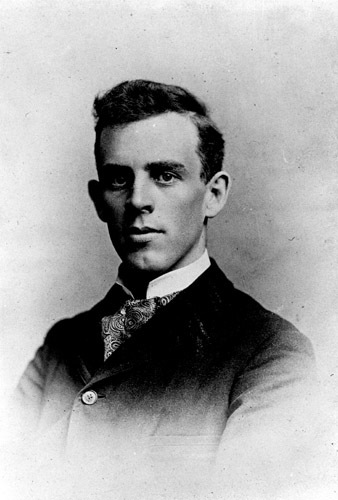
Fairchild's photo from Wikipedia
Fairchild collected specimens until his late 30’s. This was the 1880’s – 1890’s and much of South America, Africa, India and China were wild, primitive, dangerous places. He had great adventures being arrested and almost dying at various times from typhoid fever and mules losing their footing on a precipice while crossing the Andes.
Although most of the time he worked for the US Department of Agriculture, a lot of the expense was financed by his millionaire companion, Barbour Lathrop, who accompanied him on many trips. In his youth Fairchild lived the life of a gay man, closeted in those days. He and Barbour were members of a “Bohemian Club.” In his late 30’s Fairchild switched his lifestyle and married Alexander Graham Bell’s daughter Marian.
The fruits and plants: Fairfield was always looking for new and better fruits. Often poor specimens were already grown somewhere in the country, but they lacked appeal or had one or more of a myriad of marketing or growing problems: too thin-skinned to ship; don’t ripen all at once; not tasty; pest and disease problems; can’t be irrigated; etc. So, Fairchild brought us the ancestors of seedless grapes (and seedless raisins); mangoes avocados, papayas, nectarines, cashews, dates, lemons, nectarines, and many others. I say ancestors because all crops have changed dramatically by cross-breeding and hybridization since those early days.
Not all were fruits. He brought us hops that finally let the US produce European-quality beer; Egyptian cotton, and Japanese cherry trees. Each plant has its own interesting story, whether Fairchild was the collector or not.
We learn that the great expositions of the time, especially the World’s Fairs, in the days before TV and the web, were how people learned about new foods. So, the first bananas in the US were popularized at the 1876 Philadelphia World’s Fair. They were served peeled and wrapped in foil (so their shape wouldn’t offend anyone) and eaten with a knife and fork. The 1893 Chicago Fair and the 1901 Pan-Am Expo in Buffalo (at which McKinley was assassinated) were all big food emporiums.
Another interesting story is the zucchini from Italy. They were tastiest when tiny (as the “ini” implies). The Italians picked them before they flowered. Now of course we buy gigantic tasteless ones and make cookies from them. (My wife says “Why don’t they give that vegetable a rest?”)
In his later career, when he became a stay-at-home bureaucrat, he sent younger men out to collect. But the fun was over. His legacy was under attack for having incidentally introduced various pests and plant diseases. A Quarantine Act was passed that made the introduction of new plant a process that took years.
He and his wife had children and in retirement they summered in Nova Scotia and wintered in Coconut Grove, Florida. His estate in Florida, named Kampong after a site in Java where he collected specimens, became one of the National Tropical Botanical Gardens. A wealthy Floridian created an 80+ acre botanical garden in Coral Gables named in Fairchild's honor. A good read that kept my interest.
Fairchild's photo from Wikipedia

March 25, 2018
Cue up the marching band, majorettes, flag-waving veterans, and cheering crowds. The Food Explorer by Daniel Stone is a proud celebration of American greatness. The hero of the story is David Fairchild (1869–1954), a botanist and agricultural explorer. Working for the U.S. Department of Agriculture, his group was responsible for sending home seeds and cuttings of thousands of plants from nations around the world. The goal was to expand the variety of crops grown in America, and build the biggest, most profitable, industrial agriculture system in human history.
The devious villain in the story is Charles Marlatt, a childhood acquaintance of Fairchild who had grown up to be an entomologist. He detested what Fairchild was doing, because the tons of samples sent home to Washington were not quarantined and thoroughly inspected. So, plant diseases and pests were free to flee and discover America. Imported insects included the codling moth, Hessian fly, asparagus beetle, hop-plant louse, cabbage worm, wheat-plant louse, pea weevil, Croton bug, boll weevil, San Jose scale, gypsy moth, brown-tail moth, Argentinian ant, alfalfa-leaf weevil, and so on.
Marlatt understood that plant pests and pathogens were potentially as dangerous to society as a cholera epidemic. They could spread rapidly and cause enormous damage. Farms were getting thrashed, and Marlatt had stunning photos. It was nearly impossible to control problems once they were released into the ecosystem. It would have been far more intelligent to zap them before they left the starting gate. Fairchild scoffed at Marlatt’s hysterical paranoia. Economic benefits exceeded economic costs, he believed. America could solve any problem. Full speed ahead!
The spooky fanatical weirdo in this story is Fairchild’s all-star food explorer, Frank Meyer. In deepest, darkest Asia, he often walked 20 miles (32 km) per day, through regions where locals intensely hated white folks. He had frequent confrontations, beatings, and near death experiences. He obsessively gathered and shipped thousands of plant seeds and cuttings. Folks who comprehended the botanical risks of importing exotics gave him a nickname, Typhoid Mary (Google her).
In his book Grassland, Richard Manning talked about the unintended consequences of introducing European cattle to the western plains, where the climate and natural forage were not ideal for them. Efforts to introduce traditional European plants failed, so Meyer was assigned to send back plants from arid regions of Asia. Crested wheatgrass was one of his discoveries.
Following the Dust Bowl, and other agricultural wipeouts, the government aggressively planted crested wheatgrass for erosion control. It thrived on the plains, aggressively replacing native vegetation with colonies that were nearly monocultures. Unfortunately, in the winter months, this wonder grass retained little nutritional value, and the mule deer, elk, and antelope starved in endless fields of grass. Manning lamented that “Meyer brought with him botanical bombs that explode even today.”
The plant importation fad introduced a number of bummers. Spotted knapweed suppresses native grasses, and has now spread to 7 million acres (2.8 million ha). Grazing animals avoid it. Leafy spurge now inhabits 2.5 million acres, only some types of goats can eat it. The result is biological deserts that are expanding, and extremely expensive to eliminate — essentially impossible, according to Manning.
Anyway, my curiosity about Meyer led me to discover Stone’s book. It’s easy to read, and portrays the food explorers as heroes who devoted their lives to making America great. If, like most Americans, school taught you little about environmental history, Stone’s story is warm and fuzzy, a pleasant tale of courage, progress, and wealth creation. Fairchild became a celebrity, and hung out with the rich and famous.
One of the biggest eco-catastrophes caused by imported plants was the chestnut blight. Fairchild, Marlatt, and Meyer were fully aware of it. It was first noticed on American chestnut trees at the Bronx Zoo in 1904. At that time, chestnuts were a canopy species in 8.8 million acres (3.5 million ha) of eastern forest. The trees were called “the redwoods of the east.” Some grew to 150 feet (46 m) high, having trunks up to 17 feet (5 m) in diameter, and a canopy 100 feet wide.
Every year, mature trees dropped an abundance of nuts, food for squirrels, wild turkeys, deer, bears, raccoons, and grouse. The wood was rot resistant, easily split, did not warp or shrink, and was useful in many ways. Both the Indians, and the hill people who followed them depended on these trees. Hillbillies could raise free-range hogs in the forest commons at no cost, and fill their smokehouses with chestnut flavored pork. Cartloads of nuts were hauled to town and sold for cash, “shoe money."
Spores of the blight fungus were transported by birds, mammals, insects, and breezes. As the contagion got rolling, it could spread as far as 50 miles (80 km) per year. The blight damaged the inner bark, blocking the flow of water and nutrients to the tree above ground. Within 40 years, the American chestnut was a threatened species. Four billion trees died. The wildlife disappeared, and many hill people had to abandon their subsistence way of life.* One reported, “Man, I had the awfulest feeling about that as a child, to look back yonder and see those trees dying; I thought the whole world was going to die.”
In 1904, nobody knew if the fungus was native or imported. Meyer identified the source of the fungus when he found infected chestnut trees in China in 1913, and Japan in 1915. He noted that these trees rarely died from the blight, and some were very resistant. The food explorer lads did send back some chestnut seeds and cuttings over the years, but they weren’t the first. In her essay on the introduction of the blight, Sandra L. Anagnostakis** noted that nurseries were importing Japanese chestnuts as early as 1876. Many seedlings were sold by mail order long before 1904.
Marlatt argued that the blight could have been prevented if the federal government had wisely quarantined and inspected all imported plants. Fairchild though this was a ridiculous idea, impeding the speed of progress for no good reason. Marlatt eventually won. Congress passed the Plant Quarantine Act in 1912, and inspections were the domain of the Federal Agricultural Board, which Marlatt controlled.
Stone devoted about four sentences to the chestnut blight catastrophe. In Stone’s account, Fairchild dismissed the blight as a triumph of progress — an existing vulnerability had been eliminated by importing the superior blight resistant chestnuts from Asia. Hooray! Fairchild wrote a different version of this story in his 1938 book, The World Was My Garden. When he eventually comprehended the incredible devastation, he was stunned. He wrote, “I regretted any feelings of impatience I may have had towards their quarantines and inspections.”
As we chaotically plunge into the twenty-first century, with seven-point-something billion humans furiously beating the stuffing out of the planet’s ecosystems, all the red idiot lights on the dashboard are flashing. At the same time, the vast majority of consumers seem to believe that perpetual growth is both possible and desirable, life as we know it won’t get blindsided by the end of the fossil fuel era, and wizards will find a way to feed eleven billion. I’m beginning to wonder if it might be wise to devote a little time to sniffing reality’s butt.
It took thousands of years for Old World cultures to develop the skills and technology needed to obliterate their wild ecosystems. By the time these folks washed up on the shores of America, they were fire-breathing masters of the art of destruction. Uninvited immigrants colonized a vast continent and threw open the floodgates to legions of biological nightmares. Environmental history is loaded with horror stories caused by primate travelers — potato blight, anthrax, Dutch elm disease, white-nose fungus, bubonic plague, smallpox, cholera, typhoid, yellow fever, influenza, HIV, and countless others.
The tallgrass prairie and much forest land has now been stripped of indigenous life, plowed, and planted with sprawling monocultures of genetic clones — absolutely perfect paradises for pests and pathogens. Here comes the sprayers. Here comes the tumors. There goes the topsoil. The parade marches on. Hooray!
* Historical Significance of American Chestnut by Donald E. Davis
** Chestnuts and the Introduction of Chestnut Blight by Sandra L. Anagnostakis
The devious villain in the story is Charles Marlatt, a childhood acquaintance of Fairchild who had grown up to be an entomologist. He detested what Fairchild was doing, because the tons of samples sent home to Washington were not quarantined and thoroughly inspected. So, plant diseases and pests were free to flee and discover America. Imported insects included the codling moth, Hessian fly, asparagus beetle, hop-plant louse, cabbage worm, wheat-plant louse, pea weevil, Croton bug, boll weevil, San Jose scale, gypsy moth, brown-tail moth, Argentinian ant, alfalfa-leaf weevil, and so on.
Marlatt understood that plant pests and pathogens were potentially as dangerous to society as a cholera epidemic. They could spread rapidly and cause enormous damage. Farms were getting thrashed, and Marlatt had stunning photos. It was nearly impossible to control problems once they were released into the ecosystem. It would have been far more intelligent to zap them before they left the starting gate. Fairchild scoffed at Marlatt’s hysterical paranoia. Economic benefits exceeded economic costs, he believed. America could solve any problem. Full speed ahead!
The spooky fanatical weirdo in this story is Fairchild’s all-star food explorer, Frank Meyer. In deepest, darkest Asia, he often walked 20 miles (32 km) per day, through regions where locals intensely hated white folks. He had frequent confrontations, beatings, and near death experiences. He obsessively gathered and shipped thousands of plant seeds and cuttings. Folks who comprehended the botanical risks of importing exotics gave him a nickname, Typhoid Mary (Google her).
In his book Grassland, Richard Manning talked about the unintended consequences of introducing European cattle to the western plains, where the climate and natural forage were not ideal for them. Efforts to introduce traditional European plants failed, so Meyer was assigned to send back plants from arid regions of Asia. Crested wheatgrass was one of his discoveries.
Following the Dust Bowl, and other agricultural wipeouts, the government aggressively planted crested wheatgrass for erosion control. It thrived on the plains, aggressively replacing native vegetation with colonies that were nearly monocultures. Unfortunately, in the winter months, this wonder grass retained little nutritional value, and the mule deer, elk, and antelope starved in endless fields of grass. Manning lamented that “Meyer brought with him botanical bombs that explode even today.”
The plant importation fad introduced a number of bummers. Spotted knapweed suppresses native grasses, and has now spread to 7 million acres (2.8 million ha). Grazing animals avoid it. Leafy spurge now inhabits 2.5 million acres, only some types of goats can eat it. The result is biological deserts that are expanding, and extremely expensive to eliminate — essentially impossible, according to Manning.
Anyway, my curiosity about Meyer led me to discover Stone’s book. It’s easy to read, and portrays the food explorers as heroes who devoted their lives to making America great. If, like most Americans, school taught you little about environmental history, Stone’s story is warm and fuzzy, a pleasant tale of courage, progress, and wealth creation. Fairchild became a celebrity, and hung out with the rich and famous.
One of the biggest eco-catastrophes caused by imported plants was the chestnut blight. Fairchild, Marlatt, and Meyer were fully aware of it. It was first noticed on American chestnut trees at the Bronx Zoo in 1904. At that time, chestnuts were a canopy species in 8.8 million acres (3.5 million ha) of eastern forest. The trees were called “the redwoods of the east.” Some grew to 150 feet (46 m) high, having trunks up to 17 feet (5 m) in diameter, and a canopy 100 feet wide.
Every year, mature trees dropped an abundance of nuts, food for squirrels, wild turkeys, deer, bears, raccoons, and grouse. The wood was rot resistant, easily split, did not warp or shrink, and was useful in many ways. Both the Indians, and the hill people who followed them depended on these trees. Hillbillies could raise free-range hogs in the forest commons at no cost, and fill their smokehouses with chestnut flavored pork. Cartloads of nuts were hauled to town and sold for cash, “shoe money."
Spores of the blight fungus were transported by birds, mammals, insects, and breezes. As the contagion got rolling, it could spread as far as 50 miles (80 km) per year. The blight damaged the inner bark, blocking the flow of water and nutrients to the tree above ground. Within 40 years, the American chestnut was a threatened species. Four billion trees died. The wildlife disappeared, and many hill people had to abandon their subsistence way of life.* One reported, “Man, I had the awfulest feeling about that as a child, to look back yonder and see those trees dying; I thought the whole world was going to die.”
In 1904, nobody knew if the fungus was native or imported. Meyer identified the source of the fungus when he found infected chestnut trees in China in 1913, and Japan in 1915. He noted that these trees rarely died from the blight, and some were very resistant. The food explorer lads did send back some chestnut seeds and cuttings over the years, but they weren’t the first. In her essay on the introduction of the blight, Sandra L. Anagnostakis** noted that nurseries were importing Japanese chestnuts as early as 1876. Many seedlings were sold by mail order long before 1904.
Marlatt argued that the blight could have been prevented if the federal government had wisely quarantined and inspected all imported plants. Fairchild though this was a ridiculous idea, impeding the speed of progress for no good reason. Marlatt eventually won. Congress passed the Plant Quarantine Act in 1912, and inspections were the domain of the Federal Agricultural Board, which Marlatt controlled.
Stone devoted about four sentences to the chestnut blight catastrophe. In Stone’s account, Fairchild dismissed the blight as a triumph of progress — an existing vulnerability had been eliminated by importing the superior blight resistant chestnuts from Asia. Hooray! Fairchild wrote a different version of this story in his 1938 book, The World Was My Garden. When he eventually comprehended the incredible devastation, he was stunned. He wrote, “I regretted any feelings of impatience I may have had towards their quarantines and inspections.”
As we chaotically plunge into the twenty-first century, with seven-point-something billion humans furiously beating the stuffing out of the planet’s ecosystems, all the red idiot lights on the dashboard are flashing. At the same time, the vast majority of consumers seem to believe that perpetual growth is both possible and desirable, life as we know it won’t get blindsided by the end of the fossil fuel era, and wizards will find a way to feed eleven billion. I’m beginning to wonder if it might be wise to devote a little time to sniffing reality’s butt.
It took thousands of years for Old World cultures to develop the skills and technology needed to obliterate their wild ecosystems. By the time these folks washed up on the shores of America, they were fire-breathing masters of the art of destruction. Uninvited immigrants colonized a vast continent and threw open the floodgates to legions of biological nightmares. Environmental history is loaded with horror stories caused by primate travelers — potato blight, anthrax, Dutch elm disease, white-nose fungus, bubonic plague, smallpox, cholera, typhoid, yellow fever, influenza, HIV, and countless others.
The tallgrass prairie and much forest land has now been stripped of indigenous life, plowed, and planted with sprawling monocultures of genetic clones — absolutely perfect paradises for pests and pathogens. Here comes the sprayers. Here comes the tumors. There goes the topsoil. The parade marches on. Hooray!
* Historical Significance of American Chestnut by Donald E. Davis
** Chestnuts and the Introduction of Chestnut Blight by Sandra L. Anagnostakis
February 27, 2019
In the late 19th century, eating in America was pretty basic without a lot of variety and probably not a lot of flavor. It was definitely not the culture of being a "foodie" that we have today. Despite the diverse land and climate, especially as the country grew westward, the food that was grown and cultivated, remained relatively the same. David Fairchild, a botanist, with an insatiable desire to travel, sought and brought back some of our favorite foods that we take for granted as always having been here. It is amazing to think that foods like avocado, cashews, mangoes, papaya, grapes were not native to America but brought here in the form of seeds or cuttings that sometimes were acquired dubiously and not without danger in some cases. Sometimes with a benefactor/mentor he traveled around the globe several times by ship in order to send back to the Department of Agriculture, seeds or cuttings to be cultivated here in similar climates to their origin.
I was fascinated by this particular topic as we take for granted the abundance of different fruits and vegetables that we have access to. There was a lot of interesting historical facts in addition to the adventures of David Fairchild. It is well worth the read if you enjoy reading about the gilded age of American history and something as vital and necessary as the cultivation and propagation of diverse foods.
I was fascinated by this particular topic as we take for granted the abundance of different fruits and vegetables that we have access to. There was a lot of interesting historical facts in addition to the adventures of David Fairchild. It is well worth the read if you enjoy reading about the gilded age of American history and something as vital and necessary as the cultivation and propagation of diverse foods.

December 2, 2017
This was an unexpected gem of a book. It's the story of David Fairchild, an American botanist who traveled the world in the late 19th and early 20th centuries to find plants and fruits that were unknown in America. He sent cuttings and seeds back home to the U.S. Department of Agriculture so that the specimens could be studied and possibly transplanted and who knows, maybe become popular. And in fact, that happened many times, and explains how we happen to enjoy avocados and kale and quinces and mangoes and different varieties of lemons and grains and much more.
The story of a botanist does not sound intrinsically fascinating to me, but Fairchild's enthusiasm for plants and for world travel and adventure helped carbonate the story. And his friendship with Barbour Lathrop was the other ingredient that turned The Food Explorer into a story for more audiences than the botanically-minded. He was a wealthy world traveler who befriended Fairchild when Fairchild was on one of his first trips. About twenty years older than Fairchild, Lathrop became a kind of mentor to Fairchild and introduced him to adventure travel. He also funded many of Fairchild's trips before the Department of Agriculture discovered the potential value of Fairchild's contributions. He was also a rather eccentric character who offsets Fairchild's straight arrow nature to good effect in the book.
(Thanks to Penguin/Dutton and NetGalley for a digital review copy.)
The story of a botanist does not sound intrinsically fascinating to me, but Fairchild's enthusiasm for plants and for world travel and adventure helped carbonate the story. And his friendship with Barbour Lathrop was the other ingredient that turned The Food Explorer into a story for more audiences than the botanically-minded. He was a wealthy world traveler who befriended Fairchild when Fairchild was on one of his first trips. About twenty years older than Fairchild, Lathrop became a kind of mentor to Fairchild and introduced him to adventure travel. He also funded many of Fairchild's trips before the Department of Agriculture discovered the potential value of Fairchild's contributions. He was also a rather eccentric character who offsets Fairchild's straight arrow nature to good effect in the book.
(Thanks to Penguin/Dutton and NetGalley for a digital review copy.)

February 4, 2018
Just about every time you eat a fruit, vegetable or just something exciting that came from the earth, not was killed for you or by you, you have David Fairchild to thank. And no one even knows about him or at least not enough and I’m so glad there’s now this book to educate and finally give credit where credit’s due. For any discriminate palate, every vegetarian, anyone who likes or loves food, David Fairchild is The Man. Tirelessly traveling the globe and collecting fruits and vegetables (and these will actually be redefined for you by this book too) and plants to liven, broaden and expand America’s palate. He wasn’t the only one, but he was the initiator, the man with the idea and later a plan, who set it all in motion. Nowadays it wouldn’t work, of course, we’ve discovered much of what is out there to eat, did some food based math…how difficult is it to cultivate/how well will it be liked…and got a variety. But back in the day, late 19th/early 20th century, the market was begging for some diversity. Just like America was built on immigrants (the fact so often conveniently forgotten), American diets were built on and dramatically improved by delicious exports from all over the world. Otherwise it would just be meat and some local crops, how’s that for a fad diet? Nutrition and vitamin depleted blandness permeated kitchens and dining tables across the US and David Fairchild changed it. It’s pretty awesome to think about. Avocados, kale, citruses…so many tasty lovely things, most in fact except for his beloved mangosteen, have become such supermarket essentials it’s difficult to imagine life without them. But there are only here become at one point Fairchild has traveled to the land of their origin, tasted them and brought or shipped them back to the US to be cultivated. Again, awesome. Sure, he’s had some fortunate turns, wealthy improbably named benefactors, propitious marriage (to a daughter of Alexander Graham Bell no less, yes that phone guy), a dedicated protégé (Frank Meyer, more on him later), but what Fairchild was able to accomplish through sheer drive and willpower, the scale of his vision and the work he put into realizing it and his unwavering commitment are simply astounding. USA went through expansion, imperialism, international outreach and then, of course, snapped back into nationalism and xenophobia (like it does), but Fairchild always persevered in his belief that new and exciting things from other countries can only be good for the society. Sure it’s just food, but it’s a pretty poignant worldview for this day and age. What he’s done was quite heroic and I’m glad to have learned his story. Now Frank Meyer was a Dutchman who came to the US and picked up Fairchild’s outbound missions as the back stayed back in Washington to manage the operations. Oh and you know all those lovely cherry blossoms Washington D.C. is known for…Fairchild to thank and a great story. There was quite a serious battle of wills between Fairchild and a former childhood friend now formidable foe who protested further imports citing the dangers to existing crops. Food export and cultivation was a complicated process back in the day, but also a huge industry, consider the fact that almost 50% of the population were farmers comparing to only a few % today. Where Fairchild was devoted, Meyer was a fanatic, he traveled China extensively and (stunningly) a lot of it on foot and eventually the dangers (local war and crime), the privation, the disappointment in the world (this s around WWI) and (probably most crucially) the loneliness and isolation proved too much for him. That was probably the most emotionally devastating part of the book, reading about Meyer’s descent into depression and Fairchild unable to help, not unwilling, but through a difference of mentalities and restricted by the prevalent spirit of get up get going, unable to write the right things in his letters. Meyer is the man behind Meyer’s lemons. There is a joke here somewhere about lemons and lemonade, but none that would be in good taste. The man’s trajectory was a tragic one. Fairchild had more food collectors, but none like that. And eventually the need for it died out, the devastation of The Great War reduced the demand for exotic foods. It boggles the mind to consider the variety, though…once there were something like 409 varieties of tomato being cultivated in the US, now it’s about 79. Boggles the mind to consider that once there was a man who traveled the world trying new foods just to expand the range of what was known. A real explorer. So that’s the book, terrific, absorbing, meticulously researched (seriously about a quarter of it is just dedicated to bibliography and notes), incredibly informative and just very necessary. The version I read was a digital ARC from Dutton, which was challenging…for some reason (copyright paranoia?) all the ff,fi and fl are taken out of the text, imagine the fun, so ist oor is first floor and so on. Different publishers handle ARCs differently, most are perfectly readable, not sure why Dutton chooses to do this to their readers. Also (not sure if it’s because it’s an arc of what) no photos, nothing, just two paltry visual aids. That’s just sad, especially for a book so inclusive. But all that aside, I’m glad to have read it. And you should read it too, it’s only slightly longer than this review. If you did read this entire behemoth of a review though, here are some bon mots from the book to make it worth your while, delight and amuse.
To botanist vegetable is any other edible part of the plant that doesn’t contain seeds.
In 1893 US Supreme Court ruled tomatoes to be vegetables so they can collect the higher tariffs.
4 major original citrus fruits are citrons, pomelos, mandarins and papedas.
1893 World’s fair had 2 replicas of Liberty Bell, one made from rolled oats, one from oranges.
The word avocado is a derivative of an Aztec word for testicle.
Fun, right? The book has tons of these. Thanks Netgalley.
To botanist vegetable is any other edible part of the plant that doesn’t contain seeds.
In 1893 US Supreme Court ruled tomatoes to be vegetables so they can collect the higher tariffs.
4 major original citrus fruits are citrons, pomelos, mandarins and papedas.
1893 World’s fair had 2 replicas of Liberty Bell, one made from rolled oats, one from oranges.
The word avocado is a derivative of an Aztec word for testicle.
Fun, right? The book has tons of these. Thanks Netgalley.

June 1, 2019
"The Food Explorer" is essentially a biography of David Fairchild's early career as an exploring botanist who founded the Department of Agriculture in the first half of the 1900s. Fairchild's exploits significantly contributed to the US's culinary interests in foods like kale, avocados, mangoes, and lemons, as well as Japanese cherry blossoms given to Washington, DC by the mayor of Tokyo. Some of this was quite interesting, such as how international exploration and trade suffered with the outbreak of World War I. Nevertheless, narrative structure was basically nonexistent and Daniel Stone's handling of serious social issues were extremely insensitive.
David Fairchild was able to visit so many continents in his lifetime because he was a shy, hard-working fellow who the philanthropist globe trotter Thomas Barbour Lathrop liked having along as a personal companion on his extensive luxury cruises. I loved the homosexual undertones to their relationship, and I'm glad that Lathrop's judgmental nature melted over time when Fairchild asserted himself more in the decision making on their trips. However, Stone was way too preoccupied with Fairchild's personal sensibilities and doesn't put any of the questionable things he and Lathrop did into context.
When island-hopping on a yacht, Fairchild is assigned a personal assistant (basically a servant) to wait on him wherever he goes, but it's OK because Fairchild was against slavery? What the heck? And then when Fairchild and Lathrop are in the Philippines during the Moro Rebellion, and the American military slaughters an entire village after one US soldier gets killed, Stone only says that Fairchild was upset and moved on to another island?! Stone is way too obsessed with Fairchild to properly discuss all the messed up US colonialism, elitism, and racism going on during this period of our history.
And the world didn't just have issues, but Fairchild himself as well. When his best man and pacifist entomologist friend withers away from depression in the Chinese countryside during WWI, and repeatedly reaches out to Fairchild about how miserable he is, Fairchild just sends him lists of more things for him to collect and writes something like, "I'm sure a man of your previously vigorous disposition will pull yourself together and toughen up." Stone spends only one sentence on how wrong Fairchild was in responding this way, saying something like, "It's so interesting how people back then didn't understand depression." The way Stone mentions wrongdoing off-hand like this is so shallow.
Don't even get me STARTED on how Stone confesses in the epilogue that he stole cherry blossom buds from a traditional tree in Okinawa! He wanted to "feel the rush" Fairchild must've felt when taking plants from other countries, so Stone circles the garden until the tree is left unattended, then sneaks by and cuts off 3 buds with scissors he brought with him. Then the narrative professes that somehow this is OK because Stone isn't a professional botanist, and the buds die after he tried to care for them in his kitchen back in the States. But he still keeps the dead buds on his table as "inspiration"? Seriously, what the f**k?!
Either make the book all about the food Fairchild found, or actually RESPECT all the messed up s**t that he was involved in during his life.
I'm not sure who I would recommend this to. Maybe extreme foodies who really want to know where certain American favorites came from? The colonialism and elitism are just so distracting in this BECAUSE the author simply doesn't address these facets of Fairchild's life. Basically, this book was a lesson on how NOT to write about issues like invasive species introduction and stealing culinary property from sovereign nations.
David Fairchild was able to visit so many continents in his lifetime because he was a shy, hard-working fellow who the philanthropist globe trotter Thomas Barbour Lathrop liked having along as a personal companion on his extensive luxury cruises. I loved the homosexual undertones to their relationship, and I'm glad that Lathrop's judgmental nature melted over time when Fairchild asserted himself more in the decision making on their trips. However, Stone was way too preoccupied with Fairchild's personal sensibilities and doesn't put any of the questionable things he and Lathrop did into context.
When island-hopping on a yacht, Fairchild is assigned a personal assistant (basically a servant) to wait on him wherever he goes, but it's OK because Fairchild was against slavery? What the heck? And then when Fairchild and Lathrop are in the Philippines during the Moro Rebellion, and the American military slaughters an entire village after one US soldier gets killed, Stone only says that Fairchild was upset and moved on to another island?! Stone is way too obsessed with Fairchild to properly discuss all the messed up US colonialism, elitism, and racism going on during this period of our history.
And the world didn't just have issues, but Fairchild himself as well. When his best man and pacifist entomologist friend withers away from depression in the Chinese countryside during WWI, and repeatedly reaches out to Fairchild about how miserable he is, Fairchild just sends him lists of more things for him to collect and writes something like, "I'm sure a man of your previously vigorous disposition will pull yourself together and toughen up." Stone spends only one sentence on how wrong Fairchild was in responding this way, saying something like, "It's so interesting how people back then didn't understand depression." The way Stone mentions wrongdoing off-hand like this is so shallow.
Don't even get me STARTED on how Stone confesses in the epilogue that he stole cherry blossom buds from a traditional tree in Okinawa! He wanted to "feel the rush" Fairchild must've felt when taking plants from other countries, so Stone circles the garden until the tree is left unattended, then sneaks by and cuts off 3 buds with scissors he brought with him. Then the narrative professes that somehow this is OK because Stone isn't a professional botanist, and the buds die after he tried to care for them in his kitchen back in the States. But he still keeps the dead buds on his table as "inspiration"? Seriously, what the f**k?!
Either make the book all about the food Fairchild found, or actually RESPECT all the messed up s**t that he was involved in during his life.
I'm not sure who I would recommend this to. Maybe extreme foodies who really want to know where certain American favorites came from? The colonialism and elitism are just so distracting in this BECAUSE the author simply doesn't address these facets of Fairchild's life. Basically, this book was a lesson on how NOT to write about issues like invasive species introduction and stealing culinary property from sovereign nations.

December 4, 2017
Book Description
The true adventures of David Fairchild, a late-nineteenth-century food explorer who traveled the globe and introduced diverse crops like avocados, mangoes, seedless grapes--and thousands more--to the American plate.
My Thoughts
In the 19th century, preparing meals and eating was solely viewed as necessary for survival. People didn't go on culinary adventures or look for exotic ingredients to create flavor combinations to delight the palate. Enter David Fairchild, a botanist who traveled the globe in search of food items that American farmers could grow that would then provide more choices to the American eater.
Daniel Stone has written an incredibly detailed and insightful book based on David Fairchild's journeys. Love kale, mangos, avocados, pomegranates and hundreds of other crops? You can thank Mr. Fairchild. Mr. Stone used Mr.Fairchild's extensive notes to bring his journeys in the 19th and 20th centuries to life. World travel was much more complex than what we are used to today and David had many epic adventures. In addition, he had to fight our government's reluctance to bring non-native plants to America. There are so many interesting stories about the foods we as a country were eating and how Fairchild was so instrumental in shaping our culinary canvas.
I read this from beginning to end in one book binge. As someone who considers herself a foodie, I am amazed that I wasn't familiar with all that David Fairchild accomplished. I highly recommend this book to anyone interested in food. It was enlightening and enjoyable.
Thank you, Daniel Stone, Penguin Group Dutton, and NetGalley for the digital ARC. Winning a contest is always good, but winning an outstanding book is even better.
The true adventures of David Fairchild, a late-nineteenth-century food explorer who traveled the globe and introduced diverse crops like avocados, mangoes, seedless grapes--and thousands more--to the American plate.
My Thoughts
In the 19th century, preparing meals and eating was solely viewed as necessary for survival. People didn't go on culinary adventures or look for exotic ingredients to create flavor combinations to delight the palate. Enter David Fairchild, a botanist who traveled the globe in search of food items that American farmers could grow that would then provide more choices to the American eater.
Daniel Stone has written an incredibly detailed and insightful book based on David Fairchild's journeys. Love kale, mangos, avocados, pomegranates and hundreds of other crops? You can thank Mr. Fairchild. Mr. Stone used Mr.Fairchild's extensive notes to bring his journeys in the 19th and 20th centuries to life. World travel was much more complex than what we are used to today and David had many epic adventures. In addition, he had to fight our government's reluctance to bring non-native plants to America. There are so many interesting stories about the foods we as a country were eating and how Fairchild was so instrumental in shaping our culinary canvas.
I read this from beginning to end in one book binge. As someone who considers herself a foodie, I am amazed that I wasn't familiar with all that David Fairchild accomplished. I highly recommend this book to anyone interested in food. It was enlightening and enjoyable.
Thank you, Daniel Stone, Penguin Group Dutton, and NetGalley for the digital ARC. Winning a contest is always good, but winning an outstanding book is even better.

March 18, 2019
“We have only one life to live and we want to spend it enriching our own country with the plants of the world which produce good things to eat and to look at."
This is the next pick for my local bookclub and even though I had to fight the eBook hold lists at the library, I was able to get to it before we meet. It is a fascinating tale of many of the foods grown and consumed in America today, all because of this one man who ventured out and collected seeds and cuttings from around the world. My unfortunate husband got to hear a lot of tiny bits that I found fascinating. I'm looking forward to our discussion, especially since many of the people in the book club went to a talk with the author.
What about how he tried breaking quinoa to the states but people didn't get it, and it took ten decades for it to get popular?
My favorite place is probably where Fairchild talks about kale as the food of the common people and the author puts his own digs. I love kale!
This is the next pick for my local bookclub and even though I had to fight the eBook hold lists at the library, I was able to get to it before we meet. It is a fascinating tale of many of the foods grown and consumed in America today, all because of this one man who ventured out and collected seeds and cuttings from around the world. My unfortunate husband got to hear a lot of tiny bits that I found fascinating. I'm looking forward to our discussion, especially since many of the people in the book club went to a talk with the author.
What about how he tried breaking quinoa to the states but people didn't get it, and it took ten decades for it to get popular?
My favorite place is probably where Fairchild talks about kale as the food of the common people and the author puts his own digs. I love kale!
June 22, 2018
"Voices as pointed as their hats"??? What does that even mean?
Who founded the Red Cross? - it wasn't Clara Barton.
People in Australia celebrate with pies, curry and lamb chops??
In 1897 Australia wasn't federated so there was no Australian Department of Agriculture. I assume he meant New South Wales.
"Developing governments, especially those, like Australia, endowed with money from a foreign crown..." What? What money from a foreign crown? In 1897 NSW and the other colonies were self governing and raised their own revenue.
More attention to detail or a good editor would have improved this book.
Who founded the Red Cross? - it wasn't Clara Barton.
People in Australia celebrate with pies, curry and lamb chops??
In 1897 Australia wasn't federated so there was no Australian Department of Agriculture. I assume he meant New South Wales.
"Developing governments, especially those, like Australia, endowed with money from a foreign crown..." What? What money from a foreign crown? In 1897 NSW and the other colonies were self governing and raised their own revenue.
More attention to detail or a good editor would have improved this book.

March 20, 2018
Wow. I am not normally a voracious page-turner of non-fiction, but this one did it for me.
This is the true story of David Fairchild, a man who was responsible for immeasurably enriching America's agriculture. Does that sound dull? It's not. If you're like me, you love food. If you're like me, you maybe also consider yourself fairly willing to try new things and food of different ethnicities. BUT, none of us can escape that we are probably pretty complacent about the foods we have grown up with, the foods we assume "belong" to our people and our lifestyle. These foods somehow seem to just naturally have pride of place on our menu, and that's just the way it is, and they're normal, and everything else, while interesting and maybe delicious, is slightly exotic and "outside."
Wrong.
When I learned, from this book, how much painstaking work and passion went into importing new plants into America--plants that produce food we now take for granted--I was in awe. When I realized what an absolute lottery of chance it was that certain plants found success in the United States and other plants never quite got a proper opportunity due to accident or poor timing, I was confounded. My exciting, profound takeaway from this book is that there is SO MUCH food out there and given a slight alteration in history or policy, ALL of it could have been MY "normal". If this doesn't change the way you look at food, and enhance your willingness to try all types, then nothing will.
This book was extremely well written. Usually when I read non-fiction, I set myself goals of a certain number of pages per time. When I was at about 70% towards the end, I intended to stop for a bit, but I just kept on going. I wanted to know what happened to David Fairchild, to his star explorer Frank Meyer (SO tragic and when I use Meyer lemons from now on I will contemplate his life with the proper gravitas), and to the edge-of-your-seat battle between the plant importers and the pest preventers.
This is a tale of a little espionage, a little diplomacy, a little bureaucracy, a little romance, a lot of friendship, and a driving curiosity about the good stuff on the planet.
Here are a few choice quotes:
"[Fairchild] used to say, 'Never be satisfied with what you know, only with what more you can find out."
"Fairchild liked the idea of espionage, but he was as skilled at covert action as he was at ballroom dancing, having done neither."
"For a botanist, the first taste of a new plant was like meeting a new person, and recalling it flooded the mind with memories of where it had happened, what the tongue expected, and what it found instead."
"Wasn't it strange, Fairchild observed, man's propensity to be satisfied with so little when so much was available?" YES, I think so too!
"A glass ceiling could be shattered once; after that, latecomers could only break the pieces into smaller and smaller shards."
"His cynicism about people's stubborn tastes had grown strong. "I know there are many people who will shy at the idea of even tasting the leaves of the papaya," Fairchild wrote..."But as they shake their heads they will reach for a cigarette."
***I first learned about this book from a Smithsonian podcast called "Side Door," and NetGalley kindly gave me access to a digital review copy.
This is the true story of David Fairchild, a man who was responsible for immeasurably enriching America's agriculture. Does that sound dull? It's not. If you're like me, you love food. If you're like me, you maybe also consider yourself fairly willing to try new things and food of different ethnicities. BUT, none of us can escape that we are probably pretty complacent about the foods we have grown up with, the foods we assume "belong" to our people and our lifestyle. These foods somehow seem to just naturally have pride of place on our menu, and that's just the way it is, and they're normal, and everything else, while interesting and maybe delicious, is slightly exotic and "outside."
Wrong.
When I learned, from this book, how much painstaking work and passion went into importing new plants into America--plants that produce food we now take for granted--I was in awe. When I realized what an absolute lottery of chance it was that certain plants found success in the United States and other plants never quite got a proper opportunity due to accident or poor timing, I was confounded. My exciting, profound takeaway from this book is that there is SO MUCH food out there and given a slight alteration in history or policy, ALL of it could have been MY "normal". If this doesn't change the way you look at food, and enhance your willingness to try all types, then nothing will.
This book was extremely well written. Usually when I read non-fiction, I set myself goals of a certain number of pages per time. When I was at about 70% towards the end, I intended to stop for a bit, but I just kept on going. I wanted to know what happened to David Fairchild, to his star explorer Frank Meyer (SO tragic and when I use Meyer lemons from now on I will contemplate his life with the proper gravitas), and to the edge-of-your-seat battle between the plant importers and the pest preventers.
This is a tale of a little espionage, a little diplomacy, a little bureaucracy, a little romance, a lot of friendship, and a driving curiosity about the good stuff on the planet.
Here are a few choice quotes:
"[Fairchild] used to say, 'Never be satisfied with what you know, only with what more you can find out."
"Fairchild liked the idea of espionage, but he was as skilled at covert action as he was at ballroom dancing, having done neither."
"For a botanist, the first taste of a new plant was like meeting a new person, and recalling it flooded the mind with memories of where it had happened, what the tongue expected, and what it found instead."
"Wasn't it strange, Fairchild observed, man's propensity to be satisfied with so little when so much was available?" YES, I think so too!
"A glass ceiling could be shattered once; after that, latecomers could only break the pieces into smaller and smaller shards."
"His cynicism about people's stubborn tastes had grown strong. "I know there are many people who will shy at the idea of even tasting the leaves of the papaya," Fairchild wrote..."But as they shake their heads they will reach for a cigarette."
***I first learned about this book from a Smithsonian podcast called "Side Door," and NetGalley kindly gave me access to a digital review copy.

February 20, 2019
Absolutely fascinating!
I came to this book absolutely clueless about its contents--beyond what's on the cover. A GR friend had added it to her 'want to read' shelf, the cover looked interesting, and my library had it.
Once in my hands I dove right in--and barely came up for air until I had finished!
There is so much to enjoy here: the author has a deft story-telling style and the story itself is full of action, intrigue, politics, and history. David Fairchild, our hero, left behind a copious archive of written material(field notes, letters, articles) and photographs, so our author had no shortage of source materials. The photographs are especially fascinating.
I really don't want to say too much, as I would like readers to have that chance of coming upon something unexpected. However, I will say that Fairchild did his plant exploring in the 1890s and the early 1900s--a time when the US Department of Agriculture was actively looking for new, commercially viable crops for US farmers.
I shall now head off to the kitchen to get some red seedless grapes to nibble on--yet one more reason to say 'thank you' to David Fairchild.
I came to this book absolutely clueless about its contents--beyond what's on the cover. A GR friend had added it to her 'want to read' shelf, the cover looked interesting, and my library had it.
Once in my hands I dove right in--and barely came up for air until I had finished!
There is so much to enjoy here: the author has a deft story-telling style and the story itself is full of action, intrigue, politics, and history. David Fairchild, our hero, left behind a copious archive of written material(field notes, letters, articles) and photographs, so our author had no shortage of source materials. The photographs are especially fascinating.
I really don't want to say too much, as I would like readers to have that chance of coming upon something unexpected. However, I will say that Fairchild did his plant exploring in the 1890s and the early 1900s--a time when the US Department of Agriculture was actively looking for new, commercially viable crops for US farmers.
I shall now head off to the kitchen to get some red seedless grapes to nibble on--yet one more reason to say 'thank you' to David Fairchild.

October 9, 2019
I heard the author speak in Spring 2019 at Midtown Scholar in Harrisburg, PA and was so captivated by some of the stories he told about David Fairchild, I couldn’t wait to buy the book and start reading. The book does not disappoint. It is well written and interesting. Such fascinating anecdotes about Fairchild’s travels and life. I had a chance to talk to the author afterwards and he said there is a ton of primary source material because Fairchild was very prolific and there is a wonderful archive at his estate in FL.
It’s so interesting to see the founding and growth of the USDA as well as other agencies and departments and political figures in DC during the late 1800s and early 1900s. This is a very important piece of America’s agricultural history and the development of our culinary palate.
It’s so interesting to see the founding and growth of the USDA as well as other agencies and departments and political figures in DC during the late 1800s and early 1900s. This is a very important piece of America’s agricultural history and the development of our culinary palate.

May 17, 2019
Really enjoyed this book. There was some science, about plants, insects, quarantines , etc. and some human interest, as he did give the individual “characters “ (real people) enough voice that you cared what happened to them. There’s were nods to historical events, imperialism, planes, world war, etc. honestly this book has it all

August 15, 2020
What an interesting man with an unusual job at a pivotal point in history! We can thank David Fairchild for much of the food on our plates today. Seedless grapes, avocados, and kale are only a few of the many food crops he introduced to American farmers. He was also instrumental in beautifying Washington D.C. with the flowering cherry trees we enjoy each spring. His connections are like a whose-who of the early 20th century. (He was married to Alexander Graham Bell's daughter.)
I listened to the audio from the library.
2020 A book about food or cooking
I listened to the audio from the library.
2020 A book about food or cooking
February 4, 2019
Reads like fiction and provides incredible insight into where our produce comes from. I’ve got tons of “did you know...” facts that I didn’t even know I wanted to know, thanks to this book.
The author reads the audiobook version, making it incredibly engaging for what would seem to be a mundane topic.
The author reads the audiobook version, making it incredibly engaging for what would seem to be a mundane topic.
August 1, 2023
A very readable biography of David Fairchild.
August 27, 2026
i love interesting books in which i learn new things!!! now i am a huge fan of david fairchild (and barbour lathrop and frank meyer) and i can’t wait to look for their influence everywhere!!

April 4, 2021
This is a tough book to review. The premise is fascinating. Daniel Stone introduces us to David Fairchild, a plant hunter and food explorer who - from the late 19th century through World War 1 - travels the globe to diversify American agriculture. I had never given the subject much thought, but assumed most of the produce we grow either originated in North America or gradually arrived here over the last four centuries. Not the case! Fairchild is employed by the Department of Agriculture to embark on what ends up being a relatively short project but one whose results are astonishing. This book is a great biography, a fascinating travelogue, a critical subject to the study of world history - plus tells us so much about our cuisine today. My favorite origin stories: avocados, cashews, quinoa, kale, Meyer lemons, and the famous Washington Cherry Blossoms. THAT SAID, some major caveats. The end of this book, as we watch the project unravel, is a slog. I don't need to know quite so much about all the people Fairchild hoped would succeed him. There are some tangents in here that should have been cut - the digression about air travel being the most egregious. Finally, and most significantly, I think this book would have benefited tremendously if it had been read early on by an anthropologist. Fairchild's travels are very impacted by early anthropology, particularly in the South Pacific, and it is clear that Stone learned a lot from the same sources. But I worry that he didn't take on this scholarship alongside the critiques of the last century, and there's a slippage between what Fairchild understood a culture to be, and what Stone does. The absence of these critiques amounts to racism and I found it damaging to the credibility of the rest of the book.

April 17, 2018
I was looking forward to this book for months, but just didn't end up loving Stone's writing style or his audiobook narration. I also think I was hoping for more about the early Columbian Exchange, because it seemed like half the time a new fruit was discussed, it was like "well, this was technically already growing in the US, but Fairchild introduced a hardier, more popular variety." I might have liked it more if I went into it without any expectations.

August 11, 2019
I'm not sure that I will remember even 25% of the material in this book, but it was very interesting to listen to!

April 21, 2018
A wonderful story about the life of David Fairchild a botanist, who traveled the world bring back many new crops and plants for North Americans to enjoy.
This story along with all of the fascinating people Fairchild knew, and worked with was exceptionally fun to read. So much information, not only about plants but of the people as well, who against many odds brought these plants to North America. How to ship, pack and eventually grow and get people to like what they grew was a constant challenge, and just the effort to keep their findings alive for the long journeys back home was fascinating.
Today I must say we take what we eat and how simple it is to pick it up at the store for granted. Once you know the challenges the early botanist went through so that we can have this luxury, is quite eye opening.
There are so many facts to read about, some of the people were quite eccentric, such as the Dutch agricultural explorer, Frank Meyer (The Meyer Lemon) who was sent by the US Dept of agriculture to Asia many times to search out new plants. He loved plants but he also loved just wandering and was quite often in the midst of real danger.
Fairfields long time mentor, Barbour Lathrop an American philanthropist and world traveler, Would cover Fairchilds expenses if he would travel with him around the world. This would benefit both of them, the company and the chance to look for plants as Fairchild himself did not have the money, and who at an early age didn't feel he could sit behind a desk for work. Later on he would marry Marian, daughter of Alexander Graham Bell.
This book has a lot of photos I understand, but which I did not see as I received an advanced copy of the book from NetGalley and Penguin Group Dutton, Thank you.
This story along with all of the fascinating people Fairchild knew, and worked with was exceptionally fun to read. So much information, not only about plants but of the people as well, who against many odds brought these plants to North America. How to ship, pack and eventually grow and get people to like what they grew was a constant challenge, and just the effort to keep their findings alive for the long journeys back home was fascinating.
Today I must say we take what we eat and how simple it is to pick it up at the store for granted. Once you know the challenges the early botanist went through so that we can have this luxury, is quite eye opening.
There are so many facts to read about, some of the people were quite eccentric, such as the Dutch agricultural explorer, Frank Meyer (The Meyer Lemon) who was sent by the US Dept of agriculture to Asia many times to search out new plants. He loved plants but he also loved just wandering and was quite often in the midst of real danger.
Fairfields long time mentor, Barbour Lathrop an American philanthropist and world traveler, Would cover Fairchilds expenses if he would travel with him around the world. This would benefit both of them, the company and the chance to look for plants as Fairchild himself did not have the money, and who at an early age didn't feel he could sit behind a desk for work. Later on he would marry Marian, daughter of Alexander Graham Bell.
This book has a lot of photos I understand, but which I did not see as I received an advanced copy of the book from NetGalley and Penguin Group Dutton, Thank you.

May 7, 2018
*3.5. Tons of interesting information and mostly well-written, just dragged a little in some parts. I learned so much though, this book is an education in and of itself.
April 29, 2018
An excellent story of how so much of our food came to be accessible to us - through the dedication of several men committed to exploring the diverse world of plants. I really enjoyed this, especially toward the end. How lucky we are for David Fairchild and his colleagues!

September 12, 2021
The Food Explorer is a biography of the life of David Fairchild, a man who devoted his life to the pursuit of bringing foreign plants for propagation and consumption in the United States. While having brought over hundreds (if not thousands) of plants to the United States from all edges of the world, the ones he is probably most prominent for introducing to the United States were the Chilean avocado (which was later developed by a postal worker into the Hass avocado) and the Japanese cherry blossom trees (which he coordinated for planting along the promenade in Washington DC).
While having brought over many different plants, trees, fruits, and vegetables to the United States, I think Fairchild's greatest legacy (and one which is explored in the book) is his introduction to a new and dynamic approach to agriculture management at a federal scale. In many ways, he left an imprint on the way that the government went about managing their agricultural sector. Whereas in the past the government focused on crop development and propagation domestically while taking a relatively reactive approach to any issues that may have come up, Fairchild took a more global approach that focused on international knowledge and cultural exchange.
Beyond the many interesting stories of how certain plants that are nowadays mainstays of American culture (navel orange, Egyptian cotton, hops, chickpeas) managed to arrive in the United States, I really enjoyed author Daniel Stone’s contextual approach to Fairchild’s biography. Although the book is a biography of David Fairchild, it could also be read as the story of America’s turn towards globalization and its establishment as a world power at the turn of the century (1900s). Stone’s digressions on the cultural excitement of global travel at the time, on America’s involvement in foreign wars in Cuba, the Philippines, and Hawaii, and on the transition of the workforce and population from being predominantly farmers to a minority of farmers all serve to illustrate that Fairchild’s story would have never played out the same way at any other time.
Beyond being born at the right time, Stone also makes it clear that much of Fairchild’s success came from pure luck. Whether that was getting the opportunity to pursue plant exploration internationally through the department of agriculture, discovering a wealthy benefactor in the form of Barbour Lathrop, marrying the daughter of Alexander Graham Bell, or meeting and employing the right group of people for further explorations (Frank Meyer), I came away with the impression that Fairchild’s life was very fortuitous and much of his success is owed to chance more than anything else.
My only disappointment with the book was that it did not delve deeper into certain topics. There was a brief mention of Roosevelt being driven mad (to the point of suicide) on a trek to South America; it would have been interesting to learn more. And it would have been great to learn more about Frank Meyer, as well. The explorer credited with bringing over the Meyer lemon from Asia is given some presence in the book but hardly enough to fully capture the extent of his exploits and adventures (which are referenced in big strokes). But for these concerns, there is a bibliography in the back to serve as an introduction for additional reading.
Lastly, the book ends somewhat abruptly. It cuts off when Fairchild is in his 40s, married with three children but bureaucratically blocked from being able to continue running his department in the manner of the past due to a new law requiring the strict examination of incoming foreign plants for the presence of foreign pests. The struggle around this law is presented as the climax to Fairchild’s life, but is a law that I would agree with maintaining. Following this final struggle, the epilogue jumps us to the end of Fairchild’s life (at the age of 70) and some closing thoughts from the author leading me to believe that nothing notable happened in the 30 years in-between.
Ultimately, the book is a joy to read while also providing much food for thought. Whether it’s to get a sense of life in the United States between 1850-1930 or to learn the origin stories for many of our favorite fruits and vegetables or simply to regale in a true story of adventure, this book hits the mark!
While having brought over many different plants, trees, fruits, and vegetables to the United States, I think Fairchild's greatest legacy (and one which is explored in the book) is his introduction to a new and dynamic approach to agriculture management at a federal scale. In many ways, he left an imprint on the way that the government went about managing their agricultural sector. Whereas in the past the government focused on crop development and propagation domestically while taking a relatively reactive approach to any issues that may have come up, Fairchild took a more global approach that focused on international knowledge and cultural exchange.
Beyond the many interesting stories of how certain plants that are nowadays mainstays of American culture (navel orange, Egyptian cotton, hops, chickpeas) managed to arrive in the United States, I really enjoyed author Daniel Stone’s contextual approach to Fairchild’s biography. Although the book is a biography of David Fairchild, it could also be read as the story of America’s turn towards globalization and its establishment as a world power at the turn of the century (1900s). Stone’s digressions on the cultural excitement of global travel at the time, on America’s involvement in foreign wars in Cuba, the Philippines, and Hawaii, and on the transition of the workforce and population from being predominantly farmers to a minority of farmers all serve to illustrate that Fairchild’s story would have never played out the same way at any other time.
Beyond being born at the right time, Stone also makes it clear that much of Fairchild’s success came from pure luck. Whether that was getting the opportunity to pursue plant exploration internationally through the department of agriculture, discovering a wealthy benefactor in the form of Barbour Lathrop, marrying the daughter of Alexander Graham Bell, or meeting and employing the right group of people for further explorations (Frank Meyer), I came away with the impression that Fairchild’s life was very fortuitous and much of his success is owed to chance more than anything else.
My only disappointment with the book was that it did not delve deeper into certain topics. There was a brief mention of Roosevelt being driven mad (to the point of suicide) on a trek to South America; it would have been interesting to learn more. And it would have been great to learn more about Frank Meyer, as well. The explorer credited with bringing over the Meyer lemon from Asia is given some presence in the book but hardly enough to fully capture the extent of his exploits and adventures (which are referenced in big strokes). But for these concerns, there is a bibliography in the back to serve as an introduction for additional reading.
Lastly, the book ends somewhat abruptly. It cuts off when Fairchild is in his 40s, married with three children but bureaucratically blocked from being able to continue running his department in the manner of the past due to a new law requiring the strict examination of incoming foreign plants for the presence of foreign pests. The struggle around this law is presented as the climax to Fairchild’s life, but is a law that I would agree with maintaining. Following this final struggle, the epilogue jumps us to the end of Fairchild’s life (at the age of 70) and some closing thoughts from the author leading me to believe that nothing notable happened in the 30 years in-between.
Ultimately, the book is a joy to read while also providing much food for thought. Whether it’s to get a sense of life in the United States between 1850-1930 or to learn the origin stories for many of our favorite fruits and vegetables or simply to regale in a true story of adventure, this book hits the mark!
June 4, 2020
I am conflicted about this book. I was certainly interested to hear about the travels of Fairchild, the story to his life, and especially the story and descriptions of various plants and foods that were "discovered" throughout the world. But it's from such an America-centric point of view, celebrating discoveries of fruits and plants that local and indigenous peoples had always been aware of. There were times when it was hard to tell if he was tongue-in-cheek or actually saying legitimately derogatory things about non-Americans. (And the author read it, so the ambiguity was particularly disconcerting). And as the book wore on Stone very overtly makes Charles Marlatt the evil entomologist nemesis who impedes progress by *gasp* advocating for care and following appropriate procedures when importing plants so that invasive species wouldn't disrupt foreign ecosystems. But heaven forbid American progress be hindered by thoughtful legislation.
Ultimately all of the information that Daniel Stone shared could have been framed in a more thoughtful and carefully reasoned way with a nod to the knowledge that we have gained (and hopefully at least slight progress) that we have made in the last century.
Ultimately all of the information that Daniel Stone shared could have been framed in a more thoughtful and carefully reasoned way with a nod to the knowledge that we have gained (and hopefully at least slight progress) that we have made in the last century.

July 16, 2019
Have you ever started a book thinking it was going to be really spectacular, and not only educational, but just a fun and interesting read? I have and this book isn’t it. Maybe it’s because the book is about a relatively unknown in American history, David Fairchild, but I think it has to do with the writing. The material is there. Fairchild is truly the reason that Americans have interesting food on our plates and not just fish and chips, boiled potatoes, and cabbage. His story deserves to be told, but this book makes me wish it was about 200 pages shorter. The best way to explain my boredom is comparing it to shows on The History Channel. I completely and totally love it when they air a 12 hour special like The Men Who Built America, but if they were to air 12 straight hours of Ice Road Trucker my eyes would glaze over and I’d lose the will to live. Fairchild’s story should’ve been interesting and engaging like a 12 hour History Channel show, but instead felt like the author took a 22 minute show and dragged it on for 12 hours. Sorry for the crazy television to book analogy, but basically the author is incredibly long winded and the subject deserves a better book.
January 13, 2019
I’m quite jealous of Fairchild, as he got to explore the world before globalization and got to see cultures original and intact. Globalization has killed a lot of things. Very interesting book and adds a new perspective to some American history. Purchased a Meyer lemon yesterday and said a thanks to Frank. Part of what made this a good read is that Fairchild wrote down details of his travels that were relayed in the book and the photos add a nice touch.
March 29, 2019
I had visited the Fairchild Botanic Gardens in Miami, but I had not idea about its rich heritage. David Fairchild was a renowned scientist who travelled the globe looking for edible flora to bring to the U.S. At one point in the book the author mentions how he can't help but see the fruit (no pun intended) of Fairchild's labor every time he eats a meal. I have found myself doing the same recently. A remarkable book, worthy of this remarkable man.
April 19, 2020
This was a great book. I felt like I was listening to a long podcast. I can't wait to travel somewhere new and see what different foods I can find.
Displaying 1 - 30 of 551 reviews