

What do you think?

Rivers of London Graphic Novels #7
Rivers of London: Action at a Distance
The bestselling cops and wizards series from chart-topping author (and comics writer) Ben Aaronovitch continues, with its most revelatory volume yet! Uncover the secret World War II history of Peter Grant's mentor, the mysterious Nightingale!
October, 1957. A serial killer terrorising the women of Cumbria has moved to the streets of London, with Constable Angus Strallen hot on his heels. But this murderer has special abilities, and Strallen soon realises he needs the help of an old friend from the front lines who can match this madman's power - London's own wizarding police officer, Thomas Nightingale. As the pair move in closer, it quickly becomes clear that murder is not this man's only intent.
Tying directly into the continuity of the Rivers of London novels and revealing secrets about Nightingale's past that readers have long-hoped to find out!
Collects Rivers of London: Action at a Distance #1-4.
October, 1957. A serial killer terrorising the women of Cumbria has moved to the streets of London, with Constable Angus Strallen hot on his heels. But this murderer has special abilities, and Strallen soon realises he needs the help of an old friend from the front lines who can match this madman's power - London's own wizarding police officer, Thomas Nightingale. As the pair move in closer, it quickly becomes clear that murder is not this man's only intent.
Tying directly into the continuity of the Rivers of London novels and revealing secrets about Nightingale's past that readers have long-hoped to find out!
Collects Rivers of London: Action at a Distance #1-4.
112 pages, Paperback
First published March 26, 2019
About the author
Ben Aaronovitch
169 books13.8k followersBen Aaronovitch's career started with a bang writing for Doctor Who, subsided in the middle and then, as is traditional, a third act resurgence with the bestselling Rivers of London series.
Born and raised in London he says that he'll leave his home when they prise his city out of his cold dead fingers.
Born and raised in London he says that he'll leave his home when they prise his city out of his cold dead fingers.
Ratings & Reviews
Friends & Following
Create a free account to discover what your friends think of this book!
Community Reviews
Displaying 1 - 30 of 157 reviews

November 29, 2019
I’m always wishing for more Nightingale when I read the Peter Grant novels, and I finally got my wish! This one’s all about Nightingale’s past—what fun! It was a good yarn, and I loved that he had a pet Bloodhound to help him find the baddie!
The historical notes at the end of the book were fascinating, especially the piece about Bloodhounds being considered in the search for Jack the Ripper. I really liked learning about the magician Jasper Maskelyne’s exploits during World War II, but I was disappointed that the accounts aren’t well-documented.
The historical notes at the end of the book were fascinating, especially the piece about Bloodhounds being considered in the search for Jack the Ripper. I really liked learning about the magician Jasper Maskelyne’s exploits during World War II, but I was disappointed that the accounts aren’t well-documented.

June 27, 2023
Finally! A look into Nightingales' past! Personally, I think he could have his own spin-off series detailing all the life he has lived through and all the things he has seen.

June 17, 2025
4.5 stars ✈️ it was sooo nice to get back into the rivers of london world

Read
January 22, 2020For all of us who ever longed to hear more about Nightingale's wartime past – this opens with him knocking a Messerschmitt out of the sky, and very nearly made me punch the air on a bus. Admittedly, the rest of it isn't at quite that pitch, but it does still follow him in his younger and (even more) dashing days, tracking a serial killer and battling Establishment skulduggery in post-War England, with the assistance of Toby's predecessor as the Folly's resident very good boy. Peter Grant only provides a framing story and light narration, though he does get a couple of truly wonderful appearances in the one-page back-up strips. My only real complaint is the art, this time from Brian Williamson. He's obviously working from the same templates as the previous artists, so my usual subjective quibbles with the likenesses to the faces I picture from the prose still apply. More than that, though, Williamson's faces have an unfortunate tendency to look like they're doing forced smiles in scenes where that really isn't appropriate.

March 2, 2020
Going into this, the 7th Graphic Novel in the Rivers of London series, I was not sure where it fitted into the timeline. As it happens there is a reading order on one of the first pages. This volume is a series flashbacks into Nightingale's past. Therefore, everything happens before the first book.
I really enjoyed this peek into Nightingale's past even though it didn't feature any of the regular characters to any extent. As usual, Aaronovitch blends the story into known events in history with follow up essays at the end on the actual factual occurrences.
I really enjoyed this peek into Nightingale's past even though it didn't feature any of the regular characters to any extent. As usual, Aaronovitch blends the story into known events in history with follow up essays at the end on the actual factual occurrences.
September 5, 2019
Rivers of London: Action at a Distance is a graphic novel from the Rivers of London or Peter Grant series written by Ben Aaronovitch and Andrew Cartmel and penciled by Brian Williamson. This installment takes place after The Hanging Tree and Rivers of London: Water Weed and before Lies Sleeping and is best read after the sixth book. Rivers of London: Action at a Distance collects all four issues of the 2018 series.
Rivers of London: Action at a Distance has Detective Chief Inspector Thomas Nightingale is departing for a funeral service for an old friend. However, before he goes he tells Detective Constable Peter Grant to delve into the Folly Archives for October 1957 and reads about his mentor's past. Readers finally get to know Nightingale’s past during the Second World War.
During that time, a serial killer terrorizing the women of Cumbria has moved to the streets of London, with Constable Angus Strallen hot on his heels, but this murderer has special abilities, and Strallen soon realizes he needs the help of an old friend from the front lines who can match this madman's power – London's own Wizarding Police Officer, Thomas Nightingale. As the pair move in closer, it quickly becomes clear that murder is not this man's only intent.
Ben Aaronovitch and Andrew Cartmel penned the entire trade paperback. For the most part, I rather like the story, even if it is mainly Detective Constable Peter Grant reading all about it in a file. The past of Detective Chief Inspector Thomas Nightingale has always been a mystery to the readers and to find out some of it in this graphic novel was well worth the wait.
Brian Williamson penciled the entire trade paperback and because he was the only penciler, the artistic flow of the trade paperback flowed exceptionally well. For the most part, I enjoyed his penciling style. The new penciler gets some adjusting to as the Lee Sullivan was the main penciler for the previous six graphic novels.
All in all, Rivers of London: Action at a Distance is a well-written graphic novel about the past of Detective Chief Inspector Thomas Nightingale and his past actions during the Second World War. It is also a worthy and wonderful addition to the Rivers of London or Peter Grant universe – enriching it just a tad more.
Rivers of London: Action at a Distance has Detective Chief Inspector Thomas Nightingale is departing for a funeral service for an old friend. However, before he goes he tells Detective Constable Peter Grant to delve into the Folly Archives for October 1957 and reads about his mentor's past. Readers finally get to know Nightingale’s past during the Second World War.
During that time, a serial killer terrorizing the women of Cumbria has moved to the streets of London, with Constable Angus Strallen hot on his heels, but this murderer has special abilities, and Strallen soon realizes he needs the help of an old friend from the front lines who can match this madman's power – London's own Wizarding Police Officer, Thomas Nightingale. As the pair move in closer, it quickly becomes clear that murder is not this man's only intent.
Ben Aaronovitch and Andrew Cartmel penned the entire trade paperback. For the most part, I rather like the story, even if it is mainly Detective Constable Peter Grant reading all about it in a file. The past of Detective Chief Inspector Thomas Nightingale has always been a mystery to the readers and to find out some of it in this graphic novel was well worth the wait.
Brian Williamson penciled the entire trade paperback and because he was the only penciler, the artistic flow of the trade paperback flowed exceptionally well. For the most part, I enjoyed his penciling style. The new penciler gets some adjusting to as the Lee Sullivan was the main penciler for the previous six graphic novels.
All in all, Rivers of London: Action at a Distance is a well-written graphic novel about the past of Detective Chief Inspector Thomas Nightingale and his past actions during the Second World War. It is also a worthy and wonderful addition to the Rivers of London or Peter Grant universe – enriching it just a tad more.

December 4, 2019
And so on to the next graphic novel instalment from Rivers of London - and this time we finally get some back story.
As usually I will try and refrain from giving away spoilers (and to be honest the cover does a pretty good job of setting the scene without any help from me). However yes we head back to the early days Nightingale and learn a little more about the man who would become the father figure and mentor we see in the pages of the books today.
Yes I will admit that at the time of publishing this graphic novel the books are at a turning point which puts any modern day story on hold (after all if you didnt already know these graphic novels also share the same timelines and events as the books) since you do not want to give anything away about what is to come.
And to be honest I dont mind that - you see the story is entertaining in is own right and in fact I would be happy to see more tales from Nightingales past - it takes a rather mysterious character and gives us depth without compromising his position within the canon.
As with all these books they are far too short and far to quick to read - however there is always the promise of the next book to be released and there is still the next chapter of Peters life to be told.
As usually I will try and refrain from giving away spoilers (and to be honest the cover does a pretty good job of setting the scene without any help from me). However yes we head back to the early days Nightingale and learn a little more about the man who would become the father figure and mentor we see in the pages of the books today.
Yes I will admit that at the time of publishing this graphic novel the books are at a turning point which puts any modern day story on hold (after all if you didnt already know these graphic novels also share the same timelines and events as the books) since you do not want to give anything away about what is to come.
And to be honest I dont mind that - you see the story is entertaining in is own right and in fact I would be happy to see more tales from Nightingales past - it takes a rather mysterious character and gives us depth without compromising his position within the canon.
As with all these books they are far too short and far to quick to read - however there is always the promise of the next book to be released and there is still the next chapter of Peters life to be told.

September 1, 2024
But... why does Nightingale look like an American film star?

July 12, 2019
Read on hoopla!
The delight of a Nightingale backstory comic is overshadowed by my deep deep boredom with fetishy serial killers. I liked the little details: Nightingale saving his dog from getting run over by a double decker bus by magic-ing the bus; Nightingale blowing up planes in front of non-magic people and going "what a funky coincidence" (he does not say funky).
Overall /fine/.
The best part was the bit of info-dump about the British nuclear project, how it was a horrifying thing with like, all the safety precautions slowly being scraped off in a desire to keep up "world power"-hood. I'd never read much about it before, and found it very intriguing.
The delight of a Nightingale backstory comic is overshadowed by my deep deep boredom with fetishy serial killers. I liked the little details: Nightingale saving his dog from getting run over by a double decker bus by magic-ing the bus; Nightingale blowing up planes in front of non-magic people and going "what a funky coincidence" (he does not say funky).
Overall /fine/.
The best part was the bit of info-dump about the British nuclear project, how it was a horrifying thing with like, all the safety precautions slowly being scraped off in a desire to keep up "world power"-hood. I'd never read much about it before, and found it very intriguing.

December 6, 2021
"Rivers of London: Action at a Distance" is chronologically the earliest of the "Rivers of London" series and can be read at anytime without revealing significant spoilers. This books is focused entirely on Nightingale and sheds light on his experiences during the war and the late 50s. There is also a nice nod to the Sherlock Holmes stories.

April 9, 2020
Good flashback into Nightingale's past.

January 19, 2020
The cover somewhat mislead me into thinking this would have a greater connection with Nightingale's experiences during the war, and while the story touched on the war years and was focused on Nightingale, it was actually set in 1957 for the most part. While it was a fun story, I felt that even for a graphic novel there was not really much there and the basic story was padded out with modern day scenes of Peter looking back and reading over the old case files - essentially turning this into a story within a story. Not a bad thing, but given the very short nature of the story anyway, I feel that each frame and page could be put to better use. I do not really need two full pages of Molly ogling some guy with his shirt off, for example. As with all of these graphic novels - not actually written by Aaronovitch - it adds a little bit of extra context to the overall series and is a fun infusion while we wait for the next novel to present itself.

June 14, 2023
While this story was probably the strongest with a serial killer Nazis scientist, it wasn't that original, and the art quality has fallen so precipitously that you can't actually tell characters apart. FYI that wasn't a half naked Nightingale. And as for the objectification of women? Oh my. It's bad. Women worried about sexual assault do not, I repeat, do not show up to their doctor's office and then strip down like a pinup. Just no. The only part that was slightly interesting was in the overly long history section at the back. I'm not sure I've heard the Jack the Ripper bloodhounds theory before, that he was worried about their presence in London and therefore stopped killing until they left. But it's also somewhat familiar. I think I need to watch Whitechapel again to confirm or deny this.

January 20, 2023
3.5 stars.
Nightingale takes centre stage as Peter learns of a situation involving Nightingale working with the Met in 1951. There is a man targeting young women in London, and former soldier now police officer, Angus Strallen recruits Nightingale’s special talents, which Strallen learned of during the war.
Interestingly, we learn of a former four-footed resident of The Folly, a bloodhound called Hesperus, so Toby is not the first dog aiding the wizards. In the course the investigation, Nightingale meets a young woman, called Asterid Bivalacqua, whom Peter will meet many years later.
The story was not as riveting as I was hoping it would be, but still enjoyable, as Nightingale and Strallen must apprehend a practitioner who is also a serial killer.
Nightingale takes centre stage as Peter learns of a situation involving Nightingale working with the Met in 1951. There is a man targeting young women in London, and former soldier now police officer, Angus Strallen recruits Nightingale’s special talents, which Strallen learned of during the war.
Interestingly, we learn of a former four-footed resident of The Folly, a bloodhound called Hesperus, so Toby is not the first dog aiding the wizards. In the course the investigation, Nightingale meets a young woman, called Asterid Bivalacqua, whom Peter will meet many years later.
The story was not as riveting as I was hoping it would be, but still enjoyable, as Nightingale and Strallen must apprehend a practitioner who is also a serial killer.

November 15, 2022
Reread to kick off my 2024 chronological reread of the series.
I am diving headlong back into my Peter Grant series obsession and catching up with this graphic novel means post Broken Homes I’m all in chronological order. This is a solid plot looking into one of Nightingale’s past cases; he’s such a fascinating character that I enjoy even learning tiny snippets about him as we did here. I love this series so much and plan to power through them all before the end of the year.
I am diving headlong back into my Peter Grant series obsession and catching up with this graphic novel means post Broken Homes I’m all in chronological order. This is a solid plot looking into one of Nightingale’s past cases; he’s such a fascinating character that I enjoy even learning tiny snippets about him as we did here. I love this series so much and plan to power through them all before the end of the year.

June 17, 2021
2021 bk 153. Another graphic novel collection of one novella and several short stories. The main story is one from during the war and immediately thereafter as Nightingale uses his skills at bringing down planes to help with the problem of a serial murderer. This is a novel of friendship with the non-magical and a tale of Molly's crushes. Excellent read, well-drawn

November 20, 2019
Brilliant. I’d love more of Nightingale’s past.

April 10, 2020
More Nightingale stories please, and they should be written by Molly.

January 14, 2021
I do like these insights into Nightingale's past.

March 29, 2021
This made me wonder what kind of compromises governments make to stay relevant. Sort of scary.

May 16, 2021
A tale from Nightingale's past brought to Peter's attention because of an old friend's funeral.

February 18, 2026
An interesting story and i loved the illustrations. It adds more to the story and world of the Rivers of London. I enjoyed it a lot.

August 12, 2021
We learn a story from Nightingale's past, where he & another fairly indistinguishable white dude track down a German Nazi/mage/pervert/killer that is being employed & protected by the British government to do work in a nuclear facility. I would say this is one of the blandest Aaronivitch stories I've read and the illustrator was not the best with drawing unique characters & and having them show emotion. The only reason to read it is because it's quick & Aaronovitch likes to reference his comics when writing his novels.
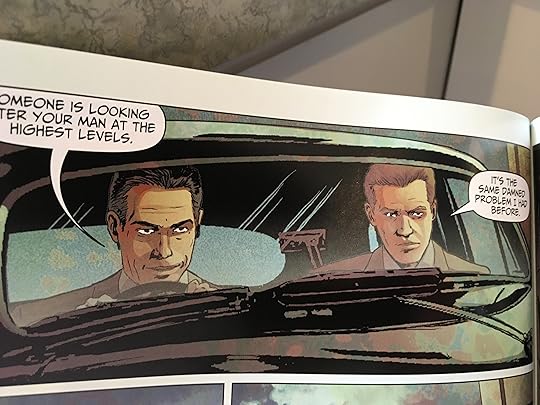
ugh, same two dudes, same car, two pages apart
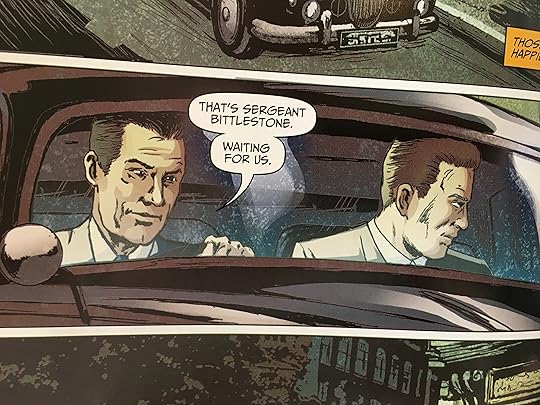
it's like he's talking to his doppelganger
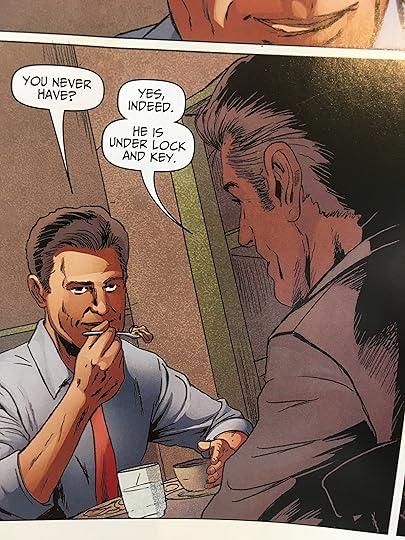
what IS this expression?
ugh, same two dudes, same car, two pages apart
it's like he's talking to his doppelganger
what IS this expression?

November 22, 2020
Interesting little peek into Nightingale's history

May 30, 2020
Aaronovitch and Cartmel take a step back and tell a story of Nightingale mostly set in the '50s. It's a fun little story of friendship and a Ripper-esque foe. Perhaps not quite as good as our modern-day stories, which their more robust supporting casts (and Beverly), but a good change of pace and a good look back.
My favorite parts actually aren't the main story but the few pages we get set during WWII and the couple of funny strips at the end. A bit sad that the main story isn't the best part, but some of those strips are drop-dead-funny.
In any case, unlike most of the licensed spinoffs I've read lately, the Rivers of London ones are 100% worth reading, and this one is noe xception.
My favorite parts actually aren't the main story but the few pages we get set during WWII and the couple of funny strips at the end. A bit sad that the main story isn't the best part, but some of those strips are drop-dead-funny.
In any case, unlike most of the licensed spinoffs I've read lately, the Rivers of London ones are 100% worth reading, and this one is noe xception.

July 14, 2020
Is it this book's fault that I am not into reading stories about the violent, fetishized victimization of women? I mean, maybe. That's pretty much what happened. There wasn't really much of a glimpse of Nightingale's past. I mean, I'll keep reading them because they're fast, but...
There was some interesting historic information at the back, which I did appreciate. More in-depth than I would have expected. But really the story... wasn't much. Also, I thought that magic usually made things stop working by frying the electronics. So I want to know how Nightingale downed the planes, and made the revolver stop working.
I will read the books again at some point, but ... I think I will skip the comics whenever that happens.
There was some interesting historic information at the back, which I did appreciate. More in-depth than I would have expected. But really the story... wasn't much. Also, I thought that magic usually made things stop working by frying the electronics. So I want to know how Nightingale downed the planes, and made the revolver stop working.
I will read the books again at some point, but ... I think I will skip the comics whenever that happens.

January 10, 2020
Wieder eine kurze Geschichte im Rivers of London Universum. Diesmal mit einer Rückblende aus Nightingales Vergangenheit. Ich mochte die eigentliche Story, hab bei den kurzen Geschichten am Ende sehr gejubelt und fand die zusätzlichen Informationen am Ende super interessant. Irgendwie finde ich Britische WWII Geschichte total faszinieren. Die Teile über Polizeihunde und das Atomkraftwerk waren cool und spannend.

December 17, 2019
2 stars
I’m a completionist or I wouldn’t bother. Wish Ben Aaronovitch would drop the comics but since he occasionally references them in main books I’ll carry on. Have taken to sneakily reading them in bookshops before returning them to the shelves though. Don’t have disposable income to waste on this guff.
I’m a completionist or I wouldn’t bother. Wish Ben Aaronovitch would drop the comics but since he occasionally references them in main books I’ll carry on. Have taken to sneakily reading them in bookshops before returning them to the shelves though. Don’t have disposable income to waste on this guff.

October 27, 2020
It was cool to get some of Nightingale's backstory. Getting to see him take out some Nazis, especially a Nazi serial killer of women, was entertaining. Peter takes the back seat in sort of a narrator role.
I also enjoyed the non-fiction bits about historic elements referenced in the story.
I also enjoyed the non-fiction bits about historic elements referenced in the story.
This entire review has been hidden because of spoilers.

January 20, 2024
I'm starting Rivers of London, I followed the chart & I read this first...
Problem: I don't have the emotional connection yet to care about the apparently very important info we've received? I'm still interested in the series, & I'll probably reread this after GN 6 to see if my rating changes.
Problem: I don't have the emotional connection yet to care about the apparently very important info we've received? I'm still interested in the series, & I'll probably reread this after GN 6 to see if my rating changes.
Displaying 1 - 30 of 157 reviews