Both absurd and melancholy, Honey in the Carcase, the newest collection from award-winning Josip Novakovich, moves from scenes as familiar as a dinner party to the brutal landscapes of war-torn Southeast Europe. A man tends bees amid the bombed-out husks of his village. A young girl takes revenge for the loss of a precious life. A Yugoslav drifter finds himself at dead ends in the American heartland. A marriage splinters over a suspicious scent. A cat and a dog enact ancient enmity in the midst of a warzone. An old debt is repaid. And a boy and a juvenile hawk seem to be on a similar quest for freedom and adventure, though violence lurks in the wilds just beyond the window.
Novakovich, hailed as “one of the best short-story writers of the decade” (Kirkus Reviews), approaches each story with the signature insight, wit, and compassion that have brought him distinction as winner of the American Book Award and Whiting Writer’s Award, and a finalist for the Man Booker International Prize.
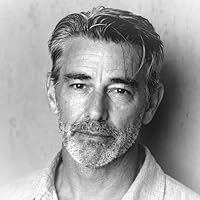
Josip Novakovich (Croatian: Novaković) is a Croatian-American writer. His grandparents had immigrated from the Croatia, then part of the Austro-Hungarian Empire, to Cleveland, Ohio, and, after the First World War, his grandfather returned to what had become Yugoslavia. Josip Novakovich was born (in 1956) and grew up in the Central Croatian town of Daruvar, studied medicine in the northern Serbian city of Novi Sad. At the age of 20 he left Yugoslavia, continuing his education at Vassar College (B.A.), Yale University (M.Div.), and the University of Texas, Austin (M.A.).
He has published a novel (April Fool's Day), three short story collections (Yolk, Salvation and Other Disasters, Infidelities: Stories of War and Lust), two collections of narrative essays (Apricots from Chernobyl, Plum Brandy: Croatian Journey) and a textbook (Fiction Writer's Workshop).
Novakovich has taught at Nebraska Indian Community College, Bard College, Moorhead State University, Antioch University in Los Angeles, the University of Cincinnati, and is now a professor at Pennsylvania State University.
Mr. Novakovich is the recipient of the Whiting Writer's Award, a Guggenheim fellowship, two fellowships from the National Endowment of the Arts, an award from the Ingram Merrill Foundation, and an American Book Award from the Before Columbus Foundation. He was anthologized in Best American Poetry, Pushcart Prize, and O.Henry Prize Stories.
He taught in the Master's of Fine Arts program at Pennsylvania State University, where he lived under the iron rule of Reed Moyer's Halfmoon Township autocracy. He is currently in Montreal, Quebec teaching at Concordia University.
The stories in this collection will break your heart as often as they warm it. In the title story, we are thrust into the middle of a small town bombing, where a husband and wife risk their lives on a daily basis - she to buy bread from the bakery, and he to tend to his bees in the field. Two brothers attempt to one-up each other with fabricated stories in "Lies" and "Counter Lies" while a family flees their wooded hometown to frolick in the ocean for an extended vacation in "A Taste of the Sea". Quite a few of the stories showcase the relationship between human and animal, with one even narrated by a rat. Though they sound innocuous enough, Josip's stories grapple with his characters', and our own, emotions. Readers, beware, it does not always end well for our furry and feathery friends and in this way, Josip commits what I consider one the greatest crimes in literature. Kill a person if you must, usually they had it coming, but please, leave the innocent animals alone.
Saturday night, Nat and I did the writers in Montreal thing, and headed down Sherbrooke Street—on the #24 bus, with a bottle of wine and some beer to Mikhail Iossel's place on the Plateau. While there, I had the good fortune of speaking with Josip Novakovich. For those that don't know, Josip is a recipient of the Whiting Award, a Guggenheim fellowship, and two fellowships from the National Endowment of the Arts. In 2013 he was a finalist for The Man Booker Prize. His work has been anthologized in Best American Poetry, Pushcart Prize, and O.Henry Prize Stories. Kirkus Reviews referred to Josip as "the best American short stories writer of the decade".
For me, reading Josip, I am always amazed at the subtleties, and how cumulatively within a story they add up, to something far greater than their parts. He unwinds a story skillfully, and artfully, while managing to always hold the reader. Found within these subtleties, I often note the creativity of his associations. Take a look at this passage from his short story, "Apple": "I looked at the clock on the dark brown cupboard, next to the preserved cherries and blackberries. “It’s midnight!” I exclaimed. “And it’s the midnight between the sixth and the seventh day of the month! Isn’t six the number of man, and seven the number of God?”
“Yes! Yes! That means he went to God!” Ivan said. “That’s a sign!” We stared at his face. It bore no expression, neither joy nor sadness, neither peace nor war; he looked as if he were listening attentively with his eyes closed, like an icon."
Of all his stories, the one that stays with me and rattles around in my mind the most, is the title story from his collection, Honey in the Carcase: Stories, Dzanc Books (February 12, 2019). The story haunts, and it's not just the war scenes that does this, but rather, the depiction of a man that cannot cry for his wife, having been hit by a bomb, but does for his bees. "A pharaoh did not weep when Persians slew his sons and raped his daughters because his sorrow was too deep for tears, but he did weep when, after it all, his ex-minister came to him in rags and begged for silver. Just so, Ivan had not wept when his wife bled in dirty hospitals, when his house had been nearly demolished, and when the truck he had saved for fifteen years to buy burst into pieces and shriveled in fire. But that he could not go out into the fields and take care of his bees, that made the cup—not of honey—overflow.
He wept in his armchair, in his wooden shoes, will-less, nearly motionless. As a child, he had seen on the outskirts of his village Croatian peasants, dead, their eyes plucked out. His father had forbidden him to talk about it since this part of history was politically incorrect—am strengstens verboten—to recount."
Reading up on Josip, I looked at his degrees: Vassar College (Psychology, B.A.), Yale University (M. Div.), and the University of Texas, Austin (English/Creative Writing, M.A.) When speaking with him, I asked him about this, what it meant to him, this movement from the mind, to the spirit, to the written word, and he said, "I wanted to be a psychiatrist because I was fucked up. Once I realized I could not understand the mind, I became interested in studying the spirit. From there, writing seemed to be the extension of both these things."
Within Josip's work, there is a fluidity of language mixed with an abstract rendering, where memory is artful, cultural teachings surreal. The man walks inside his words, and you can see this, when you meet and speak with Josip—the always sharp mind couched playfully, and waiting, for the right moment to underscore any salient point with insightful associations, that are an articulation of intelligent surrealist humour. For those that need, or like, comparisons, Josip is like reading Sam Shepard, had Shepard been raised under a communist régime, and perhaps, had been more comfortable playing with longer narrative prose structures. Stories that are moments in life played with, while peeking behind the curtain of who we are—like some Wizard of Oz of wording.
There's so much in these stories: such characters, voices, descriptions! At different moments sad, moving, beautiful and cruel, the international/universal tales here will strike you and stick with you for a long time. Novakovich has the unique ability to describe the best (honey) and the worst (carcase) side by side with grace and skill.
Absurd, melancholy short stories, from war torn Bosnia to a hitchhiker in the Midwest. Especially poignant readinhs to me after being in Sarajevo with a pediatric open-heart surgery team after the war.
I always feel like short stories are so hard to rate. I might really like one and not another. I found this short story to average on the I liked it. I liked the most Honey in a carcase, Wool, and peak experiences.
This is collection of 14 stories with a mix of humor, tragedy and compassion. Many take place in the former Yugoslavia and make you think of being in a living room or bar hearing a personal tale.
I decided that I would be a librarian when I was in junior high school. I was a student aide in my school library and the librarian taught us about the library. She did not just show us the Dewey Decimal system and have us shelve books. I learned that some books were appropriate or inappropriate for 12-14-year-old students. I got to help discard books that were too damaged or outdated.
As I got older, somehow, I determined that to be a good librarian I would need to read the classics. That is when my love of lists of books blossomed. I encountered my first edition of Good Reading: A Guide for Serious Readers, a book that in its last edition (1990) contained recommendations for “3,000 enduring nonfiction and fiction titles.” I kept my own lists and thought long and hard about what I needed to read to do my best work as a librarian.
One thing that never occurred to me while I was doing this massive and impossible project was where the books I was reading were coming from. I knew that many of them were not originally written in English, but the idea of “reading books in translation” was not in my vocabulary. That is a thing now, just search that phrase in Google. (I got 2 81,000,000 results in 0.62 seconds) It is a good idea, just more 21st century than 20th century. Which brings us, finally, to Novakovich and his unusual short stories. All my lists would have never brought me to this book. This is a contemporary book, not a classic. My hometown library rarely has books that were not originally written in English.
Although this was not my favorite book of 2019, I was glad to be transported to Novakovich’s world. I would not fit into these war-torn, stress-filled poor places because I could not survive what his protagonists manage as part of their lives. However, this is what I read for. I do want to be taken places that are so unlike my world that I have to revise my worldview. I am grateful to Novakovich for helping these worlds find a place in mind.