

What do you think?

Objevování dítěte
Maria Montessori začala svou pedagogickou dráhu prací s dětmi, které trpěly mentálním postižením. Docílila toho, že tyto děti složily zkoušku ze čtení a psaní určenou pro děti bez postižení. To ji podnítilo k tomu, aby svou metodu uplatnila i ve vzdělávání zdravých dětí. Právě tímto obdobím se zabývá kniha Objevování dítěte, kterou Maria Montessori napsala na samém začátku své pedagogické výzkumné činnosti. Systém montessoriovské pedagogiky je tu představen jako výsledek autorčina hledání a ověřování nejvhodnějšího způsobu vzdělávání malých dětí nejen ve školách a předškolních zařízeních, ale také v rodině. Vychází z poznávání potřeb malého dítěte, učí rozvíjet jeho přirozené schopnosti a smyslové vnímání. Kniha nejenom, že vysvětluje vědecké základy autorčina přístupu, ale seznamuje i s metodami a nástroji, které rozvoj jednotlivých vloh (jež souvisejí např. s pohybem, vnímáním, psaním, čtením, řečí, počítáním, kreslením, hudbou či náboženstvím) podporují a usměrňují. Vzdělávání v tomto systému není chápáno pouze jako příprava na školu, ale příprava pro život.
Maria Montessori (1870–1952) byla všestranná italská pedagožka, filozofka a a vědkyně. Je známa především svými novými pedagogickými metodami. Vystudovala medicínu, filozofii a psychologii, zabývala se antropologií, biologií a pedagogikou. Po celý život nepřestávala studovat. V její práci se vzájemně ovlivňovala teorie a praxe. Práce Marie Montessori není založena jen na teorii. Její síla spočívá v praktickém uskutečňování myšlenek. Převážnou část jejich prací tvoří výklady pozorování dětí a zdůvodňování pedagogických experimentů.
Maria Montessori (1870–1952) byla všestranná italská pedagožka, filozofka a a vědkyně. Je známa především svými novými pedagogickými metodami. Vystudovala medicínu, filozofii a psychologii, zabývala se antropologií, biologií a pedagogikou. Po celý život nepřestávala studovat. V její práci se vzájemně ovlivňovala teorie a praxe. Práce Marie Montessori není založena jen na teorii. Její síla spočívá v praktickém uskutečňování myšlenek. Převážnou část jejich prací tvoří výklady pozorování dětí a zdůvodňování pedagogických experimentů.
352 pages, Paperback
First published January 1, 1909
About the author
Maria Montessori
609 books727 followersMaria Montessori was an Italian physician, educator, philosopher, humanitarian and devout Catholic; she is best known for her philosophy and the Montessori method of education of children from birth to adolescence. Her educational method is in use today in a number of public as well as private schools throughout the world.
Ratings & Reviews
Friends & Following
Create a free account to discover what your friends think of this book!
Community Reviews
Displaying 1 - 30 of 44 reviews

June 24, 2018
One of the most shocking parts of this book are references to God. This is awful. This woman is so wise, empathetic and passionate and when it comes to faith she’s blind and just stupid. But... I agree with everything except faith and religious parts.

August 2, 2021
This is a truly amazing read because she discovered through observation what we are now uncovering and making practice thanks to neuroscience. Montessori was a product of her time, so there is some archaic language but in her time she was an innovator. The book has not been re-printed for over 40 years, so many aspects of the format are antiquated.

October 13, 2008
A good book, but this would not be my first recommendation of a Montessori to others. The approach is more scientific here, and I would guess, of more benefit to those who have had Montessori teacher-training (unlike myself). It is full of interesting information and stories, but I did not find this work as fascinating as The Secret of Childhood, and in fact at times returned to it with little enthusiasm. The best of it I found to be in the last 40 or so pages! The chapter on religious education is a MUST-read for anyone with any inkling of interest in the subject!
One of my favorite quotes:
"No one can be free if he is not independent, therefore, in order to attain this independence, the active manifestations of personal liberty must be guided from earliest infancy."
An excerpt from the chapter on religious education:
"A priest gave the children instructions in religion and celebrated Mass in the chapel. Just as soon as it had been completed and opened up to the children, we witnessed something that had not been anticipated. We discovered in many respects that the church is a kind of goal to which our method is orientated. Some of the exercises which did not seem to have any definite external goal in the school found their practical application within the church. The silence which had prepared a child to recollect himself now became that inner recollection to be observed in the house of God, in these half-dark surroundings, broken only by the flickering of candles. Walking silently, keeping still, moving chairs without creating a disturbance, standing up and sitting down and passing between benches and people without making a sound, carrying fragile objects without damaging them in the process, as for example, vases filled with flowers to be put at the foot of the altar, and lighting candles without spilling wax on hands and clothes were little more than repetitions and practical applications of what a child had already learned to do within the walls of the classroom."
"They must therefore appear to these tender minds as the goal of their patiently endured efforts. And they are a source of sentiments of gratitude, joy, and a new sense of dignity. The children carried out these [practical life] exercises at first in response to an inner impulse, but without a definite external goal. They later performed them out of respect for God's service and experienced what was almost a revelation of the difference between the two modes and places. It was like the difference between sowing and reaping. The very act of distinguishing between similar activities that have varied meanings and uses is in itself another important source of intellectual growth. A child of four does not fail to notice the difference between the holy-water font in which he dips his slender little finger to bless himself and the basins in a neighboring room where he washes himself. Such intuitions as these in recognizing differences in things that are
alike afford a real exercise for the intellect. A small child, who is thought to be almost incapable of rising to concepts that transcend the senses, begins to make such distinctions when he begins to realize that he is a son of God lovingly invited into the house of his Heavenly Father."
[One woman said to her, do you know why my grandson likes to come to school in time for mass? Because he enjoys extinguishing candles in the basin of water, that is all. Why not use this exercise to teach counting as the candles are extinguished? Maria said this woman knew little of children- her exercise would have lasted about a week- as long as it takes children to learn to count to ten.] "But children, as they grow in age and general knowledge, whether of a secular or religious character, will continue to light candles for years which will burn themselves out before the tabernacle. And they will understand that this is no childish game but a truly religious act because it is carried out in a sacred place preserved for the worship of the Lord."
One of my favorite quotes:
"No one can be free if he is not independent, therefore, in order to attain this independence, the active manifestations of personal liberty must be guided from earliest infancy."
An excerpt from the chapter on religious education:
"A priest gave the children instructions in religion and celebrated Mass in the chapel. Just as soon as it had been completed and opened up to the children, we witnessed something that had not been anticipated. We discovered in many respects that the church is a kind of goal to which our method is orientated. Some of the exercises which did not seem to have any definite external goal in the school found their practical application within the church. The silence which had prepared a child to recollect himself now became that inner recollection to be observed in the house of God, in these half-dark surroundings, broken only by the flickering of candles. Walking silently, keeping still, moving chairs without creating a disturbance, standing up and sitting down and passing between benches and people without making a sound, carrying fragile objects without damaging them in the process, as for example, vases filled with flowers to be put at the foot of the altar, and lighting candles without spilling wax on hands and clothes were little more than repetitions and practical applications of what a child had already learned to do within the walls of the classroom."
"They must therefore appear to these tender minds as the goal of their patiently endured efforts. And they are a source of sentiments of gratitude, joy, and a new sense of dignity. The children carried out these [practical life] exercises at first in response to an inner impulse, but without a definite external goal. They later performed them out of respect for God's service and experienced what was almost a revelation of the difference between the two modes and places. It was like the difference between sowing and reaping. The very act of distinguishing between similar activities that have varied meanings and uses is in itself another important source of intellectual growth. A child of four does not fail to notice the difference between the holy-water font in which he dips his slender little finger to bless himself and the basins in a neighboring room where he washes himself. Such intuitions as these in recognizing differences in things that are
alike afford a real exercise for the intellect. A small child, who is thought to be almost incapable of rising to concepts that transcend the senses, begins to make such distinctions when he begins to realize that he is a son of God lovingly invited into the house of his Heavenly Father."
[One woman said to her, do you know why my grandson likes to come to school in time for mass? Because he enjoys extinguishing candles in the basin of water, that is all. Why not use this exercise to teach counting as the candles are extinguished? Maria said this woman knew little of children- her exercise would have lasted about a week- as long as it takes children to learn to count to ten.] "But children, as they grow in age and general knowledge, whether of a secular or religious character, will continue to light candles for years which will burn themselves out before the tabernacle. And they will understand that this is no childish game but a truly religious act because it is carried out in a sacred place preserved for the worship of the Lord."

Read
June 29, 2018Danny from The Shining, is that you? Just stopping by to say WHY would anyone choose this as the book cover photo? Please give this child a moment of your attention and reflect with me. Why is your tongue out Danny? This book is required reading for a class I’m taking, but I can barely touch this book without feeling disturbed; have to remove it from my bedroom at night so that Montessori Danny doesn’t haunt my dreams.

Want to Read
July 28, 2025Matt bateman on reading about montessori: “Discovery of the Child²—If you read just one thing, let it be this!
Read
October 21, 2022I read this book in 1973 in teacher's college: Montessori Method was taught in conjunction with Piaget's Developmental psychology and Kohlberg's extension of that into the moral methodology of decision making as it evolved in the human through to adult-hood.
Quite revelatory.
Some years later, my daughter was doing algrebra and trigonometry problems in 3rd grade with rods and blocks. She knew "what" she was doing, she did not know what it was called (and who cares?)
Needless to say we need more child-based learning methods and less top-down indoctrination. I graduated before there was a Department of Education to endorse travesties like CORE curriculum.
If you are a parent trying to decide between a Montessori school or pre-school and a "normal" school, this book won't help much because it is Maria's story. Hainstock's review, also dating from this time, is far better for the parent looking to find out. If you are thinking of education as a career, then this book is essential.
Quite revelatory.
Some years later, my daughter was doing algrebra and trigonometry problems in 3rd grade with rods and blocks. She knew "what" she was doing, she did not know what it was called (and who cares?)
Needless to say we need more child-based learning methods and less top-down indoctrination. I graduated before there was a Department of Education to endorse travesties like CORE curriculum.
If you are a parent trying to decide between a Montessori school or pre-school and a "normal" school, this book won't help much because it is Maria's story. Hainstock's review, also dating from this time, is far better for the parent looking to find out. If you are thinking of education as a career, then this book is essential.

December 5, 2019
مونتيسوري هي أول امرأة إيطالية تخرجت من كلية الطب بجامعة روما عام 1896. وعملت بعد تخرجها في مؤسسة للأمراض النفسية للأطفال المتأخرين ذهني! كانت مهمتها الأساسية العناية بهم ولكنها استطاعت الغوص داخل أرواحهم باحثة عن قدراتهم الكامنة!
جمعت خبرتها في هذا الكتاب ضمن مقارنة ما بين الأطفال العاديين والمتأخرين! وأهم ما يمكن تعلمه وكيفية البدء بكل نشاط كالقراءة والكتابة والموسيقى مع شرح مفصل للتمارين المستعملة والمعدات اللازمة.
جمعت خبرتها في هذا الكتاب ضمن مقارنة ما بين الأطفال العاديين والمتأخرين! وأهم ما يمكن تعلمه وكيفية البدء بكل نشاط كالقراءة والكتابة والموسيقى مع شرح مفصل للتمارين المستعملة والمعدات اللازمة.
September 2, 2011
Rather dry, but this has a lot to do with the older, scientific style of her writing. As it applies to the education of children, it is very interesting. It reinforced my conviction that the Montessori method is the best way for my son to be educated!

August 14, 2018
Skutočne podrobný vhľad do pedagogiky Marie Montessori. Nájdete tu nielen základ a históriu jej práce, ale hlavne veľa podrobných a kontrétnych tipov.
Svojim rozsahom vhodné skôr pre učiteľov. Pre mňa, bežného rodiča, ktorý nechce ísť výlučne montessori smerom, to bolo až príliš popisné.
Svojim rozsahom vhodné skôr pre učiteľov. Pre mňa, bežného rodiča, ktorý nechce ísť výlučne montessori smerom, to bolo až príliš popisné.
September 29, 2012
Great insight into an outstanding mind and leader in the understanding and importance of educating the whole child.

Read
June 4, 2025dnf - read several lengthy excerpts from all throughout the book during the school year. some of it was very interesting. some of it didn’t apply to my role or interests at all so I skimmed.

Read
May 6, 20231. The education of even a very small child does not aim at preparing him for school but for life.
2. Education is a contact of souls.
3. This is the first duty of an educator: to stir up life but leave it free to develop.
4. The material puts a child in communication with himself and opens up his soul so that he can act and express himself.
5. A child is dominated by an unconscious need to develop himself. Human soul developing according to its true nature is what makes us call our little ones happy and wonderful children.
6. The secret of all nature is to be found in the soul of a child.
2. Education is a contact of souls.
3. This is the first duty of an educator: to stir up life but leave it free to develop.
4. The material puts a child in communication with himself and opens up his soul so that he can act and express himself.
5. A child is dominated by an unconscious need to develop himself. Human soul developing according to its true nature is what makes us call our little ones happy and wonderful children.
6. The secret of all nature is to be found in the soul of a child.

July 8, 2022
Mi-a plăcut mult de tot cartea Mariei Montessori. Trebuie citită de toți profesorii, educatorii, părinții care militează pentru o educație nonconvențională, o educație în care copilul e lăsat liber, să descopere spontan plăcerea învățării. Rezultatele sunt peste măsură, așa cum s-au dovedit în carte. Am rămas foarte surprinsă la capitolele care făceau referire la învățarea scrisului, cititului și a aritmeticii.
February 12, 2026
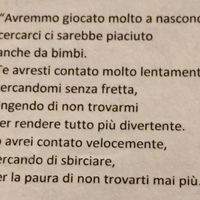
Pura Meraviglia. Recensisco con un paio di frasi che mi hanno colpito, che riassumono alcuni dei punti trattati:
"Chi è servito invece di essere aiutato, in certo modo è leso nella sua indipendenza."
"Il bambino non ha bisogno di stimoli che lo risveglino e che lo mettano in rapporto con l’ambiente reale. Egli è sveglio, e i suoi rapporti con l’ambiente sono innumerevoli e continui. Egli ha bisogno invece di ordinare il caos formato dalla sua coscienza e dalla moltitudine di sensazioni che il mondo gli ha dato."
"Chi è servito invece di essere aiutato, in certo modo è leso nella sua indipendenza."
"Il bambino non ha bisogno di stimoli che lo risveglino e che lo mettano in rapporto con l’ambiente reale. Egli è sveglio, e i suoi rapporti con l’ambiente sono innumerevoli e continui. Egli ha bisogno invece di ordinare il caos formato dalla sua coscienza e dalla moltitudine di sensazioni che il mondo gli ha dato."

January 14, 2023
Ammetto di averlo letto per l'università, ma è un classico che non può mancare nelle librerie di insegnanti, educatori e pedagogisti (sì, probabilmente anche psicologi).
Nell'edizione da me letta in appendice c'è un discorso che fa la Montessori e che riassume tutto il suo studio e che fa comprendere il degrado e il disagio della Capitale della fine dell'800.
Nell'edizione da me letta in appendice c'è un discorso che fa la Montessori e che riassume tutto il suo studio e che fa comprendere il degrado e il disagio della Capitale della fine dell'800.
June 15, 2024
Come studentessa e appassionata di educazione infantile, ho trovato questo libro molto interessante e affasciante. Si tratta di una chiara esemplificazione del metodo Montessori in tutte le sue forme: dalla lettura, alla scrittura, all'educazione religiosa fino a brevi spunti su come deve comportarsi un'insegnante per incoraggiare la naturale curiosità del bambino.
This entire review has been hidden because of spoilers.

March 6, 2025
Po lekturze nadal nie jestem największą fanką Marii Montessori ale czy uważam że jest kompletnie to kosza? Absolutnie nie i miło że zamieściła w publikacji też konkretne praktyki z Domów Dziecięcych. Niemniej mam jeden duży zarzut - Montessori strasznie filozofuje przez co czyta się dość ciężko. Ale well zrzucę to na studiowanie filozofii (do czego się przyznała w samej książce).
January 20, 2019
Nice written book! A lot of practical examples, but more suitable for a teacher that a parent. The focus is on inside class activities than at home. But still the book contains many examples which can be adapted! I recommend it!
April 24, 2021
Montessori Felsefesini ve uygulamasını harika bir dille, sıkmadan, çok uzatmadan ortaya koymuş. Beğendim ama okumam biraz zaman aldı. Hiçbir noktayı kaçırmak istemediğimden dinginlik aradım. Belki de ondandır😊

July 31, 2021
Although written with an audience more familiar with the fundamentals of the Method in mind, Dr. Montessori’s revelatory work in education continues with this book. The method that bears her name works and brings real results: this book has definitely given me much to consider and put into practice in my own classroom. This is a vital book for teachers, Montessorians, and indeed anyone who cares for and works with young children. Follow the child and be amazed at the work they can accomplish.

April 25, 2024
While the work and discoveries of Dr Maria Montessori are nothing short of miraculous, I have removed a star only for the dryness of the writing. The work, however, is commendable to the highest degree.

May 3, 2025
DNF'd at page ~181 or so. I liked her ideas and methodologies but I eventually became too stupid for the book, I think. would give it 3.5 stars on what I read if it was allowed. plus one star for the great cover.
June 22, 2017
It is indeed a very great book and it explains a lot of useful games and learning material for kids but I thought it can be organized in a simpler way and according to age.

December 5, 2018
The book consists of 26 topics. It explains Montessori education briefly. Frankly, I find it short and sweet.

March 23, 2020
Liked it.
If someone wants to understand the Montessori method and why and how it was created, they should read this book instead of the "fancy" books that are out there these days.
If someone wants to understand the Montessori method and why and how it was created, they should read this book instead of the "fancy" books that are out there these days.
July 17, 2020
La mia prima lettura di un libro della Montessori, sono davvero stupita da come alcune considerazioni siano ancora totalmente attuali.

November 4, 2020
If you're looking for the history of the basic materials used in montessori method, this book will provide you those informations. From the sizes to rule of thumbs.
February 9, 2021
Momtessori felsefesini anlayabilmek için güzel bi başlangıç dönemin koşullarını bilmekte fayda var. Ancak o zaman daha anlamlı olacaktır diye düşünüyorum

February 4, 2022
I think I'm in love...
September 30, 2023
Très intéressant ! On apprends vraiment les prémices de cette méthode, et comment elle fonctionne 😊🙏🏻
Displaying 1 - 30 of 44 reviews