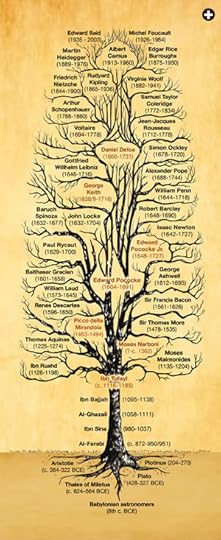
İbn Tufeyl’in Hay bin Yakzan’ı, İbranice, Latince ve İngilizce çevirileriyle, Pico Della Mirandola, Locke, Rousseau gibi isimler dahil olmak üzere, klasik İslam felsefesinden Rönesans hümanizmine ve Avrupa Aydınlanması’na kadar uzanan geniş bir tarihsel alanda, otodidaktizm tartışmalarının esin kaynağı olmuştur. Avner Ben-Zaken’in çalışması, metnin bu dolambaçlı seyahatini, farklı kültürel ortamlarda yol açtığı tartışmaları ve bu ortamlara nasıl uyarlandığını gösteriyor. “On İkinci Yüzyıl’dan bir Arapça metnin, Batı tarihinin dört dönemindeki macerasını izleyen büyüleyici bir çalışma.” -Bernard Bailyn, Harvard Üniversitesi-
Let's see here. I was very interested in the subject matter, and this book by Avner Ben-Zaken helped explain the influence of Ibn Tufayl's Hayy Ibn Yaqzan on autodidactism and the European enlightenment. Generally speaking, if I have underlined and made a lot of notations in the book, it means I got a lot out of it. This book was heavily marked.
Sapere Aude: Dare to know.
"The seminal empiricism Ibn Tufayl expressed in Hayy Ibn Yaqzan was rooted in both classical and Muslim sources. It helped inspire not only Narboni, della Mirandola, the Pocockes and Defoe, but also authors, philosophers and scientists who all drew on his and related ideas to debate and define modernity, up to the present."Tom Verde who writes an excellent review: http://www.aramcoworld.com/issue/2014...
I read this like a mix of Robinson Crusoe, The Doors of Perception, and the Tao de Ching. The story covers a lot, but it continually made me think without it becoming exhausting.
The book begins as a surprisingly charmingly morbid Jungle Book-like story and ends with the lone character Hayy gaining the truths of the humanity(actually). Hayy throughout the book is curious and constantly questioning, representative of both philosopher and scientist. With each question his discoveries grow broader and more metaphysical as he moves from curious beast, to man, and onwards to something more knowing. This centuries old and deeply spiritual book has influenced much of Arabic and European literature, Philosophy, and Science ranging from Ibn al Nafi, to Isaac Newton, to Cotton Mather, and based on that merit alone deserves to be read.