
What do you think?
Rate this book

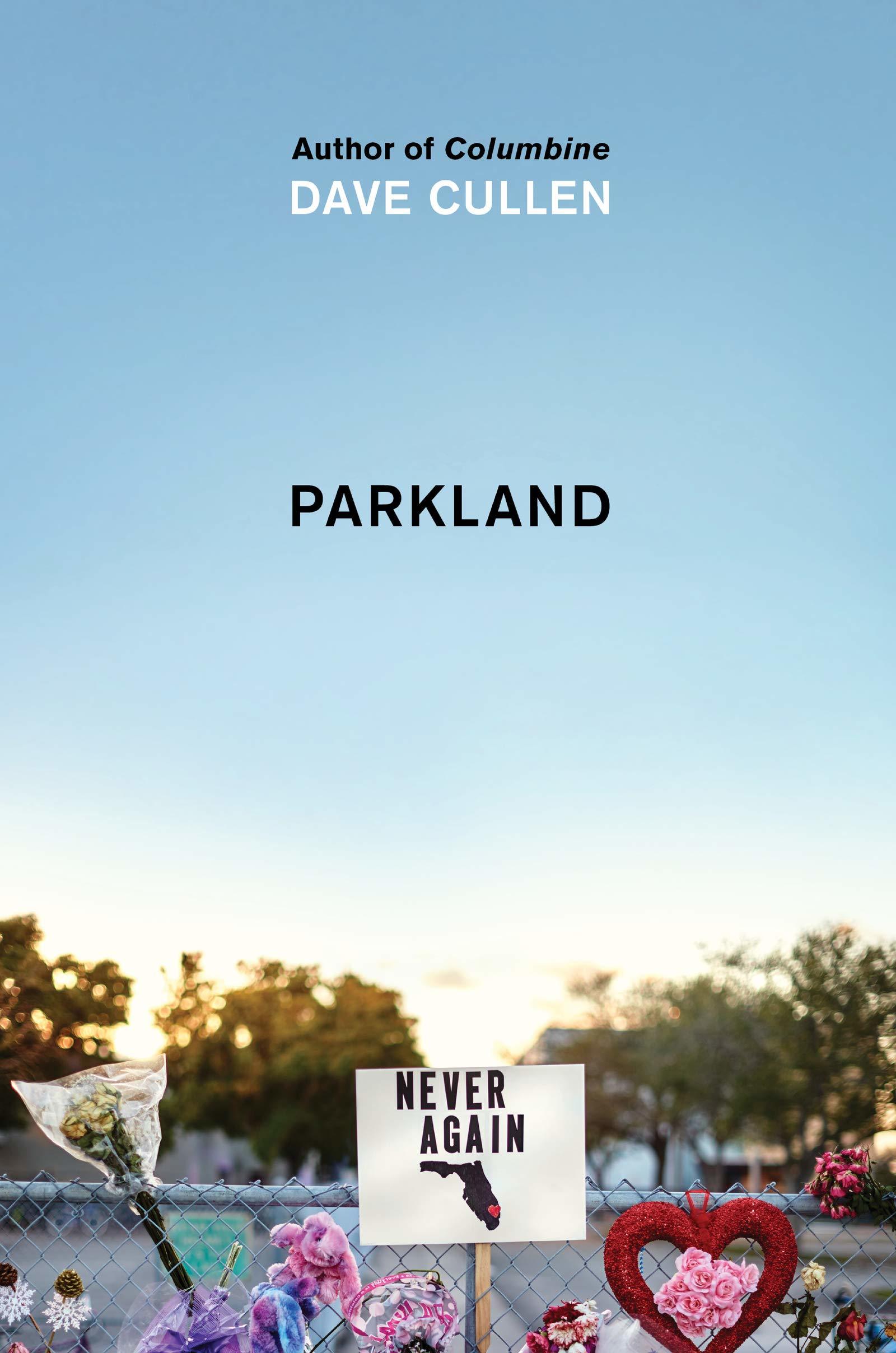
385 pages, Hardcover
First published February 12, 2019


There are strains of sadness woven into this story, but this is not an account of grief. These kids chose a story of hope.
It became clear quickly that suburban kids feared violence inside their school—once in a lifetime, but horrific—and the Chicago kids feared violence getting there. At the bus stop on their porch, walking out of church. It could happen anywhere, and it did… Martin Luther King had preached six principles of nonviolence…The Parkland kids were embarking on #4: “Suffering can educate and transform.”After the seminal Columbine shootings in 1999, Dave Cullen undertook to research the event deeply, to find out what the truth was of the shooters, their motivations, planning, and outcomes, and to dispel the many false notions that had made their way through the media like a Russian virus after the event. In a way it was a whodunit, and a whydunit. His book, Columbine, was an in-depth historical look, examining what had happened, after the fact. This included following up with many of those who survived the attack, for years after.

Archbishop [Desmond] Tutu described March for Our Lives as one of the most significant youth movements in living memory. “The peaceful campaign to demand safe schools and communities and the eradication of gun violence is reminiscent of other great peace movements in history,” he said. “I am in awe of these children, whose powerful message is amplified by their youthful energy and an unshakable belief that children can—no, must—improve their own futures.One could do worse, if looking at how to begin a movement, than to pore through Cullen’s reporting, as the kids of Marjory Stoneman Douglas High School pivot from the physical and emotional carnage of a brutal armed attack on their school to organizing a regional, then national call for gun sanity.
Hogg, in fact, was frequently not on the bus but traveling separately in a black SUV accompanied by bodyguards. If he were a politician, one of the staffers told me, the intensity of interest in him would merit 24-hour Secret Service surveillance. “We get people armed to the teeth showing up and saying, ‘Where’s David Hogg?’ ” Deitsch told me. An outfit called the Utah Gun Exchange had been following the kids on tour all summer — on what it called a pro–Second Amendment “freedom tour” — sometimes in an armored vehicle that looks like a tank with a machine-gun turret.What does it take to build a movement? Why did this movement catch on, and grow? Was it a propitious confluence of events, right time, right place? If Parkland had happened a year or two years earlier, would it have had the same impact? Would the MFOL movement have gained the traction it has garnered?
The NRA seems to take Hogg’s existence as an affront, having tweeted out his name and whereabouts and inciting its approximately 5 million members by perpetuating the falsehood that the Parkland kids want to roll back the Second Amendment. Hogg’s mother, Rebecca Boldrick, says that in June she received a letter in the mail that read, “Fuck with the NRA, and you’ll be DOA.” - from Lisa Miller’s New York Magazine article, David Hogg, After Parkland
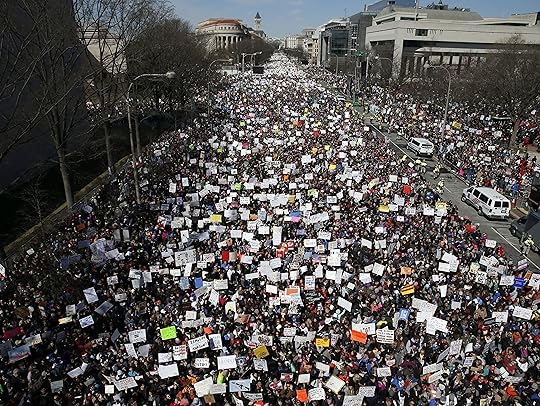
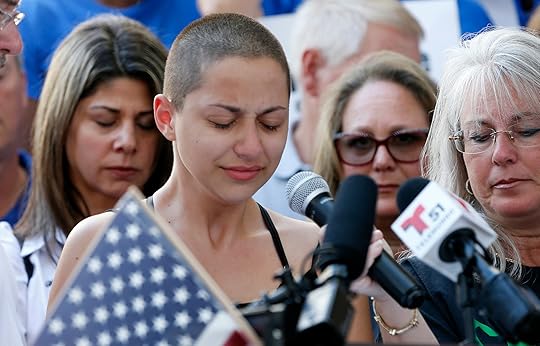
Less than a week after creating her Twitter account, Emma would surpass a million followers—about double that of the NRA. By the summer, Cameron would amass 400,000 followers, David twice that, and Emma at 1.6 million towered over them all.Another element was the availability of supportive adults. This began, of course, with the parents of the organizers, but also some parents of the shooting victims. And beyond the immediate there was input from interested adults from outside the area, people able to offer not only money but media access. George Clooney got in touch, offering not only a sizeable contribution, but a connection to a high-end PR agency. State and national political people got involved as well. One particularly meaningful connection was made with the Peace Warriors in Chicago, local activists whose work in trying to fend off violence dovetailed particularly well with the Parklanders. The relatively wealthy suburban kids were worried about violence in their schools. The Peace Warriors lived in a world in which getting to and from school unharmed was the challenge. The joining of the school safety movement with an urban gun safety movement, was seminal, changing the focus of the Parklanders from school safety to gun safety. Bet you did not hear much about that in the papers.
The Peace Warriors arrived at just the right moment. They helped shape the MFOL policy agenda and the tenor of their approach. They all kept talking: by email, phone, and text. The Parkland kids peppered the Peace Warriors with questions about the six principles, and then burrowed deeper on their own. The more they learned, the more they found it was like listening to themselves—a better, wiser version of the selves they were fumbling toward. How liberating to discover Martin Luther King Jr. had already done all that work. Brilliantly. He had drawn from Gandhi, and it was amazing how well the principles stood up across time, space, and cultures.The stages involved in the group’s growth and how the movement shifted focus makes for fascinating reading. Beginning with the initial rally, growing to larger memorials, then a rally at the state capital, then the nation’s capital, then a cross country bus tour in Summer 2018, from coverage in local news media to national, even global news coverage. Cullen gives us enough without overwhelming with too much detail on the challenges involved in the logistics of making rallies, tours, and marches happen, and the upsides and downsides of ongoing national exposure. Some of MFOLs core leaders even decided to keep away from any coverage that might focus on personal portrayals, as media stardom was seen as distracting from the group’s message.
reached back fifty years, and drew a straight line to Martin Luther King Jr., assuring us that “the arc of the moral universe is long, but tends toward justice”—but adding a stern corollary” “That arc doesn’t bend on its own.” Bending it takes a whole lot of us, bending in with every ounce of strength we’ve got.


