A funny and timely debut YA about the toxic masculinity at a famous improv comedy camp
Seventeen-year-old Zelda Bailey-Cho has her future all planned out: improv camp, then Second City, and finally Saturday Night Live. She’s thrilled when she lands a spot on the coveted varsity team at a prestigious improv camp, which means she’ll get to perform for professional scouts—including her hero, Nina Knightley. But even though she’s hardworking and talented, Zelda’s also the only girl on Varsity, so she’s the target for humiliation from her teammates. And her 20-year-old coach, Ben, is cruel to her at practice and way too nice to her when they’re alone. Zelda wants to fight back, but is sacrificing her best shot at her dream too heavy a price to pay?
Equal parts funny and righteous, Unscripted is a moving debut novel that Printz Award winner Nina LaCour calls "a truly special book, written at exactly the right time."
This book somehow manages to be heartwarming, inclusive, and THROW-THE-BOOK frustrating (in the best way) all at once and also the audiobook is excellent and READ BY THE AUTHOR who can somehow do teen girl and man-hunk voices and I have no idea why I didn't listen to it sooner?
It's basically what would happen if an ambitious female team comedian had to deal with the summer camp version of Louis CK.
GUYS. I hit the point where I could NOT stop reading, and I just kept going.
This book is great. There are some aspects that certainly feel a little bit heavy-handed, but I'm also an adult reading YA fiction. I think that they would be great for the true intended audience because perhaps that teen isn't comfortable asking an adult or they don't know how to bring it up. I want to recommend this book to all of my female students who do acting and improv club.
While there are certain aspects that I wish were more developed, and I think the ending could have had a lot more going (it wrapped up quickly). I couldn't help but give it five stars for the way some things were handled.
I appreciated Zelda's strength, I appreciated how developed her character was (she genuinely did seem conflicted even though she was a strong character), and I especially valued how she handled Jake at the end. Sorry for being vague; I don't want to spoil anything.
This was great. I really do recommend it. It takes the #metoo movement and really helps use it to help reshape norms and expectations.
This book tackles important topics, but it's important that important topics are dealt with well, and this was not well-written. The characters were underdeveloped (most of the friends were virtually forgotten about after the dragging intro) and the story felt rushed, and no justice was done to the storylines. I found Zelda annoying, naive and impulsive, and that never changed. Also, if you're going to write about comedy ... it helps to be funny. And this was not. It was cringey, immature and amateur.
**Trigger Warnings: sexual harassment, sexism, bullying, & abusive relationship/grooming**
I have been anticipating this book for so long… so I’m super bummed I’m deciding to DNF it right now.
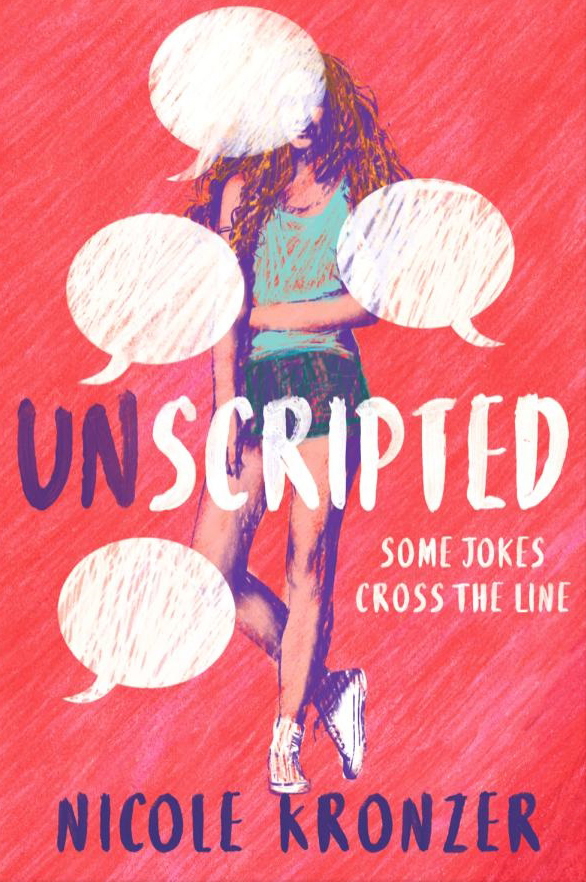
When I first saw this was about a girl who gets accepted to attend an improv camp & has to fight against the sexism and toxic masculinity while being the only girl on her team, I assumed this was going to be like Moxie. While our main character, Zelda, does try to fight against the sexism and bullying she’s facing so far in the book, in the end I couldn’t finish it because of how mad I was getting because of the way she was being treated. When the tagline on the cover says “Some jokes cross the line”, it really means it. I get that this is the topics the book is discussing and like I said, I went in knowing this was going to be a theme in the story, I just don’t want read a book right now that’s going to anger me.
Another big issue that made me upset was how no one in position of power was stepping in while these boys harassed her onstage, which leads to my next point of her coach…. WHY WAS HER COACH FLIRTING WITH HER? Zelda herself is confused on if he’s flirting with her or just being nice, but I feel like I can see it a mile away and I was just not okay with it. He also tells her to get used to the way she’s being treated because “that’s just how it is in the real world of improv & you can’t always run home and cry to your mom” or something like that, and I… I just couldn’t. Despite not finishing the book I can already see him manipulating her and it was just another thing that I just couldn't...
I get what this book is trying to do, and maybe, if I can get myself to finish it, I’ll see that it possibly succeeded in delivering that message, but to not sound like a broken record again, I just can’t right now and I’m not in the mood to be angry or upset from a book I’m reading.
Also, complete side note but the jokes in the book haven’t been all that funny… which I feel like if you have a book set at an improv camp, the jokes should make me laugh? Right?!
A funny and timely debut YA about the toxic masculinity at a famous improv comedy camp
Seventeen-year-old Zelda Bailey-Cho has her future all planned out: improv camp, then Second City, and finally Saturday Night Live. She’s thrilled when she lands a spot on the coveted varsity team at a prestigious improv camp, which means she’ll get to perform for professional scouts—including her hero, Nina Knightley. But even though she’s hardworking and talented, Zelda’s also the only girl on Varsity, so she’s the target for humiliation from her teammates. And her 20-year-old coach, Ben, is cruel to her at practice and way too nice to her when they’re alone. Zelda wants to fight back, but is sacrificing her best shot at her dream too heavy a price to pay?
Equal parts funny and righteous, Unscripted is a moving debut novel that Printz Award winner Nina LaCour calls "a truly special book, written at exactly the right time."
Review: I loved this book it was a very emotional read but it was funny to . This is about Zelda she is going to a improve camp with her brother and his boyfriend. She meets her bunkmates and they are all very different but awesome girls . Zelda has to deal with a coach who is abusive asshole and her teammates are Jerks who don't think girls are funny . A lot goes on in this book Zelda also meets some great boy scouts Jesse namely is my favorite he is actually kind to Zelda and respects her. Ben is a monster he assaults her she kicks him to get away he yells at her tells her the only reason she's on the team is cause she's hot and she's a girl but he's 20 and she's 17 she's a minor yet he touched her inappropriately many times and when she tries to tell the two Paul's in charge they don't listen. She goes on a hike with Jesse and she tells him she likes him and then when she gets back at camp Ben is there and he hits Jesse and then she hits Ben where the sun don't shine and she gets kicked out of camp yep thats logic but she ends up staying with Karen the nurse at boy scout camp. And the police officer asks her if she wants to press charges she thinks about it for a second and then the Paul's say if she doesn't press charges she can come back to camp what a bunch of assholes so she presses charges. They ended up sneaking her back onto camp so she could meet Nina and they do her sketch she wrote . Everyone needs to read this book.
Quotes:
The situation should be if you two are happy together, everyone else should be happy for you. And not gross-happy.”
Lady doctor? I guess that makes you my gentleman patient.” I looked down at his “chart.” “Ah! I see you’ve had a series of brain injuries that make you say inappropriate things.
I was relying on books by Rainbow Rowell and Nicola Yoon and Maurene Goo and on movies like The Princess Bride and Love, Simon
Hey, Ellie. Come on,” Ben said. “Smile.” “She doesn’t have to smile if she doesn’t want to.”
Is that what you want, Zelda-girl?” Hanna asked. She pushed my knee. “Someone who’s only nice to you sometimes?”
If I leave, they’ll have won.” “If you stay,” Sirena mused, “doesn’t that excuse their behavior?
Will stopped walking. “You know, I’m offended by that. Guys everywhere should be offended. ‘Boys will be boys’? What—we’re so out of control we can’t be kind? Thoughtful? Human? ‘Boys will be boys’ aligns us with wild animals. I can think about what I say before I say it. I can anticipate how someone else might feel before I do something. I can keep it in my pants.”
This entire review has been hidden because of spoilers.
Disclaimer: I received this ARC courtesy of Amulet Books at Yallfest 2019. I am grateful for the opportunity to review an ARC for my readers, but this will not influence my final rating. All opinions expressed in this review are my own and based solely on the book.
This book. This book was an accidental pick-up at Yallfest when I was waiting in line for another ARC giveaway, and it was sort of a panic grab. I saw that it mentioned some funnies and feminism, which always is a good combo, and honestly, none of the other books looked as enticing. I hadn't heard a single thing about it, and that's why this book is truly an underrated gem.
I will definitely be picking up Kronzer's other books, should she continue to write, because I loved the ease of her writing. It's easy, it's breezy, and it draws you in until it consumes you. I devoured this book in a day, because I had to know what was going to happen. It starts off light and then gets heavy, but Kronzer's writing never misses a beat.
This book deeps with some super heavy topics, and while you feel it, you also continue to feel a feeling of hope. Our heroine, Zelda, goes to a improv camp, to help hone in her skills to one day make it on Saturday Night Live. When she gets to camp, she discovers that she is one of only 5 other girls at a camp where toxic masculinity is king. She deals with isolation, gender discrimination, and a controlling camp counselor who may or may not be showing more interest in her that is allowed (legally, ethically, and mentally). This story shows Zelda's journey throughout.
I believe that Kronzer did a good job with most of the topics that she took on. It was incredible the amount of feminism and girl power that she shows throughout the story. We are still living in a patriarchal society, and comments that are in this story are things that woman have heard and continue to hear. Kronzer doesn't sugarcoat it, and it's so hard to read at times - but she also shows the resilience of sisterhood and our heroines that showcase mental, emotional, and physical strength. I loved the sisterhood of the Gildas so much, and it's honestly the best part of the this story. It honestly made me feel like I could take on the world again.
Kronzer also did a touching and through job on the abuse that Zelda experienced throughout the book - especially with her camp counselor. Young adults are the biggest age group to experience abuse in relationships, but there are still so few books that I've seen that touch on this topic. This book showed the horrible reality of a girl that is drawn in by an older man after having no romantic experience beforehand and gets drawn into his twisted web before realizing she's in too deep. This story is, yes, focusing on taking on the "man" but it showcases taking on one man who has started to steal parts of yourself. It's incredibly heartbreaking to read, but I felt Kronzer did an amazing job of showing the turmoil Zelda went through, the warning signs of the abuse, and how you can reclaim yourself.
I felt like Kronzer did a good job of making sure both of these topics had adequate time devoted to them so that neither message was lost or diminished. There are a few other plot lines going on throughout the story, and they were all interesting and kept the story going on as well.
I did have one little hesitance with another plot line, though. The romance subplot might have been a little fast? SLIGHT SPOILER BUT ALSO CONTENT WARNING: Zelda meets a Boy Scout from another camp, and they do embark on a romance at a certain point in the novel. Kronzer does do a fantastic job with showing what a healthy relationship looks like compared to Zelda's and Ben's and showcases how a man should treat you - along with sex positivism. However, it felt, well, it felt a little fast? Like, it kind of came up very quickly after things went down with Ben, and it just felt a little rushed and almost tacked on. It didn't necessarily feel like it was having a boy save her, but it just felt...it just felt a little off like he swooped in right after the whole abuse came to light - which was a slightly mixed message. Zelda is almost raped, and then we have a consensual sex positive moment a few days later. Again, multiple people say throughout that she doesn't have to and she can take all the time to heal, so we definitely see both sides of the very important coin. I've never experienced any of what Zelda went through, so I'm not the right person to say anything about the time length of healing and how to heal - I would leave that for a person that has experienced it. However, it just seemed like a very quick amount of time and seemed like the answer was to rush the healing, when I think we could have benefited from a slightly more drawn out timeline.
The characters were amazingly well done. There are a lot of characters in this story, and each one felt like their own distinct personalities. The Gildas were the star of the show for me, and I loved them all. The Boy Scouts were fun (Ricky and his rocks were a jam, and I want a whole story on this man), and Zelda's brother and his boyfriend were fantastic. All of the other characters were complex as well - even when they were terrible people.
Other minor things: I loved the camp setting, and I honestly could picture it so well. It wasn't incredibly funny, but I appreciated some of the humor and there was a great laugh out loud moment. I didn't find myself put out of it, though. I definitely learned a lot about improv as the story continued.
This review is already pretty long, so I'm just going to wrap it up before I continue to ramble. This book blew me away, especially since I had no expectations for it. I thought it was just going to be a little random book, but it hit me so hard. It was certainly the book to read in Women's Reading Month. It does have triggering and hard to read content, but there is a message of hope, healing, and inspiration.
rating: Anna representation: albino side character, black side characters (and love interest), Indian side character, f/f romance, m/m romance, Korean side character content warnings: homophobia, attempted rape (underage, too), underage drinking, consensual sexual content, racial comments read this if you: an underrated but incredibly feminist novel that delivers sisterhood, strength in the darkest time, and healing
See more of my reviews on The YA Kitten! My copy was an ARC I got from the publisher via NetGalley.
Content warnings: homophobia (in jokes antagonistic characters tell), sexism, sexual assault (groping, non-penetrative), mention of past suicidal ideation
I can’t improvise anything to save my life, but I adore improv comedy. Lord, the many, many hours I’ve whittled away watching episodes of Whose Line Is It Anyway? both as a child an adult. Though some of the humor has aged badly, there are still a ton of things I love about it. Though I knew improv comedy (hell, comedy in general) had a dark side to it filled with sexism and harassment, Unscripted brings it into the light through a renowned improv camp Zelda and her brother attend.
Now, this novel is objectively funny. Some of the material Zelda writes is the best kind of absurdist comedy and it got me giggling multiple times. However, you’re unlikely to laugh much at this novel because there’s so much serious stuff going on. Though Zelda’s skill earns her a place on the camp’s varsity improv team, she’s the only girl on it and the rest of the team members are basically Shane Gillis clones. Her coach Ben is an unholy fusion of Louis CK and Chris D’Elia, encouraging her and being flirty in private while mistreating her and destroying her material in team practices.
His behavior leads her teammates to believe Zelda only made it into their group because Ben likes her or she’s been flirty with him, which isn’t the case at all, but it makes Zelda question her own skills. Based on what I’ve heard from many female comedians in their interviews, this is what it’s like to be a marginalized person in comedy. Their material gets stolen, their colleagues make “jokes” out of them in hurtful ways, and they have to endure sexual harassment or else they get harassed and blacklisted out of the business.
Thankfully, Zelda doesn’t have to suffer alone, though she keeps what’s happening to her quiet for a while. She has the support of her brother and his boyfriend, the other girls of Gilda Radner cabin (all the cabins are named after famous improv comedians and Gilda is the camp’s only one for girls), and even the Boy Scouts at the camp next door. One of those Boy Scouts, Jesse, is a nice guy who adores Zelda. Contrast with Ben, who is a Nice Guy and assaults Zelda when she won’t go further with him.
Beyond her mostly-white-boys Varsity teammates, the novel’s cast is pretty diverse. Zelda and her brother are biracial, her brother is part of one of the novel’s two gay couples, there are multiple BIPOC characters, and one of her cabinmates has albinism. It’s representative of the real world and it also underscores how cishet white men harass marginalized people out of the business, leaving the big names of improv and general comedy looking very cis, het, white, and male. It’s not necessarily because they’re the best at what they do. It’s because the marginalized people with just as much talent, if not more, were chased out before they could reach the same level.
Once Zelda’s support system finds out what’s been happening to her at the hands of the other Varsity boys and Ben, they try to alert the camp’s head honchos. When those two cishet white men try to sweep it all under the rug and even kick Zelda out of the camp, that’s when the group bands together to force change by taking it all public. That’s the only way we’ll ever make change in the face of systemic sexism: by working together and supporting one another. The camp is a place of systemic racism and sexism in a microcosm.
I don’t know if I could stomach a reread of Unscripted anytime soon because it goes to such dark places within comedy, but it’s one I recommend to everyone who loves comedy and wants to see things change for the better. I just love this novel so much.
I happened to nab an ARC at YALLFEST and randomly chose a book from my stash to read as I waited in various lines. This book was the random chosen one. For the first 60-70 pages, I thought, "Meh, it's alright. Kind of cheesy." I don't like DNFing anything so I continued on. I'm so glad I did.
The slow and cheesy beginning now makes sense - we are supposed to see Zelda as a carefree kid. She makes stupid jokes, cares a lot about her family, and is obsessed with becoming the best improv actor. Being an actor myself, I can tell you that these people exist. You'll want to smack her in the beginning of the book just like you'll want to smack those people in real life. True story.
The change of tone in this book started out gradual and then became quicker and more out of control. It was almost unbelievable in the quick nosedive it seemed to take, but isn't that an accurate depiction of an abusive relationship? A gradual downturn followed by a seemingly flipped switch? I've never been in an abusive relationship, but that's how it seems to me when I hear about them.
I really liked that this book walked the line between "she asked for it" and "this was definitely not her fault." It would have been so easy to make her a perfect ingenue and play the damsel in distress card. However, this author made the smart choice of making Zelda human - she thinks she wants something, realizes that she doesn't, and then becomes trapped. I liked this choice so much more because it made Zelda relatable and it makes the reader sympathize with someone who without a doubt would be vilified in today's news for "leading him on" or "asking for it" (...excuse me while I vomit.)
I'm so pleasantly surprised by this book. Yes, the quality of writing seems like the work of a debut author, but the plot and the message of the overall story are good, solid things. My advice to you (if you haven't read this yet) is to push through the beginning. It's worth it.
As the #MeToo movement has gathered momentum, there are too many of us who can relate to the stories being told… who ask ourselves how we would or should have responded in similar situations… who have had moments where we were conflicted about whether or not to speak up because we didn’t want to be seen as “rocking the boat.” Nicole Kronzer explores many of these issues in her YA debut, through a story that puts readers in the shoes of Zelda – a smart, funny protagonist who finds that her dream of attending a prestigious improv camp is not all that she’d hoped it would be. There’s a huge imbalance in the male-female ratio at camp for one, and, especially in the otherwise all male group that Zelda has been assigned to, the vibe is confusing and toxic. Her counselor, Ben, alternates between being too personal with Zelda when they are alone and a willing participant in the inappropriate behavior that the rest of the group directs toward her during rehearsals. As Zelda struggles with uncertainty about how to handle Ben’s behavior and the harassment she’s receiving from some of her fellow performers, she also forms new friendships with the girls in her cabin and a sweet trio of Boy Scouts who show that the best relationships are those based on kindness, support and mutual respect. This is a book about standing up to harassment, finding true friendships, the importance of being an ally and the power of finding your voice. Readers will be rooting for Zelda every step of the way.
Thank you, Pippin, for sending me an advanced copy of UNSCRIPTED! I devoured this beautiful debut in one day. So many of us have been in vulnerable situations where we want something so deeply or need acceptance so badly we fall prey to people who make us question our decisions, our gut reactions, and the very essence of ourselves. So many of us have watched people we love "groomed" by manipulative asshats. And so few authors truly capture the complexity of those dynamics. Kronzer nails it. She nails heavy topics like consent, what it means to be an ally, and the trepidatious path of new love.
UNSCRIPTED is a snapshot of these turbulent times, tucked into a forested mountain camp. If you like improv, you'll feel at home in this book. If you like masterfully crafted stories of abuse of power, betrayal, friendship, courage, and redemption, this book will stay with you. And if you are one of those teens with a secret thing for boy scouts, well...buckle up.
once again, a book where the main couple has an uncomfortable age difference (17 and 20. I know it doesn't seem bad, but I CANNOT imagine, when I was 20, looking at someone who was in high school romantically)
but has a lot of 5 stars, so I'll give it a shot.
________________________
But then he said, “Turn around. I made you tense today. Let me loosen you up.” I hesitated. Coaches give back rubs? “Come on, Ellie. Relax.” The corners of his mouth turned up in a way that made me feel I was being ridiculous. “Give me those stiff improv shoulders."
gross. ________________________
TW: sexual assault, emotional and physical abuse
SPOILERS
OKAY. This book was NOT what I was expecting. At all. The blurb made it seem like some fluffy summer romance where our MC would have to overcome some boy's club at camp. I am SO GLAD it wasn't.
My initial critique was that, for a book about a girl who is at an improv camp and wants to work at SNL, I just didn't find the book that funny. I just finished A Girl Called Shameless by Laura Steven, so I was expecting an older tone, something really witty, funny without trying, self-deprecating, sarcastic. And, especially in the beginning, I just didn't really get the humour. I thought, if you're going to base the whole book around a girl wanting to be on SNL one day, it should be funny (and I feel bad for even writing this out, because obviously one of the main conflicts in the book is Zelda dealing with the sexist assumption that girls aren't funny).
However, after a few fake outs with it became clear to me that that was not the real story. Instead, we got this impactful, startling, upsetting story about a girl who goes to a comedy camp with mostly boys, and has to deal with . Do I think the story could have been elevated if Zelda's inner voice was as distinct as Izzy O'Neill from The Exact Opposite of Okay? 100%. But I also can take the book for what it is, which is a commentary on the excuses the world will make for men when a woman tried to "intrude" on male-dominated spaces, like comedy.
And yes, I teared up. And yes, I giggled. I smiled. I loved Zelda's gumption at the end when it came to sticking up for herself (though she did have me rolling my eyes at the excuses she made in the beginning, her refusal to go to The Pauls (though obviously we know how that turned out). I loved the Gildas and their unwavering support of Zelda. The instant belief from the people that really mattered. I loved how Jesse's character juxtaposed Ben's so completely. I loved how Kronzer weaved in some more intersectional themes through the Gilda girls; how, if being respected in the comedy world was a hurdle for Zelda to overcome, it was a mountain for girls of colour, LGBTQIA+ identifying girls, etc.
And I am ECSTATIC that for ONCE, a book isn't romanticizing a relationship between teenagers (and in this case, a 20 year old) with a 3 year age difference (I'm looking at you, The Inheritance Games)
I'll be a quick bitch, by saying I felt the story did drag a bit at the end. But hey, still finished it in less than a day, so.
It's not that it was bad but it was hard to read the MC go through everything. I didn't enjoy reading it for that ...😕 but I also see what the author was trying to do and for that, they did a good job.
Jesse and the Gildas were the best part! Other than that I was waaay too frustrated at all the back and forth of Zelda getting angry and then justifying the sexism 2 seconds later...
I received an Advance Reader Copy from the publisher via NetGalley. This in no way impacted on my view.
Laughter and improv is all Zelda Bailey-Cho has ever wanted, and when the 17 year old gets the chance to take part in a prestigious two week summer camp, with hopefully the opportunity to perform in front of big wigs in the industry, she can’t wait. However, when she arrives at the camp, she’s one of only 5 girls, and the only one to make the Varsity team. Facing all manner of toxic masculinity, sexist jokes, and even humiliation and abuse from her 20 year old coach, Zelda might discover that improv is a difficult place to get a foot in.
This book made me so unbelievably angry! That’s not to say it was a bad book; rather, it’s a book that is so important, and relevant, but the content of it was horrific at times. Admittedly, I went into the book with no expectations. I have a number of books on my kindle app that I’ve yet to read/review, and I’m going through them at random at the minute. I vaguely remembered requesting this one, but thought it would be a nice, cute summer read, all about comedy and improv, and was thrown off by the hard hitting material. Zelda was amazing! She was funny, and caring, and so strong. She deserved her place at the camp, and on the varsity team, but apart from one of the other team members, everyone else was a ‘bro’, who made dead prostitute and sexy secretary jokes about her, and if she commented on it, she was a bitch. Even worse than it all, was the coach, 20 year old Ben. He was charismatic in private, but harsh and neglectful in public. He tried to brush it off by saying he was helping Zelda toughen up, but he abused his position of power, and kissed and assaulted her without her consent. He honestly terrified her, and even foresaw her going to the inept camp leaders, Paul and Paul, and said she had a crush and was being hysterical. When Zelda finally got the strength to go to the two Paul’s and tell her truth, they said she should reconsider and not press charges when the police became involved, or she’d be kicked out of camp. I wanted to jump into the book and throttle them all! I felt for Zelda so much, and was grateful she had her brother and his boyfriend, the other Gilda’s, and even Jesse and the Boy Scouts to help and support her. As difficult as it is to say I enjoyed a book with this content, I did, and can’t wait to see what’s next from this author.
Firstly, this was an equally amazing story while also being so hard to read. Trigger warning for sexual assault and homophobia.
Let me break down why is book is amazing and should be talked about more. 1. Understanding that a lot of industries (especially the arts) have allowed there to be distinction between male and female performers. How we need to end this perpetual state of excluding people because of binary or sexual preferences. That change can happen and we all need to speak up about it. 2. The importance of relationships and talking to those when you need help. (though I would've LOVED if Zelda tried to find help faster I understand that many women don't even confide that information. But I love that we're combating that idea and telling girls their voice matters.) 3. Normalizing that abusive relationships are bad and you have every right to end it. In YA abusive men who kiss girls who are younger or without consent happens too offend. No, it's not sexy to be kissed when you don't want it - even if the guy is hot. This should be obvious by now. 4. Normalizing that supporting women is cool! And that over sexualizing/belittling them doesn't do anything - not even make a good joke. 5. Women and BIPOC are often face with extra difficulties for no reason and besides recognizing that, we need to continue to work towards better change. 6. That verbal and physical abuse is serious. That every person deserves the respect of being believed and time to heal. 7. Lastly but most importantly that women are awesome and that we should continue to look out for each other.
This was an amazing book and I often wanted to throw the book out of frustration, but Zelda's journey is sadly a journey that happens to a lot of people. Her story is necessary and if you can get through the triggering content I would highly recommend this book.
So many hot-button topics packed into 300 pages and yet it didn’t feel like too much or overdoing. Although some of it is triggering, especially if someone has experienced similar situations, there were also many very important underlying (& right in front of your face) messages/lessons. I could not put this book down. I was constantly rooting for Zelda and was so appreciative for the amazing supports she had in her corner - I felt connected to all of the Gildas, Jonas, Will, and the Boy Scouts. I also felt familiar with the Pauls, the Varsity team, and Ben - although I wish I wasn’t. For an author to be able to really paint a picture and pull out the emotions and create believable characters is what makes a GREAT author! The things she experienced unfortunately happen far to often, in varying situations, and I am so grateful to Kronzer for calling it out and saying it like it is. Great read! Can’t wait for the next!
P.S. Thanks to Unscripted I had two back to back mornings of pure exhaustion after late nights glued to the book!
I almost didn't stick with this book, because I found some of the characters to be a bit annoying...but I'm glad I did. The story picked up and has some important messages to be shared with teen girls in particular.
I loved this book! It is such a good exploration of sexism in theatre/comedy and a beautiful journey of a girl trying to find herself. I would love this book to be in my classroom one day.
This book was an excellent read, but it was also very sad. Don't get me wrong, the book itself wasn't particularly sad (wonderful, sweet, infuriating, maybe, and ok, there were some sad moments, but the book itself wasn't terribly sad). But the fact that this book is still so relevant, that it is STILL such an important story. That part is downright tragic. The fact that books like these are still NECESSARY, that this is still a reality is pathetic. Because shit like this shouldn't STILL be a reality. The shit in this story should have been left in the fifties with segregation, when women left the kitchen. It's is infuriatingly that there are still hobbies, interests, professions, etc., that are still "boys clubs". And it is infuriating that being part of something that is traditionally male dominated should still have to come with the expectation that women "suck it up" and deal with rude, disrespectful, demeaning, misogynistic, abusive attitudes and behavior. It is infuriating that things like this still happen, and that people are still doubted and not believed, and even punished when they come forward and/or defend themselves.
But in light of the fact that this shit does still happen, this book makes some excellent commentary, and also, can impart some really valuable lessons, which is of particular value to young female readers, and male readers too (or any gender identity really).
This book not only details what women face every day, and highlights some of the worst behavior of men, but it also highlights what good men look like, and how good men ought to behave. And while the former part sucks, there were moments when I whooped for joy at the latter, because while many guys in this book suck, one in particular, there are some that get it absolutely right (again, one in particular, that I just wanted to hug). So I guess first I'll discuss that piece of shit, Ben, then end on a happy note with the things I loved.
Ben was horrific. Ben was the definition of the harm in excusing men for their shitty behavior with the phrase "boys will be boys." Ben was all kinds of abusive and shitty, and while I hated him, I thought his character was really well crafted. I have known Ben, and I have even cared abut Ben in my lifetime (also, I legitimately do know and care for a person named Ben, who thankfully, is absolutely nothing like the Ben in this book. Anyhow...) The point is, i'm sure at some point in their life, every girl has met someone like Ben. Someone who didn't take them seriously, simply because they were a girl. Or someone who was manipulative and cruel, but also acted like they cared in private, and confused the hell out of us. Ben is a pretty typical abuser, treats this poor girl awfully, but every time he does, comes back afterwards with apologies that sound so sincere that they're accepted. Who acts like a total asshat, but then also acts so vulnerable and sweet that you can sort of understand why he's kind of messed up, and instead of being angry at the shitty behavior, you feel bad for him, and want to make him feel better. Ben is manipulative and toxic, but charismatic and compelling, and excellent at sucking people in, at making the target of his abuse feel for him, care for him, so that he can perpetrate the cycle of abuse, because that's what abusers do. In that sense, much as I hated him, I thought Ben was well-crafted and realistic, and the way he acts was right on the money. And thankfully, things happened quickly enough, and Ben wasn't adept enough at grooming a victim, that Zelda was able to recognize his shitty behavior for what it was, before she was too deep into it to find her way out. Even still, the things Ben did to her in just a single week will haunt her for some time to come. And this story perfectly illustrates how the cycle of abuse works, and the crazy-making way abusers groom their victims, and manipulate them into thinking that thy are somehow at fault, that they aren't victims, but rather instigators, causing their own abuse. This book deftly showed how easy it is for even smart girls to get caught up in that web, and for them to start second guessing themselves, losing their confidence and their self-assurance, for them to get used to being controlled and belittled, until they learn to put up with the abuse, even normalize it. This book does an excellent job of heping people to understand exactly how easy it is to get trapped in a cycle of abuse without even realizing it's happening. And I think that's a really important lesson. Any young person, not just women, can become trapped in an abusive situation, be it a romantic or professional one, and can become the victim of abuse. And young people are especially vulnerable to this, because they don't have the experience with other people that comes from repeated relationships and time. so it's important for the to learn the red-flags that signal abuse, like controlling behavior , and apologies and promises to change things that never come to fruition. Young people need to read this story, and become very familiar with people like Ben so they can learn to avoid him, and better, to report that behavior, or make it know to others so it doesn't continue to happen.
And that also brings up other points that this book touched on. This book deals with a lot, but it also specifically deals with bystanders, and those in a position of authority who sit back and do nothing while bad shit happens, both of which contribute to the problem. People in both those positions sometimes want to think that they aren't at fault, because they weren't the ones behaving badly or hurting anyone else, but doing nothing while someone is hurt is just as bad as committing the actions. Standing by while other people are demeaned, made fun of, treated poorly, whatever, is just as bad. Allowing it to happen and doing nothing to intervene not only condones it, and basically says to the person doing the harming that it is ok to harm someone, but it creates an atmosphere where that sort of thing is permissible, and will actively continue to happen. When people in Zelda's improv group see the way she is treated, and do nothing, even though they might not be the ones treating her badly, they are just as guilty as the rest. And that's another important lesson that this book tackles. Zelda even says something to one boy at the end. She calls him out for saying nothing, for doing nothing, for just standing there while she needed him. As anyone with a conscience, it is our job to stand up for others who aren't in a position to stand up for themselves. Not everyone is capable of defending themselves, and in a world where people are marginalized, the marginalized don't often have the power or strength to stand up for themselves, so it's up to those with more privilege to do so, in order to create a better atmosphere, to make it known that shit like that will not be tolerated and to create a safe space for those people to be in.
And it's also up to people in authority positions to believe someone when they come forward with a problem and need help. Zelda takes a long time to tell anyone about what she's going through because she's worried that no action will be taken, that she won't have enough evidence, that she won't be taken seriously, and she's right to be worried about those things. She isn't helped, even when she asks for it, and she isn't taken seriously, and it's not until things really come to a head and become violent that anyone in a position of authority does anything. This book makes some excellent commentary on the fact that those authority figures' failure to do anything has fostered an environment where the abuse Zelda suffers is permissible, where the "boys club" remains a boys cub by alienating women, because they don't want to have to suffer that abuse, so they exclude themselves. This book brings to light all of these things, and shows us just how toxic a culture like that can be, and how excusing boy for "being boys" perpetuates abuse.
But, on the flip side, this book also shows up what solidarity between women can look like, and what good men can look like. The relationships with the Gildas and the Boy Scouts made me so happy I wanted to jump around. Seriously. The Gildas were so supportive, so caring and helpful to each other. This is what it can look like when women stand up for each other, believe in each other and support each other. Sirena especially was just amazing. I wanted to hug her when she insisted on being in the same room so that Zelda could feel safer, or when Paloma and the other girls cooked up that scheme about menstrual products to get Ben away from Zelda for a while. This is what good friends look like, but they were more than just good friends. They were true-blue allies, who were there for Zelda, who constantly tried to lift her up and remind her of her own value and worth, who encouraged her to say something when things got bad, who grounded her and told her she wasn't crazy, and helped center her back in reality when she got in her head and second-guessed herself.
I also really loved Zelda's brother, and his boyfriend, who did most of the things the girls did, like encouraging Zelda. Every time her brother talked with her when she was defending Ben, helped her to see that the way he treated her wasn't excusable, that it wasn't ok, and that it wasn't her fault, that she didn't do anything wrong, that Ben was the one doing shitty things, every conversation they had made me cheer. Every time Will pushed her to tell someone how awful things were I wanted to hug him. He was so loving and supportive and everything a good sibling should be. I wish everyone had a sibling like Will on their side to help them see things clearly, to be there for them. I LOVED him.
And on the subject of guys, I LOVED the boy scouts. They were also wildly supportive, really good friends, and some of the first people to point out how Ben's, and Zelda's improv team in general were being shitty. They were the first ones to comment on how the team didn't act like a team, but moreover, how the things that the team said to Zelda were inappropriate. And Jesse especially was wonderful. (HUGE props to his sister for teaching him how to be a good man who knows how to treat a woman right.) Jesse always stood up for Zelda, cared about her feelings, but also never pushed her or asked for more than she was wiling to give. He never judged her, was never shitty, and always made sure to check in with her to make sure she was ok with things. He was legitimately everything you'd want in a guy. And all I could think was that in addition to women reading this for the helpful lesson in how to spot abusive behavior (what it looks and feels like), they should read this book to see what a GOOD guy looks like, not just a bad one. And beyond that, I feel like every person (anywhere on the gender spectrum), should read this book and take notes from Jesse, because no matter what their identity or orientation, Jesse is a great model of how to treat a significant other: with respect and kindness. He was so wonderful to Zelda, and so into her for everything she was as a person, and I just ADORED him.
So this book is tough in one sense, it's hard to read about Zelda's struggles, I got so mad hearing hr question herself and defend someone else's awful behavior, I got so frustrated and upset that she got to a place where she'd just take it. And watching other people blame the victim, and defend the abuser was rage-inducing, even more so because I know this still happens in the world all the damn time. But in another sense, it was also really beautiful and triumphant. Zelda does find her courage eventually, and in the end I think she changes things for people. he stands up to Ben, and hopefully her actions have lasting effects at this camp. And if nothing else, it was beautiful to see the solidarity that she built with the other girls in Gilda; they forged such an amazing and uplifting bond with each other. And I was really happy for Zelda to meet someone who treated her with the respect and care that she deserved, for her to finally be able to build some confidence in herself in a relationship sense, and for her to learn what a healthy relationship looked like. What a great book overall, and really relevant still (sadly). But because of it's relevance to our time and the metoo movement and everything, I think this is definitely one that everyone should read.
Unscripted is the debut young adult novel of author Nicole Kronzer. Released in April of 2020, Unscripted is the story of Zelda, a high-school student who loves improvisational comedy. As the novel opens, Zelda and her brother Will are on their way to improv camp at the Rocky Mountain Theater Arts Summer Camp. Zelda’s enthusiasm is quickly dampened when she finds that she’s one of just a handful of girls at the entire camp. The girls don’t even have a counselor for their cabin.
Zelda earns a highly coveted spot on the varsity improv team, coached by the hunky Ben, who is just a few years older than Zelda. Ben is flirtatious towards Zelda when they’re off stage, but during varsity rehearsals he offers her no support and doesn’t protect her from the toxic masculinity of the rest of the all-male team. Really, the first clue that Ben is an idiot is the fact that he has no idea who F. Scott Fitzgerald is. He asks about her name, “Like the video game?” Zelda responds, “And the Fitzgerald.” Ben has no idea what she means, but he finally recalls that Leonardo DiCaprio was in the movie of The Great Gatsby. Zelda tells him, “It’s also a good book.” (p.33)
Unscripted deals unflinchingly with the atmosphere of toxic masculinity at the theater camp, and the novel shows how soul-crushing it is for Zelda to deal with. Unscripted is an excellent novel, and Kronzer paints an effective portrait of how Zelda chooses to navigate the difficult minefield of the camp. Unscripted is also very funny, and the jokes and skits the characters come up with feel authentic. One of the parts I found the funniest was Zelda writing a list of “Funny Dead Bodies,” concluding with “Hitler? That’s punching up. Or other things Nazi-adjacent? …But what are decades-old Nazi bodies doing undecomposed in the woods?” (p.104)
If you’re looking for a fresh new YA novel that tackles a serious topic, but will still make you laugh, check out Unscripted.
When I first tried my egalley of Unscripted, I DNFed. However, I decided to come back and try again with the audiobook. I'm glad I did, because it worked much better for me as an audiobook.
Honestly, I can understand why I DNFed originally, and it was entirely a problem of expectation. If you look at the shelves for this on Goodreads, you get: Contemporary, Romance, Humor, Feminism, LGBT. The expectation is a really hilarious, feminist rom-com, and oh my god that is not what this book is. For one thing, it's not a romance. There is a romance in it, but very little time is spent on that. The genre is absolutely not romance, despite an HFN ending for the couple. The book imo also is not a humor book. Yes, it's set in the world of comedy (Zelda is an aspiring improv comedian, and she is attending an improv comedy camp), but the subject matter is not funny. I also personally found almost none of the actually comedy sketches in the book funny, but mileage may vary there. The LGBT is a reference to the heroine's brother, also at the camp with his new boyfriend, as well as an f/f couple who Zelda becomes friends with at the camp.
The tag that's most accurate for this book is Feminist. What Unscripted actually is is a look into the sexism of the comedy industry. It's a male-dominated industry that leans heavily on punching down and accuses women of being too sensitive if they complain about playing a dead hooker. It looks into the various abuses and the misogyny, including sexual predation. See what I mean? Not a humor novel at all. It's dark and upsetting.
I do think this is a good book if you want an unflinching look at sexism in comedy. If you're looking for a hilarious read or a romantic comedy, I can't recommend it. This seems harsh, but it's not meant to be. It was a pretty good read for me, but I probably wouldn't have picked it up based on what it actually is. If the actual subject matter excites you, I think you'll really enjoy the book.
This book is perfect, and I flew through it in two sittings. I laughed and I cried and I screamed in indignation and I laughed and cried some more.
As an improv junkie, I couldn’t wait to get my hands on a copy of this book. I didn’t know what to expect, because improv is *hard* and writing about improv is even harder. But Nicole does this beautifully. She writes really clever improv bits, has an amazing and diverse cast of characters, and has such great, tension-filled scenes. The sexism that goes on is so infuriating, and unfortunately so realistic. I could go on and on about my thoughts about each scene (especially some amazing ones toward the end) but I don’t want to give away any spoilers.
I grew up going to SNL and UCB as a teen, and it wasn’t until I went to college that I realized all of the casual sexism and racism that had dominated the industry. I was at the unfortunate DCM Assscat in 2011 when an audience member actually gave a monologue *bragging* about an act of sexual assault he committed: https://www.vulture.com/2011/08/one-n... . I sat by and watched as many of my (male) improv idols stood on stage, not saying anything.
It took me a few years to return to improv, and in the ten years since then (jeez I’m old), things have started to change…but they still have a long way to go.
The book has an important message, but it is in no way an issue book—it gets this message across in a powerful and gripping way.
Everyone should read this book and give a copy to all of the young adults—regardless of gender—they know.
As a fellow YA writer (I do not know the author), I just can’t even imagine the amount of work that went into making this level of perfection. 10 out of 5 stars!
Honestly such a good book. I love the characters, they all feel real and good and so diverse and they all struggle with something but they all encourage each other too, such healthy bonds, I just really like this. All of this excluding ben (are there nice bens? I can't think of one), obviously.
Huge, HUGE trigger warning for graphic emotional abuse and sexual harassment and assault as well as some homophobia and racism and people trying to excuse all that.
People suck, but there are always some good ones, too. Trust your instincts. All the love to survivors.
I admit, I picked this book up because the author was my creative writing teacher, but I loved this book! Kronzer did amazing things with improv, storytelling, and teenagers in this book. I could not stop reading! The ending does go a bit quick, but I think I just wanted to know what happened to all of the characters!
"'There's a lot of crap out there...But the way to get through it is together. Find your people. And then keep helping people up. It's the only way.'" (pp.320-21)