

What do you think?

不含傳說的普魯士
普魯士是一個神話。對某些人來說,它的名字代表著秩序、正直與寬容;對其他人來說,它卻集軍國主義與反動作風於一身。身為普魯士人的賽巴斯提安.哈夫納拋開舊有的傳說,娓娓道出這個國家的歷史──它僅僅以獨立國的身分存在了一百七十年。
普魯士的特殊之處在於它是一個人工化的產物:普魯士需要極度強烈的自保意志,才得以將分散各地的國土凝聚成一個相互連貫的整體。在數百年的演進過程當中,普魯士是由民情迥異的德意志與斯拉夫殖民地區共同生長而成,缺乏共通的血源或宗教基礎、沒有天然的疆界,以致它只能說是一個「理性國家」。廉潔的政府以及對宗教的寬容,使得普魯士成為十八世紀歐洲最現代化的國家。它的危機開始於法國大革命,它在建立德意志帝國之後陷入緩慢的死亡,國家社會主義則促成普魯士的毀滅。
賽巴斯提安.哈夫納探討這個不尋常的國度時,心中不存偏見、抱持批判態度,但不無欽佩之意,使得本書成為一部關於普魯士歷史的獨特著作。
普魯士的特殊之處在於它是一個人工化的產物:普魯士需要極度強烈的自保意志,才得以將分散各地的國土凝聚成一個相互連貫的整體。在數百年的演進過程當中,普魯士是由民情迥異的德意志與斯拉夫殖民地區共同生長而成,缺乏共通的血源或宗教基礎、沒有天然的疆界,以致它只能說是一個「理性國家」。廉潔的政府以及對宗教的寬容,使得普魯士成為十八世紀歐洲最現代化的國家。它的危機開始於法國大革命,它在建立德意志帝國之後陷入緩慢的死亡,國家社會主義則促成普魯士的毀滅。
賽巴斯提安.哈夫納探討這個不尋常的國度時,心中不存偏見、抱持批判態度,但不無欽佩之意,使得本書成為一部關於普魯士歷史的獨特著作。
320 pages, Paperback
First published January 1, 1971
About the author
Sebastian Haffner
36 books184 followersSebastian Haffner (the pseudonym for Raimund Pretzel) was a German journalist and author whose focus was the history of the German Reich (1871-1945). His books dealt with the origins and course of the First World War, the failure of the Weimar Republic and the subsequent rise and fall of Nazi Germany under Hitler.
In 1938 he emigrated from Nazi Germany with his Jewish fiancée to London, hardly able to speak English but becoming rapidly proficient in the language. He adopted the pseudonym Sebastian Haffner so that his family back in Germany would not be endangered by his writing.
Haffner wrote for the London Sunday newspaper, The Observer, and then became its editor-in-chief. In 1954, he became its German correspondent in Berlin, a position which he kept until the building of the Berlin Wall.
He wrote for the German newspaper, Die Welt, until 1962, and then until 1975 was a columnist for the Stern magazine. Haffner was a frequent guest on the television show Internationaler Frühschoppen and had his own television program on the German channel, Sender Freies Berlin.
In 1938 he emigrated from Nazi Germany with his Jewish fiancée to London, hardly able to speak English but becoming rapidly proficient in the language. He adopted the pseudonym Sebastian Haffner so that his family back in Germany would not be endangered by his writing.
Haffner wrote for the London Sunday newspaper, The Observer, and then became its editor-in-chief. In 1954, he became its German correspondent in Berlin, a position which he kept until the building of the Berlin Wall.
He wrote for the German newspaper, Die Welt, until 1962, and then until 1975 was a columnist for the Stern magazine. Haffner was a frequent guest on the television show Internationaler Frühschoppen and had his own television program on the German channel, Sender Freies Berlin.
Ratings & Reviews
Friends & Following
Create a free account to discover what your friends think of this book!
Community Reviews
Displaying 1 - 10 of 10 reviews

May 29, 2026
Ha azt mondom, porosz, az embernek olyasmi jut eszébe, mint a „poroszos oktatás”, vagy a „porosz militarizmus”. A porosz szónak elég rossz konnotációja van, valami idejétmúlt, értelmetlen szigor, sőt: hideg agresszió társul hozzá – de szerencsére jön Haffner, ez a jó porosz, hogy helyre tegye a dolgokat. Célja egy tárgyilagos, de nem hűvös Poroszország-történet megírása, a felemelkedés és a bukás krónikája, mese az államról, ami sose volt olyan jó, mint hitte, de olyan rossz se, mint amilyennek a többiek festették.
Az egész a pogányokkal kezdődött. Valahol a Keleti-tenger partvidékén élt egy kis nép, amiről nagyjából semmit se tudunk. Aztán megjelent a Német Lovagrend, és úgy döntött, hogy ezt a kis népet az üdvösség útjára vezeti, magyarán: karddal és tűzzel meghódítja őket. Érdekes módon az így létrejött állam felvette a legyőzöttek nevét, és Poroszország néven futott tovább. Aztán a Német Lovagrend lassan veszíteni kezdett jelentőségéből, az államalakulat pedig a Hohenzollernekhez került, akik évszázadokig görcsöltek azon, hogy lehetne ebből a perifériára szorult képződményből életképes formációt eszkábálni, ami meghatározó lehet a német nyelvű államok között.
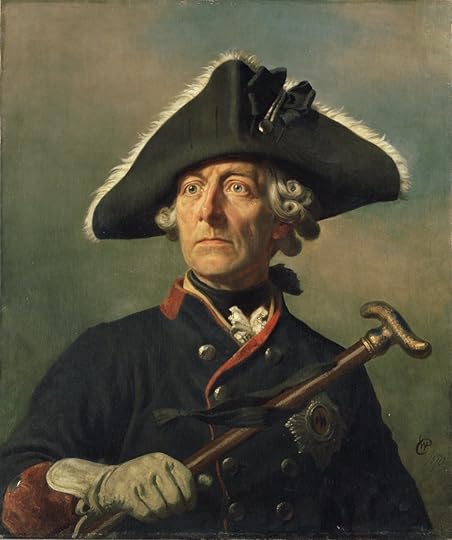
(Frigyes, a Nagy. Tud nézni az öreg, mi?)
Ez az idő végül a XVIII. században, Nagy Frigyes idején érkezett el. Poroszország, úgy fest, ekkoriban nagyon ráérzett a korszellemre – ő testesítette meg az „ész államát” a maga tökéletesen szervezett, megvesztegethetetlen bürokráciájával, racionális gazdaságszervezésével és jól képzett hadseregével, ami dacolt a legnagyobb birodalmak koalíciójával is. Persze agresszív állam volt, ami nem volt rest simán legyalulni Sziléziát, ha szemet vetett rá, de ugyanakkor a tolerancia mintapéldája is. Frigyest ugyanis nem érdekelte, alattvalója református-e vagy katolikus, zsidó-e vagy muzulmán, csak fizessen adót és legyen lojális. Így aztán Poroszország igazi multikulturális paradicsom lett, biztos rév a menekülteknek, skót presbiterek és francia hugenották, szlávok és németek kusza egyvelege – ráadásul igencsak eredményes egyvelege.
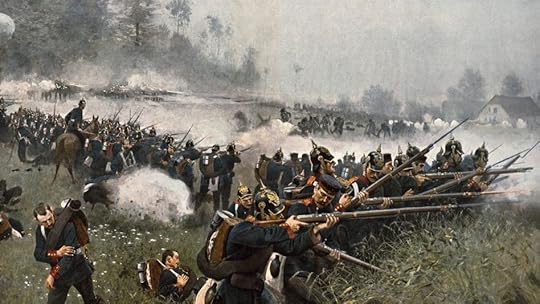
(Königgratz - lőnek a poroszok, mint az istennyila.)
A sors sajátos fintora, hogy ez a felettébb jól működő állam épp legnagyobb diadalával lépett a megsemmisülés útjára. Ennek felelőse pedig Bismarck, aki olyan elánnal zúzta szét Königgratznál legnagyobb riválisát, azt osztrák sereget, majd később a franciákat, hogy az egész német egységesítés az ő nyakába zúdult. Csakhogy ezzel alaposan túl is nyerte magát, mert az újonnan megszületett államot nem Poroszország kontrollálta, hanem az új birodalom lelkes nacionalizmusa számolta fel és szippantotta magába lassanként a porosz állameszményt. Amikor aztán 1932-ben a hosszú agónia végére pont került, és von Papen birodalmi kancellár erőszakkal megszüntette az önálló porosz államot, igazából már egy porosz se maradt, akiben felmerült volna, hogy meg kéne védenie.
Nagy, tragédiát és iróniát egyaránt tartalmazó történet ez. Tök jó, hogy Haffner személyében egy olyan szerző írta meg, akiben abszolút megvan az a klasszikus ízű, magas minőségű irodalmi tudás - a történelmi tudáson felül.
Az egész a pogányokkal kezdődött. Valahol a Keleti-tenger partvidékén élt egy kis nép, amiről nagyjából semmit se tudunk. Aztán megjelent a Német Lovagrend, és úgy döntött, hogy ezt a kis népet az üdvösség útjára vezeti, magyarán: karddal és tűzzel meghódítja őket. Érdekes módon az így létrejött állam felvette a legyőzöttek nevét, és Poroszország néven futott tovább. Aztán a Német Lovagrend lassan veszíteni kezdett jelentőségéből, az államalakulat pedig a Hohenzollernekhez került, akik évszázadokig görcsöltek azon, hogy lehetne ebből a perifériára szorult képződményből életképes formációt eszkábálni, ami meghatározó lehet a német nyelvű államok között.
(Frigyes, a Nagy. Tud nézni az öreg, mi?)
Ez az idő végül a XVIII. században, Nagy Frigyes idején érkezett el. Poroszország, úgy fest, ekkoriban nagyon ráérzett a korszellemre – ő testesítette meg az „ész államát” a maga tökéletesen szervezett, megvesztegethetetlen bürokráciájával, racionális gazdaságszervezésével és jól képzett hadseregével, ami dacolt a legnagyobb birodalmak koalíciójával is. Persze agresszív állam volt, ami nem volt rest simán legyalulni Sziléziát, ha szemet vetett rá, de ugyanakkor a tolerancia mintapéldája is. Frigyest ugyanis nem érdekelte, alattvalója református-e vagy katolikus, zsidó-e vagy muzulmán, csak fizessen adót és legyen lojális. Így aztán Poroszország igazi multikulturális paradicsom lett, biztos rév a menekülteknek, skót presbiterek és francia hugenották, szlávok és németek kusza egyvelege – ráadásul igencsak eredményes egyvelege.
(Königgratz - lőnek a poroszok, mint az istennyila.)
A sors sajátos fintora, hogy ez a felettébb jól működő állam épp legnagyobb diadalával lépett a megsemmisülés útjára. Ennek felelőse pedig Bismarck, aki olyan elánnal zúzta szét Königgratznál legnagyobb riválisát, azt osztrák sereget, majd később a franciákat, hogy az egész német egységesítés az ő nyakába zúdult. Csakhogy ezzel alaposan túl is nyerte magát, mert az újonnan megszületett államot nem Poroszország kontrollálta, hanem az új birodalom lelkes nacionalizmusa számolta fel és szippantotta magába lassanként a porosz állameszményt. Amikor aztán 1932-ben a hosszú agónia végére pont került, és von Papen birodalmi kancellár erőszakkal megszüntette az önálló porosz államot, igazából már egy porosz se maradt, akiben felmerült volna, hogy meg kéne védenie.
Nagy, tragédiát és iróniát egyaránt tartalmazó történet ez. Tök jó, hogy Haffner személyében egy olyan szerző írta meg, akiben abszolút megvan az a klasszikus ízű, magas minőségű irodalmi tudás - a történelmi tudáson felül.

June 8, 2025
1978 ein Bestseller. Die Legende, die Haffner meint, ist die vom preußischen Militarismus und seinen Traditionen, die im Nationalsozialismus ihre Fortsetzung fanden - und die von Bismarck als Retter Preußens. Die Legenden sind heute wohl weitgehend überholt. Haffners wenig distanzierter essayistischer Stil berührt mich als Leser 2025 daher emotional nicht mehr und das Buch wirkt ein wenig angestaubt. Dennoch, aus der Sicht seiner Zeit ein bedeutendes Buch über ein Thema das wohl lange ideologisch sehr aufgeladen war.

October 1, 2020
This is a really interesting and quite readable + short history of Prussia, focused mainly on the period from 1701 to the creation of the German empire in 1870. It does a great job of giving a sense of what distinguished Prussia from other German states, and argues that after the creation of Germany Prussia's distinctiveness began to erode much more dramatically than that of other historical regions within the country. I particularly appreciated Haffner's argument that Prussia was--until the French Revolution--the quintessential Enlightenment state: highly rationalized, fairly tolerant, also absolutist and defined by a universal duty to the state.
I would definitely recommend this book to anyone interested in learning more about how Prussia fits into German history or geopolitics in the 1700s.
I would definitely recommend this book to anyone interested in learning more about how Prussia fits into German history or geopolitics in the 1700s.
August 19, 2024
"Pruisen hoefde er niet te zijn. De wereld kon het missen. Het wilde er zijn. Niemand had dit kleine land in de groep van Europese grote mogendheden genood. Het drong zich op, en drong zich in. Maar hoe het dat een halve eeuw lang klaarspeelde, vol vernuft, sluwheid, onbeschaamdheid, arglist en heldenmoed, dat is een bezienswaardig schouwspel. "
Wat wist ik van Pruisen voor dit boek? Ijzervreters, militarisme, agressie, oorlog, jonckers, ijzeren discipline, Bismarck en de Duitse eenmaking . Maar na het lezen van dit boek lijkt de waarheid veel genuanceerder. Pruisen was veel meer dan dat. Pruisen ontstond uit een mengeling van volkeren en was multicultureel, was tolerant op godsdienstig vlak, schafte als één der eerste landen foltering af. In de achttiende en begin negentiende eeuw was het verrassend liberaal en vooruitstrevend. Ironisch dat Bismarck, dé Pruis bij uitstek, het doodvonnis van Pruisen schreef met de eenmaking van Duitsland. Pruisen werd zo slechts een deel van Duitsland. Of zoals Willem I, de Pruisische koning, de dag voor zijn kroning tot keizer van Duitsland zei : "Morgen is de ongelukkigste dag van mijn leven. Dan dragen we ket koningschap van Pruisen ten grave."
Wat wist ik van Pruisen voor dit boek? Ijzervreters, militarisme, agressie, oorlog, jonckers, ijzeren discipline, Bismarck en de Duitse eenmaking . Maar na het lezen van dit boek lijkt de waarheid veel genuanceerder. Pruisen was veel meer dan dat. Pruisen ontstond uit een mengeling van volkeren en was multicultureel, was tolerant op godsdienstig vlak, schafte als één der eerste landen foltering af. In de achttiende en begin negentiende eeuw was het verrassend liberaal en vooruitstrevend. Ironisch dat Bismarck, dé Pruis bij uitstek, het doodvonnis van Pruisen schreef met de eenmaking van Duitsland. Pruisen werd zo slechts een deel van Duitsland. Of zoals Willem I, de Pruisische koning, de dag voor zijn kroning tot keizer van Duitsland zei : "Morgen is de ongelukkigste dag van mijn leven. Dan dragen we ket koningschap van Pruisen ten grave."

June 4, 2013
Haffner was a newspaper man. I suspect a very good one. Evidently his commentary on German TV in the 60's and 70's is still fondly remembered as straight talking comment. There was too much dissembling by the centre right during the cold war in Europe and Haffner must have been like a breath of fresh air.
This book is straight talking and while not journalistic is certainly to the point. He covers 600 years of history in 192 pages. It is history by a non historian and I think the slow build up of evidence with proper footnotes might have served his cause better. The structure is also a bit wobbly here and there.
I was tempted to call his approach impressionistic or a word picture but I think that it is more like the difference between writing about history and writing about politics. He zeros in on the points he wants to make about Prussia and he makes them very well. He is critical of the teleological view of Prussian history. Prussia was not the father of Hitlers Germany. Prussia was the accidental father of modern Germany like Savoy was the accidental father of modern Italy.
While Prussia at various times was aggressive and opportunistic towards its neighbours it was also at various times a keeper of the peace. Haffner makes the point that Prussia was not terribly different to other European states during the 17th and 18th century in its mixture of diplomacy and war as an instrument of state policy.
Prussia had a strange birth as the unloved successor state to the Teutonic warrior kingdom. It's early history was a bloody mix of crusade and colonization. The pagan Prussians as an indigenous race could have been wiped out, no one is sure, but they were so drastically reduced that it matters little. They for all intents and purposes disappeared as a society and culture. There was so much unrelentless bloodshed in trying to convert the pagans that the land was depopulated and so colonizers were called for and they came from all over Europe. This process continued after the Hohenzollern took over. Germans, French, Dutch, Catholic, Protestant all came to take up the empty lands. German may have been the lingua franca of this state but it was no means a German State. Most of it was not even in the Holy Roman Empire. It was a mess of a entity spread out from what is now the east and north of Poland to the Rhine to the south of Germany in a hotch potch.
Prusssia went through various incarnations. Once as the most Enlightened state in Europe but it was as a rational state that asked its citizens to pay taxes and fight in its army but after that that state left its citizens alone.
'The eighteenth-century Prussian state was denominationally indifferent, nationally indifferent and socially indifferent.' ..."An extreme illustration is the true story of the cavalryman who had committed sodomy with his horse. Sodomy in eighteenth-century Europe was regarded as more or less the most hideous crime there was — punished everywhere by death in the most painful manner. Frederick the Great’s judgement was: ‘Have the swine transferred to the infantry.’ "
The next incarnation was as one of the reactionary states that included Russia, and Austria-Hungary. This was an alliance to squash any Liberal tendencies in each others countries or indeed other countries.
In the end though the nation state that Prussia ended up Creating namely the German Empire ended up subsuming Prussia and indeed destroying its constitutionally special place in the Reich by Hitlers regime.
This book is straight talking and while not journalistic is certainly to the point. He covers 600 years of history in 192 pages. It is history by a non historian and I think the slow build up of evidence with proper footnotes might have served his cause better. The structure is also a bit wobbly here and there.
I was tempted to call his approach impressionistic or a word picture but I think that it is more like the difference between writing about history and writing about politics. He zeros in on the points he wants to make about Prussia and he makes them very well. He is critical of the teleological view of Prussian history. Prussia was not the father of Hitlers Germany. Prussia was the accidental father of modern Germany like Savoy was the accidental father of modern Italy.
While Prussia at various times was aggressive and opportunistic towards its neighbours it was also at various times a keeper of the peace. Haffner makes the point that Prussia was not terribly different to other European states during the 17th and 18th century in its mixture of diplomacy and war as an instrument of state policy.
Prussia had a strange birth as the unloved successor state to the Teutonic warrior kingdom. It's early history was a bloody mix of crusade and colonization. The pagan Prussians as an indigenous race could have been wiped out, no one is sure, but they were so drastically reduced that it matters little. They for all intents and purposes disappeared as a society and culture. There was so much unrelentless bloodshed in trying to convert the pagans that the land was depopulated and so colonizers were called for and they came from all over Europe. This process continued after the Hohenzollern took over. Germans, French, Dutch, Catholic, Protestant all came to take up the empty lands. German may have been the lingua franca of this state but it was no means a German State. Most of it was not even in the Holy Roman Empire. It was a mess of a entity spread out from what is now the east and north of Poland to the Rhine to the south of Germany in a hotch potch.
Prusssia went through various incarnations. Once as the most Enlightened state in Europe but it was as a rational state that asked its citizens to pay taxes and fight in its army but after that that state left its citizens alone.
'The eighteenth-century Prussian state was denominationally indifferent, nationally indifferent and socially indifferent.' ..."An extreme illustration is the true story of the cavalryman who had committed sodomy with his horse. Sodomy in eighteenth-century Europe was regarded as more or less the most hideous crime there was — punished everywhere by death in the most painful manner. Frederick the Great’s judgement was: ‘Have the swine transferred to the infantry.’ "
The next incarnation was as one of the reactionary states that included Russia, and Austria-Hungary. This was an alliance to squash any Liberal tendencies in each others countries or indeed other countries.
In the end though the nation state that Prussia ended up Creating namely the German Empire ended up subsuming Prussia and indeed destroying its constitutionally special place in the Reich by Hitlers regime.
July 13, 2025
Książka bardzo ważna w Polsce, bo pokazuje, jak niekompletnie jest pokazywana u nas historia Prus. Prusy tak jak Rzeczpospolita nie posiadały naturalnych granic, zaczynały bardzo pozno budować swoją pozycję, ale potrafiły rozegrać Rzeczpospolitą jak sztubaka. Myślę, że do dzisiaj historycy nie do końca rozumieją, jak to sie stało, że Prusy z prowincjonalnego terytorium urosły do potęgi Europejskiej. Polecam bardzo serdecznie.
https://youtu.be/HuyJGi_oHJ0
https://youtu.be/HuyJGi_oHJ0
Read
March 24, 2021讀到後面忘了前面,中世紀歐洲史真的好無聊,但還是會繼續看完三部曲的!(我到底要在這網站上留下多少垃圾感想)
March 31, 2025
用简单明了的语句讲述了普鲁士光辉的历史,同时不乏优美的翻译与遣词造句。让人们对于普鲁士的历史脉络有了更直观的认识。
September 11, 2013
Told the History of Prussia in a grand wya

December 11, 2025
Bis heute eines meiner Lieblingsbücher.
Sebastian Haffner schildert die Geschichte Preußens in einer wunderbaren Sprache, so das man sich garnicht mehr vom Buch losreißen kann.
Sebastian Haffner schildert die Geschichte Preußens in einer wunderbaren Sprache, so das man sich garnicht mehr vom Buch losreißen kann.
Displaying 1 - 10 of 10 reviews