Jump to ratings and reviews
Rate this book

Barn Blind

Rate this book
The pastures of the Karlson farm in Illnois have the charm of a landscape painting, but the horses that graze there have become the obsession of a woman who sees in them the ultimate fulfilment of her every wish - to win, to be honoured, to be the best. By the author of "A Thousand Acres".

218 pages, Hardcover

First published April 1, 1980

6 people are currently reading
460 people want to read

About the author

Jane Smiley

133 books2,711 followers
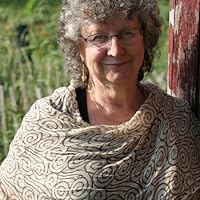
Jane Smiley is a Pulitzer Prize-winning American novelist.

Born in Los Angeles, California, Smiley grew up in Webster Groves, Missouri, a suburb of St. Louis, and graduated from John Burroughs School. She obtained a A.B. at Vassar College, then earned a M.F.A. and Ph.D. from the University of Iowa. While working towards her doctorate, she also spent a year studying in Iceland as a Fulbright Scholar. From 1981 to 1996, she taught at Iowa State University. Smiley published her first novel, Barn Blind, in 1980, and won a 1985 O. Henry Award for her short story "Lily", which was published in The Atlantic Monthly. Her best-selling A Thousand Acres, a story based on William Shakespeare's King Lear, received the Pulitzer Prize for Fiction in 1992. It was adapted into a film of the same title in 1997. In 1995 she wrote her sole television script produced, for an episode of Homicide: Life on the Street. Her novella The Age of Grief was made into the 2002 film The Secret Lives of Dentists.

Thirteen Ways of Looking at the Novel (2005), is a non-fiction meditation on the history and the nature of the novel, somewhat in the tradition of E. M. Forster's seminal Aspects of the Novel, that roams from eleventh century Japan's Murasaki Shikibu's The Tale of Genji to twenty-first century Americans chick lit.

In 2001, Smiley was elected a member of The American Academy of Arts and Letters.

Ratings & Reviews

What do you think?
Rate this book

Friends & Following

Create a free account to discover what your friends think of this book!

Community Reviews

5 stars
104 (12%)
4 stars
262 (30%)
3 stars
349 (40%)
2 stars
107 (12%)
1 star
30 (3%)
Displaying 1 - 30 of 93 reviews
Profile Image for K.D. Absolutely.
1,820 reviews
September 26, 2011
My first book by Pulitzer Prize-winning American novelist Jane Smiley and I liked what I read. Now, I have got to find my copy of her A Thousand Acres (1991). The reason why I read this first was that I already saw the movie adaptation of “Thousand” and I thought it would be nice to read her very first book: Barn Blind (1980).

Barn blind refers to the mother Kate. She is an ambitious businesswoman running a barn with 42 horses. She is barn blind because all she sees are her horses and her dream of competing in the racehorse competition, how to make her children great horse riders and how to make money selling her horses. She practically neglects her family composed of husband Axel and their children: Peter , Margaret, John and Henry. I was able to relate to the story because we were also four in the family and in the same order: I being the youngest of the three boys. I particularly liked the scenes when two of the boys are having fistfights. We did not have those. When I was about the same age as Henry, my elder brother one time chased me along the street holding a bolo but I hid under the bed inside my uncle’s house. That same brother, while crying, challenge my eldest brother to a fistfight but the later refused. He said that he was the eldest and he would have to answer to our parents if something happened to my other brother. Me and that eldest brother? We never fought and I don’t even remember us having some kind of misunderstanding. I guess it has something to do with our 5-year age difference. That eldest brother is also one of my friends here at Goodreads so maybe that was the other thing that made us understand each other better: we both love books!

I consider Barn Blind a very good first novel. I love reading first novels of now well-known or established novelists. You get a glimpse of their raw talents. The days when their brains were not yet “complicated” but because they wanted to be known to the world, they put in all of what they knew in creative writing. For a first novel, I admired Jane Smiley’s focus to her story making it cohesive and taut. I also admire the depth she put in each of her main characters: the mother, the father and each of their four kids. There were also brilliant word plays and striking dialogues that were almost movie-like. At first I just couldn’t really relate to the milieu: Illinois farmland in the 70’s but I just had to remember the same scenes in A Thousand Acres and the difficulty just disappeared.

A nice easy read and a kind that you're happy you decided to actually read it.
Profile Image for Judy.
1,965 reviews461 followers
September 3, 2010
Reading Jane Smiley's first novel was a pleasure and a revelation. I've only previously read one of her books: Good Faith. I liked it a lot but didn't love it. I've read most of her book about writing, Thirteen Ways of Looking at the Novel, which is a bit dry in parts but from which I learned more about literature and derived inspiration as a writer. One summer I heard Jane Smiley speak at the Los Angeles Times Festival of Books where she impressed me with her intelligence. Later I met her in the ladies' room where she impressed me with her height; she is at least as tall as Julia Child was.

So I've always had the idea that I would read more of her books, finally deciding to read them in the order in which she published them, which is my way of getting to know an author. Barn Blind is astoundingly good for a first novel. The characters are rich and deep. It is their interrelationships which drive the story: brothers and sister, kids to parents, mother to children and husband/father to wife and kids. With admirable economy she gets all these relationships into a little over 200 pages.

The mother is much more invested in her career as a horse woman (breeder, riding instructor and horse show presenter) than she is in her children. She uses her children to advance her career dreams and they are overpowered by her, causing varying degrees of trouble. From the opening chapter, you know that tragedy looms and the impending doom stuck me like glue to the book.

There is something about people and the connection with animals that makes for compelling stories. Charlotte's Web, Black Beauty, The Story of Edgar Sawtelle, The Three Junes, The God of Animals, all came to mind as I read Barn Blind. I am excited to read more Jane Smiley. From interviews I can see that she lives by her own internal compass. That is my kind of woman and in the two books I have read so far, I have found a kindred spirit.
Profile Image for Elizabeth (Alaska).
1,573 reviews554 followers
October 24, 2025
Everything was a mess, especially in the dark.
Having awakened, Henry Karlson is stumbling around in the dark. He looks out the window and sees his older brother, John, outdoors in the middle of the night. Soon, we learn there is another brother, Peter, who is two years older than John. Kate Karlson is their mother. Eventually, Axel, the father is introduced as is Margaret, the eldest child, who is home having dropped out of her first year of college. The family lives on a 300 acre farm and 40 horses.

It took me awhile to understand the title and I admit maybe I still don't have it quite right. The phrase is even used once in the text. I think it means that Kate, who lives, eats and breathes horses and everything about them, can see nothing else - and particularly no one else. Her entire life is wrapped up with horses and showing horses. She has a bulletin board where she posts chores for the children, chores which include cleaning the stalls, soaping saddles, and exercising the horses. And so, she is barn blind: blind to everything not having to do with the barn and what lives in the barns.

This is Smiley's debut. Her potential is clear here, both as to writing style and characterization. However, several times I was reminded of Anthony Trollope who wrote about good characterization. I'm paraphrasing certainly, but his contention was that you must have good characterization to make a novel, but good characterization is nothing without plot, that there must be some reason for those characters to exist.

I found the lack of plot in this novel to be glaring. It was too good for it not to be heading toward something, but there was no vehicle to take us to wherever it was heading. Still, I was glued to the pages, even when it was certainly no page turner. That doesn't even make any sense to me, but there it is. With two of the three elements I need for a novel to be better than average, I can definitely find a 4th star.
Profile Image for Kelly.
956 reviews135 followers
April 5, 2019
I forgot what a sharp writer Jane Smiley is. She's very obviously a product of the Iowa Writers, so if that's not your thing, steer clear.

As well as she writes, this - her first book - is largely plotless. Life on the farm is saturated with work, with worries, with horses, and Smiley's detailed descriptions of such. If this isn't your thing, steer clear.

The writing is clear-eyed and unsentimental, and Smiley doesn't shy away from her characters' brutality and their weaknesses. The relationship between Kate, the family's mother, and her children and husband is difficult to read about. The children's actions are often hard to understand (Margaret with the elderly Randolph, John with his grimly determined cruelty), as are the motivations of Kate's husband, the mysterious Axel, who loves her in spite of herself, though it's never quite clear how (they share separate bedrooms) or why (she is unfathomably cold).

This is a book written by a writer with potential, and her later work - A Thousand Acres - is much better. Many of the same qualities - the murkiness of the relationships between the characters, the deeply felt obligations and duties between family members, the unending liability of a large property and its residents - recur, but in smarter relationship to the plot and in a more palatable story. Barn Blind is a very horsey book, as consumed by the raising and showing of horses as Kate and the family are, and less interesting, story-wise, because of its single-mindedness.
Profile Image for Sandy .
394 reviews
March 24, 2024
Realism at its most annoying. This is a tragic story about a family of six which is completely dominated by a matriarch whose ambitions overshadow the needs, desires, indeed the personalities of her four children. The style is cold and clipped. The writing is grammatically correct and very consistent.

The main character grated on my nerves. The husband I could admire for having some backbone and making an effort to (a) protect the children from the mother’s domination, (b) preserve his own individuality, (c) attempt to return some measure of enjoyment to the marriage relationship, and (d) provide some comic relief to the household. Watching the four children, with their various personalities and each in their own unique way, trying to survive and thrive amidst the unrelenting emotional wounding at the hands of their mother was heart-wrenching.

Whenever I encounter a very disturbing novel, I try to fathom what the goal of the author was. In this case, I come up empty-handed. This story was a real “gut-punch” for me.
Profile Image for Linden.
311 reviews7 followers
November 26, 2015

Smiley's farm books--A Thousand Acres and this one--touch me deeply. Kate Karlson's family live and work on a farm, a horse ranch, really. It is Kate's vision to make of her family the best at horses, at riding, breeding, and instruction. And it is her dream that drives the family in large ways and in small, as inexorably as the Ice Age glaciers, in their progress, scoured away obstructions like mountain and forest alike.

Yet it is not just that her characters are so real, so specific, so different from each other, each a bonfire with a distinctive perspective ablaze on the page. It is not just that Smiley gives us to understand them in ways that would take years in real time. And it is not just that her eye and ear know how to translate behavior to the page with humor or with wisdom. It is all of that, and more. Perhaps it is just easier for me to call what Smiley does, art.

I don't really have an example to bolster that suggestion. But I do have a couple of favorite paragraphs. Here's one that will serve to prove her voice, from page 30 in the print edition. Though her son John is sure he deserves better, for his lesson with Kate, he is riding Teddy, a chunky uninspiring, obstinate horse. John is angry and full of hatred as he
completes the ride. Kate speaks.
"Thank you. Dismount, please." Teddy yawned, then helped himself to grass. His ears flopped in perfect self-confidence, and he cocked one back hoof. Kate took the reins but declined the crop John offered her. "Theodore, stand up!" she ordered. In a second she was on top of him and he was describing a large circle in a nicely collected and extremely surprised trot. Two small circles to the left. Two to the right. Figure eight at the canter with a flying change of lead. Halt. Back four steps. Extended trot down the long side of the ring. Teddy's tongue dropped out of his mouth in his effort to take the bit. "Stop that," she said. His
poll bent, his neck arched, and he began to sweat. She brought him down to the collected trot again, this time almost a passage, and made him two-track across the ring, a lovely diagonal movement with Teddy's ankles crossing one another like a dancer's. Around the end of the ring at a normal trot, then two-tracks the other way. Walk. Halt. A moment's relaxation, then she picked him up again and took him over the stone wall and the rails. When she returned him panting to her son, she said, "Teddy is not a beginner's horse. If he were, I would not have mounted you on him."
Or perhaps the two long paragraphs at the end of Chapter 4 are better--about talking about one's own children. I don't know how to say how fine it was. It just was. (218 p.)
Profile Image for Marilyn Saul.
862 reviews12 followers
August 16, 2022
An amazing debut novel, which I read back in the '80s and loved enough to carry with me throughout my years wanderings and adventures. And it was all "new to me" on the re-read some 40 years later. I had completely forgotten that Kate was such a damaged, obsessive, controlling, passive-aggressive person. And I kept wondering how, why she had become like that, because there were hints that she was not at all like this before her conversion to Catholicism. Did she convert because the religion more closely suited her true personality and helped her justify her actions? Or did the conversion create the monster??? It really struck home with me because my domineering, damaged, controlling mother was a devout Catholic. No answers here - just pondering.
Profile Image for Leslie.
42 reviews3 followers
August 22, 2010
Never was an author so in-aptly named. I love the way this woman writes but her books are not easy to live with after you've read them. They're depressing and they stay with me for days as I think back on what happened and how she told the story. Both this book and A Thousand Acres are stories about everyday people whose secrets and desires and unflattering thoughts lead them thru a plot that pulls you in quietly. And they end so softly, like a fading note on the breeze, that you can't really believe it's over.

Kate in Barn Blind is often referred to as 'obsessed' in the reviews. To me, because I share some personality traits with her, she seems less obsessed than simply very driven to achieve her goals. The sub-story of her marriage is played softly in the background, and the children's interactions with each other rang very true to me, often consisting of only a few paragraphs.

It is a book for intelligent readers, I think, because she doesn't fill in every blank, explain every action. You're left to infer a lot, which I enjoy. I have two more Jane Smiley books on the shelf but won't be picking them up real soon. I need a break with something foolish - David Sedaris, maybe? But she has become a favorite author of mine because her books reach out and grab you by the throat.
Profile Image for Faith.
196 reviews19 followers
January 13, 2009
Kate Karlsson owns stables with some 40 horses that she loves more than anything. She is also wife of Axel and mother of four children. It doen't really go together. Kate is Barn Blind. She sees nothing but the barns. She doen't understand her children. The only thing she wants of them is them o be good riders. The eldest daughter Margaret doesn't know what she wants to do with her life. Peter seem to be his mother's pet since he is the star rider. He get all her attention. Younger brother John is jealous and wants to prove that he is ust as good as Peter. Even the younges brother Henry has got problems. He is also kinda ignored and plans to run a way. Kate has really messed it up, and everything just hets worse...

I rather liked the book. Jane Smiley really can write. Has always since this is her first book. She has cleraly become better lately anyway, since other book I have read by her have been better. The horse environtment was rather nicely pictured. It was some time ago I read a horse book last time.
Profile Image for Emi Yoshida.
1,673 reviews99 followers
August 13, 2016
5 stars for the terrifyingly impactful ending, but the first half of this book took a while for me to get into (partly because of the constant drone of their hard work, and also for their über-generic names). Kate Karlson, the mother of all Equestrian Tiger Moms, runs a successful family horse farm in rural Illinois, funded by husband Alex, and with the labor of their four children: Margaret, Peter, John and Henry. This book packs so much in: the romance of a long marriage as it dwindles and is rekindled, plenty of delicious foreshadowing, and a stupefying cautionary tale about the parenting pitfalls of favoritism, non-communication, and mono-mania.

It is incredible that Jane Smiley produced such a work of genius at the age of just 31. So brilliant. Also, in the beginning I couldn't ever remember the title but then it gained meaning for me, kind of like "house poor", or "house proud", and evocative of "not being able to see the forest for the trees".
Profile Image for Jennifer.
55 reviews2 followers
November 27, 2007
3.5 stars. This book had the flavor of a short story. The writing and was finely drawn and economical, you got a sense of the rhythm of life on the farm and in the family that is the center of the book. The tragedy at the end follows the daily scenes of family life like a punch in the gut - something I associate more with short stories than novels.
Though the characters in this book are given equal exposure, they remained cyphers for the most part to me. I got a sketch of them, but failed to connect with them. Still, the book was very well written and Smiley was very successful at evoking a specific time, place, and family. You get a sense of what it is like to be in a family bound to their farm and their cold, obsessive mother.
Profile Image for Beth Stephenson.
250 reviews3 followers
January 18, 2019
I had trouble rating this book because I am torn about the story. The writing was lovely, as Jane Smiley can do, but I found myself wishing for more focus on the dysfunctional family dynamics (That Kate is a cold one!)than the details of horse ownership. But that's just me. I will forward this book to my friend Bob, who adores his three horses, as well they deserve. I bet he'll have a different take.
Profile Image for Barbara Rhine.
Author 1 book8 followers
May 7, 2014
Smiley’s first novel, this is a terrific portrait of dictatorial mother who raises her children on a horse ranch. By the end, the reader really understands what makes this woman tick. She is monstrous in her controlling love, but exacts a reluctant admiration, at least from this reader, for the thoroughness of her horrible determination.
Profile Image for Robin Yaklin.
358 reviews4 followers
May 26, 2011
Hooked the end of the first scene. She is a masterful writer!
Profile Image for Clara.
Author 9 books14 followers
January 1, 2012
This is early Jane Smiley, very clean, simple and good.
Profile Image for Andy Plonka.
3,854 reviews18 followers
December 19, 2015
What could be better than a tale in which horses figure prominently by one of my favorite authors
Profile Image for Kathy.
498 reviews
November 25, 2017
Life is too short to spend time reading a story that isn’t good.
450 reviews68 followers
April 23, 2023
THE PRICE OF AMBITION. This is another story about a dysfunctional family, a family of six, mother, father, four children, one girl, three boys.

Kate Karlson loves horses, possible more than she likes people. She has a horse farm in Illinois, far from her former home in Maryland, not far from horse country in Virginia. This is what she has always wanted in her life, to a have a horse farm, train horses, breed horses, teach horseback riding to children, show horses. She has her kids show horses in events, several a year. She grows angry if she sees anyone abuse a horse, especially her kids. They know better. But does her family want this type of life or would they rather have many interests? Kate is driven with ambition, especially for her kids. She is bossy, she who must be obeyed.

Axel Karlson loves his wife, wants her to have what she wants. He is an easy going man, loves his kids. Kate is driven, she likes her kids better when they do well in the events. The only time the family ever goes anywhere is to horse shows and school.

The book is set on a horse farm, a beautiful area in Illinois on a long, hot summer.

Margaret, the oldest and only girl, has been to college, then returned home. She doesn't know what she wants to do, she is happy to be home, she loves the farm in a way, but doesn't know if she would like to own it. Her mother asks her what is her choice in life. Margaret is only nineteen, she has a lot of choices, as a friend tells her.

Peter is seventeen, a tall boy, handsome, most like his mother. Kate is prepping him to ride and show MacDougal, the most valuable and beautiful horse on the farm. Peter, a dreamy boy, doesn't really know what he wants, he does want to make his mother happy. She gets mad if he doesn't.

John is fifteen, argues much with Kate, he doesn't care for living on a horse farm, younger brother, Henry, twelve, respects the way John doesn't let Kate talk to him, but gets back her. He is a rough, tough guy, or is he? A gutsy kid. The family is somewhat afraid of Kate.

Henry, twelve, likes his bike better than horses, his bike does what he wants. takes him places, horses are too much trouble, his bike not much. He is constantly eating, an eating machine, likes money, knows the prices of everything, likes having money, keeps it neat and in order, not crumpled up in his pockets like his brothers do. His money is well counted. A businessman in training, a future billionaire.

I like reading about the way the brothers talk back and forth with each other.

Jane Smiley is great at getting into her characters heads. A good book for readers who are interested in this type of horsey book. It goes much into riding, keeping up a horse farm, plus more about horses and their owners. It is somewhat sad.
Profile Image for Cathy.
546 reviews7 followers
January 18, 2019
It took me a while to get into this book about a family who lives and breathes their 42 horses and the farm on which they live in Illinois. We know from the first chapter that John, the third oldest of four children, will be a driving and uncontainable force in this story. When he escapes into the "night abroad," escaping the confines of this house that is ruled with an iron fist by their "barn blind" and dictatorial mother Kate, the reader knows he will be a catalyst for what will happen to their family. Kate, who seems not to have an emotion in her body for her husband or children, is obsessed by the horses and the smooth operation of the farm, and drives her children like slaves to constantly work at the upkeep of the farm and the training of the horses. Only Peter, the eldest boy, seems to be at peace with the horses and his mother's demands. He is the golden boy, after all, riding the mother's favorite horse, MacDougal. He's handsome, cultured and a good horseman. John is all over the place; he seems disinterested in the whole operation, but then seems to be determined to be as good as or better than his older brother. His hatred for this mother is always raging under his skin. Younger brother Henry loves John but is whimsical and dreams of escaping not because he hates the farm, but because there is a whole glowing world out there. Margaret, who dropped out of college because all she could think of while at college was the farm, slowly starts to change her feelings about the farm and its confines.

The story gained momentum as it progressed and after a while I could hardly put it down. The long bits about the details of the horses and the minutiae of taking care of horses got to me, and took me a while to overcome. I assume this focus was to show the obsession of the mother, and to take the reader deeply into this obsession.

Smiley did an excellent job of revealing the characters, especially John and Margaret, and to some degree Henry. Peter seemed vacuous, while John was always angry and unhappy. Margaret was totally without direction and didn't seem to have any idea what to do with her life. Even the husband Axel was revealed to be humorous and kind, although it is difficult to see why such a goodhearted man could have married the ruthless Kate. We mostly seemed to see Kate through Axel and the children's eyes, and I couldn't help but wonder why she was so obsessed with the whole life they were living. It was impossible to have any sympathy for her.
Profile Image for Barbara Howe.
Author 9 books11 followers
August 13, 2022
I love Jane Smiley's writing. It is beautiful and economical, and in this book, paints such a vivid picture of summer on a Midwestern American farm that I can almost feel the heat and smell the dust. Her ability to describe life in a household always short of time and money, and dominated by a mother obsessed with horses, is inspired. Take the opening lines for example:

Everything was a mess, especially in the dark. By the time he'd negotiated the boot-, book-, whip-, and curry-comb-strewn hallway to the bathroom, and groped gingerly around all kinds of bottles for the light, twelve-year-old Henry Karlson was wide awake.


But... the story is slow moving, with almost no plot. The focus is on the relationships her husband and four children have with the mother, a woman who loves her horses--and tolerates their differences--more than she does her human family. She's the kind of parent who tries to live her own dreams and ambitions through her children. Inevitably this leads to tragedy, but since none of the characters were very appealing (especially the one involved in the tragedy), I wasn't emotionally invested in the story, and the tragedy didn't move me.

Still, it's a magnificent effort for a first novel, and she has gone on to write others with more appeal. It's obvious, too, almost from the start, that the author knows and loves horses, and knows what she's writing about in the details around dressage and equestrian competitions. Her command of her subject and of the English language make this worth reading on those grounds alone.
Profile Image for Chris Schneider.
447 reviews
June 8, 2025
A domineering mother of 4 children and a husband on a horse ranch. She runs an equestrian school while raising and selling horses. Her children are all expected to engage in competitions while their mother tries to raise them as strictly as she runs the business. The husband is minimally present, trying to engage with both mother and children, but he is not part of the horse world and is more or less left out. The oldest boy starts to excel, leaving his siblings behind in both competitions and in their mother's attention. The youngest want to run away, the daughter is completely lost in life, and the 2nd son is trying too hard to catch up. Something has to give.

ENDING

This is one of those books that suddenly ends without trying to wrap up everyone's stories. It leaves you assuming the direction each person will take, which does seem inevitable. It is also one of those stories where nobody is really the protagonist, nobody emerges as particularly sympathetic. I enjoyed it, but like the mother I was not emotionally invested.
264 reviews
December 24, 2024
This book bothered me. There was no redeeming quality about the mother. She neither loved nor showed any affection to anyone in the family. She had a favorite son only because he could ride well. I never figured out why she hated John so much. The children acted the way they did each in their own way because of the mother. I think they were abused emotionally, mentally and physically. The mother was demanding. The children were isolated, were only allowed to compete and take care of the horses. They had little free time if any and no friends. She constantly criticized and demeaned them. The father was worthless and really did nothing, seeing the abuse and allowing it to happen. This was the first book that I have read by Smiley and don’t know where her mind was. There really was no ending everyone was left in their sorry state minus John. I would not recommend this book.
Profile Image for Michelle H.
373 reviews1 follower
December 2, 2022
I’ve read Jane Smiley before but Barn Blind has a slightly more literary feel some her newer work. It took a while to sink into it because of this. Something about the early pages made it hard for me to keep straight who was who & to understand how they fit together.

Once I got used to the style though, there was a lot to love about this book. It’s clearly set in a time and place. The characters are interesting - especially the kids. Pieces of them are revealed organically through the book and it makes the whole narrative really rich. I finally understand what it means when someone says it’s a “character-driven” book.

The thing that kept me from being truly wowed was the way Smiley handled the ending. I won’t say anything else so as to not spoil it.
Profile Image for Marilaine.
337 reviews2 followers
March 2, 2022
Jane Smiley is such a gifted writer - a pleasure to read. The novel itself (in my very humble opinion), seemed to move uncomfortably, with various characters popping up to add their own particular angst to the gloom. Knowing that something terrible was going to happen because it says so right on the cover of the paperback, Publishers Weekly calling it "An American tragedy...", I was prepared for the worst. The only question was which family member was going to get sacrificed to the mother's obsession. Good lord, what a selfish bitch she was!
You may not like all the characters but read this book. It is engrossing. It's real literature.
Profile Image for Jennifer Robison.
13 reviews4 followers
January 29, 2019
Unless you’re really into the most detailed minutiae of owning, managing and showing horses, the first half of this book will move along painfully slowly. Cruelty to animals and to other people characterizes a good chunk of the second half, at least until the occurrence at the very end of a random tragedy. Overlaying it all is a religious conversion that seems like it’s supposed to be important to the narrative arc, but that is never explained and rarely examined. I love Jane Smiley’s work. This book, her first, was disappointing.
Profile Image for Deena.
129 reviews6 followers
October 6, 2019
I like Jane Smiley's writing and the unpredictability of her characters' minds. This book feels almost like an etude, as if she is just exercising her powers of observation and her pleasure in writing about equestrian culture. It feels unfinished, and it simply and abruptly ends. I enjoyed being immersed in horsey world, but I wonder if I had no equestrian background whether I would still like this book. It was fun and ultimately unsatisfying. But a sharply focused portrait of its characters.
44 reviews
January 4, 2025
Lots of detail about the horse world, too much for me. Lots of character development, which I do like, and the book left me thinking about them and what might have happened next, which I don't usually do. I'm used to a satisfying ending, and this certainly was not, but, on reflection, there were characters that I had some hope for and those who had no hope. So, interesting, and I'm glad I read it.
Profile Image for Jan Morrison.
Author 1 book9 followers
Read
February 3, 2022
Smiley's first book is as well-constructed, lyrical and true as any of her later ones. It is a heartbreaker though, and so took me a long time to read. I had to keep stopping and reading other books I didn't care so much for. Reading this great run of Smiley is a great exercise. None of hers have affected me as much as Horse Heaven, not even A Thousand Acres.
Displaying 1 - 30 of 93 reviews

Can't find what you're looking for?

Get help and learn more about the design.