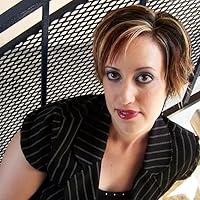
Authors Jayne E. Schooler and Thomas C. Atwood share insights into every aspect of adoption. This powerful resource addresses the needs and concerns facing adoptive parents, while offering encouragement for the journey ahead.
One of the better books on adoption that I've read, but fair warning: it comes from a Christian perspective. Most of the time this is tolerable, as it's in the background and the intro but near the end the author just gets LAZY and pulls stuff like talking about how to love your child unconditionally, and I kid you not, says, "Well, the Bible really puts it best" and quotes I Corinthians in place of writing any of her own words. But if you can put up with that occasional misstep it takes a good look at issues adoptive parents may encounter and strategies for handling them. Sexuality and gender are not addressed, again because this book comes from a certain perspective, so potential parents will still need resources for handling these very important topics. I still felt the good outweighed the omissions and eye-roll moments.
Maybe more of a 1.5. I would not recommend b/c of broad brush with which they paint situations or individuals--"unwed mothers" and the "tragedy" of some of their "lifestyles," how some behaviors can "rip away at the beauty and foundation of this unique relationship of promise." The bothersome language and underlying judgments put me off to the point that it was difficult to focus on the info being presented.
A 3-star resource for adoption in general. It was a good "starter" book as we began our adoption process. I particularly gleaned insights from the chapter on transcultural adoption, a well as a few additional nuggets throughout. However, I find myself wanting more depth. I'm looking forward to reading more books specific to toddler adoption and transcultural adoption.
This a very good introduction to almost all aspects of adoption, from deciding to adopt to issues that may arise with adopted children through their adulthood. It is a great resource that I will keep on the shelf and reference from time to time as my wife and I continue to go through this process!
The book was a good introduction into adoptive parenting. By nature of being the “whole life adoption book,” many topics are covered at a very high / broad level but don’t go into as much detail. That being said, the book was very “readable” with the author’s illustrating points through stories of adoptive families. One note for those who may be turned off by it, it is written from a “Christian” perspective although most of the times this is just in the stories of the people highlighted (e.g., “…they wanted to adopt after being missionaries at an orphanage in…” or “…they relied on support from their church congregation…”), but there are some subtle Christian-based biases in the perspectives such as presumption that parents are heteronormative, the unwed mother being tragic, etc.
All that said, I do think this was a good unintimidating generalist adoption book. Other books are going to be required to dive into more specific topics where you might want to “go deeper” - such as transracial adoption, open adoptions, etc.
This felt like a good starter book but it never go into as much detail as I wanted. But now I have a better idea of what questions I should be asking and topics I know I need to learn more about which is of course valuable.
A bit short for a "whole life" overview of the adoption, but it's a good jumping off point for adoptive families who want a resource to help them begin dealing with the difficulties of adoption.
This was recommended by the social worker who did our home study, and overall it was a good recommendation. Unlike some other adoption books I've read, which either focused on the logistics of adopting a child or glossed over the challenges to try to sell the reader on adoption, this book is fairly comprehensive in its information on choosing between the different adoption processes, talking about adoption with your child at different stages of their life, and dealing with potential issues unique to (or more common with) adoptive children, such as attachment issues and birth parent searches.
The book is published by a Christian company, but I found the religious messaging minimal and benign, unlike the "save the orphans" messaging I've heard from Christians before about adoption. There's a note on the copyright page that the stories are mostly composites or example illustrations, which I thought was pretty obvious but only irritating in the very fake-sounding letters and quotes from some of the example adoptive children.
Even though the book focuses a lot on children adopted following a history of abuse or neglect (with good reason), I appreciated that there was still a lot of information for parents of children adopted at birth about issues of identity and information-sharing that are likely to arise later on. It was a little annoying, though, that the only examples of birth parents in private domestic adoptions were teenage/young mothers, which is not nearly as common as people think it is -- as long as they were making up their examples, I would have liked more diversity in the birth parents' back stories. I was actually a little surprised, since they presented a lot of stats on things like % of adoptive children who want to seek out birth family information, that they didn't take time to correct this misconception but actually played into it.
All told, it's a solid read for both prospective and current adoptive parents.
Another required book on our reading list, but very informative. It has a few good chapters for dealing with things later on in life that I'm sure we'll use as our child grows. It's more of a "text-book" read, so make sure you're in the mood to learn and not be "caught up" in a story.
I felt like this gave me a broader picture of the mindset of an adopted child and also how to parent and create connections with said child, by offering up a clearly idea of what they are experiencing. Also loaded with practical advice.