

What do you think?

Chronology
Literary Nonfiction. Essay. Taking as its starting point an ultimately failed attempt to translate a Sesotho short story into English, CHRONOLOGY explores the spaces language occupies in relationships, colonial history, and our postcolonial past. It is a collage of images and documents, folding on words-that-follow-no-chronology, unveiling layers of meaning of queering love, friendship, death, and power. Traveling from Cape Town to the Schomburg Center in New York, Zahra Patterson's CHRONOLOGY reveals and revels in fragments of the past-personal and the present-political.
96 pages, Paperback
First published September 1, 2018
About the author
Zahra Patterson
2 books6 followersZahra Patterson (she/they) is a writer and educator. Her polyvocal, collage-like essay Chronology (Ugly Duckling Presse, 2018) received a Lambda Literary Award for Lesbian Memoir/Biography and a Face Out Fellowship from the Community of Literary Magazines and Presses. She is the creator of Raw Fiction, a one-time (twice done) youth literary arts project. Her projects have been supported by Mount Tremper Arts, Brooklyn Arts Council, The Pratt Center, and many wonderful individuals. She lives in Bucks County, PA on occupied Algonquin land that was inhabited by Unami speakers of the Lenni-Lenape; she agrees that this acknowledgement is insufficient on its own but believes awareness is an important step toward creating a more just future.
Ratings & Reviews
Friends & Following
Create a free account to discover what your friends think of this book!
Community Reviews
Displaying 1 - 11 of 11 reviews

December 6, 2018
Using translation of a story as a backbone the very nature of language & colonialist interference keeps bubbling to the surface. Many techniques are employed with emails, notebook jottings, transcripts & even loose leaf inserts and this style is extremely effective, jolting you into a realisation of the white structured way of things is simply not effective translating an African story.
Simply brilliant - sorry I had to write this in English!!!
Simply brilliant - sorry I had to write this in English!!!

April 25, 2019
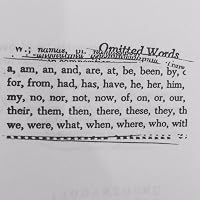
Patterson puts her brief, 85-page "essay," as the publisher calls it, in direct conversation with Theresa Hak Kyung Cha’s 1982 classic experimental autobiography Dictee. Chronology is ostensibly about Patterson's failed attempt to translate a Sesotho short story into English, which, leads her into other topics, including feminism, African writers, the relationship between language and colonialism, and the difference between oral and written versions of a language (something Cha also focused on in her book). Chronology combines emails, bits of memoir, handwritten notes, press releases, scraps from other texts, lists of words in Sesotho and English that verge on poetry, and several loose reproductions of photographs that are inserted between specific pages of the book as illustrations. Patterson's book is but a fragment compared to Cha's rich text, but it is, nevertheless, a fascinating, multifaceted fragment.
Read
July 11, 2025“i’m unsure if this has been an act of violence or an act of love. …
is it possible to not engage in violence - when everything i have, everything i am, is its product? how does the artist/friend avoid perpetuating the violence into which we are almost all born? if we make beauty of violence, is it worth it?”
is it possible to not engage in violence - when everything i have, everything i am, is its product? how does the artist/friend avoid perpetuating the violence into which we are almost all born? if we make beauty of violence, is it worth it?”

November 14, 2018
This is a work of compassion and political intention. It is a guide book for anyone that is thinking about translation, cultural or literary, and the relationships that form through that courageous, risky act.

February 28, 2019
An incredible look at a timeline in a person's life, particularly as it relates to another's. Incorporates such interesting, lovely forms too.
November 27, 2019
This format was really interesting, but not really for me.
December 26, 2020
"Empire then is empire now. Empire there is empire here."

May 8, 2022
A tender, angry, in-between homage to a beloved, to language, to the places that language can’t reach; a searching, deconstructing indictment of racism and colonialism.

May 13, 2022
“the violent gift of literacy” - holy shit!
February 22, 2021
Chronology was a New Suns book for our October 2020: Beginnings box. Read the full review here!
"The pages abound with evidence of Patterson’s frustration as she is met by a multiplicity of postcolonial barriers preventing her from making progress in Sesotho, from her own position as a mixed-race English speaker to the lack of adequate dictionaries at the library. Through the lens of attempting to translate a Sesotho short story into English, Patterson explores themes of colonialism, feminism, the politics of translation, and language as a form of intimacy. The twin driving forces behind her attempts are longing and inaccessibility. Longing for Liepollo and longing to learn the language that has become synonymous with her; inaccessibility to the former through unresolved romantic tension and death, inaccessibility to the latter through the fraught history of colonization that continues to mar the language to the present day.
Perhaps the most difficult aspect of reading Chronology is that there is no single storyline to follow, no one lesson taught or piece of knowledge gained. Patterson debates with herself, with others, and with authors she has read or heard speak; she pieces together fragments into a 'translation' that she then re-translates into a poem so abstracted from the Sesotho text that it has lost all of the original writer’s meaning. There is no real catharsis or conclusion to Patterson’s relationships with Liepollo and Sesotho. Most of the time, she just kind of leaves you with this assortment of writings to sort through on your own. "
"The pages abound with evidence of Patterson’s frustration as she is met by a multiplicity of postcolonial barriers preventing her from making progress in Sesotho, from her own position as a mixed-race English speaker to the lack of adequate dictionaries at the library. Through the lens of attempting to translate a Sesotho short story into English, Patterson explores themes of colonialism, feminism, the politics of translation, and language as a form of intimacy. The twin driving forces behind her attempts are longing and inaccessibility. Longing for Liepollo and longing to learn the language that has become synonymous with her; inaccessibility to the former through unresolved romantic tension and death, inaccessibility to the latter through the fraught history of colonization that continues to mar the language to the present day.
Perhaps the most difficult aspect of reading Chronology is that there is no single storyline to follow, no one lesson taught or piece of knowledge gained. Patterson debates with herself, with others, and with authors she has read or heard speak; she pieces together fragments into a 'translation' that she then re-translates into a poem so abstracted from the Sesotho text that it has lost all of the original writer’s meaning. There is no real catharsis or conclusion to Patterson’s relationships with Liepollo and Sesotho. Most of the time, she just kind of leaves you with this assortment of writings to sort through on your own. "
February 12, 2025
i just love reading books about grief huh (all my class readings are really syncing alongside all of my grieving 😭… okay universe.) but a really delightful read. it’s so creative and i just love books that play with structure so much and deconstruct/ construct more than just the material and pages and cover of the book itself — i love how material this book is, with its additional pictures sprinkled within, the addition of emails and handwritten notes. truly what is grief if not love persevering? it took me a bit of a while to get the plot, still so many questions unanswered but i enjoyed the experience it gave me and i definitely read it all too fast but 🤍
Displaying 1 - 11 of 11 reviews