One of the Most Anticipated Books of the Year -- LitHub, The Millions, Thrillist, Entertainment Weekly.
In this "deliciously funny, sharp, and sincere" debut (Helen Oyeyemi), a young graduate student writing about -- and desperately searching for -- inspiration stumbles upon it in the unlikeliest of places.
Anna Brisker is a twenty-nine-year-old graduate student in English at Collegiate University who can't seem to finish her dissertation. Her an intellectual history of inspiration. And yet, for the first time, Anna has found herself utterly uninspired. Rather than work on her thesis, she spends her days eating Pop-Tarts and walking the gritty streets of New Harbor, Connecticut.
As Anna's adviser is quick to remind her, time is running out. She needs the perfect case study to anchor her thesis, and she needs it now. Amid this mounting pressure, Anna strikes up a tenuous friendship with the niece of famous author Frederick Langley. Freddy wrote three successful books as a young man, then published exactly nothing for the rest of his wayward, hermetic life. Critics believe Freddy suffered from an acute case of writer's block, but his niece tells Anna that there's more to the When he died, he was at work on something new.
With exclusive access to the notebooks of an author who was inspired, uninspired, and potentially re-inspired, Anna knows she's found the perfect case study. But as fascination with Freddy blooms into obsession, Anna is drawn irrevocably into the criminal machinations of his sole living heir.
A modern twist on the Parable of the Talents, Lapidos's debut is a many-layered labyrinth of possible truths that reveal at each turn the danger of interpreting another person's intentions -- literary or otherwise.
A quirky and unique story revolving around an English graduate student working on her dissertation. Unfortunately, the promise of a “wickedly funny debut” completely missed its mark for me. While I enjoyed following some of the main characters’ experiences, a lot of what happened seemed random and awkward. I was simply not the proper audience for this novel.
Thank you to Little, Brown and Company for providing me with a physical ARC to read and review.
Thank you to the publisher Little, Brown and Company who provided an advance reader copy via NetGalley.
I was drawn to this book by the cover artwork and the premise that it involved books. The story began with the main character Anna Brisker on a supermarket line where a woman in a bright orange raincoat discovered her pockets were empty. My first thought was, "Did she borrow the raincoat from Ringo who wore that for The Beatles final concert on Apple headquarter's rooftop?" Anyway, Anna lent the money to the woman who promised she would pay it back that afternoon. Two weeks later, there was still no repayment check in the mail, so Anna walked around the town of New Harbor hoping to run into this mystery woman. Amazingly, she was wearing the eye-popping raincoat once again when Anna happened upon her. Anna didn't even realize that it was Christmas Day, perhaps because she was Jewish. The woman's name was Helen Langley. She had books piled all around her house along with leather for book binding. As it turned out, Helen was a book antiquarian...and famous author Frederick Langley's niece.
Anna is an English college graduate student, and her achilles heel is successfully producing her dissertation. Apparently, Anna's teachers and family all had big hopes and expectations of her, but Anna's inability to conclude her PhD degree has drawn skepticism from all parties. Her degree should have taken a minimum of five years, yet Anna was already halfway through her seventh. When Anna befriends Helen and discovers her relation to the famous and controversial author Frederick Langley, a light bulb goes off in her head: "Here is the topic I'll use for my dissertation; why did Frederick Langley suddenly stop writing?" There are two composition notebooks the famous author secretly left behind that might provide some clues.
I had a very strange experience I never had before while reading a book. From the first page I assumed that the main character was a man. Even though I found out (to my utter surprise) that it was in fact a woman named Anna, I still felt as though I were reading about a man all the way through to the book's end. Quite bizarre! The most endearing quality this character had was her penchant for fruit-filled Pop Tarts. Other than that, she was living in a very nice apartment thanks to the financial stipend left behind by Anna's deceased grandfather. I felt no emotional connection to this character, and it was sadly a lackluster read.
TALENT by JULIET LAPIDOS was an interesting, steady-paced, and quirky story that was a little structurally & mentally challenging for me to read. The blurb states that this is a “wickedly funny debut” novel that I definitely didn’t find funny at all or it went way over my head. I kind of lack the sense of understanding the dark humour here.
JULIET LAPIDOS delivers an intriguing and well-written read here that I really wanted to fully embrace and love. I have this need to broaden my reading horizons and one of these days I am going to thoroughly “get” these types of novels. I love the challenge of reading them even if I do find them a bit grueling to read.
I wasn’t able to really feel any emotional connection to the characters as I couldn’t connect with the academic side to the story. I missed a lot of the dark humor here with that to thoroughly immerse myself in this storyline. I just didn’t “get” it. Although I was totally entertained and engaged with the narrative, moving this story forward to keep me turning those pages.
This was a Traveling Sisters read that I read along with Brenda and Lindsay.
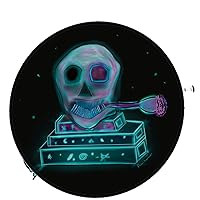
Norma’s Stats: Cover: Eye-catching, artistic, appealing, and distinctive. I actually quite love this cover and think it’s a great representation to storyline. Title: Intriguing, interesting, and wish that I was talented enough to have “gotten” this one. LOL Writing/Prose: Well-written, entertaining, engaging and smart. Plot: Challenging, complex, interesting, thought-provoking, steady-paced, and entertaining. Ending: An ambiguous ending that I’m still not exactly sure that I interpreted correctly…..but I’m not so inclined to actually worry about not getting it though and just accepted it for what it was. Overall: Even though I didn’t end up loving this novel, I still appreciated and enjoyed the rugged escape that this book provided.
Thank you so much to HBG Canada / Little, Brown Company for sending me a physical ARC of this book to read and review!
An interesting debut novel about a graduate student struggling with her dissertation on the origins of artistic inspiration. “Relatives who’d once admired my precocity were beginning to wonder what was taking so long.” Her thesis advisor has told her to find a case study for her hypothesis. She stumbles across the niece of a well known short story author, Freddy Langley, someone who was prolific for a few years and then just stopped publishing. He would seem to be the perfect subject to use for her thesis, especially since the niece has access to two of Freddy’s notebooks from his later years. Pages from the notebooks are interspersed with the story. Thoughts, ideas for stories, short blurbs - these make up the notebook pages. Langley’s stories remind me of Seinfeld. “What made Langley famous were the compulsion dramas, in which he took an ephemeral thought or urge and followed through to a logical yet extreme conclusion.”
One odd feature were the footnotes. While they imparted information that moved the story forwarded, they also took me out of the story. And the story is odd enough as it is. The Author has definite ideas on academia and they aren’t kind ones. At one point, the grad students lament how they’ve lost the joy of reading. How everything is about “extracting arguments from texts”. One chapter is entitled If a Scholar’s a Parasite”.
This book was described as “wickedly funny” in the blurb, but I didn’t find it funny in the slightest, let alone wickedly so. And the ending was just strange. It didn’t really hang together. I’m glad I read the book but I can’t give it a wholehearted endorsement.
My thanks to netgalley and Little Brown for an advance copy of this book.
I feel like Talent can best be described as an academic literary thriller and is something I have not read anything like before. Like Norma mentioned I do like to challenge myself by reading more books that require me to think differently. I do think it took on a bit of a psychological feel to it as well as some of these characters were unreliable and manipulative. At times it felt a little bit like a psychological playground with the characters. The writing took on a bit of a chaotic feel to the story. It also felt a bit eccentric. Now that can be a good thing and I think here it was, however, the whole storyline was not something I was familiar with. The longest piece of work I have ever done is probably this review and I like to stick to reading fiction and not textbooks. lol
Our main character here, Anna is a grad student struggling to write her dissertation. After an encounter with a stranger, she acquires unpublished notes by a deceased talented author. Anna delves into his notebooks and things got a little chaotic for me with the different formats used to write this story. I also should have focused more on the characters and questioned their reliability instead of trying to figure out the academic dark humor of a grad student. I am not going to say anymore as to not say too much about this story.
I recommend this one to readers who like an intelligent story that explores more of academics and delves into some dark humor around Grad students.
Thank you so much to HBG Canada / Little, Brown Company for sending me a physical ARC of this book to read and review!
Well, as the saying goes it takes talent to recognize talent. By that logic does it make me a talented reviewer to recognize what a clever book Talent is? I love books, books about books, authors, etc. but primarily I read for pleasure. The protagonist of this book, and the main secondary character also for that matter, are two individuals who are also around books all day, but they utilize them in different ways. One, the 29 year old graduate student stuck on finishing her dissertation, dissects literature in search of meaning (or at least something worth of an essay) and the other makes a living binding and/or forging books. Both are connected through an author, who, popular once decades ago, published three books to some success and then walked away from it all. Anna sees him as just the subject to complete her thesis on the nature of inspiration, his niece is after his notebooks worth a decent amount of money. And so it’s a story (or even a satire) of academia primarily and the plot revolves around this preppy proper tweed world of pretense and ambition, but it really sparkles when it comes to tangential discourses. Talent, for me, is an ode to Nothing. Not nothing as in the opposite of something per se, but nothing as an alternative to the ambition driven life. Freddy Langley, the author, walked away from it all to a quiet life of thinking and drinking. Anna Brisker in a way dreams of it (her precise ideal life is that of professor emeritus, which is apparently more or less a comfortable sinecure) as she and the book contemplates just how foreign that idea is to an American mindset. Something about an idle life just goes offensively contrary to Puritanical mentality. Our culture is all about doing, careers, drives, possessions, joining the race, climbing the ladder and so on. No place for dreamers, contemplators or just anyone who isn’t particularly good at life. No one pauses to enjoy the small things. Nothing as a state of stillness and quietude goes dramatically unappreciated. Mind you, Freddy Langley did nothing on his and then his friends and then his brother’s dime and Anna can afford to do nothing on her dead grandfather’s inheritance, but still…as a concept it’s nice to read about. The other thing this book contemplates well is, as you’d imagine with Anna’s thesis, the nature of inspiration and talent. Very interesting, much food for thought on both accounts. And all that aside, it’s just a very entertaining book, advertised as wickedly funny, it was for me more on the darkly humorous side stemming from the genuine cleverness of the narrative. Lapidos with degrees in English and comparative literature really knows her material, the observations on the nature of literary criticism, the way it anatomizes and studies its subjects, the works of substance and originality, to produce something that is neither and a mere theory or speculation at best, rendering the primary source as just a user database, thus depriving books of their very soul…it’s poignant and smart and so well observed. You might not care for the books’ characters, Anna alone is the very embodiment of white privilege, subsisting on poptarts and desperation, but her obsession with Langley and his work still spirals into a very compelling journey. And Langley can be perceived as a man who never got past resentment of his father. And the ending may be considered as lacking finality. But essentially, there’s just too much to enjoy about this book and the terrific writing to compensate for whatever personal likes of dislikes you might have of its denizens. Most auspicious for a debut. Very enjoyable genuinely smart read. And, unlike this rambling review, appealingly succinct. Recommended. Thanks Netgalley.
Talent is a gorgeously written academic satire, focusing on floundering doctoral student Anna Brisker. Sadly, gorgeous writing is all Talent has, as its plot lands the satire but fails when it tries to make broader points about writing and people and life--so, you know, everything. It also, aside from Anna, suffers from character description syndrome, where (in this case, beautifully written) appearance (coat, shoes, lipstick, hair, state of general grooming, etc.) are meant to convey depth in the place of actual characterization.
Anna lives in New Harbor, Connecticut, working on her PhD in English at Collegiate University (a very thinly veiled Yale). She's writing her dissertation, a study of authors and inspiration. She doesn't believe that authors have/get inspiration but despite her efforts (and increasing number of years that have seen her go from wunderkind to cautionary tale) she just can't seem to make her argument strong enough, can't seem to motivate herself to find a way to finish. (Cue sledgehammer of irony)
A chance encounter with a woman, Helen, at the grocery store turns out to be the surprising spark Anna feels she needs, as Helen is the niece of Fredrick Langley, deceased minor writer renowned mostly for ceasing to write just as he started to become well known.
Certain that Fredrick's career holds the key to finishing her dissertation, Anna agrees to help Helen obtain notebooks Fredrick kept in the period just before he died--notebooks that Helen insists she's inherited but are held by Collegiate. But to be honest, none of this matters--it exists for Ms. Lapidos to sprightly and brightly savage academia, and that is where Talent works. But having a plot that doesn't ever find its point and characters that never approach the flesh level of fleshed out makes it too slight to hold the weight of what it wants to be.
Having said all that, Ms. Lapidos's writing is so beautiful that I would definitely love to read something more substantial from her.
This novel is described as being "wickedly funny" but I will say that's a simple description for a story that's a little more complicated than that.
Although the novel does have moments of humour, it seems more suitably described as a literary fiction with depth and substance. It's a uniquely quirky novel that goes in different directions. At first, I found the main character relatable with her indecision and conflict regarding the future, but by the end of the novel that relatability to her character had weaned itself away.
The ending left me with a feeling of being inconclusive. I was unable to determine what was real or what may have been falsely created through the main character's narrative. This question and unknown added more to my experience of the story.
Overall, it was a good read but not one that can easily be raced through. Between the writing style and the content, it takes thought and time to process the story.
***Thank you to Hachette Book Group Canada for sending me an ARC of this novel in exchange for an honest review***
(3.5) Talent is loosely based on the Parable of the Talents. I remember being told the story at school. It's the one about a master who goes away and leaves his three servants with various 'talents' (sums of money). When he returns, two of them have made investments and doubled their money. But the third, risk-averse servant has buried the talent, and for this he is punished; it's taken from him and given to the servant who already has the most. (I never realised how weirdly capitalist the whole thing was.) In this novel, one character writes an unfinished retelling of the parable, while several others are shown to have squandered their 'talent' – be that money, natural artistic flair, or both.
Anna lives in past-its-best New Harbor, studies at Collegiate University (presumably a stand-in for Yale), and is almost 30. Once a brilliant student for whom great things were predicted, she's stuck in a rut. A rut that mainly involves eating a lot of Pop-Tarts. She just can't seem to finish her dissertation – the topic of which, ironically, is artistic inspiration. One day she follows a woman who borrowed cash from her in a shop queue, planning to find her house, knock on her door and ask for the money back. (The fact that this happens a) at all and b) on Christmas Day gives a hint as to how isolated Anna is.) The woman is Helen, who repairs and sells rare books. She's also the niece of a reasonably well-known 20th-century writer named Frederick Langley.
Here is a solution to Anna's problem: using material only Helen has access to, she can write a case study of Langley and thus complete her dissertation. But she may have underestimated Helen, who has her own reasons for allowing Anna into her life. If this makes the plot sound thrillerish, it's definitely not: Talent is slow-paced, a story that rarely creates any sense of urgency or peril. This is partly because Anna's wealth ensures immunity from disaster. She's oddly likeable, though, and makes a charming storyteller.
While many reviews of Talent emphasise how funny it is, I'm not sure I'd describe it as a comedy. The humour is dry rather than laugh-out-loud. Anna's deadpan voice reminded me of the unnamed narrator of You Too Can Have a Body Like Mine, Helen in Sorry to Disrupt the Peace, and Keiko in Convenience Store Woman. If you liked any of those, you might want to take this for a spin.
It's not a flash-bang-amazing, change-your-life, I'll-remember-this-forever kind of book, but I enjoyed Talent. I've also been left with a disturbingly strong craving for Pop-Tarts.
I received an advance review copy of Talent from the publisher through NetGalley.
I received an early copy of this book. It made me think--which is actually pretty unusual. I see other reviewers were confused by the ending. But, I think the ending was intentionally confusing, or at least intentionally ambiguous. One of the themes here is that people are bad at interpreting both literature and other people (the publicity materials say as much). People make assumptions and then go with them, even when the evidence contradicts those assumptions. The ending riffs on that, putting the narrator/main character (Anna) in the position of the person now being misunderstood.
I found this book very clever and complex--deceptively so. When I finished it I actually went back and reread certain parts that I realized, upon completing the book, I hadn't really understood / were more significant than I had realized. I don't generally find that necessary with contemporary fiction. It's full of Easter eggs. Five stars.
Talent pulled off the rare double of speaking to my interests in (1) fiction that puts ideas at the forefront, and (2) fiction that bends daily life into absurd-bordering-on-menacing twists. If analogies are helpful for you figuring out whether you'd like a book or not: It reads like a Jean-Philippe Toussaint novel with a revved up ideas engine.
I received an advanced copy of this book. I thought it very funny and charming--and also thoughtprovoking. Lots to mull here about the meaning of talent--hence the title--and productivity and nothingness, too.
I think this is a book people need to read closely to enjoy. The notebooks, I found, are full of little hidden messages that explain the main narrative.
I read this in one long sitting because the story drew me in and the writing is superb, but I didn’t find anything funny about it, as other reviewers have noted. I found it sad. For me, the intermittent notebook entries felt like annoyances, and the random footnotes weren’t something I enjoy. Certain things (like the last 2-3 chapters/sections) felt sort of rushed and slapped on, almost underdeveloped.
If I never read another “literary” book comprised of the internal sufferings of struggling English PhD writers who have Lost their Motivation, it will still be too soon.
I don't really go for fiction with a lot of meta commentary about art, inspiration, attribution, and well, talent, but this is a sharp exception. And I do mean "sharp" in the sense of being clever, and funny, and taut.
Talent is about an English Ph.D. student, Anna, who is struggling with writing her dissertation. By chance she meets the niece of a dead mid-century author, Frederick Langley (a sort of a Chuck Palahniuk or J.D. Salinger of his day - a cult icon writing in a transgressive way for his time; a darling of teenagers with intellectual aspirations, scoffed at by literary adults for being a little juvenile). Anna is looking for a case study of inspiration to flesh out the aforementioned dissertation, which she's nowhere near finished with after almost seven years. It turns out that Langley wrote effortlessly in his youth then stopped writing abruptly at the height of his literary success. His niece tips Anna off to the fact that two notebooks containing the dead author's private thoughts are kept in the university's private collection, though she and the university are in legal dispute over the rights. This kickstarts the whole literary mystery element of the book: what drove Langley? And what drives his niece, who seems like a bit of an odd character but to whose friendship Anna is compelled?
That's all I want to tell you about the plot of this book. Partly because I think it's best left for you to discover on your own how all the moving pieces come together, and partly because plot is only part of what makes Talent so good.
The book is, for instance, the best vindication of living for leisure that I've yet read. It manages to reference Barthes and Nabokov, but also could serve as free advertisement for Pop Tarts. And I loved the academia-weary commentary on lit criticism, the way academics wring meaning out of a text that the author didn't necessarily intend, the way the author becomes irrelevant in the interpretation of his/her own work. I flashed right back to college graduation, 2008, holding my English degree with honors and being proud of that, yet also being so relieved to finally be able to read for pleasure again.
Because like Anna, and like the tenured Professor Pippen, what I love is to read. Not offering critique. Not researching. Not working (grading/lecturing/writing all fit under this header). Reading!
I laughed quite a few times while reading this novel. Anna, the protagonist, is a smart ass. She's also terribly self-deluded and full of herself.
I need to read this novel again because it's seemingly easy-to-read nature hides that this short novel is experimental in both form and ideas. Lapidos uses footnotes and metafiction, blending the world of the reader with the world of the novel. The novel details great arguments about what talent is and is not, and how, if someone has talent, they should use it. Anna saw so much of herself in Langley, but they differed in one crucial manner: Anna was never successful. She had promise, but never did anything with it.
I think Anna raised great points during her moments of introspection. When we use the talent we have, who benefits from it? Is a person obligated to make something of their abilities? When capitalism and personal enjoyment of an activity meet, what does the pressure of performance supplanting the enjoyment of the activity mean for the benefactor of the activity? (Think actors or cooks or fashion designers).
This book has given me so much to think about. I hope more people read this novel. I highly recommend it.
This was not “wickedly funny” to me. I loathed the protagonist from her first Pop Tart-obsessed musings and I found the book painful to read and abandoned it pretty quickly. I received a free copy of this book from the publisher.
Anna Brisker is a graduate student at Collegiate University trapped under the heavy weight of her incomplete dissertation that is “very nearly finished”, lacking enthusiasm, feeling uninspired writing about the ” intellectual history of inspiration”. Inspiration, in her mind, isn’t simply floating around like blessed golden confetti thrown by some benevolent being, landing on the chosen. Great works of art and literature take blood, sweat, tears, and talent, of course. She would know, as her own drive has fled. A far cry from the brilliant future everything in her youth promised, a young girl who was valedictorian at her high school and burned as bright at an elite college. How did she get here, feckless and without either the self-control or the divine touch necessary to continue blazing along on her trail of accomplishments. Most says she’d rather stuff a pop tart in her mouth. Her advisor is exasperated by her lack of progress thinking she has lost her focus, her parents think she is lazy, spending her days wandering aimlessly doing nothing to establish herself , they may be right.
Then she meets Helen Langley, niece of Frederick Langley, who for Anna was the introduction to literary culture during her middle school years. A wildly talented writer who burned bright on the scene with his own following, wowing people, producing a book every so many years only to suddenly cease publishing. Perplexed that a man who was said to have ‘found writing easy’ could just one day decide to cease all creativity and live his life closed off, makes what Helen has to say something to put her faith in. Anna she is giddy again with the possibility that something big could come out of this. As she becomes closer to Helen, she discovers that the talented author did not stop writing. In fact, there are notebooks he penned at Collegiate’s Elston Library, hidden. This is exactly the spark of hope Anna needs to feed her passion once again. Helen is the way Anna can get to know Freddy, she is her stroke of luck! Who knew that a chance encounter, a small debt at the grocery store could turn her life around?
Though an antiquarian, Helen isn’t as ‘intellectual’ as Anna but she knows full well the worth of her uncles notebooks. With a promise to her uncle long ago she had sworn to be the keeper of his work but there was a tangle, the school has them, but Helen approves who gets to see them. So begins the plan. Helen is far more bohemian than Anna who lives with means beyond your average struggling student. Everything about Helen is vibrant and full, overly generous maybe messy and a little too free spirited but at least there is no shame in her ‘degeneracy’. Anna intends to help her new friend. So maybe Helen is a little wayward and her talent is in forgery, she does what she must for her survival so what, she grabs life by the throat and certainly doesn’t judge Anna for caving to her own pleasures. More than ones intellectual weight, social status, nor the heft of promise in one’s future this is a story about how we chase the “then what” of life. I sort of felt like saying, what the hell does it matter in the end? Any of it. One woman has family money but can’t seem to get her hands on the life she has envisioned for herself, another wants her own inheritance and comfort and both think Freddy is the means to their end. The two meet in the middle and if things take a bit of a criminal turn, so be it. What will it mean for Anna, and will her dissertation ever get finished?
Clever. Juliet Lapidos points out the snobbery of academia and the mistakes people make by putting all their faith in philosophy too. Talent as accidental, or indiscriminate blessing/curse vs talent as choice, work. Maybe it is just all BS, according to Anna anyway.
“Finally he's beginning to understand that I never had and never will have, not in a million years or more, I can wait until the sun explodes, any interest in his narrow sort of wife-and-child-and-job life. Why, if it prosper, none dare call it life.”
The author's attempt to constantly be witty completely obscures the premise of this book. The narrative, an English graduate student working on her dissertation struggles with artistic inspiration until she crosses paths with the niece of a well known short story author. The story navigates through their escapades searching for the author's lost journals. All a container for a body of missed witticisms.
Funny, propulsive, and full of wisdom. Talent is a retelling of the Parable of the Talents, in a way, an existential novel about reading disguised as a laconic campus thriller. Coursing though a fictionalized New Haven are shady characters both rich and poor, state sponsored oppression in architectural form, unglazed Pop Tarts, and ideas about the mythic history and personal burdens of creation itself. Love this author very much.
It's possible that this book just wasn't for me, but I didn't care for it. Though I can tell Juliet Lapidos is a talented writer, I felt like it was a lot of inside baseball for academics and literary scholars, so perhaps some of the cleverness that was touted simply went over my head. I just didn't connect with any of the characters, the plot didn't draw me in, and I didn't find the book funny. I thought about quitting partway through, but ended up pushing through because it was so short.
Looking forward to more long prose from this author.
For example, on page 162, “I didn’t recognize her but I imagined that I could recognize in her the boundless arrogance of an intelligence not yet stopped in its tracks for repairs.”
This book left me feeling like a deflated balloon. The premise of the novel is that a young, promising scholar loses steam midway through her dissertation and not only fails to complete her degree, but is caught up in something illegal in the process. Is the message that the academy is broken? Or that the academy will break you? Either way it hit a little too close to home and the recurring pop-tart motif recurred a little too frequently for my taste.
A fun book that takes you inside the mind of a graduate student who is slowly losing touch with reality as her unfinished dissertation is making her question all of her life choices. She sees salvation in the form of a relative of a popular writer who has passed away and left two notebooks to the college she’s attending. Lapidos is such a smart writer. The book never goes exactly where you expect it to and finds dark humor everywhere.
talent was described as “deliciously funny” and “enormously entertaining” but i spent most of the book wishing it was over, and only felt interested in the last few chapters. however, i would recc for english majors/ lovers of lit history.
Anna Brisker is a frustrated mature student. Having spent many years in the college system, she is unable to cross the final line and get her PhD in English completed. Her tutor is not impressed by what she is currently submitting and he suggests she look deeper for inspiration, that she find a case study.
Anna has spent a number of years in the college environment, with a long term goal of achieving the position of professor emerita. But Anna has hit an academic wall.
Anna has been very lucky to have very little concern about finances, due to a family inheritance and once she has a sufficient supply of Pop Tarts in her cupboard, her needs are quite simple. But as time passes Anna sees her fellow PhD colleagues achieve positions in other universities while Anna still remains a student.
An accidental meeting with Helen Langley, a woman who specialises in the binding of books, changes the direction of Anna’a life. An unlikely friendship develops between the two women, each with an agenda of their own, yet each still willing to embrace this unusual pairing of minds.
Talent is a book divided into two sections, which are sporadically divided and spread throughout the book. We have Anna’s story, as she struggles to come to terms with her life and what it is that she truly hopes to achieve, and we have the random notes of a writer, Frederick Langley, the man that Anna hopes can salvage the remaining hopes for her career in academia.
I have to admit I struggled with Talent. It is a very unusual and quirky read, certainly a book that would not be for everyone. I am a college graduate, having spent five years in university, so I do have an understanding of the pressures of academic life. Anna Brisker has the luxury of money behind her, something that many students do not have. Anna is in a position to belittle her colleagues, the college, the environment because Anna can. She is in the unique position of having the choice. Anna has quite a cynical view of the third level system, which transcends through the pages of Talent, a critical look at academia in general.
The word talent is defined as having a natural ability or aptitude for a skill. In this book, Juliet Lapidos queries the talent of the author, the student and how far we are willing to go to fulfill this talent. It is a satirical look at the life of the academic and the writer.
Unfortunately Talent just wasn’t the right fit for me. It’s rare I review a book that has so little appeal for me. I didn’t connect with any of the characters. I certainly did not find it a ‘literary caper’ and, to be honest, I struggled to finish it. The writing style was not an issue for me, as it is clear that Juliet Lapidos is well able to write but it was the subject matter, the plot, that was, quite frankly, beyond me!!