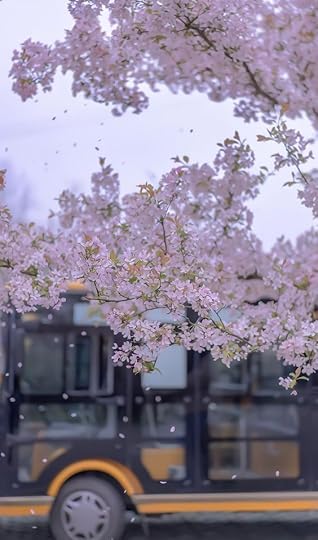
Discover the Japanese philosophies for living a happier, more balanced life in this beautifully illustrated guide.
With the longest healthy life spans in the world, Japanese people understand the art of living well. This beautiful book distills traditional Japanese philosophies intrinsic to the culture of wellbeing and provides easy-to-follow exercises for those who want to incorporate these ideas into their daily lives.
With sections on kokoro (heart and mind) and karada (body), plus a guide on how to form and nurture good habits, the book includes entries on ikigai (living with purpose), wabi-sabi (the beauty of imperfection and impermanence), shinrinyoku (forest bathing), ikebana (the art of flower arranging), and much more.
Richly illustrated, A Little Book of Japanese Contentments is a warm invitation to cultivate contentment in everyday life.
Erin Niimi Longhurst is a half-Japanese, half-British writer and blogger. She currently works as a social media and digital consultant, helping charities, nonprofits, and foundations to improve their interactions with those who are important to them, by telling their stories more effectively online. Her blog, Island Bell, focuses on food, travel, and lifestyle. She is a graduate of the University of Manchester with a degree in social anthropology.
In 2017 I had a horrible interview to teach English in Japan that was cut short the moment they asked about my mental health. Japan, I learned, will not issue you a work visa if you have ever been on anti-depressants or anti-anxiety medication. I was depressed and hurt. I was angry. I still am.
So I chose to read this book to challenge my views and my pain. I am really glad I did.
First things first, Erin Niimi Longhurst is exactly the person to write this book. Sure, she is a lifestyle blogger, which usually means very little for true self-help. But Longhurst is different. Longhurst has a degree in social anthropology from University of Manchester. This is not a cute Japanese girl writing about cute Japanese things. This is an intelligent Japanese social scientist analyzing the elements of her culture that are going to work for and benefit others.
Getting into the book itself it is important to note that it is a mental health friendly book. Longhurst offers no great cure-all for the human condition. Instead she confronts her own struggles in relation to the Japanese traditions that soothe them. For insistence, Longhurst shares a story about going to Japanese school to learn the characters while her friends were in Girl Scouts--she missed out on standard fun but came away with a skill that has shaped her mentality towards time management.
Of the three parts of the book I found part two, Karada (The Body) to be the least helpful. This is the part where Japanese minimalism comes in (not my style no matter how many books/Netflix shows try to tell me otherwise, give me that Ukrainian American cozy clutter!). There is even a bit about tsundoku which I do not believe is a real thing. What does that word mean? It is the "phenomenon of accumulating books that remain unread". That is just a collection and I won't be ashamed of it. This section also covers food ways and arts.
The third part, Shukanka (Forming the Habit) is the most obvious self-help section. It is insightful and encouraging. It is here that Longhurst shows how she wants readers to act upon what they have learned and how to enhance day to day life. She discusses her own failing and struggles here, which is vastly humanizing.
Exceedingly the best part of the book was the first section, Kokoro (The Heart and the Mind). This is where ikigai, wabi-sabi, and kintsugi are discussed (your life purpose, finding beauty in imperfection). The philosophies presented here are comforting and gentle. They are the kinds of ideas that even the most broken hearted of people can use to mend. It is a well written section that does not skimp on compassion in order to save face.
If you read one modern Japanese cultural study or one Japanese self-help book this year A Little Book of Japanese Contentments should be it. It is rousing, thought provoking, and sympathetic in a way that uplifts the reader naturally.
this is a concise and enlightening collection of japanese concepts promoting mindfulness and contentment. it introduces readers to ideas like ikigai, forest bathing, and wabi-sabi, encouraging a more fulfilling and balanced life. with accessible writing and practical tips, this book inspires gratitude and appreciation for the present moment. it serves as a valuable resource for anyone seeking a joyful and meaningful existence.
This is such a beautiful book with its zen, aesthetic pictures and started so promising!
In the introduction the author promised to "share with you [...] not just aspects of Japan and its culture in the abstract, but philosophies and strategies that have helped me get through some of the hardships, barriers and trials of modern everyday life" And I was SO looking forward to it!
I expecting this book to be one of those books with a "magical quality" that, even if it is nonfiction/self-help, takes you to place that feels out of the ordinary.
I and it kinda was!
BUT
It just "brushed off" the practical aspects. I needed it to go deeper on the promised strategies so I could take something with me that were helpful and memorable enough to really help me with "some of the hardships, barriers and trials of modern everyday life".
3.5 - 4 stars I am a wee bit head over heels for Japanese culture that way that some are fascinated by the French chic lifestyle. A Little Book of Japanese Contentments is a sweet book. I do wish that some of the information would have featured photos. For instance, the author details the tools of Sumi-e, and photos of each tool would have been very helpful.
There are three sections: Kokoro (the heart and the mind), Karada (the body), and Shukanka (forming the habit). Each section is divided into several chapters which address the section's topic. In addition to little gems of advice, the author includes lovely illustrations and photographs. This book falls a bit short of perfect for me, as I would have liked a bit more depth of content and photos that directly corresponded to the content. Perhaps this is a formatting fail in the ebook?
An aesthetic look at Japanese culture, from the nature of being to ramen recipes. Many topics are briefly introduced for a simple understanding or to pursue further outside of the book.
Discovery, design, and easy implementation is the focus. You often won’t find more than a few sentences on a concept or tradition.
If you have a basic understanding of Ikigai or Wabi-Sabi, this book won’t expand on that. The author’s intro sounds like she is rediscovering her Japanese heritage and learning along with the reader. Her comments on the changeability of Japanese homes was my favorite bit. Good for a broad look at Japanese culture, from the top five walks in Japan to the eight essential strokes in Japanese calligraphy.
Each page's design is unique and calming. Even as an ebook it looked great.
From the perspective of a Westerner, this is a great little book that gives a peak into Japanese practices. What stood out is how so much of Japanese way is process oriented and how practice and patience is usually what brings the person to master the process. I also loved the insight on community, shared meals and living spaces that are transformative.
This book is full of a lot of really interesting concepts and information. I've read a lot of books on Japanese culture and mindsets and this was honestly my favorite one so far. It describes a lot of words that only exist in Japanese that do not have direct English translations.
Author Erin Nimii Longhurst describes herself as a half- Japanese, half-British writer and blogger. Drawing on her Japanese heritage, her childhood living in Japan, and conversations with her family members, she crafted this reference book of Japanese traditions and offers suggestions for how to adopt these “contentments” to bring harmony to one’s life. It’s a delightful collection of short commentaries and instructions. This little book is both an explanation of Japanese culture and a handy reference book (complete with index and glossary).
Miren para ser sincera el libro me gusta porque se trata sobre la cultura y muchas cosas más sobre Japón, pero es un libro muy simple, es un me gusta a secas por que varias cosas ya las sabia o he investigado sobre el tema, pero creo que el único aspecto a resaltar es que la autora lo explica con ejemplos y eso se aprecia porque puedes entenderlo mejor y algunas veces identificarte.
Además las ilustraciones y fotografías le dan un toque genial… muy aesthetic.
He de agregar que también aprecio que al final del libro pongan el glosario completo sobre todos los términos explicados en este libro, así que es muy práctico.
Mi termino favorito es: SHOGANAI Yo lo interprete con la expresión "Ya, ni modo" o ¡Que le vamos a hacer!...
En conclusión si quieres saber más sobre la cultura japonesa y aprender todos estos términos en japonés este libro es para ti.
Sígueme para mas reseñas y recomendaciones de libros en... Youtube | Instagram
From the 'Unearth a Good Book' event at my OKC library. I'd not have bothered to borrow it on my own initiative because I already have read about so much that is in here. But if you're new to the different philosophies that can support a healthy lifestyle, this seems to be a pretty good introduction. And the photos sure are pretty.
Get it at your library first. You might skim, as I did, and be done. Or you might find it perfect and buy it so you can gradually implement so many of these rituals, mindsets, practices, and perspectives.
One of the interesting things about it is the vocabulary. For example, we say Heart. They have three different words for the heart organ in the body, the Valentine symbol, and a sort of "heart, mind, and soul."
And there are two kinds of love: Koi, which is romantic love and ai which is all-encompassing love. "A good way of differentiating the two is that while koi is always wanting or seeking, ai is always giving." (I'm not sure I'm grasping what she's trying to explain, but it's something to think about.)
فلسفههایی که در این کتاب مطرح میشود، جایگاه عمیقی در فرهنگ ژاپنی دارند و به شما کمک میکنند گذرا بودن زندگی را بشناسید و با آن کنار بیایید. به کمک این فلسفهها میتوانید زیبایی درون آشفتگیها و بینظمیها را بیابید و یاد بگیرید که جای زخمهای خود را با بیزاری نگاه نکنید و به آنها حرمت بگذارید - همه آنها میتوانند بسیار مایه رهایی باشند. در این نوع زندگی به جای اینکه دنبال هدفی دوردست، دنبال «کمال» دستنایافتنی باشید، در پی آرامش و رضایتمندی در اموری خواهید بود که همین حالا پیشروی شما قرار دارند. این کتاب پر از نکتههای کاربردی، پیشنهادها، دستورالعملها و موارد دیگر برای تقویت ذهن شما و بهبود زندگیتان است. همه این نکات از سرزمین یکه و زیبا و جادویی ژاپن الهام گرفتهاند.
I loved reading this book. I've been a huge fan of Japanese culture and cuisine for many years now so I was really intrigued to learn about the numerous philosophies that form the foundation of Japanese society. Along with wisdom, this book also contains several Japanese recipes that I am going to come back to again and again (as I gain more confidence in my cooking skills). A great way to start the new decade.
A very nice, not in-depth but imminently readable, guide to some of the daily traditions and culture of Japan. You won't learn *how* to do the things, but you will learn *what* they are and how they fit into the daily life and culture of Japan, and give you pointers for learning more. Would absolutely recommend for anyone interested in dipping their toes into Japanese culture or planning a trip to Japan.
This was such a peaceful read. I learned a lot about slowing down the Japanese way. I’ll also never complain about learning a new recipe or art form. I got both. Anyone interested in Japanese culture will find this little book insightful, though it is beneficial to anyone wanting to be more mindful.
از بخش پایانی کتاب : "بسیاری از خانواده های ژاپنی برای استقبال از فرا رسیدن سال جدید دست به نظافت عمیق (اوسوجی)می زنند و از نو شروع می کنند " اوسوجی (osouji) اوسوجی شبیه به خانه تکانی ما ایرانیان برای ورود به سال نوست. نمی دونم دیگه کدوم کشورها همچین سنتی دارند .
While sometimes unrelatable due to the author’s mentions of access to affluence and travel, the rest of this book is full of beautiful traditions detailed in a straightforward but conversational way. These historically Japan-exclusive and sometimes difficult to find milieu are detailed down to the purpose rather than just the function, and her writing looks into objects, ideologies, and recipes in a way that is accessible for the average person to integrate into their life even with substitutes. Amazing photos and graphics make this just as beautiful of an item as the chapters of this book detail. In equal measure of aesthetics, it is just as much a nice, entry-level viewpoint into the essentials of Japanese contentment.
Learned of some serious cultural faux pas I've committed, picked up a couple new untranslatable words and basically confirmed Japanese culture and beliefs are just lovely.
The title intrigued me and I bought this book rather haphazardly. I enjoyed reading it as I understand the contents well. I think the author tries to illustrate the perspectives of life through the Japanese traditions and values. I presume she wrote this book because she is finding contentment by recognizing the influences of her Japanese mother, grandparents and the rituals she experienced by living in Japan – her roots. She made some outstanding statements and I expected more elaboration on how she arrived at those values. But I felt like the book became more like a travel book explaining some Japanese cultures and not enough correlation to her main message in the end. The cultures are important factors to identify who you are. She did a wonderful job illustrating a life perspective using the explanation of Kintsugi, the Japanese art of repairing broken pottery. I wanted to read more of that, I guess. Nevertheless, an excellent choice for the title of the book! I hope the readers will be inspired to search for their own contentment by reading this book.
with all due respect to this author's Japanese heritage, I was singularly unimpressed with this book. It feels like a "gift" book yet I can't think of anyone I'd want to give this to. The topics are NOT covered in any depth, you could google any one of the contentments and come away with a much deeper understanding. I did appreciate learning that the Japanese language holds three separate words for heart. This low-content book seems like it really is just the author cashing in an social media opportunity.... and post script sort of thought... given all the sensitive awareness we are supposed to hold toward cultural appropriation, seems like this book is a bit out the cultural zeitgeist.
A delightful little book... a cozy companion... learning so much about my favorite culture. good ideas and inspirations. The illustrations are adorable. This book will be a treasure I will cherish forever.
The book is “cute” so to speak. Felt like left over food made from bits of cultural reference. I loved how it was picturesque and that’s how it got my attention in the first place but there was no depth to the content or glue to hold the chapters together.
As someone who is also Asian but not Japanese, I love to learn about how our cultures both intersect and diverge. Growing to love minimalism and valuing your life and possessions for their meaning rather than quantity is something that I am constantly trying to learn—but in a fast paced, capitalist country, it's easy to get swept up into the need to gain and compare.
I loved how this book teaches you to slow life down and reconnect with yourself, family, nature, and build relationships that aren't as heavily emphasized in Western culture. Through this book, it shows you how to review your life and take care of yourself through kokoro (your heart and mind), karada ( your body), and shukanka (developing habits).
Although this is a bit more for myself, this is a brief summary of the book (although I highly recommend to read it to learn more about how to take care of each, in depth).
Kokoro In life failure is inevitable, but embracing your realization and mindfulness of it all is oh so liberating. In this part Erin introduces you to different philosophies to help you put life into perspective and make it so much more valuable and fulfilling. She starts with ikigai, or your purpose. This is something that is shown to you over time and adds balance to your life—it's the reason you wake up in the morning and want to get out of bed. It's the center of your life, like the center of a flower, with all other aspects of your life (ie. family, friends, environment, hobbies) connected to it; it's what pushes you to find fulfillment. She then moves to wabi-sabi, the beauty of imperfection and impermanence. It's the "laughter lines on a face; or feeling pleasantly sated after a simple lunch." This is one that I need to embrace more and will keep coming back to—to accept and romanticize life for both its extravagance and small signs of happiness. To embrace my scars for showing what I've been through and belongings (even if it's old and broken) for serving me well.
Karada Our body and self is the most important relationship we have, but it's one we often forget when we're caught up in our lives. She discusses shirin-yoku, to be nourished by nature, and we can do this through walks, separation from technology, or even through bringing nature into our own homes. We also need to be nourished by what we eat as food (tabemono) and tea (ocha). In this section she discusses our intimate relationship with food and taking time to enjoy it as well as including her own delicious recipes! And in one of my favorite sections, she beauty of flexibility, utility, and simplicity of a full and functional Japanese home.
Shukanka Finally she talks about forming (good) habits, something I'm sure we all heard before—whether it's from our parents or a TED talk. There will never be a point where we are at our best—we can always grow and be better. We need to be disciplined and aiming to reach our own goals as well as work with others and cooperate. Changing yourself overnight is impossible and it takes time—even if it's hard— but in the end, it will be so worth it.
This entire review has been hidden because of spoilers.
My Dai-kichi Lost objects will be found soon; look to find them between other objects. We often are so focused on meeting a specific target or goal that we forget to take in and be thankful for the things that already surround us, that are already within our grasp and that bring us happiness. Remember to be grateful, appreciate the smaller moments, and take in the present, grounding yourself. The journey: Prospects are good, but look out for your companions. Look beyond yourself, and cherish what is around you: your home, your environment, and your work. How can you better yourself by bettering your surroundings? This reminds me of another proverb: “An apprentice near a temple will recite the scriptures untaught.” We are shaped by our environment, just as we shape it ourselves. Rely on the advice of others. Listen to stories, seek new perspectives, and change your perceptions.
With many little strokes, a large tree is felled. If the current sinks, it will rise again. If you try, you may succeed. If you don’t try, you will not succeed. This is true of all things. Not succeeding is the result of not trying. Friends are known first in hardship. Work of self, obtainment of self. One who smiles rather than rages is always the stronger. The prime of your life does not come twice. The wound is the place where the lights enters you- Rumi Perseverance is strength. I took a walk in the woods ad came out taller than the trees- Henry David Thoreau whether it’s accepting the imperfect, seeing the beauty in things that are broken, or finding your motivation, taking the time to care for yourself in more ways than one (paying attention to mental health as well as physical) will put things in perspective, help you to find joy, and enable you to live a fuller, richer, happier life. So first, let’s take a look at ways to find your ikigai, or purpose – the thing that drives you and makes you get out of bed in the morning. We’ll then look at wabi-sabi – accepting the nature of impermanence and transience and embracing the presence of chaos in life – before, finally, finding the beauty in the broken, through the art of kintsugi. Ikigai is that thing in our lives that provides a delicious richness – it’s what gives life, its raison d’être. There is a fire within us all; it may burn brighter in some than in others, and it may waver, but it can also return stronger, hotter, and more powerful than ever, and it takes different things to stoke the flames for each of us. There are two ways to define what we mean by “love” in Japanese: koi and ai:
enjoyed reading about Japanese contentments. With many little strokes, a large tree is felled. Your Ikigai - purpose - the thing that drives you and makes you get out of bed in the morning. My life’s “raison d’être” You can’t have the sweet without the bitter.
The Principles of Tea: 1. Harmony: living harmoniously with each other, but also with nature - being movable, flexible, and changeable. 2. Respect: have respect for the process and the ceremony and also for each other, as well as the implements and equipment; Taking care with a muted, unassuming pride in the practice. 3. Purity: purity refers to cleanliness, and orderliness as well as being authentic, clear and transparent - a purity fo mind and spirit. 4. Tranquility: an elevation of the mind or a specific state of mindfulness. It requires the high level of discipline to embody tranquility within and Outside your practice.
“ Remember that nurturing your kokoro, or heart, mind and soul, isn’t something that someone else can do for you. Others can play an important role, helping you along the way, but, ultimately, the responsibility lies with you. You need to carve out the time to take care of yourself in order to help others, and to be more productive. Again, it’s all about balance, but be sure to make time for it. Find your drive and your purpose, your ikigai (I ki Gai ). Aim high, but be realistic; know your limits, but then test them. Remember to take your time, and celebrate the little milestones - life is fleeting, and will rush past you sooner than you know. Stay humble, be fluid, and take the time to reflect. You will face hardships - you’ll almost certainly get bumps and scratches along the way. But those are the things that will shape you - and celebrating those scars will show you just how far you have come.” (P. 88) The top five walks in Japan (Nikko, Kamakura, Kumano Kodo, Daisetsuzan and Mount Fuji) (p. 112) look interesting. I must have a little Japanese in my bones as I love teas, time together celebrating with tea and the bathtub good soaks at the end of the day. Japanese bathtubs tend to be extremely deep…and most come equipped with a button that lets you reheat the bathwater, so you can easily spend hours in the tub” (p. 218) I am going to try some of Longhurst’s Japanese decluttering, storage and organization suggestions (p. 256)
I was born and raised in Japan, and as I read this book, it made me realize that what I had taken for granted before was not the norm living in the U.S., and I felt very much in love with my calm everyday life.
I thought her name was "Niimi," which I thought was her last name, but then I realized it was her first name “新美”(or middle name), and I thought it was very beautiful.
In my daily life and in my translation work, I cannot find a word that fits perfectly when explaining uniquely Japanese phrases in English.
For example, "Itadakimasu", "Otsukare-sama","Okaeri", and so on. I found Erin's explanation of these unique nuances in a very sensitive way to be very helpful.
The word "ikigai" is also a word that expresses passion, "I live for this!" and it is not easy to find for everyone, but if you will find it here. If you can find "ikigai", you will have a happy life.
Also, Japanese people don't judge things in black and white, and instead live their lives by accepting the natural flow of time, so they don't get into big fights or arguments among their friends.
With 120 million people living on the small Japanese archipelago, we are close to our neighbors and have naturally learned from childhood the importance of cooperation and of not standing out as the only one.
I also believe that the "Wabi-sabi" culture was born, where things are beautiful precisely because they are not perfect, and things that are fleeting, like cherry blossoms, are beautiful.
In my parents' house in Japan, there is a "Tokkuri" (a sake pot that holds sake) made by Kakiemon, a potter that my grandmother, who was born in the Meiji period, has treasured since the Edo period.
The Tokkuri is cracked, but as Niimi san explains in this book, it is still carefully preserved in the family home using the "Kintusgi" technique.
Japan has many beautiful customs based on nature, but with the arrival of competition and individualism from the West, Japan has become a society where only the strong survive, and many of its citizens suffer from depression.
I believe that in the digital society of 2024, we need to reconsider the traditional Japanese ideas introduced in this book.
This is a really lovely text, both in terms of the content and the aesthetic. I was drawn to a number of the ideas presented as mainstream Japanese cultural awarenesses, like the meditative aspects of ikebana (way of flowers) and sado (way of the tea). The role that everyday tasks play in Japanese society appeals to me, as these are things that are often overlooked and taken for granted in other cultures (like mine).
Another aspect of this work that appeals to me is that it reminds me of my father, who lived in Japan for a couple of years and who appreciated Japanese culture in a way that didn't make a great deal of sense to me when I was younger. His adoration of French culture was much more relatable to adolescent-me because he had a close childhood friend who lived in Bordeaux. Engaging with the cultural ideas and values presented in this text seems like a way to keep him a part of our lives, especially since so many of the suggestions are appealing in their own right: For example, we already use a genkan (entryway for removing shoes on entering the home) and onsen (languor in baths and vacation to soak in regional hot springs). The kotatsu (heated tables/quilts) sound so divine, I could easily see us adding that to our home.
In that vein, I might read this again with an eye toward applying some of these concepts to our home and lifestyle. And even if I don't, I am certainly walking away from this read with an idea of specific products to purchase from our local markets -- our area has so many great Asian shops and restaurants. We have enjoyed taiyaki many times from a local shop not 5 minutes away!
A wonderful and easy to read book that shares a lot of digestible, but important concepts from and elements of the Japanese lifestyle. As a non-Japanese American raising half-Japanese children in the US with my Japanese wife and trying to ensure our children experience their Japanese heritage, this book especially touches home with insights from an author that bridged multiple cultures and brought many valuable lessons from her Japanese heritage into her life in another country. The book introduces several concepts I'd maybe tangentially heard of or felt the edge of in trips to Japan or conversations with my wife and her family, but that I didn't understand well or appreciate sufficiently. I'm thankful for this book's introduction to bringing some of these aspects into my own life and for a beginning vocabulary and understanding for helping bring more Japanese culture to my sons' lives.
This book exploited on my obsession with Japanese culture. I loved every minute reading this book and remembering things, big and small moments, of my time there. The most impactful/favorite pieces in the book: 1. Ganbare Encapsulates the spirit of “do your best” and “don’t give up” 2. Wabi-sabi Too difficult to describe fully, but appreciating the beauty of aging (in more than just humans) 3. Kintsugi Fixing that which is broken than throwing away and starting new. Items and more are priceless and unique when mended 4. Shoganai A willingness that things cannot be changed. 5. Shinrin-yoku Nourished by nature 6. Onigiri! 7. Onsen Hot springs and bathing, the sacredness and relaxation of the activity 8. How to bring Japanese influence in your home and life
There was a ton in this book that I loved (hence the 5 stars), but these were the things that will continue on with me.
I picked this up in a local bookstore and was hooked after the first few pages. As she details some of her favorite Japanese traditions, she reminds the reader of the beauty that comes with treating each moment with attention and care. After reading, I wanted to bring that same tenderness into each cup of tea I make or each flower I pick and press. I hadn’t realized I’ve been forest bathing for months now LOL but I’m so glad to have joined such a long standing tradition. One of my favorite parts was about “shoganai”, the flexibility and willingness to accept that which cannot be changed. Kintsugi, the art of repairing cracked pottery with gold, is another practice whose meaning makes my heart feel a little bit bigger. This is the kind of book I’d go back and re-read over and over again, knowing I’d discover something new each time.



 Bookblogger and Fantasy Writer passionate about TrueStory, OwnVoices, Diversityand Equality, especially Feminism & GirlPower