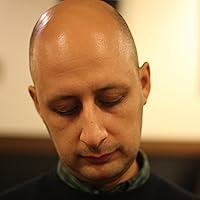
THE FRENCH POSTMODERNIST PHILOSOPHER COMMENTS ON CURRENT EVENTS
Jean Baudrillard (1929-2007) was a French philosopher, cultural theorist, political commentator, and photographer most associated with the “Postmodern” movement.
He begins this 1990 book with the statement, “If I were asked to characterize the present state of affairs, I would describe it as ‘after the orgy.’ The orgy in question was the moment when modernity exploded upon us, the moment of liberation in every sphere. Political liberation, sexual liberation, liberation of the forces of production, liberation of the forces of destruction, women’s liberation, children’s liberation, liberation of unconscious drives, liberation of art…
"This was total orgy---an orgy of the real, the rational, the sexual, of criticism as of anti-criticism, of development as of the crisis of development. We have pursued every avenue in the production and effective overproduction of objects, signs, messages, ideologies and satisfactions. Now everything has been liberated, the chips are down, and we find ourselves faced collectively with the big question: ‘What do we do now that the orgy is over?’” (Pg. 3)
He states, ”When [Andy] Warhol says: all works are beautiful---I don’t have to choose between them because all contemporary works are equivalent; when he says: art is everywhere, therefore it no longer exists, everyone is a genius, the world as it is, in its very banality, is inhibited by genius---nobody is ready to believe him. Yet his is in fact an accurate description of the shape of the modern aesthetic, an aesthetic of radical agnosticism. We are all agnostics, transvestites of art or of sex. None of us has either aesthetic of sexual convictions any longer---yet we all profess to have them.” (Pg. 22)
He says, “Yet it is precisely now that the rights of man are acquiring a worldwide resonance. They constitute the only ideology that is currently available---which is as much as to say that human rights are the zero point of ideology, the sole outstanding balance of history. Human rights and ecology are the two teats of the consensus. The current world charter is that of the New Political Ecology. Ought we to view this apotheosis of human rights as the irresistible rise of stupidity, as a masterpiece which, though imperiled, is liable to light up the coming fin de siècle in the full glare of the consensus?” (Pg. 87-88)
He observes, “This indifference of memory, this indifference to history, is proportional to our efforts to achieve historical objectivity. One day we shall be asking ourselves whether Heidegger himself ever existed. The paradox of Robert Faurisson’s thesis may seem repugnant---and indeed, it is repugnant in its HISTORICAL claim that the gas chambers never existed---but at the same time it is a perfect reflection of a whole culture: here is the dead end of a fin de siècle so mesmerized by the horror of the century’s origins that forgetting is an impossibility for it, and the only way out is denial. So proof is useless, since there is no longer any historical discourse in which to frame the case for the prosecution, but punishment too is in any case an impossibility.” (Pg. 92)
He suggests, “The utopia of the end of alienation has likewise disappeared. The subject has not succeeded in negating himself as subject, within the framework or a totalization of the world. A determinate negation of the subject no longer exists: all that remains is a lack of determinacy as to the position of the subject and the position of the other. Abandoned by this indeterminacy, the subject is neither the one nor the other---he is merely the Same. Division has been replaced by mere propagation. And whereas the other may always conceal a second other, the Same never conceals anything but itself. This is our clone-ideal today: a subject purged of the other, deprived of its divided character and doomed to self-metastasis, to pure repetition. No longer the hell of other people, but the hell of the Same.” (Pg. 122)
He notes, “If it is true that seduction is founded upon my intuition of something in the other that remains forever secret for him, something that I can never know directly about him but which nevertheless exercises a fascination upon me from behind its veil of secrecy, then today there can be very little leeway left for seduction, for the other retains very little mystery for himself. The fact is that everyone is devilishly self-aware these days, devilishly conscious of the nature of their own desire. Everything is now so clear that the very fact of presenting oneself behind a mask is liable to elicit nothing but mockery. In such a contest, what becomes of the poker game of seduction? Where, for that matter, is the illusion of desire---except, perhaps, in the theoretical illusion of psychoanalysis or the political illusion of revolution?” (Pg. 166)
This book contains Baudrillard’s characteristically acerbic and perceptive comments on a very wide variety of issues; it will be of great interest to anyone who enjoys his other writings.