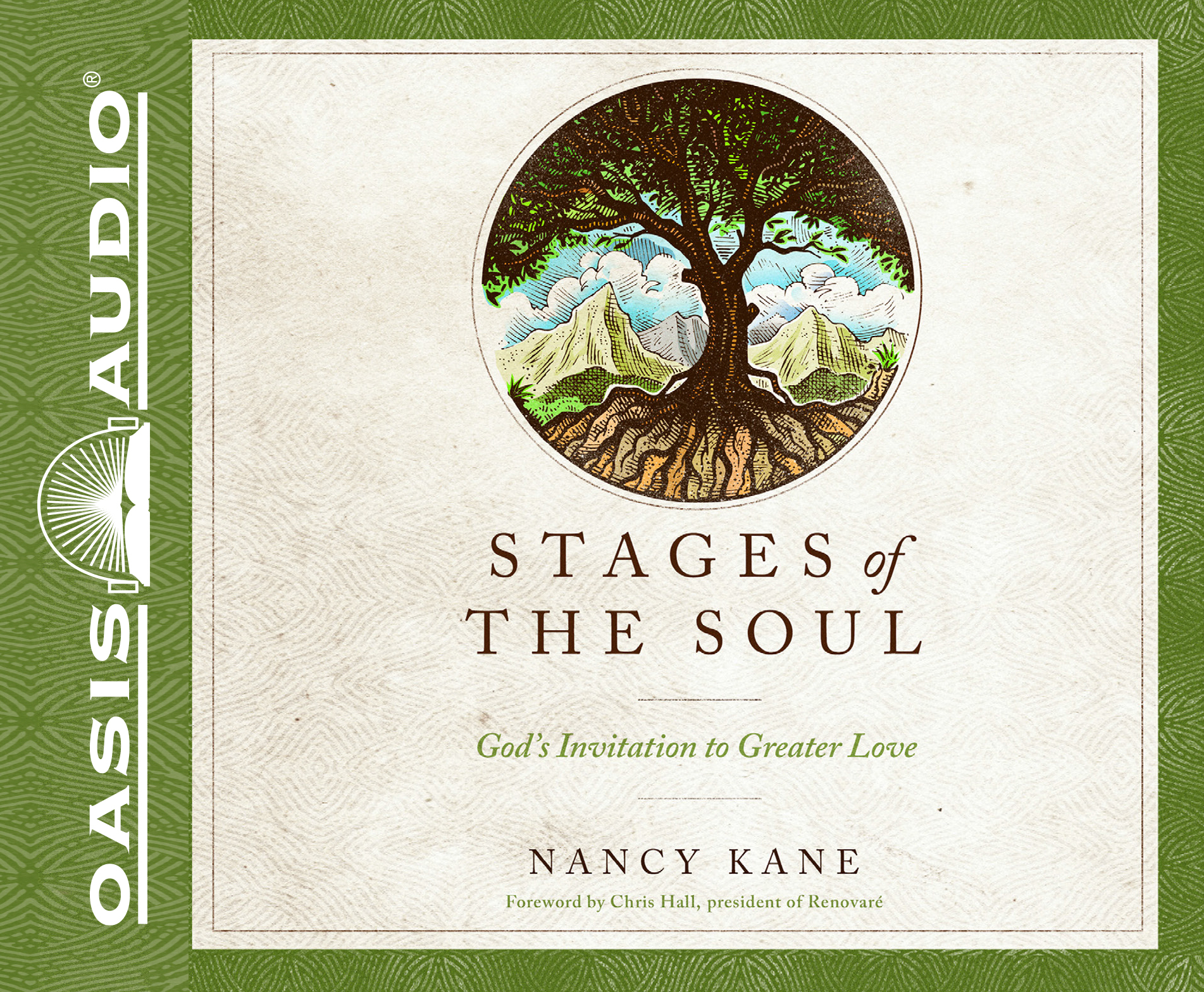
How can you tell if you’re actually growing? Sure, when you’re working on getting rid of a huge character flaw you can see progress, but do you ever wish you had a roadmap for the spiritual journey for the rest of the time? Do you ever feel spiritually dry—or like something’s just not working anymore in your spiritual life? If you find yourself longing for more satisfaction, joy, and intimacy with Christ, this book is for you. Stages of the Soul is about making tangible spiritual progress. It’s about truly understanding—understanding like you’ve never understood before—that you are deeply loved. Nancy Kane walks you through five stages of the soul’s journey toward embracing God’s love. As you learn about each stage you’ll be able identify where you are in the process of spiritual growth understand the role of pain and suffering in your life experience God’s love in the radically deep way you were designed to experience it. Imagine loving God in a way that fills you up from the moment you wake up to the moment you go to bed. Imagine having Christ’s love for the world flow out of your heart without insecurity, anxiety, or selfishness getting in the way. That what this bookis all radically deeper love. This book will help you see more clearly how the Lord tenderly guides us to greater wholeness, holiness, and love. But Stages of the Soul is not just another book, it will become both your companion and guide as you walk day by day in greater intimacy with Christ There is nothing more valuable than help in your journey toward spiritual wholeness. Receive that gift today.
It's important for all of us walking with Jesus to understand where we are on the journey. This brief book does an excellent job of outlining the 5 stages to a deepening relationship with God. Kane uses some very good examples, both Biblical and secular, to highlight each stage and there are some excellent references used as well to validate her points.
Each of the 5 stages is addressed in one chapter using the same outline: Character, Obstacles, Transformation, Summary with 4 short questions for Personal reflection at the end. The key elements were summarised in a very useful table at the beginning of the book which can be used as a reference guide but as another reviewer states highlights the best parts of the book.
I found I wanted more substance to each of the stages, particularly the latter ones, on how one truly progresses to them. Perhaps that might be covered in a follow up book or by referring to some of the quality individuals Kane states in Appendix B.
Overall, I'm pleased I read it and am keen to further understand more on Stages 4 and 5.
We long for a deeper relationship with God and to grow spiritually. In her book, Stages of The Soul, Nancy Kane helps us to understand and identify five stages of spiritual growth.
In a most encouraging and gentle way, the author defines and understanding to the way we grow and how God grows us in each stage of our relationship:
Stage One: Our First Love. This stage is explained as “the encounter with God’s perfect love in Jesus Christ”. This is where we are invited to a “radical change of mind, heart, body, and soul”. Stage Two: Obedient Love. In this stage, our souls are formed by the learning of biblical truths and the practice of life with other believers. Stage Three: Persevering Love. Here we learn to grow as we persevere through painful circumstances which develop a deeper intimacy with God. Stage Four: Sacrificial Love. Moving into this stage, we find ourselves more aware of our own spiritual state and therefore enabled by God’s love to extend His compassion, grace, and mercy to others. Stage Five: Intimate Love. In this stage, we find ourselves desiring nothing more than to dwell with Christ, and a willingness to lay down our lives for His purposes.
The author explains each stage so that each stage builds on the one before. She takes you on a journey which develops an eagerness to begin to develop a daily pattern of prayer and spiritual practices.
One of my favorite quotes from the book is:
“He [Jesus] calls us, on increasing levels, to the renewing of our hearts through His Word and presence. Our lives are Emmaus-road journeys; God walks along with us, making sense of our pain and bringing hope to our questions, as He did in the encounter recorded in the gospels of Luke and Mark. He continues to speak to us and direct us as He did His followers after His resurrection.” (from page 49)
The book has many modern and classic quotes which brought a richness and a depth of understanding to each stage. This is a book for everyone wherever you may be on your spiritual journey.
*I am most grateful to Moody Publishers for providing a copy.
Christians long for a deeper relationship with God. Nancy Kane's "Stages of the Soul" teaches us about the five stages and how to identify where we are. The five stages are "Our First Love", "Obedient Love", "Persevering Love", "Sacrificial Love" and "Intimate Love". Each chapter ends with a summary of key characteristics as well as thought-provoking discussion questions. The appendix includes a chart to help you decide what stage you are in on the soul stages journey.
"Stages of the Soul" is a comprehensive and concise study of spiritual growth. It is a great resource for your personal study as well as in a group. If you are in a mentoring relationship, this book would work well in a one-on-one mentoring partnership. Kane not only explains each stage in depth, but she also gives advice and wisdom on moving through each stage.
Disclosure of Material Connection: I received this book free from Moody Publishers, as part of their Book Review Blogger Program. I was not required to write a review. The opinions I have expressed are my own. I am disclosing this in accordance with the Federal Trade Commission’s 16 CFR, Part 255: “Guides Concerning the Use of Endorsements and Testimonials in Advertising.”
Change is a subject that I like. Because I don't understand it, because it's not easy for me, and because I need it. I did not know this author, it is the first book I read about her, I googled her and I think she only has 2 others. She must continue writing, I really liked her style, I feel she is a born teacher. Her little book made me think a lot. I think she treated the subject in such a concrete and simple way, enjoyable. The author divides the walk of a person with Christ in an almost visible way. Although we are such different and unique beings, I think he is right to be able to roughly change people in general stages with which anyone can feel identified. His words and examples are clear and timely in each section. I thoroughly enjoyed its pages and commented with my son. It is so digestible that I read it in one sitting, but make no mistake it is not light or shallow. I wish I could read it with friends, stop at each reflection question, pray, cry ... snif ... do it as a study. It made me think of the book of How people change, by Tripp. It doesn't have to do with each other, except that they both talk about how people change. I think the two are a good kit to understand the progress and change in the maturity of people. It is very intense to see how you have progressed and where you have stagnated ... and everything you need to be like Christ. I recommend this book to people who have been "born" in a Christian crib, in the gospel and who think they know everything. No, they don't know everything. No, they still do not arrive. We need to continually preach the gospel and see ourselves in the spect of truth, let the sword penetrate. I like Moody's resources. Oh yeah
So I read the book (not the audio version). It was a really concrete way of categorizing the Christian walk. I know there are people who would completely disagree with my review but I liked the way she developed each stage. As a non-abstract thinker, I can look at myself or another believer and almost immediately place them into a stage. It helps me know how to better minister to an individual in their walk with Christ without coming across as judgmental. (Although I could see how some would think that placing someone in a certain stage is judgmental-and I guess it is but not in a prideful way because I am not at stage 5 - but even if I was I still like the idea.) I immediately thought of the people I have been counseling and staged them. I can see what would best help them on their journey. Some will never move on to another stage and others will pass me by. But I really resonated with the practical application of this book. Great ministry tool for me. And for my own walk.
Nancy Kane leads us through five stages of spiritual transformation - or really sanctification. She is a very good writer, easy to read. She uses many real life stories to support her points as well as her own life examples. At the end of each stage, she also describes the potential obstacles of growth. This is especially helpful and instructive. I am thankful that her approach was not linear but circular as growth in Christ keeps returning to previous stages all through life. We die daily to our old nature and are reborn.
At 136 pages, the book is quite short. It would work well though with a small group or in a study at church. For personal growth, I would like a more in depth study as I felt I barely got into the stage when she was already wrapping it up.
But I would recommend this for spiritual growth and as a way of evaluating one's own relationship with Christ.
I agree with the author of the foreword, Chris Hall, that this is the best book about spiritual formation for an evangelical audience. It is a short but substantive read, and I plan to re-read it regularly. Her analysis on why most Christians stay “stuck” in stage 3 is poignant. The appendices are helpful as well. One appendix provides a self-assessment on the five stages. Another appendix lists other people’s renditions of the stages of spiritual formation. Some topics I would be interested in seeing this author explore further would be how these stages could be cyclical, and the role of discipleship in spiritual formation.
A short but dense book that lives up to the title and gives clear descriptions of each of the stages and what's required to move through them, including the grace to know it's not easy and there will be setbacks and advances throughout one's life.
This book isn't one to rush through. As you read through and ponder the five stages of the soul, you will discover where you've been a where you're heading. An easy read and very informative.
In our age of anger, arguments, disputes, violence, and war, the word 'love' appears to be some form of wishful thinking. We speak of love but instances of love are generally few and far between. While we are creatures made in the image of God, we are also sinners who constantly defy the work of the Spirit. Love in its essence does not appear out of nowhere. We don't simply invent love. It must first be received. That is why Christian Theology teaches us that love begins with God. Without God, we can do nothing. Just like God who created heaven, earth, and us, we need God to initiate love. This He had done and is continuing to do so daily. We cannot help ourselves. We need God. In a nutshell, if we want to grow in spiritual formation, we need to accept God's invitation to His Divine Love. If you desire a deeper and growing relationship with God, this is an excellent book to read, to reflect, and to ponder upon how to put love into action. The five stages of the soul are:
Stage One - Our First Love Stage Two - Obedient Love Stage Three - Persevering Love Stage Four - Sacrificial Love Stage Five - Intimate Love
Author and professor Nancy Kane links the growth of love with the natural physical growth. Just as our body grows in size and shape, so too is our need to grow in love. At the same time, our growth happens within the context of an increasingly non-religious background. With the rise of the "Nones," believers not affiliated with any Church, people are grappling with a new era as the Church's influence wanes. The primary reason is because people have not truly experienced or encountered God. Thus, people need to be invited. They need to be assured they will neither be condemned nor judged. Going back to the way God revealed Himself to Isaiah, Kane shows us how the prophet first encounters the holiness of God; resulting in personal confession; receiving God's cleansing; and finally responding in desiring to serve God. The author hopes that the book would help individuals grow in maturity in Christ and to cultivate love for God so great that this love not only grows within oneself but permeates through to others. This book is a map to help us do just that.
It all begins with God. We are able to love only because God first loved us. Stage One begins with our first love, also called saving faith. It is crucial to have a personal experience with God. Our preoccupation with the things of the world is the single biggest impediment to seeing God. If our hearts are like that fertile soil, the seed of the Word will be able to land, germinate, and grow deep roots, and tall branches. Stage Two flows naturally with "Obedient Love," a love that learns the ways of godliness. I like the way obedience is connected to godliness. It is how we let our desire for God lead to a hunger for the Word and a thirst to know Him more. Kane uses the beatitudes of Jesus in Matthew 5 to see how each of them builds on each other. Rather than seeing them as a series of do's and don'ts, we are encouraged to use them as a way to grow our desire for God. Stage Three deals with "Persevering Love" that even when the times are tough, we will learn that our relationship with Christ is more than just a formula. It is like a marriage relationship, with its shares of ups and downs. Yet, there is this holy longing that will keep us together. We might even forget about the experiences of the previous two stages. This is where we need to be careful not to allow emotions to make decisions for us. Getting ready to deal with these tensions without abandoning God is a mark of Stage Three love and maturity. This stage is also marked with temptations and discouragement as we grapple with idols of our lives. Stage Four is Sacrificial Love. Using the powerful story of Robertson McQuilkin, who quit from his role as President of Columbia International University in order to care for his wife who was suffering from Alzheimer's disease. For 13 years, he faithfully and intentionally put his wife first, even though it meant giving up on his career and leadership roles. Such a life exemplifies what it means to love sacrificially. Sometimes, our prayers begin with our needs and wants instead of seeking God or wanting to see God's presence. This stage is a time to free ourselves from such attitudes and to seek God for who He is, not what He can offer us. Finally, Stage Five is about Intimate Love, that the ultimate delight and desire is to simply be in God's presence. With God, it is enough. With God, we don't need anything else. With God, following Christ is a given.
Each chapter follows a similar pattern. Kane begins with a definition of what that stage of love is. This is followed by a story or illustration about the kind of love that stage represents. Following the biblical explanations, readers are given some warnings about the obstacles to growth in that stage. Toward the end, there is a summary of key characteristics which is helpful both as a reminder as well as a quick reference for the busy reader.
My Thoughts When I see the word "stages," I am reminded of the classics such as Francis de Sales's "Introduction to the Devout Life" or St Bernard of Clairvaux's "Four Degrees of Love." These works are classic devotionals to help believers to pursue after God through spiritual direction. While Sales's five books aim at a particular stage of seeking God, Kane's book condenses the stages of love into five chapters. They are quite similar in terms of of general thrusts. For instance, Sales's first and second books are about the intimacy with God, just like Kane's emphasis on intimacy. The last two stages of this book also parallels Sales's warnings on temptations and the eventual stage of enjoying God forever. Kane lists some of the other models of faith in the appendix which would help readers to explore the other works of spirituality.
This book is well thought out and extremely readable. For our modern audience who are not used to the classics of old, this book's modern language and cultural update would give readers a fresh impetus to seek after God in love. Filled with both Bible teachings and updated illustrations, most readers would be able to identify with the gist of what it means to love God and to experience God's love. Without trying to make things too idealistic, Kane has meticulously laid out warnings and possible traps to prevent the layperson from becoming discouraged in their spiritual journeys. I appreciate the way spiritual maturity is blended with love. We all want to grow, but sometimes we don't know how. This is where this book comes in to guide us in our respective journeys of spiritual direction. Apart from the personal experience and individual growth, I am glad that Kane has a bigger picture in mind, to move more toward communal living. Using the Barna 2016 statistics as a warning, we are reminded that only 35% of the people go to Church, and this number is shrinking. It is easy to let ourselves become self-absorbed to the point that we forget the importance of being a part of the larger church community. I look forward to her next book that will cover the stages of the soul through the journey in the Church. She closes with a powerful vision that is worth sharing:
"Believers in every stage would be singularly focused on Christ. There would be a common seeking to understand and grow with each other with no animosity or competiveness shown toward people in other stages. An environment of empathy, openness, and acceptance would make people feel at home no matter their stage. Women and men would share an equal voice in dialogue; people would not be segregated by ethnicity or social status. The homeless would be welcomed and not seen as a ‘mission opportunity.’ Children would be woven into the fabric of gatherings. There would be a heart of service, not marked by activism but fueled by compassion. Materialism and prosperity would be replaced with simplicity and radical generosity. There would be a sense of being known and fully accepted."
Thank you Nancy Kane for this inspired vision.
Nancy Kane is a Licensed Clinical Professional Counselor in private practice in Northbrook, Illinois. She is also an Associate Professor at the Moody Bible Institute of Chicago. Nancy co-authored From Fear to Love: Overcoming Barriers to Healthy Relationships with her husband, Ray. They have two children and live in Arlington Heights, Illinois.
Rating: 4.25 stars of 5.
conrade This book has been provided courtesy of Moody Publishers and NetGalley without requiring a positive review. All opinions offered above are mine unless otherwise stated or implied.