Frederick Fyvie Bruce FBA was a Biblical scholar who supported the historical reliability of the New Testament. His first book, The New Testament Documents: Are They Reliable? (1943), was voted by the American evangelical periodical Christianity Today in 2006 as one of the top 50 books "which had shaped evangelicals".
A fantastic little book—only 114 pages—by one of the great New Testament scholars of the 20th century. Although written by a professor (of professors) and delivered as lectures to graduate seminary students, Bruce rarely includes scholarly jargon. He goes about showing how several OT themes are developed in the NT. These themes include: the Rule of God, the Victory of God, the People of God, the Son of David, the Servant Messiah, and the Shepherd King. His use of the Bible, especially the Old Testament, inspires me to someday have even half the command of Scripture that Bruce demonstrates. He used several passages that I would say to myself, "I've never seen that before."
F. F. Bruce was one of the first biblical scholars I began reading when I first grew interested in studying the Bible more deeply. This particular book has sat on my shelf for over a decade. I think I stumbled across it at a used book store in England. Reading it felt like listening to old mentor.
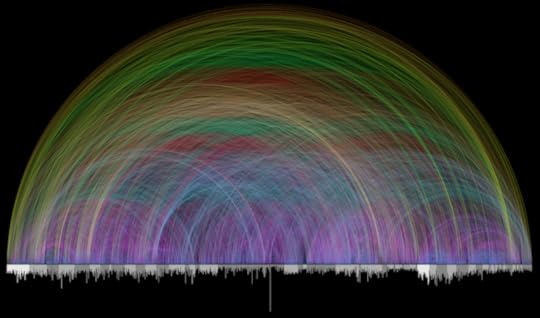
FF Bruce lays out a compelling Biblical theology ("taking both Testaments into account"), showing how the Old Testament foreshadows and is fulfilled in the New Testament. My favorite kind of book - one that helps you begin to see the great arcs that tie together the whole Bible. The name of the book is taken from Acts 2:16- “This is that which was spoken by the prophet Joel.”
The Old Testament does not present a systematic theology but a set of images: - The people of God - The rule of God (and the image of God as king) - The Word of God - The Presence in the Temple - The Messianic figure - The Suffering Servant of the Lord - The Branch - The Good shepherd - The man at the right hand of God - The Son of Man Instead of doctrine, the Bible gives us images and metaphors.
So it is our job to understand these images/themes as they weave throughout thousands of years of real history from Genesis to Revelation. They are the vehicles of OT revelation, and our pathway for understanding the "ways of God with men": "These images are of a terrific potency and they are of the very essence of Israel’s religion. Revelation has clothed itself in them and to seek to get rid of them, to demythologize the Old Testament, would be to refuse to make use of the very means by which we may hope to apprehend the ultimate reality…"
In Jesus, all the images meet in "the central point of revelation." Jesus is the bringing together of all the images of the OT.
"In Jesus the promise is confirmed, the covenant is renewed, the prophecies are fulfilled, the law is vindicated, salvation is brought near, sacred history has reached its climax, the perfect sacrifice has been offered and accepted, the great priest over the household of God has taken his seat at God’s right hand, the Prophet like Moses has been raised up, the Son of David reigns, the kingdom of God has been inaugurated, the Son of Man has received dominion from the Ancient of Days, the Servant of the Lord, having been smitten to death for his people’s transgression and borne the sin of many, has accomplished the divine purpose, has seen light after the travail of his soul and is now exalted and extolled and made very high."