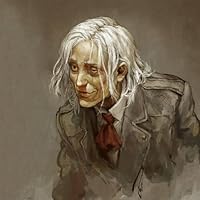
When Erik and Rugrat entered the ten realms they didn’t know what was going on. They only knew that they had contracted the two week curse.
When entering the second realm they came to understand their character sheets, and part of the system that is called the ten realms. A place that the strong make the rules and the weak cling to them for protection and hope that they might be left in peace.
They passed through the trials of the Beast Mountain Dungeon, taking control of it and becoming the leader of nearly two hundred people.
Now in command of the Alva Dungeon and looking to forge a new future, they need more power, mana stones, dungeon cores, monster cores, if not then the Dungeon will stop functioning and they will need to relocate once again.
As they ascend to the second realm, Erik and Rugrat need to grow their skills, gain information and find a dungeon. It’s hardly ever that easy.
Michael Chatfield is a Canadian Army veteran and international bestselling author who writes the kind of books he always wanted to read—character-driven, gritty, tactical, and grounded in reality.
He doesn’t write one-dimensional killers wrapped in plot armor, charging toward an objective without thought. His stories are built for readers who want earned progression, tight, understandable logic, and realistic strategy. Every stat system has structure. Every decision is deliberate (except when there is Jaeger involved).
And the pacing? It's locked at two hundred percent. From alleyway brawls to starship armadas clashing over galactic sovereignty, from tactical dungeon assaults to city-states warring over a continent’s fate—Chatfield commits to every battle like it’s his last.
With millions of books and audiobooks sold, and tens of thousands of reviews his work spans LitRPG, military sci-fi, fantasy, and post-apocalyptic survival. He writes for readers who value systems that make sense, loyalty that lasts, and power that’s earned, not handed out.
Whether you're listening on a long drive, grinding through a shift, or up past midnight planning the next in-game raid—this is where you’ll find sagas to binge. Where strength is earned, logic rules, and camaraderie is forged in fire.
You can connect with him on Patreon and don't forget to follow him on social media!
This is an isekai/LitRPG series that expects you to read in order. I endorse that expectation.
So you know what you're getting. More hijinks by the ex-military protagonists. I like the build-up of the village-turned-dungeon, Alva, and its inhabitants. So the core quest/adventure/plot was interesting. I also liked Erik and Rugrat honing their various interests. Crafting is inherently boring in terms of story, so seeing Chatfield stick to the interesting bits (and creating interesting bits) was enlightening.
The pace dragged a bit in places and some plot points seemed a bit samey, so it isn't all win. I enjoyed the interactions with the Blue Lotus Trading House and how that relationship with our two heroes has grown and provided them a strong base socially. It made sense and held together, even if "Erik heals a family member of someone powerful" is becoming a bit of a trope well on its way to cliché.
I'm going to give this one four stars, recognizing that some of the shine is off. It was still very entertaining, at least if you like this kind of story (as I obviously do). But it is a downward trajectory so I hope the next story discovers new territory.
A note about Chaste: In this book, one of our heroes gets some! Entirely off the page and even the one kiss we see was from an external PoV. So it's still very chaste and can I say how refreshing it is to have two high-capacity soldier boys who aren't complete horndogs? I can and I will!
Mistakes: This is by far such sub par work from Michael Chatfield, that I'm just stunned that it was even published. You have missing letters, numbers inserted into words, messed up punctuation, misspelled words, miss used words, missing sentences, missing paragraphs, and more. This is nothing more than a bad rough draft that was never cleaned up and edited. Plot: you have three main plot lines that are jumbled, choppy,and not well fleshed out. Characters: I still like them but they can't carry a book this badly put together. I feel ripped off by the author that he published something so shoddy and I paid for it because his first series was so well done that I thought this series would have the same quality. Fooled me. I'll read book three just because I bought all the books in this series at one time. However if book three shows the same lack of care and quality I will drop this author for good. My hard earned money should go to authors that take price in their work and put out a worthwhile product. 1/10
I really wanted this book to be great and build the characters up whilst continuing to build the world and expand everything from the first book but it was just, well, frustrating in every way. I feel a little cheated (having actually bought the series) that this book is so badly written and poor. Spelling misatkes are unf0rgivable in this day and age, even sentances that are clearly just wrong can be caught by a simple word processor! It was driving me nuts that on occassion characters appeared out of thin air, references to things were mixed up, there is even one fight scene where he suddenly hits someone not taking part in the fight! amazing. This author should be ashamed of the quality of this book, it is without doubt the worst quality I've ever read. The teenager like swearing dialog was horrible to read and unbelievably 1 dimensional.
I can't think of anything all that positive to say other than this made me think "if this guy can get away with this, and I paid good money for it, and read it all, and will read the 3rd book I expect, then why the hell don't I just write a book, it'd be better than this!". So thankyou to this book for giving me confidence in myself, I'm going to get my tesla ordered now with the furute money I will make from the book I plan to write which will be better than this one if only for the reason I'll use a spell checker and re-read it to myself at least once!
I've given it 2 stars as to be fair, I did read it all and there are a few books I've not managed to get through which are more deserving of a 1 star. Really hoping the author had a new baby during this book and was writing it on 2 hours sleep a night, yes, that's what I'm going to tell myself, congrats on the baby.
3.5 Stars for Narration by Todd Menesses 4 Stars for Main Characters & Story Concepts 1.5 Stars for Uneven Pacing & Writing
I should have written the review for the first book but my experience for the two books are about the same. The narrator is good but he doesn't have a wide range for character voices and that doesn't work well with a story that has a lot of side characters. The main characters are solid. They are fully developed characters that come across well. In fact, I would say that the details for the plot, setting, etc are very well planned but the execution is a bit off. The writing doesn't have an even consistency from start to finish. Some parts are well written and others are very rough. Word choices make scenes that should have been full of energy come across as flat & boring. The series comes across as a work in progress due to chunky transitions between a well delivered scene to a rough one. I wouldn't be able to read the series in print because errors would be more obvious. It's easier to take in & enjoy in audio format.
★★★★☆ — THE SECOND REALM: THE WORLD GETS BIGGER, BUT SOME OF THE FIRE OF BOOK ONE BURNS WEAKER
Audiobook review by Kiba Snowpaw — Alpha Ice Wolf of HowlStrom
Essential
The Second Realm by Michael Chatfield is still a good continuation of The Ten Realms, but for me it is clearly weaker than The Two Week Curse. The first book had a sharp identity: Erik and Rugrat were two soldiers dropped into an unknown cultivation world with little more than their training, modern knowledge, equipment, dark humour and complete trust in each other. Everything felt immediate because they were learning how to survive while I was learning the Ten Realms beside them. Book 2 naturally has to expand beyond that beginning, and it does. Erik and Rugrat now have Alva Dungeon and nearly two hundred people depending on them, while their need for mana stones, monster cores and a dungeon core pushes them into the Second Realm in search of resources, knowledge and greater skill. That expansion gives the story more crafting, settlement building, politics, professions and side characters, but it also dilutes the thing that made Book 1 special to me. The series is becoming larger, yet the emotional focus feels less concentrated. I still enjoy the world, I still love Erik and Rugrat, and I still want to continue, but this is the first point where I can feel the story beginning to trade some of its raw survival energy and brotherhood for systems, management and a wider cast.
Hook and Thesis
The easiest way I can explain my reaction is this: Book 1 felt like two brothers standing in a blizzard with one weapon each and no idea what was beyond the next ridge. Book 2 starts building a town behind them. That is progress, and logically it should feel bigger and better, but something changes when the story is no longer simply about keeping the wolf beside you alive. The first book had an almost military simplicity underneath all the LitRPG mechanics: assess the threat, prepare, adapt, protect your brother, survive. In The Second Realm, Erik and Rugrat are no longer only survivors; they are leaders, craftsmen, dungeon masters and people whose decisions affect an entire community. I actually like that direction, especially because I enjoy strategy and building systems, but the more responsibilities, side stories and professions the book adds, the more often I find myself missing the tighter Erik-and-Rugrat focus. My thesis is therefore not that the sequel becomes bad; it is that expansion costs intimacy. The heart is still beating, but now there are more layers between me and it. When Erik and Rugrat are together, planning, insulting each other, learning or walking into danger as a unit, the old fire comes back immediately. When the story wanders too far into secondary perspectives or long technical processes, I start waiting to return to the two men who made me care about the Ten Realms in the first place.
Basic Plot Summary
After surviving the Beast Mountain Dungeon and taking control of what becomes Alva Dungeon, Erik and Rugrat are responsible for a growing population and a base that cannot simply sustain itself forever. The dungeon needs power and resources, so they ascend to the Second Realm looking for knowledge, mana stones, monster cores and ultimately a way to secure the dungeon's future. Their journey brings them into a realm where the hierarchy is clearer, the organisations are stronger and the assumption that visible status equals actual power becomes even more important. They continue building connections while pursuing their individual professions: Erik digs deeper into alchemy and healing, and Rugrat develops his smithing and ability to create increasingly advanced weapons and equipment. At the same time, Alva continues to grow without them, which means the book increasingly cuts away from the two protagonists to show the community, its people and the systems developing around it. The result is a story that is part cultivation adventure, part crafting progression, part settlement-management fantasy and part military buddy story. That mixture is distinctive, and I understand why many readers love the series for exactly that reason, but it also means Book 2 has less of a single driving line than Book 1. Instead of one sharp survival problem, there are many smaller goals running in parallel, and that makes the book feel more like a continuing campaign than one tightly shaped adventure.
Praise and Critique
The best material is still the material built directly around Erik and Rugrat. Their military background continues to shape how they think rather than existing as decoration. They do not suddenly forget years of practical experience because magic exists now. Erik's medical background naturally feeds into healing and alchemy, while Rugrat's familiarity with weapons and practical problem-solving makes smithing feel like a genuine extension of his identity. I especially like that their professions are passions rather than random skill trees. Erik wants to understand how bodies, mana and medicine interact; Rugrat wants to understand materials, weapons and how to make better tools. That kind of progression works for me because it says something about the characters. Their attitude toward status is also consistently entertaining. The Ten Realms care deeply about hierarchy, appearance and public strength, while these two often behave like veterans who have already seen enough death to be unimpressed by somebody's expensive robe or impressive title. This repeatedly causes people to underestimate them, and although that pattern becomes too predictable later, it is still satisfying when an arrogant character discovers that the two apparently crude outsiders are far more capable than expected.
I also like Alva more than I expected because the settlement-building side scratches the same part of my brain that enjoys RTS games. I am naturally the type who wants to build the economy, train too many workers, gather too many resources, upgrade everything and only attack once the army is probably twice as large as necessary. Alva turns that mentality into fantasy worldbuilding. Knowledge becomes infrastructure. Healing knowledge improves lives, smithing improves equipment, organisation improves defence, and people who began as refugees or survivors gradually become part of something stronger. The problem is that what is fun to control in a strategy game is not always equally exciting to listen to. I enjoy seeing Alva develop when the development has a clear consequence, but I do not need every process to become its own miniature lecture. Chatfield has a habit of loving his systems so much that he sometimes explains the machine after I already understand that the machine works. The crafting is one of the series' unique strengths, but it can also slow the book until progression starts feeling more like administration.
Criticism
My biggest criticism is the widening cast and the increasing number of side perspectives. I understand the purpose. A settlement of nearly two hundred people cannot feel alive if everyone freezes whenever Erik and Rugrat leave the room, and a long epic needs people who can eventually carry stories of their own. But being important to Alva does not automatically make a character important to me. Erik and Rugrat arrived with history, scars, humour, loyalty and a relationship I immediately understood. Many side characters arrive with a job, a cultivation level or a function. Some grow beyond that, but others blur together, and in audiobook form that becomes even more noticeable because I cannot glance backward across a page and instantly remind myself who somebody was. There were sections where I did not hate what I was hearing, but I also knew exactly what I was waiting for: Erik and Rugrat. That is dangerous for a series because every side plot should either become compelling in its own right or deepen the central story. If it mainly makes me wonder when the protagonists are coming back, then the expansion has not earned its space yet.
The second problem is repetition. The series already has a visible pattern where Erik and Rugrat enter a new place, people judge them by appearance or status, someone arrogant assumes they are weak, trouble begins, and the idiot eventually discovers he has been kicking an armed bear. I like this trope. Watching smug people discover that they chose the wrong target can be extremely satisfying, but Book 2 uses versions of it often enough that I begin seeing the gears. The same danger exists with Erik's healing and the way his unusual knowledge opens doors with powerful people. A strength stops feeling special if the narrative keeps creating the same lock for the same key. I want more situations where modern military knowledge, healing, firearms or smithing are not enough, because limits make competence interesting. Erik and Rugrat should be dangerous, but the Ten Realms should also be capable of making two Earth veterans feel genuinely small. Without that pressure, progression risks becoming a victory lap rather than a climb.
There is also less survival tension than in Book 1. That is partly unavoidable because knowledge itself is power. Once Erik and Rugrat understand cultivation, money, factions and their own abilities, the Ten Realms cannot remain as frighteningly unknown as it was when they first arrived. But a sequel needs to replace lost uncertainty with a new kind of danger, and The Second Realm does not always do that strongly enough. Their greatest problem is often obtaining resources or improving professions rather than surviving something they barely understand. It reminds me of a survival game where the opening hours are intense because every bullet and meal matters, but later I own warehouses full of supplies and the monster outside becomes another source of crafting materials. I still enjoy getting stronger, but I miss the feeling that one wrong decision could fundamentally change everything. That is one of the things Book 1 had that Book 2 begins to lose.
Evaluation
Mentally, the reason this difference matters so much to me is that the brotherhood between Erik and Rugrat touches something much deeper than the progression system. I have spent a large part of my own life learning how to function alone inside my head. Depression, anxiety, grief and years of becoming increasingly inward taught me how to keep moving even when the fight was invisible to everyone else. I know how to stand alone because sometimes there is no alternative, but being able to stand alone is not the same as never wanting someone beside you. That is what Erik and Rugrat represented so strongly in Book 1. They were both capable men who did not need the other because they were helpless; they chose the other because loyalty had become family. To me that is more powerful than dependency. “I cannot survive without you” is one kind of bond. “I can survive alone, but I will still walk into hell to bring you back” is another. That second kind hits harder for me because it is not about weakness. It is about choosing someone even when you have learned how to survive without being chosen.
In HowlStrom I picture Book 1 as two figures walking through a whiteout where every pawprint matters. If one disappears into the storm, the other immediately notices. Book 2 is what happens after they reach the fortress. Now there are walls, workshops, guards, healers, smiths, politics, supplies and hundreds of voices calling for attention. The fortress is objectively safer and stronger, but the two original sets of tracks become harder to see underneath everyone else's. That is exactly my emotional problem with this sequel. I want Alva to grow. I want Erik and Rugrat to become leaders rather than eternal wandering adventurers. I want them to build something worth protecting. But I do not want the city they create to become louder than the relationship that made me care whether they survived long enough to create it. The larger the series becomes, the more important it is that Erik and Rugrat remain its emotional home.
Conclusion
So The Second Realm is weaker than The Two Week Curse for me, but weaker does not mean bad. It is still a good audiobook and still a series I want to continue. I enjoy the cultivation, crafting, Alva's development, the military mindset and the way Erik and Rugrat increasingly turn knowledge from Earth into advantages that can improve an entire community. The problem is that Book 2 already shows the danger of becoming too broad. More systems, more characters, more professions and more settlement development create scale, but scale is not automatically depth. Book 1 had less, yet what it had was concentrated. Book 2 has more, yet some of it pulls energy away from the two characters whose brotherhood remains the strongest reason for me to listen.
If I stood on the walls of HowlStrom and watched Erik and Rugrat return from the Second Realm, I would see something different from the two soldiers who first walked out of the storm. They would no longer be carrying only themselves. Behind them would be Alva, its people, its workshops and every responsibility they have accepted. That is growth, and I respect it. But as the Alpha Ice Wolf watching those two brothers walk through my gates, I would also hope they remember the simplest truth they had before there were dungeons, professions or followers: when everything else is stripped away, the person beside you matters more than the title above your head. The Second Realm still has that heart. I can just hear more noise around it now.
Final Rating: ★★★★☆
Story: ★★★★☆ | Erik & Rugrat: ★★★★★ | Brotherhood: ★★★★★ | Military Mindset: ★★★★½ | Crafting: ★★★★½ | Alva Development: ★★★★☆ | Worldbuilding: ★★★★☆ | Side Characters: ★★★☆☆ | Pacing: ★★★½☆ | Emotional Impact: ★★★★☆ | Compared with Book 1: ★★★½☆
Final thought:The Two Week Curse felt like two brothers against an unknown world. The Second Realm feels like those two brothers beginning to build an entire world around themselves. I still want to see what they build. I just hope the walls never grow so high that I can no longer see the two men at the centre of it.
This is pretty much a straight continuation of everything seen in the first book. The prose is really clunky and bad. I've never actually read anything else from Michael Chatfield, but considering he's a British Canadian, I can't help but develop a conspiracy theory that he has a non-English speaking friend that he lets publish under his name and everything is machine translated.
I am evidently that much of a depraved litrpg fan that despite the awkwardness of the writing, I am still enjoying the story. So much of it is cluttered, but there are still so many fairly unique things here that I can't help but continue.
Reading this series is kind of like eating at Applebee's. I think the BBQ sauce smells like body odor, but one of my friends really likes the place so I keep going and eating it and I'm just like well I guess I'm fine...haven't had diarrhea yet.
I would have given it 4 stars, but there were so many continuity errors that I just couldn't. It has somewhat become the staple of this author so I got used to it, but come on, can't you get someone to go through your book and check these things out?
This reads like an asian light novel, which I believe is intentional and that is fine. What is not fine is that the book is full of grammatical and typographical errors. There is probably at least one on ever single page. From bad grammar to often poor sentence structure, some wrong tenses and wrong word use, this has borrowed not only the style but the bad translation language that are so prevalent in the asian light novels. Even font sizes change in the middle of a chapter for no good reason. I'm not even basing my rating on the repetitive word usage and contradictions found throughout the book. It is obvious the text has not been reviewed by a professional editor, which makes this feel like a draft instead of a book published by somebody who cares about quality or wants to look professional.
The story itself still interests me, even though it is getting to be somewhat formulaic, borrowing quite a few of the main plots from the first book. The main characters also do not grow in any way, and I do not mean stat-wise, but as people who learn, change and adapt. Again, oh my god, the grammar. I would expect something in such a primitive state to be written by a middle schooler and not a published author.
3.75 stars Certainly a book with a vast world to traverse yet shackled by the dwarfish plot
The tale begins where it left off previously , the characters are in the Second Realm they are searching for a dungeon core but......what happens next in the plot of things is not much. It's the same story as the previous but told in a more grader proportions.
There are interpersonal relationships explored, but rather falls short on weaving it out through the plot.
31.8.2018 - 4* I like Chatfield’s books, especially litrpg ones. I was looking on Ten Realms for some time but just few days ago actually started reading it. The first one was behind me in matter of hours, I happily devoured it and asked for more. And lucky me, the second book was on menu in just few days.
What I love about the story the most - ex soldiers are acting like ones. And just the fact the story is told from their pov is making the books perfect for me. Other not so important details like great ideas, good worldbuilding or plotline are just cherry on top. ^^ The tiniest con which started bug me out - there are a lot of characters in the story and beside mcs, they kind of started to blur into one, at least for me. Which is weird because all of them have potencial to be more distinct. Also, it's not really negative for me but there are lot of describing and theory in there. I love the thoughts behind it but it's true the pace of book suffered for it. Editing is better, though. :)
Great follow up to the first book but things seem to have slowed down and spread out a bit too much for my liking (Cultivation where you at??). All the different POVs I didn’t care about so much.
What I love about this series that I didn’t mention in the review for the first book was that blend of Chinese wuxia setting into the western LitRPG story telling. Having sects and ridiculous combat techniques along with body/mana cultivation is wonderful wuxia. It’s also nice to leave the many tropes of that genre with the accompaniment of western writing. Examples are how females are written, arrogant young masters, and “face”. All of these come up in the book but are then trampled on and it’s great to see because it’s what I always wanted to see in wuxia.
Listened for the second time. I might of liked it better the second time because I skipped the parts that I didn't like that much and just listened to the parts that I liked. Mainly with Eric and Rugrat. Wouldn't have been able to do that on the first read through since with the first time you have to listen to everything since you don't know what is important.
This book is a bastardization of litRPG. Wait! Hear me out, please. I love litRPG genre with passion. Books like this one and it's sisters specialize in providing the feeling of accomplishment. That's what RPG games are about, and that's what litRPG is mostly about, having this awesome feeling of successs, coolness or progress, that we all love, as it's main focus instead of an afterthought. Some would call litRPG shallow, but it can, and often does, have a depth rivaling far more 'serious' books. Not this time, though. Chatfield is good at creating litRPG, but he's not god at writing litRPG books. The feeling of progress and success is just as effective a drug as it is in my favourite books of the genre, but when you look over the abstract idea of litRPG and see the pages and text that carries it, you are stuck in a realm (pun intended) of amateur fanfiction. Dialogues and monologues (which I sometimes struggled to distinguish), sound synthetic, and to read them in their entirety is like staring at Michael Jackson's plastic nose and hoping it gets better with age (spoilers - it doesn't). They weren't that bad in Chatfield's previous works, so I assume that his goal to have an asian theme threw a really big stick under his feet, locking him him in a culture he did not properly understand. Even though, I would still expect more than dialogues that sound as if parroted from an english translation of low budget Isekai manga. Characters are almost not worth mentioning, perhaps only because I find funny that they yet again sound and feel as a perfect recreation of low budget Isekai tropes. You got your two MCs, who are basically like one personality and it's perfect copy side-by-side. You got their friendly teachers that they run into every now and then. You got high-ranking masters of the current region that are just big fish in small ponds, and are only there to be at awe at the double-MC of the book. And there is even a young, arrogant and rude apprentice that only gets to know the double-MC's greatness after his master points out in his eternal wisdom just how cool and awesome they are. All of those points are quite new to Chatfield's books, as I found Emerilia far less... distracting (in a bad way). Now to those that are, and were prevalent from the beginning. The MC (or two of them, this time), lacks any major or believable progress in their personality, and if ever, it's only mentioned in third person, and has little influence over their actions or thoughts after that point. Side-character stories are boring to such a degree, that I struggle to find worse examples in literature I managed to finish. Perhaps that's because they lack the only thing that this book has going for it - the feeling of progress and success.
Now, for the good parts. The worldbuilding is semi-interesting, being either really good or really boring. Reading about both MC's progress and how they go about it is really, really interesting at times, and would be quite high on my shelf if it wasn't se in this particular book. The MC's are against all previously mentioned odds, quite likeable, and sometimes get a good giggle out of me with their antics.
To summarize, I have developed a love/hate relationship with this book and Chatfield's works in general. It feels a bit like a Stockholm syndrome, but even though I realize the love I have for these is twisted and unnatural, I still can't quite leave them. Even though I have given up on reading this book like 4 or 5 times before finishing it, with good few days in between the attempts, I still returned in the end, even if only out of boredom. This is not meant as a hateful message, but one where I express my irritation at what I got into. Seeing Chatfield's potential, coupled with sometimes abysmal execution, is like having the last unfinished corner of Mona Lisa done by a 7-year old child. So... please, get better.
Sincerely, someone who struggles to call himself Chatfield's fan.
This is really a review of the author's writing style itself. I read this author's other series Emerilia, a couple of years ago, and lost interest about 4 books in. The series started off strong, but over time I slowly lost interest. That put me off reading this newer series, "Ten Realms" as I was afraid of the same thing happening.
This series starts off pretty strong in the first book, I rate it 4, maybe 4.5 stars. The first book is about survival and learning about the world. It is a great book and I loved it. Book 2 wasn't as good, yet I still enjoyed it. It took me longer again to get through book 3 as it kept getting bogged down by supporting characters, and Book 4, I stopped reading midway.
This author has two major issues with his books:
1. Too many side characters. I'm sorry, but I just don't care about random people. I want to read about Eric and Rugrat. You can occasionally throw in another POV, but when over half the book takes place from side characters' point of views, I get bored. This makes the pacing of the book too slow as we have lots of plot lines that most people don't care about. I found myself skimming the book way too much. I read fast, a 300 page book in 4 hours, and I love long books if the pacing is good, but this felt too slow.
2. There is no point to the series. This series has the exact same issue as the last. Why should I care? This author writes "slice of life" style books. There is no bad guy to be defeated, there is no overarching reason to grow strong. They literally just want to get to max level to see if they can because they think it'll be cool to be like gods. They are work-aholics that don't sleep and do nothing but grind their skills to make them go up, not because they have to in order to save family or friends, not in order to live or defeat pure evil. Just cause. They endure pure torture of pain to get stronger, even though there is no threat to them and they are rich enough to live like kings in their new world for the rest of their lives,
Overall, the series isn't bad at all, I just found myself coming up with reasons to not read it. Some people may like slice of life books, I do not.
3.5 Unlike The Masterful And Eargasmic AC/DC Stars
The Second Realm is the second book in The Ten Realms LitRPG series by Michael Chatfield.
The overburdened feeling of being boggled down by just too much vast amounts of information continued on in this book. While I enjoy exploring the concepts and the unique takes on themes I’ve been introduced to before, it’s hard to fully enjoy it. There may be many small confined fights and turmoils our two mcs face but there isn’t an air of intrigue and ‘must keep reading’. Honestly, in my opinion there isn’t enough action and the battles themselves can be a little contrived after a while, never truly reaching scintillating.
However, I did enjoy getting to travel with the other dungeon inhabitants as they traveled or the day to day rite happenings, as a minor break from Erik and Rugrat. The progression in the dungeon itself and theorizing happening within its halls holds my interest well. That no one thought until the last pages to consider the repeating trials that led to them being Dungeon Masters before the end of this book is surprising. I irrationally need my protagonists to be a little more all knowing and have an immediate solution for everything.
I can’t wait to see the next realms as they come, because while our heroes are so scarily strong right now they’ve yet to reach the pinnacle of true power in this world. Hopefully we’ll meet up with Old Man Hei before we run across Elder Nguyen. Finally we will get to test the true limits of Erik’s Alchemical profession, as more of a focal point in the story than compared to the weight of Rugrat’s smithing up to this point.
Re-read: Rounding up my rating, because I honestly enjoyed this book more than the previous for the everyday minutiae. Specifically diving into the concepts, theories, and processes behind the four main specialization: Formations, Alchemy, Smithing, and Healing. I think I’m appreciating the exact opposite of my preferences from my initial read. But oh well.
A little different from the first book. In this book Eric and Rugrat go to the second realm to try and get a dungeon core to save their dungeon. Instead of working on their personal power/cultivation they spend most of their time working on their crafting. It was a little odd to me. It was pretty easy for them to open mana channels or temper their bodies in the first book, I couldn't understand why they put off continuing that process in this book. The two main characters are still very OP and the way they view other people and their power is not something other people in this world are accustomed to seeing. This causes a lot of problems for them. They don't really care about their appearance, politics or power struggles. In a world where power is everything, if you don't show your power you are begging to be bullied. This happens to Eric and Rugrat multiple times. People underestimate their power and mess with them, they get pissed off and then kick ass leaving people to try and figure out what happened. Overall this was a good continuation of the series.
This book is not about defeating some great overlord or being the chosen one or fulfilling some prophecy.
This book is a journey of two men putting their heart into their individual passions and becoming great at what they do. But it does not stop there. I love how even though Eric and Rugrat are worlds apart from Alva Dungeon, the storyline of Alva Dungeon does not feel flat. Eric and Rugrats aren't the only thing that's interesting anymore.
Also, is there no shortage of obnoxious lil spoiled rich brats in the ten realms?
The author has continued to make sure that you are sucked into his story. The characters are interesting and the supporting characters are good. The pace is good and the action scenes are well written.
This book seemed like a set up book. There was alot of set up and introduction to many new characters. I enjoyed watching the struggle of leveling up their trade skills and learning how the world really worked. I am having alot of fun reading these books.
I had this book on my mind since finishing the first. I hope all my excitement doesn't end in disappointment.
Is this going to be a running gag? Every time they enter a city they step on someone important toes.
The same thing that happened with the author's other series is happening here. There are more point of views being continuously added, and he is turning it from a book about survival and bettering one's self into a slap shtick low IQ comedy. Stupid fart jokes that a six year old would find funny.
I can't believe I was longing to read this book. The skeleton in this book is slowly turning into that A.I robot that made me drop the other series.
If things continue they way they are going, I will have to drop the series. I can't stomach these type of books any longer. I have other things to read that won't show me something in book one, then spit in my face in the second book.
I really don't understand this author. He writes great parts, then switches to things kids would find funny. It's like he doesn't know how to balance his books, or tell mature jokes that don't ALL depend on childish fart jokes amongst others.
This would have been better if it focused on Erik and Rugrat, and less on the people in the dungeon. They are not interesting. They are not the reason I picked up book two, it was Erik and Rugrat that made me do that.
I also noticed that the author is terrible with his time scale. He gives people time limited, but the things they accomplish in that time always seems off.
I really like the parts where Erik and Rugrat are being serious, and trying to survive or better themselves. I'm tempted to read the third book and skim or skip anything that doesn't have Erik and company.
Why do authors start these books so good, then continuously add characters no one wants to read? Even if the author is giving some insight into what is happening elsewhere, they should keep it short, not lengthy paragraphs. It should take up less than a chapter when all the pieces are combined.
I will read the thirst book, but I will be skimming a lot when it reaches parts I'm not interested in.
Sadly I think the author will add more character POVs in the next one.
I very much like the plot and the world that the author is building in this series. Having read a fair amount of military fiction, fantasy, litrpg, and xianxia/wuxia novels; I like the balance that the author has struck between plot advancement and "cultivation."
My one pet peeve with this author in general, and this book specifically, is that it seems to have not been edited at all. I'm not talking about the odd misspelling or incorrect punctuation, although there are MANY examples of this, there are much more blatant mistakes which even the most cursory glance by the author or editor should have caught. Just the ones I noticed include, but are not limited to, issues like: the font and text size changing drastically from one paragraph to the next for no reason, random bolded paragraphs, missing paragraphs and sentences, nonsensical or missing exposition and descriptions, bizarre plot jumps, incorrect character names, typos including numbers such as "sp3ells," and others.
I understand and appreciate the fact that the author pumps these books out at an insane rate, and I've happily read many of his other works, but this is one of the most poorly edited novels of his that I have come across, and that's saying something.
Having gotten that off my chest, there are many redeeming qualities to this book such as a diverse and interesting character pool and a well-thought-out world/system with plenty of room for growth. I would very much recommend this series if you're the kind of person who enjoys good litrpg and can look past often immersion-breaking writing/editing to enjoy the story.
To The Author (should he read this): Please, Please, PLEASE spend the day or two necessary to have someone read your work before publishing it. So many issues with this book could have been rectified in an hour with a properly marked manuscript. This is actually my second attempt at reading this series after seeing the "edited and revised copy" of book 1 on Kindle. Here's hoping they are better edited going forward.
In this book, Erik and Rugrat are taking on the Second Realm within the Ten Realms, looking for a dungeon core that they can use to save Alva Dungeon, while also working to level themselves up and increase their skills in alchemy and smithing.
Jeez, it seems like Erik and Rugrat stir up trouble wherever they go. Admittedly, it's not usually their fault (usually), but a result of someone getting their knickers in a bunch because they think so highly of themselves that they forget there may be someone else who is stronger than they are. Oh, yeah. And, these asshats fall prey to judging the book by its cover and assume that Erik and Rugrat are weak nobodies. Not surprisingly, that assumption usually goes badly for them.
I enjoyed this book just as much as book 1. The characters continue to be developed and even though the cast of characters is growing, the author does a good job of balancing the various storylines, keeping the reader up-to-date on what's happening in all the major locations.
Though there are setbacks at various points, Erik and Rugrat continue to pursue their goals with a dogged determination that is not often seen. While I was a little disappointed with one failure - mostly because I was really hoping they would succeed - I was not really surprised by it. I look forward to seeing how things go in the next book as they explore the Third Realm. As this realm is essentially the home base for alchemists, it will be interesting to see how Erik is able to progress, and what kind of reception he is given by the Alchemist Association. At this point, the Association should have heard about the Age Rejuvenation potion that Erik developed. How will they react to it? Something tells me that it will not be smooth sailing.
If that sounds the least bit interesting to you, then I encourage you to begin reading the series. If you've already read book 1 and are trying to decide whether or not to read book 2, let me tell you this: if you enjoyed book 1, then read book 2; if you didn't enjoy book 1, then don't. Pretty simple.
This is technically a review of the first two books. Chatfield has out together an interesting world, with 10 Realms to ascend through as you get stronger, and a system of leveling and magic that is interesting and scratches that LitRPG itch.
That's where the good ends, and why this book has two stars. This book is written in the most infuriating way possible; almost stream of consciousness at times. EVERY detail is spelled out like the reader is a moron, and repeated out loud by characters as they muse about the best course of action for an entire chapter. This book is like 700 pages and should be 300 at the very max.
The action sequences are slowed down by the explanation of WHY each person can do something, referencing their stats over and over and over again. We get it, we've seen the stats (which are also inconsistent, seriously needs better notes on what level everyone is), so sometimes characters can have a fight without explaining how the main character is fast because of his agility. We know. Seriously, we know.
There's also definitely a military fetish and obsession with their badassery that doesn't fully make sense to me in context. Our heroes are war veterans, which is a cool set-up for the series and directs their sense of morals and how they go about leveling. What doesn't make sense is that they have entered a world where people live for literally hundreds of years fighting and leveling. Why do our main characters supposedly have more combat experience that's terrifying to some of these people? Minor gripe, but it comes up often enough.
Tried not to include spoilers, but this book could have been EXCELLENT if Chatfield would just take the time to condense the text into something readable. Get an editor, or maybe just let us experience the story through dialog (very painful dialog, by the way) instead of treating us like children who can't figure out what's going on without the entire thing spelled out.