

What do you think?
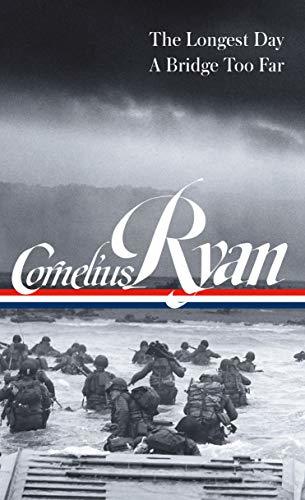
The Longest Day / A Bridge Too Far
A veteran journalist fascinated by the experiences of “ordinary people caught up in fear and crisis,” Cornelius Ryan combined exhaustive research with a novelist’s gift for storytelling in his brilliant World War II classics The Longest Day (1959) and A Bridge Too Far (1974). For each book Ryan interviewed or corresponded with hundreds of military veterans and civilian participants, weaving their individual stories together in books at once epic in scale and intimate in focus.
A visit to the Normandy beaches in 1949 inspired Ryan to write a book about D-Day, a task that took a decade to complete. The Longest Day is a democratic history in which American paratrooper John Steele, hanging from a church steeple in the midst of battle, and German infantryman Josef Häger, trapped inside a besieged bunker, share the stage with top commanders General Dwight Eisenhower and Field Marshal Erwin Rommel. Ryan captures the nervous anticipation felt by Allied servicemen and French civilians as they await the signal for the invasion; chronicles the confused German response to the Allied onslaught; and provides cinematic depictions of the grim battle for Ste-Mère-Église, the desperate assault on the Merville battery, and the bloody struggle to get off Omaha Beach.
In Ryan’s tragic masterpiece A Bridge Too Far (1974), Field Marshal Bernard Montgomery’s uncharacteristically bold plan to end the war in 1944 by crossing the Rhine in Holland sets in motion the greatest airborne assault in history. Ryan narrates with consummate skill the heartbreaking hour-by-hour unraveling of Operation Market Garden as the Allied offensive encounters unexpected German resistance, precipitating a series of merciless battles fought in the Dutch countryside and the shattered streets of Nijmegen and Arnhem. Written as Ryan was fighting his own private battle with cancer, A Bridge Too Far is an unforgettable story of physical and mental suffering, bewildering confusion, stubborn endurance, and unyielding courage.
This authoritative Library of America volume also collects seventeen of Ryan’s wartime dispatches for the London Daily Telegraph, including his eyewitness account of D-Day as seen from an American bomber; magazine stories that supplement The Longest Day; revealing letters to publishers; and samples of the research questionnaires he sent to veterans. It restores to print the full-color endpaper maps from the first edition of The Longest Day, and includes an introduction, a chronology of Ryan’s life and career, explanatory endnotes, eighty-eight pages of photographs, and eleven black and white maps.
A visit to the Normandy beaches in 1949 inspired Ryan to write a book about D-Day, a task that took a decade to complete. The Longest Day is a democratic history in which American paratrooper John Steele, hanging from a church steeple in the midst of battle, and German infantryman Josef Häger, trapped inside a besieged bunker, share the stage with top commanders General Dwight Eisenhower and Field Marshal Erwin Rommel. Ryan captures the nervous anticipation felt by Allied servicemen and French civilians as they await the signal for the invasion; chronicles the confused German response to the Allied onslaught; and provides cinematic depictions of the grim battle for Ste-Mère-Église, the desperate assault on the Merville battery, and the bloody struggle to get off Omaha Beach.
In Ryan’s tragic masterpiece A Bridge Too Far (1974), Field Marshal Bernard Montgomery’s uncharacteristically bold plan to end the war in 1944 by crossing the Rhine in Holland sets in motion the greatest airborne assault in history. Ryan narrates with consummate skill the heartbreaking hour-by-hour unraveling of Operation Market Garden as the Allied offensive encounters unexpected German resistance, precipitating a series of merciless battles fought in the Dutch countryside and the shattered streets of Nijmegen and Arnhem. Written as Ryan was fighting his own private battle with cancer, A Bridge Too Far is an unforgettable story of physical and mental suffering, bewildering confusion, stubborn endurance, and unyielding courage.
This authoritative Library of America volume also collects seventeen of Ryan’s wartime dispatches for the London Daily Telegraph, including his eyewitness account of D-Day as seen from an American bomber; magazine stories that supplement The Longest Day; revealing letters to publishers; and samples of the research questionnaires he sent to veterans. It restores to print the full-color endpaper maps from the first edition of The Longest Day, and includes an introduction, a chronology of Ryan’s life and career, explanatory endnotes, eighty-eight pages of photographs, and eleven black and white maps.
1000 pages, Hardcover
Published May 7, 2019
About the author
Cornelius Ryan
23 books297 followersCornelius Ryan was born in Dublin. After finishing his education he moved to London in 1940, and became a war correspondent for ''The Daily Telegraph'' in 1941.
He initially covered the air war in Europe during WW II, flew along on fourteen bombing missions with the Eighth Air Force and Ninth Air Force United States Army Air Forces (USAAF), then joined General Patton's Third Third Army and covered its actions until the end of the European war. He transferred to the Pacific theater in 1945, and then to Jerusalem in 1946.
Ryan emigrated to the United States in 1947 to work for Time magazine, where he reported on the postwar tests of atomic weapons carried out by the United States in the Pacific. This was followed by work for other magazines, including Collier's Weekly and Reader's Digest.
He married Kathryn Morgan (1925–1993), a novelist, and became a naturalized citizen of the United States in 1951.
On a trip to Normandy in 1949 Ryan became interested in telling a more complete story of D-Day than had been produced to date. He began compiling information and conducting over 1000 interviews as he gathered stories from both the Allies and the Germans, as well as the French civilians.
In 1956 he began to write down his World War II notes for The Longest Day, which tells the story of the invasion of Normandy. Published in 1959 it was an instant success.
His next work was Last Battle The Classic History of the Battle for Berlin (1966), about the Battle of Berlin.
This work was followed by A Bridge Too Far (1974), which tells the story of Operation Market Garden, the ill-fated assault by allied airborne forces on the Netherlands culminating in the Battle of Arnhem.
Ryan was awarded the French Legion of Honor, and an honorary Doctor of Literature degree from Ohio University, where the Cornelius Ryan Collection is housed (Alden Library). He was diagnosed with cancer in 1970, and struggled to finish A Bridge Too Far during his illness. He died in Manhattan, while on tour promoting the book, A Bridge Too Far, only two months after publication.
Four years after his death, Ryan's struggle with cancer was detailed in A Private Battle written by his wife, from notes he had secretly left behind for that purpose. He is buried in the Ridgebury Cemetery in northern Ridgefield, Connecticut.
Biography info: http://en.wikipedia.org/wiki/Corneliu...
He initially covered the air war in Europe during WW II, flew along on fourteen bombing missions with the Eighth Air Force and Ninth Air Force United States Army Air Forces (USAAF), then joined General Patton's Third Third Army and covered its actions until the end of the European war. He transferred to the Pacific theater in 1945, and then to Jerusalem in 1946.
Ryan emigrated to the United States in 1947 to work for Time magazine, where he reported on the postwar tests of atomic weapons carried out by the United States in the Pacific. This was followed by work for other magazines, including Collier's Weekly and Reader's Digest.
He married Kathryn Morgan (1925–1993), a novelist, and became a naturalized citizen of the United States in 1951.
On a trip to Normandy in 1949 Ryan became interested in telling a more complete story of D-Day than had been produced to date. He began compiling information and conducting over 1000 interviews as he gathered stories from both the Allies and the Germans, as well as the French civilians.
In 1956 he began to write down his World War II notes for The Longest Day, which tells the story of the invasion of Normandy. Published in 1959 it was an instant success.
His next work was Last Battle The Classic History of the Battle for Berlin (1966), about the Battle of Berlin.
This work was followed by A Bridge Too Far (1974), which tells the story of Operation Market Garden, the ill-fated assault by allied airborne forces on the Netherlands culminating in the Battle of Arnhem.
Ryan was awarded the French Legion of Honor, and an honorary Doctor of Literature degree from Ohio University, where the Cornelius Ryan Collection is housed (Alden Library). He was diagnosed with cancer in 1970, and struggled to finish A Bridge Too Far during his illness. He died in Manhattan, while on tour promoting the book, A Bridge Too Far, only two months after publication.
Four years after his death, Ryan's struggle with cancer was detailed in A Private Battle written by his wife, from notes he had secretly left behind for that purpose. He is buried in the Ridgebury Cemetery in northern Ridgefield, Connecticut.
Biography info: http://en.wikipedia.org/wiki/Corneliu...
Ratings & Reviews
Friends & Following
Create a free account to discover what your friends think of this book!
Community Reviews
Displaying 1 - 15 of 15 reviews

November 28, 2019
This was a re-read of the Longest Day and the first time I read A Bridge Too Far. The Longest Day is a 5 star military journalism classic. In just over 250 pages Ryan paints a picture of the pivotal moment of World War II in Europe. Combining the stories from hundreds of soldier interviews, Ryan concisely describes the D-Day invasion in a journalistic style putting you in the boots of soldiers and behind the binoculars of leaders as the battle unfolds. I've loved this book every time I've read it.
I would rate A Bridge Too Far, the story of Operation Market Garden, the largest airborne battle of World War II, as a 4 star read only because Ryan's story sometimes gets bogged down in too much detail. Market Garden was planned and executed in September, 1944 in a wave of optimism as allied forces raced across France and Belgium. Supreme Commander Dwight Eisenhower bought into a plan developed by Field Marshall Bernard Montgomery who mistakenly assumed the Germans were beaten and he could send an armored column 60 miles up a single highway through Holland following the seizure of 3 bridges by US and British Airborne troops leading to the Dutch city of Arnhem on the Rhine River. From Arnhem the allies would march easily into the German Ruhr valley ending the war by Christmas. How many times in Korea, Viet Nam and the Persian Gulf would we hear grand plans launched by high level commanders promising early ends to conflicts?
Montgomery's plan discounted intelligence showing 2 divisions of German Panzer armor in the area, ignored the presence of the German 15th army retreating from Antwerp and failed to take into account the elevated roads and marshy terrain that would complicate the campaign. The plan also put airborne soldiers far from their bridge objectives reducing the element of surprise that worked at Normandy. The battle plan assumed the capture of three bridges, by separate airborne forces, would be quickly and simultaneously completed. Classic military strategy points out the risk of dividing forces. This plan relied on 4 separate attacks, the US 101st Airborne (of Band of Brothers fame) at Eindhoven, the US 82nd Airborne at Nijmegen and the British 1st Airborne at Arnhem, while the British Armored XXX Corps and Infantry would cross the Meuse-Escaut Cnal and rush up the highway linking the three cities.
The British 1st Airborne faced the toughest challenge assigned to capture the Arnhem bridge at the farthest point up the road and landing via air 8 miles from the bridge they needed to capture. Amazingly the British battalion led by Colonel John Frost was able to capture the north end of the Arnhem bridge in the first 24 hours of the battle only to get into a terrible siege that they fought through valiantly.
Ryan's reporting on the British 1st Airborne at Arnhem is brilliant war reporting equally describing the horror, destruction, bravery and valor of the soldiers charged with carrying out the plan. A Bridge Too Far focuses on the stories of the soldiers and line commanders who fought the campaign, only spending time with Montgomery and Eisenhower at the beginning of the book to set up the story.
The strength of A Bridge Too Far is the story Ryan weaves from first person interviews with the soldiers and leaders on both sides of this battle. It reminds us that all military action planned by generals is reliant on the soldiers on the front lines who gamble their lives based on their loyalty to their country and fellow soldiers.
I would rate A Bridge Too Far, the story of Operation Market Garden, the largest airborne battle of World War II, as a 4 star read only because Ryan's story sometimes gets bogged down in too much detail. Market Garden was planned and executed in September, 1944 in a wave of optimism as allied forces raced across France and Belgium. Supreme Commander Dwight Eisenhower bought into a plan developed by Field Marshall Bernard Montgomery who mistakenly assumed the Germans were beaten and he could send an armored column 60 miles up a single highway through Holland following the seizure of 3 bridges by US and British Airborne troops leading to the Dutch city of Arnhem on the Rhine River. From Arnhem the allies would march easily into the German Ruhr valley ending the war by Christmas. How many times in Korea, Viet Nam and the Persian Gulf would we hear grand plans launched by high level commanders promising early ends to conflicts?
Montgomery's plan discounted intelligence showing 2 divisions of German Panzer armor in the area, ignored the presence of the German 15th army retreating from Antwerp and failed to take into account the elevated roads and marshy terrain that would complicate the campaign. The plan also put airborne soldiers far from their bridge objectives reducing the element of surprise that worked at Normandy. The battle plan assumed the capture of three bridges, by separate airborne forces, would be quickly and simultaneously completed. Classic military strategy points out the risk of dividing forces. This plan relied on 4 separate attacks, the US 101st Airborne (of Band of Brothers fame) at Eindhoven, the US 82nd Airborne at Nijmegen and the British 1st Airborne at Arnhem, while the British Armored XXX Corps and Infantry would cross the Meuse-Escaut Cnal and rush up the highway linking the three cities.
The British 1st Airborne faced the toughest challenge assigned to capture the Arnhem bridge at the farthest point up the road and landing via air 8 miles from the bridge they needed to capture. Amazingly the British battalion led by Colonel John Frost was able to capture the north end of the Arnhem bridge in the first 24 hours of the battle only to get into a terrible siege that they fought through valiantly.
Ryan's reporting on the British 1st Airborne at Arnhem is brilliant war reporting equally describing the horror, destruction, bravery and valor of the soldiers charged with carrying out the plan. A Bridge Too Far focuses on the stories of the soldiers and line commanders who fought the campaign, only spending time with Montgomery and Eisenhower at the beginning of the book to set up the story.
The strength of A Bridge Too Far is the story Ryan weaves from first person interviews with the soldiers and leaders on both sides of this battle. It reminds us that all military action planned by generals is reliant on the soldiers on the front lines who gamble their lives based on their loyalty to their country and fellow soldiers.

April 24, 2023
This handsome LOA volume collects two classics of popular World War II history by Cornelius Ryan. The first, The Longest Day, follows the D-Day landings in Normandy through the heroic, horrific, and absurd experiences of Allied and German commanders, soldiers, and civilians, all in a brisk 200 pages. The more expansive and complex A Bridge Too Far follows the controversial Operation Market-Garden -- though its start is troublingly slow, the book becomes much more gripping than its predecessor, especially when it covers the British First Airborne's tragic stand in and around Arnhem (also, it's somber to think of how Ryan was painfully wasting away from cancer while struggling to complete the book). Thoroughly memorable in their storytelling while also staying concretely informative about the planning and order of these crucial battles, both books stand alongside other great works (like Hiroshima) on the major events of the 20th century.
February 17, 2026
Very very detailed
Read
October 28, 2024Although I have not read many WW2 books, it is my belief that A Bridge Too Far and The Longest Day are the finest you will set your eyes upon. Instead of being thrown into the usual one viewpoint of a staunch military leader, here we see the war through a kaleidoscope of interesting people. Privates, Generals, Germans, French, Dutch... if they have something to say to provide a fleshed out view of the battle, you will hear of it.
SPOILERS (I guess? I mean, it's history; it isn't fictional) The 'Red Devils,' or the 1st Parachute Brigade, really got to me in A Bridge Too Far. I was practically begging with them that reinforcements would arrive. It saddens me that they were nearly eradicated, and the house to house fighting is scary as hell to think of. Anyhow. If you want to read a WW2 book - Cornelius Ryan is your best bet.🫡
SPOILERS (I guess? I mean, it's history; it isn't fictional) The 'Red Devils,' or the 1st Parachute Brigade, really got to me in A Bridge Too Far. I was practically begging with them that reinforcements would arrive. It saddens me that they were nearly eradicated, and the house to house fighting is scary as hell to think of. Anyhow. If you want to read a WW2 book - Cornelius Ryan is your best bet.🫡

May 30, 2025
So in spite of Goodreads classifying this as an edition of The Longest Day, this is actually an omnibus volume containing that book, A Bridge Too Far, and some of Ryan's other writings on World War II. Presumably adding The Last Battle would take the page count well beyond what Library of America is comfortable printing. I've already reviewed those two books separately, so I'll just give a few thoughts on the rest of the collection. As with the other Library of America volumes I have, I love the presentation - the whole book feels high quality and there's even a ribbon bookmark. The introduction gives some good context to Ryan's works - I certainly wouldn't have realized he was dying of cancer when he wrote A Bridge Too Far otherwise. The book includes some of Ryan's dispatches from World War II, starting with him riding along on a series of bombing runs during and after D-Day. Some of them felt kinda repetitive, but his writing about witnessing Tojo's attempt to kill himself was pretty interesting. And it was cool to read a couple of letters about the impetus for writing The Longest Day, as well as seeing examples of the surveys he sent out for that and A Bridge Too Far. Overall this was a great collection and I'm definitely glad I have it.

September 27, 2020
Fantastic accounts by a veteran Irish journalist of two critical moments during the final year of World War II: the Normandy invasion, which succeeded, and Montgomery's effort to shorten the war (and preempt his American rival Patton) with a dramatic air assault on eastern Holland, which failed. Ryan based his accounts of both events on extensive surveys and interviews of hundreds of participants (all listed) on both sides of the conflict, and so manages to create a cinematic composite picture that is far richer and more textured than the usual historic account. Both have been made into first-rate movies, although I recommend reading the book before seeing the movies. "A Bridge Too Far" is an especially remarkable achievement because Ryan was battling a steadily worsening case of prostate cancer while working on the book--a battle that he ultimately lost (and that is powerfully chronicled in "A Private Battle" by his wife Kathryn).

September 13, 2020
History that reads like great fiction. Not a catalogue of dry details but a visceral account of two pivotal events in 1944: D-Day (The Longest Day) and Operation Market Garden (A Bridge Too Far). This Library of America edition (2019) contains coloured maps from the period as endpapers and photographs, some of which are graphic (e.g., a dead German general hanging out of his car after being shot by British troops). I was struck by the horror of the situations the soldiers found themselves in (from the mundane - getting seasick and incapacitated before the battle - to the tragic - soldiers landing and dying in shallow swamps) and amazed at the resilience and courage they displayed. But ultimately it's all in the telling, and Cornelius Ryan is extremely gifted in this regard. Possibly my book of the year so far. Well done to Library of America.
April 29, 2022
The history of D-Day begins with Ryan's text. A great narrative history of the event made even better with interviews from those on both sides of the battle. Ryan creates a complete picture of the events and his analysis never seems heavy-handed as much as clarifying while providing context and perspective.
His account of Operation Market Garden in A Bridge Too Far is challenging to read--to see so many pieces of this complex endeavor not fall in place and the tragic aftermath that results makes it so. Yet, similar to The Longest Day, it is the individuals and the courageous and improvisational actions they took that bring the humanity of the actions forward to tell the story.
His account of Operation Market Garden in A Bridge Too Far is challenging to read--to see so many pieces of this complex endeavor not fall in place and the tragic aftermath that results makes it so. Yet, similar to The Longest Day, it is the individuals and the courageous and improvisational actions they took that bring the humanity of the actions forward to tell the story.
January 11, 2022
A lovely edition with two books, articles, and letters describing two important actions in the campaign for Europe. Both books were made into classic films but I prefer reading the books. A great deal of sifting of primary sources informs the books and they illustrate that there are literally millions of stories about the events in the war. The story is told from both sides and from different levels. The arrogant British generals do not come out well.

December 17, 2019
This is not a book where you will find all the details of D-day, but it gives you a good impression what the soldiers went through. To make al long story short, this book belongs in the collection of everyone interested in the 2nd WW.
June 7, 2019
As good a read as when I read it years ago. The Book is better than the movie and the movie is excellent. Personal memories with historical records make reading a joy.
Read
June 28, 2019940.5421 R988L 2019

July 29, 2019
An excellent book. I've watched both movies a couple of times. But, as everyone knows, the books are always better.
August 21, 2020
what a great book about D-Day and operation market garden about the failed invasion of Holland. a must read if you're a fan of world war 2. a quote from Patton " war is hell"

December 9, 2020
Simply incredible.
Displaying 1 - 15 of 15 reviews