

What do you think?

Wonder Woman (2011) #1-6
Wonder Woman by Brian Azzarello & Cliff Chiang Omnibus
The entire run of writer Brian Azzarello (100 BULLETS) and artist Cliff Chiang's (PAPER GIRLS) bold new imagining of one of comics' most iconic characters is now collected in its entirety in his giant-size omnibus edition!
Raised as a daughter by the Queen of the Amazons, the warrior princess called Diana is different from the rest of her countrywomen. They've all heard the legend of how she was formed from clay to give the childless queen the daughter she dreamed of--and they treat her like an outsider and outcast because of it. But Diana is different than everyone else, just not for the reasons everyone thinks.
It's because she's the daughter of Zeus.
With a new cadre of brothers and sisters as allies and enemies, Wonder Woman's world is rocked to its core when her eldest brother, the First Born, was freed from his slumber. Her newfound family is in ruins and her friends scattered, she must turn to Orion and the New Gods of New Genesis to save herself, her newborn brother Zeke and his mother Zola from the First Born's wrath.
Collects Wonder Woman #0-35, 23.1 and a story from Secret Origins #6
Raised as a daughter by the Queen of the Amazons, the warrior princess called Diana is different from the rest of her countrywomen. They've all heard the legend of how she was formed from clay to give the childless queen the daughter she dreamed of--and they treat her like an outsider and outcast because of it. But Diana is different than everyone else, just not for the reasons everyone thinks.
It's because she's the daughter of Zeus.
With a new cadre of brothers and sisters as allies and enemies, Wonder Woman's world is rocked to its core when her eldest brother, the First Born, was freed from his slumber. Her newfound family is in ruins and her friends scattered, she must turn to Orion and the New Gods of New Genesis to save herself, her newborn brother Zeke and his mother Zola from the First Born's wrath.
Collects Wonder Woman #0-35, 23.1 and a story from Secret Origins #6
928 pages, Hardcover
First published October 29, 2014
About the author
Brian Azzarello
1,292 books1,127 followersBrian Azzarello (born in Cleveland, Ohio) is an American comic book writer. He came to prominence with 100 Bullets, published by DC Comics' mature-audience imprint Vertigo. He and Argentine artist Eduardo Risso, with whom Azzarello first worked on Jonny Double, won the 2001 Eisner Award for Best Serialized Story for 100 Bullets #15–18: "Hang Up on the Hang Low".
Azzarello has written for Batman ("Broken City", art by Risso; "Batman/Deathblow: After the Fire", art by Lee Bermejo, Tim Bradstreet, & Mick Gray) and Superman ("For Tomorrow", art by Jim Lee).
In 2005, Azzarello began a new creator-owned series, the western Loveless, with artist Marcelo Frusin.
As of 2007, Azzarello is married to fellow comic-book writer and illustrator Jill Thompson.
information taken from http://en.wikipedia.org/wiki/Brian_Az...
Azzarello has written for Batman ("Broken City", art by Risso; "Batman/Deathblow: After the Fire", art by Lee Bermejo, Tim Bradstreet, & Mick Gray) and Superman ("For Tomorrow", art by Jim Lee).
In 2005, Azzarello began a new creator-owned series, the western Loveless, with artist Marcelo Frusin.
As of 2007, Azzarello is married to fellow comic-book writer and illustrator Jill Thompson.
information taken from http://en.wikipedia.org/wiki/Brian_Az...
Ratings & Reviews
Friends & Following
Create a free account to discover what your friends think of this book!
Community Reviews
Displaying 1 - 30 of 37 reviews
August 15, 2021
THIS WAS EPIC!
I loved how this came about, it starts with Diana meeting this girl named Zola and her adventures take her to wild places in the Greekosphere of DCU. We meet all the Olympian gods and have interesting enemies for Diana and allies and also the arc with Hera, Hades and then Poseidon is cool. Then her trying to protect Zola and her son Zeke, finding about her true origins and facing off against one of her biggest threats in FIRST BORN! We see his history and his motivation is so well done and a crisis unlike anything the Olympians have faced and so its upto Diana, God of War and Queen of Amazons to defeat him and win. Will she be able to protect Zola and her son Zeke? What other secrets do they hide? Plus what revelations will change her forever?
This was a fantastic volume and like is very long but the art and the writing is so good that it makes you love it. I like the simple writing structure of Azarello and the art is the champion here, the ladies look so gorgeous here and in particular the action scenes are so easy on the eyes and its enabled by the great colorist. Plus its one big story broken into parts and the big bad First born earns the final fight and its amazing. Diana protects her mate Zola and its one of the best friendships ever. Loved it throughout. Probably one of my fav Omnibus I have read this year! Its a must read for sure for fans of WW.
P.S. there is interesting interpretations of Apollo, Strife and Artemis here. Really well done.
I loved how this came about, it starts with Diana meeting this girl named Zola and her adventures take her to wild places in the Greekosphere of DCU. We meet all the Olympian gods and have interesting enemies for Diana and allies and also the arc with Hera, Hades and then Poseidon is cool. Then her trying to protect Zola and her son Zeke, finding about her true origins and facing off against one of her biggest threats in FIRST BORN! We see his history and his motivation is so well done and a crisis unlike anything the Olympians have faced and so its upto Diana, God of War and Queen of Amazons to defeat him and win. Will she be able to protect Zola and her son Zeke? What other secrets do they hide? Plus what revelations will change her forever?
This was a fantastic volume and like is very long but the art and the writing is so good that it makes you love it. I like the simple writing structure of Azarello and the art is the champion here, the ladies look so gorgeous here and in particular the action scenes are so easy on the eyes and its enabled by the great colorist. Plus its one big story broken into parts and the big bad First born earns the final fight and its amazing. Diana protects her mate Zola and its one of the best friendships ever. Loved it throughout. Probably one of my fav Omnibus I have read this year! Its a must read for sure for fans of WW.
P.S. there is interesting interpretations of Apollo, Strife and Artemis here. Really well done.

March 22, 2020
Рідко коли можна зустріти успішні великі рани від початку до кінця. Авторам, художникам часто-густо не легко витримати ритм інтенсивного випуску номерів. Хотілося б сказати, що це блискучий ран, але ні: Гікмен у кінці дещо здає, хоча й не критично. Однак перші арки — блискучі!
Увесь ран тримає одна важлива складова: виявляється, що в Зевса з’явився черговий позашлюбний паросток від смертної, який багатьох не надто влаштовує: спочатку маленький Зевсик не влаштовує Геру, в потім інших. Із цього й розпочинається колотнеча, в яку потрапляє Діана, принцеса амазонок і заодно Диво-жінка. Як завжди, в олімпійських інтригах одні підтримують Діану, а інші — Геру, ва потім вже Аполона, який, до слова, претендує на трон. Де подівся Зевс — окреме питання. Події стають все більш масштабними, а поява бастарда викриває старі й нові рани Олімпу.
Історія Азарелло має декілька відразу помітних переваг. По-перше, це блискуча інтерпретація богів і міфологічних істот (не без не менш майстерного малюнку Кліффа Чанга), які здаються живими й реальними характерами. Чого тільки варті Арес, Аїд чи Гефест! Як вам форма голови Аїда у формі свічки як нагадування про невідворотність смерті, тобто потойбічного життя? Кожен із них має свій стиль, хороші й не дуже риси, а також суб’єктивне ставлення до своїх родичів (а всі ключові боги між собою родичі). По-друге, Азарелло дуже добре бачить свою історію, тому веде читачів як та Аріадна Тесея у лабіринті. Відчуття легкості, динамічності сюжету тримає у напрузі добру половину рану. По-третє, окрім чудового сценарію, Азарелло чудово прописує діалоги. Вони живі й сучасні, часто смішні, часто драматичні. Це додає комплексності та, знову ж таки, динаміки й ритму історії.
Що стосується недоліків, то це поступове зменшення інтересу до історії. У якийсь момент я просто відволікався. Йдеться десь про останні дві арки, а точніше — з появою Першонародженого драматична складова замінюється на пафосний бойовик. Це ніяк не ламає загальної ідеї, але мені хотілося б продовжити стежити за інтригами, стосунками й конфліктами між богами, а не боротьбою проти якось чергового зла чи хаосу. Так чи так, ран Азарелло на Чудо-жінці справедливо вважається одним із найкращим. Він добре розуміє характер Діани й блискуче переосмислює грецьку міфологію в антуражі всесвіту дісі, додаючи туди навіть космічну складову (привіт Джек Кірбі). Усе це робить комікс оригінальним, яскравим словом серед багатьох робіт навіть сьогодні (хоча ран досить таки свіжий), задаючи гарну планку як для інших авторів, що захочуть писати про Чудо-жінку, так і для усіх інших, які взагалі хочуть написати цікаву й захопливу історію.
Увесь ран тримає одна важлива складова: виявляється, що в Зевса з’явився черговий позашлюбний паросток від смертної, який багатьох не надто влаштовує: спочатку маленький Зевсик не влаштовує Геру, в потім інших. Із цього й розпочинається колотнеча, в яку потрапляє Діана, принцеса амазонок і заодно Диво-жінка. Як завжди, в олімпійських інтригах одні підтримують Діану, а інші — Геру, ва потім вже Аполона, який, до слова, претендує на трон. Де подівся Зевс — окреме питання. Події стають все більш масштабними, а поява бастарда викриває старі й нові рани Олімпу.
Історія Азарелло має декілька відразу помітних переваг. По-перше, це блискуча інтерпретація богів і міфологічних істот (не без не менш майстерного малюнку Кліффа Чанга), які здаються живими й реальними характерами. Чого тільки варті Арес, Аїд чи Гефест! Як вам форма голови Аїда у формі свічки як нагадування про невідворотність смерті, тобто потойбічного життя? Кожен із них має свій стиль, хороші й не дуже риси, а також суб’єктивне ставлення до своїх родичів (а всі ключові боги між собою родичі). По-друге, Азарелло дуже добре бачить свою історію, тому веде читачів як та Аріадна Тесея у лабіринті. Відчуття легкості, динамічності сюжету тримає у напрузі добру половину рану. По-третє, окрім чудового сценарію, Азарелло чудово прописує діалоги. Вони живі й сучасні, часто смішні, часто драматичні. Це додає комплексності та, знову ж таки, динаміки й ритму історії.
Що стосується недоліків, то це поступове зменшення інтересу до історії. У якийсь момент я просто відволікався. Йдеться десь про останні дві арки, а точніше — з появою Першонародженого драматична складова замінюється на пафосний бойовик. Це ніяк не ламає загальної ідеї, але мені хотілося б продовжити стежити за інтригами, стосунками й конфліктами між богами, а не боротьбою проти якось чергового зла чи хаосу. Так чи так, ран Азарелло на Чудо-жінці справедливо вважається одним із найкращим. Він добре розуміє характер Діани й блискуче переосмислює грецьку міфологію в антуражі всесвіту дісі, додаючи туди навіть космічну складову (привіт Джек Кірбі). Усе це робить комікс оригінальним, яскравим словом серед багатьох робіт навіть сьогодні (хоча ран досить таки свіжий), задаючи гарну планку як для інших авторів, що захочуть писати про Чудо-жінку, так і для усіх інших, які взагалі хочуть написати цікаву й захопливу історію.

June 3, 2021
The contentious but immensely popular New 52 reboot for DC Comics introduced huge changes for many characters. Wonder Woman was no different and the changes to her character’s origin sparked a lot of controversy. I for one loved the idea, and it opened the way for tons of creativity from writer Brian Azzarello.
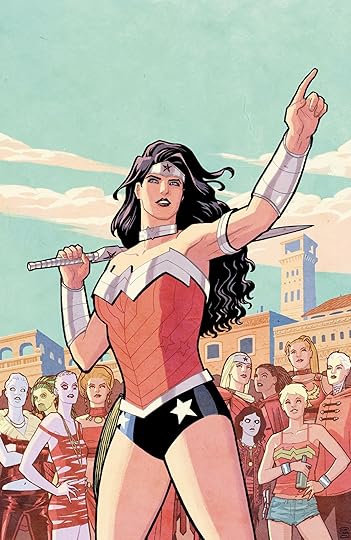
Gone is the silly, dated idea that Diana was molded out of a blessed piece of clay on a beach on Themiscyra. In this story, Diana discovers that she’s a bastard child born of an affair between Zeus and the Amazon queen Hippolyta, one of many children that Zeus has fathered. Now she finds herself charged with protecting a young woman and her infant baby, the latest of Zeus's children. At the same time, she's embroiled in the many feuds between the Gods for the throne of Olympus, all while the prophesied First Born son of Zeus returns to take bloody revenge and make his brutal play for the control of the heavens.
Like I said, because of the reboot, Azzarello and artist Cliff Chiang have the freedom to do what they want here and let their creativity fly. The highlights of the book are all of the clever characterizations and character designs of the various Greek Gods, from Hades, to Apollo, to Artemis. Although Greg Rucka did something similar in his first Wonder Woman run, the characters here are all memorable, and lends the book a singular air that sets it apart from any other Wonder Woman series. While ultimately, the book doesn't quite hold up to its promise, the story is steeped in a revisionist version of Greek mythology, very original, and the book is all the better for it.
Gone is the silly, dated idea that Diana was molded out of a blessed piece of clay on a beach on Themiscyra. In this story, Diana discovers that she’s a bastard child born of an affair between Zeus and the Amazon queen Hippolyta, one of many children that Zeus has fathered. Now she finds herself charged with protecting a young woman and her infant baby, the latest of Zeus's children. At the same time, she's embroiled in the many feuds between the Gods for the throne of Olympus, all while the prophesied First Born son of Zeus returns to take bloody revenge and make his brutal play for the control of the heavens.
Like I said, because of the reboot, Azzarello and artist Cliff Chiang have the freedom to do what they want here and let their creativity fly. The highlights of the book are all of the clever characterizations and character designs of the various Greek Gods, from Hades, to Apollo, to Artemis. Although Greg Rucka did something similar in his first Wonder Woman run, the characters here are all memorable, and lends the book a singular air that sets it apart from any other Wonder Woman series. While ultimately, the book doesn't quite hold up to its promise, the story is steeped in a revisionist version of Greek mythology, very original, and the book is all the better for it.
May 31, 2026
If you want a Wonder Woman story that isn’t afraid to take massive risks, this is it. Brian Azzarello’s run is darker, edgier, and feels much more like a brutal God of War epic than your standard superhero comic. It completely upends Diana’s lore in the best way possible, focusing heavily on the Greek gods and changing her world big time.
What makes this omnibus truly special, though, is the balance. Despite the darker tone, Diana’s core remains untouched, she is still deeply loving, compassionate, and caring. The character work here is phenomenal. Old faces like Ares (War) are reinvented in incredibly interesting ways. Orion, a character I usually couldn't care less about, stole the show and had me hyped every time he jumped back on the page. And Zola? A brand-new character who completely steals the heart of the book. She is absolutely amazing.
Pair all of that incredible storytelling with jaw-dropping art, kickass fight scenes, and some of the most expressive character work in modern comics, and you get an absolute masterpiece. An amazing, unforgettable reading experience from start to finish!
What makes this omnibus truly special, though, is the balance. Despite the darker tone, Diana’s core remains untouched, she is still deeply loving, compassionate, and caring. The character work here is phenomenal. Old faces like Ares (War) are reinvented in incredibly interesting ways. Orion, a character I usually couldn't care less about, stole the show and had me hyped every time he jumped back on the page. And Zola? A brand-new character who completely steals the heart of the book. She is absolutely amazing.
Pair all of that incredible storytelling with jaw-dropping art, kickass fight scenes, and some of the most expressive character work in modern comics, and you get an absolute masterpiece. An amazing, unforgettable reading experience from start to finish!
November 16, 2021
(Zero spoiler review) 1/5
No, no, no, no. Writing this bad and half baked is entirely unacceptable, unless of course, you're an established writer in the comic industry, able to seemingly coast on some minor success' turning in piss weak work for the next decade or so, given the industry has long since given up demanding excellence from its creators. So, what you get is Azarello's run on Wonder woman. A run so disturbingly poor, I could only force myself through a quarter of it before I stopped reading, lest suicide start seeming like a better option over finishing this out.
Confession time; I have never read or watched anything Wonder woman in the past. No movies, no comics, nothing. Obviously, through societal osmosis, I was aware of the basic traits and lore of the character, but beyond that, not a dicky bird. Despite this, about two issues in, I was distinctly aware that Azarello's version of Wonder Woman was a third rate, apathetic bastardisation of the no doubt much greater written character whom came before.
I'm still not entirely sure that half of Azarello's script didn't get lost on the way to the printer, EVERY FRIGGIN TIME! So jarring is the lack of dialogue, the lack of narration, of exposition, that it seemed Azarello had some weird clause in his contract, where he was paid a flat rate for the story, yet every word cost him a few bucks. Thus he set about trying to craft a story using as little language as possible. I seriously had trouble following this mess.
The characters were bland and one dimensional. Ten issues in, and I knew nothing about Diana of Themysicara, or any other of the universal mainstays. I didn't give a shit about anyone. IN fact, I actively hated most of them, such was their galling lack of presence. The main narrative, which I feel totally contradicted past canon, was hot garbage, yet seemed wholly compatible with modern interpretations of much beloved characters. In short, nobody was likeable or true to themselves, the dialogue was watery pancake flat, and the overall execution was a disgrace. Yet another omnibus I had reasonable hopes for opened, only for my hopes to be dashed to shit soon after.
The art was passable to good. Still, how this got an Absolute edition release I'll never know. If you're someone who can read a garbage story just cause you like the art, then by all means, fill your boots. But no amount of outstanding art (and what I saw certainly wasn't outstanding) could make me feel anything else but ire for this crap. Avoid as if your life depends on it. 1/5
OmniBen.
No, no, no, no. Writing this bad and half baked is entirely unacceptable, unless of course, you're an established writer in the comic industry, able to seemingly coast on some minor success' turning in piss weak work for the next decade or so, given the industry has long since given up demanding excellence from its creators. So, what you get is Azarello's run on Wonder woman. A run so disturbingly poor, I could only force myself through a quarter of it before I stopped reading, lest suicide start seeming like a better option over finishing this out.
Confession time; I have never read or watched anything Wonder woman in the past. No movies, no comics, nothing. Obviously, through societal osmosis, I was aware of the basic traits and lore of the character, but beyond that, not a dicky bird. Despite this, about two issues in, I was distinctly aware that Azarello's version of Wonder Woman was a third rate, apathetic bastardisation of the no doubt much greater written character whom came before.
I'm still not entirely sure that half of Azarello's script didn't get lost on the way to the printer, EVERY FRIGGIN TIME! So jarring is the lack of dialogue, the lack of narration, of exposition, that it seemed Azarello had some weird clause in his contract, where he was paid a flat rate for the story, yet every word cost him a few bucks. Thus he set about trying to craft a story using as little language as possible. I seriously had trouble following this mess.
The characters were bland and one dimensional. Ten issues in, and I knew nothing about Diana of Themysicara, or any other of the universal mainstays. I didn't give a shit about anyone. IN fact, I actively hated most of them, such was their galling lack of presence. The main narrative, which I feel totally contradicted past canon, was hot garbage, yet seemed wholly compatible with modern interpretations of much beloved characters. In short, nobody was likeable or true to themselves, the dialogue was watery pancake flat, and the overall execution was a disgrace. Yet another omnibus I had reasonable hopes for opened, only for my hopes to be dashed to shit soon after.
The art was passable to good. Still, how this got an Absolute edition release I'll never know. If you're someone who can read a garbage story just cause you like the art, then by all means, fill your boots. But no amount of outstanding art (and what I saw certainly wasn't outstanding) could make me feel anything else but ire for this crap. Avoid as if your life depends on it. 1/5
OmniBen.

September 20, 2023
I can see why Wonder Woman purists would hate this story. It undoes everything that made Diana and the Amazon's so wonderful. But I still had fun. I enjoyed seeing the Greek gods at play. I enjoyed seeing the Amazon's as having a big fatal flaw. And I enjoyed the rewrite of Wonder Woman's origin. Very fun comic, with spectacular character character designs and an intriguing odyssey.

January 6, 2026
Meet him at comic con this year, told him I like what’s he’s done with Bat and Lex. He did not give a fuck, told him I loved what I had at the time read of this. He said “really?” Anyway I’m excited for my girlfriend to read but I wasn’t planning on reading anything of the new 52 but when I said she’s the daughter of Zeus in this, her ears peaked up. So yk I had to buy the whole run
Read
February 28, 2026Telenowela wśród bogów, komiks dla dorosłych (jest naklejka od EGMONTU) bez przekleństw i wojownicza Wonder Woman, jest tym, co oferuje nam run Briana Azzarello i Cliffa Chianga. Każdy z tych elementów wydaje się nieco osobliwy, a razem tworzy naprawdę oryginalną mieszankę. Nie każdemu będzie smakować.
[Recenzja całego runu Briana Azzarello i Cliffa Chianga, czyli tomów 1-6]
„Wonder Woman” w interpretacji Briana Azzarello i Cliffa Chianga nie jest moim pierwszym komiksem z Dianą w roli głównej. Jednak alternatywna „Absolute Wonder Woman” też nie jest czymś typowym (nawet jeśli dobrym). Być może równie popularne dwa runy Grega Rucki lub nawet oryginalny Williama Marstona byłyby lepszym odniesieniem, ale niestety moje wyobrażenia w większości ograniczone są do osmozy kulturowej i adaptacji.
Dziwne początki
W tym kontekście czytany komiks jest dziwny. Gdy po niego sięgałem, nie spodziewałem się tego, co dostałem. Zaczynamy „Wonder Woman” od pokazania bogów w centrum, a w szczególności nieobecnego Zeusa. Apollo radzi się swoich wyroczni po zniknięciu ojca, Hera poluje na kolejnego bękarta swojego męża, a Hermes stara się go uratować za wszelką cenę. Hermes jest jednak posłańcem, nie wojownikiem i potrzebuje pomocy naszej dzielnej Amazonki.
Ta dziwność jest trudna do wskazania. Samo zawiązanie akcji wydaje się interesujące. Jednocześnie każdy z bogów ma bardzo specyficzny projekt, ale ich moc jest niekonsekwentna. Hermesa potrafią zranić nasłane przez Herę zbiry, a czasami nawet półbogowie wydają się niewrażliwi na ciosy.
Ta niekonsekwencja w skalowaniu potęgi stoi obok komiksowego luźnego inspirowania się mitologią. Dla bogów ważniejsze są ich domeny i częściej nazywani są imionami typu Wojna i Księżyc niż tymi mitologicznymi. Jednocześnie większość bogów i półbogów jest zwyczajne dziwna z wyglądu i ma przypisane zwierzę.
Hermes ma białą niebieskawą skórę, czarne oczy i ptasie nóżki. Artemida wygląda trochę jak Srebrny Surfer tylko z nieco jaśniejszym księżycowym odcieniem skóry i potrafi zachowywać się jak pies myśliwski. Posejdon zaś jest potworem morskim.
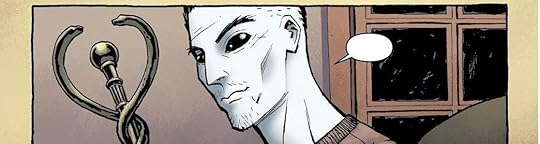
Zeszyt 4. Hermes
Jednak te nowe oryginalne projekty bogów nie są najdziwniejsze: Ares wygląda jak Briana Azzarello. Podobno scenarzysta opisał postać tylko jako starego, zgorzkniałego drania, a Chiang zrobił swoje. Niestety nie udało mi się znaleźć bardziej bezpośredniego potwierdzenia tej rewelacji, bo wszelkie znalezione linki do odpowiedzi na X (dawniej twitter) i wywiadów z tą informacją są martwe (update, tu wspomina: https://www.cbr.com/azzarello-chiang-... [dostęp 01.03.2026]).
Równie nietypowa potrafi być narracja. Czasem wydaje się rwać, gnać łeb na szyje lub zdania są dziwnie skonstruowane. Może temu sprzyjać sposób opowiadania historii przez Azzarello. Często bowiem dzieli on wypowiedzi między kadrami, a także prowadzi rozmowy z offu, przedstawiając nam inne miejsca. Przez to nie zawsze wiadomo od razu, kto mówi. Nie wiem, jak jest z tym rwaniem logiki zdań w oryginale, ale widać język polski mu nie służy.
Z pewnością można wskazać jeszcze wiele innych specyficznym elementów jak np. dużo nawiązań do Marvela (Rękawica Nieskończoności w zbrojowni Hefajstosa, wspomnienie Sanctum Sanctorum Doktora Strange’a etc.). Jednak ważniejszym pytaniem wydaje się, czemu tak dziwny i nietypowy komiks o Dianie mógł w ogóle powstać.
Umożliwił to „Flashpoint” Geoffa Johnsa i Andy’ego Kuberta, który wywołał miękki reset świata DC. Choć widać inspiracje oryginalnym komiksem Marstona (polecam odc. 2 „Robert Kirkman's Secret History of Comics” z 2017) z dużą ilością wiązania, to omawiana „Wonder Woman” widzi ambasadorkę pokoju w zupełnie innym świetle. Jako pierwsi po resecie Brian Azzarello i Cliff Chiang mieli stworzyć odświeżoną Wonder Woman i wykorzystali tę możliwość.
W moim przypadku, choć poczucie rwania miejscami nadal się pojawiało, po drugim tomie wkręciłem się i zaakceptowałem dziwnostki tej „Wonder Woman”. Dwa pierwsze tomy w sposób spójny zamykają pierwszy główny konflikt i otwierają historię na nowe nieoczywiste problemy, które w skrócie można opisać jako właśnie boska telenowela. Jeśli ktoś do tego momentu nie przekona się do komiksu, raczej nie ma już dla niego ratunku.
Boska telenowela
Skoro ponarzekałem, przejdźmy do relacji postaci – jednego z pozytywnych elementów. Są one nierozłączne z tym, kim jest tytułowa bohaterka. Została ulepiona z gliny przez Hippolite, królową Amazonek, a Zeus tchnął w nią życie. Iście biblijna opowieść, tyle że to backstory zostaje tu nadpisane przez zwyczajny romans wspomnianych bohaterów. W dodatku Amazonki dostają więcej swoich problematycznych historycznych aspektów, które dotychczas nie były obecne w ich mitosie DC.
Te problemy w raju są zawsze dobrym punktem, by Diana nie chciała lub nie mogła wrócić do domu. Jej nadnaturalne przyjście na świat, a także pozycja, zawsze odróżniało ją od sióstr, a jednak było to naprawdę, co innego. Po tych rewelacjach Wonder Woman znów będzie musiała odnaleźć siebie. Te problematyczne relacje z matką i Amazonkami to jednak tylko jedna strona monety.
Jej ojciec – Zeus – łączy ją z całym greckim panteonem. Początkowo Hera ściga Dianę i Zole (matkę najnowszego dziecka), jednak wraz ze wzrostem skomplikowania intrygi jej relacja się zmienia. Jest to symptomatyczne, bo nigdy nie wiadomo, czy tym razem któryś bóg chce być miły, czy cię zabić. Mimo że dla nich to mniej lub bardziej gra, ich powody są zawsze w jakimś stopniu zrozumiałe. Poza tym, kto nigdy nie chciał zabić członka rodziny?
To z tych ambiwalentnych interakcji wypływa osobowość każdego z bogów, a pojawia się w końcu cała dwunastka, a to jeszcze nie wszyscy. Z ich tarć wypływają refleksje nad nieśmiertelnością i ich różne do niego podejścia. I to wtedy pióro Azzarello błyszczy.
W tym dziwnym sosie Wonder Woman nadal jest pełna miłości wobec całego świata. Jednak jej typowej patronki Ateny jest tu tyle, ile kot napłakał. Samo zawiązanie akcji zaczyna się od Zeusa, jednak ten wokół kogo krąży cały komiks to Wojna. Relacja Amazonki i Aresa jest tu przeinterpretowana – w końcu każdy kto chce pokoju, musi być gotów o niego walczyć.
Jednak nigdy nie uciekniemy od dziwności. Z jednej strony idealnym dopełnieniem, a jednocześnie tym dziwnym elementem świata DC są Nowi Bogowie. W historii Diany pojawia się Orion, który idealnie wpasowuje się w telenowelowe klimaty, a naprawdę potrafi być obrzydliwą postacią – np. pozyskać czyjeś DNA bez zgody i w obleśny sposób. Jednak nadal jest w drużynie dobrych i wprowadza nieco wewnętrznego konfliktu, którego Diana czasem potrzebuje.
Dorosłość

Znaczek na tylnej okładce
Skoro wracamy do dziwnostek, co zatem znaczy ten znak, skoro nie ma w tym komiksie przekleństw? Nie pamiętam, żeby bezpośrednio się pojawiły, ale Azzraello zastosował ciekawy chwyt, by uniknąć krzaczków. Zamiast nich niektóre postacie zaczynają przekleństwo, jest ono identyfikowalne, ale coś im przeszkadza. Purytańskie standardy zachowane, ale co tu dla dorosłych?
Już na początku dostajemy dużo krwi i czegoś, co niektórzy nazwaliby znęcaniem się nad zwierzętami. Pod koniec jest jednak tego dużo więcej. W komiksie nie brak także nagości i niebezpośrednio pełen romans Hippolity z Zeusem. Zatem znaczek ten jest uzasadniony, choć nie wiem, czy nie wystarczyłyby trigger warningi lub coś podobnego.
Najlepsza jest klasyka
Zupełnie inaczej czyta się jednak dodatki, czyli „Wonder Woman” zeszyt 0 i „Secret Origins” zeszyt 6. Oba zeszyty to prequele i dodatki, ale pierwszy jest kluczowy dla fabuły. Wydania zbiorcze umiejscawiają go w narracji na początku 3. tomu, a nie jak sugeruje numeracja przed pierwszym. Z kolei „Secret Origins” opowiada o marzeniu Diany o opuszczeniu wyspy.
Zeszyt zerowy opowiada o pierwszym spotkaniu Diany z Wojną i o tym, co definiuje ich relacje. W bardzo przyjemny sposób buduje ich konflikt i ostateczną konfrontację. W dodatku wszystko, co dzieje się w tym zeszycie, ma wpływ na finał i nie tylko – przedstawienie się tu Wojny daje nazwy tomów tego komiksu.
Z kolei w „Secret Origins” nie ma nic ciekawego ani nowatorskiego. Jednak widoczne jest pytanie o relację między Dianą, a jedną z Amazonek. Nie dostajemy odpowiedzi, ale napięcie jest widoczne. W końcu mieszkają razem na jednej wyspie i nie ma na niej mężczyzn, taki podtekst pisze się sam.
Jednak nadal nie doszedłem do tego, czemu „najlepsza” i czemu „klasyka”. Oba zeszyty mają odrobinę inny styl graficzny i językowy. Zostają one zarchaizowane na modłę złotej ery komiksów i lat 60. Kolory są płaskie, narracja i dialogi opisowe, a jednak Azzarello i Chiang potrafią wyciągnąć z tego stylu prawdziwe życie. I nieironicznie uważam, że te dwa zeszyty są najlepszym elementem tego runu.
Sztuka
Skoro już mowa o archaicznej grafice, to jaka jest ta właściwa? Cliff Chiang nie odpowiadał jako jedyny za warstwę graficzną. Korporacyjne komiksy są produktem i przez to „Wonder Woman” przewijało się dużo nazwisk – czy to przy kolorach, czy też tuszu. I to, co najbardziej rzuca się w oczy w tym komiksie, to właśnie grube kreski.
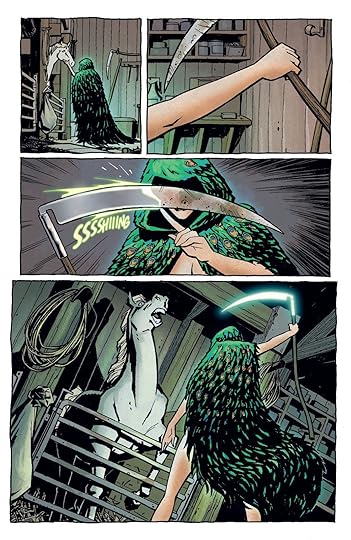
Zeszyt 1
To właśnie one nadają ton i powagę komiksu. Kreski i rysunek Chianga są też kanciaste, co uzupełnia statyczny i poważny charakter. To nie miejsce na miękkie i elastyczne linie. Powagi, a zarazem niepewności, nadaje także obramowanie kadrów, które nie jest zwykłymi prostymi liniami.
To z tego powstaje dynamiczna narracja nakładających się na siebie kadrów, która raz pędzi przed siebie, a raz pokazuje powoli otaczający bohaterów świat. Na wszystko jest czas, a warstwa graficzna w pełni wykorzystuje swoje możliwości. Dla podkreślenia dynamizmu pojawia się też z dwa razy zwielokrotnienie ramion Wonder Woman podczas odbijania pocisków, ale w połowie przypadków było to dla mnie nieczytelne przez rozkład kadrów. Nic nie jest idealne.
Ad finitum
Ostatecznie mimo niepewnego startu „Wonder Woman” jest dobrym i przyjemnym komiksem. Jego różne elementy łączą się w spójną całość, a autorzy mają nam coś konkretnego do przekazania na temat wojny i pokoju. Nie znaczy to, że nie zabraknie tu refleksji nad typowymi tematami Wonder Woman jak relacje damsko-męskie, lub mniej typowymi jak sprawy rodzinne i nieśmiertelność.
A zawsze można sięgnąć dla porządnego retellingu mitologii greckiej. Choć żaden mit bezpośrednio się nie pojawia, to można cieszyć się z nawiązań, zmian i remiksów. Sztuka tradycyjna opiera się na wiedzy, a może przy okazji lektury znajdzie się coś więcej.
Komiks czytany dzięki życzliwości Biblioteki na Koszykowej (Biblioteki Głównej Województwa Mazowieckiego).
[Recenzja całego runu Briana Azzarello i Cliffa Chianga, czyli tomów 1-6]
„Wonder Woman” w interpretacji Briana Azzarello i Cliffa Chianga nie jest moim pierwszym komiksem z Dianą w roli głównej. Jednak alternatywna „Absolute Wonder Woman” też nie jest czymś typowym (nawet jeśli dobrym). Być może równie popularne dwa runy Grega Rucki lub nawet oryginalny Williama Marstona byłyby lepszym odniesieniem, ale niestety moje wyobrażenia w większości ograniczone są do osmozy kulturowej i adaptacji.
Dziwne początki
W tym kontekście czytany komiks jest dziwny. Gdy po niego sięgałem, nie spodziewałem się tego, co dostałem. Zaczynamy „Wonder Woman” od pokazania bogów w centrum, a w szczególności nieobecnego Zeusa. Apollo radzi się swoich wyroczni po zniknięciu ojca, Hera poluje na kolejnego bękarta swojego męża, a Hermes stara się go uratować za wszelką cenę. Hermes jest jednak posłańcem, nie wojownikiem i potrzebuje pomocy naszej dzielnej Amazonki.
Ta dziwność jest trudna do wskazania. Samo zawiązanie akcji wydaje się interesujące. Jednocześnie każdy z bogów ma bardzo specyficzny projekt, ale ich moc jest niekonsekwentna. Hermesa potrafią zranić nasłane przez Herę zbiry, a czasami nawet półbogowie wydają się niewrażliwi na ciosy.
Ta niekonsekwencja w skalowaniu potęgi stoi obok komiksowego luźnego inspirowania się mitologią. Dla bogów ważniejsze są ich domeny i częściej nazywani są imionami typu Wojna i Księżyc niż tymi mitologicznymi. Jednocześnie większość bogów i półbogów jest zwyczajne dziwna z wyglądu i ma przypisane zwierzę.
Hermes ma białą niebieskawą skórę, czarne oczy i ptasie nóżki. Artemida wygląda trochę jak Srebrny Surfer tylko z nieco jaśniejszym księżycowym odcieniem skóry i potrafi zachowywać się jak pies myśliwski. Posejdon zaś jest potworem morskim.
Zeszyt 4. Hermes
Jednak te nowe oryginalne projekty bogów nie są najdziwniejsze: Ares wygląda jak Briana Azzarello. Podobno scenarzysta opisał postać tylko jako starego, zgorzkniałego drania, a Chiang zrobił swoje. Niestety nie udało mi się znaleźć bardziej bezpośredniego potwierdzenia tej rewelacji, bo wszelkie znalezione linki do odpowiedzi na X (dawniej twitter) i wywiadów z tą informacją są martwe (update, tu wspomina: https://www.cbr.com/azzarello-chiang-... [dostęp 01.03.2026]).
Równie nietypowa potrafi być narracja. Czasem wydaje się rwać, gnać łeb na szyje lub zdania są dziwnie skonstruowane. Może temu sprzyjać sposób opowiadania historii przez Azzarello. Często bowiem dzieli on wypowiedzi między kadrami, a także prowadzi rozmowy z offu, przedstawiając nam inne miejsca. Przez to nie zawsze wiadomo od razu, kto mówi. Nie wiem, jak jest z tym rwaniem logiki zdań w oryginale, ale widać język polski mu nie służy.
Z pewnością można wskazać jeszcze wiele innych specyficznym elementów jak np. dużo nawiązań do Marvela (Rękawica Nieskończoności w zbrojowni Hefajstosa, wspomnienie Sanctum Sanctorum Doktora Strange’a etc.). Jednak ważniejszym pytaniem wydaje się, czemu tak dziwny i nietypowy komiks o Dianie mógł w ogóle powstać.
Umożliwił to „Flashpoint” Geoffa Johnsa i Andy’ego Kuberta, który wywołał miękki reset świata DC. Choć widać inspiracje oryginalnym komiksem Marstona (polecam odc. 2 „Robert Kirkman's Secret History of Comics” z 2017) z dużą ilością wiązania, to omawiana „Wonder Woman” widzi ambasadorkę pokoju w zupełnie innym świetle. Jako pierwsi po resecie Brian Azzarello i Cliff Chiang mieli stworzyć odświeżoną Wonder Woman i wykorzystali tę możliwość.
W moim przypadku, choć poczucie rwania miejscami nadal się pojawiało, po drugim tomie wkręciłem się i zaakceptowałem dziwnostki tej „Wonder Woman”. Dwa pierwsze tomy w sposób spójny zamykają pierwszy główny konflikt i otwierają historię na nowe nieoczywiste problemy, które w skrócie można opisać jako właśnie boska telenowela. Jeśli ktoś do tego momentu nie przekona się do komiksu, raczej nie ma już dla niego ratunku.
Boska telenowela
Skoro ponarzekałem, przejdźmy do relacji postaci – jednego z pozytywnych elementów. Są one nierozłączne z tym, kim jest tytułowa bohaterka. Została ulepiona z gliny przez Hippolite, królową Amazonek, a Zeus tchnął w nią życie. Iście biblijna opowieść, tyle że to backstory zostaje tu nadpisane przez zwyczajny romans wspomnianych bohaterów. W dodatku Amazonki dostają więcej swoich problematycznych historycznych aspektów, które dotychczas nie były obecne w ich mitosie DC.
Te problemy w raju są zawsze dobrym punktem, by Diana nie chciała lub nie mogła wrócić do domu. Jej nadnaturalne przyjście na świat, a także pozycja, zawsze odróżniało ją od sióstr, a jednak było to naprawdę, co innego. Po tych rewelacjach Wonder Woman znów będzie musiała odnaleźć siebie. Te problematyczne relacje z matką i Amazonkami to jednak tylko jedna strona monety.
Jej ojciec – Zeus – łączy ją z całym greckim panteonem. Początkowo Hera ściga Dianę i Zole (matkę najnowszego dziecka), jednak wraz ze wzrostem skomplikowania intrygi jej relacja się zmienia. Jest to symptomatyczne, bo nigdy nie wiadomo, czy tym razem któryś bóg chce być miły, czy cię zabić. Mimo że dla nich to mniej lub bardziej gra, ich powody są zawsze w jakimś stopniu zrozumiałe. Poza tym, kto nigdy nie chciał zabić członka rodziny?
To z tych ambiwalentnych interakcji wypływa osobowość każdego z bogów, a pojawia się w końcu cała dwunastka, a to jeszcze nie wszyscy. Z ich tarć wypływają refleksje nad nieśmiertelnością i ich różne do niego podejścia. I to wtedy pióro Azzarello błyszczy.
W tym dziwnym sosie Wonder Woman nadal jest pełna miłości wobec całego świata. Jednak jej typowej patronki Ateny jest tu tyle, ile kot napłakał. Samo zawiązanie akcji zaczyna się od Zeusa, jednak ten wokół kogo krąży cały komiks to Wojna. Relacja Amazonki i Aresa jest tu przeinterpretowana – w końcu każdy kto chce pokoju, musi być gotów o niego walczyć.
Jednak nigdy nie uciekniemy od dziwności. Z jednej strony idealnym dopełnieniem, a jednocześnie tym dziwnym elementem świata DC są Nowi Bogowie. W historii Diany pojawia się Orion, który idealnie wpasowuje się w telenowelowe klimaty, a naprawdę potrafi być obrzydliwą postacią – np. pozyskać czyjeś DNA bez zgody i w obleśny sposób. Jednak nadal jest w drużynie dobrych i wprowadza nieco wewnętrznego konfliktu, którego Diana czasem potrzebuje.
Dorosłość
Znaczek na tylnej okładce
Skoro wracamy do dziwnostek, co zatem znaczy ten znak, skoro nie ma w tym komiksie przekleństw? Nie pamiętam, żeby bezpośrednio się pojawiły, ale Azzraello zastosował ciekawy chwyt, by uniknąć krzaczków. Zamiast nich niektóre postacie zaczynają przekleństwo, jest ono identyfikowalne, ale coś im przeszkadza. Purytańskie standardy zachowane, ale co tu dla dorosłych?
Już na początku dostajemy dużo krwi i czegoś, co niektórzy nazwaliby znęcaniem się nad zwierzętami. Pod koniec jest jednak tego dużo więcej. W komiksie nie brak także nagości i niebezpośrednio pełen romans Hippolity z Zeusem. Zatem znaczek ten jest uzasadniony, choć nie wiem, czy nie wystarczyłyby trigger warningi lub coś podobnego.
Najlepsza jest klasyka
Zupełnie inaczej czyta się jednak dodatki, czyli „Wonder Woman” zeszyt 0 i „Secret Origins” zeszyt 6. Oba zeszyty to prequele i dodatki, ale pierwszy jest kluczowy dla fabuły. Wydania zbiorcze umiejscawiają go w narracji na początku 3. tomu, a nie jak sugeruje numeracja przed pierwszym. Z kolei „Secret Origins” opowiada o marzeniu Diany o opuszczeniu wyspy.
Zeszyt zerowy opowiada o pierwszym spotkaniu Diany z Wojną i o tym, co definiuje ich relacje. W bardzo przyjemny sposób buduje ich konflikt i ostateczną konfrontację. W dodatku wszystko, co dzieje się w tym zeszycie, ma wpływ na finał i nie tylko – przedstawienie się tu Wojny daje nazwy tomów tego komiksu.
Z kolei w „Secret Origins” nie ma nic ciekawego ani nowatorskiego. Jednak widoczne jest pytanie o relację między Dianą, a jedną z Amazonek. Nie dostajemy odpowiedzi, ale napięcie jest widoczne. W końcu mieszkają razem na jednej wyspie i nie ma na niej mężczyzn, taki podtekst pisze się sam.
Jednak nadal nie doszedłem do tego, czemu „najlepsza” i czemu „klasyka”. Oba zeszyty mają odrobinę inny styl graficzny i językowy. Zostają one zarchaizowane na modłę złotej ery komiksów i lat 60. Kolory są płaskie, narracja i dialogi opisowe, a jednak Azzarello i Chiang potrafią wyciągnąć z tego stylu prawdziwe życie. I nieironicznie uważam, że te dwa zeszyty są najlepszym elementem tego runu.
Sztuka
Skoro już mowa o archaicznej grafice, to jaka jest ta właściwa? Cliff Chiang nie odpowiadał jako jedyny za warstwę graficzną. Korporacyjne komiksy są produktem i przez to „Wonder Woman” przewijało się dużo nazwisk – czy to przy kolorach, czy też tuszu. I to, co najbardziej rzuca się w oczy w tym komiksie, to właśnie grube kreski.
Zeszyt 1
To właśnie one nadają ton i powagę komiksu. Kreski i rysunek Chianga są też kanciaste, co uzupełnia statyczny i poważny charakter. To nie miejsce na miękkie i elastyczne linie. Powagi, a zarazem niepewności, nadaje także obramowanie kadrów, które nie jest zwykłymi prostymi liniami.
To z tego powstaje dynamiczna narracja nakładających się na siebie kadrów, która raz pędzi przed siebie, a raz pokazuje powoli otaczający bohaterów świat. Na wszystko jest czas, a warstwa graficzna w pełni wykorzystuje swoje możliwości. Dla podkreślenia dynamizmu pojawia się też z dwa razy zwielokrotnienie ramion Wonder Woman podczas odbijania pocisków, ale w połowie przypadków było to dla mnie nieczytelne przez rozkład kadrów. Nic nie jest idealne.
Ad finitum
Ostatecznie mimo niepewnego startu „Wonder Woman” jest dobrym i przyjemnym komiksem. Jego różne elementy łączą się w spójną całość, a autorzy mają nam coś konkretnego do przekazania na temat wojny i pokoju. Nie znaczy to, że nie zabraknie tu refleksji nad typowymi tematami Wonder Woman jak relacje damsko-męskie, lub mniej typowymi jak sprawy rodzinne i nieśmiertelność.
A zawsze można sięgnąć dla porządnego retellingu mitologii greckiej. Choć żaden mit bezpośrednio się nie pojawia, to można cieszyć się z nawiązań, zmian i remiksów. Sztuka tradycyjna opiera się na wiedzy, a może przy okazji lektury znajdzie się coś więcej.
Komiks czytany dzięki życzliwości Biblioteki na Koszykowej (Biblioteki Głównej Województwa Mazowieckiego).

March 3, 2023
In the spirit of what Morrison had done with his new52 Superman run (alotugh taking quite a few steps further), Brian Azzarello and Cliff Chiang complelty reinvent Wonder Woman's characters and related mythology, to great effect.
Her history and the Greek Gods presented here are quite different from Marston's original creation, or Perez's renowened revival in the 80's (the former tends to be regarded as the definitive take on Wonder Woman and her mythology).
Wonder Woman and her origin are the only elements that get an extreme "makeover". The pantheon of Greek Gods are completly different. Their designs, the way they relate to the amazons and themselves, their powers and objectives - it's all given an extremely creative, fresh and modernized look and feel.
The run focuses not only on Wonder Woman, who is bent on protecting a child who is believed to be the son of Zeus, and a key element for the fulfillement of a prophechy, but also on the power struggles and machinations of the Greek Godsthat are attempting to take control of Olympus in the absence of Zeus, who is missing.
The artwork, mostly by Cliff Chiang, but occasionally by Goran Suduka and Atkins is vibrant and creative, and does a great job of properly conveying the narrative's ideas, modern feel and grandeur.
It's a reallly fantastic run all around. It sags a bit towards its middle, and some repetition kind of sets in, as at a certain point the narrative feels a bit like its stalling and spinning its wheels, but it regains its momentum again very quickly, and ends in a very strong note.
I will say that this run, while part of the new52, doesn't really feel as such. It kind of feels separate, and little to no mentions of the rest of that era is mentioned during this run. They are very much a very self-contained set of stories.
Recommended for fans of Brian Azzarello and of Wonder Woman, altough the changes to WW's history and mythology might be grating for more puritst-minded readers. I, for one, enjoyed it very much.
8/10
Her history and the Greek Gods presented here are quite different from Marston's original creation, or Perez's renowened revival in the 80's (the former tends to be regarded as the definitive take on Wonder Woman and her mythology).
Wonder Woman and her origin are the only elements that get an extreme "makeover". The pantheon of Greek Gods are completly different. Their designs, the way they relate to the amazons and themselves, their powers and objectives - it's all given an extremely creative, fresh and modernized look and feel.
The run focuses not only on Wonder Woman, who is bent on protecting a child who is believed to be the son of Zeus, and a key element for the fulfillement of a prophechy, but also on the power struggles and machinations of the Greek Godsthat are attempting to take control of Olympus in the absence of Zeus, who is missing.
The artwork, mostly by Cliff Chiang, but occasionally by Goran Suduka and Atkins is vibrant and creative, and does a great job of properly conveying the narrative's ideas, modern feel and grandeur.
It's a reallly fantastic run all around. It sags a bit towards its middle, and some repetition kind of sets in, as at a certain point the narrative feels a bit like its stalling and spinning its wheels, but it regains its momentum again very quickly, and ends in a very strong note.
I will say that this run, while part of the new52, doesn't really feel as such. It kind of feels separate, and little to no mentions of the rest of that era is mentioned during this run. They are very much a very self-contained set of stories.
Recommended for fans of Brian Azzarello and of Wonder Woman, altough the changes to WW's history and mythology might be grating for more puritst-minded readers. I, for one, enjoyed it very much.
8/10

October 23, 2021
A bold interpretation of wonder woman from brian azzarello I really enjoy his writing and use of wordplay that always has multiple layers. I’m a big fan of 100 bullets and loveless so was interested to see how he would deal with mythology. Having read some greg rucka and Gail Simone Wonder Woman this was a significantly different version of the character. It’s a testament to the character that she can have so many fascinating interpretations. There is little of the peacemaker or diplomat. It starts as a mission of protection but then becomes a tale of revenge. Particular highlights include: the jealousy of hera regarding Zeus and his affairs, the lie about Diana’s clay origin and her being the literal daughter of Zeus after an affair with hippolyta (the lie used to protect young Diana from Hera) , the interpretation of lord Poseidon as a giant sea monster, the physical embodiment of war looking like the author, the gods being slightly more grounded and working subtly in the real world rather than bouncing around on clouds or in another realm full of pillars of stone observing, the Amazons going on pirate raids to get pregnant and then discarding all the male babies,
Some wonderfully stylised art from cliff chiang and tony akins with fantastic colours from matthew wilson and nick filardi
Some wonderfully stylised art from cliff chiang and tony akins with fantastic colours from matthew wilson and nick filardi

June 25, 2022
This took me longer than I thought it would and is only the second omnibus I've ever read but I had some time and decided to make a day out of it and finished it off. As someone who knows nothing about WW besides the movie- this was a great jumping on point. I knew DC had the rebirth and New 52 eras which both act as soft reboots for their character lineups and that's why I chose this one. (That and the entire run is collected in one place) This character and this run were ones I wanted to check out for a long time and I gotta say, this met and surpassed my expectations. As someone who had a brief but intense interest in Greek mythology in high school, it's cool that this plays more into Diana's (WW) mythological background and you don't need to know much about WW or her rogues gallery as this is entirely centered around Diana and a prophecy affecting the entire pantheon of Greek gods and goddesses. I love the twists and turns, all the characters and their motivations; you can never tell where the story is gonna go, what's gonna happen, who to trust. I love that the single issue side-story they included actually ties into the main storyline. If you have any interest in Wonder Woman as a character and have been wanting to jump in I'd definitely recommend this. I can't say it's the best jumping on point as it's the only WW story I've read, but it is a damn good one!
December 29, 2020
Brian Azzarello is probably best known for his wise-cracking, street smart noir books, like 100 Bullets and Joker, so Wonder Woman seemed like a truly odd choice for him. But damn, does it work.
Azzarello and Chiang takes Diana's story to places its never been before, and makes her the centre of a modern day mythology that feels unique in a market flooded with mythology-based fiction. As many reviewers have stated, this does not connect much to previous WW work, or the rest of the DC Universe. I've read a few reviews saying this feels more like an Elseworlds tale than an ongoing DC book.
But that's exactly why this is so great. It's a book anyone can jump into and get lost in. There are a few familiar faces along the way, but never ones you truly need to know to appreciate the story or see its innovative approach.
This isn't Frank Miller's Dark Knight Returns or Alan Moore's Swamp Thing. This isn't a reimagining that changes the face of comics. But it is a fun ride, and it's one that's well worth the journey.
Azzarello and Chiang takes Diana's story to places its never been before, and makes her the centre of a modern day mythology that feels unique in a market flooded with mythology-based fiction. As many reviewers have stated, this does not connect much to previous WW work, or the rest of the DC Universe. I've read a few reviews saying this feels more like an Elseworlds tale than an ongoing DC book.
But that's exactly why this is so great. It's a book anyone can jump into and get lost in. There are a few familiar faces along the way, but never ones you truly need to know to appreciate the story or see its innovative approach.
This isn't Frank Miller's Dark Knight Returns or Alan Moore's Swamp Thing. This isn't a reimagining that changes the face of comics. But it is a fun ride, and it's one that's well worth the journey.
June 7, 2020
OVERALL RATING: 3 stars (6 out of 10)
Art: 3 stars
Writing Style/Quality: 4 stars
Plot: 2 stars
Pacing: 2 stars
Characterization: 3 stars
World Building: 3
Art: 3 stars
Writing Style/Quality: 4 stars
Plot: 2 stars
Pacing: 2 stars
Characterization: 3 stars
World Building: 3
March 19, 2025
Finished all 37 issues of Azzarello and Chiang's Wonder Woman. Its supposed problems are way overblown and its quality is overstated. It's a decent run with good art, no quality dips or spikes throughout, and with somewhat memorable but mostly serviceable side-characters. The Greek Pantheon didn't interest me all that much and, by the end, felt rather bland and cookie-cutter. Diana's characterisation was, however, great and the run's themes were solid. It just felt a bit shallow at times with nothing particularly interesting to say and with too few subplots to flesh out the rather simplistic main plot.
Overall, it's a run that's probably better viewed as an elseworld story since it alters things that didn't need altering and doesn't contribute anything worthwhile to the overall WW Mythos.
3/5
Overall, it's a run that's probably better viewed as an elseworld story since it alters things that didn't need altering and doesn't contribute anything worthwhile to the overall WW Mythos.
3/5
February 25, 2024
unfortunately dogshit...which sucks because i really love this character in all her complexity and unapologetic thorniess...but Azzarello seems completely disinterested in her, essentially weaving a crazy decompressed Percy Jackson era narrative around a loosely related titular protagonist who barely exhibits agency
the first arc alone takes 24 issues just to limp and fall onto its conclusion...the artwork has this fugly roundness that's at odds with the tone of the material...i dunno, this is probably the least enjoyable run i've read to this extent and i hope subsequent reads in the New 52 bring a bit more to the table
the first arc alone takes 24 issues just to limp and fall onto its conclusion...the artwork has this fugly roundness that's at odds with the tone of the material...i dunno, this is probably the least enjoyable run i've read to this extent and i hope subsequent reads in the New 52 bring a bit more to the table

March 15, 2024
Four stars ⭐️⭐️⭐️⭐️. One of the most consistently good runs I’ve read so far. As I’ve said before, Wonder Woman is at her best when her Greek mythology roots are explored, and this run is a perfect example of this. Her characterization might not be the best one, but it’s certainly better than what other writers have done with Diana in the past. But without a doubt the best part of this run was the world-building and the cast of supportive characters (the only annoying one and out of place was Orion). To see a new twist on the Greek myths and their gods was so refreshing. Definitely a run that kept me entertained and intrigued all throughout its 37 issues.
June 11, 2020
This is it. This, for me is peak Wonder Woman. This is the best and freshest feeling run from what I consider to be the best creative team.
Diana has never been more human and relatable (which is ironic considering all that is happening)
I love this run and it is the first one I recommend to anybody interested in reading Wonder Woman (well, this and the stuff by Gail Simone).
Diana has never been more human and relatable (which is ironic considering all that is happening)
I love this run and it is the first one I recommend to anybody interested in reading Wonder Woman (well, this and the stuff by Gail Simone).

March 14, 2023
This is maybe the best run of any comic book that I've read: an electrifying new vision of Wonder Woman and her relationship to the Greek pantheon that tells a ripping yarn. It stands largely apart from the usual suspects in the DC universe, and that's part of its strength. The art is as electrifying as the script. Kudos all around for this one.

March 22, 2025
I don't think I was the target audience.
Figured with Azzarello writing it I might be.
Didn't like the artwork at all,
Storyline was a bad pop song,
Kept hoping,
Shouldn't have.
I don't even think that a 12 year old girl/boy would enjoy this even, maybe a really hard core WW fan...maybe.
Sorry Brian find no joy in these comments.
Figured with Azzarello writing it I might be.
Didn't like the artwork at all,
Storyline was a bad pop song,
Kept hoping,
Shouldn't have.
I don't even think that a 12 year old girl/boy would enjoy this even, maybe a really hard core WW fan...maybe.
Sorry Brian find no joy in these comments.
March 22, 2026
One of my favorite Omnis to date. The story grabbed me from the start and propelled me thru 35 parts of a story. It was the closest thing to watching a movie that I’ve experienced in a comic.
Admittedly I had a bit of time at first with the art but that rapidly faded away, now that I’m finished I wish there was more to read.
All that’s missing is another volume!!!
Solid 5 stars from me!
Admittedly I had a bit of time at first with the art but that rapidly faded away, now that I’m finished I wish there was more to read.
All that’s missing is another volume!!!
Solid 5 stars from me!

September 24, 2026
You have to wonder if Azzarello's assignment was to write the gnarliest Wonder Woman story he could. He really leans in on the darker side of Greek mythology with heaping helpings of body horror along the way. Strife's persona and character design was probably my favorite and there probably won't be another DC title ever published this obsessed with killing a baby.

May 24, 2021
Nemmeno Superman e Batman possono vantare così tanti archetipi come il mythos di Wonder Woman. L'autore, pur concedendo qualcosa alla serialità del fumetto, ha scritto una storia davvero epica. Da leggere anche per chi non conosce il personaggio.
March 22, 2023
I retroactively went back and knocked down the Gail Simone run another star. This was just SO much better. Everything felt cohesive. Great characters. Big stakes. Amazing villain. Kudos to Azzarello & Chiang for a great run!
September 18, 2023
Art: Freaking solid all the way through.
I enjoyed the first half way more than the second, but I’m glad this wasn’t a run bogged down my tie-ins and pointless stories. Overall a solid run, makes me wanna read more WW
I enjoyed the first half way more than the second, but I’m glad this wasn’t a run bogged down my tie-ins and pointless stories. Overall a solid run, makes me wanna read more WW

January 8, 2026
En realidad mi valoración está más cerca del 4,5 y si no le doy las 5 estrellas es porque tanto cambio de dibujante a lo largo del volumen me saca un poco de la historia.
Si te gusta,a mitología griega este es un cómic que tienes que leer..
Si te gusta,a mitología griega este es un cómic que tienes que leer..

June 21, 2024
Who knew the best modern take on mythology would be in a Wonder Woman comic?

February 1, 2025
I loved it when I first read it and I love it more now.
The best Wonder Woman in history.
The best Wonder Woman in history.
December 24, 2025
Favorite comic book of all time. As one of the first DC comics I read during its continuous release, I constantly revisit this one!
May 2, 2026
It was like alright, I felt like a fever dream.
May 3, 2026
The first 3 storylines : Blood, Guts and Iron were great, the rest.....not so much
Blood *****
Guts *****
Iron *****
Flesh *
Bones *
AVG 3.4/5
Rounded down to 3***
Blood *****
Guts *****
Iron *****
Flesh *
Bones *
AVG 3.4/5
Rounded down to 3***
Displaying 1 - 30 of 37 reviews