Could it be that the more we know about the world, the less we understand it? Could it be that, while everything has been explained, nothing has meaning? Extending the ideas presented in his book In The Dust of This Planet, Eugene Thacker explores these and other issues in Starry Speculative Corpse. But instead of using philosophy to define or to explain the horror genre, Thacker reads works of philosophy as if they were horror stories themselves, revealing a rift between human beings and the unhuman world of which they are part. Along the way we see philosophers grappling with demons, struggling with doubt, and wrestling with an indifferent cosmos. At the center of it all is the philosophical drama of the human being confronting its own limits. Not a philosophy of horror, but a horror of philosophy. Thought that stumbles over itself, as if at the edge of an abyss. Starry Speculative Corpse is the second volume of the "horror of philosophy" trilogy, together with the first volume, In The Dust of This Planet, and the third volume, Tentacles Longer Than Night. The cover of the first volume In the Dust of this Planet can be seen in a New York gallery, on a banner at the 2014 Climate Change march in New York and on Jay-Z s back promoting Run. This book influenced the writers of the US TV series True Detective and has been lambasted by ex-Fox News broadcaster, Glenn Beck in this podcast https: //www.youtube.com/watch?v=2IW8OK4_1gQ"
Eugene Thacker is an American philosopher, poet and author. He is Professor of Media Studies at The New School in New York City. His writing is often associated with the philosophy of nihilism and pessimism. Thacker's books include In the Dust of This Planet and Infinite Resignation.
"Every star in the universe will have burnt out, plunging the cosmos into a state of absolute darkness and leaving behind nothing but spent husks of collapsed matter. All free matter, whether on planetary surfaces or in interstellar space, will have decayed, eradicating any remnants of life based in protons and chemistry, and erasing every vestige of sentience--irrespective of its physical basis. Finally, in a state cosmologists call 'asymtopia,' the stellar corpses littering the empty universe will evaporate into a brief hailstorm of elementary particles. Atoms themselves will cease to exist. Only the implacable gravitational expansion will continue, driven by the current inexplicable force called "dark energy," which will keep pushing the extinguished universe deeper and deeper into an eternal and unfathomable blackness." --Ray Brassier, qtd within.
This second installment in the Horror of Philosophy series is definitely more philosophically charged than the first one. Thacker takes us through the tradition of Darkness Mysticism and various typologies of darkness/blackness, the Kyoto's School's fascination with absolute nothingness (sunyata) and Schopenhauer's reworking of the Kantian split as opposed to German Idealist double folding of the noumena in the phenomena and vice versa (Will or Will-to-Life as the inhuman drive within us). What they all share is the audacious attempt to think beyond the limit of thought, bringing thought and by extension Philosophy to collapse on itself (hence the title of the series; horror of philosophy). Thacker has a deft handle on explication and is to be commended for creatively synthesizing and appropriating disparate intellectual traditions to craft a compelling narrative of Philosophy's own self-negation in the form of the suspension of "the principle of sufficient reason". The main stake of this volume is that thought may turn out to be only accidentally human and that the Will-to- knowledge, beholden only to its own terrifying rigor and implacable passion, pushes its host closer to the last midnight, of total, speculative and consummate annihilation.
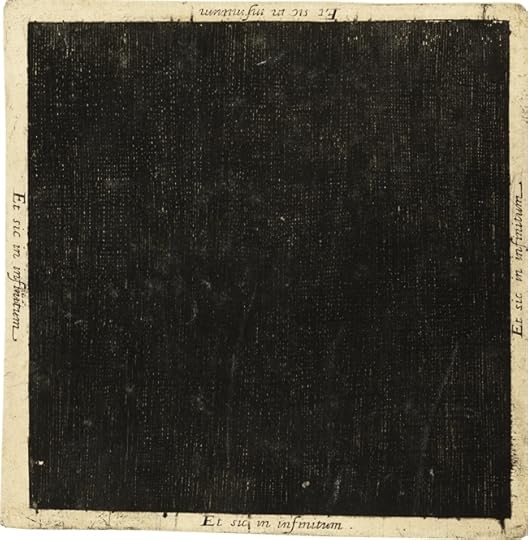
Justo hace un año terminé En el polvo de este planeta, el primer volumen de esta trilogía, del que apunté: "Thacker es un gondolero que nos pasea por las aguas negras de lo oculto para explicarnos la evolución del satanismo, paganismo y pesimismo cósmico, de lo demoniaco, del color negro, de lo numinoso, de lo otro, de los monstruos... todo sustentado con teorías y doctrinas filosóficas". Por lo que me saboreaba este segundo volumen. Sin embargo, me quedó un sabor agridulce. Editorialmente, hicieron ajustes en la portada, cambiaron el color del papel y omitieron ese borde negro ominoso del filo de las hojas... Y al igual que el primero, aunque ahora se me hizo más evidente, la formación es "rara": sin sangrías y las notas vienen hasta el final (lo que se vuelve muy incómodo). En cuanto al contenido, el autor nos advierte que en este volumen hará una lectura de la filosofía como si se tratase de una obra de horror. Pero, a diferencia del primero donde utiliza muchísimos, los ejemplos son escasos, lo que vuelve muy pesada la lectura. Por otro lado, el capítulo sobre el uso de la oscuridad en la pintura es invaluable (busca el "Cuadro negro" de Kazimir Malévich y las obras de Caravaggio) y amé la frase "Pesimismo de la retina: no hay nada que ver y estás viendo" (aunque la editorial bien pudo incluir imágenes). Igual de invaluable es el capítulo final, donde hace un resumen de las corrientes y filósofos que agotó hasta el cansancio en las páginas anteriores, y cierra con un párrafo brutal: “Y así el ser humano descubre, al fin, que su existencia ha dependido siempre de su no-existencia, que muere en el momento que vive y que, quizá, no hacemos más que acarrear un cadáver que a su vez lleva de acá para allá esa taciturna materia gris que de vez en cuando se pregunta si acaso las igualmente taciturnas estrellas que ocupan cada firmamento a cada escala también ocupan este rutilante cadáver especulativo”. Espero que para el siguiente volumen, Tentáculos más largos que la noche (donde el autor advierte que hará una lectura del horror como si se tratase de una obra filosófica), retome el espectacular ritmo del primero.
“The proposition that governs this book, Starry Speculative Corpse, is that something interesting happens when one takes philosophy not as a heroic feat of explaining everything, but as the confrontation with this thought that undermines thought, this philosophy of futility.”
Again, I have to preface this with confessions of bias, I absolutely love the subject matter of this series so I was easily sucked into this book after reading In The Dust of This Planet.
This book sent more chills down my spine than most horror fiction I’ve read. I was exposed to so much stuff I’ve never heard about before. Thacker does a lot of digging around obscure texts and finds interpretations with new implications in well known texts and philosophers. The examination of John the Cross, Dionysius the Areopagite, Meister Eckhart, the musings on the contradiction of black as a symbol for no-thing. There was so much stuff here that stuck with me. I admit that when it came down to the more dense parts I failed to follow it all. It’s very well written and there are sentences in this book that you could expand into ideas for some really good horror novels or movies. It’s not just entertaining and extremely interesting, the core of this book I suspect is the dread and terror of philosophers, things that ring more true than they dare to admit, lest they fall and face the blackness.
I’ve long been fascinated by the transcendental negative – the nothing beyond nothing. Which is kinda why I was interested in Thacker as a thinker to begin with. And I’ve always read philosophy in this quietist fashion, letting it wash over me, before beginning to engage with it in the afterglow. So this is the sort of thing that was naturally fascinating to me. There’s not any kind of consistent argument here – more just a series of provocations – but I don’t think this could be presented any other way. It’s a reminder for me to start reading some Kyoto School thinkers, and that’s cool. If you’re into metaphilosophy, this might be for you, but In the Dust of This Planet is probably a more essential work.
Of the three volumes of Eugene Thacker's brilliant Horror of Philosophy series, Starry Speculative Corpse is perhaps the only one that faulters slightly in the face of his ambition. Based on the premise of "mis-reading" philosophy texts as horror stories, I feel sympathetic as someone who has written numerous essays with clearly set goals that, somehow, end up being un-met in favour of a more conservative, albeit successful pursuit of academic rigour, that what SSC ends up as looks suspiciously like a history of philosophy, more than a horror. I'll be the first to admit, my background in Heidegger, Schopenhauer and the apophatic theology of St John of the Cross et al was mostly lacking before now, but I still don't see how much of Thacker's analysis here could be considered a "mis-reading," certainly in the pursuit of darker territory than that of the provenance of the original texts.
Nevertheless, it is a history of philosophy both insightful (I avoid, with obvious reason, to describe it as "illuminating) and thoroughly legible. It covers a lot of ground in relatively few pages and has inspired me to spend much more of my time engaging with mediaeval dark mysticism, so that's only good. Arguably the heaviest of the three on the central theme of philosophy's doomedness-to-failure in relation to what Thacker terms the "horizon of thought," SSC achieves an analysis of the "horror of philosophy" as Thacker defines it, even if not in the somewhat sexier notion of horror that is addressed more in vols. 1 and 3. In that regard, Tentacles Longer Than Night provides a certain "relief" one might suggest, returning to Lovecraftian (etc) territory, but SSC remains a necessary, nay vital, read.
This book was a little denser to me since I'm not exactly a philosophy major. I enjoyed it's content but I think some of the rigor may have been lost on me personally. There were a few really interesting nuggets that are something I want to look more into but overall I found the book insightful despite being bombarded with terms. Definitely worthwhile if you're interested in the subject material.
There was more meat on this volume compared to the first one, but it was also still plagued by most of the shortcomings that haunted its prequel. Crossing my fingers for the third volume.
Here we can pause a bit and attempt a summary of the ground we’ve covered thus far. In thinking about darkness (that which “is” and “is not”), we see mystical thinkers connecting a logic (in particular, a logic of negation) with a poetics (a poetics of darkness, shadow, abyss, and the like). With Dionysius the Areopagite the logic of the via negativa is tied to his notion of divine darkness (Θειου σκοτους ακτινα). With Meister Eckhart, a logic of negating negations (negatio negationis) is tied to the darkness (finsternis) of the Godhead, something echoed in the corporeal negations of Angela of Foligno, and the emphasis in The Cloud of Unknowing on a paradoxical contemplation of which cannot be thought. In John of the Cross, a negation of all possible experience (including that of darkness) is tied to this central poetic motif of the dark night (la noche oscura). And finally, in Bataille, a complex logic of excess and leads to what he terms the excess of darkness (l’excès des ténèbres). What should we make of this tradition of darkness-mysticism. Even though each of these thinkers uses slightly different terms, I would suggest that there are three basic modes of darkness in this mystical tradition: a dialectical darkness, a superlative darkness, and what I’ve been calling a divine darkness. The first mode – dialectical darkness – entails a concept of darkness that is inseparable from an opposing term, whatever that term may be. Dialectical darkness is therefore structured around the dyad of dark/light, which finds its avatars in the epistemological dyad of knowledge/ignorance, the metaphysical dyad of presence/absence, and the theological dyad of gift/privation. Dialectical darkness always subsumes darkness within its opposing term, and in this sense, darkness is always subordinate to something that opposes or comes after darkness. With dialectical darkness, the movement is from a negative to an affirmative experience of the divine, from the absence of any experience at all to a fully present experience. However, at the same time, this affirmative experience comes at the cost of a surreptitious negation: a “vision” (visio) that is also blindness, an ecstasy (ecstasis) or standing outside oneself that displaces the subject, and a rapture (raptus) in which the self is snatched away into a liminal otherness. We should note that the recuperative power of dialectical darkness is such that it inhabits all attempts to think a concept of darkness – even those that claim to pass beyond oppositions. Dialectical darkness is at once the ground of, and the obstacle for, any concept of darkness. This management of boundaries shifts a bit when we move to superlative darkness, the second mode. Superlative darkness is a darkness precisely because it lies beyond the dialectical opposition of dark and light. Paradoxically, superlative darkness surpasses all attempts to directly or affirmatively know the divine. Hence superlative darkness contains a philosophical commitment to superlative transcendence. Superlative darkness makes an anti-empiricist claim, in that it is beyond any experience of light or dark. It also makes an anti-idealist claim, in that it is beyond any conception of light or dark. What results are contradictory, superlative concepts of “light beyond light,” the “brilliant darkness,” or the “ray of divine darkness.” With superlative darkness, there is a movement from an affirmative to a superlative experience of the divine, from a simple affirmation to an affirmation beyond all affirmation. Claiming to move beyond both experience and thought, superlative darkness harbors within itself an anti-humanism (beyond creaturely experience, beyond human thought), leading to a “superlative darkness” or, really, a kataphatic darkness. We should note that with superlative darkness we are brought to a certain limit, not only of language but of thought itself. The motif of darkness comes in here to indicate this limit. And it is a horizon that haunts every concept of darkness, the possibility of thinking the impossible. This play between the possible and impossible finally brings us to the third mode – what we’ve been calling divine darkness. Divine darkness questions the metaphysical commitment of superlative darkness, and really this means questioning its fidelity to the principle of sufficient reason. Now, the interesting thing about superlative darkness is that, while it may subscribe to a minimal version of the principle of sufficient reason, it does not presume that we as human beings can have a knowledge of this reason. That everything that exists has a reason for existing may be the case, but whether or not we can know this reason is another matter altogether. Superlative darkness is thus an attenuated variant of the principle of sufficient reason. Perhaps we should really call this the principle of sufficient divinity. The principle of sufficient divinity is composed of two statements: a statement on being, which states that something exists, even though that something may not be known by us (and is therefore “nothing” for us as human beings), and a statement on logic, which states that that something-that-exists is ordered and thus intelligible (though perhaps not intelligible to us as human beings). Superlative darkness still relies on a limit of the human as a guarantee of the transcendent being and logic of the divine, or that which is outside-the-human. The limit of human knowing becomes a kind of back-door means of knowing human limits, resulting in the sort of conciliatory knowledge one finds in many mystical texts. Now, a divine darkness would take this and make of it a limit as well. This involves distinguishing two types of limit within darkness-mysticism generally speaking. There is, firstly, the limit of human knowing. Darkness is the limit of the human to comprehend that which lies beyond the human – but which, as beyond the human, may still be invested with being, order, and meaning. This in turn leads to a derivative knowing of this unknowing. And here, darkness indicates the conciliatory ability to comprehend the incomprehensibility of what remains, outside the human. Then there is, secondly, the limit of that which cannot be known by us, the limit of the limit, as it were. With the limit of human knowing, there is still the presupposition of something outside that is simply a limit for us as human beings. The limit of the limit is not a constraint or boundary, but a “darkening” of the principle of sufficient divinity. It suggests that there is nothing outside, and that this nothing-outside is absolutely inaccessible. This leads not to a conciliatory knowing of unknowing, which is really a knowing of something that cannot be known. Instead, it is a negative knowing of nothing to know. There is nothing, and it cannot be known. We’ve been tracing the motif of darkness in mystical texts, and the way in which the concept of darkness is often compounded, duplicitous, and enigmatic. Each of our examples stems from the Dionysian tradition of negative theology, or the via negativa. Each puts forth a concept of negation that is tied in some way to the motif of darkness, though darkness is not always negative for each of these thinkers. And each example reaches its limit in a concept of the divine that we have been “mis-reading” in terms of the horror of philosophy – the limits of the human, the unreliable knowledge of such limits, the human confronting something it can only name as unhuman. Such a darkness is not in any way an answer, much less a solution, to some of the issues we face today concerning climate change, posthumanism, or what Bataille once called “the congested planet.” In a way, thinking this type of darkness is doomed to failure, devolving as it does on its own limits. And, perhaps, the greatest lesson from all this is the one repeatedly stated by Eckhart – that this darkness, in its unknowing, is not separate from us, but really within us as well. It is not a darkness “out there” in the great beyond, but an “outside” (to use Bataille’s term) that is co-extensive with the human at its absolute limit. It runs the gamut from the lowest to the highest, from the self to the planet, from the human to the unhuman. It is a sentiment echoed by Bataille when he speaks about darkness as a form of impossibility: enter into a dead end. There all possibilities are exhausted; the “possible” slips away and the impossible prevails. To face the impossible – exorbitant, indubitable – when nothing is possible any longer is in my eyes to have an experience of the divine…
More cohesive and cogent than its predecessor “In the Dust of This Planet,” Thacker mines Western (and a little Eastern) philosophy for insights we typically associate with the horror genre.
If you’re a fan of grimdark armchair philosophizing from writers like Thomas Ligotti, E.M. Cioran, and Schopenhauer this is essential reading. Suitably, the volume ends in the nowhere and nothing one might expect. It arrives there changed (or the same or both or neither).
An easy-reading, pop-friendly account of pessimism in philosophical history. If there is such a thing as pessimistic, light reading, this is it. Great for microdosing with existential dread, right before bed.
How can people, in public spaces, on public transportation for instance, actually read newspapers or books, listen to music, or simply sleep? To do that, you have to stop caring about anyone there; your attention must be on the pages, the music, or the sleep, not on the people around you. This requires treating others as background noise rather than as full, complex individuals, which is a form of dehumanization. Although tired or habituated people can easily do this, and even sensitive people can sometimes manage it, they do so less often because they remain aware of the environment they are in. Awareness cannot coexist with indifference; a reaction always leaks through. Yet most people appear to leak nothing, because they are not aware of anything, not even in the most basic sense. For instance, most of them cannot say, “At this moment, I am within the entity called the universe, within the galaxies of the Local Group, within the Milky Way galaxy, within the solar system, on the planet called Earth, on this continent, in this country, in this city, on this vehicle,” because their minds have narrowed into that human game and they cannot see beyond it. I could never do what they do, because I would take not caring about people personally, as something I would feel responsible for despite everything. So many people are born inside a huge machine, into the same bureaucratic cage, and none of them even makes a sound about it, and this makes me feel unintentionally guilty. They say there are “social rules.” Those unwritten rules, having reigned over and suffocated societies for thousands of years, hesitate only slightly before drowning them entirely. They do not realize that these rules exist to normalize separation and indifference. Talking to strangers is supposedly foolish, for example, because they have no place in one’s life, or worse, dangerous, because they might do something “bad.” People also believe that “certain things should be spoken of only in certain places,” and by dividing life into compartments once again, they push the public transportation space completely into the background. As a result, everyone boards that bus or train without a sound and gets off again without a sound, ignoring even the person standing right in front of them and treating them as just another human briefly seen in passing. I never adapted to this rhythm. I have to make an effort not to care about people, because it is not natural to me; they, on the other hand, do it without effort, because this is simply what they are like. How can they be so numb? They are all thinking about their own lives; that metro or bus is merely the point where those lives intersect, and since they are not even conscious of that, they can only think about their own lives anyway. I see faces there. There are people. Yet it feels as if none of them is breathing. Though the space is filled with bodies, there is no mind. Even if I stood right in front of them and waved my hands at their faces, it seems as though they still would not see. Everyone moves silently, as if bound by an unspoken agreement, from one place to another, and even while sitting on those seats, when they stand up, instead of realizing that this is a rush, they are already thinking about the rush they will merge back into once they leave. And I, as always in my invisibility, feel as though a pane of glass has been placed between them and me, as if I am watching from behind it, unreachable, an alien precisely because I am the only present person there. If I were to say to them, “I’m tired of all this nonsense. I want everything to stop, even for a moment, just so it can breathe,” I would of course be seen as insane, because in the vortex of daily rhythm, saying such a thing is a social crime. No one there would share this view, because what feels like hell to me feels natural to them, because they belong to this world; they have anesthetized themselves and no longer feel the fire.
Starry Speculative Corpse The format is aphorisms. Short numbered sections, some a paragraph, some a sentence, occasionally just a word followed by a colon followed by something you weren't expecting. Thacker uses this structure out of necessity, not style; the subject matter just won't let you build a philosophical case for thought not thinking the world. The second you try, you prove you believe the opposite. So instead he annotates. Circles. Writes around the thing rather than at it. Which works, mostly. You feel Cioran in this. Leopardi too. Zapffe gets his due. The pessimist tradition laid out not as intellectual history but as a series of writers who arrived at the same wall from different directions and just — stood there looking at it. You get Schopenhauer's resignation, Cioran's dark amusement, and Leopardi's grief, which is so clean and precise it's almost beautiful. Thacker isn't adding to this tradition so much as annotating it, which sounds like a criticism and in some ways is, but the annotations are sharp enough that the distinction stops mattering mid-read. The horror angle is the interesting move. This isn't horror as a genre, but as a philosophical encounter. It's when reason hits something it can't understand and just has to accept it. The world's not made for us. Not against us either. Just not for us. The short, aphoristic format feels like the only real way to respond. A long argument would suggest you can actually debate the world. Loses a full point because Thacker knows he's writing the Thacker book. The atmosphere, the pessimism, the carefully cultivated bleakness — some sections feel like they're performing the ideas rather than thinking them, like the format became a brand somewhere in the middle. In the Dust of This Planet felt like someone genuinely grappling with stuff. This one occasionally feels like someone who already knows where he's going and is choosing the scenic route. Still a four. The Leopardi parts alone are worth it.
I'm slowly working my way through this Horror of Philosophy series as I like both horror and philosophy. It builds a little bit on the first book (which I read a very long time ago and so don't remember) where it originally introduced concepts of horror and philosophy. This second book in the trilogy looks then at how one can discover horror in philosophical thought and discourse, and how various philosophers have struggled with ideas of darkness and mysticism, negation, and nothingness, and how each and every one who has attempted to to stare into those depths and voids has either been scarred by it or chickened out and waved their hands in some cosmic or theological surrender. It ends on a plea to resist the thought-terminating conclusions of the pessimist, which is hard to avoid when one delves deep enough into this territory, and try to instead be humbled by the cosmic insignificance of it all, even if that fills us equally with awe and horror. Presumably this will then be the exact type of thinking to take into book 3, which is about how these topics are explored in horror films and literature.
I gave it three stars not because it was poorly written or reasoned, but mainly because it was a little more scholarly than advertised and probably written for a little more of a philosophy audience than a pop audience like myself, so I think there could maybe have been a little more explication and example-giving to bring the rest of us along. But I did enjoy what I could understand of it, and I think if I were to do another careful reading, or at least peruse some books on the source philosophers, I could emerge with more understanding.
This book is part two of the Philosophy of Horror. Despite this link to the horror genre and an introduction that promises a reading of philosophical works as horror, the link is only occasionally established. This book is more of a history and extended argument of cosmic pessimism. I enjoyed reading it and found the text scholarly, stimulating, and very deep. However, it is, at times, very dense. I cannot claim to have fully understood all of the arguments in my first reading. There were plenty of thoughts to mull over to then get back to the text again in the future. Even though I enjoyed the book, I wished the author had made the text a bit more accessible. Sometimes, I read a summary at the end of the chapter that provided the basic overview for me to understand the many pages before. If this summary had preceded the section, I would have gotten much more out of the text. Similarly, linking more clearly to the horror genre or other analogies from popular culture would have made the dense philosophical arguments clearer for the non-specialist reader. I think the previous volume “In the dust of this planet” was the more compelling book. Still, I’m curious to see how the author approaches the subject in the third volume of the series.
This is a much stronger work than the first in the series, perhaps because it is a more sustained engagement with select philosophical concepts and trains of thought. Where the first book tackles, in a way, the "philosophy of horror", this nominally contends with the "horror of philosophy" (and not just because it makes one consider Hegel and Heidegger's actual writing!). The core of the book is an extended analysis at the various ways philosophers and mystics have contended with the concept of "nothing" or "nothingness" and the ways in which such concepts can easily throw wrenches in the gears of basic philosophical and metaphysical concepts (e.g. does the concept of "nothing" fall apart once considered, once it becomes an object for a subject?). It is perhaps an indictment of philosophical analysis that it is improved and given more depth the farther away from "actual things in the present world" it gets, but certainly when not confined to tying philosophy to artifacts of popular culture the space for analysis is opened up considerably. A highlight for me was the introduction to and analysis of the key contributions of the Kyoto School and its synthesis of German Idealist philosophy with non-Western theological and philosophical concepts.
Those, like me, who are attracted to Thacker for his meta-analyses of horror fiction will find this second edition to his Horror of Philosophy a bit tricky, as it wades deep in theory with little fiction to grasp on to. Schopenhauer, Nietzsche, and Kant are some of the names most discussed. The book functions as a sort of poetic ouroboros, constantly acknowledging its ironic existence as a discussion of the philosophy of negating philosophy. The chief focus of this book, much like its predecessor "In the Dust of this Planet", is pessimism, both ethical and metaphysical. In sum, what Thacker refers to as "Cosmic Pessimism," or the negation of all existence (even Descartes' "cogito ergo sum") is the focus of the book. I do love Thacker's style, and the way that he manages to paint an image of the destruction of all living matter in the Universe in a beautiful light (the titular "corpse") but this is definitely an esoteric book for the critical theorist and the dialectical gothic.
This book was much denser than volume one of Thacker's Horror of Philosophy series. It retains the humour and wit of "In the dust of this planet," but the pop culture references are much fewer and far between. As someone who has not read primary sources by Plato, Decartes or Kant, I struggled to grapple with some of the theoretical concepts and approaches discussed by Thacker. This book asks a lot more of its readers than volume one did, and assumes a solid base knowledge of philosophy and it's key players. The discussion of the Kyoto school fascinated me, however, and did inspire me to look into the three thinkers introduced here: Nishida, Nishitani, Tanabe. Would have been grateful to have the subsection "A Very, Very, Very Short History of Philosophy," which comes at the start of the final chapter, earlier on in the book.
I’m working my way through this series, one more book and I’m through it.
This tract expounded on a lot of the ideas present in the first of the trilogy, focusing more on the philosophical texts and concepts than on pop culture. I will admit there were times when I felt a little lost in the weeds as far as understanding how the archival works connected to the overall thesis. However, I was glad with how everything synthesized at the end.
From what I can tell in this first reading, Thacker is suggesting an ontology of non-being or negation that supersedes even the dichotomy between being and non-being. This also leads him to speculate on epistemologies and ethics that might issue forth from that ontology.
But, there was a lot in there and I will likely need to think more on it.
Volume 2 of Thackers Horror of Philosophy was dense with philosophical concepts that took getting used to. I appreciate the depth and the attempt at a general overview of philosophical concepts that try to make sense of our world and our selves. I would have likely gotten more out of the reading if I had a more robust background in philosophy. The end chapter was the best and I like way he tied his conclusions back to the title of the book.
A really interesting look at philosophers such as Nietzsche, Kant, and Schopenhauer. This book focuses much more on philosophy itself than the first volume of the trilogy, "In the Dust of Planet". As a result it's a bit slower reading, but even if you don't have much background in philosophy at all it is still approachable.
Less punchy and incisive than "In the Dust of This Planet" (though the title is equally strong), here we dance through Kant, Hegel and Schopenhauer, and the history of philosophy. Interesting, but it didn't jump out at me as much. Only pick it up if you enjoy reading philosophy.
Thacker's "heretic" reading of Meister Eckhart's treatment of a single passage from Bible (Acts 9.8: "Paul rose from the ground and with open eyes saw nothing") is quite possibly the most horrifying thing I have ever read.
Conceptually enticing to a layperson with a cursory interest but written in such a way that assumes a previous academic understanding of philosophical history, and logic. Usually wrapped up nicely in the closings of each essay. Well worth doing the homework and extra credit.
I love Eugene Thacker, he changed how I see the world. This book took me a while to read because it got dense in some parts, but it didn't stop me from loving it.