

What do you think?

Tuzak
“Bilincim daha önceden sezgilerimin ima ettiklerini inkâr ettiyse dahi, artık bu sıra dışı kavrayış aşikârdı. “Alice” teki hayâl ürünü hikâye üzerime ani ve ölümcül bir gerçeklikle çökmüştü. O aynanın sıra dışı, kötücül bir çekişi vardı ve rüyamda geveleyerek konuşmaya çalışan kişinin anlatısı da çağlar boyu süregelmiş bütün insanoğlu tecrübesi ve sağduyulu üç boyutlu evreni ihlâl eden bir gerçekliği ortaya koyuyordu. Bir aynadan fazlasıydı- bir kapı, bir tuzak; bizim görünür evrenimizde yaşayanlar için olmayan ve ancak Öklid’i inkâr eden denk- lemlerle fark edilebilen bir uzay girintisi. Akıl hayâl almaz bir şekilde Robert anlayışımızın ötesine geçip aynanın içine girmiş, orada hapsolmuş ve kurtarılmayı bekliyordu.”
64 pages, Paperback
First published January 1, 1931
About the author
H.P. Lovecraft
7,058 books19.9k followersHoward Phillips Lovecraft, of Providence, Rhode Island, was an American author of horror, fantasy and science fiction.
Lovecraft's major inspiration and invention was cosmic horror: life is incomprehensible to human minds and the universe is fundamentally alien. Those who genuinely reason, like his protagonists, gamble with sanity. Lovecraft has developed a cult following for his Cthulhu Mythos, a series of loosely interconnected fictions featuring a pantheon of human-nullifying entities, as well as the Necronomicon, a fictional grimoire of magical rites and forbidden lore. His works were deeply pessimistic and cynical, challenging the values of the Enlightenment, Romanticism and Christianity. Lovecraft's protagonists usually achieve the mirror-opposite of traditional gnosis and mysticism by momentarily glimpsing the horror of ultimate reality.
Although Lovecraft's readership was limited during his life, his reputation has grown over the decades. He is now commonly regarded as one of the most influential horror writers of the 20th Century, exerting widespread and indirect influence, and frequently compared to Edgar Allan Poe.
See also Howard Phillips Lovecraft.
— Wikipedia
Lovecraft's major inspiration and invention was cosmic horror: life is incomprehensible to human minds and the universe is fundamentally alien. Those who genuinely reason, like his protagonists, gamble with sanity. Lovecraft has developed a cult following for his Cthulhu Mythos, a series of loosely interconnected fictions featuring a pantheon of human-nullifying entities, as well as the Necronomicon, a fictional grimoire of magical rites and forbidden lore. His works were deeply pessimistic and cynical, challenging the values of the Enlightenment, Romanticism and Christianity. Lovecraft's protagonists usually achieve the mirror-opposite of traditional gnosis and mysticism by momentarily glimpsing the horror of ultimate reality.
Although Lovecraft's readership was limited during his life, his reputation has grown over the decades. He is now commonly regarded as one of the most influential horror writers of the 20th Century, exerting widespread and indirect influence, and frequently compared to Edgar Allan Poe.
See also Howard Phillips Lovecraft.
— Wikipedia
Ratings & Reviews
Friends & Following
Create a free account to discover what your friends think of this book!
Community Reviews
Displaying 1 - 30 of 37 reviews

October 25, 2020
"Decididamente, y a pesar de que mi conciencia había rechazado previamente lo que me decía la intuición, no podía seguir cerrando los ojos a aquella asombrosa revelación. Lo que tan sólo era fantasía en el cuento de «Alicia» se me presentaba como algo serio e inmediato, real. El cristal del espejo realmente poseía un maligno, anormal efecto de succión; y la desconsolada figura que hablaba en mis sueños demostraba fehacientemente que había violado todas las anteriores reglas de la experiencia humana, y todas las leyes que se habían venido desarrollando acerca de la tercera dimensión desde hacía siglos. Aquel objeto era algo más que un simple espejo; era una puerta; una trampa; un sendero"
El narrador, se instala como Huesped y tutor en una escuela privada, luego de muchos viajes a otras tierras lejanas que según el le sirvieron para abrir su mente. En uno e esos viajes por Las Islas Virgenes adquiere un espejo el cual luego de restaurarlo lo coloca en la escuela. Al poco tiempo de instalarlo, el y un alumno perciben algo extraño en el espejo y eventualmente el alumno desaparece.
Los espejos siempre han sido algo bastante explorado y explotado en la literatura. Y esta historia guarda relación con lo fantástico y con el ocultismo, como es habitual.Y también explora la metafísica , la telepatía y una extraña vinculación con los mitos nórdicos.
Este relato en colaboración resulta bastante interesante, aunque no termina de ser del todo redondo. Es bastante fuera de lo común dentro del "catalogo" de Lovecraft y eso también lo hace particularmente interesante, aunque también se entienden los motivo de porque esta un poco perdido dentro de su bibliografía o pasa desapercibido.
El narrador, se instala como Huesped y tutor en una escuela privada, luego de muchos viajes a otras tierras lejanas que según el le sirvieron para abrir su mente. En uno e esos viajes por Las Islas Virgenes adquiere un espejo el cual luego de restaurarlo lo coloca en la escuela. Al poco tiempo de instalarlo, el y un alumno perciben algo extraño en el espejo y eventualmente el alumno desaparece.
Los espejos siempre han sido algo bastante explorado y explotado en la literatura. Y esta historia guarda relación con lo fantástico y con el ocultismo, como es habitual.Y también explora la metafísica , la telepatía y una extraña vinculación con los mitos nórdicos.
Este relato en colaboración resulta bastante interesante, aunque no termina de ser del todo redondo. Es bastante fuera de lo común dentro del "catalogo" de Lovecraft y eso también lo hace particularmente interesante, aunque también se entienden los motivo de porque esta un poco perdido dentro de su bibliografía o pasa desapercibido.

April 23, 2017
3.5
A collaboration with his friend Henry Whitehead.
The Trap is told by an unnamed teacher who up until this moment in his life didn't know he owns an extraordinary mirror. At first, he sees movement in the corner of his eye, but dismisses it. Then, a student of his goes missing and thanks to his previous experiences from his travels, the teacher knows exactly where to find the boy.
You can read it here. I liked it.
A collaboration with his friend Henry Whitehead.
The Trap is told by an unnamed teacher who up until this moment in his life didn't know he owns an extraordinary mirror. At first, he sees movement in the corner of his eye, but dismisses it. Then, a student of his goes missing and thanks to his previous experiences from his travels, the teacher knows exactly where to find the boy.
You can read it here. I liked it.
October 15, 2018
Tuhaf kurgunun müthiş bir örneğiydi.


June 24, 2018
Lovecraft #81: The Trap (1931, with Henry S. Whitehead)
“Anyone in the fourth dimension must necessarily be reversed in just this way—hands and feet, as well as colors and perspectives, being changed about. It would be the same with all the other dual organs, such as nostrils, ears, and eyes. Thus Robert had been talking with a reversed tongue, teeth, vocal cords, and kindred speech-apparatus; so that his difficulties in utterance were little to be wondered at.”
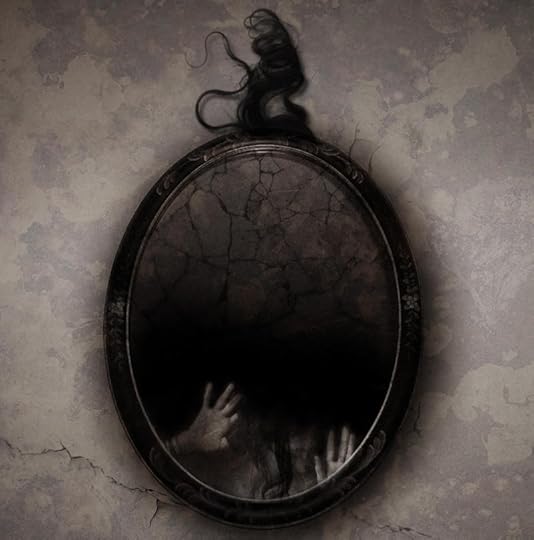
[In the Mirror (2006) by AliceinDeadLand]
“The Trap” is a lame story. It appears all the worse to me since I am reading Lovecraft’s fictional work in chronological order and this comes right after his masterpiece The Shadow Over Innsmouth. “The Trap” is arguably the 81 oldest extant story by American weird fiction author Howard Philips Lovecraft (1890-1937), written in collaboration with his friend Henry S. Whitehead. According to Joshi & Schultz (2001), the authors probably worked on it together “or at least discussed it..during HPL’s three-week visit to Whitehead’s home in Dunedin,” (p. 273) Florida from May to June in 1931. Contrary to popular opinion, HPL traveled a great deal. While he loved the history, culture and architecture of his native New England, he much preferred the consistently hot, humid weather of southeastern states. We don’t know how much of “The Trap” that HPL wrote, although Joshi & Schultz (2001) suggest that “from the prose style, it can be conjectured that the latter three-fourths of the story” (p. 273) was his. I find that the plot of “The Trap” is overly convoluted and the depiction of the so-called fourth dimension is painfully inconsistent. Skip this one unless you are reading every story that Lovecraft wrote, as I am in the process of doing.
Title: “The Trap”
Author: H.P. Lovecraft
Dates: late 1931 (written), March 1932 (first published)
Genre: Fiction - Novelette*, fantasy, horror
Word count: 8,471 words
Date(s) read: 6/26/22-6/28/22
Reading journal entry 135 in 2022
Sources:
Link to the story: https://hplovecraft.com/writings/fict...
First publication citation: Strange Tales of Mystery and Terror vol. 2, no. 1 (March 1932): 73–88.
Joshi, S. T., & Schultz, D. E. (2001). An H.P. Lovecraft Encyclopedia. Greenwood Press.
Link to the image
In the Mirror (2006) by AliceinDeadLand: https://www.deviantart.com/aliceindea...
“Anyone in the fourth dimension must necessarily be reversed in just this way—hands and feet, as well as colors and perspectives, being changed about. It would be the same with all the other dual organs, such as nostrils, ears, and eyes. Thus Robert had been talking with a reversed tongue, teeth, vocal cords, and kindred speech-apparatus; so that his difficulties in utterance were little to be wondered at.”
[In the Mirror (2006) by AliceinDeadLand]
“The Trap” is a lame story. It appears all the worse to me since I am reading Lovecraft’s fictional work in chronological order and this comes right after his masterpiece The Shadow Over Innsmouth. “The Trap” is arguably the 81 oldest extant story by American weird fiction author Howard Philips Lovecraft (1890-1937), written in collaboration with his friend Henry S. Whitehead. According to Joshi & Schultz (2001), the authors probably worked on it together “or at least discussed it..during HPL’s three-week visit to Whitehead’s home in Dunedin,” (p. 273) Florida from May to June in 1931. Contrary to popular opinion, HPL traveled a great deal. While he loved the history, culture and architecture of his native New England, he much preferred the consistently hot, humid weather of southeastern states. We don’t know how much of “The Trap” that HPL wrote, although Joshi & Schultz (2001) suggest that “from the prose style, it can be conjectured that the latter three-fourths of the story” (p. 273) was his. I find that the plot of “The Trap” is overly convoluted and the depiction of the so-called fourth dimension is painfully inconsistent. Skip this one unless you are reading every story that Lovecraft wrote, as I am in the process of doing.
Title: “The Trap”
Author: H.P. Lovecraft
Dates: late 1931 (written), March 1932 (first published)
Genre: Fiction - Novelette*, fantasy, horror
Word count: 8,471 words
Date(s) read: 6/26/22-6/28/22
Reading journal entry 135 in 2022
Sources:
Link to the story: https://hplovecraft.com/writings/fict...
First publication citation: Strange Tales of Mystery and Terror vol. 2, no. 1 (March 1932): 73–88.
Joshi, S. T., & Schultz, D. E. (2001). An H.P. Lovecraft Encyclopedia. Greenwood Press.
Link to the image
In the Mirror (2006) by AliceinDeadLand: https://www.deviantart.com/aliceindea...

December 14, 2018
Kitap 61 sayfa büyük puntoyla yazılmış ama yazı tipini pek sevmedim. Bir noktadan sonra gözü yoruyor. Alışkın olduğumuzun dışında olduğu için sanırım böyle oldu ama uzaktan bakılınca da göze hoş geliyor aslında. Anlatım birinci tekil şahıs ve çeviride herhangi bir sorun göremedim. Rahatsız eden bir nokta yoktu.
Ah bu arka kapak yazıları… Neden böyle en önemli noktaları arka kapağa ulu orta koyarlar ki. Çok elzem olmasa bile ipucu sevmeyen kişiler için bir parça sorun yaratabilir. En azından ilk yarısı için. Bu sebeple arka kapak yazısını spoiler takıntısı olan arkadaşların okumasını tavsiye etmem.
Küçücük bir öykü olduğu için Laputa Kitap da bu ve bunun gibi öyküler için “Küçük Karanlık Kitaplar” adı verdiği bir seri oluşturmaya niyetli gibi geldi. Serinin devamının geleceğini düşünmekle birlikle hikayenin içeriğine şöyle kenardan bir değinmek istiyorum. Hikayeyi Bay Canevin’in anlatımıyla okuyoruz. Bay Canevin Connecticut’ta arkadaşı Browne’un sahip olduğu özel bir okulda eğitmenlik yapıyor ve orada yaşıyor. Büyük-büyükannesinden kalma eski bir aynası var odasına astığı ve bu aynadan bir gün bir gölge geçtiğini sanıyor. Tabi bunun mümkün olmadığını düşünerek ve günün de verdiği koşturmaca içinde bu aklından hemen çıkıyor. Olaylar da soğuk bir günde öğrencilerini nispeten daha sıcak olan kendi odasına ders işlemek için davet etmesiyle başlıyor.
Konu bakımından ilgi çekici olsa da son kısmını biraz zayıf buldum. Tam doruk noktasına ulaştığınız anda o ihtişamlı dik yamacı görmek için hazır beklerken bir anda koca bir düzlükle karşılaşıyormuşsunuz hissi uyandırdı.
Ah bu arka kapak yazıları… Neden böyle en önemli noktaları arka kapağa ulu orta koyarlar ki. Çok elzem olmasa bile ipucu sevmeyen kişiler için bir parça sorun yaratabilir. En azından ilk yarısı için. Bu sebeple arka kapak yazısını spoiler takıntısı olan arkadaşların okumasını tavsiye etmem.
Küçücük bir öykü olduğu için Laputa Kitap da bu ve bunun gibi öyküler için “Küçük Karanlık Kitaplar” adı verdiği bir seri oluşturmaya niyetli gibi geldi. Serinin devamının geleceğini düşünmekle birlikle hikayenin içeriğine şöyle kenardan bir değinmek istiyorum. Hikayeyi Bay Canevin’in anlatımıyla okuyoruz. Bay Canevin Connecticut’ta arkadaşı Browne’un sahip olduğu özel bir okulda eğitmenlik yapıyor ve orada yaşıyor. Büyük-büyükannesinden kalma eski bir aynası var odasına astığı ve bu aynadan bir gün bir gölge geçtiğini sanıyor. Tabi bunun mümkün olmadığını düşünerek ve günün de verdiği koşturmaca içinde bu aklından hemen çıkıyor. Olaylar da soğuk bir günde öğrencilerini nispeten daha sıcak olan kendi odasına ders işlemek için davet etmesiyle başlıyor.
Konu bakımından ilgi çekici olsa da son kısmını biraz zayıf buldum. Tam doruk noktasına ulaştığınız anda o ihtişamlı dik yamacı görmek için hazır beklerken bir anda koca bir düzlükle karşılaşıyormuşsunuz hissi uyandırdı.

January 27, 2018
Reminded me of Algernon Blackwood's 'The Pikestaffe Case', where a man disappears inside a mirror. Here, Lovecraft has people the fourth dimensional world inside the mirror with people from different centuries, and the protagonist is outside attempting to rescue a student who has been lured inside the mirror by the occupants.

July 14, 2018
1,5*. Very weak story. No heroes, no intrigue, no narrative.

December 3, 2019
Wordswith Editions
London 2010.
The language is very atmospheric at the beginning but loses its power at the ending.
It is pretty much same with the content.
The most interesting part of the metaphisical subtext is the idea of other dimensions. I do not know what importance the mirror as a real odd object had in the teachings of the occult, probably Lovecraft pull this theme from the ancient traditions of all that is arcana.
¡Saludos weones y weonas!
London 2010.
The language is very atmospheric at the beginning but loses its power at the ending.
It is pretty much same with the content.
The most interesting part of the metaphisical subtext is the idea of other dimensions. I do not know what importance the mirror as a real odd object had in the teachings of the occult, probably Lovecraft pull this theme from the ancient traditions of all that is arcana.
¡Saludos weones y weonas!

October 19, 2024
كعادة لافكرافت عقله سابق زمانه وفكرة البعد الرابع رائعة جدا ...


September 19, 2018
Enjoyable tale. A satanist from the 1600s creates a mirror world and lures people into it. Once HPLs hero figures this out he frees his friend by setting the mirror face downward and breathing on it. Or that's how I understood it. Kind of funny. Well thought out; almost too elaborate for the kind of story it is but that's HPL for you.

May 22, 2015
Good beginning, terrible ending

February 19, 2021
The one where Lovecraft made an attempt on writing science fiction. It’s too predictable, too positive and too boring.

May 30, 2019
Пан Кеневін працює вчителем в приватній школі для хлопчиків в штаті Коннектикут. У нього є дивне старовинне дзеркало з Данії, в якому, якщо подивитися на нього під певним кутом, помітен вир, який всмоктує всередину. Це здавалося ілюзією, поки не зник один з учнів, Роберт Ґрандісон. Пошуки виявляються марними, але він приходить своєму вчителю уві сні і пояснює, що опинився по той бік дзеркала.
Пану Кеневіну складно пояснити свій сон, але це єдиний спосіб спілкуватися зі зниклим хлопцем. Протягом наступних ночей він дізнається, що всередині дзеркала живе ще кілька людей, передусім - данський майстер Аксель Хольм, творець дзеркала. Він хотів жити вічно, тому, будучи вправним як у виготовленні дзеркал, так і в магії, він перемістився по той бік, а завдяки телепатії змушував інших торкатися того виру, який переносив їх до нього.
Що мене здивавало, так це те, що історія завершилася відносно щасливо - хлопця вдалося визволити. Не було жодних моторошних сцен і навіть протагоніст виявився заледве зловісним, особливо не вмішуючись у сюжет. Подякувати всього-на-всього за легкий переляк - якщо він взагалі був - мабуть, треба саме Вайтгеду. А Лавкрафту, схоже, таке неплідне на справжні жахи співробітництво не припало до душі, тому що це в них єдиний спільний твір.
Пану Кеневіну складно пояснити свій сон, але це єдиний спосіб спілкуватися зі зниклим хлопцем. Протягом наступних ночей він дізнається, що всередині дзеркала живе ще кілька людей, передусім - данський майстер Аксель Хольм, творець дзеркала. Він хотів жити вічно, тому, будучи вправним як у виготовленні дзеркал, так і в магії, він перемістився по той бік, а завдяки телепатії змушував інших торкатися того виру, який переносив їх до нього.
Що мене здивавало, так це те, що історія завершилася відносно щасливо - хлопця вдалося визволити. Не було жодних моторошних сцен і навіть протагоніст виявився заледве зловісним, особливо не вмішуючись у сюжет. Подякувати всього-на-всього за легкий переляк - якщо він взагалі був - мабуть, треба саме Вайтгеду. А Лавкрафту, схоже, таке неплідне на справжні жахи співробітництво не припало до душі, тому що це в них єдиний спільний твір.

January 21, 2024
As soon as you read the setup (a "curious suggestion of motion" in the infinite corridor of reflecting mirrors, centered on a whorl in the glass that, when touched, creates "an impression of quite distinct suction"), you know how it's going to go. All that remains is to discover how it got like that, which actually doesn't matter much, and how to deal with it.
Lovecraft was no mathematician nor physicist, and his painful explanations here reflect the technobabble in other sci-fi works that would follow. There's not much to recommend this story, in which he still manages to jam a bit of white supremacy despite it not being connected to the core narrative in any but the most tenuous ways.
Skippable.
Lovecraft was no mathematician nor physicist, and his painful explanations here reflect the technobabble in other sci-fi works that would follow. There's not much to recommend this story, in which he still manages to jam a bit of white supremacy despite it not being connected to the core narrative in any but the most tenuous ways.
Skippable.

February 18, 2019
Years ago I decided to read the complete work of this author, a choice that I came to regret: while Lovecraft's contribution to the field is indisputable, and while a small number of his stories are good, the vast majority of his work is mediocre at best, and often marred by horrifying xenophobia. I thought I was done reading his work, when I came across this collaborations between Lovecraft and Whitehead that I had previously missed. I decided to give it a try since in my experience some of the best of Lovecraft's stories are collaborations. The Trap is not an exception: while it is not a masterpiece, and while some xenophobic attitude ruins it for me, it is entertaining and it has an interesting plot.
This is the story of Canevin, the narrator, that settles as a school tutor after many travels to far away lands that open his mind to the mysteries of the paranormal. He finally get a chance to take out of storage an antique mirror that he found in an abandoned estate house... but the mirror is not just what it appears to be.
This is the story of Canevin, the narrator, that settles as a school tutor after many travels to far away lands that open his mind to the mysteries of the paranormal. He finally get a chance to take out of storage an antique mirror that he found in an abandoned estate house... but the mirror is not just what it appears to be.

December 12, 2020
The premise of this story is interesting, while the execution is drawn out mind numbingly overwrought. A good editor could have saved this. A Faustian sorcerer with occult tendencies created a dangerous mirror, which has been known by the sobriquet 'glass of immortality' and also 'Loki's Glass'. Centuries later this looking glass ends up in the possession of a teacher, which is unfortunate for one of his students.
Audible, narrated by Robertson Dean.
Audible, narrated by Robertson Dean.

October 19, 2023
Schoolteacher finds out one of his students became trapped inside a mirror connected to the Fourth Dimension.
The mirror world he is sucked into contains people from different past centuries as it is actually the creation of the Luciferian wizard Axel Holm who created it to try and gain immortality.
Prose quality aside it was not terribly interesting, and a bit below Lovecrafts usual mind-bending. There are reddit creepypasta with similar plot quality.
The mirror world he is sucked into contains people from different past centuries as it is actually the creation of the Luciferian wizard Axel Holm who created it to try and gain immortality.
Prose quality aside it was not terribly interesting, and a bit below Lovecrafts usual mind-bending. There are reddit creepypasta with similar plot quality.

May 31, 2022
Tatlı bir tek günlük hap öykü. Fikir gayet iyi ama kitabı Laputa kitap karanlık serinin ilk kitabı olarak basmasına rağmen, o kadar da karanlık olmayan bir öyküyle giriş yapmalarıyla beni şaşırttı. Zira Poe olsun, Borges olsun daha karanlık öyküleriyle Burada ilk sıralara yerleşebilirdi.

April 1, 2026
Hard to believe how many of us imagine another world trapped within the infinity of a mirror looking into a mirror. That the author thought to observe a reversal of chiral symmetry upon ones release in interesting.

July 19, 2018
Interesting idea, poorly executed. The beginning POV should have been the boy's, later supplemented with the prof's. The weird journalistic distancing at the end didn't help matters, either.
November 1, 2020
Worst teacher in the world brings cursed wizard mirror to school with him. One unfortunate student will need years of therapy.

November 18, 2020
Un título quizás no tan conocido de Lovecraft,pero que igualmente llega a gustar.
November 17, 2022
Просто занудно. Какое-то описание зеркальных свойств.

February 25, 2023
ilginçti

November 8, 2023
Pretty good!

October 16, 2025
This tale surely inspired both Stephen King's The Crate and Carlton Mellick's Spider Bunny.

Currently Reading
August 30, 2026Short horror story The trap
Libby library kindle book, collection of stories book. 383 pages.
Golden Age of Weird Fiction megapack volume 1. Henry S. Whitehead
Libby library kindle book, collection of stories book. 383 pages.
Golden Age of Weird Fiction megapack volume 1. Henry S. Whitehead
Displaying 1 - 30 of 37 reviews