The Social's finance expert connects money and happiness in this fresh, feel-good guide to financial well-being.
Everything tells us that what will make us happy can be bought, whether it's the latest gadgets, renovated kitchens, or luxury goods. But research has shown that having more money in the bank and more stuff around the house doesn't necessarily correlate with being a happier person. With Happy Go Money, financial expert Melissa Leong cuts through the noise to show you how to get the most delight for your dollar.
Happy Go Money combines happiness psychology and personal finance and distills it into an indispensable starter guide. Each snappy chapter provides practical, easy-to-understand advice on topics such as spending, budgeting, investing, and mindfulness, while weaving in research, interactive exercises, and relatable anecdotes. Frank, funny, and empowering, this primer challenges everyone to revamp their relationship with their money so they can dial down their worries and supersize their joy.
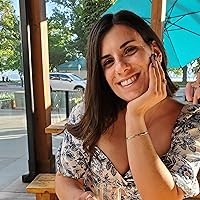
Melissa Leong is a personal finance writer, on-air personality, speaker and bestselling author. She’s the author of the feel-good finance guide, Happy Go Money, and is the resident money expert on Canada’s leading daytime talk show, The Social on CTV. Her money articles have appeared in the Financial Post, where she was the personal finance reporter, and in newspapers across the country. Having been a journalist for more than 15 years, she’s interviewed thousands of subjects, including heads of state, royalty and celebrities such as Hugh Jackman and Carrie Fisher. She also writes paranormal teen fiction under the pen name Wynne Channing. Her vampire adventure novels, What Kills Me and I Am Forever, have sold almost 70,000 copies and soared to #1 on a number of bestseller lists on Amazon.
I loved this book. It's full of practical advice but infused with a lovely sense of humour. So much within this makes sense. As with all self help books the advice tends to favour the country of the author so it can be Canadian heavy sometimes. However a personal bug bear is when a book is written for that country and you can't find any relevance within it for where you are. That doesn't happen in this book. The statistics cover Canada, USA and the UK and where something is written about Canadian finance i.e pensions, there is enough in there for someone else (me in the UK) to understand and go find out what I need here at home. Wise advice; make sure you have a pension.
This is a great read whether you think you have your financial ducks in a row, are a bit worried and want to learn to budget or like me are 4 years into a 5 year repayment plan. I think there's something for everyone in it. Much recommended
A common-sense approach to thinking about personal finance (+ a bit of general self help?). The tone of this book was light and approachable, but I tend to cringe through anything with a 'millennial attitude' voice.
I personally don't feel that I learned or gained much from the book and I likely would have benefitted more if I read it when I was first starting to manage my finances.
Upon finishing, the things that stuck out to me more were the things I did not like about it lol
• a few Kanye West references that aged horribly (but we cannot blame the author for that!!)
• the section where the author basically complained about the burden of finding good tenants and managing investment properties (in Toronto, no less!). I get it...I guess...but given the content in the rest of the book it felt out of place and soured me a bit. As a renter, I am someone's tenant, so it kind of felt like someone was making a joke about me to my face lol
• and the worst offender towards the end - "Know a stay-at-home mom that sells lipstick? Buy a ravishing red from her and pick her brain." My jaw dropped and I was pretty much forced to disregard everything in the book prior to this. Suggesting the reader take advice from someone in an MLM in a FINANCE book is CRAZY work lol it's a no for me dog.
2.5? It's not that it was bad, it just wasn't for me!
Half personal finance, half self-help, I found this book offered great advice to help people take both themselves and their bank accounts to new heights.
I enjoyed its bite-sized tasks and goals which keep you reflective and in control. It will be particularly useful to people who struggle with money or who haven't put much thought into it in the past. After reading it you'll be empowered to kick-start your financial independence with a smile on your face.
This was a fun book, but the fact that I’ve been reading this book for almost a month and I’m not excited about continuing it right now definitely tells me that I need to DNF this. I might pick it back up later though!
If you read one thing about money ever, let it be Happy Go Money. Is your money working for you? Do you know how to manage it so that it's making you more money and preparing you for the future while also allowing you to spend on fun experiences? If not, you definitely want to read this.
Money is one of those things that we tend to be secretive about and that feeds into a fear that we're doing it wrong or a negative thought pattern. But money is there to support you, to enable you to live your best life and to be your security blanket so that when something unexpected happens, you have the bandwidth to focus on the more important things. Because we tend to not talk about it, people aren't usually managing their money in a way that allows them to do all of this - which is exactly why a guide like Happy Go Money is so awesome. It breaks down the different ways you could/should spend your money to maximize happiness, giving you helpful tips, instructions and really awesome thought-provoking questions for you to consider to understand your relationship with money and how you can make it better. And even though this book is all about money, it reminds you that in life, it's never all about money but having your money working for you allows you to put your focus elsewhere.
Read this, give it to a friend, give it to another friend and then talk to those friends about money and what your goals are and where you're struggling -- because the more we can support each other, the more we can make all of our lives just a little bit happier.
I breezed through Leong's new release on balancing personal finances with happiness. Her take on the humdrum of budgets, savings and spending wisely is fresh and filled with funny anecdotes that had me laughing out loud. That's not to say her book isn't to be taken seriously. On the contrary, Leong doesn't hold any punches in keeping it real and practical; she clearly knows her stuff. Whether you are experienced or a novice, there is a little something for everyone. Like a two-bite brownie, the portion is perfect, sweet and satisfying. Loved it!
This is one of my favorite finance reads. The author was relatable, humorous at times, and well versed in money management. She uses personal examples, as well as those of friends to describe the things she's discussing and various situations or beliefs that individuals can find themselves in. She has action plans at the end of every chapter and provides other experts and resources to check out to learn more.
One of many books teaching the uninitiated personal finance. The author covers the expected gamut of topics, and does a good job covering the finance basics and the indirectly related, such as selling stuff to raise cash, bond investing, and how exercise fights depression. Given the breadth of topics, when you finish you feel like you've covered a lot, and you have. The voice of the author is what I call Millenial/Attitude, which veers from pithy and funny to sometimes harsh. I found reading a bit at a time worked. The author was Canadian. This means that she was nicer than some authors, and more friendly, but also talked about the Canadian way of personal finance, which can be different than the US or anywhere else in some of the details and terms. Overall, not bad for beginners at personal finance, a light read and simple reminder for the pros.
A delightful, funny, highly informative read. I enjoyed all the personal anecdotes that tied in with lessons about personal finance. Also, there was an entire section of relating happiness to the psychology of money that I found very inspiring and cathartic.
This book was everything I wanted and needed right now. Not only does Melissa Leong offer helpful tips for saving for future you, but she helps to re-frame how we look at money and success.
A great "money sense" book that's light and funny. I definitely enjoyed the message of spending money on what's important to you (not just, "SAVE, SAVE, SAVE!").
I’m still new to the personal finance game so this book was a great reminder to keep my financial planning oriented about what will actually make me happy in the long term and what kind of spending fits with my values.
I found the latter half of the book a bit more helpful than the first half, which is a bit more generally self-helpy.
Worth noting - the advice is Canadian based with some American options
Loved the intial focuses on moderating wants as a critical financial skill.
However, towards the end suggestions include making your hobbies net neutral and making something out of everything…
If you’re wealthy and your hobbies need to be net neutral/enterprises - what is the point of being wealthy? Where is the end? And per the beginning of the book- when does happiness start?
I just finished her book Happy Go Money. I must say my husband bought it for me, thinking it’s what I “needed to hear” because I was constantly thinking that what I’m doing and what I have financially isn’t good enough, and always searching and hustling for more, more, more. When really more isn’t always more. I have to admit at first I was very skeptical, I thought, “He we go another finance book by a wealthy Money Expert...” At the beginning of the book, I found myself frustrated, annoyed, restless, and couldn’t even get through the first few chapters - I even cried a couple of times thinking, “Why the fu*k did my my husband think this would be “good for me”?! Psssht! What the fu*k does he know?!” 🤬 But I stuck with it (maybe it’s because I’m stubborn, or maybe because I thought maybe my husband does know what’s good for me, and somewhere around Chapter 5/6 I found the more I read the more I was sitting on my couch nodding my head in agreeance, repeating lines/quotes from Melissa to my husband and saying things like “Yaaaas girl!”, “That’s exactly it, Melissa!” out-loud. Needless to say, I’m beyond glad I stuck with Melissa Leong’s book and have been recommending it to all of my friends. It’s a fantastic read, gives great examples/tips, Melissa is genuine, and authentic AF. Love how candid and real she keeps it in her book and this will definitely be a book I refer to going forward and will be a part of my Finance/Money resources for years to come. My future Silver Fox thanks you, Melissa. Thank you for a great read/resource - you, my lady, are the real deal! ❤️
I really enjoyed this light hearted book about personal finance. I agreed whole heartedly with most of her thoughts and practices. Especially poignant was the phrase...you can always make money, but you can't always make time. Meaning if you were given a choice between making money or spending time with your family...spend the time,...you can't get time back. everything about this book was common sense about finances. and wonderfully laid out. The only part was the meditation. I felt that should have been a separate book.
Happy Go Money was an enjoyable, entertaining and easy read. Melissa's book is unlike any other personal finance book I've read. Focusing on money and happiness is such a unique and great idea. I also like her writing style. It sounds just like her. This is the must-read personal finance book of 2019.
I really got a lot out of this. The author presents money-related topics in a very approachable way and gave me several new ways to look at things. Some people may be put off by her casual/snarky style (she refers to her husband as MoFo for some reason and uses colorful language), but I’d recommend this to anyone of pre-retirement age.
Simplified language and vocabulary for those who are not too financially literate or savvy. The author articulates herself well throughout and uses her expansive financial and reporting background to give well-rounded information. She talks about money from a place of humility and makes it easy, accessible, and funny. I never felt alienated for not knowing something before, Leong has a gift for making people feel included.
Author – 5/5
I loved this author. She is authentic, open, and more honest than I expected from this type of book. She is very quick to remind readers that she is not a professional in a particular field when she gives recommendations about things outside her financial scope, for example when discussing CBT. Like a good memoir does, she includes personal stories that are well considered and written from a place of having learned from them. She is both self-aware and forgiving.
“But we were young, and we made choices in that moment based on the knowledge and experience that we had. And I won’t blame 21-year-old me for my present disappointments.”
I appreciated the objective viewpoint of the author and the matter-of-fact tone, she is also really funny. The author was very knowledgeable and had some great anecdotes alongside the research and advice. I enjoyed the stories she shared from her reporting days - the patio furniture house and the man who paid his mortgage off by age 30 living in his basement. Leong made this book a lot more interesting than I expected finance could be by making it accessible through language and humour. She is also very grounded and considerate of different financial scenarios that can create greater barriers to financial health than hers.
The Content – 5/5
She included easy descriptions and notes the pros and cons while breaking down savings plans, investing strategies, bonds, and insurance. This is done in a simple and organized format so you can use these sections as a mini reference book. There were good resources provided for finding more information, helpful tips on questions to asks, apps for organizing finances on your own, and book recommendations for inspiration. I really appreciated the last one because I am currently two months into a no-shop new year plan (I started in early December) and any resources and inspiration are greatly appreciated. I was highlighting book titles as I read and have a pretty good list to explore.
Leong has also done her research, she doesn’t just ramble on from personal experience (sadly, too many books seem to do that these days). Her personal experience and ideas still carry the book and bring a lot to the table. The title of the book is, “Happy Go Money” and there was a well-balanced mix of information and research on how the two are intertwined but also ideas to support how to create a more positive financial scenario for yourself and general good practices for being more satisfied with what you have.
Final Thoughts:
The only negatives I could find were that at times she was just skimming the top of things I already know and would’ve liked a deeper dive, but that does align with the goal of the book being more introductory. If you are well-versed in financial vocabulary and strategies, this probably isn’t the book for you. If you are trying to improve your shopping habits or learn a little more about finance, this book might be a good springboard and motivator for you as it was for me. There is a lot of focus on how to spend money and time on things that add value to your life in the form of prompts and questions to ask yourself before saving, spending, or investing. I liked the reminders of free activities which have strong impacts on our well-being – such as walking, reading, and napping. I appreciated the validation here, as these are my 3 favourite activities. Overall, I loved this book, it connected with me at the right time.
Some little takeaways I will keep with me:
“You can have it all – just not at the same time.”
“The only way that shame, guilt, and regret will serve you is if it mobilizes you to act. Accept, acknowledge, look for the lesson in your error and move on.”
“We know we can’t flip the happy switch with our credit cards. We know that rather than wipe the pain away, these purchases will just sit on the surface before sinking into our murk.”
“I know what is valuable in my life. I am in control. Let’s do this.”
I won this book at a brunch that I was dragged to by a friend and, quite frankly, was a bit petulant about attending in the first place (first thing on a Sunday morning I just wanted breakfast and gossip, not a lecture on my poor spending habits). Out of these inauspicious beginnings, I was pleasantly surprised and had to begrudgingly backtrack on my bad attitude- the brunch, and this book, were both great.
If Leong looks or sounds at all familiar, you might be Canadian- she is a reporter for the Financial Post, a section of the more right-wing of Canada’s two national daily newspapers, the National Post. I knew her vaguely from The Social, Canada’s version of The View, where she often appears as a guest, providing financial insight and advice. Although I knew of Leong, I was not really familiar with the substance of her advice and I didn’t have many expectations for this book (although I do love the cover- sprinkles! It just looks so cheery).
Despite or because of my low expectations, I was very pleasantly surprised- Happy Go Money is a non-judgmental, practical but also emotionally/socially attuned guide to thinking about and being better with your money. Leong starts off with the softer side of money/ wealth, and our relationship to it. I hadn’t given a lot of thought to how my parents talked about or treated money, and when I did stop to think about it I realized that a lot of what I do is less of a conscious decision and more because that’s the way I was raised (which is true of a lot of relationships…). From the ‘softer’ relationship aspects (ie: additional chapters on self worth and a more holistic view of ‘wealth’), Leong moves into some of the ‘harder’ and more standard financial advice topics (investments, compound interest, debt), and finishes up with charitable giving. Each chapter provides background to the topic at hand, often including scientific studies or pop culture references, a personal story or anecdote relevant to Leong’s own money journey, and then questions and challenges for readers.
I found this book really inspiring and have been thinking about it- and tackling its questions and challenges – since I read it. I actually sat down and did a retroactive budget of where my money is going and it was almost like getting the results of a personality test. I also drafted this budget from a different ideological starting point than the other budgets I’ve attempted and abandoned- instead of thinking ‘where can I squeeze more money out’, I was thinking, ‘does what I’m spending my money on fit with my values?’. Reading the book/ doing the budget has also impacted my spending of money going forward- I’m thinking about values as I spend.
This book turned out to be much less about finances in the traditional here-is-how-to-manage-money sort of way. It was instead a book that posited joy and happiness as goals in life and tried to examine money through this lens. For the most part, it worked really well.
I think my favorite thought experiment was this one: Think back on the last week. What were the three moments that brought you the most joy? ... ... ... Would having more money have made any of them better?
For me, the answer was no, and so it was fun to make a list of the things that bring joy (a sunset, the first sip of coffee, biking) and realize how many of these things are no or low cost.
It should be noted that this book is written for a middle to high-income reader. The assumption is that you have enough money for everything and can decide where to redirect money to get the most joy-bang for your buck. Of course this excludes many people, but I think it is hard to write a financial book that is all things to all people.
My only true reservation about the book is that there are moments where the author stresses the idea of finding a good fit, say with a financial planner, and focuses a lot on whether you like the person, without ever mentioning the idea of needing to ask them whether they are a fiduciary. That was weird. Overall, I think the actual specific financial advice wasn't nearly as useful as her big picture questions.
All in all, a fun read and a novel take on how to approach budgets and financial goals with joy in mind.
"Instead of comparing ourselves to others, we need to be grateful for what we have, focus on the opportunities ahead of us and turn off our phones and get a life outside of the glow box." Yet when you do engage in social media, "Be a source of good on-line," Leong recommends.
Melissa Leong offers many great 'one-liners' to live by regardless of age or money. I read this book over two months for the sheer joy of it and to internalize some of her recommendations. Leong proves that busy people get things done! This witty author is not just a financial advisor but has been a competitive salsa dancer, a successful fiction writer, journalist, and prolific public speaker in the media. And to add to her accomplishments, also a supportive marriage partner and mother. Thus, she comes from a position to have something of value to share.
Leong shares her financial advice with amusing anecdotes. She shares her life stories and personal vulnerabilities which make this book a delightful and often a hilarious read! But she knows how to 'kick-butt' when it comes to money! She encourages self-evaluation of her readers with many inspirational ideas to set one on a path of solidity and strength, as she has the reader laughing with her idiosyncratic examples for success. Leong is never boring.
Overall, this book is personal, humorous, practical with a whole lot of common sense! Keep it nearby. You'll love the writer as she entertains you all the way through. Bravo, Melissa!
When you are reading a book dense with statistics and other data, it helps to have a conversational tone. In this approachable book, one feels like they are having a gab fest with a girlfriend from college that you have met out for Ladies Night. Which is to say, not for me, but maybe for you. I give it 3.5 stars.
With sentences like, “But all of us find joy in some simple things- kisses, laughter, getting IDed over the age of 25” and “Who doesn’t love a pie chart? It reminds you of dessert”, I couldn’t help but cringe all the way down to my black little soul.
Although not all the cutesy sayings were a miss. I did grin at “Check yourself before you wreck your wealth”. And the advice to love yourself the way Kanye loves Kanye is solid advice.
About 2/3 of the way through the book, I did acclimate to the writing style, and I enjoyed thinking of my future self as a “silver fox” that I needed to save for.
If you are new to books citing positive psychology studies, this would be a great first book because of its accessibility. All the major hits are covered (quadriplegics are happier than lottery winners, etc.). I received the book as an advance copy from Netgalley in exchange for an honest review.
This is actually a great book! No easy feat for a financial book. This book is funny, witty, banters, and even cracks sexual jokes. It is a good mix with the dry financial knowledge. A good part of the book is about happiness. It disconnects it from finances. The first half of the book I was thinking that this is not really a financial book but a self-help ‘happiness’ book. The author does well with Stats and Probability in chapters regarding behaviouralism. It is rather interesting data that she shares (Canada and US). She does well explaining meditation as someone who is not a New Ager or Woke. Sometimes, that is what is needed. She also references Kabat Zinn who is fairly decent at Eastern Mysticism with Western Psychology. Lastly, her financial advice is sagely. I agree with it all for the very most. I enjoyed how she wrote the book. Some important points she could have covered further. She tends not to be authoritative with rules to follow. It’s up to the reader to take the basic concepts of living below their means and saving money. The budget is important. Debt is never really good even if it’s student loans or a mortgage. The whole concept of labeling it as good debt allows it to loom around. This author has a very solid financial attitude.
A little more “girlfriend”-y than I was expecting (I didn’t know the author when I picked up the book, so the ultra-casual, millennial-focused hip gurl style was a surprise), but this was a good book covering all the tips and tricks I already knew about how to steer your financial ship in the right direction. It covers saving, spending, investing, debt repayment, credit cards and basic interest rate know-how, entrepreneurship, asking for a raise, and a lot of other things that I wish were taught in high school. Nothing new to me, but I am in my mid-forties and had the advantage of a family who discussed money openly and invested in me and my financial awareness early and often. I had a job at 13, a second job to get me through university and for many of my early career-building years, invested in real estate young, and so on. All the advice here is what you would want your kid to know before they leave home to build heir own lives, and it is delivered with a light, conspiratorial, humorous tone.
This was a refreshing book that challenges the old theory that money can buy happiness. It cannot. After a certain point, money brings regret. Don’t go chasing after what others have. Instead, look at your life and what makes you happy. Challenge the ideal that you have to compare to others. You can treat yourself, but don’t overindulge and put yourself into a spiral of chasing after someone else’s dream. Leong breaks down the components of saving and spending, providing additional research sources to cover the different financial personality types, and helps readers identify what is important to them and how to maintain their own happiness within their financial means. This was a wonderful book that helps readers break through the complicated world of finance and gets to the heart of how we can all be successful in our financial futures.
Leong is writing a personal financial book but takes a more broad approach that focuses on human behavior and individual values tied in with financial advice. In this aspect it fits more in line with Vicki Robins "Your Money or Your Life" but without the hard core expense tracking. Leong wants people to understand the things that actually make you happy and set yourself up so that you have less money stress in life by taking care of the money things that we often ignore. Saving for retirement, avoiding debt, getting a will, and ensuring you have the right insurance for your needs. I liked the book and I liked her style but for some reason the flow didn't fit and I don't feel like this is a money book I'd recommend to friends or family trying to get their financial lives in order.
Happy go Money is a quality read in the personal finance genre. It has fun content and serious content for the reader who enjoy a little spark in their information.
Melissa is engaging, fun spirited, and an energetic author. This is based on listening to the book on audiobooks as Melissa is the narrator as well.
The content fits well for those in the 16-40 age bracket, but can be applied to all ages and stages of life. She provided insight on insurance, smart spending, smart investing, money mindset, money and relationships, and personal anecdotes to enhance her arguments and content.
I've read about 10-15 personal finance books and this would be in my top three, including The Richest Man in Babylon, and Total Money Makeover by Dave Ramsey.
A genuinely good money book laced with humour and information. I picked this up after the whole GameSpot Reddit thing and wanted to know more about personal finance - and this was a great start. It puts money, wealth and your life in general into perspective and had Canada specific information (I now know what and ETF is). I am lucky enough that I was able to skip the debt repayment chapter and the ones about hustling, but I do wish there was more about retirement and saving and how to manage money long term (as opposed to just telling you to research or speak with a financial advisor... But she did give tips on how to pick a good one which was also helpful!) Anyways, this was a fun, fast and informative read for most money minded beginners!
Entertaining and fluffy. Easy to listen to the author read her story with such a fun personality!
Since I chose the book because I wanted to learn more about money, I found myself asking a couple of times, "Why am I listening to this," since it wasn't primarily about money.
There were a lot of common sense reminders about taking care of yourself and being positive on media and with friends etc. to be happy. And of course, avoiding debt causes a lot of stress.
However, I was glad I kept listening for Chapters 16 and 17. They were very helpful in explaining money principles and the details of investing in a light way that was easy to digest.
Overall the books wasn't what I expected from the cover.