Jump to ratings and reviews
Rate this book

Dancer from the Dance

Rate this book
Young, divinely beautiful and tired of living a lie, Anthony Malone trades life as a seemingly straight, small town lawyer for the disco-lit decadence of New York’s 1970's gay scene. Joining an unbridled world of dance parties, saunas, deserted parks and orgies – at its centre Malone befriends the flamboyant queen, Sutherland, who takes this new arrival under his preened wing.

But for Malone, the endless city nights and Fire Island days, are close to burning out. It is love that Malone is longing for, and soon he will have to set himself free.

First published in 1978, Dancer from the Dance is widely considered the greatest, most exciting novel of the post-Stonewall generation. Told with wit, eroticism and unashamed lyricism, it remains a heart-breaking love letter to New York's hedonistic past, and a testament to the brilliance of our passions as they burn brightest.

259 pages, Paperback

First published May 1, 1978

593 people are currently reading
21793 people want to read

About the author

Andrew Holleran

31 books331 followers
Born in 1943. Andrew Holleran is the pseudonym of Eric Garber, a novelist, essayist, and short story writer. He is a prominent novelist of post-Stonewall gay literature. He was a member of The Violet Quill, a gay writer's group that met briefly from 1980-81.

Ratings & Reviews

What do you think?
Rate this book

Friends & Following

Create a free account to discover what your friends think of this book!

Community Reviews

5 stars
3,747 (35%)
4 stars
3,691 (35%)
3 stars
2,271 (21%)
2 stars
616 (5%)
1 star
162 (1%)
Displaying 1 - 30 of 1,048 reviews
Profile Image for DoctorM.
842 reviews2 followers
May 1, 2023
I first read "Dancer From The Dance" long, long ago, in my days at New Haven. Someone at the old Atticus Books recommended it as "the gay Gatsby". It is that, very much so: a novel of doomed romanticism, memory and all its traps, and dreams of new identity. It's set in the lost NYC of the early/mid-'70s, in the gay club world that's lost almost beyond recall. That world was alien to me, but I shared the clubland belief in the redemptive power of dance and the enchantments of beauty (female beauty, for me). "Dancer" calls up a world of melancholy dreams, of losing oneself in night and hopeless romances. It's suffused with that Japanese quality of mono-no-aware, the fleetingness of all things beautiful and earthly. Even if you were never on the gay scene, you could identify with Holleran's hero and his hopes for romance. "Dancer" has haunted me all these years, and I can still open it and feel that sense of longing and loss. Very much recommended, even it's not your world Holleran is writing about. A fine, sad, dream-touched story.
Profile Image for Mark.
430 reviews19 followers
February 8, 2008
I'd heard about this book forever and finally got around to reading it. I waffled between liking it and appreciating it as I was reading it. The writing is unique and effective. But I felt like I was reading the same twenty pages over and over and over again. Which is, ultimately, the point. It's indulgent but the book is about indulgence. It's frustating but the book is about frustration. Sometimes I'd get swept away by it and other times left completely cold. So it worked. A bold way to tell about an experience by giving you that experience on a different level. I also liked how the author reminds us that this is about only one segment of the community and comments on everything from that standpoint. I'm wondering how different and how much the same things are in that life today. This book made a big impression on me.
Profile Image for Doug.
2,544 reviews912 followers
October 20, 2022
4.5, rounded up.

There's a reason Holleran's debut novel was instantly declared a gay classic upon its publication back in 1978. I first read it a year or so later, and although its depiction of early '70's New York gay culture had no personal resonance for me (having been a more or less closeted teenager on the West Coast during that era), I felt like I KNEW that world, largely through Holleran's potent and lyrical evocation of that period.

Coming back to it again for the first time over 40 years later, it still holds a powerful sway over one's imagination, and it's perhaps even more poignant and relevant NOW, knowing what would occur with the advent of AIDS just a few short years later. If it contains some flaws endemic to all first novels (a bit overwritten, some repetitious elements), Holleran is a master prose stylist, and though there is very little plot, per se, I'd love to see an adventurous director turn this into a film (... for some obscure reason, I kept picturing Neil Patrick Harris as playing the aging doomed queen, Sutherland - future casting agents take note!).

PS: I had never heard of this track, but it's kind of the theme song of the novel, mentioned several times throughout: https://www.youtube.com/watch?v=TX87S....
Profile Image for George Ilsley.
Author 12 books314 followers
December 28, 2021
A book I've read several times, although not lately. At one point in my life, when I was supposed to be studying for an exam, I would re-read this book instead. Now, I'm scared to read it again, in case it no longer lives up to what I remember. It was a cultural sensation at the time— you could buy T-shirts with raunchy lines from this book ("My honeypot is on fire").

When I first purchased my copy, at a chain bookstore in a mall, the young female clerk was kind of flirty, and then when she saw the book I was buying, with the shirtless man on the cover, became all flustered and awkward. And no longer friendly. At all. Such were the times. And that is why we needed so many GLBT bookstores.

Notably, this book was pre-aids — but the ending seems to foreshadow it all.
Profile Image for Meike.
Author 1 book4,943 followers
July 23, 2024
Absolutely loved this classic American novel: The lyrical, evocative writing, the sense of place and time post-Stonewall and pre-AIDS, the story and how Holleran plays with literary tropes. First published in 1978, "Dancer from the Dance" revolves around Anthony Malone, a blond young man born in the Midwest and brought up in Sri Lanka who starts a career as a lawyer, but feels alienated and alone - when he discovers / confronts his homosexuality, he leaves everything behind and goes to New York, where the older Andrew Sutherland introduces him to a world of sex, drugs, and parties.

Malone is the only fully fleshed out character, a young man who chases the romantic ideal and works as a callboy, becoming a part of a fragile, fast-moving scene that, as represented by Sutherland, perceives life as brutal and meaningless and thus fights reality with sexual and chemical pleasure, which produces another kind of emptiness than the one Malone fled, but still an emptiness. Malone tries to eradicate his former life, but then realizes he participates in another charade - in many ways, this is a novel that juxtaposes romantic ideals with harsh realities, as epitomized in the satire on the marriage plot that unfolds later in the story. Which of course brings up the question: Does the life Malone (and many others, no matter the sexual orientation) desires even exist, can it be willed into existence? All the while, Sutherland appears as almost enigmatic, having built a speed-saturated wall around himself, but he is also way more pragmatic than Malone.

What makes the narrative so clever is not the epistolary frame, unneccessarily presenting the main plot as an autofictional novel by a fictional writer, but the fact that Malone is always shown from the outside while the narrative voices change: From an omniscient narrator to several unnamed members of the queer scene depicted, sometimes even modulating into a lyrical we, like a Greek choir. It's beautiful and elegantly done, befitting to the theme of male beauty that runs through the text with its many depictions of bodies, erotic tension, and longing - which is then paralleled with age and disintegration.

The title is taken from William Butler Yeats' poem "Among School Children", and on a literal level, it certainly alludes to the many discos and dance parties depicted in the novel, but metaphorically, it also touches upon the ecstasy of getting lost in a pleasurable physical experience. The idea of almost spiritual reverence to love is reflected in the often religiously connotated language Holleran employs, which is rooted in Malone's past as a deeply religious boy who, as a grown-up, still needs something or someone to believe in.

This is just a beautifully atmospheric, superbly written text, and if you don't believe me, you can read parts of the foreword, crafted by the fantastic Garth Greenwell, here: https://yalereview.org/article/garth-...

(Fun fact, btw: I somehow got here after I disappeared in a Dennis Cooper rabbit hole, and I have no rational explanation for this progression! :-))
Profile Image for Glenn Sumi.
407 reviews1,931 followers
August 8, 2018
Andrew Holleran's groundbreaking 1978 novel is a lyrical, funny and elegiac book about a certain segment of gay life in mid-to-late 70s New York City.

The modern reader will appreciate the glimpse into post-Stonewall, pre-AIDS urban gay life, with its discos, tea dances and all-night parties. Some behaviour and attitudes have obviously changed, but the restless pursuit of the newest fashion or fad and the yearning after beauty and romance feels universal.

Holleran's characters – some outrageously heightened, satirized, mythopoetic creatures – are memorable. And his literary prose (with nods to everyone from Proust to Henry James) is sensual and seductive.
155 reviews30 followers
December 14, 2017
I used to have this history teacher. He would tell us stories from his younger days, and he would get to certain parts of his story and stumble. It would be a part that involved sex or drugs and he would edit around it so he wouldn't get fired, but with a nod and wink that still let you know which naughty bits were being PG-13'd out so we'd still understand.

He'd finish his pared down tale of debauchery and just-barely-appropriate-for-high-school-ears adventures, and when we were looking at him like the shit he just told us was the kind of stupid normally reserved for the Darwin Awards, he'd shrug and say, "It was the 70s, man." As though there were no other way to explain why or how any of it happened. Or how he or anyone else managed to make it to the 80s and beyond with enough brain cells left intact to tell the tale later in life.

That's what this book reminds me of. Obviously, it's not edited for prime time. There are quaaludes, water sports, and Everard, but there's a certain self-aware combination of pride and shame that accompanies all stories told about the 70s that is very much present in this book.

Stories from the 70s are incredible. It was before the self-inflicted narcissism of cocaine. It was the advent of high energy dance paired with party and pleasure drugs, but no one had any fucking clue what they were doing, so people were hurling themselves off buildings, lighting themselves on fire - you fucking name it, someone died doing it while on mescaline or angel dust. And drugs weren't the only thing that was approached with abandon and zero sense of self-preservation. Sex, music, art, protest... everything. It was all out, balls to the wall, don't look down, because you're up here without a safety net.

Point being if you're reading a story about the 70s, it'll be a hell of a ride, but you'd better bank on it hurting in a way that only the senseless tragedy of wasted life can hurt. It's not a romantic kind of hurt. There are no star crossed lovers. There's no deeper meaning or greater good. Just a sense of loss and the feeling that it was wholly unnecessary, completely avoidable, and such a fucking waste.

This book has a lot to say, and very little is about the plot (what plot?). But that's because the point of this book isn't the plot, but the characters and perhaps more importantly, the setting in which those characters exist. It's one part commentary on the false gods of youth and beauty, love between men or the lack thereof, intimacy and loneliness, shame and pleasure. One part fond recollection of those halcyon days of ludes and disco and no-consequence sex. And one part recitation and bragging of excess in dancing, drugs, and sex designed to shock the plebs - this man blows guys in bathrooms all day! Quaaludes & poppers! Fisting! *gasp* A man referring to other men by female names and pronouns? How edgy! Men pee on each other for fun and profit! How shocking!

For the younger crowd, it's La Vie Boheme in RENT. Performative. Find yourself a vanilla citizen, and then list everything you love that will make said citizen clutch their pearls and mutter, "I never!"

None of it is a lie or an exaggeration. Nothing is false. I don't mean to say that because it's written to shock, that makes it counterfeit or disingenuous. It's defiant and genuine, but if it shocks a few people along the way, well, that's just an added bonus. A little extra thrill.

Reading it in 2017 is a bit weird, because you're out of step with the time. What was written to shock is now met with, "Ah yes, I've read much about the sexual revolution of the 1970s. I've read about the wide use of drugs. Quaaludes and disco were the precursors to the modern rave and rave drugs. PCP is scary shit, but the edgiest drug users have moved on to different scary shit, these days. Bath salts, flakka, spice..." There's something singularly unshocking about ... historical context.

This book has something that I value a great deal, and that is that it made me think. About queer counter-culture, and how it's changed from what is depicted here to what it is today (which I have a lot of thoughts about, but now isn't really the time and here is definitely not the place) About youth and beauty and shallowness and shame.

I don't imagine that I gained the same things reading this that someone who lived through this time period would or that the book's original audience would, but that's what makes a book that endures. When there's something to be gained even after the things that were so important at the time have lost their salience and have faded to dim 'historical context'. When a book touches on something that is universally true, it elevates from a story about people in a time and place to a story about humans doing humanity things, and even if the situations and society have moved on, there's still something recognizable and relatable to hold onto. I'm not going to say that this book is completely that, but there are moments in the reading where I saw myself in the book and I felt that something true had been said.

Something more enduring than *shrug* "It was the 70s, man."
Profile Image for Scott.
695 reviews133 followers
June 5, 2009
Am I allowed to dislike this book?
Profile Image for Amina .
1,317 reviews31 followers
June 21, 2023
✰ 3.75 stars ✰

“THAT is what I want to write about—why life is SAD. And what people do for Love (everything)—whether they're gay or not.”

Dancer in the Dark is a novel that gives an illustrious glimpse into gay culture in the glittering world of New York during the early 70s. And with it's languid yet profane prose, jarringly distasteful vocabulary, tinged with a hint of a melancholic love for the zest of living the life at that time, it just left me feeling very sad. At times, I felt like I was floating through their lives - a mere spectator to their world, much like the nameless narrator, himself, who could neither act nor react as he witnessed the friendship between Malone and Sutherland evolve. Malone, a 'a literal prisoner of love', searching in vain for the right kind of love, and Sutherland - a glitzy 'queen thought to have come from another planet' who 'dressed Malone like a doll each night and ushered him out into the city to be a fantasy for someone', simply believing that it was the only right way of life for someone to live.

“Now of all the bonds between homosexual friends, none was greater than that between the friends who danced together. The friend you danced with, when you had no lover, was the most important person in your life; and for people who went without lovers for years, that was all they had.

It was a continuing bond and that is what Malone and Sutherland were for years, starting that fall: two friends who danced with one another.”


I cannot relate at all to the time that this story was depicting, so I can not say with confidence that it was depicted correctly. However, I can say, that how it was described here, for the generation it was showcasing - it was that time to be alive. A time to be whoever you wanted to be, a time to love whoever you thought you could have, a time to cling onto the existence that you have been given, to sleep your way through the challenges of everyday life and live and breathe simply in the now - searching for that gripping glow of love.

“Do you understand? As Auden says, we want not only to be loved, but to be loved alone...”

And at the crux of it was Malone - a man raised with the Christian faith, but somehow, found himself drawn to the wants of being with other men - falling in love with the one man he found attractive, only to find that he simply wanted more - searching for that attainable desire of love. And when his lover beat him and threw him onto the streets, and it is there when he stumbles upon Sutherland - a man, so colorfully flamboyant and fashionable, so rich in the know-how of what entertains the mind and desires for all gay people at the time, that he could be Malone's confidante, savior, and pimp - all in one, was what made their friendship all the more scintillating and bizarre then what it appeared.

“Isn't it strange that when we fall in love, this great dream we have, this extraordinary disease, the only thing in which either one of us is interested, it's inevitably with some perfectly ordinary drip who for some reason we cannot define is the magic bearer, the magician, the one who brings all this to us. Why?”

Were Malone and Sutherland likable characters? Were they tragic romantics who were blazing through life - existing in the now, making the most of what was offered to their present existence? It's hard for me to judge - how can I? How can I fault either of them? Malone who moved from man to man, almost in a dream-like state, neither here nor there, searching for a chance to feel that feeling of true love. Or as Sutherland emphatically informed him,

"Looking for love is not one of the standard entries on the résumé. You see, you have been writing a journal for the past ten years, and everyone else has been composing a résumé."

And Sutherland, who spouted tall tales and loud words that boasted of the grandiose with his brazenly bold thinking and zealous lifestyle that was the envy of all - attainable by so very few, was a character that came alive with his words, that could either make you love him or despise him - or even both for how he could make you feel about yourself. But, it is what Malone confided to that nameless narrator at a moment of contemplative reflection on his life - simply wondering where did the time go - that just hit me in my core.

“...life, if you just let yourself float," he said in the voice of a child wondering over some extraordinary fact, "you can end up anywhere! There are tides flowing anywhere!" he said, looking over at me with his chin still resting on his hands.

"Why," I said, "do you think you've wasted your life?"

"Does it matter?" he smiled. "And do I have enough strength to save it? If I do want to?" he said.”


When I read this bit, my mind immediately drifted to that most poignant and iconic line from the movie, Papillion.

Yours is the most terrible crime a human being can commit. I accuse you of a wasted life… The penalty is death.

And somehow, this hurt me even more, at how ironic this statement will play out for the outcome for both men. As much as primarily, the focus of this novel is to offer us a look into what life was for the gay man at that time, this was also the tragedy of Malone - a man who felt that he had spent the betterment of his years, squandering his youth. A man who did not know that he could destroy a man's life and heart, simply because they set eyes on him - a man who had the rich and famous wrapped around his finger, who did not know that he was simply a mirage of what he was - that he did want to, at times, be something more than what he had become.

For the times when he really did try to break free from Sutherland - there were so many moments where he made an effort to say that he wanted something different, he didn't want to be pimped out anymore, he wanted to settle down, but...it is wrong that I looked at Sutherland as a villain - someone who was noticeably harmful for Malone - that he could have been better off after being broken by Frankie, that he had never met him? Clinging onto him to make his life a little more colorful - so he wouldn't be at the service of this one man - granted, he was still meandering through life - searching for the love of his life - but, this one contemplative thought that eventually led to his inevitable end - it just hurt me deeply. Sometimes I wonder if I read a little too differently into what the book's initial aim was - maybe, I am - doesn't mean it hurt any less as I reached the end.

I ended this book with a heavy heart - not that I was disappointed, just that I felt so hollow inside - it's hard to explain, really. Or perhaps I'm looking at it in the wrong light - that in fact, this book was only written to emphasize and portray what was the way of living for gay people during the pre-AIDS 70s - a cultural lifestyle so vibrantly passionate with the glam for the daring and sensual disco-ball glare - the desire to have the unobtainable - the allure of the heady glances and obscene objectifying - that yet, at the heart of it all - they were just men - normal men - searching for someone to love - that you could still have that someone - just as you are.

So you must be wondering, why did I feel that way - that sudden turn of uplifted spirit? Well, allow me to explain the reason why. The book starts off with two correspondents exchanging letters, as the narrator mentions that he would like to write a novel about their friendship. Each of their letters end with a famous name from history. As the story draws to a conclusion, as the two contemplate the ending of Malone and Sutherland's lives, the recipient of the narrator's letters signs of his message with his name - not a famous figure, not a historical leader - just simply his name. And with these parting words, which pushed the rain cloud out of my heart with the knowledge and understanding that somehow, somewhere, someday, there will still be happiness and hope for them.

“No, darling, mourn no longer for Malone. He knew very well how gorgeous life is—that was the light in him that you, and I, and all the queens fell in love with. Go out dancing tonight, my dear, and go home with someone, and if the love doesn't last beyond the morning, then know I love you.”

“Life can never be
Exactly what you want it to be.”

-"Dedicated to The One I Love"
Profile Image for Jemppu.
514 reviews97 followers
September 7, 2022
Borderline poetic prose, observing atmospheric moments, aesthetically pleasing vistas, and male beauty. Infused with erotic allusions and frank remarks.

Harmoniously flowing narration with wit and obscene tenderness.

______
Reading updates.
Profile Image for Conor Ahern.
667 reviews231 followers
December 31, 2019
Read this for my gay (gayer?) book club, and liked it a lot. I had never heard of it or the author, but I found it extremely entertaining, even as a gay who was never really in the circuit in NYC and who has never stepped foot on Fire Island. This was all about Malone for me. He was endlessly entertaining, truly either the perfect commemoration of a voice that has endured for generations or the instantiation of a gay archetype that continues to this day.

As we discussed in book club, this book was also interesting for having been released right before AIDS mushroomed into full-blown epidemic. Gay culture seemed to have developed in many baroque, intriguing, alluring, and disturbing ways. There was so much hedonism and promiscuity, and it's easy to see how those were both good and bad things, simultaneously. It's also easy to see how a contemptuous cishet society would link gay holocaust to the types of behaviors portrayed in this book, characterizing the scourge as condign punishment for the most scandalous sybaritism this side of Gomorrah. And as a factual matter I don't think you could say those statements were wrong, though assignment of blame and culpability are an entirely different matter. But it's interesting to see in so much of the puritanism within and without the gay community how internalized that feeling is, that any sufficiently uninhibited behavior is "asking" for punishment. It wasn't until much later that people began to acknowledge that this was a particularly virulent disease and one that was uniquely linked with a particular subgroup's maligned form of sexual activity, and that these things were much more likely to be purely and tragically coincidental than at all connected in some more cosmic sense. If it had been a bunch of straight people dying because they move to the suburbs and catch diseases related to lawn care regimens, I doubt we would be blaming them or warning that a renewed wave of lawn-care enthusiasm is a harbinger of a second pandemic, but humans are simple creatures prone to cognitive biases, and so I imagine the condemnatory mindset will persist.

Having lived through the recoil following the worst of the AIDS crisis and living in the drug-positive, PReP-enabled 2010s, it feels in some ways as though we're back at that moment depicted in this book. Maybe a bit "before" it, but it's hard to make exact comparisons. There were parts of this book that seemed alluring, and there was some nostalgia for a time I never experienced, and probably never will. But would my life have been better if I had lived back then? I probably would have been some miserable suburban closet case, and if I had broke free to live the lives of the men in this book, I probably would have had a ton of anonymous sex and done a lot more drugs, but I certainly have those avenues available to me still and don't find them particularly alluring.

Maybe it's just that that time will never return, that culture will never again be as vital and vibrant, robbed as it is of its frisson of danger and intrigue and the complexity of semiunderground social strata. But books like this are the next best thing.
Profile Image for P..
528 reviews124 followers
April 25, 2020
The book started great but my fondness for it dwindled rapidly. It has some great writing and little else. There's barely any plot, the characters lack gravity, and the reading just gets progressively tedious. It's a very glassy, oblique book and it seems more of an attempt at a novel than being an actual one. It left me severely dissatisfied, especially because the book showed so much promise in its opening pages. It is ostensibly about two people and their life trajectories in New York, but we don't really know much about their characters or lives. The story is one party after another and absolutely nothing transpires that is of any effect. What is supposed to be the point of all this? Nothing, nothing, nothing. If the objective was a cultural critique of all the hedonism that went on in the pre-AIDS gay community, then it could've been accomplished much more effectively with well-defined characters and an actual plot. I understand that this book was published in 1978 when books by Larry Kramer and Edmund White were also published and it was an important era for gay literature. This might have held some significance back then, but reading in 2020 I don't find much to care about in this book. The characters float around in an inert haze and vague winds move them between parties. Hundreds of faceless people partying and partying and dancing on and on without any intent or enjoyment. The book wants to be about a lot of things but there is nothing in it. Reading it felt like having toothpaste for dinner. I might be extra hard on this because of all the potential it had. But the lack of direction and the willed ambiguity drives me nuts. This book is the equivalent of a blurred image that could have been a great picture. Also, it's racist.
Profile Image for N.
1,214 reviews58 followers
August 26, 2024
"We lived for music, we lived for Beauty, and we were poor. But we didn't care where we were living, or what we had to do during the day to make it possible".

"The door slides shut, and you go dashing off away from what in the very interior of your heart means most to you"

"The friend you danced with, when you had no lover, was the most important person in your life; and for people who went without lovers for years".

And so are some of these beautiful, lyrical quotes that come from this classic work of gay love- "Dancer From the Dance". The friendship between the lonely and handsome Anthony Malone, and Andrew Sutherland, the flamboyant queen, is one that will linger in the reader's mind after the final page has been completed.

We also meet Frankie- Malone's brutal and jealous first love as one of the several characters that make up New York’s 1970s gay scene.

Holleran captures the local color of 1970s New York- hot, tropical, sexy, orgy filled, with countless dancing and club scenes. The culture of Fire Island of the 70s also has never been captured with so much beauty and luridness.

Ultimately, the loneliness and the sadness of being left behind by Malone is the catalyst of Sutherland’s demise, perpetrating a cycle of loneliness and bitterness, perhaps a precursor to what will become the AIDS epidemic of the 1980s.

Overall, the novel is about the universal search for love, of its ups and downs, and the ultimate recognition that it is chosen families that stay.
538 reviews25 followers
April 24, 2020
Classic gay novel from 1978. Ranks with me as one of the all time great gay-themed novels. The beautiful Malone and his frenzied search for love in the gay world, pre AIDS, from midnight ventures into the parks of Greenwich Village, to drug-infested discos and promiscuous gay bathhouses and onto Fire Island orgies in this superbly written and realized first novel by the talented Andrew Holleran.

Proud owner of a William Morrow hard cover first edition.
Profile Image for Jason Bradley.
1,092 reviews317 followers
January 24, 2015
This was a great look at the 70s gay community. It felt a little like a trip down memory lane and since I wasn't there, I didn't get all the inside comments.
Profile Image for Joel Buck.
314 reviews74 followers
May 11, 2020
Didn't do myself any favors reading this so soon after Underworld. I guess in a perfect world I'd be reading jaw-dropping books one after the other, but also it's nice to have time between the greats to let them settle, and great doesn't start to cover this one. I only heard of this book a couple months ago and I still can't figure out how I managed to have such a huge blind spot for so long, especially given that I was fairly curious/proactive about reading gay lit for years even before I was out. It's late and I really have nothing profound to say about it. It's fascinating to read so many descriptions of—and insights into—gay life that remain uncomfortably accurate 40 years down the road. Not that it's news that things don't change, just that the sort of hedonistic gay culture in question seems to pride itself on shock value and it's really not shocking. It's equally fascinating to read a gay novel written so shortly before the HIV/AIDS epidemic. There are a bunch of ways (all pretty obvious) that this book made me think of Gatsby, but this is chief among them. Where Fitzgerald was grappling with the emptiness of The American Dream, Holleran's sketching out this sort of marked-for-death beauty of young gay party life, neither knowing that these monumental disasters were looming that would kind of turn their novels quasi prophetic. Idk if that's too much a stretch? I'll google shortly, I'm sure someone smarter and better read than I has clearer things to say about all of this. I really loved this book. And it was especially weird reading it right now during lockdown when the idea of crowded dance floors and fire island seem so far away from having happened or happening again. I was getting wistful, regularly, for so much of the absurdity even while reading this was driving home how empty and unsatisfying it all can be. What a mess.
Profile Image for Daniel Myatt.
988 reviews100 followers
January 29, 2023
The halcyon days of disco, the glamour of 1970s nightclubs, and the excesses of the New York gay scene all shine through in this brilliant and absorbing book.

Malone is a beautiful man who's always falling in love with the men he meets around the city of New York, and Sutherland is the beating heart of an extraordinary social world. They meet by chance and are sets them off on a whirlwind of drugs, heartbreak, and a party that has to end someday.

I'm not sure, and it might just be me, but parts of this book reminded me of Evelyn Waugh's Vile Bodies with the descriptions of endless parties, bright young things, and devastating come downs..
Profile Image for Kevin Lawrence.
117 reviews28 followers
November 5, 2013
A narcissist meets a solipsist and thus is born a gay classic? Ugh. There were moments when a lustful impulse is rendered convincingly, but I really couldn't care very much for these characters. Maybe it's a generational thing. Found the "friendship" between Malone and Sutherland unlikely -- unless the financial bond between them had been more fleshed out. Not a book I'd recommend to a young gay man looking for literary solace/guidance/whatever-it-is-we-read-for.
Profile Image for Deanna.
2,735 reviews65 followers
December 25, 2014
None of all the bonds between homosexual friends, now was greater than that between the friends who danced together. The friend you danced with, when you had no lover, was the most important person in your life; and for people who went without lovers for years, that was all they had. It was a continuing bond and that is what Malone and Sutherland were for years, starting that fall: two friends who danced with one another.

There were things I appreciated about this book. The writing was good. The historical setting of the 70s spot on. It was a peek at a time before HIV was a known element of all of our sexual lives. (I am old enough to have experienced the sexual revolution of the 60s and 70s. Yes there was sex and in the 70s the mythical "everyone" straight and gay, danced the nights away.) The gay scene in New York City was captivating in its hedonism and rawness.

...the van raced on through the streets so that the driver could hustle back for another load of pleasure-seekers, so bent on pleasure they were driving right through Happiness...

I had some problems. First the blurb on the book I read did not reference the story I read, at least in the hilarious reference. There is no hilarity in this book. Witticisms yes, but ones forced by the need to be accepted and loved.

'Oh, who is that? Find a flaw, I can't find a flaw."

"That is Malone," said Sutherland in his lowest, most dramatic voice, "and his only flaw is that he is still searching for love, when it should be perfectly clear to us all by now that there is no Mister Right, or Mister Wrong, for that matter. We are all alone.


Sutherland was a tragic character that could never find what he truly wanted. They came to Fire Island for summer pleasure and returned to the City and it baths and bars and they danced. What was important was physical beauty. That and the size of a man's penis were the only criteria that mattered.

The Island waited now in bleak desuetude for next season; the very beach of that particular summer had been mercifully obliterated by its shape; and it was right. One came here for very selfish reasons; after all, it was a purely pagan place.

Malone was a sad character. He lost all direction and let the group move him through life, or at least Sutherland. Even as a young man he did not make his own decisions picking a career because he was told to do so by family. Maybe if he had chosen a career that satisfied him and felt that he could tell his family the truth about himself he would have had an anchor for his life. He did not. He only had Sutherland whose contact with reality was tentative at best. He said he wanted love but could not commit when it was given. Actually love was not what he craved. It was the love of a romantic dream that could never be given to one person. He built his life on that false view of love which was truly only lusting for a type over and over again. He relied more on drugs for his support. Not a good decision.

Malone only wanted to be liked. Malone wanted life to be beautiful and Malone believed quite literally in happiness - in short, he was the most romantic creature of a community whose citizens are more romantic, perhaps than any other on earth, and in the end - he learned - more philistine.

This book was filled with what should have been characters that jumped from the page and enchanted me with their emotional bareness of their lives while filling their hours with motion and dance. They did not. I like the time and place of the book but I wanted more heart. I did not want to be told about the happenings, but wanted to feel them. This was a book about sex without any sex. A book about love without any love. A book about a stark world of need and drugs, without the reality of either. Not a bad book, interesting but a disappointing one for me.
Profile Image for Alex Stargazer.
Author 8 books21 followers
April 10, 2014

Sad, aimless literature.


Okay. So: Dancer from the Dance, a fairly well known LGBT novel with some rather pompous praise. What’s it really like?


The story follows the life of Malone: a man from an upper-class background, initially not realising he’s gay, but eventually coming to accept it. Thereafter, he becomes incredibly enamoured with a Puerto Rican man; however, their relationship sours and they become enemies.


Malone then becomes extremely promiscous, sleeping with everyone—and forming a curious friendship with a man called Sutherland.


There is very little apparent plot. That is my main issue with this book: I keep reading and reading, but there really isn’t anything that forces me to do so. There is no suspense, no direction, and no hope. There isn’t even a clear conflict (although there are various bullshit metaphorical ones).


Then again, some ‘literary’ novels are interesting, even though they have little going on plot-wise.


And yes, the characters are very well developed. Malone’s evolution—or devolution, arguably—feels very real and authentic. Likewise, Sutherland’s friendship with him makes some sense.


The book is written from the viewpoint of an unnamed narrator. The aim is clear: to emphasise the importance of Malone and Sutherland. But still, it is mildly irritating.


The other characters in this book are also very well realised; they feel human, and believable.


However—and this is a big however—they all seem to be in much the same situation. Engrossed by sex; chained by the promise of love; or, in other words, the stereotypical gayness.


I dislike it for this. I am not a pity party. I am quite happy being gay, and have no remorse or self-pity over this.


This novel seems quite pessimistic, and without hope. It’s portrayal of gay people is really rather stereotypical; and also, subject to disbelief. I should hardly think every gay person in New York City—all 600,000 of them, if you take the statistics—are going to be insanely promiscuous and mad about sex.


This book is very well written. It uses powerful imagery, and a highly descriptive, poetic writing style. Dialogue is smooth, believable and appropriate; the pacing is without flaw.


This scores it some brownie points. It’s why I gave it a decent rating. And yes, I do understand something about it: sadness. This book shows how one can spend one’s entire life in the chains of a hope, a wish, and an illusion. It is the ultimate display of the toxic paragon, and the subtle dangers that can plague our existence.


But also, I don’t get the full force of it. Not everyone is like that; and while it is undoubtedly true for for many who lived in that era, it is no longer true now. Not anymore. A major problem, I think, is that you have to have lived through it to really grasp it.


Most importantly of all though, this book has no hope; no resolution; no silver lining. If you really are serious about writing this kind of thing—and not merely telling a good story—then you have to understand that human life must have hope as well as sadness in order to feel real. Even the people facing starvation must have some hope, when they see the signs of rain approaching.


And this book didn’t have that.


Final Rating: 3/5.
Profile Image for Jeff.
326 reviews43 followers
June 18, 2018
This was a hard one for me. One hand I appreciated the novel as a window into pre-AIDS, post Stonewall, urban gay culture, but on the other hand I was repelled by the constant, casual racism and antisemitism spewing from the main characters. To me, it didn't read as a commentary on racism within within the gay community, and was so widespread throughout the novel that its hard for me to imagine the author didn't believe the hateful things his characters were saying.
Profile Image for Harrison.
217 reviews62 followers
March 18, 2025
5⭐️
Wow. Just wow!

I can't believe this book isn't talked about more.
While I understand that a good amount of the plot and circumstances can be dated, the themes that occur are eerily still current with gay life today.

What makes this book amazing is that, as I was reading, I found resonances from other works that came before and after: "The Great Gatsby," Walt Whitman, "A Little Life," "The Picture of Dorian Gray," and so, so many more.

This was an absolute work of art that was full of powerful prose and packed a uniquely powerful story. If you are a gay man, you HAVE to read this book!
Profile Image for ALLEN.
553 reviews150 followers
February 11, 2019
Dancer from the Dance is a 1970's gay novel I'm always happy to recommend with its passion and eroticism. It tells the story of Malone, a young man who becomes a lawyer and lives alone until he finally comes out to himself and to Manhattan's gay community. While in some respect a period piece of pre-AIDS sexual liberation, Malone's journey is one echoed by many gay men, here and around the world. Exceptional prose and lyricism among exceptional circumstances make this well-remembered novel a standout.

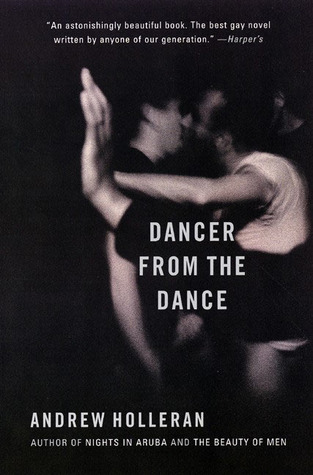
Note: Here is an image of the current paperback cover:
232431
(The image at the top of this review is of the one I first read.)

In closing, I must wonder what younger readers think of this extraordinary book? In many ways it is a period piece, but then love and lust never go out of style.
Profile Image for Lindy.
253 reviews76 followers
June 2, 2018
While it is remarkably rich as a cultural and historical document, I would not recommend anyone read Dancer from the Dance for the purposes of enjoyment, entertainment, or gleaning insights into the human condition: the prose is purple, the characters are one dimensional, the plot is incongruous, and the racism is flagrant.
Profile Image for enzoreads.
183 reviews3,018 followers
January 30, 2025
Ptdrrr les fous du bus c’était hilarant
Profile Image for Tyler  Bell.
247 reviews34 followers
February 23, 2021
3.25/5 Stars


Conflicted...


Listen, I totally understand why this book is heralded as a "gay literature classic". But, I generally rate books on how much I enjoyed it, at to be fair, it was just fine.

This book was published in 1978, pre-AIDS crisis. Getting such an explicit novel like this published at such a time is truly remarkable. Seeing someone actually writing about the emerging gay culture scene in 70's New York is a really important milestone. In fact, reading this book has got me interested in more fiction and non-fiction books about this time in gay history. To be honest, as gay people (especially Gen Z), it's our responsibility to continue to be informed and educated on people who came before us and shaped the way we are able to live our lives now. And I think reading books like this can contribute to that.

All that being sad, I do have some criticisms. For one, the way this novel is structured is a bit strange for me. It's starts out with letters (which were interesting) that leads into the main novel. The actual novel portion is extremely narrative heavy. It seemed to me that Holleran was telling us instead of showing us certain events and character feelings. The characters come alive through their dialogue (especially Sutherland), but we don't get to see how they think. It was hard to understand some characters' intuitions and rationale.

The writing in this novel is really good. It reminds me of an Andre Aciman novel, where I'm able to fly through it yet it's super lyrical and poetic. However, I will say "be cautious" because this novel uses some vocabulary that's not very acceptable anymore. Granted, this was written in '78, but reading it in 2021, I kind of cringed at parts.

In the end, I'm glad I read this because it's part of gay history, and I'm always trying to better educate myself on it. In terms of enjoyment, this book falls flat for me. I'm interested if anyone has recommendations for more gay literature during this era!

If you're curious about where gay culture was in the '70s, then check this one out!
Profile Image for Ricky Schneider.
259 reviews43 followers
May 28, 2021
Dancer from the Dance is considered a classic by many and so I want to give it the respect and reverence it deserves but I have to be honest about my own personal experience and I really struggled to enjoy it. The language was often beautiful and there were some well-drawn metaphors. However, it was also overwrought, self-indulgent and often just plain off-putting. Holleran (a pseudonym) seemed to have some well-intentioned ambition to create a reverent ode to New York City, the 70's gay scene before AIDS and Fire Island. It almost works in that capacity but what could've been a time capsule of the unique culture and beautiful freedom of discovering yourself in one of the greatest cities in the world during a distinct and exciting time was often reduced to a depressing and miserable struggle to exist in a vacuous, misguided and shallow subculture that pins all it's joy on the temporal and superficial while destroying the lives of each of the characters slowly and painfully. The author reminded me of that friend that has a good idea for a joke or a story but that invariably can't stop themselves from running it into the ground and ruining all the interesting and promising aspects of the story with a horrifyingly tasteless punch-line or obnoxious, unnecessary language. The sentences were actually long-winded paragraphs that often rehashed the same point or described the same details incessantly. One of my biggest complaints is that literally every negative stereotype about gay people ever created is perpetuated by this novel. Perhaps at the time it was written, they weren't negative stereotypes yet but then I have to think that this book probably had a hand in popularizing these unfair clichés. The characters are all vapid, sex-crazed, size-obsessed, superficial and selfish. They are also all endlessly tortured by their own existence. That could've been tolerable if the reader could get to know or love them as flawed and struggling human beings. However, the narrative structure employed here filters every character through the recollections of an unnamed narrator that barely knew any of the main protagonists. So you end up getting the mere rumor of the character. You only ever know them as a second or third-hand reputation instead of as a real and complex human. As a result, I didn't connect with any of them. Their choices were treated with casual ambivalence and there was no way of understanding or sympathizing with them. I also felt that this novel is disturbingly confusing carnal lust with actual love. There seems to be no distinction between the two. The ending did bring some sense of nostalgia for a time and place where all these youths were partying their days away and enjoying the freedom of discovering a world filled with others like themselves that they could finally be free around. It did remind me of the debauchery and wild, open possibility of your twenties but in the next sentence it would completely repulse or depress me for no apparent reason other than a misguided attempt at off-color humor or for sheer shock-value. Overall, I appreciate what it is in the canon of queer literature and recognize what it might evoke for those that lived through this time. I am just thankful that I don't live in this version of the world so tainted with superficiality, casual racism, and toxic relationships. I can't help but feel that the legendary 70's gay scene in New York and the colorful characters that inhabited it deserved much better.
Profile Image for Joseph.
93 reviews10 followers
July 22, 2011
first off--it's been forever since i've read a novel. second--it took me no time at all to understand that this was "literature" and not some trashy recounting of promiscuous sex, drugs, and fire island. third--i was blown away with this book. i couldn't help thinking after reading it. the characters were exquisitely developed, and the prose was surprisingly fluid. the characters, and goings-on of the book was raw. i found myself identifying with aspects of all the characters and scenes. after reading it i realized that i need to read it once more to understand further nuances that i may have missed.
Profile Image for Tom the Teacher.
169 reviews60 followers
June 11, 2025
I don't quite get the hype with this one.

Sure, the writing is stylish, but it just gets alarmingly repetitive and hollow after a while. Not a whole lot happens here.

Beautiful, hopelessly romantic gay man struggles in 1970's New York sounds like my kind of read, but ultimately the characters are shallow, the plot is weak, and just...not much happens.

I get the shallowness is the point, it's a critique, potentially satirical, but it just wasn't compelling enough, as I simply didn't care about the characters. They were more like caricatures.

I found the perspective here off putting and oddly detached, and it seemed to focus on the wrong things. I'd have much rather had more details about Malone and Frankie or some background to Sutherland, than a dingy dancefloor or block of flats described over three full pages.

In terms of the gay canon, it doesn't do tortured protagonist as well as, say, The Pillar In The City, What Belongs To You or Giovanni's Room, doesn't have as much substance as The Line of Beauty or Young Mungo or The Great Believers, isn't as sexy and risqué as Call Me By Your Name, and isn't light-hearted enough to rank with the likes of Less or cutesy gay reads.

I found myself skimming towards page 130 or so as I already knew what happened to Malone, and simply wasn't invested by that point. A short book which should've been shorter.
Displaying 1 - 30 of 1,048 reviews

Can't find what you're looking for?

Get help and learn more about the design.