The review of this book comes with the story of how I came to read this book – and that in itself is so incredibly apt for a review of this book. This is a book about books for children. Today I feel as if the real life me, and the me who read this book, was brought into the house of mirrors that this book creates.
A friend of mine at work emailed me last week to ask if I would send her my home address so that she could send me a book – except, she didn’t say that it was to be this book. In fact, she didn’t mention any book. She just said that it was a book she had read, and that it had made her think of me. The joy began there, of course, because how could you not speculate about the book that someone had read and was reminded of you.
Up until the start of this year the two of us would sit in our small office, the office I haven’t sat in since March, almost on the same desk, but each in our corner, with our backs turned to each other on Mondays and Tuesdays. We met during our PhDs. We have chatted books for years now – very nearly a decade.
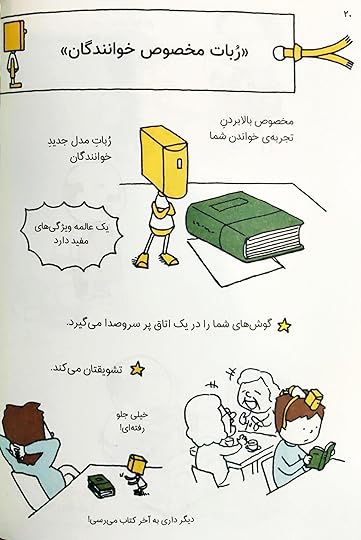
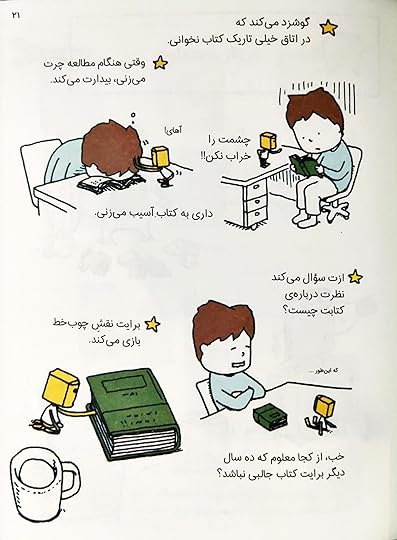
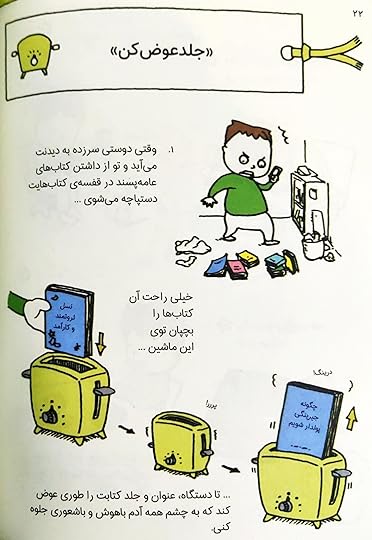
The I Wonder bookstore isn’t like other bookstores. The man who runs it sells books that are about books. This book made me think of so many other books. And not all of those books were the kind of books you might expect to be reminded of while reading a children’s book about books. Some of them where exactly those kinds of books, of course. I thought of Shaun Tan more than once. The illustrations reminded me a little of the Moomintroll books. The oddest thing, while I was reading this, was how much it made me think of Italo Calvino – obviously the first chapter of If on a Winter’s Night a Traveller, but even more so Invisible Cities. This book is written by a Japanese writer and my daughter, who is 30 years old and has been to 30 countries, including Japan, brings Invisible Cities with her every time she travels overseas. It is something about her that I know and treasure, and my knowing this about her is one of the single most precious things I possess.
This morning in the shower I was listening to Ike and Tina Turner singing the Beatles’ Come Together, and I suddenly thought that Lou Reed would have done a fabulous version of that song, so I tried it, and I think it really could have worked, with Lou’s emphatic, spoken word singing style saying ‘toe-jam football’. Sometimes I try to sing famous songs in the shower by one artist as if they had been sung by a completely different one. Van Morrison singing Dancing Queen. Tom Waits singing Miss You. Jimmy Hendrix singing One More Cup of Coffee. There are parts of this book that are just like that.
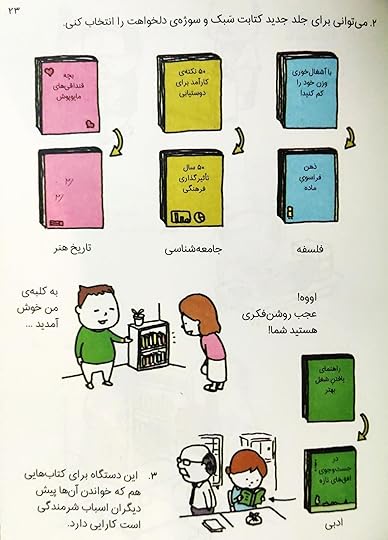
When readers get married in the world that is the world of this book (that is the world of the imagined bookstore full of books about books that is this book), there necessarily has to be a special book-themed wedding ceremony. And it is just as necessary that the ceremony connects readers and books as it connects the two people getting married. Two parts of this ceremony struck me. One involved reading to the assembled guests a history of the books that the lovers themselves had read (how better to know if they will really be compatible?) and the other involves them together, hand-on-hand, placing a bookmark into a book.
A long time ago, I almost finished writing a novel. In that novel a young man catches a leaf in Autumn and gives it to a woman who has been his lover, but whom he is not sure he is in love with. She places the leaf into a book of poetry they have been studying at school together, and then years later it troubles him that he never knew which page of the book she placed the leaf into or which poem it rested beside.
Perhaps it could go without saying that I will need to mention Borges here? Although, perhaps not. After all, this is a Japanese children’s book – how likely is it that anyone would mention Borges while reviewing a Japanese children’s book? Except that in a valley a rich man has built a library, a library so very tall. Until one day the valley began to flood, and the library began to fill with water, so that now you can only reach the books in the library by boat. The shelves that are under water remain filled with books, but you can never read any of these again. You can only read the books on the shelves you can reach across to from your boat. One day these books will also sink beneath the water and in their turn become unreachable. The locals, looking down on the valley and at the library and at the rising water, speculate about the books that are stored on the very highest shelves of this slowly submerging library. And they wonder when they will be able to reach these upper most books and what stories these might contain. How could I not mention Borges?
Tell me, is it absurd to imagine a man buying an expensive fountain pen and a bound, blank paged notebook, one that looks like something you might buy from an antiquarian bookshop, and for him to write in this notebook advice to a stranger he does not know and feels certain he will ever meet? If I was that man, and I had done such a thing, I would take my small, handwritten book to a second-hand bookshop or to an exchange library. I would search the shelves for two books I’d read and loved. And then I would sneak my book in snug between them, in the hope someone who had read and loved those two books would trust the writer of this curious old looking book waiting there on the shelf between them. I mention this because I think my favourite line in this book is where the book seller, after retrieving some books he believes might appeal to someone who has entered his store inquiring after books on a particular topic, says, “How about these? Please let me tell you about them…” If any line in this book might remind me of me, I think that line might be it.
The worst of children’s books have something in common. They assume that children are as stupid as the people who watch television. And so, they take it as read that the children won’t understand and that they will need things explained. As if there was ever a joke that was improved by being explained. That children won’t be able to tell the difference between the romance of what books ought to be like, and the dream that perhaps one day happily-ever-after will be the first line of the rest of their lives. The worst of books think joy is something that can be explained to children. The idea of an adult explaining joy to a child makes me smile.
This is such a delightful book. It has sent me at running pace through shelves and cupboards and cabinets, and all of them filled with books, both real and imagined. I really can’t thank you enough, Caroline – for this gift of pure delight.