She Happiness is eating a little grass at sunrise, playing with the children until lunchtime, doing a little exercise after lunch, eating a little more grass, chatting with her neighbor Mrs. Miller in the evening, and then having a lovely long sleep.
If she had more time? She would eat a little grass in the morning, play with the children until lunchtime, do a little exercise after lunch, eat a little more grass, chat with her neighbor Mrs. Miller in the evening, and then have a lovely long sleep.
And if she won a million dollars? She would eat a little grass . . .
As a child Jutta was born in 1955, in Hamburg. She went to school for ten years and describes it as “a necessary evil”.
As an adult Jutta is one of the best-known picture-book artists and cartoonists in Europe. She currently lives in Germany.
As an artist When asked where the idea for Opas Engel (the original German title of Grandpa’s Angel) Jutta commented, “At the time I had my drawing table at the film studio of a friend and was actually looking for a funny story for a film. My friend’s studio had a big window looking onto the street and we would watch how the school children plodded along – sometimes deep in thought. Watching this, I couldn’t help thinking that all these children usually do arrive safely. Then I had the idea for the guardian angel.” Grandpa’s Angel however, was not conceived as a story for children from the beginning. Jutta added, “I don’t like that; I believe that stories are like vessels. They offer a form, but every reader – no matter whether young or old – fills it anew with their experiences and their individual stories.”
Give me an absolutely ridiculous yet interesting premise and my inner child is totally on board.
What is happiness, described from a sheep's point of view.
Is it for adults? Is it for children??? I don't know! A 26p picture book. Deep. Funny. Could not be simpler. And the key to happiness is...
----------------------------------------------- PERSONAL NOTE: [2002] [26p] [Inspirational] [Conditional Recommendable] -----------------------------------------------
Dame una premisa absolutamente ridícula pero interesante y mi niño interior se manda de una.
Qué es la felicidad, descripta desde el punto de vista de una oveja.
Es para adultos? Es para niños??? No lo sé! Un libro de imágenes de 26p. Profundo. Gracioso. No podría ser más simple. Y la llave para la felicidad es...
----------------------------------------------- NOTA PERSONAL: [2002] [26p] [Inspiracional] [Recomendable Conditional] -----------------------------------------------
November 16, 2019: Such a lovely book. Such a simple message, and takes all of three minutes to read. “What is happiness?” asks the dog to the old ram. A charming little tale follows. Happiness is essentially enjoying the simple things in life, which no amount of time or money can change. Perhaps it’s all in the execution, because writing it out this way makes it sound so corny and twee (this IS a children’s book after all) but it makes me feel warm and all aglow, because in a complicated and often frightening world, such messages are very comforting.
*****
Read in August 2011. A GR reviewer reminded me what a lovely, life affirming little book this is. Time to borrow it again from the library for a refresher, methinks.
Here is my original review: A dog asks a wise old ram to explain what happiness is, the wise one answers by telling him the story of Selma: every morning at the break of dawn, she eats a little bit of grass; she gives speech lessons to her children till noon; she does a little bit of exercise during the afternoon; then she eats a bit more grass; in the evening, she has a chat with Mrs. Meier; at night she sleeps a deep peaceful sleep. A wonderful little story about the small pleasures that give life all its meaning. The simple pen & ink illustrations with beautiful colouring are good fun. An instant favourite.
Tiny book with a big message. What is happiness? Loved this little gem by Jutta Bauer. It is simple, humorous and enlightening. Lovely water colour illustrations.
This one is a 3.5 for me, and I would have adored it as a child. As an adult, it made me think and smile to myself about how happiness is defined and measure. Originally published in German, the book only takes a couple of minutes to read, but its message lasts far longer than that and is a good one for all of us. In search of the meaning of happiness, a dog approaches a ram, who tells him the story of Selma. He describes how she spends her days, and then what her reaction was to the question of what she'd do if she had more time or received a million dollars. To many readers' surprise, Selma would spend each day exactly as she had before, demonstrating that it's the simple pleasures in life that make us happy as well as how we use our time. I appreciated the repetitive language in the story as nothing at all changes for Selma in all three stories, no matter her circumstances. The book is a tiny philosophical treasure that nudges readers to think about their own days and how they spend them. Perhaps happiness and contentment are more easily achieved than the dog thought.
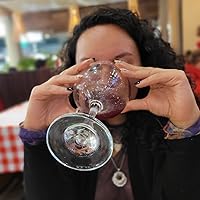
I love this book. I love this book sooo much. I bought it from Ev at Mother Tongue for those folks who remember our local and wonderful feminist bookstore which closed its doors too soon (thank you for your years of service to our community Ev and Laura). I bought it because Ev recommended it and whenever Laura or Ev recommended anything they were never wrong (Thich Nhat Han, Alison Bechdel’s Fun Home). Like so many of the books they recommended, it was lost on me initially, and it didn’t really speak to me until the pandemic. It features a dog who just can’t take it anymore (he’s pictured, but very backgrounded, with a glass of wine looking overwhelmed). He goes to consult the wise ram, and asks him: “What is happiness?” The wise ram tells him the story of Selma. Selma is a sheep (and seemingly a single mother), who, every morning at sunrise, eats a little grass. Then she plays with her children, after which she gets some exercise. Then she eats a little more grass. Then she has a little chat with her pal the vulture in the afternoon, before finally falling fast asleep. A journalist appears on the scene to ask her what she would do if she had more time. Into the microphone, she says”, well, I would eat a little grass at sunrise, play with my children until lunchtime, exercise in the afternoon, eat some more grass, have a little chat with Mrs. Miller in the evening, and finally fall fast asleep.” And if you won a million dollars Selma? Well, you guessed it. Selma explains she’d love to repeat the same routine. I don’t know why this book tickles my funny bone so much. But it offers such a positive spin on repetition! I understand that this degree of sameness is not for everyone, the pandemic has made it very difficult to have change in our days. And yet, there is some deep wisdom in Selma about parenting. There are so many times where I’ve been playing with my children, dying of boredom inside and watching the clock, while simultaneously already mourning that some day they will be grown up and won’t have time to play with me for hours. In this moment, where there is a lot of repetition and sameness, it feels so helpful to me to take in this book about the pleasures of routine. If this book makes you want to throw it out the window and shout: I didn’t even want to watch Groundhog Day the movie, totally cool too. I can accept it’s not for everyone.
A dog at the end of his rope (pictured at a bar with a half-empty glass of wine) asks the wise ram what happiness is. The ram tells the dog the story of Selma. Selma was a sheep. Every morning she would eat a little grass, play with her children until lunchtime, exercise in the afternoon, eat some more grass, have a little chat with Mrs. Miller (a vulture), and finally, fall fast asleep. A reporter asks her what she would do if she had more time, and she replies with the exact same words: eat a little grass, etc. When asked what she would do if she won a million dollars, she replies with the same refrain. Each time the illustrations are just a tiny bit different, but essentially her life is the same – each activity gives her joy and sustenance. Bauer’s cartoon animals have a quiet dignity, which is comic nonetheless, with Sempé-like expressiveness. The simple background of each page and the repetitive text keep the focus on the sheep’s simple life. This German import sends a sweet message about the value of choosing joy. Not exactly a criticism, but this is more of an ironic gift book for teens or adults. Its small size would cause it to get lost on picture book shelves, and young children already know how to find joy. It’s the adults who need reminding!
SELMA is a simple book that seeks to tackle a complex topic- what is happiness? The answer goes back to Selma, a sheep who has a daily routine that she would not change, even if she had lots of money or more time. Her life is filled with simple pleasures, like playing with her children, eating, and exercising. This is one of those books that may be equally targeted at parents and children.
What I loved: I really appreciated the messaging of the book - to be happy with what you have and enjoy the things that make everyday life so great. It is sometimes fun to imagine what you would do if you won the lottery - but this book posits that happiness would be wanting to do the same things you already do even after you win lots of money or have more time. The simple and repetitive story will appeal to young readers, who may enjoy the many pictures of Selma and other sheep. The philosophical topic will keep parents busy as they think about the themes of the story.
Final verdict: A book with a lesson for parents and children, SELMA is an interesting picture book that helps the reader to imagine the meaning of happiness.
Please note that I received a review copy. All opinions are my own.
Quiero ser como Selma. Punto. Es mi “roll model”. No tarda mucho un buen ilustrador en convertirse también en el autor del texto de una obra.. Empiezan poniéndole cara y color a las historias de otro y de pronto ya tienen las suyas, un lujo que se pueden dar ellos, pero no los autores que carecemos de talento en las manos. Este es el caso de Jutta Bauer, famosa por ilustrar el trabajo de Christen Borie y Christine Nostlinger, y que pronto sacó su propia obra, uno de mis libros favoritos. Selma es una oveja casi zen, con un equilibrio de vida entre su salud, las relaciones significativas, el servicio y el gozo que es digna de admirarse y replicarse. Mantiene su sencillez y sabiduría natural a pesar de la enorme notoriedad y riqueza que adquiere. Las ilustraciones están llenas de humor. Un libro regalable para todas las edades. #Alemania #Escritoras #Favoritos #LibroÁlbum #LIJ
Jutta es una escritora alemana ganadora del Hans Christian Andersen de ilustración (2010) que en el 97 publicó Selma, libro que escribió en una noche como un regalo para sus amigos.
Así que lo que leemos es un presente ¿el presente? ¿Lo que disfrutamos cada día? ¿Lo que seguiríamos haciendo siempre que podamos? Seguramente cada lectora tendrá una sensación y una respuesta diferente. Lo que es seguro es que esta historia, que surge porque un perro va con el carnero sabio para saber ¿qué es la felicidad?, nos plantea preguntas y los días de Selma.
Leerlo con niños y niñas me regaló una experiencia adicional, unos ojos menos cansados, corazones con otras expectativas y risas e ideas...
La vida de Selma puede ser muy simple, tan simple como comer hierba, hablar con niños, hacer ejercicio, tener una buena conversación... nada fuera de lo común, ni muy distinta a la de cualquiera de nosotros. Pero, ¿y si tuvieras más tiempo en el día? ¿Y si te ganaras la lotería?
Una pequeña reflexión que considero es más para los adultos que para los peques; sin embargo, pasarán un buen rato porque las ilustraciones son muy bonitas y el texto muy conciso (además es pequeño y de pasta dura :P).
Esas pequeñas cosas, esas que parecen las más simples son las que le dan sentido a la vida y no hay que darlas por sentado.
The simple message of Selma is something everyone needs a little of in their life: The idea of being content. Selma doesn't need much to be happy besides eating grass and spending time with her kids. Even when presented with the idea of having a million dollars, Selma would choose to just keep living her quiet and cozy life. While I disagree with the message of never seeking new opportunities out a little bit, thats just me and my life. It works for Selma and it could work for you too. For me this book showed me to balance being happy where I am while still trying to better things. Selma is a happy sheep who is someone I think we could all look up to.
Oops, this is not in English on openlibrary by this title. It's Ewe Too Can Be Happy. And imo it's full of it. I'm all for the simple life, but it's a fantasy. No matter how disengaged one tries to be, something comes up. And it's a hard lesson to learn, for those of raised on books with the message that Selma teaches us.
Brevísimo cuento, apto para todos. Sugiero acompañar la lectura del niño y ayudarle a interpretar, pues las imágenes le dan más significado al texto. El mensaje es, adrede, altamente interpretable pero muy bueno, en todo caso. Tal vez el lector descubra lo que es la felicidad o tal vez no, pero sin duda podrá ver un camino o, al menos, la actitud más conveniente para tomar o seguir una senda ya escogida en procura de la felicidad.
Tiny and simple, this book looks at what happiness means.
Selma is a sheep who has a set routine. When asked what she would change if she had more time or more money, Selma the sheep wouldn't change a single thing. The hard part is filling your day with things that you wouldn't change even if you could.
There is a lot to think about after reading this shorty.
Un libro sobre Selma, la oveja, quien tiene una vida simple, pero que adora. Al parecer ella no le cambiaría nada y creo que es bastante simple y amena; una historia sobre la felicidad y la sabiduría de alguien que ya encontró su vida ideal.
It is the kind of book that teaches and questions children and adults at the same time. It might open a deep conversation between caregivers or parents and children. I loved it. It just needs a couple of minutes.
Y si te preguntaran, ¿qué es la felicidad?¿Qué responderías tú? Esa es justamente la pregunta que le hacen a la oveja Selma, y aprendemos lo que es la felicidad para una "simple" oveja. Pero creo que al final, lo más importante es darnos cuenta que la felicidad está en las cosas sencillas.
Me lo regaló una alumna por mi cumpleaños y es un libro que conservaré hasta que tenga hijos. A través de una fábula, se nos cuenta que la felicidad es lo que hacemos cada día y lo que no cambiaríamos por nada.