Religion remains an important influence in the world today, yet the social sciences are still not adequately equipped to understand and explain it. This book advances an innovative theory of religion that goes beyond the problematic theoretical paradigms of the past. Drawing on the philosophy of critical realism and personalist social theory, Christian Smith explores why humans are religious in the first place―uniquely so as a species―and offers an account of secularization and religious innovation and persistence that breaks the logjam in which religious scholarship has been stuck for so long. Certain to stimulate debate and inspire promising new avenues of scholarship, Religion features a wealth of illustrations and examples that help to make its concepts accessible to readers. This superbly written book brings sound theoretical thinking to a perennially thorny subject, and a new vitality and focus to its study.
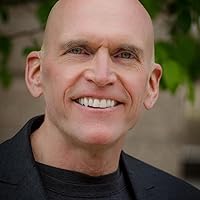
Christian Smith is the William R. Kenan, Jr. Professor of Sociology and Director of the Center for the Study of Religion and Society at the University of Notre Dame. Smith's research focuses primarily on religion in modernity, adolescents, American evangelicalism, and culture.
Overall, Smith makes interesting, thought-provoking, and believable claims about what religion is and why it is a pervasive human phenomenon. I find his use of social scientific methods compelling, and he walks the line between secular/academic dismissal of religion and claiming the reasonability of religion (while analyzing it) very well. The bulk of the argument is really in the first chapter, and everything after that feels less necessary, except to follow his arguments to their logical ends. He sets out to write for both academic and public audiences: I'm not sure that he writes well for both at all times, but he does seem to keep both in mind -- though a little theory heavy at times, I think this book is reasonably accessible.
This is a sociological evaluation of the nature and usefulness of religion to homo sapiens. After defining religion, the author goes on to describe why religion is so prevalent by enumerating the direct and indirect benefits to humankind. Religion is seen as a net benefit to the species, which some may want to argue with.
The epistemic status of religious claims is not evaluated except for a couple a paragraphs analyzing why some people are not religious, which leads me to question the entire endeavor.
While an interesting read if you are interested in the grip that religion has on human culture; if you need to work from the reality of religions claims, you may be disappointed.
I really enjoyed this book. It is scholarly, but not so academic as to not be enjoyable. Smith has a certain methodology that is an interesting take on religion, focusing on practices and universal goals. He explains concepts and then does a nice job offering examples, as well as graphs and charts where applicable. As a religious person myself, I enjoyed seeing religion from a sociological perspective.
Taking the stance of critical realism and seeing humans the primary agent in human social lives, the author gives a timely overall reflection on the field of religion. Good to have this near the end of the 2010s. The main refreshing part is that the author takes into account of the recent changes in the field of religious studies --including the much better understanding of "other" religious traditions -- and seeks to build a better theoretical ground to approch religions empirically.
This book is academic, which makes it sometimes tedious to read. But if you can stay with it, it's well worth it. I especially appreciated that it's thorough, thoughtful, and even-handed, and that it maintains an inquiring attitude throughout, with no agenda or axes to grind.
Bit too academic for my casual reading, and sometimes felt like a slog. But some interesting points I’ll be chewing on. Mainly, the sociological trend toward religious moderation/mediocrity.