

What do you think?

弟の夫 [Otōto no Otto] #3-4
My Brother's Husband, Vol. 2
The concluding volume in the story of Yaichi, his daughter Kana, and how their meeting Mike Flanagan - Yaichi's brother-in-law - changes their lives and perceptions of acceptance of homosexuality in their contemporary Japanese culture.
As Mike continues his journey of discovery concerning Ryoji's past, Yaichi gradually comes to understand that being gay is just another way of being human. And that, in many ways, remains a radical concept in Japan even today. In the meantime, the bond between Mike and young Kana grows ever stronger, and yet he is going to have to return to Canada soon—a fact that fills them both with impending heartbreak. But not before more than a few revelations come to light.
As Mike continues his journey of discovery concerning Ryoji's past, Yaichi gradually comes to understand that being gay is just another way of being human. And that, in many ways, remains a radical concept in Japan even today. In the meantime, the bond between Mike and young Kana grows ever stronger, and yet he is going to have to return to Canada soon—a fact that fills them both with impending heartbreak. But not before more than a few revelations come to light.
352 pages, Hardcover
First published February 1, 2018
About the author
Gengoroh Tagame
108 books594 followersGengoroh Tagame is a Japanese manga artist who specializes in gay BDSM erotic manga, many of which depict graphic violence. The men he depicts are hypermasculine, and tend to be on the bearish side.
Born into a family descended from samurai, Tagame began his career as a manga artist in 1982, while he was studying graphic design at Tama Art University (多摩美術大学). His works have been published in several Japanese gay magazines, including Sabu, G-men and SM-Z. Since 1986, he has used the pen-name Gengoroh Tagame, and since 1994 Tagame has lived off the profits of his art and writings. In recent years, Tagame has edited a two volume artbook series about the history of gay erotic art in Japan from the 1950s to the present, 日本のゲイ・エロティック・アート (Nihon no gei, erotikku āto, Gay Erotic Art in Japan) volumes 1 and 2.
All his works contain "virile males, or youths, and their apprenticeship of physical and mental submission". Works of his include: Jujitsu Kyoshi at B Product; Emono, Shirogane no Hana (3 vol.) and Pride (3 vol.) at G-Project.
His manga Gunji (軍次) was translated into French in 2005, followed by Arena in 2006 and Goku in 2009. An artbook of his works has also been published in France by H&O Editions. An exhibition of his works was held in France in May 2009. Tagame is openly gay.
Tagame has been called the most influential creator of gay manga in Japan to date, and "the most talented and most famous author of sado-masochistic gay manga". Most of his work first appeared in gay magazines and usually feature sexual abuse. Tagame's depiction of men as muscular and hairy has been cited as a catalyst for a shift in fashion amongst gay men in 1995, away from the clean-shaven and slender bishōnen stereotypes and towards a tendency for masculinity and chubbiness. Tagame's work has been criticised by notable gay manga writer Susumu Hirosegawa as "SM gekijō" (S&M theater) for its violence and lack of complex storylines.
A small amount of Tagame's work has been licensed in English; a short story, "Standing Ovations", was included in the third issue of the erotic comics anthology Thickness, and in July 2012, Picturebox announced a short story collection, The Passion of Gengoroh Tagame, for 2013 release, which will be the first completely bara work published in English in a print format. The book will collect short works spanning 15 years of Tagame's career, including a new story commissioned especially for the book by book designer Chip Kidd.
(notes : everything else can be read on wikipedia)
Born into a family descended from samurai, Tagame began his career as a manga artist in 1982, while he was studying graphic design at Tama Art University (多摩美術大学). His works have been published in several Japanese gay magazines, including Sabu, G-men and SM-Z. Since 1986, he has used the pen-name Gengoroh Tagame, and since 1994 Tagame has lived off the profits of his art and writings. In recent years, Tagame has edited a two volume artbook series about the history of gay erotic art in Japan from the 1950s to the present, 日本のゲイ・エロティック・アート (Nihon no gei, erotikku āto, Gay Erotic Art in Japan) volumes 1 and 2.
All his works contain "virile males, or youths, and their apprenticeship of physical and mental submission". Works of his include: Jujitsu Kyoshi at B Product; Emono, Shirogane no Hana (3 vol.) and Pride (3 vol.) at G-Project.
His manga Gunji (軍次) was translated into French in 2005, followed by Arena in 2006 and Goku in 2009. An artbook of his works has also been published in France by H&O Editions. An exhibition of his works was held in France in May 2009. Tagame is openly gay.
Tagame has been called the most influential creator of gay manga in Japan to date, and "the most talented and most famous author of sado-masochistic gay manga". Most of his work first appeared in gay magazines and usually feature sexual abuse. Tagame's depiction of men as muscular and hairy has been cited as a catalyst for a shift in fashion amongst gay men in 1995, away from the clean-shaven and slender bishōnen stereotypes and towards a tendency for masculinity and chubbiness. Tagame's work has been criticised by notable gay manga writer Susumu Hirosegawa as "SM gekijō" (S&M theater) for its violence and lack of complex storylines.
A small amount of Tagame's work has been licensed in English; a short story, "Standing Ovations", was included in the third issue of the erotic comics anthology Thickness, and in July 2012, Picturebox announced a short story collection, The Passion of Gengoroh Tagame, for 2013 release, which will be the first completely bara work published in English in a print format. The book will collect short works spanning 15 years of Tagame's career, including a new story commissioned especially for the book by book designer Chip Kidd.
(notes : everything else can be read on wikipedia)
Ratings & Reviews
Friends & Following
Create a free account to discover what your friends think of this book!
Community Reviews
Displaying 1 - 30 of 1,189 reviews

June 17, 2019
Love starting my morning off with a good cry this is fine I'm fine 😭😭😭😭😭😭

October 16, 2018
The second of two volumes essentially about a family in grief. Yaichi loses his identical brother, Ryoji, and he also becomes divorced, in a relatively short period. The death and grieving are complicated by the fact that he and his brother were estranged, for reasons that begin to be clear in the first volume: Yaichi has never fully understood or accepted anything about his brother being gay. Yaichi also has a little daughter, Kana. One day his brother’s husband, Mike, a big bearish Canadian, shows up at his door to visit.
In the first volume there are uncomfortable moments in the first volume as we see that Yaichi, while not exactly shunning his brother, had been (quietly) bigoted. Mike is great, very likeable and always positive, and Kana also his very accepting and loving. The two of them form a bond that makes Yaichi consider his own actions.
In the concluding volume Kana is the same irrepressible kid we love, and Mike remains who is, but Yaichi changes, as a kind of model for us of acceptance. This is a quietly and not unexpectedly positive, but still moving, volume where small, good things happen (I mean there is not a lot of drama); for instance, Yaichi confronts Kana’s homeroom teacher about protecting her from bullying because she has a gay uncle. In the process it is Yaichi who educates the teacher. In another scene, Yaichi’s ex points out that they have become a family—a divorced couple who love their daughter together, including now the husband of their lost brother and uncle. Okay, so what if I’m crying, shut up.
Gengoroh Tagame's Goodreads biography tells us “he is a Japanese manga artist who specializes in gay BDSM erotic manga, many of which depict graphic violence. The men he depicts are hypermasculine, and tend to be on the bearish side.” Mike fits this category, but in no other sense would this sweet tale appear (I haven't read any of the rest of it) to be typical of Tagame’s work, which was meant for a particular gay audience. As I see it, this may be primarily written for a straight or cis-gendered audience, who are essentially Yaichi, learning to appreciate what it might mean to be gay in Japanese—or any other—society. Mike has lost his husband, the love of his life. Ryoji has lost his brother. Part of his grieving involves learning to accept and love the man his brother loved, and to accept him as loving and losing as he has loved and lost his brother (and wife, to some extent). My Brother’s Husband is about grief, but it’s also about love, which knows no boundaries.
In the first volume there are uncomfortable moments in the first volume as we see that Yaichi, while not exactly shunning his brother, had been (quietly) bigoted. Mike is great, very likeable and always positive, and Kana also his very accepting and loving. The two of them form a bond that makes Yaichi consider his own actions.
In the concluding volume Kana is the same irrepressible kid we love, and Mike remains who is, but Yaichi changes, as a kind of model for us of acceptance. This is a quietly and not unexpectedly positive, but still moving, volume where small, good things happen (I mean there is not a lot of drama); for instance, Yaichi confronts Kana’s homeroom teacher about protecting her from bullying because she has a gay uncle. In the process it is Yaichi who educates the teacher. In another scene, Yaichi’s ex points out that they have become a family—a divorced couple who love their daughter together, including now the husband of their lost brother and uncle. Okay, so what if I’m crying, shut up.
Gengoroh Tagame's Goodreads biography tells us “he is a Japanese manga artist who specializes in gay BDSM erotic manga, many of which depict graphic violence. The men he depicts are hypermasculine, and tend to be on the bearish side.” Mike fits this category, but in no other sense would this sweet tale appear (I haven't read any of the rest of it) to be typical of Tagame’s work, which was meant for a particular gay audience. As I see it, this may be primarily written for a straight or cis-gendered audience, who are essentially Yaichi, learning to appreciate what it might mean to be gay in Japanese—or any other—society. Mike has lost his husband, the love of his life. Ryoji has lost his brother. Part of his grieving involves learning to accept and love the man his brother loved, and to accept him as loving and losing as he has loved and lost his brother (and wife, to some extent). My Brother’s Husband is about grief, but it’s also about love, which knows no boundaries.

October 17, 2018
SO GOOD IM CRYING. Gonna buy this for my collection and I rarely buy graphic novels because they’re just so damn expensive but omg it’s amazing.

July 4, 2020
Just sobbed my way through the last 50 pages and now I’ll never be the same. I miss Mike, Kana and Yaichi already 🥺🥺🥺🥺🥺

August 30, 2023
Had me crying and in my feelings. I want more! 😭
I want another volume or two of Yaichi and his daughter, Kana, visiting Mike in Canada so he has the opportunity to get to know his brother through Mike's eyes, though this volume ended things on a pretty perfect note.
I just didn't want to leave this family at all. I became so immersed in their lives.
I'll just be reviewing Volume 1 & 2 here.
Yaichi is a single father, a twin. His brother Ryoji past away and Yaichi never really got the chance to get to know his brother in his adult years, though they were pretty close when they were young.
But when he found out his brother was gay, there was some unintentional distance that was created.
Now that his brother has past away, Mike, his husband, goes back to Japan, to meet his husband's family, as that was a promise they made to one another. They just never managed to fulfil it and Yaichi is forced to face his past.
This whole story was just heartwarming and tender. It incorporated so many things. Such as grief, fatherhood, Yaichi confronting his own biases, it being challenged and that changing and adapting for the better, especially through the lens of his daughter, Mike gaining a family in his husband's family, sexuality and the challenges in coming out and so much more.
It was all so moving and beautiful and I didn't want it to end. 🥹
I want another volume or two of Yaichi and his daughter, Kana, visiting Mike in Canada so he has the opportunity to get to know his brother through Mike's eyes, though this volume ended things on a pretty perfect note.
I just didn't want to leave this family at all. I became so immersed in their lives.
I'll just be reviewing Volume 1 & 2 here.
Yaichi is a single father, a twin. His brother Ryoji past away and Yaichi never really got the chance to get to know his brother in his adult years, though they were pretty close when they were young.
But when he found out his brother was gay, there was some unintentional distance that was created.
Now that his brother has past away, Mike, his husband, goes back to Japan, to meet his husband's family, as that was a promise they made to one another. They just never managed to fulfil it and Yaichi is forced to face his past.
This whole story was just heartwarming and tender. It incorporated so many things. Such as grief, fatherhood, Yaichi confronting his own biases, it being challenged and that changing and adapting for the better, especially through the lens of his daughter, Mike gaining a family in his husband's family, sexuality and the challenges in coming out and so much more.
It was all so moving and beautiful and I didn't want it to end. 🥹

April 19, 2019
1.) My Brother's Husband Volume 1 ★★★★★
2.) My Brother's Husband Volume 2 ★★★★★
-----------------------------------------------
I AM CRYING IN THE CLUB RIGHT NOW
2.) My Brother's Husband Volume 2 ★★★★★
-----------------------------------------------
I AM CRYING IN THE CLUB RIGHT NOW

May 7, 2019
It took a while for me to get into the second and final volume of Gengoroh Tagame’s superb series, My Brother’s Husband, because not a whole lot initially happens (the whole onsen episode). And, really, not much happens afterwards either - in that regard, this feels like a superfluous book. Yaichi has accepted his dead brother Ryoji’s homosexuality and he and his daughter Kana have become friends with his brother-in-law, burly Canadian bear Mike - that’s the arc and it was done by the end of Volume 1.
Still, there’s so many feels later on in this book that, even if it does seem a little unnecessary, it’s impossible not to like. Seeing Yaichi, Kana and Mike’s relationship blossom further is heart-warming and Yaichi continues to grow as a person. From someone who turned his back on his brother for being gay, he’s now sticking up for Mike after a schoolteacher is alarmed that Kana’s uncle is living, what is still in Japan, a taboo lifestyle. And Yaichi seeing the photos of his brother’s wedding and how his bigotry led him to miss out on such an important occasion - *bawls*!
That whole final half is one long sob-fest so fair warning, guys. Mike listening to the closeted gay kid and giving him advice, Yaichi taking Mike to his parents’ graves, Mike saying his goodbyes to both Kana and Yaichi individually - this manga is all heart.
My Brother’s Husband, Volume 2 is a bit overlong with a slow beginning but Gengoroh Tagame’s crafted a modern masterpiece with this series. Here’s hoping the real audience for this title - close-minded Japanese - learn to become more accepting and loving like Yaichi. Nothing good ever came from prejudice.
Still, there’s so many feels later on in this book that, even if it does seem a little unnecessary, it’s impossible not to like. Seeing Yaichi, Kana and Mike’s relationship blossom further is heart-warming and Yaichi continues to grow as a person. From someone who turned his back on his brother for being gay, he’s now sticking up for Mike after a schoolteacher is alarmed that Kana’s uncle is living, what is still in Japan, a taboo lifestyle. And Yaichi seeing the photos of his brother’s wedding and how his bigotry led him to miss out on such an important occasion - *bawls*!
That whole final half is one long sob-fest so fair warning, guys. Mike listening to the closeted gay kid and giving him advice, Yaichi taking Mike to his parents’ graves, Mike saying his goodbyes to both Kana and Yaichi individually - this manga is all heart.
My Brother’s Husband, Volume 2 is a bit overlong with a slow beginning but Gengoroh Tagame’s crafted a modern masterpiece with this series. Here’s hoping the real audience for this title - close-minded Japanese - learn to become more accepting and loving like Yaichi. Nothing good ever came from prejudice.

January 26, 2020
4 Stars
Again, this continues to shed light on the lack of acceptance that’s still prevalent but also delivers the message that there is an opportunity for change and the ability to heal through love.
Again, this continues to shed light on the lack of acceptance that’s still prevalent but also delivers the message that there is an opportunity for change and the ability to heal through love.

October 12, 2018
Wish 👏 there 👏 was 👏 another 👏 one.

May 19, 2019
The second volume of this Manga was much more restrained than the first installment that felt too didactic, yet delved deeper into the difficulties and discomfort with which homosexuals are being faced and the awkward self-consciousness they feel due to the constant social and moral shunning by their straight fellow man.
A book with a heart and a voice.
A book with a heart and a voice.

January 8, 2019
Rating: 4* of five
The Publisher Says: The concluding volume in the story of Yaichi, his daughter Kana, and how their meeting Mike Flanagan--Yaichi's brother-in-law--changes their lives and perceptions of acceptance of homosexuality in their contemporary Japanese culture.
As Mike continues his journey of discovery concerning Ryoji's past, Yaichi gradually comes to understand that being gay is just another way of being human. And that, in many ways, remains a radical concept in Japan even today. In the meantime, the bond between Mike and young Kana grows ever stronger, and yet he is going to have to return to Canada soon--a fact that fills them both with impending heartbreak. But not before more than a few revelations come to light.
SECOND VOLUME IN SERIES BEGUN IN MY BROTHER'S HUSBAND vol. 1
My Review: Yaichi's gay twin, Ryuji, married Canadian bear Mike after emigrating to escape his repressive, hidebound culture. He promised, swore!, he would have his twin—his only remaining family—know Mike as his husband. Then, as is the way with sworn promises, Ryuji died. Mike, to make his dearly beloved husband's promise come true, visits Yaichi and his daughter Kana in their home.
We pick up the story in medias res, this being a two-volume omnibus edition of the manga. Yaichi, a lovely man (for legal purposes), has his most acute attack of the collywobbles yet. Mike mentions that it's possible Kana will be a lesbian. These two pages made me laugh so hard I almost choked:
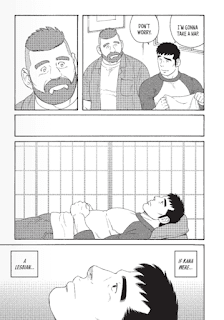

Poor Yaichi! What's a traditional Japanese father to think? My daughter with a woman?! HEEELLLP!!!!
The rest of the story is Yaichi coming to value and care for Mike, whose love for his brother is strong. They've lost so much, they've got to come to peace with each other. Mike has no problem with this, since he's been out a long time; Yaichi finds himself saddened that he didn't try harder to connect with Ryuji while he was alive because now he can't. All while being a divorced custodial dad to a little girl. Who has fallen utterly in love with her big Canadian bear-uncle.
A very telling scene comes when Mike goes to Kana's school, to be met with hostility and suspicion. It's really amusing at first because Mike doesn't see it, but it becomes a major Thing between Yaichi and his inner demons. It provides Yaichi with a chance to work through what he thinks about Mike's gayness and what Japan as a whole thinks about gayness. The men resolve their desire to be close to each other over a look at Mike's photo album, including wedding pictures. Yaichi realizes how much he will miss Mike as he's about to leave, and Kana asks for a sworn promise that Mike will visit again, or she gets to come to Canada to visit Mike.
And now I venture into personal territory. My Young Gentleman Caller, Rob, is 34 (thirty-four) years younger than I am. We might as well be Canadian and Japanese, since I understand his culture about as well as he does mine. The Moon landing was 50 years ago. I remember it vividly. I had to YouTube footage for Rob, who had sort-of heard about it. His FATHER was born two years after it happened. So we both relate to the "...say what now?" moments between Yaichi and Mike.
We talked at some length about the way it feels to be so different from someone you care very much about, and how that puts strains on one's inner sense of peace and quiet. We both worry about the other's feelings being hurt when we're being our separate selves...we both worry about the way our beloved handles the need we have to be understood. Am I trying hard enough, too hard, do I even know what he means? And it was this manga that called that conversation into being.
If you don't read the series for any other reason, read it for that one. It is good enough to start a life-altering conversation between people too different to know where or how to begin to do that for themselves.
THAT's good storytelling!
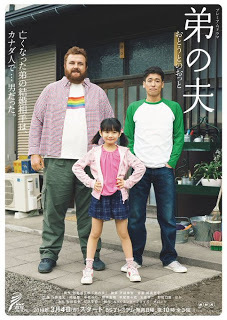
Also! Extra! May the US be blessed with the live-action TV series! Here's a promo photo of the amazing casting:
The Publisher Says: The concluding volume in the story of Yaichi, his daughter Kana, and how their meeting Mike Flanagan--Yaichi's brother-in-law--changes their lives and perceptions of acceptance of homosexuality in their contemporary Japanese culture.
As Mike continues his journey of discovery concerning Ryoji's past, Yaichi gradually comes to understand that being gay is just another way of being human. And that, in many ways, remains a radical concept in Japan even today. In the meantime, the bond between Mike and young Kana grows ever stronger, and yet he is going to have to return to Canada soon--a fact that fills them both with impending heartbreak. But not before more than a few revelations come to light.
SECOND VOLUME IN SERIES BEGUN IN MY BROTHER'S HUSBAND vol. 1
My Review: Yaichi's gay twin, Ryuji, married Canadian bear Mike after emigrating to escape his repressive, hidebound culture. He promised, swore!, he would have his twin—his only remaining family—know Mike as his husband. Then, as is the way with sworn promises, Ryuji died. Mike, to make his dearly beloved husband's promise come true, visits Yaichi and his daughter Kana in their home.
We pick up the story in medias res, this being a two-volume omnibus edition of the manga. Yaichi, a lovely man (for legal purposes), has his most acute attack of the collywobbles yet. Mike mentions that it's possible Kana will be a lesbian. These two pages made me laugh so hard I almost choked:
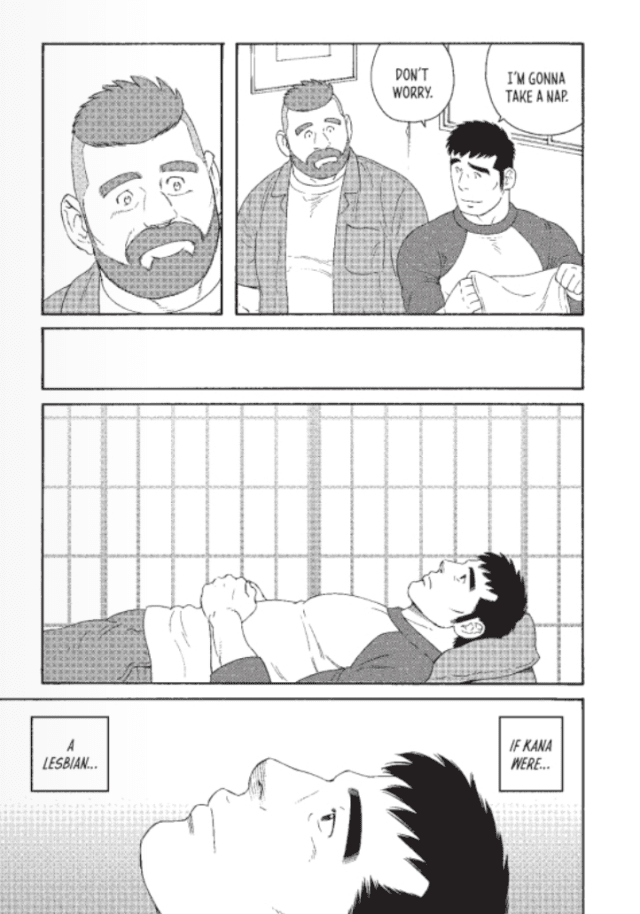

Poor Yaichi! What's a traditional Japanese father to think? My daughter with a woman?! HEEELLLP!!!!
The rest of the story is Yaichi coming to value and care for Mike, whose love for his brother is strong. They've lost so much, they've got to come to peace with each other. Mike has no problem with this, since he's been out a long time; Yaichi finds himself saddened that he didn't try harder to connect with Ryuji while he was alive because now he can't. All while being a divorced custodial dad to a little girl. Who has fallen utterly in love with her big Canadian bear-uncle.
A very telling scene comes when Mike goes to Kana's school, to be met with hostility and suspicion. It's really amusing at first because Mike doesn't see it, but it becomes a major Thing between Yaichi and his inner demons. It provides Yaichi with a chance to work through what he thinks about Mike's gayness and what Japan as a whole thinks about gayness. The men resolve their desire to be close to each other over a look at Mike's photo album, including wedding pictures. Yaichi realizes how much he will miss Mike as he's about to leave, and Kana asks for a sworn promise that Mike will visit again, or she gets to come to Canada to visit Mike.
And now I venture into personal territory. My Young Gentleman Caller, Rob, is 34 (thirty-four) years younger than I am. We might as well be Canadian and Japanese, since I understand his culture about as well as he does mine. The Moon landing was 50 years ago. I remember it vividly. I had to YouTube footage for Rob, who had sort-of heard about it. His FATHER was born two years after it happened. So we both relate to the "...say what now?" moments between Yaichi and Mike.
We talked at some length about the way it feels to be so different from someone you care very much about, and how that puts strains on one's inner sense of peace and quiet. We both worry about the other's feelings being hurt when we're being our separate selves...we both worry about the way our beloved handles the need we have to be understood. Am I trying hard enough, too hard, do I even know what he means? And it was this manga that called that conversation into being.
If you don't read the series for any other reason, read it for that one. It is good enough to start a life-altering conversation between people too different to know where or how to begin to do that for themselves.
THAT's good storytelling!
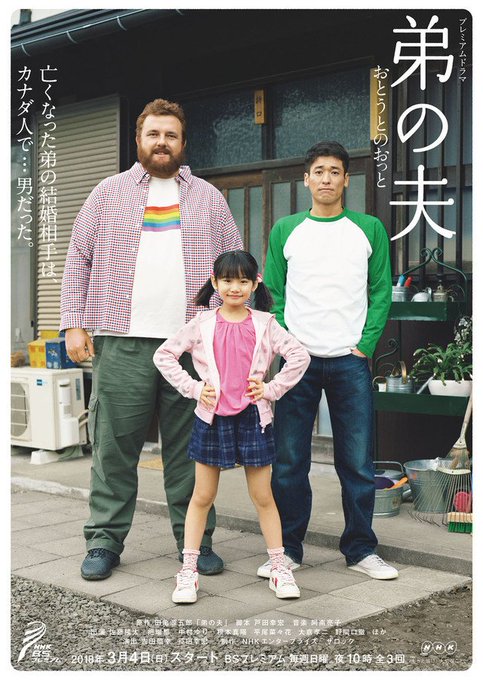
Also! Extra! May the US be blessed with the live-action TV series! Here's a promo photo of the amazing casting:

Read
May 3, 20213/5/21
A good story indeed! I enjoyed the characters and the progression as well as the topics that were touched. Nothing all that unexpected happened in the story, but I can definitely see the significance of it and hope to see more and longer of these type of manga being created/translated that are more in depth (character wise in particular).
You can find me on
Youtube | Instagram | Twitter | Tumblr | Website |
A good story indeed! I enjoyed the characters and the progression as well as the topics that were touched. Nothing all that unexpected happened in the story, but I can definitely see the significance of it and hope to see more and longer of these type of manga being created/translated that are more in depth (character wise in particular).
You can find me on
Youtube | Instagram | Twitter | Tumblr | Website |

April 29, 2020
Qué tierno y qué encantador es, también, el segundo y último volumen del manga “El marido de mi hermano”. Me ha parecido una lectura muy valiosa que creo que puede ser un material perfecto para trabajar la diversidad familiar.
En esta obra se cuenta la historia de un canadiense que viaja a Japón para conocer a la familia de su recientemente fallecido marido. Es un cuento familiar que habla sobre cómo los estigmas sociales pueden arruinar vidas y relaciones personales, sobre el diferente nivel de prejuicios de distintas culturas en relación a las personas LGBT y sobre cómo el amor está por encima de cualquier barrera. El subtítulo de estos dos libros podría perfectamente ser “Homosexualidad para principiantes” ya que, a lo largo de las páginas, el lector inexperto en temas de diversidad irá descubriendo muchas cosas sobre la vida cotidiana de las personas queer. Es una lectura preciosa que creo que debería estar en todas las bibliotecas escolares.
En esta obra se cuenta la historia de un canadiense que viaja a Japón para conocer a la familia de su recientemente fallecido marido. Es un cuento familiar que habla sobre cómo los estigmas sociales pueden arruinar vidas y relaciones personales, sobre el diferente nivel de prejuicios de distintas culturas en relación a las personas LGBT y sobre cómo el amor está por encima de cualquier barrera. El subtítulo de estos dos libros podría perfectamente ser “Homosexualidad para principiantes” ya que, a lo largo de las páginas, el lector inexperto en temas de diversidad irá descubriendo muchas cosas sobre la vida cotidiana de las personas queer. Es una lectura preciosa que creo que debería estar en todas las bibliotecas escolares.

January 13, 2019
I got choked up a couple times reading this gentle book about recognizing and confronting homophobia in yourself and others. Highly recommended.

January 5, 2025
I'm not crying, you are. 🥺🥺

December 14, 2018
Don't wait on that rapprochement with your family member. If you delay it may be too late.
(This isn't the main point, but it is a point, possibly the one with the widest scope of application.)
(This isn't the main point, but it is a point, possibly the one with the widest scope of application.)

Read
May 8, 2019just heart eyes for this series cuz it's the most precious thing on the planet <3

July 18, 2019
Even cuter than the first one

May 18, 2019
Vol. 1 ★★★★★
Vol. 2 ★★★★★
Do you have any idea how painful it is to go through a 352-page manga trying not to cry? 😭
I adored this manga series so, so much, and I'm totally heartbroken that it's over already. I wanted so much more time with Yaichi and Kana and Mike, and I loved every single interaction between them all. They're the most wonderful, precious little family, and watching Yaichi grow so much over this three-week span with Mike in his home? It was everything. ♥

November 22, 2018
The conclusion of Yiachi and Kana's story.
What can I say?

I definitely know how this story continues in my head...

5 stars!!!
What can I say?
I definitely know how this story continues in my head...
5 stars!!!

March 31, 2018
Excuse me while I go cry in the corner because this volume was utter perfection.


September 27, 2019
This is part two of a family drama — Canadian husband of deceased Japanese man visits his Japanese family in Japan. The text makes the surprising claim there is no homophobia in Japan, yet many of the chapters deal with that very issue, including the regrets of the straight brother for never accepting his gay twin brother after he came out.
This reader reached the conclusion that the manga was partially intended to educate Japanese readers, especially those inclined to deny the existence of homophobia.
There is a sequence where a teacher seemingly expresses, um, something but perhaps that was mostly xenophobia— it is Japan after all! The children however offer hope for the future and all ends well.
3.5 stars rounded up because the child is so sunny.
This reader reached the conclusion that the manga was partially intended to educate Japanese readers, especially those inclined to deny the existence of homophobia.
There is a sequence where a teacher seemingly expresses, um, something but perhaps that was mostly xenophobia— it is Japan after all! The children however offer hope for the future and all ends well.
3.5 stars rounded up because the child is so sunny.

May 20, 2024
Gorgeous sequel to "My Brother's Husband," but I was left still wanting more. Recommended for all ages. Really moving series.

October 11, 2018
I didn't enjoy this volume as much as the first one because I don't think it had a hard-hitting moment which shaped the story. I still really liked it though, the family dynamic is excellent and the message is so beautiful. The characters and art are wonderful. It was a lovely ending to the series. Very wholesome!

December 14, 2024
EN I don't think the second volume adds much to the first. It essentially builds upon the story and brings it to a conclusion.
That said, I still enjoyed it immensely, even though the element of surprise is no longer present.
At its core, it’s a story about connection. It sheds light on the struggles for acceptance that homosexuals often face, sometimes even within their own families.
An emotional ending that’s sure to bring tears to your eyes.
--
PT Não acho que o segundo volume acrescente muito ao primeiro. Essencialmente, desenvolve a história e dá-lhe uma conclusão.
Ainda assim, gostei imenso, apesar de o elemento surpresa já não estar presente.
No fundo, é uma história sobre ligação. Lança luz sobre as lutas pela aceitação que os homossexuais frequentemente enfrentam, por vezes até dentro das suas próprias famílias.
Um final emocionante que certamente traz lágrimas aos olhos.
That said, I still enjoyed it immensely, even though the element of surprise is no longer present.
At its core, it’s a story about connection. It sheds light on the struggles for acceptance that homosexuals often face, sometimes even within their own families.
An emotional ending that’s sure to bring tears to your eyes.
--
PT Não acho que o segundo volume acrescente muito ao primeiro. Essencialmente, desenvolve a história e dá-lhe uma conclusão.
Ainda assim, gostei imenso, apesar de o elemento surpresa já não estar presente.
No fundo, é uma história sobre ligação. Lança luz sobre as lutas pela aceitação que os homossexuais frequentemente enfrentam, por vezes até dentro das suas próprias famílias.
Um final emocionante que certamente traz lágrimas aos olhos.

May 5, 2019

Heartwarming and filled with fluff. I wish this series would continue on, but it seems to have come to a bittersweet end.

December 30, 2018
Lovely! Now I'm all teary eyed, but in a good way. My Brother's Husband is the story of Yaichi, a single father raising his young daughter Kana. His brother Ryoji died recently. Yaichi and his brother hadn't spoken in a long time. He knows that Ryoji came out as gay and moved to Canada years ago, and that he’d gotten married to another man. And then Mike Flanagan shows up on his doorstep, intending to meet his husband's family and see where he grew up …
This is a story that's as big and welcoming and fuzzy as Mike Flanagan himself. He’s a big Canadian teddy bear of a man. Kana loves him at first sight. Yaichi is reserved but polite. This manga is all about Yaichi sorting through his feelings about LGBTQ people and his brother in particular. There's no real hatred or anything, just a lot of things he never really thought about before. It's about tuning in on an aspect of life that he’d overlooked.
This is honestly one of the best LGBTQ themed comics I’ve ever read. Gengoroh Tagame has a knack for capturing the subtlest facial expressions. The whole sequence where Yaichi is talking with one of Kana’s teachers is just amazing in how well it captures the nuances of their exchange. The artwork reminds me in some ways of Tim Barela’s Leonard & Larry books--both artists draw impressively beefy bearded men. I’m definitely keen to check out more of Tagame’s work (and yes, I understand that it's generally more adult-oriented.) Highly recommended!
This is a story that's as big and welcoming and fuzzy as Mike Flanagan himself. He’s a big Canadian teddy bear of a man. Kana loves him at first sight. Yaichi is reserved but polite. This manga is all about Yaichi sorting through his feelings about LGBTQ people and his brother in particular. There's no real hatred or anything, just a lot of things he never really thought about before. It's about tuning in on an aspect of life that he’d overlooked.
This is honestly one of the best LGBTQ themed comics I’ve ever read. Gengoroh Tagame has a knack for capturing the subtlest facial expressions. The whole sequence where Yaichi is talking with one of Kana’s teachers is just amazing in how well it captures the nuances of their exchange. The artwork reminds me in some ways of Tim Barela’s Leonard & Larry books--both artists draw impressively beefy bearded men. I’m definitely keen to check out more of Tagame’s work (and yes, I understand that it's generally more adult-oriented.) Highly recommended!

April 9, 2018
Tanti pianti per questo manga. Consigliato anche a chi (come me) non legge questo genere di solito.

March 24, 2020
#1) My Brother's Husband, Vol. 1 ★★★★☆
➸ Trigger warnings for .
▷ Representation: Yaichi (mc) is Japanese; Kana (mc) is Japanese; Mike (mc) is gay; gay & Japanese scs.
Blog • Goodreads • Twitter • Instagram
Displaying 1 - 30 of 1,189 reviews